Few things can get me to leave the Sunday dinner table but look at this beauty!!! A hummingbird Hawkmoth…
A little distraction from Sunday dinner…
1
Few things can get me to leave the Sunday dinner table but look at this beauty!!! A hummingbird Hawkmoth…
As spring turned to summer, our trip to Sweden in the second half of June once again revealed the richness of the country’s wildlife. Our stay in a summer house in the Swedish countryside enabled us to wander locally and further afield in search of birds, mammals and insects in a variety of landscapes.
The summerhouse is located about a third of the way up the country and around 125km north-west of Stockholm. It lies in an area where southern Sweden transitions into the north, a region of forest, lakes, meadows and bogs.
As always, the gardens and forest around the summerhouse provided a lot of wildlife watching. The warblers were a constant throughout our stay with willow warbler perhaps the backing soundtrack to each day. However, the other warblers were also prominent with blackcap, garden warbler and chiffchaff frequently heard. During the trip we also saw common and lesser whitethroat on our travels.
The area around the summerhouse is also good for a range of small birds including tits (blue, great, coal, willow and, my favourite, crested), nuthatch, treecreeper, house sparrow and tree sparrow and quite a few finches including chaffinch, greenfinch, bullfinch, goldfinch and siskin (in the image below). The garden also had frequent visits from both pied and spotted flycatcher as well as the occasional roding woodcock.

Mälaren, the great water body of interlinked navigable lakes that reaches inland from Stockholm, is about 55km south of where we stay and there are two lovely nature reserves reaching inland from the shoreline, one either side of the large town of Västeras. We visited both Asköviken, to the west, and Ängsö, to the east, for the first time. Both reserves have reedbed and grass marshland against the coast with old oak woodland behind. Oaks are not typical of what we might imagine Scandinavian woodland to be. However, in Southern Sweden, oaks in mixed woodland can be found in many places, and I’ve been to a few.
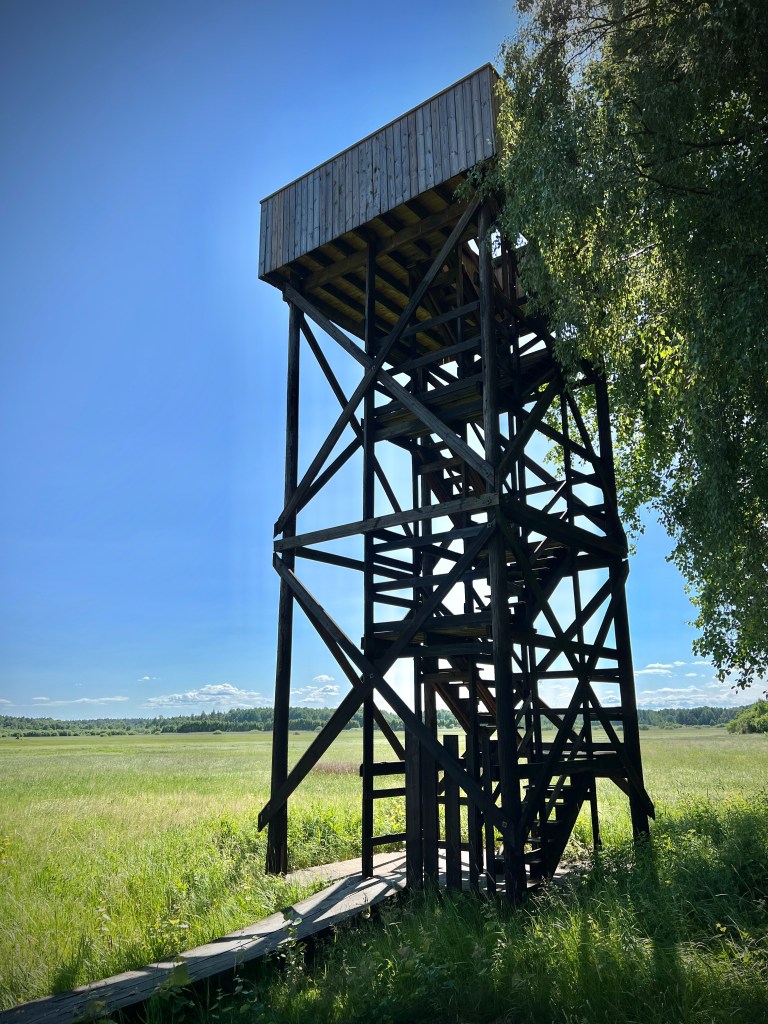
Both visits to the nature reserves provided rich pickings for birdwatchers, with Asköviken particularly memorable. Walking out to the bird tower on the water’s edge we came across tree pipit and red-backed shrike, and as we approached the tower heard a call somewhat like a parrot but it turned out to be my first ever icterine warbler. Normally, these birds are very hard to see and it seemed this one would live up to that reputation, however, once we were at the top of the tower, it flew into the top of a nearby tree where is stayed and called for quite a while (picked out in the image below).

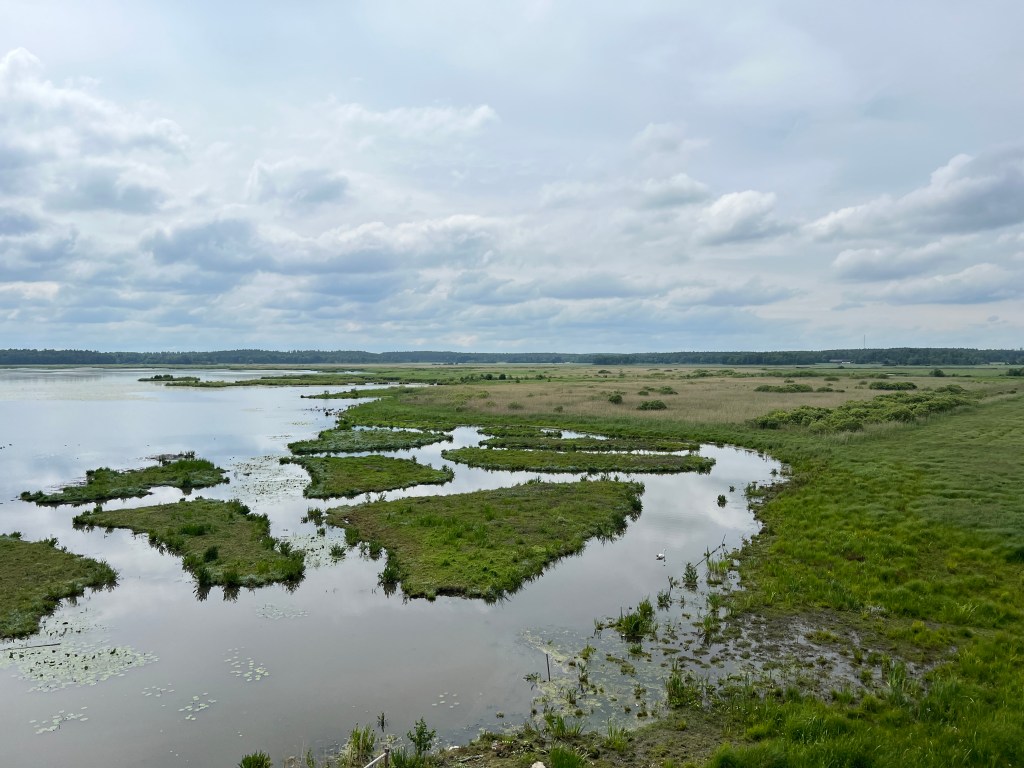
The bird tower gave us views out into Mälaren over the shallows and small, low islands. There were plenty of greylag geese and a few different ducks. The only waders we saw immediately were lapwings but after a while we saw two summer plumage spotted redshanks in the distance. Even further out, we saw the unmistakable silhouettes of two white-tailed eagles. They were both hunting and eventually dived down to an island and didn’t reappear. On the way back, I had another first as we walked through the woodland. A bird flew up from the ground and into a track-side tree. At first, I thought it was a thrush but looking again it turned out to be a wryneck, and a pretty grainy photo (below) confirmed it.


Amongst other woodpeckers we saw during the trip we green and great-spotted, and we heard a black woodpecker. We also saw a lesser-spotted woodpecker at Ängsö, the first I’ve seen since a winter trip to Poland in 2018.
One of my favourite places to visit within an easy distance of where we stay, is Färnebofjärden National Park and we took another couple of trips up there for to look for wildlife. We had intended to go to grill sausages at one of the riverside fireplaces but the lack of rain over the preceding months had led to tinder-dry conditions and a fire ban. However, we went anyway and we’re rewarded with a short view of a goshawk as it disappeared into the forest after crossing the water. On a second visit to the National Park we saw another white-tailed eagle from the bird tower at Skäkersbo as well as crested tots high up in the surrounding trees.
The trip overall was quite good for raptors. On top of the white-tailed eagles and the goshawk, we saw buzzard, kestrel, sparrowhawk, osprey (including three in one view) and hobby. I do usually see marsh harrier and sometimes red kite but not this time.
We also found a new spot to look for wildlife, to the south of the National Park, at Österbo, where there is a 700m boardwalk crossing what is usually a wet water meadow. On our visit there was little sign of water and little wildlife, but I suspect it’s a good location for migration stopovers for wading birds, waterfowl and cranes. We’ll have to go back in spring or autumn to check.
On the way back to the summerhouse, we very fleetingly saw a third and final ‘first’ in the form of a hazel grouse which flew in front of the car and landed on a track as we drove down a fast main road; unfortunately we couldn’t stop.
I’ve said before on my blog that my greatest interest in wildlife is actually in mammals rather than birds. Sweden’s is much richer in it mammalian life than the UK is, showing how our islands once were, a long time ago, and perhaps could be once again (but probably not in my lifetime).
We didn’t have any real standout mammal moments on this trip but we did see a few; albeit some being on our trail cam. We put it the camera out at night, both at the front of the summerhouse and in the forest immediately behind it. We recorded roe deer, red fox, red squirrel and badger but unfortunately, unlike our last stay, we didn’t record a passing European Elk. We also saw brown hare in the area around the summerhouse. As in 2022, we got good views of beaver at the nearby lake, but unlike last year, these weren’t every night and we didn’t get as close views.
There were reptiles too with two types of snake. We saw a grass snake as we swam in the lake at the summerhouse and an adder as we walked along the forest tracks. We sometimes see slow worm in the garden but not this time.
We also spent a little time looking for insects and specifically looked out for one type of butterfly, finding a poplar admiral along a Dalarna forest track. On our first evening at the summerhouse we also saw a swallowtail. We were also pretty amazed by the sheer number of dragonflies and damselflies as we swam in the lake. Mating pairs would be hounded by packs of followers around our heads.


While seeing some birds for the first time is always nice, these weren’t the best wildlife memories of the trip. There were the swifts racing overhead as I swam in the lovely warm lake, there were the haunting calls of the black-throated divers as we relaxed by our waterside tent and, finally, the bugling of cranes echoing around the forest as we sat outside one evening. These were all quite magical moments that you get only from immersion in nature, even just for a few minutes.

All in all, we saw or heard 95 species of bird over two weeks, which I think must be a record for any holiday I’ve had except for guided trips to Africa.




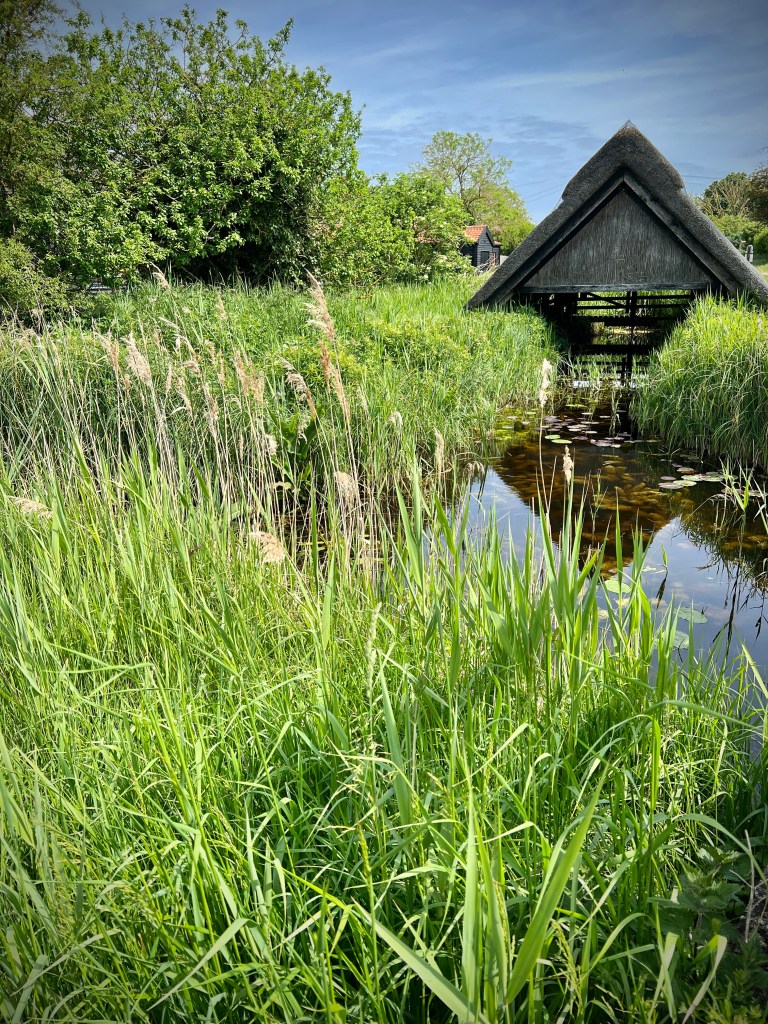
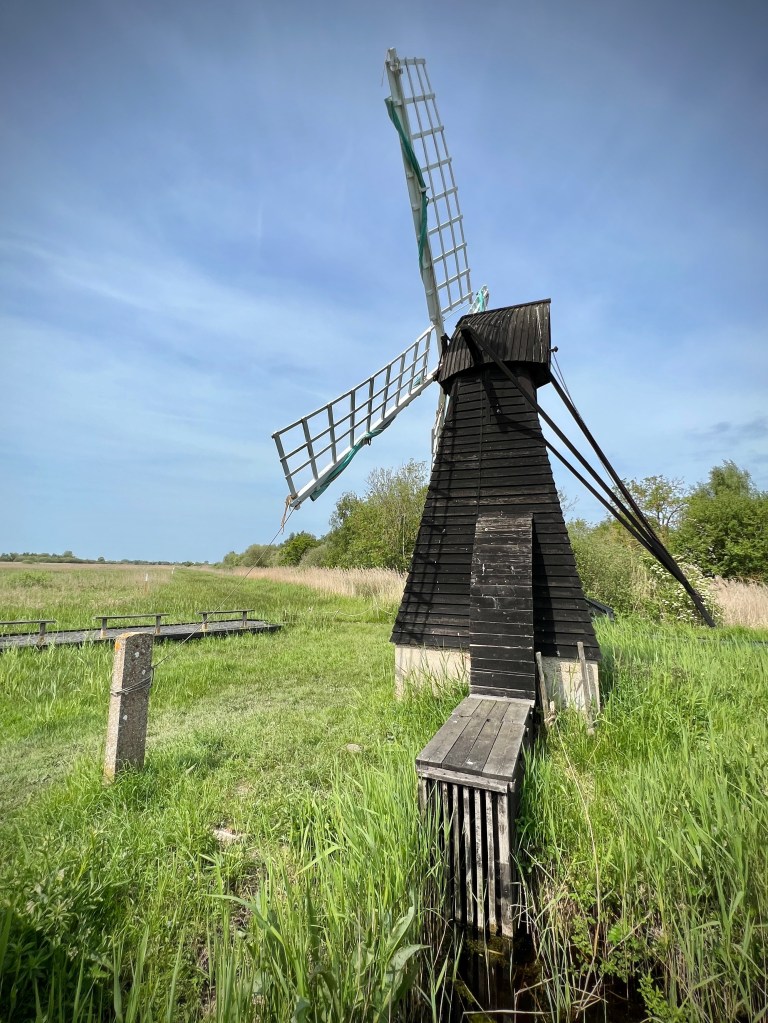
Moving to Northamptonshire from Cheshire has made the east of England much more accessible than it was. This has put many of the wildlife sites and reserves within easier reach of an hour or two’s drive. So far we’ve had some great trips out that way including to the Ouse Washes, the Nene Washes, the Great Fen Project and much further into Norfolk. Late this spring we went to one of the reserves I’ve been wanting to visit for many years, Wicken Fen.
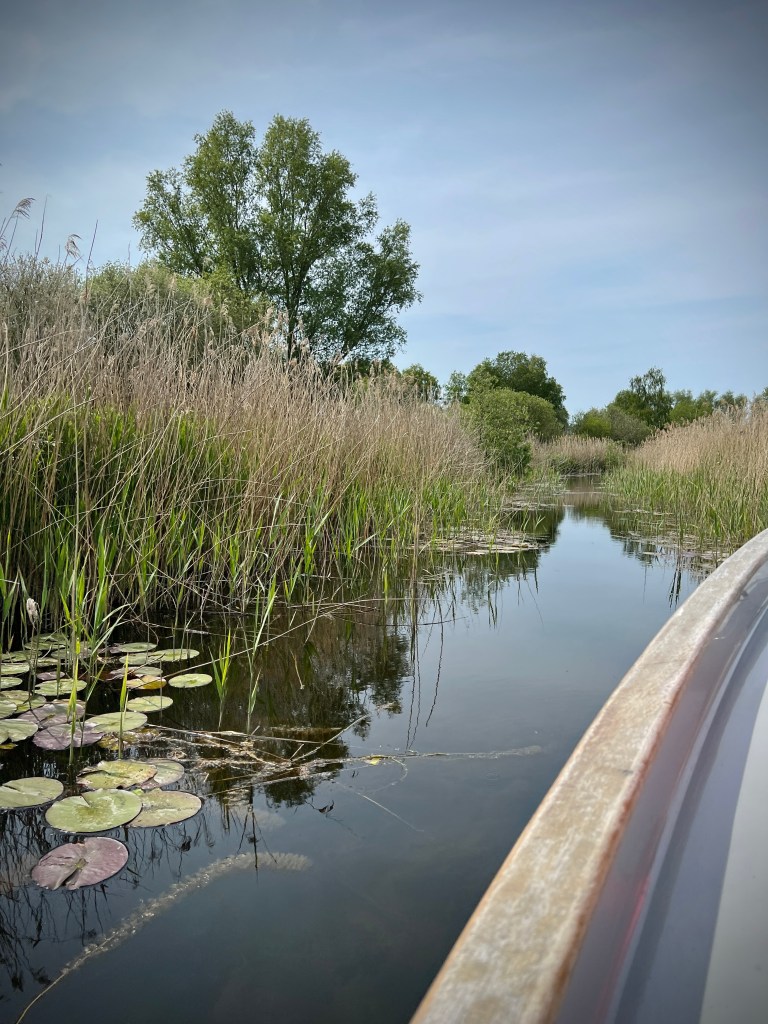
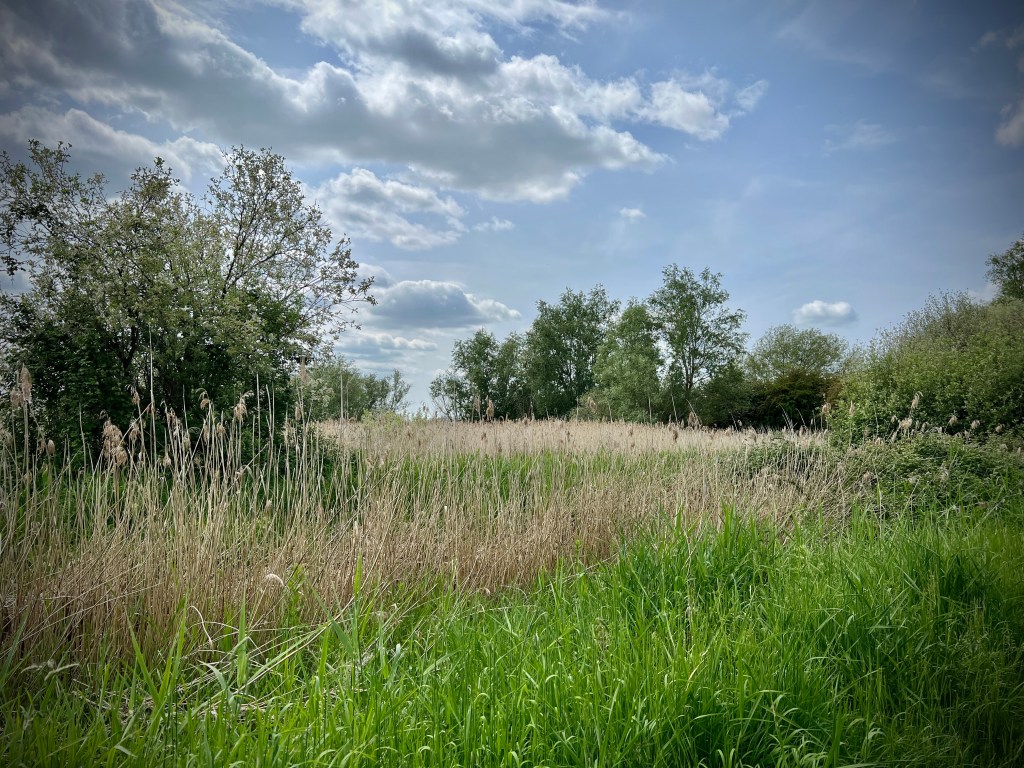
The Natural Trust reserve is large at 255 hectares and consists of a fenland landscape of wet meadows, sedge and reedbeds that has been lost from most of its former area. It has navigable channels, boardwalks and grassy paths on which to see the site. As well as walking, we took a 50-minute out and back electric boat ride which gave us a very different perspective to walking around the paths.
Being springtime, one of our main aims was to see and hear some of the typical fenland birds in their prime and we weren’t disappointed. We saw 45 species during the day but with some real highlights. The warblers, as would be expected, we very prominent with cetti’s, grasshopper, reed, sedge, willow, garden, chiff chaff, whitethroat and blackcap all in abundance. The raptors were led by marsh harriers but also included red kite, kestrel and buzzard. However, the real star of the show were the hobbies, with up to five in one view catching dragonflies and eating them on the wing. The other bird of note, which I always long to hear, and hopefully see, was the cuckoo. We heard one a few times as we sailed and walked around the reserve but then we got a great view as it sat in one tree calling and then flew across a meadow and called from another tree, all with the hobbies circling overhead.
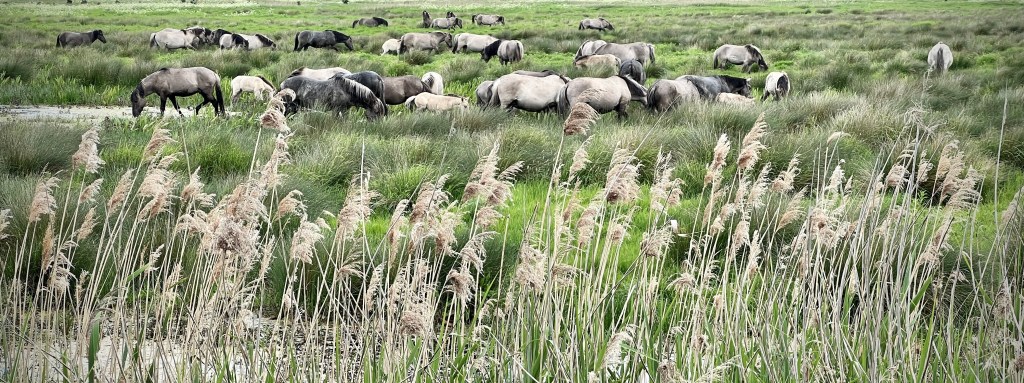
The visit was lovely in the warm spring sunshine and the birds alone made the trip very much worth it. However, there was another target species for the day which at first we only had a very distant, hazy view of. Like the not too far away Great Fen Project, Wicken is a generations-spanning project to restore the fenlands at a landscape scale. To support the process, the plans include not just supporting birds but bringing back large herbivores to the land. So far this has included both highland cattle and wild Konik ponies.
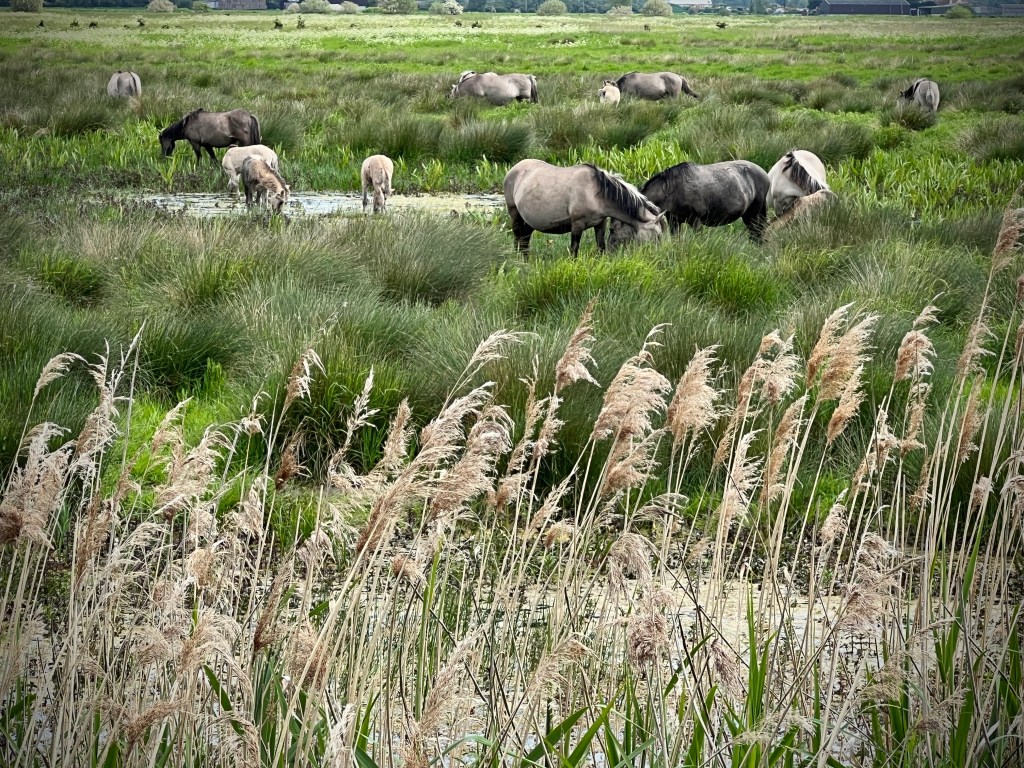
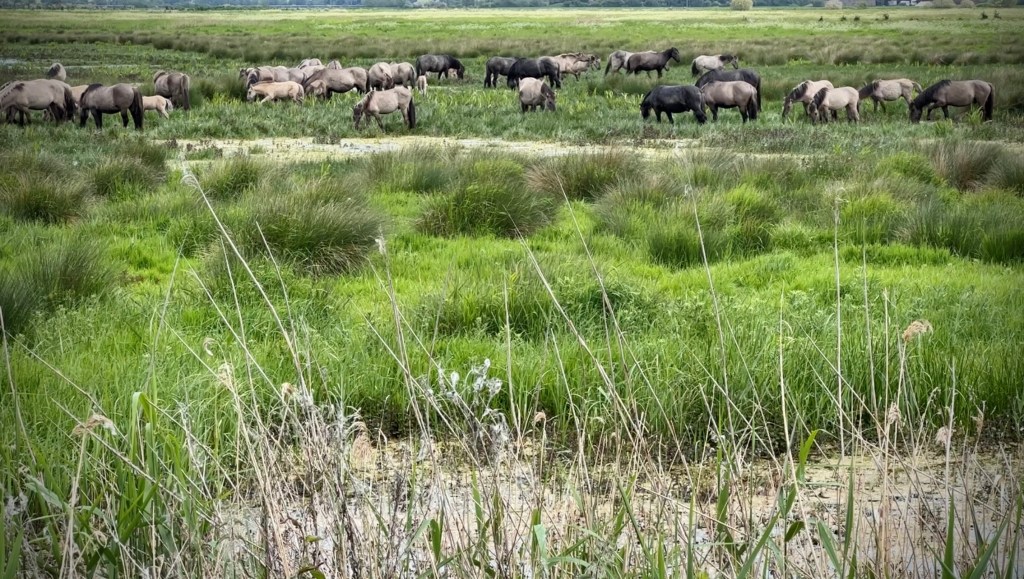
After that distant view of both the ponies and cattle, we didn’t expect to see them close up during our visit, despite going to the area closest to where they would be. As we headed back to the car, we had almost given up the hope but then we heard a commotion in the distance as we walked past the area we had previously looked. We suddenly saw a small herd of ponies coming into view across the meadows and shallow lakes. Rushing to get a better look, the view opened up to reveal a stream of ponies in different groups cantering across the landscape and getting closer and closer until they were right in front of us.
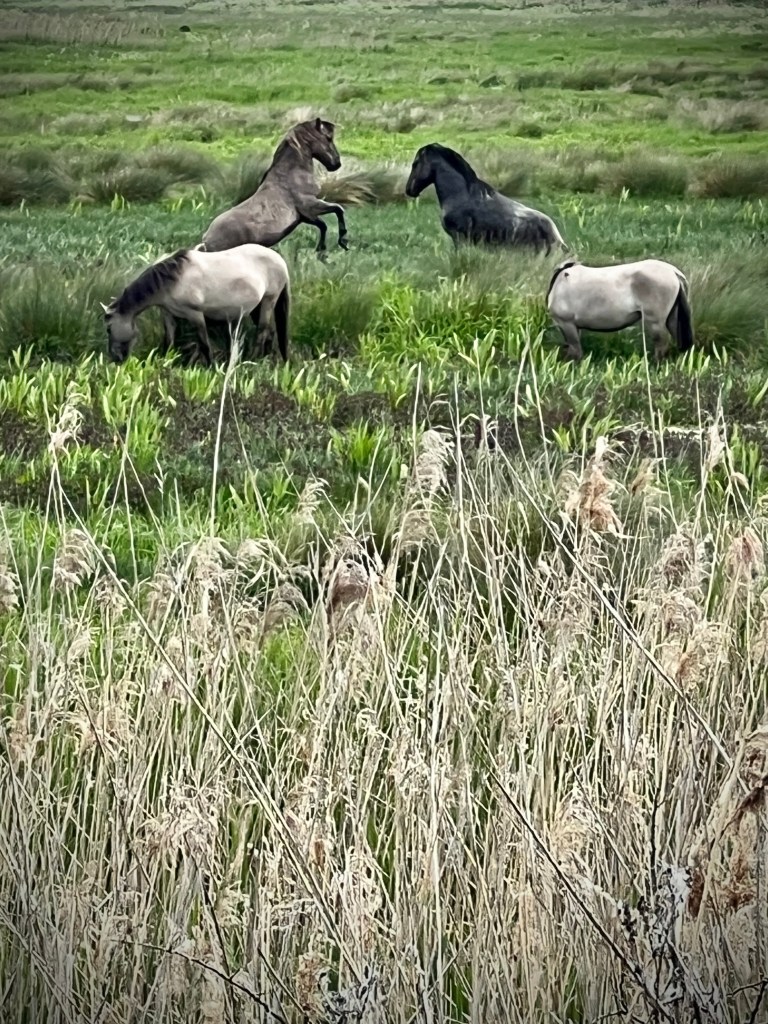
It was immediately apparent that these weren’t just some tame hacking ponies from the local livery yard but very much their wild cousins. There was a dynamism in their lives you don’t see in horses grazing domestic fields. They weren’t just passively nibbling at the grass and lazily swishing their tails to swat flies. Instead, they were living real lives of herd animals. The mares we’re staying close to their youngsters, guiding them as they splashed through the water but with the older foals gaining confidence and rushing around in groups. The stallions were the stars of the show. Their strength and energy was obvious as they rushed around their harems, warding off the advances of others. Squabbles and fights would break out, with biting and kicking, and occasional face-to-face thrashing of limbs and hooves as they stood high on their rear legs. There was a constantly whinnying and snorting as the males tried to keep hold of their mares.
The last group of ponies, a bachelor pack, galloped from the distance over harder ground with their hooves filling the air with a rumble and their cries growing louder. As they entered the water, they chased and bickered amongst themselves but slowed down to a trot as the water deepened. The stallions closest to their route were agitated by their advance and turned towards them, only for the group to halt their approach. Individually they stopped and dropped into the water, rolling to cover themselves in dark, watery peat-laden mud. They stood up and shook themselves, now blackened and dripping, their bedraggled manes plastered think against their necks.
This was a wild herd acting as wild animals. All of this was laid out in front of us in a landscape that is being transformed by their presence. It stirred something visceral, a feeling of wilderness and something long lost from the country. There are no true wildernesses left in the UK but at times a sound or view can bring a momentary link between the modern UK and its former more wild past. For a moment, a window opened to provide a view into what has been and what could yet be again.
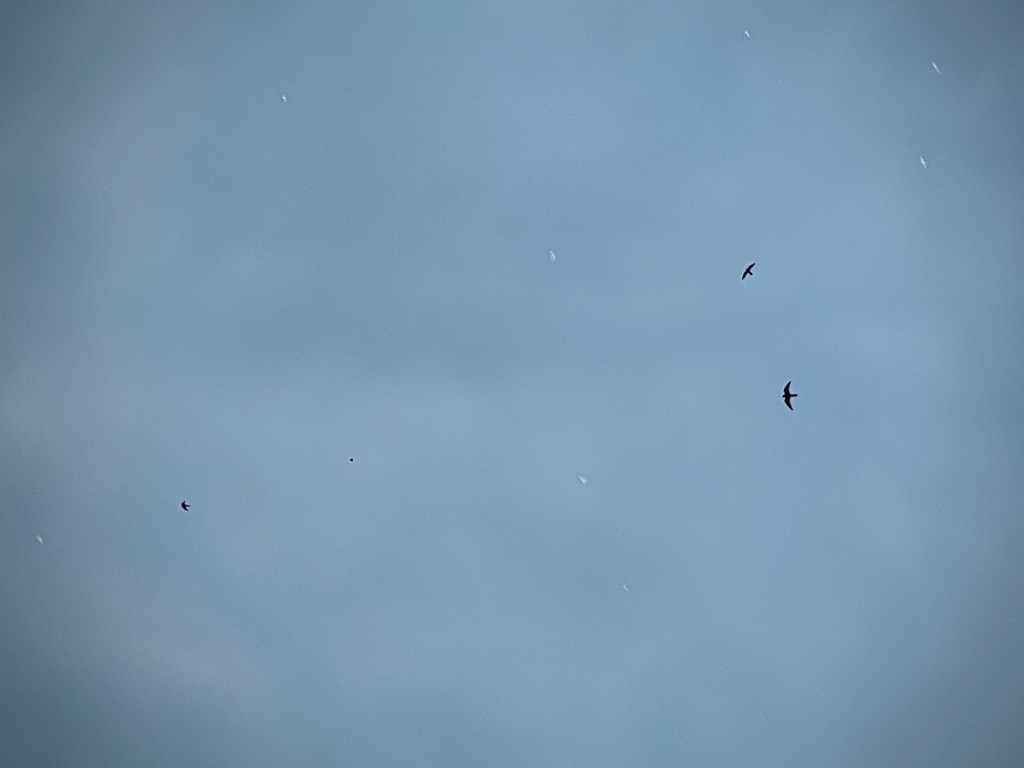
Searching through the pages of my blog, I’m not sure I’ve really given enough space to my favourite bird – the swift. I aim to change that and I’ll start with a post about yesterday when I had the chance to get up close to some of these birds. Having spoken to one of our fellow villagers, John, a few times since we moved here in 2021, last year he kindly showed me his swift nest boxes and the video feed he has from them. We spoke again recently and this time he invited me around to see the swift chicks be ringed.
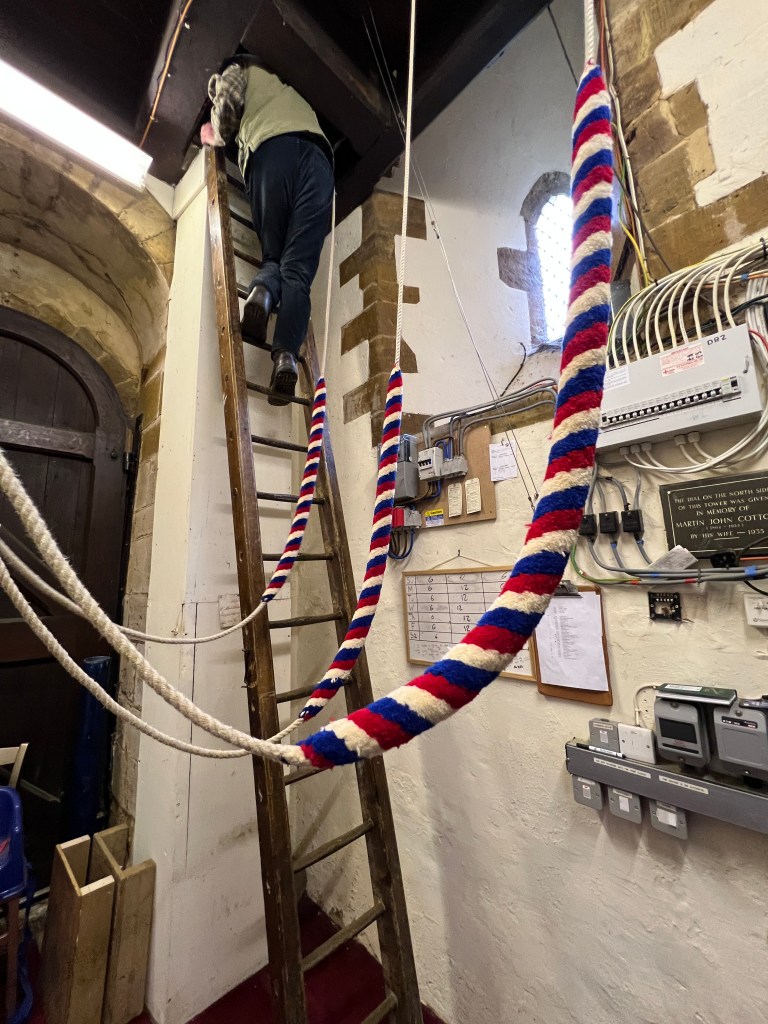
John, the two ringers, Neil and Michelle, and I made our way up to one of his bedrooms where he can gain access to two of his nest boxes. The birds from one of the boxes had already fledged but there were two chicks still in the second. Unfortunately, on inspection, the chicks were too close to fledging to ring; it would have risked them flying out of the nest too early. We therefore had to abort the ringing but instead walked up to the church to inspect the nest boxes high up in the base of the steeple.

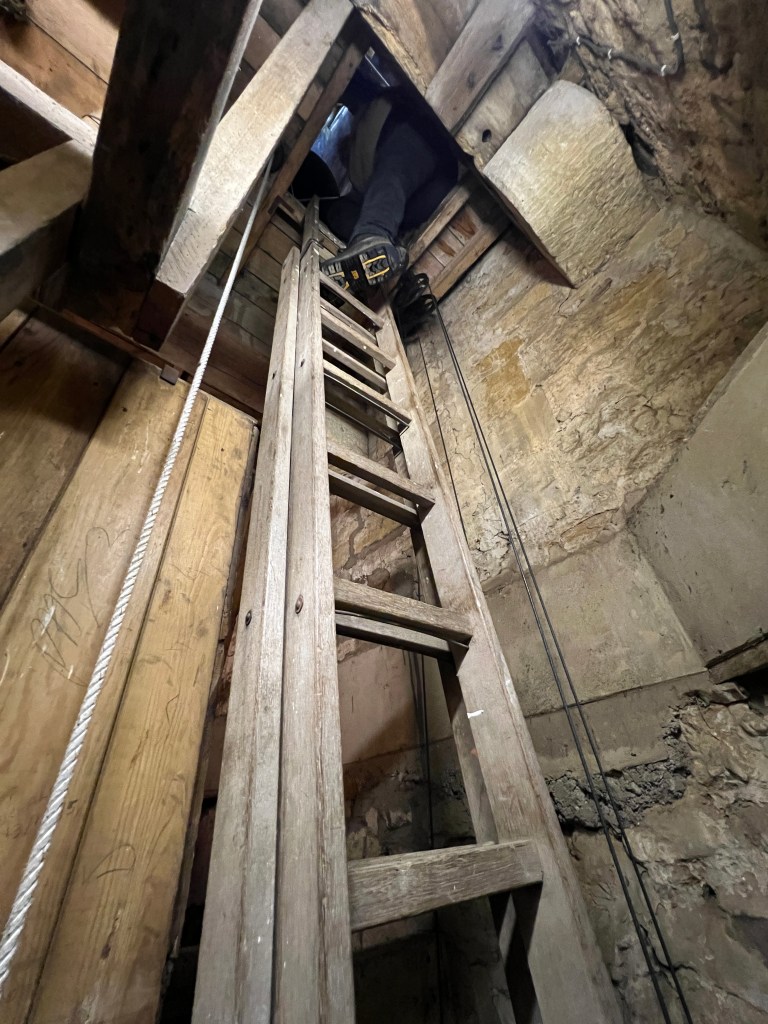
Three of us went up the three steep sets of ladders to gain access to the steeple and then John and Neil clambered over the bells to check on the two boxes. More chicks were found, revealing a very successful breeding year for John’s nest boxes with five boxes in total producing 10 chicks.
Over the previous two summers we have lived in the village, we have frequently seen swifts but not often at low roof-top level around our house. However, during this third summer in the village, we have seen quite a lot of swifts flying close around our house and the neighbouring ones, hopefully, indicating not only that there may be more nests in the village but that they may be in the surrounding houses or out-buildings.
I could talk and write for hours about swifts, and I aim to write some more, but I’ll keep this post short but just say that there is something rather nice about hearing a party of screaming swifts as I sit at my desk in my home office on a warm summer afternoon. It’s a sound I look forward to throughout the autumn, winter and spring.


We’ve been having a quiet weekend after quite a few busy ones over the last couple of months. Not wanting to be stuck inside, despite the pretty poor weather for July (is it ever going to stop with the endless stream of showers and heavier rain?), we made a short trip to the nature reserve at Pitsford Water. As we made our way to the first larger hide in Scaldwell Bay, we met a birdwatcher who said he’d seen a black-necked grebe. After a little looking around with our binoculars, it couldn’t be seen, so we wandered off. A few hundred metres further on, we stopped and scanned the water’s edge some more, and there it was floating and diving in an area that had been hidden from view earlier. As my first black-necked grebe, this was a good return on a quick trip to the reservoir.
However, we wandered on to the hide and saw a big group of cormorants on the old tree stumps at the edge of the water and small numbers of black-headed gulls, with their summer plumage starting to fade. Sadly, we didn’t see many common terns at all, and I wonder whether they have been hit by bird flu this breeding season, as there were many more when we visited earlier in the spring. Hearing their calls has become one of my favourite sounds of the summer when visiting Pitsford.
As we left the hide we came across a nice patch of brambles and thistles with really good numbers of butterflies feeding on the flowers – peacock, gatekeeper, painted lady, comma and large white – as well as large numbers of damselflies. Just as we turned to leave we also heard a marsh tit calling from the trees beyond – I still haven’t seen one this year but heard quite a few now.
As we headed home, it began to rain again, still no sign of a settled spell of summer weather.



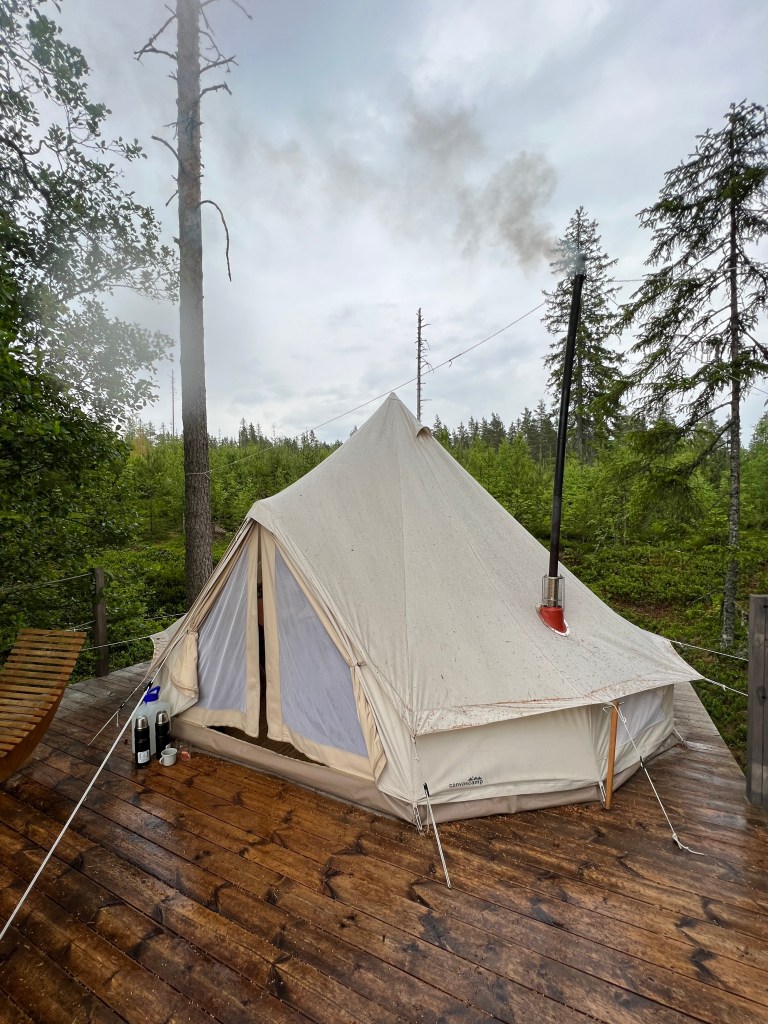
During our two-week trip to Sweden in June we celebrated our first wedding anniversary (on the summer solstice), and to do so in style, we booked two nights ‘glamping’ out in the Swedish countryside.
After going on my first ever wildlife holiday, anywhere, in the Bergslagen area of Central Sweden in 2009, I’ve always wanted to go back and I found that the same local company that ran that trip offers a whole range of wildlife and nature-focused breaks and holidays. After looking through the options, we decided on camping near Kloten.

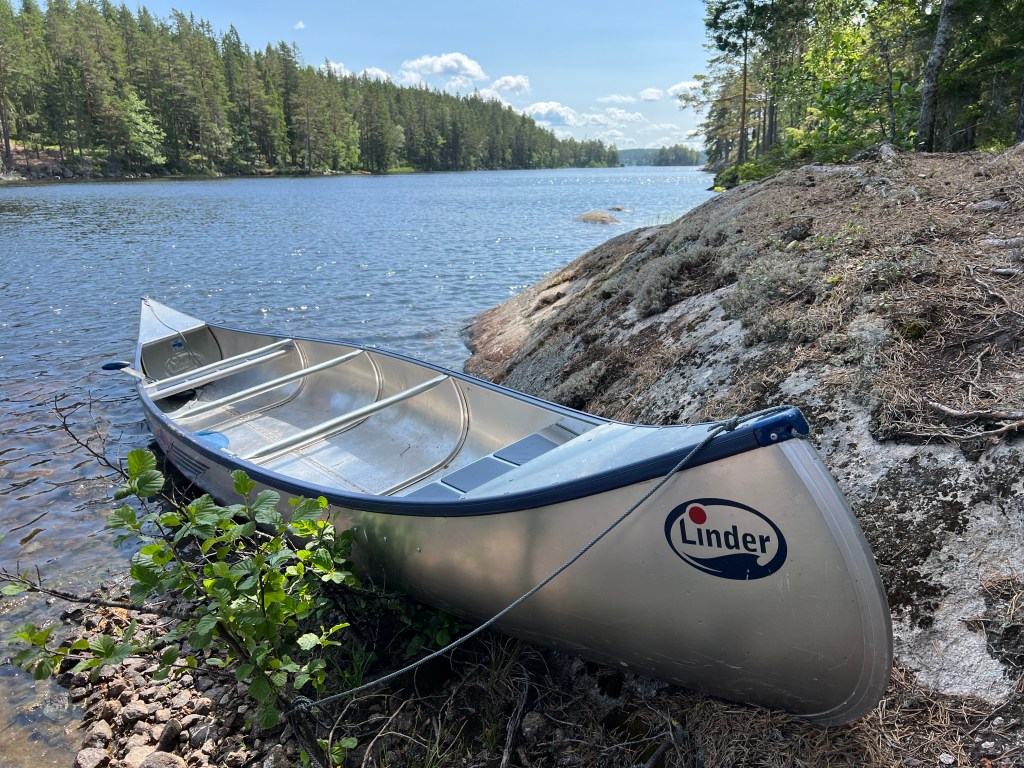
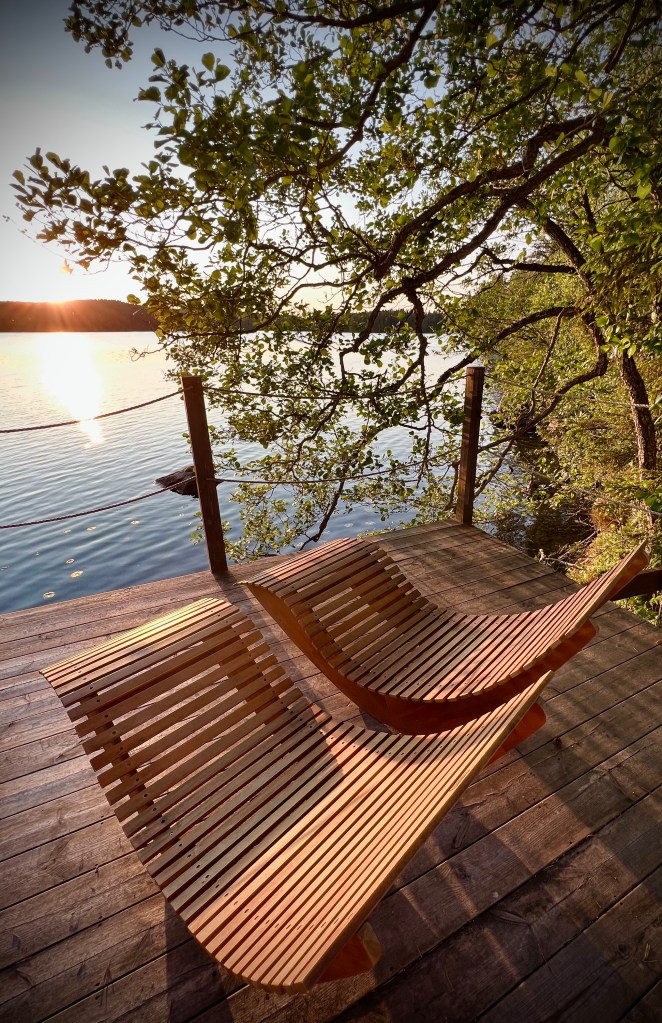
The Kloten Lakeside Camp comprises only four individual bell-tents on wooden platforms at the edge of a large lake. Each tent has a double bed, small woodburning stove, bedside tables, chairs and blankets. Outside on the deck are a dining table and chairs, and two very lovely reclined wooded rocking chairs. Each tent also has its own individual compost toilet. Due to the long-lasting dry weather in that part of Sweden, outdoor fires have been prohibited, therefore the fire pit wasn’t available to us, unfortunately.
The camp is located at Kloten Nature Resort, shown in the map below, and the tents are on the east coast of the lake just north of the long, thin island in the centre of the map below.
As we arrived, we were met in reception and after a cold drink (on what was a warm day) we were taken to our tent via a 15-minute boat ride and given an introduction on the way. After we were dropped off with our luggage (we were told we had actually packed lightly, which came as a bit of a surprise) we unpacked and settled in. However, on what was a lovely afternoon, we couldn’t stay still for long. Each tent comes with its own Canadian canoe and we took it for a quick spin around the nearby shoreline of the lake. On our return we took a dip and swam in the lake, cooling us down in the warm late afternoon. However, the weather soon changed as the rain came in and we had to retreat to our tent for much of the evening.
Our evening meal, along with our breakfast for the first morning, was brought by boat, and we heated the former on the very efficient stove in the tent. We started with salmon rolls, followed by large pieces of salmon with potatoes and vegetables, and finished off with cheese cake; all very delicious.
The rain relented after dinner and we spent a little time outside but unfortunately there was no sunset over the lake. We went to bed listening to the calls of a nearby cuckoo. This made the perfect end to our first anniversary; on our wedding day and our first anniversary, we both woke and went to sleep to the sound of cuckoos and one called throughout the wedding ceremony itself. The cuckoo really is our ‘wedding’ bird!
We woke early the next morning. Sun rises at just after 3:30am in this part of Sweden around the summer solstice and the tent canvas did little to keep the light out. Exiting the tent, we were welcomed by morning very different to the previous evening; a clear day of blue sky and sunshine. We looked up to see three ospreys circling overhead, with two of them making their ‘chipping’ alarm call, perhaps trying to ward off the third intruding osprey.
After a typical Swedish breakfast of yoghurt, fruit, breads and jam, eggs and ham, we decided to go for a longer canoe. Our lunch arrived mid-morning and we loaded it into the canoe and headed out onto the water. The lake was actually a series of large lakes connected by narrower straights of water. We paddled out for about two miles, moving in and out of little inlets and across the wider sections of lake. We came across a family of black-throated divers, with the parents escorting on little chick and shepherding it away behind an island. The wind started to pick up so we decided to head back but stopped off at the side of the lake for our lunch.
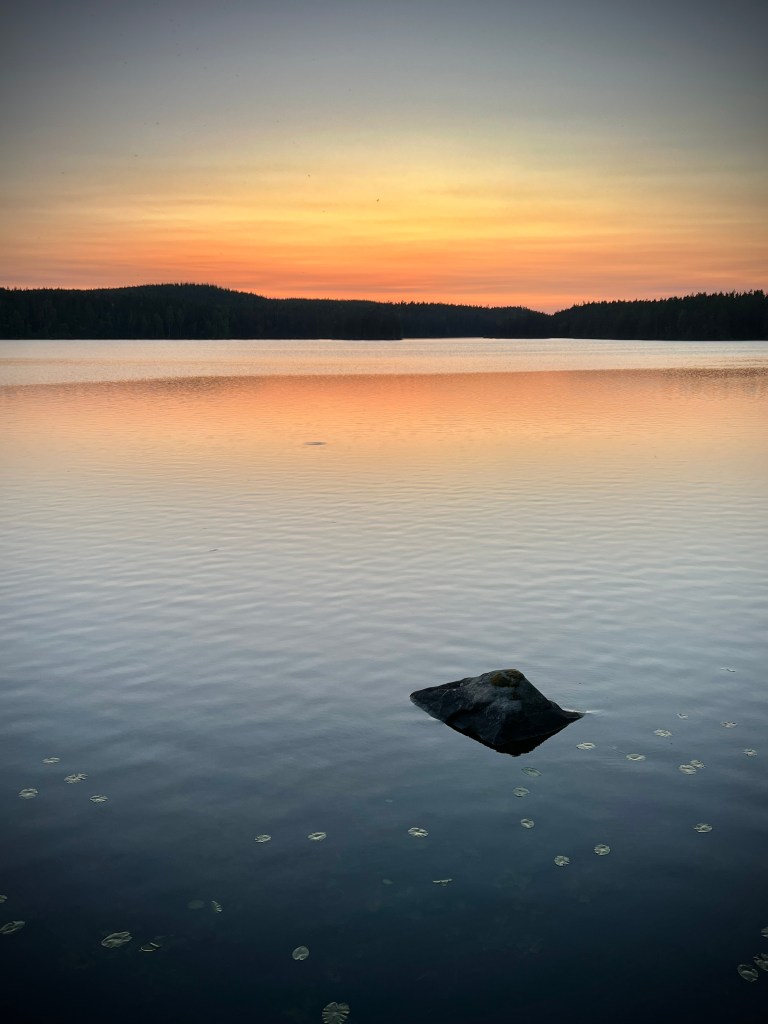
Despite the strong wind, it was lovely spending the late afternoon on the front of the platform over the water. Our dinner arrived along with the last breakfast and we tucked into a beef stir fry, again heated on the tent’s woodburning stove. That evening, we were treated to a proper sunset with the sky glowing orange as the sun dipped behind the tree-covered far shore of the lake.

In the morning we took a final dip in a calmer lake before breakfast, then packed and relaxed before we were picked up in the boat at 11:00am.
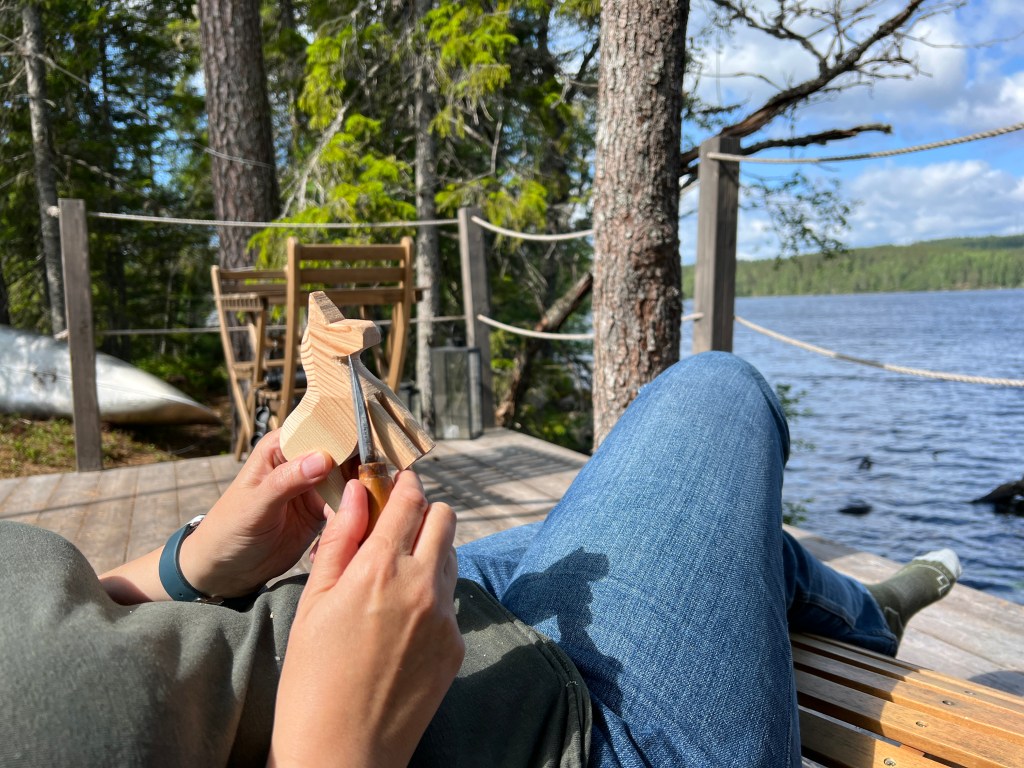
The whole experience was fantastic, spending time in the Swedish wilds, swimming, canoeing, watching the wildlife or simply relaxing. The tent was provided with some extra things to keep us busy including a couple of small wooden dalahäst (dales horse), and a knife to whittle them further, and a polaroid camera to take snaps of the stay and an album to stick them in.
Before we went, we were slightly worried there might be a mosquito problem and that it might actually be quite busy being part of a ‘resort’. We needn’t have worried on either count. We didn’t see a single mosquito the whole time we were there, despite there being quite a few where we were staying for the rest of our time in Sweden. The only other people we saw or heard the entire time we were there were a few canoeists paddling past, some distance away. Even if the other three tents had been occupied, they are far enough away that I doubt they would cause any disturbance or interrupt your privacy.
Overall, the experience was not at all cheap but worth every penny – both the big things and the little things made it. We will remember it for all the things mentioned above but also for the sights of groups of black-throated drivers flying and swimming past the tent, and the sound of their haunting calls echoing over the lake – magical!
The trip was booked through WildSweden with a link to the webpage here.



Floating on my back, barely moving, with only small ripples on the lake lapping around my head, I watched two dozen swifts whirling around the deep blue cloudiness sky. They were mostly silent, not screaming as I hoped they would, but they were there, chasing, racing and gliding on their flickering wings. They would come closer and then move away, returning again, then disappear far behind my head where my eyes could not follow. Every so often one would drop down low, thrusting its wings behind its back in an upward ‘v’, scooping up water from the surface as it met the bottom of its loop. These were minutes of near perfection, watching my favourite birds while I was swimming in the bath-warm waters of a Swedish lake at the end of a hot summer afternoon.
I’m a latecomer to swimming. Having not been in a pool since my mid-teens, I tried it in my early forties in the sea while volunteering on a Pembrokeshire island. That was the June and July four years ago and I carried on afterwards until my then local outdoor pool closed for the winter. The gap from my teens to middle age meant that I went from a very weak swimmer to a non-swimmer. That summer and early autumn in my local pool enabled me to grow in confidence and I ended up being able to do quite a few lengths on each visit. The pandemic, moving house and generally focusing on other types of fitness activity have meant that I haven’t been swimming since September 2019. However, a two week trip to Sweden provided a great opportunity to start again – but I hoped not from ‘square one’.
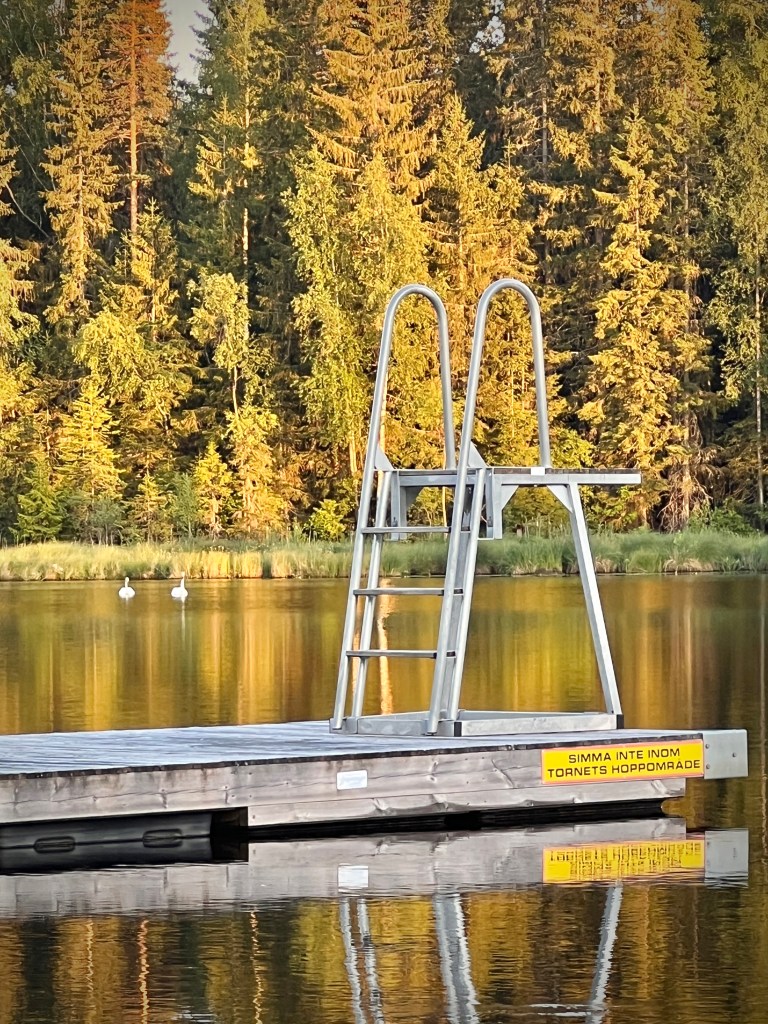
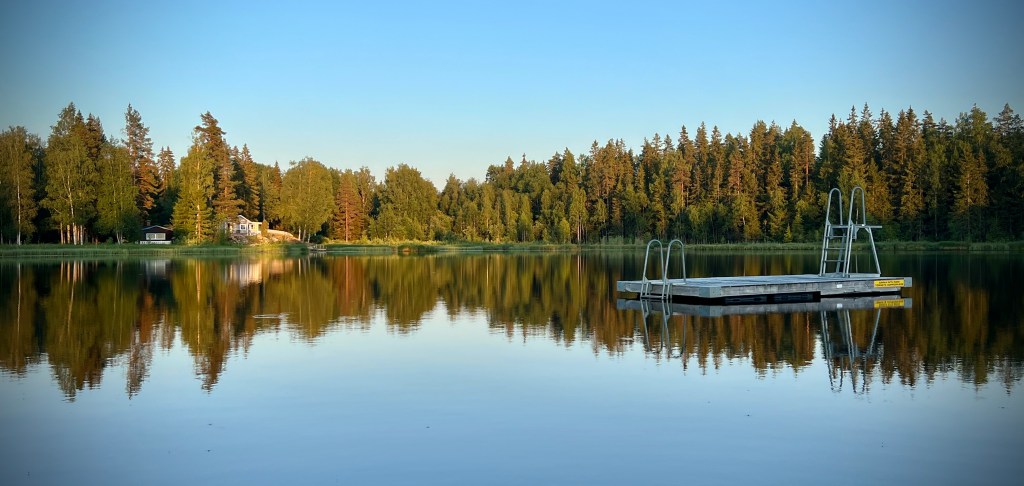
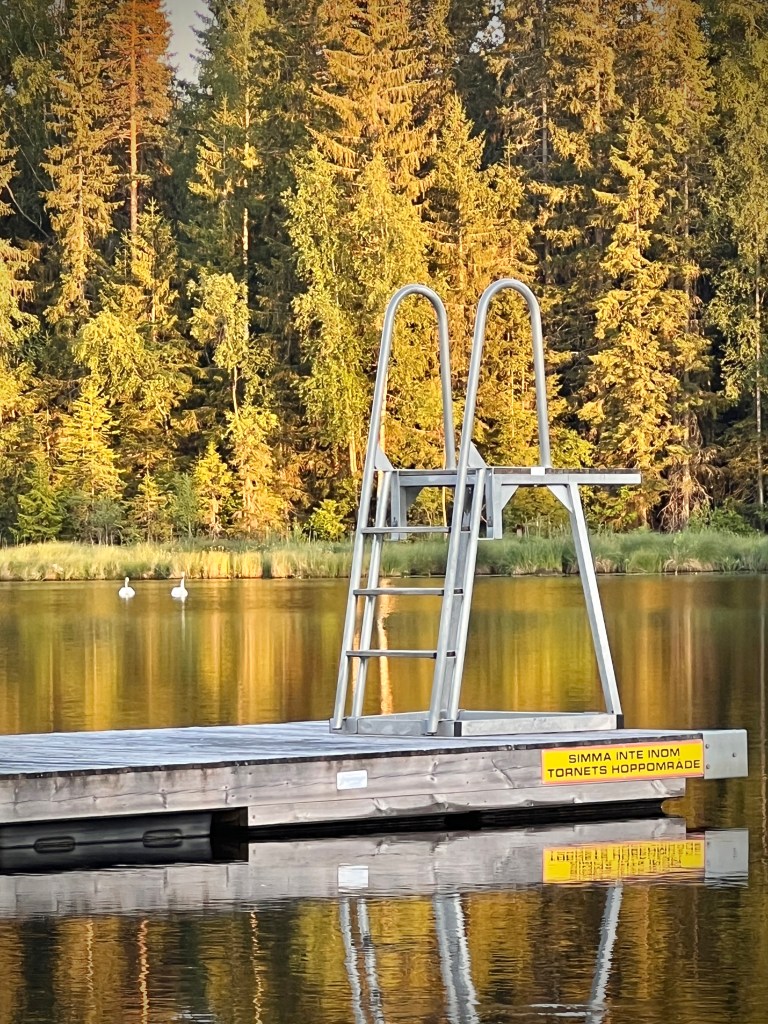
We are fortunate to have access to a summer house in the Swedish countryside and have just returned from staying there. Like so many similar locations in the country, it is only a short walk to a swimming lake. The water is dark, being fed from forest streams that bring peat in the lake; this means that the sun warms it very quickly and it was a lovely 22 to 28 degrees Celsius while we were there. The lake is not quite circular, being 200 metres long and 150 metres wide and is shallow at the edges, with a little shady beach, but it’s much deeper in the middle. The lake also has a swimming pontoon that reaches out into the water with a set of steps into the water and a floating platform further out into the lake. This all makes it sound like it would be very busy but actually the two of us often were the only ones swimming there or we were joined by one or two others.
On taking to the water for the first time since 2019, I was surprised that I could swim straight away, no rustiness or uncertainty, no sinking or flailing about. Over the course of the fortnight we stayed there, we swam every day that we could, sometimes swimming twice in a day. By the end of the stay, I was comfortably swimming for 30 minutes on each visit to the lake. My swimming strength increased and I set myself a personal challenge to swim from the pontoon to another smaller one on the far side of the lake. With one abortive attempt, with some swans getting in the way, on the penultimate day I finally swam the 350 metre round trip, and actually without too much difficulty. I never thought I’d be cable of swimming, let alone being able to swim such distances; it might not be far for many people but it was a real milestone for me.
Putting personal challenges to one side, swimming in that lake brought an extra dimension that going to the local pool simply can’t. Swimming there brought me much closer to nature, making me feel more part of nature rather than just an observer. Being in the water put me amongst the flora and fauna of the lake. I swam amongst the lilies and other water plants, and I was buzzed by dragonflies as flew low over the water catching meals and competing for mates. I saw grass snakes making their way over the surface and watched the whooper swans as they formed a new pair bond. I listened to the cuckoo calling from a nearby tree and watched the swallows hawking for insects. If I had swum later into the evening, I may even have come face-to-face with the local beaver family as they started they nocturnal forays across the lake. However, lying on my back, floating under groups of chasing swifts, my favourite of all birds, made the greatest of those connections. This little meadow and forest-side lake, with its warm waters and plentiful wildlife, felt to me like a swimming utopia and I can’t wait to go back.
I’ve borrowed the title, or paraphrased it, from ‘Fishing in Utopia’ by Andrew Brown. It is a memoir of the author’s life in Sweden, where he moved from England as a young man in the 1970s. He explores the history, culture and politics of the country, as well as his personal experiences of love, loss and fishing. He describes how fishing became a way of connecting with nature, escaping from loneliness and finding meaning in a changing world. He also reflects on the challenges and contradictions of Sweden’s social democracy, its environmental issues and its role in the European Union. The book is a blend of autobiography, travel writing and social commentary. written with humor, insight and a large pinch of nostalgia.



I got up very early yesterday to head out into the Northamptonshire countryside to do my first Breeding Bird Survey (BBS) of the year. Leaving the house before 7:00am on a cold and cloudy Sunday morning didn’t seem very appealing and on arriving at the survey site, in the village of Clipston, the appeal had mostly worn off. However, on starting the first of the two transects the magic of these surveys immediately reappeared. A kestrel swooped down and dropped behind a hedge just beside but quickly flew off as I wander along.
This is the second year that I have been doing the BBS at the grid square around and including the village. It’s a lovely spot for the survey with a mixture of rural village, playing fields, sheep pasture on the surrounding low hills and a little arable land too. This mixture provides for a range of different birds, both farmland and garden birds appearing in the survey.
This first of two spring visits to the site found 27 different species of bird, two more than the same visit last year, and added some further species to the list for the grid square. On top of the kestrel, two more raptors were recorded for the first time, sparrowhawk and red kite, and I added green woodpecker to the great-spotted woodpecker seen on the first survey last year.
The particular gird square hadn’t been surveyed prior to my first visit last year, so it’s great that I’m adding information for a new place into the BBS records, even if the birds seen last year and so far this year are probably what would be expected at the location.
Hopefully, the second visit in May or early June will find a further few new species to the list for the grid square. The list reached 33 after the second survey last year and now stands at 37, so hopefully I might even get to 40 for the site by the end of this year’s survey

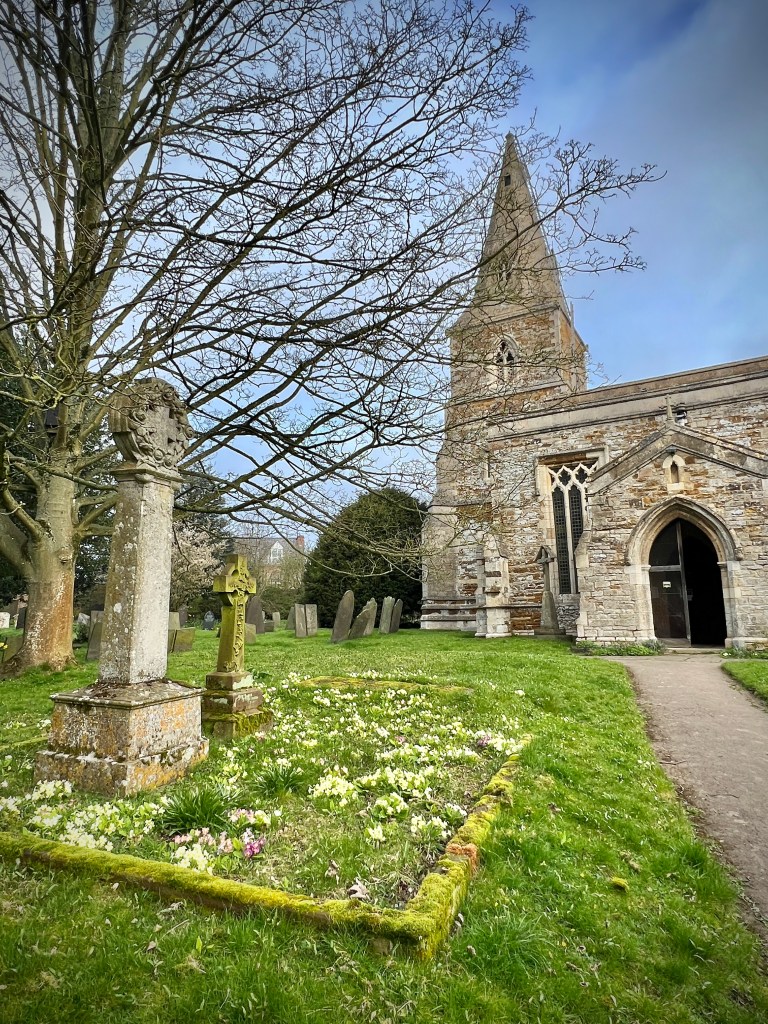
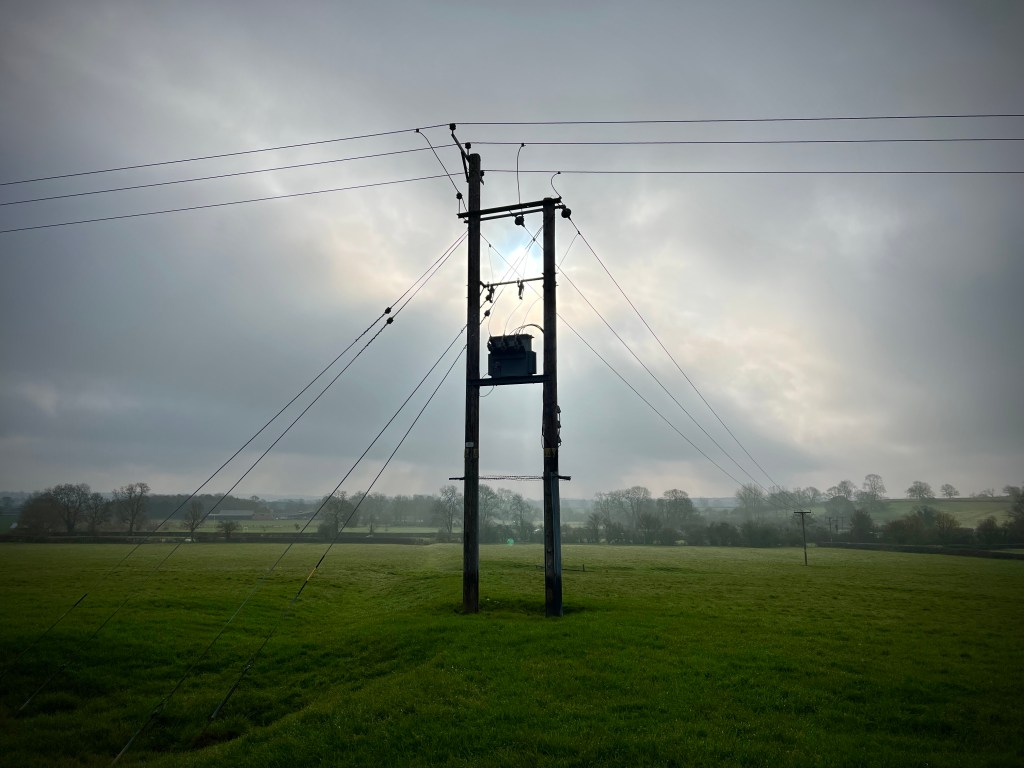
…is occasionally you get mornings like this in the way to the station…


Ever since we moved into our house two years ago, we’ve had uninvited house guests staying all year round. From the roof space about our bedroom comes the frequent scratching, squeaking, squabbling and, sometimes, beatboxing of a pair of starlings.
Our relationship with them swings from care and amusement to annoyance and, very occasionally, strong avicidal thoughts. They like to slide down the sloping sides of the loft floor and get into fights with their neighbours, they occasionally like to run around the loft itself (in the pitch blackness) and they sit in the tree opposite their nest hole impersonating all manner of other birds.
They also bring up their broods just above our sleeping space. Just as the chicks first hatch, we hear very faint squeaking, barely audible without straining to hear. However, after very few weeks this turns into loud and rowdy cacophony of harsh rasping from countless near-fledglings. For a week or so in June we are woken way before sunrise each day by the feathery idiots and their offspring starting their day like hyperactive gremlins.
When they eventually do leave us in peace and fly the nest, the chicks invade our garden, causing more general disturbance as they endlessly beg their parents for food and fight with each other and their other starling friends.
Once they have left the next they do leave behind a bit of a mess in the eaves of the house but we tolerate it for the entertainment they give us. However, thinking our human guests would not appreciate the same treatment we get, we decided to block up another hole above our spare room. We then installed a starling nest box just below the former entrance. So far they have completely ignored the luxury new home and, instead, the pair decided to start a turf war with our bedroom starlings before trying a new spot above my study.
This post wasn’t meant to be about our idiot lodgers but their foreign friends who visit the UK every year. I do like to seek out murmurations, where the starlings migrating to the country each winter form huge flocks and perform aerial ballets at dusk. We found one earlier this winter a few miles away near to Summer Leys Nature Reserve but haven’t really looked since.
Over the couple of weeks, however, when I’ve been out for a run after work I’ve been seeing growing numbers of starlings around the village. They started as small flocks but very recently they have turned into much larger congregations swirling over the houses. Last night, deciding against a run, we walked up the gradual hill in the village to seek the murmuration out and the video and photos below are the result…


I really can’t be cross with our house starlings when their cousins provide these spectaculars…but we might just be away on holiday this year at the peak of their rowdiness.

