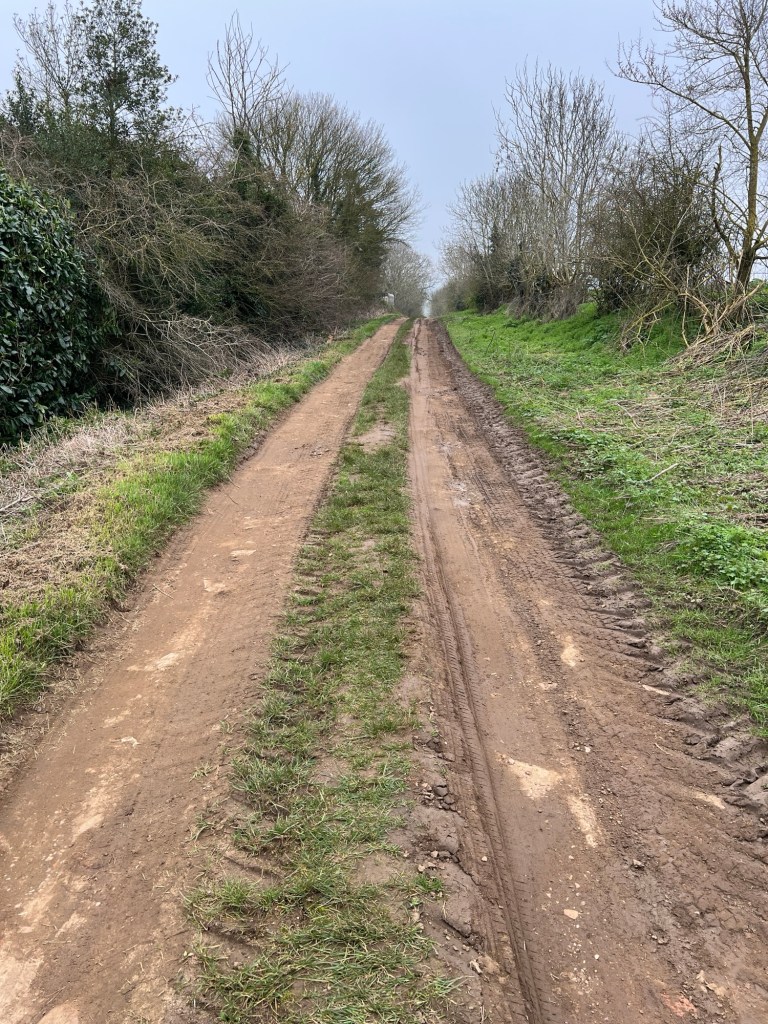
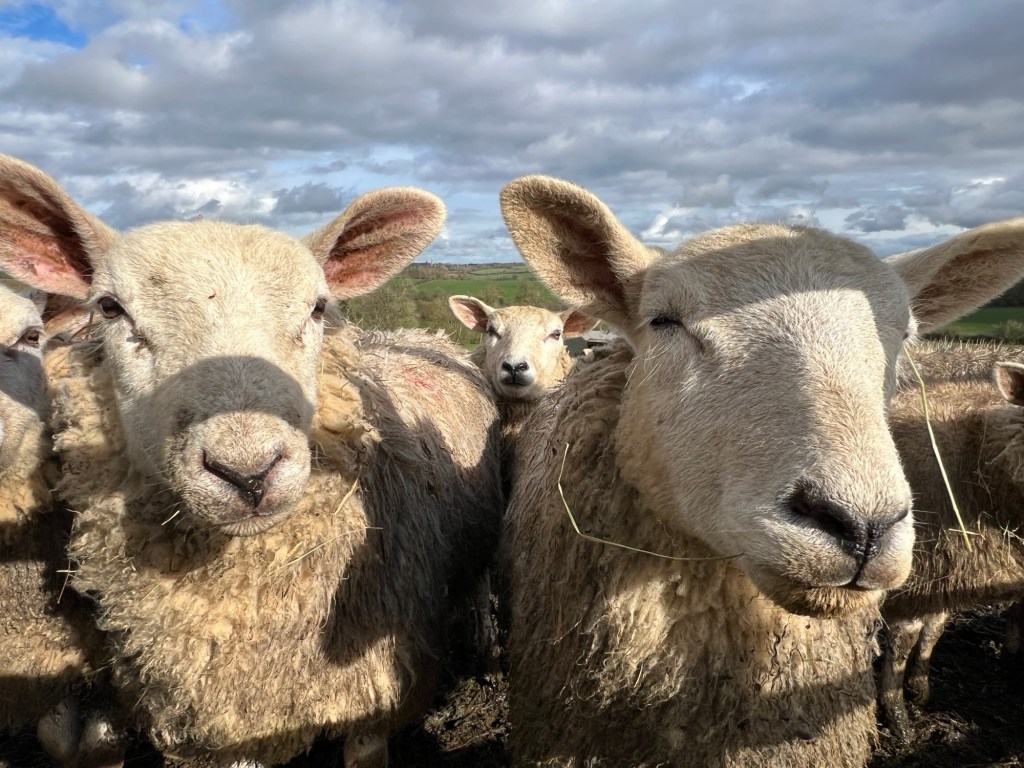
Despite leaving January behind and spring bulbs starting to break cover, today really does feel like the depths of winter. There may be no frost or snow but the low cloud gloominess and a brisk chilling wind make being outside particularly unpleasant; and that’s before the afternoon rain arrives.
I often find February to be the month where I really struggle with the dark days and the seemingly endless wait for spring. I’m hoping with more exercise, I’ll be able to avoid the worst of it. We might now be a long way from Christmas but I feel this is still a time for bringing both light and coziness into the house while we wait for the light to return.
We’ve just got back from a two-night stay in North Norfolk. This is one of our favourite places for a winter break with the wildlife along the coast some of the best you can find in what can a bleak season in England.
The over-wintering birdlife is our usual focus for our days out and this visit was no different. However, a change of plan gave us some spare time at the end of the second day and we took the long way back to our lovely rental cottage in the village of Blakeney. Rather than sticking to the coast road we headed a little inland and drove slowly along the single-track roads. The landscape here, back from the marshland coast, is of rolling arable land with a mixture of unfenced fields and others surrounded by high, thick hedging. In winter, these fields are either starting to show the first green shoots of this year’s crops or still lying to bare soil. Some of the fields without the early growing crops have been cleared of sugar beat or have been used to house free-range pigs.
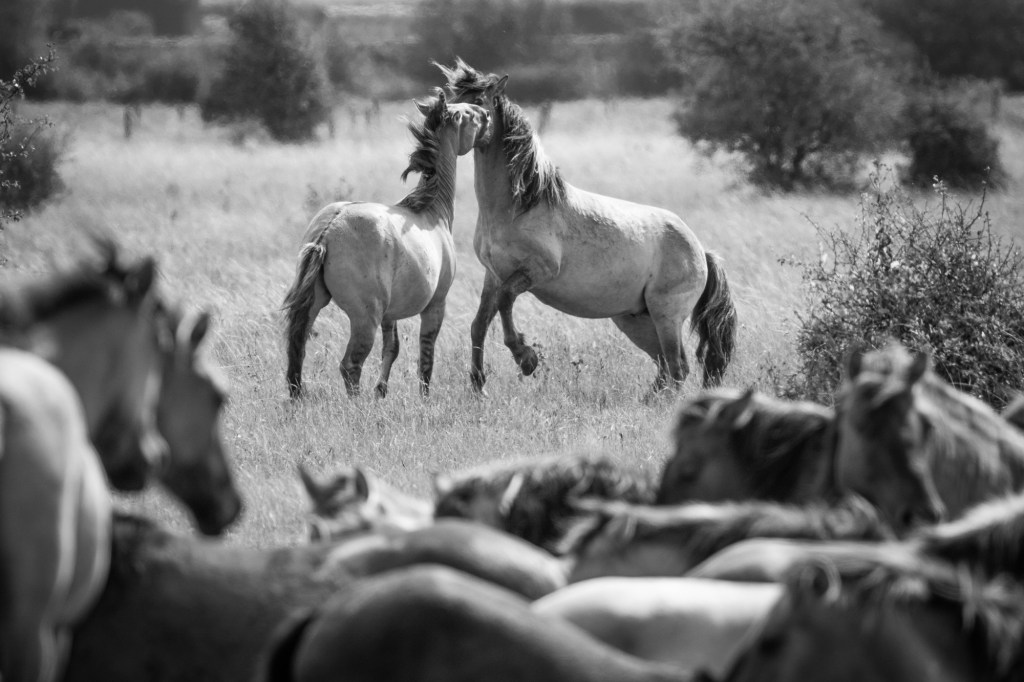
As we made our way along the narrow lanes, we stopped at field gateways or gaps in hedges to scan the land with our binoculars to check for wildlife. We almost immediately found a hare and as we progressed onwards we found more and more. Sometimes there was just a solitary hare sitting at the field edge but on other occasions there were pairs, either sitting close to each other nibbling on those fresh shoots or, in a few cases, starting to slowly chase each other across the open ground. This was perhaps the first signs of pairs coming together to breed, but it seemed a long way off the chasing and ‘boxing’ of the mad march hares.
Also out in the fields we increasingly saw groups of deer as the light began to fail. We saw three species out there; the native roe and two imported species; muntjac and Chinese water deer. Most of the deer were too far away to photograph by one water deer stayed calmly close-by as we stopped the car to take a look.
In all, all we must have seen upwards of 40 hares in our slow drive back, over the course of an hour or so. This really highlighted just how rich in mammal life North Norfolk is as well as being home to some much bird life.
As we were about to finish our little driving safari we could hear a few geese nearby. We drove around for a few minutes unable to find them. Just as we were about to give up, we came to a muddy track alongside a hedge behind which we thought we cold hear them. As we came to a gap in the hedge, we were given a view of a huge flock of pink-footed geese, numbering in the thousands, feeding on a sugar beet field. We arrived just in time to see them lift from their daytime feeding and head off to the safety of their coastal roost out on the mud of The Wash. For me, there is little that stirs my soul more than a mass of wintering geese calling as they fly into the night.
A two week holiday in Shetland had just about everything I could ask for from a trip within the British Isles: spectacular wildlife on the ground, in the air and out at sea, distant views over stunning scenery, and human history around every corner. Having a longing to spend time on islands, a liking for ferries and a fasciation for abandoned villages, as well as a constant struggle to keep my mind from wandering to nature, Shetland, could just have been the perfect holiday location for me.
I’ve long been wanting to visit Shetland. Ever since starting an odyssey of Scottish Islands 16 years ago, this most northerly archipelago has been calling to me. After having travelled to so many of the Inner and Outer Hebrides as well as it’s southern neighbours in Orkney, Shetland was the last of the major groups of Scottish islands I had to visit. So, after planning the trip for well over a year, and trying to contain my excitement for just as long, we travelled up to these most northerly of the British Isles for a mid-summer holiday in June 2025.
I have to say, it’s not the easiest of places to get to, or, at least, not the quickest, especially if travelling by car; but all good things come to those who wait (or travel far). To be honest, a love a good long road trip, so the drive to Shetland was never going to be an issue. As we made our way up from the East Midlands, we had an overnight stay in Cumbria before a leisurely drive up and across to Aberdeen to catch the overnight ferry to Lerwick, Shetland’s capital. The Northlink ferry identical twins, Hjaltland and Hrossey, are comfortable ships for the 12-hour crossing, particularly if you pay for a cabin. We spent a good while up on deck watching the Scottish land mass disappear and looking out for seabirds and marine life. While waiting for the ferry, we had earlier seen a large pod of dolphins hunting in mouth of Aberdeen Harbour, but sadly didn’t see them again from the ship.
By the time dinner had been eaten and we had a final look out over the sea, it very quickly reached bed time. The cabins are quite a cosy places to spend the night and, fortunately, the blinds in our cabin were good enough to black out most of the very light night sky, as it tends to be in June. It is also a very quick get up in the morning; with the ship docking at 7:00am, there is time for a fast breakfast and a wander up on deck as the ship passes the southern tip at Sumburgh and travels up the long, thin southern spine of the Shetland Mainland. Unfortunately, we didn’t get good views on the way into the port at Lerwick as low cloud shrouded the islands and we had only brief glimpses of the landscapes we were to become very familiar with. As we left the ferry behind us, in good hobbit-style we had second breakfast at a very good cafe (Fjarå) towards the southern end of Lerwick before heading off to our first base for our holiday.
The holiday really began as we boarded the ship but our Shetland experience started properly as we drove out of Lerwick in search of our cottage out on the western side of Mainland. For the first five nights we stayed at a fantastic modern cottage the far side of Walls. Westshore is very smart, clean, comfortable and well-equipped rental property with a contemporary style and great big windows giving wide panoramic views over a wide sweep of sea lochs and low rolling pastureland. The cottage is accessed by a rocky and slightly winding track between two gates, often dotted with dozing ewes and their lambs. The mixture of landscape, sea, wildlife and those sheep, gave a constantly shifting world outside the windows of the cottage which I could have happily sat and watched for hours on end.
After being welcomed by the owner, we unloaded our heavily-laden car and unpacked, looked at the scenery for a little while and then headed the 35 minutes back to Lerwick for a wander and to purchase provisions.
Our first couple of journeys highlighted two things which we were to remark on throughout our stay. Firstly, just how good the roads are; so much of the islands are covered by fast single carriageway (i.e. a lane in each direction) and there’s barely a pothole to be found. As you get to some of the further reaches of the islands, where roads provide access to a few smaller communities, they do narrow down to single track roads (one lane with passing places), but even in summer (we travelled just before the schools finished), there isn’t much traffic to meet on these roads.
The second thing we noted was that the weather can change from one part of the islands to another. As we travelled between our first accommodation and Lerwick, one side of the Mainland was bright and sunny while the other was under dark, dampening skies. It is around 15 miles between where we were staying at Walls and Lerwick, as the crow flies, but more like 25 miles by road. This is not far off the widest part of Mainland, which gives a good distance for the weather to change its mind. Heading between the two places, the roads meet two pronounced moorland-covered ridges, with the valley of Weisdale between (more on Weisdale later). This change in height may contribute to the differences in weather with these ridges being some of the first hills that the wind from the Atlantic meets, creating cloud as the air rises; we certainly saw this happening when we were further down to the south of Mainland. This increase in height also provides opportunities to see great distances (when the weather allows() down the spine of Shetland: at good spots on these ridges you can park at the side of the road and see the islands laid out in front of you towards the south.
Our wander around Lerwick took us through the old town, including coming across the Shetland Pride march, and down to the harbour, where a German sail training ship had docked and was attracting significant attention. Also docked were two cruise ships of different scales, the like of which we would see a few of with our subsequent stops in the capital. Despite some of the cruise ships being enormous, we didn’t come across too many of their passengers, especially away from Lerwick itself, and they never impacted on our holiday.
That afternoon, we also went to the Shetland Museum, located a little way to the north of the town centre; it’s great and gave us a very good introduction to culture and history of the islands, which we were to explore more of over the course of the next two weeks. Readers of my blog may have seen previous posts about visiting villages that had been emptied of their communities as a result of the Highland Clearances. The museum provided some detailed context to the longer history both before and after that period but also details of what life would have been like for communities during that particularly harsh period in the islands’ history. What we saw in the museum was brought to life in our travels around many parts of the islands and in particular by the ancient standing stones, the viking remains and the almost unbelievable number of abandoned houses and communities that we came across. Over the course of the trip we also visited smaller museums at Eshaness and on Unst and Fetlar; while not as polished as their larger, Lerwick counterpart, these were well worth a visit to learn more about Shetland’s past.
As we eventually drove back west for our first night in the cottage, we started to become familiar with the landscapes we would travel through over the next two weeks. There is no ‘typical’ landscape in the islands around Scotland but Shetland has similarities to many of those I have visited before, particularly its nearest large neighbour, Orkney. They share a landscape of low rolling coastal pastureland, dotted with crofts and smaller clusters of homes in hamlets and larger villages. Shetland, however, has far more of the rugged upland moor, with large areas of Mainland, Yell and Unst given over to this sparser populated, more hilly landscape. The deeply indented coastline provides both rocky high cliffs and lower rolling fields reaching down to the sea, with some stunning sandy beaches, pebbly shorelines and a small harbour almost around each corner. The variation means that the landscape seems to constantly change and in a few minutes you can have gone from the sometimes bleak and stark upland, with its dancing carpets of cotton grass, to the softer, lush green pasture along the coasts.
The first few days were spent travelling around Mainland, visiting the islands of Noss to the east and Papa Stour to the west, taking a trip down to the road-linked islands of Trondra, West Burra and East Burra, to the south of Scalloway, and a long day out to the north west of Mainland including wandering around the spectacular area of Eshaness.
The only real disappointments of the entire trip came in the first two days. Both of our pre-booked boat trips were cancelled due to poor weather. The first was a trip to the sea below the towering seabird cliffs of Noss, an island beyond Bressay to the east of Lerwick, and the second was a night-time trip to Mousa, an island to the south east of Mainland, during which we hoped to see storm petrels coming into the famous broch. Not only were the planned trips cancelled but so too were both of the rearranged trips. We didn’t let the disappointment of the cancelled boat trips dampen our spirits and on the first full day on Shetland we took a trip to walk around Noss instead, and it was perhaps the best day of the entire holiday: more of which I’ll cover in a specific blog post.
The day on Papa Stour was a particular highlight. We left the car at the quayside and took the 40 minute ferry from West Burafirth to the island. On arrival, we set off on foot along the only road, serving the few scattered homes, turned north and crossed the airstrip, and then made our way on a winding route along the west coast. The route is spectacular; like so much of the Shetland coast, this part of Papa Stour is dotted with geos (a narrow, steep-sided inlet), islets, stacks and rock arches. The walk is quite winding as you head in and out of headlands created by the geos and in the strong wind we were careful not to get too close to the edge of the coast. As we reached the northern-most part of the walk we turned onto a track for the return leg and the long-threatened rain began. It was heavy but short-lived; we got drenched but with the return of the sun and the strong wind, most of our clothes were drying by the time we got back to the harbour. Like many of the other harbours where the ferries dock, there was a little terminal building with a waiting room and toilets, as well as hot drinks, souvenirs and tablet (a very nice Scottish fudge-like sweet) paid on an honesty box basis. After making use of the facilities we had a lovely sit in the warm sun in a little sheltered spot to give our legs a rest after the rugged eight mile walk.
I can’t mention an ‘honesty box’ without highlighting the cake fridges of Shetland. We have come across them elsewhere, especially in Harris, but the number and variety of these little unstaffed shops was particularly great in Shetland. We bought cakes, jam and fresh berries from the various ‘cake fridges,’, we stopped at.
A day spent out on the far north-west of Mainland, eventually stopping at Eshaness was also one to remember. It was another day of grand Shetland coastal landscapes with high cliffs, rocky beaches and off-shore islands. Eshaness itself is worth a wander around once you get to the lighthouse with views that go on for miles, across the green pasture, along the rugged coastline and out to sea. On the way there we stopped at Mavis Grind, a narrow isthmus linking the Mainland to what would be a separate island but for this narrow 90 metre piece of land. It is said you can through a rock between the water on either side, from the Atlantic to the North Sea, but I’m not sure my throwing arm is that good. On the way back we stopped at Stennes Beach to the south to sea Dore Holm, out outlying island with a huge natural arch; we also stopped at Frankie’s Fish & Chips shop, which was great!
Having been to many Scottish Islands at this time of year, we knew that we shouldn’t expect wall-to-wall sunshine and Mediterranean temperatures, and the cancellation of the boat trips is just part and parcel of holidays on the coasts of the UK. However, over the course of the two weeks, the weather we had was probably 40% sunny, 40% cloudy and 20% rainy and, of course, 90% windy. While it was rarely warm when we were out in the open, typically 12 to 14 degrees celsius, the mid-summer sun was strong enough to make it almost hot in sheltered spots. There were actually only a couple of days over the whole two weeks when the rain altered or limited our plans and the wind did get strong enough on one of our trips to Hermaness to make us retreat away from the cliffs to reduce the risk of being blown over the edge. Overall, therefore, the weather was what we expected for a trip this far north.
Our five nights at Westshore were followed by a single night at the Sumburgh Hotel, at the very far south of Mainland. This gave us a chance to visit some of the main sites south of Lerwick including St Ninian’s Isle, Loch Spiggie, the amazing historical site of Jarlshof and, of course, Sumburgh Head itself. We visited the rocky outcrop, with its lighthouse, twice over 24 hours, firstly in the afternoon and then first thing in the morning before breakfast. We went, in particular, in search of close views of puffins and while during the afternoon visit we found comparatively few, the dawn visit presented us with good numbers in the perfect morning light. However, Sumburgh isn’t just all about puffins. This southern-most tip of Mainland has great 360 degree views including out towards Fair Isle, which is visible to the south. There are birds other than puffins too.
The birdlife was one of the main reasons for going to Shetland and weren’t disappointed. Yes, puffins are plentiful and fairly easy to find but so is an array of other birds which make the island a great place to wander around with a pair of binoculars. The seabirds dominate the islands with the cliffs and off-shore islands providing nesting for large numbers. There’s also a large supporting cast of wetland birds, waders and gull as well as the ever menacing skuas and other birds typical of the north in the UK. I’ll do another post to provide more details.
Our final accommodation of the trip was a seven-night stay in a renovated croft cottage on the island of Unst at the very top of Shetland; in fact, it’s the most northerly populated island in the British Isles. After breakfast at Sumburgh, we headed back to Lerwick to replenish our stocks and then took two ferries, first between Mainland and Yell, and then between Yell and Unst.
Car-based travel around Shetland is very easy, with the good roads I’ve already mentioned and frequent ferry crossings on the main routes between Mainland, Yell and Unst. The prices for the ferries are also amazingly cheap, in my view. Prices are £2.80 per passenger for a return ticket, including the ferries to Yell, Bressay, Fetlar and Papa Stour we took. Cars are more expensive, at £16.50 return but even this seems cheap for the longer crossings. What did confuse us at the time was that you don’t seem to pay for the ferry between Yell and Unst. We made that crossing four times (two return trips) and no one ever took payment. On returning home, we checked and it appears that it is indeed a free ferry, possibly to reduce the burden of travel costs for locals.
With the good roads, and frequent ferries on the main routes, it’s also quite quick to get from north to south, especially if you time it right with the ferry crossings. Sumburgh Head in the far south to the ferry crossing to Yell in the north of Mainland is little over an hour while Yell takes around 25 minutes to cross by car, as does Unst. So, allowing for ferries, you can travel the full length of Shetland by car in significantly less than three hours.
The general advice is book the ferry crossings, even for the more frequent routes for Yell and Unst, but definitely for the less frequent crossings, say to Fetlar and Papa Stour. However, we often turned up early for our booked ferry and were waved on by the crews with the ferries having space to spare. The ferries on the main routes, including to Yell, Unst, Fetlar and Bressay are full ‘drive-through’ vessels where you drive forwards both getting on and off them. However, on return from Fetlar, I did have to reverse onto the ferry to enable it to arrive back into Unst pointing in the right direction. To be fair, it wasn’t a difficult manoeuvre, partly helped by there only being three cars on that particular crossing. If the idea of reversing on or off a ferry puts you off, then you might want to leave the car behind if you go to Fetlar or Foula, as you have no choice but to reverse onto that ferry. However, that is largely a moot point as there’s little point in taking the car to those islands if you’re on a day trip.
On reaching Unst, we had a very convenient 10 minute drive to the cottage on the west coast of the island. Like Westshore, the cottage was accessed first by a single track road, then a private track with two gates to pass through. The second gate for was a little fenced corral for the car, and very soon we could see why it was a good thing to park in there. The cottage was in the middle of a sheep field, and while the front and side of the house, as well as the parking space, we inside a fence, the back of the house wasn’t; we got very used to finding lambs standing on the low stone wall at the back, looking into the lounge. I suspect the car would have become a convenient rubbing post for the local sheep without the protection of the fence. The cottage itself was very clean, comfortable and cosy, and had everything we needed for a week’s stay. Being an old croft cottage, like others we have stayed in previously, it has relatively small windows, unlike Westshore the previous week, which meant that, despite arguably having even better views, we didn’t get the benefit of them when inside the cottage.
Our week on Unst, like the previous week, included nature, landscapes and some history with highlights including two trips to the amazing Hermaness nature reserve, day trips to Fetlar and Yell, and a good walk in the south east of the island to some historical sites. Some of these I’ll also write about in separate posts. Highlights also included visiting the most northerly pub and shop in the UK and seeing the site of the first space port being built in the UK (although there isn’t a visitor centre for it, yet).
As long as you don’t mind a long walk out to the cliffs across open moorland (but mostly on a boardwalk), Hermaness is a must for anyone with a liking for seabirds and maritime scenery, and we simply had to go twice! The gannet cliffs are enormous and you can get close enough for some very nice photographs, while being careful not to disturb them or get blown off the top. The nature reserve also provides a sight of the most northerly point of the British Isles, the island of Out Stack, just north of Muckle Flugga with is lighthouse.
A trip to Fetlar is also very much worth it with a chance to find red-necked phalaropes (which we did fleetingly) and yet more lovely scenery. We also had one of the best views of an otter there, with one munching on a massive crab we saw it bring to shore. As I have put in another post, we had some great otter sightings, with Unst being the most productive in our search for them, contrary to the view we had heard that this was the least promising place to look.
During our stay, I spent the quiet evenings reading a book providing a fictionalised account of the Weisdale Evictions; the clearing of communities from villages in that valley between the two ridges dissecting the widest part of Mainland. As I have written on my blog a few times, I find this part of Scottish history fascinating and I’m drawn to the villages abandoned either through the Highland Clearances or later as people found living in these places increasingly impossible. Shetland is covered with abandoned homes and settlements like nowhere else I’ve seen and I simply had to take a walk out to spend time amongst then ruined walls of these deserted communities. We did a walk out to Colverdale on the south-east coast of Unst. Starting at Hannigarth, we walked along Sandwick beach and then on through the Viking history of Framgord and on to Colverdale, with tumbled-down houses scattered across a wide area criss-crossed by field walls and paths. The sense of communities lost was almost tangible under the dark clouds spreading dampness and gloom across the now silent landscape.
After a busy week on Unst, we set off early in the morning to catch the ferry to Yell for the last time, crossed the island and caught the ferry back to the Mainland before driving all the way back to Sumburgh. With the ferry back to Aberdeen not until late afternoon, we had chance for a final bit of puffin watching and then a slow drive up the coast, including a beach walk. The ferry crossing was a little more rough on the way home but not uncomfortably so and despite the gloom we had good views of Fair Isle as we passed it a couple of hours into the crossing and then the coast of Orkney as we stopped there very late into the evening. As we woke the next morning, not long before the ferry docked, the trip came to an end, except for the long seven hour drive back southward.
It took me a long time to write this post; partly because it’s so difficult to sum up those two weeks in just one go. It really deserves far more and I plan, even more than six months later, to write additional posts to ensure I do it, even slightly, some justice.
This was almost without doubt the best trip I’ve had in the UK. That in part was due to having the time over two weeks to spend travelling in a more relaxed way than a single week trip normally allows for. However, the main reason was Shetland itself – it’s spectacular in every way – it is an absolute must for another visit.
We’ve just done our hour taking part in this years Big Garden Birdwatch and we recorded quite a good list of birds.
We get a lot of different birds in and above the garden and I’ve record 65 species, seen or heard from the garden since we moved here nearly five years ago. Obviously, we were never going to record that many in just an hour but a total of 14 species in those 60 minutes is quite good, I think.
Our list is okay included the following:
Blackbird – 2 individuals
Blackcap – 1
Blue tit – 4
Chaffinch – 1
Coal tit – 2
Dunnock – 3
Goldfinch – 4
Great spotted woodpecker – 2
Great tit – 5
House sparrow – 6
Jackdaw – 4
Robin – 1
Starling – 2
Wood pigeon – 4
Despite such a good list, we missed some of our regulars including greenfinch and long-tailed tits. We also saw ravens and a red kite flying overhead but birds only count if they land in the garden. We’ve also had a grey wagtail in the garden several times recently and sometimes get a brambling at this time of year but sadly no sign of them today.
When we entered our data on the website, well over 2 million over entries had been made, which makes this a huge citizen science event. In this time of divisive politics and social discord, it’s quite heartening that so many people put aside an hour to join in something so positive.
As we pass through the latter half of January and approach early February we are in the coldest weeks of the year. The first few days of next month mark Imbolc, the Celtic festival celebrating mid-winter and the slowly returning daylight. Tuesday already seemed to feel like the light is returning at pace with a bright sun and blue sky dotted with white fluffy clouds. Those clouds were being pushed rapidly by a strong southerly wind which brought warmer air that reached towards double digit temperatures. The birds seemed to be enjoying it with buzzards and red kites playing in the breeze and parties of rooks and jackdaws feeding in the fields.
This was all in stark contrast to the weather a couple of weeks ago when we had a light covering of snow (others not far away had a lot more). The weather then seemed fitting for winter and even thigh snow isn’t something we see that often. During some recent winters we have barely seen a snow flake let alone have a covering.
As I write, a couple of days later, we are back into the wet and windy kind of winter, a continuation of the autumn experience, albeit with lower temperatures. This gloom combined with the short days, doesn’t make it particularly attractive to set a foot outside but as the weekend comes around, spending some time away from the house is one of the best ways to fight the mid-winter blues.
This is a usual time of year for us to spend a day out in the Fenlands of Cambridgeshire and Lincolnshire. With the sun bright over a frosty land, we headed out eastward in search of winter visitors and owls.
Our first stop was the Nene Washes, which was meant to be the main focus of the day. As we arrived the sun disappeared as low cloud and then fog enclosed the scene. This wasn’t a great start to our visit and it didn’t really get any better. Our visits over recent winters have coincided with flooding of the washes which attracts vast numbers of wintering wildfowl. Instead, today, to our surprise following a very wet autumn, there was barely anyway water at all and very few birds.
We heard very distant whooper swans and possibly a crane but as we walked along the high bund there was little to see bar a nicely perched red kite. There were also very few other people around; there’s usually a few people hanging about watching owls in the thick bushes behind the bund but today, virtually no one. It’s a significant task trying to find the amazingly well camouflaged long-eared and short-eared owls and we usually get a few pointers from those who have already found them, but with no one around, we gave up pretty quickly.
However, we bumped into a man who had just arrived from some birding sites near the ‘Deepings’ and he gave us a tip-off. With that information, we headed off in search of a bird that I have never seen before.
After about 30 minutes of driving along the long, narrow and often subsiding fenland roads, we came the spot we had been told about. In the distance was a large flock of wintering whooper swans and as we scanned through them we very quickly found the target of our search: a snow goose.
You can see the bird, third from the left on the following, very poor image taken through my scope.
I like a goose, particularly those that travel long distances to spend the winter in the UK, but snow geese shouldn’t actually be here. They are a North American and Siberian species that spend their winters on the far side of the Atlantic from us. However, they are a vagrant visitor to the UK albeit most that are seen have escaped from collections rather than being wild birds. In the case of this bird, I’m hoping it was the real wild deal given that it was amongst a flock of whoopers, which come here from the Icelandic breeding grounds.
Well, I’m going to count it as wild and therefore a genuine ‘lifer’ for me; the first I’ve seen in the wild and a great way to start the new year!
As we left the area we came across another flock of whoopers in a field very close to the road and we stopped to take a look…taking a nice video with, for me, one of the evocative sounds of winter…
Well, that went quickly didn’t it? I said something similar in the equivalent post last year but, really, 2025 has absolutely shot past and I’m not sure how we’ve got to the end of the year so quickly – surely it should be only September?
2025 was in some ways a routine one, having been settled into rural Northamptonshire for a fifth year. We have now familiar places to visit for wildlife and walks, as well as regular cycles into the countryside. We also have a pattern of more distant trips and holidays that is becoming more standard between the years, with destinations both familiar and new.
The year started in a new location in Devon, close to Hartland Point, where 2026 is now planned to finish. The wild rugged north-west Devon coast is a stunning location for any time but a stormy opening of the year was pretty wild and set a tone for some extreme weather during 2025.
We had to wait into March for our first short trip away, with another coastal stay, this time in Suffolk at Orford. I had just finished reading a book, ‘Where are the fellows who cut the hay?’ by Robert Ashton, which is set in the rural area behind the coast and is well worth some time if you want to reflect on the changes to rural communities over the last 100 years. We really liked that part of the country and plan to go back, including more visits to the nature reserves including Minsmere.
We also had a spring long weekend in Ludlow, enjoying walks from the town and down into Herefordshire and mid-Wales. Another lovely rural location with great wildlife, historic towns and villages and pleasant scenery. So nice in fact, that we may one day end up living there, if or when we choose to move on from Northamptonshire.
Out biggest trip of the year came in June with a two week holiday in Shetland. I’m still writing up blog posts for the trip but it deserves that time. I honestly think it was the best trip I’ve ever had in the UK and I’d love to spend more time there. The wildlife was spectacular, the landscapes both similar and very different to other Scottish islands, and the history was fascinating. Islands really are my ‘thing’ and Shetland is top of my list of those in the UK.
For a second year running I wasn’t able to volunteer in RSPB Ramsey Island; this time due to issues with the mainland jetty to get volunteers and visitors across. Due to the lack of clarity on whether things will be back to normal soon, I also won’t be going to a stay jn 2026. Instead, I did two days volunteering with the local BCN Wildlife Trust. I did one day cutting willow in a wetland and a second day gathering hay at the Trust’s new Strawbery Hill reserve. This built on my two visits to the site in the spring the second of which produced perhaps the loudest dawn chorus I’ve ever heard in the UK.
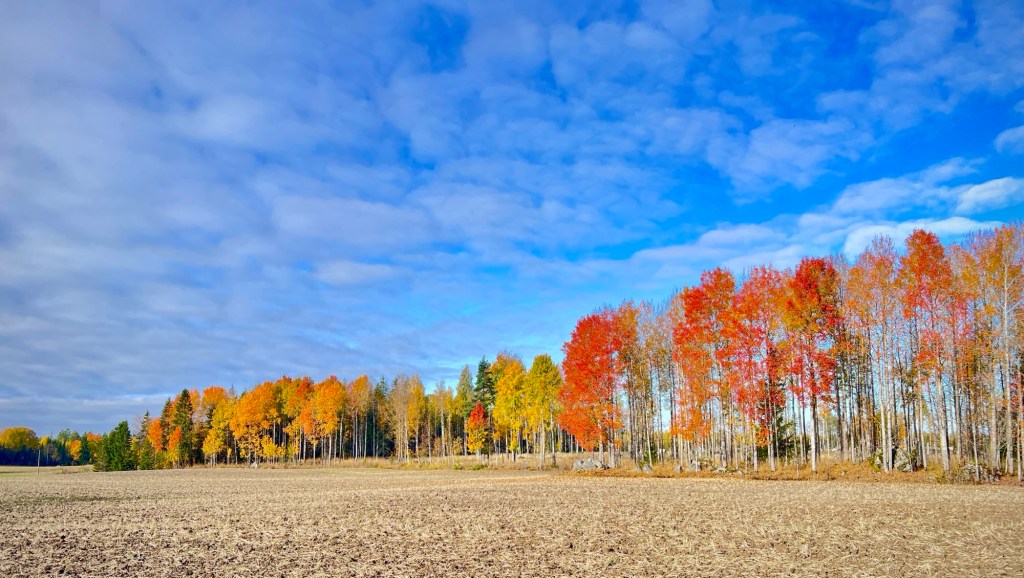
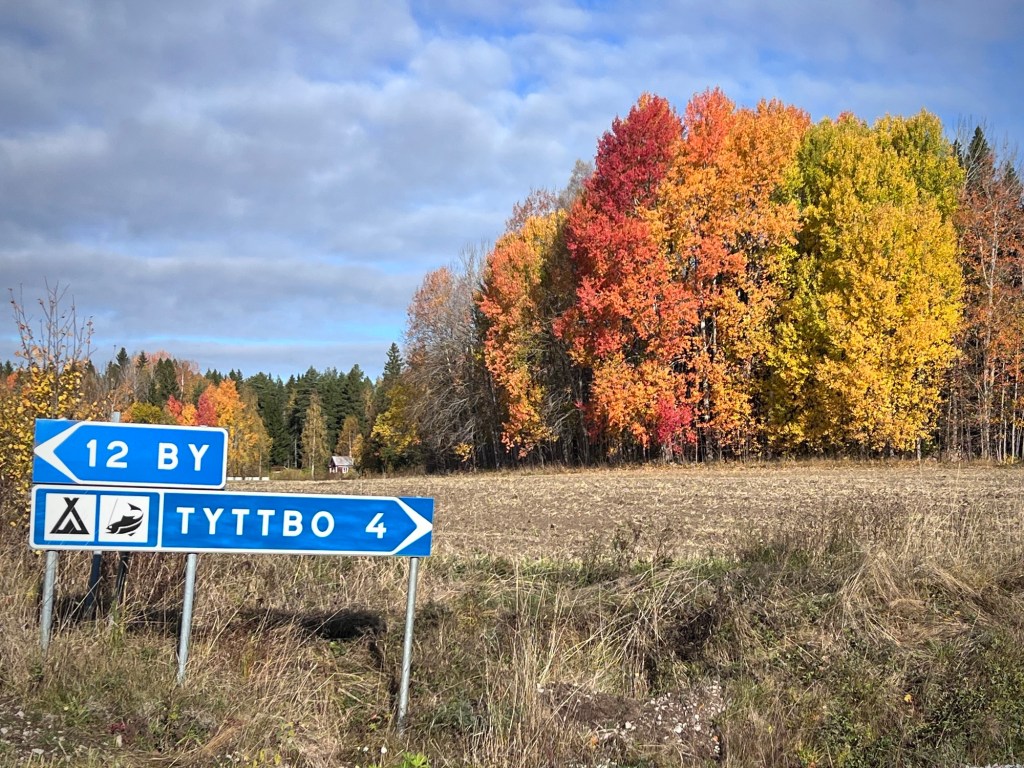
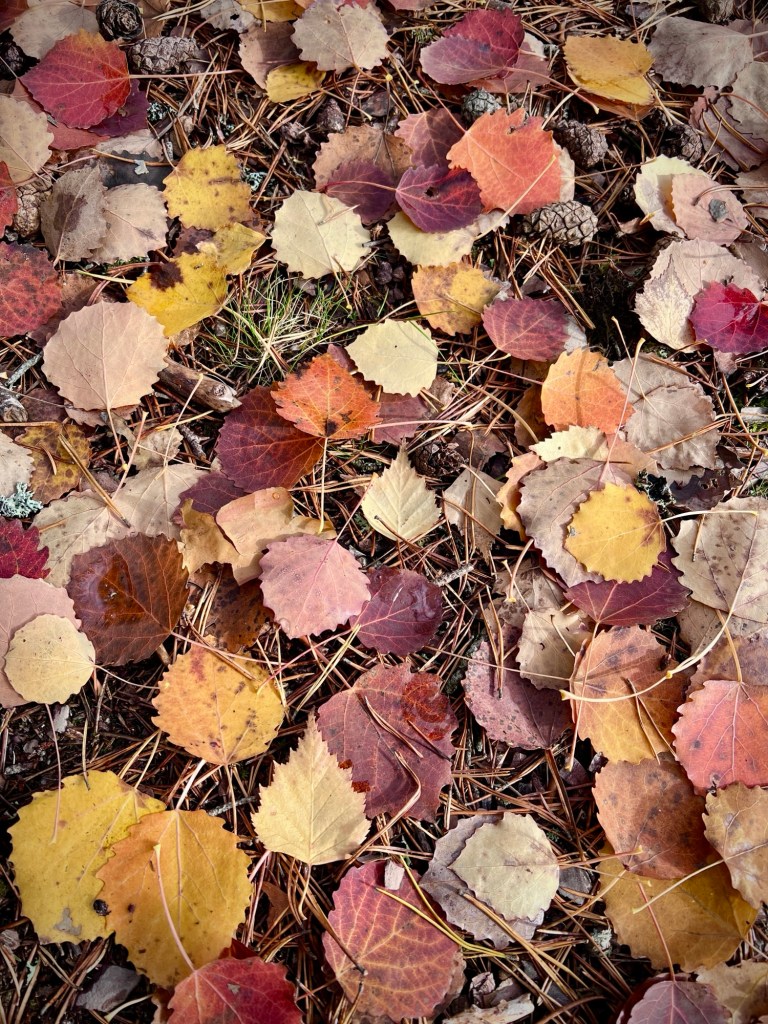
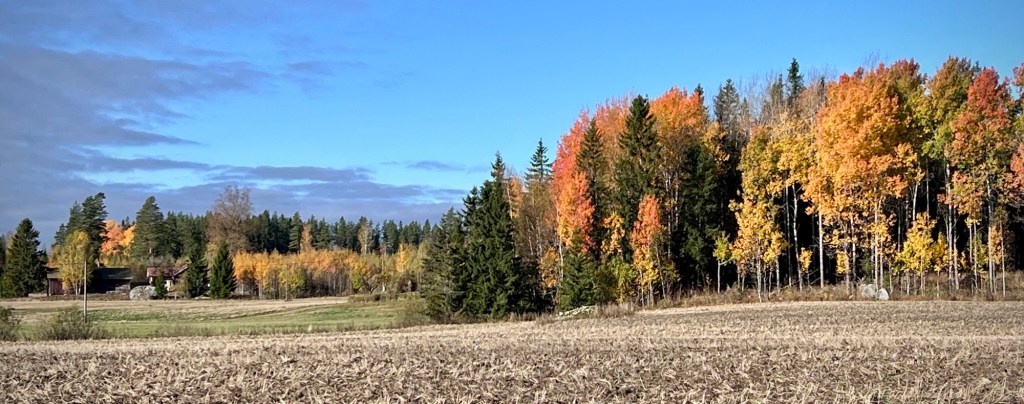
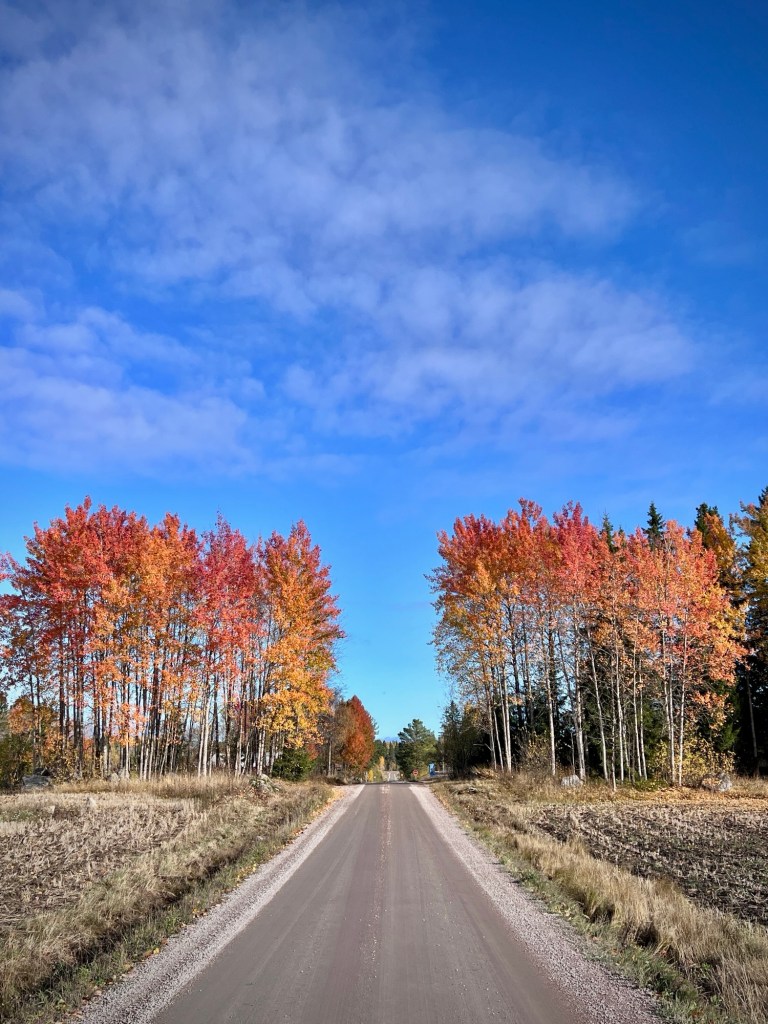
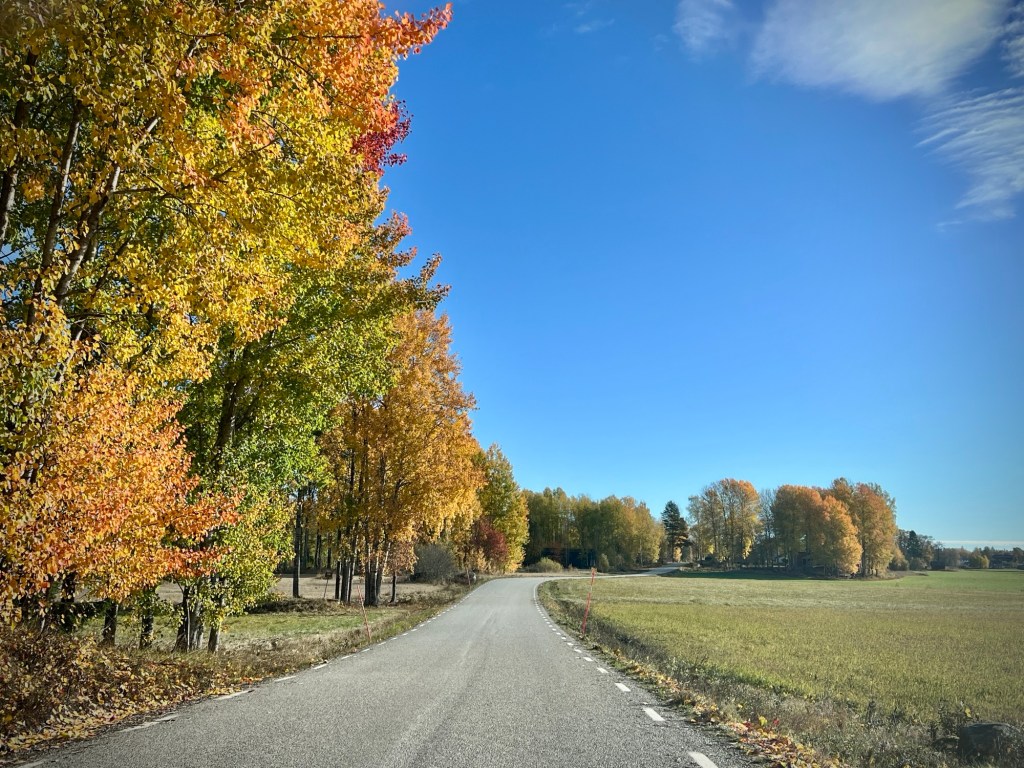
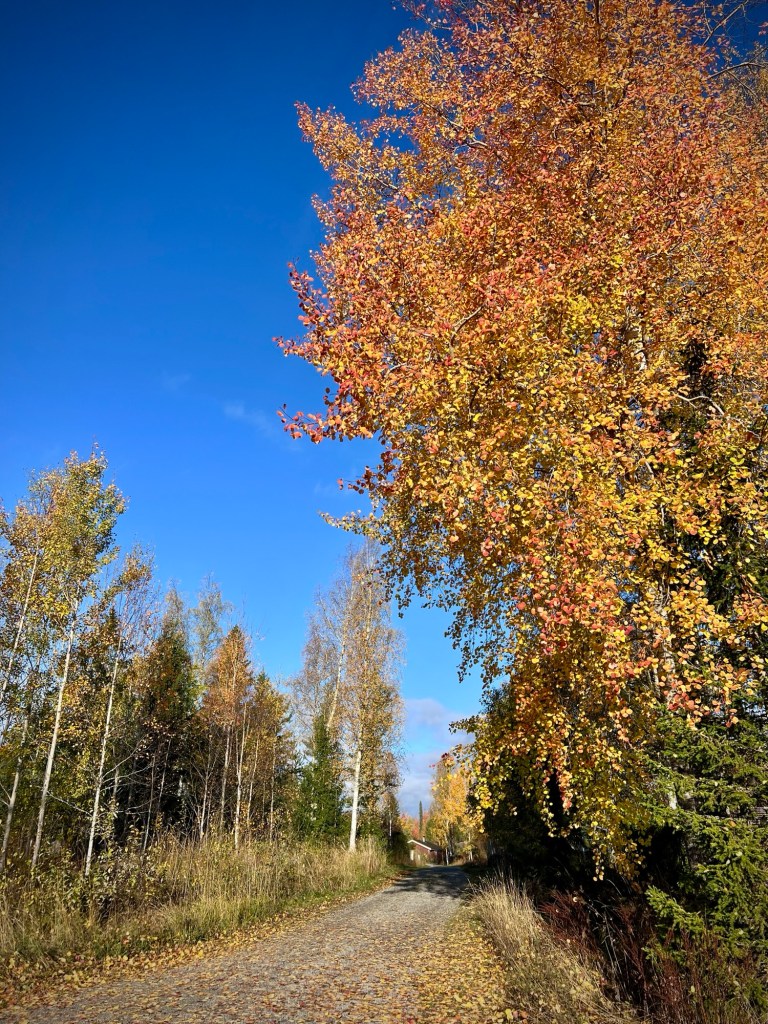
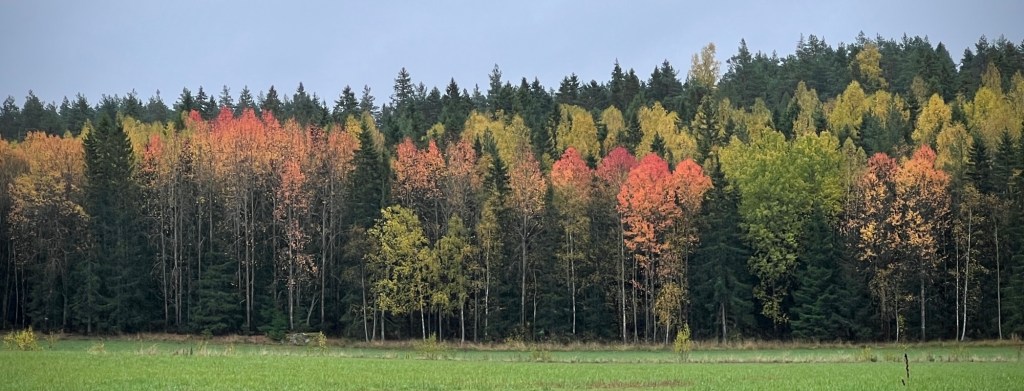
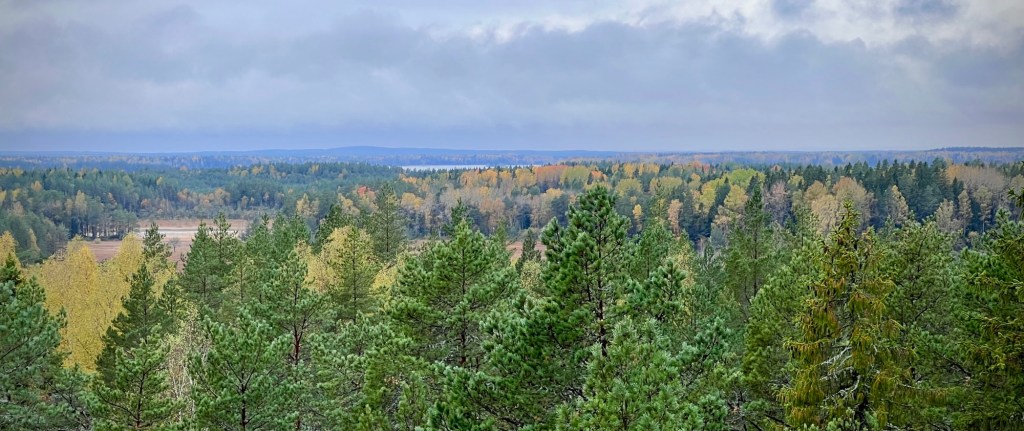
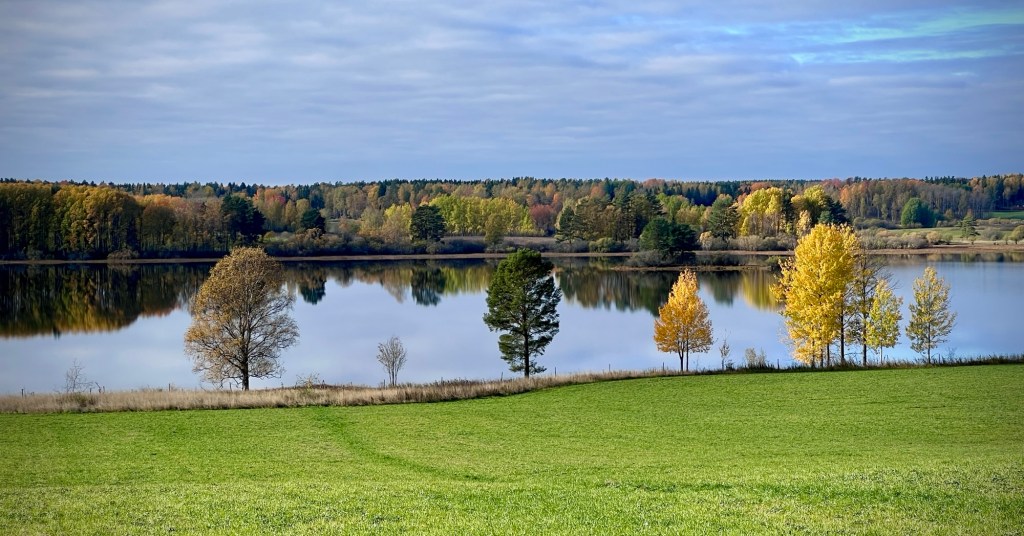
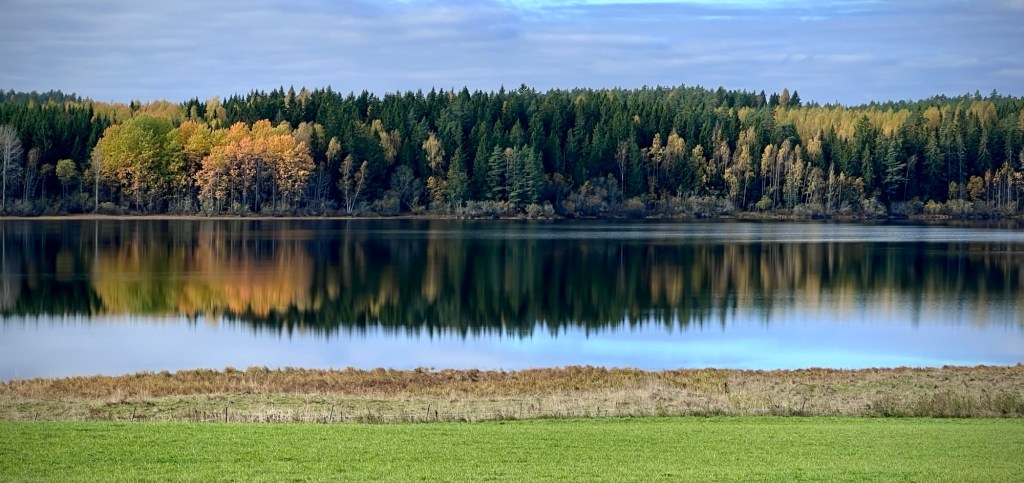
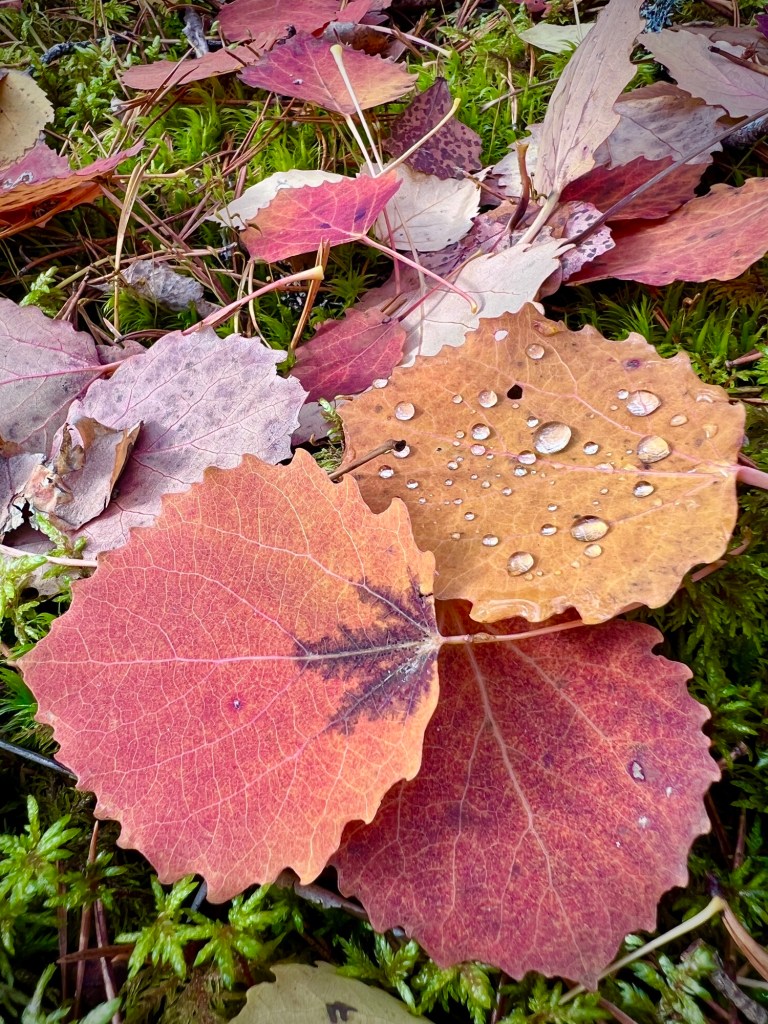
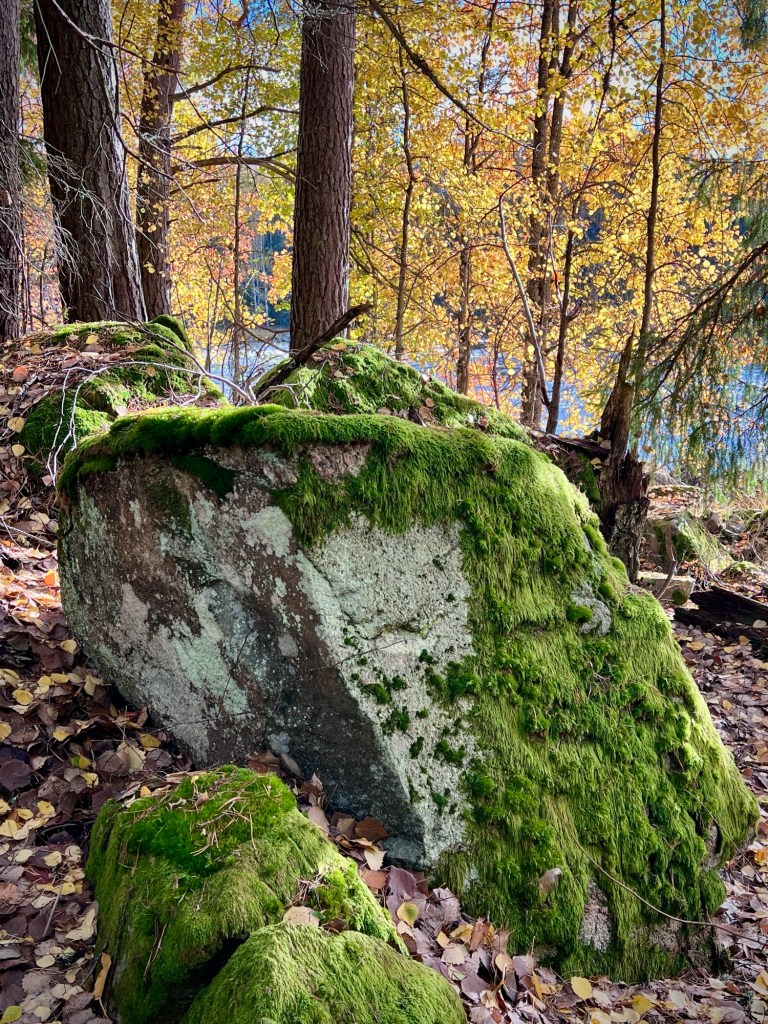
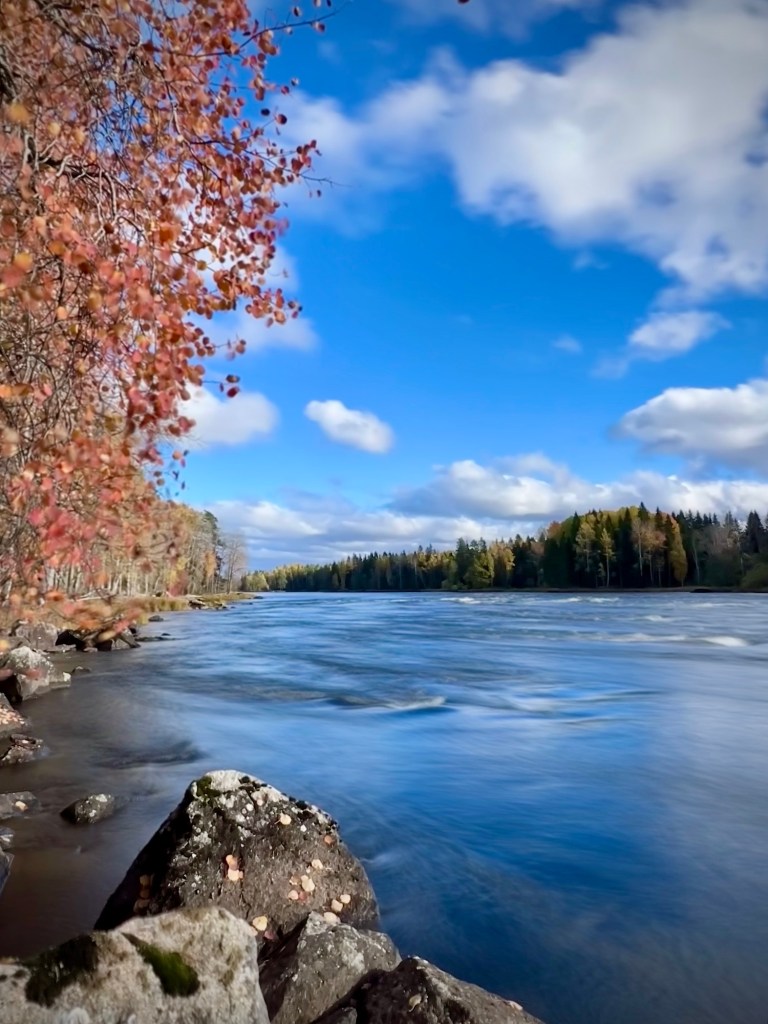
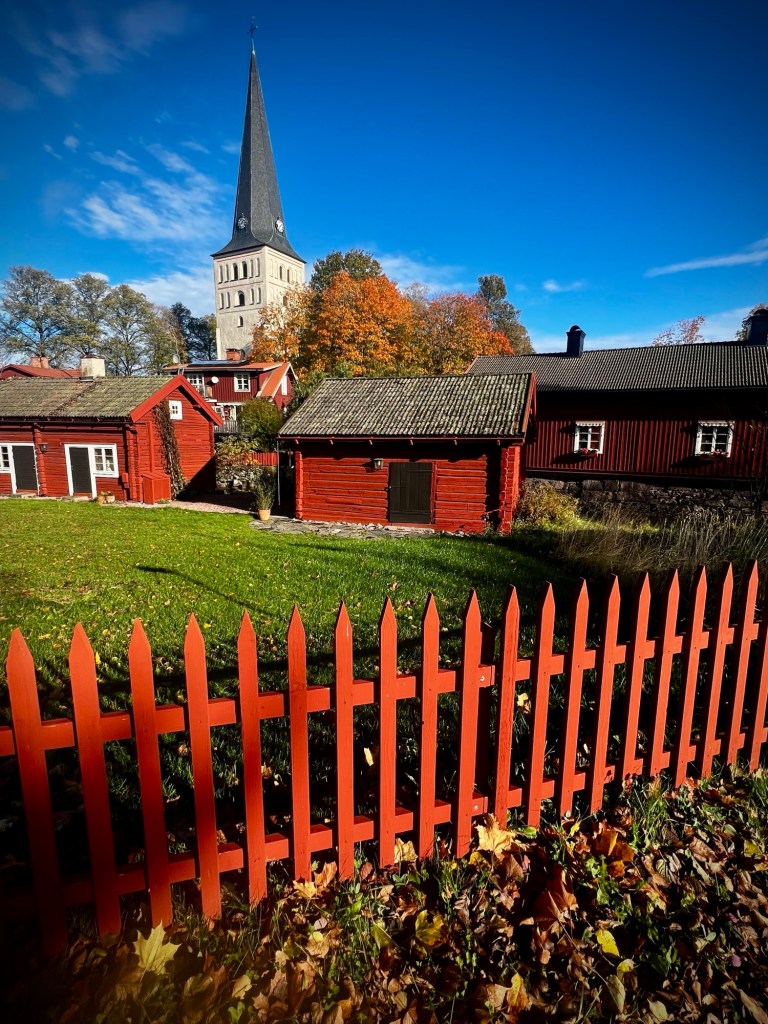
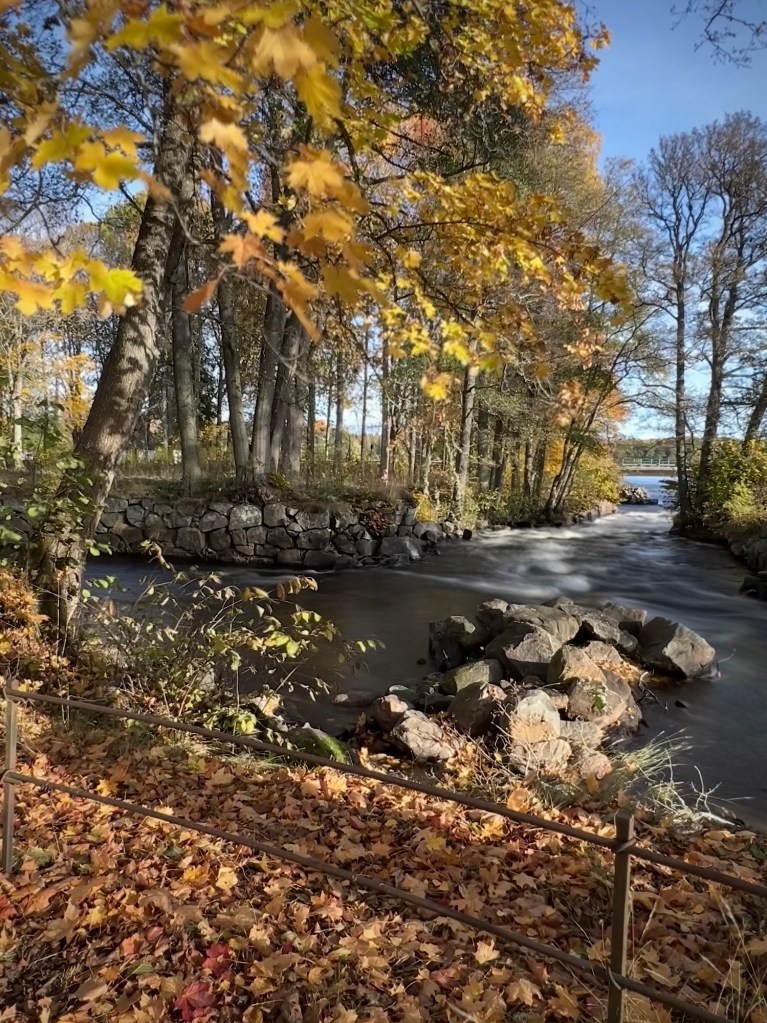
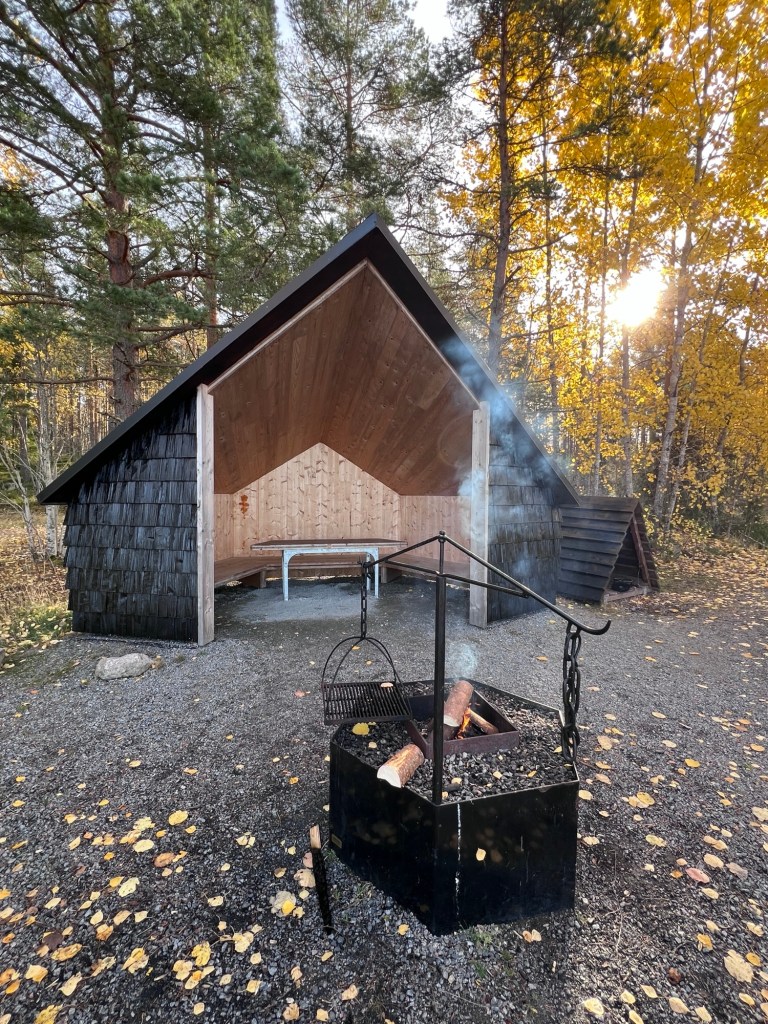
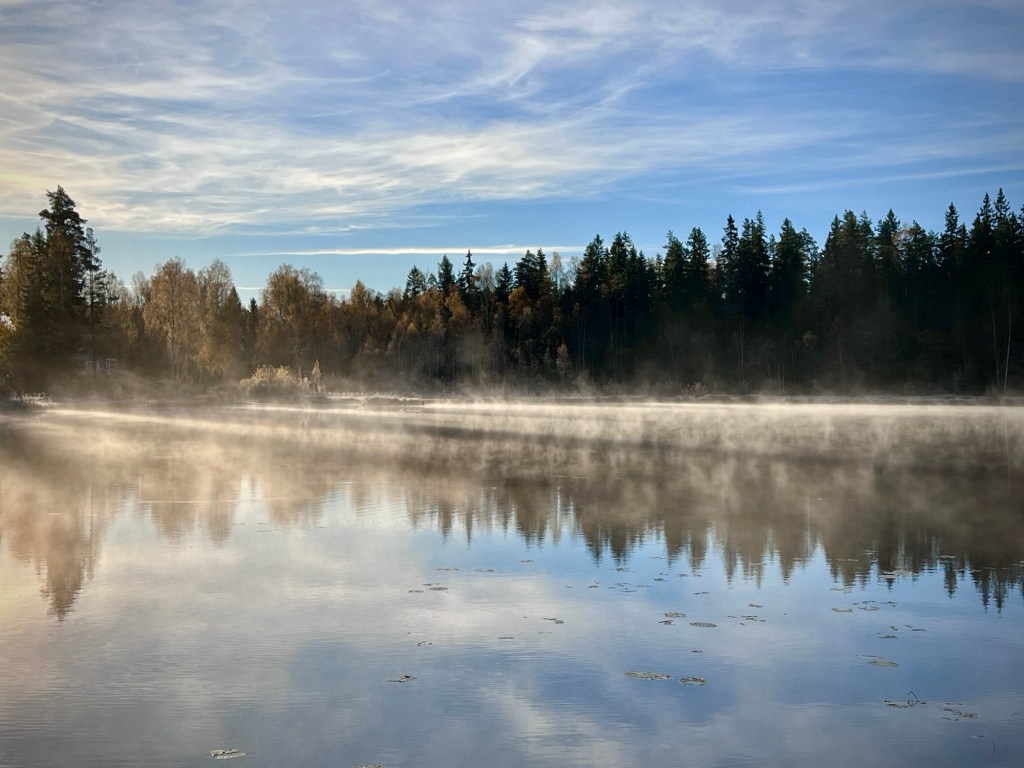
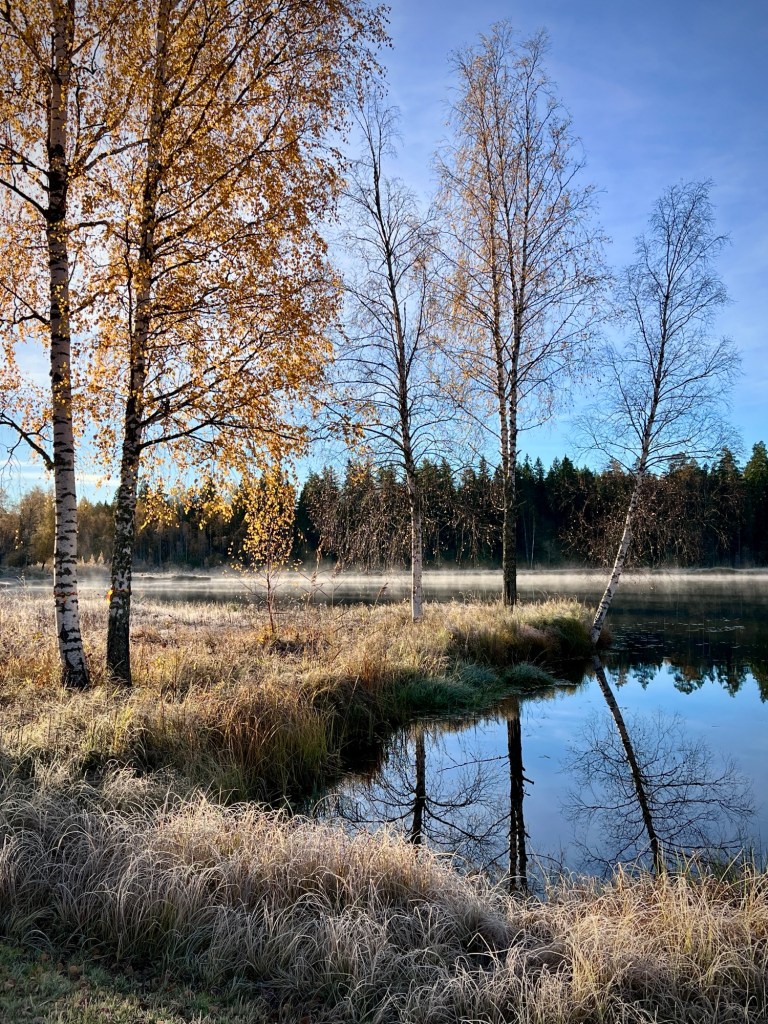
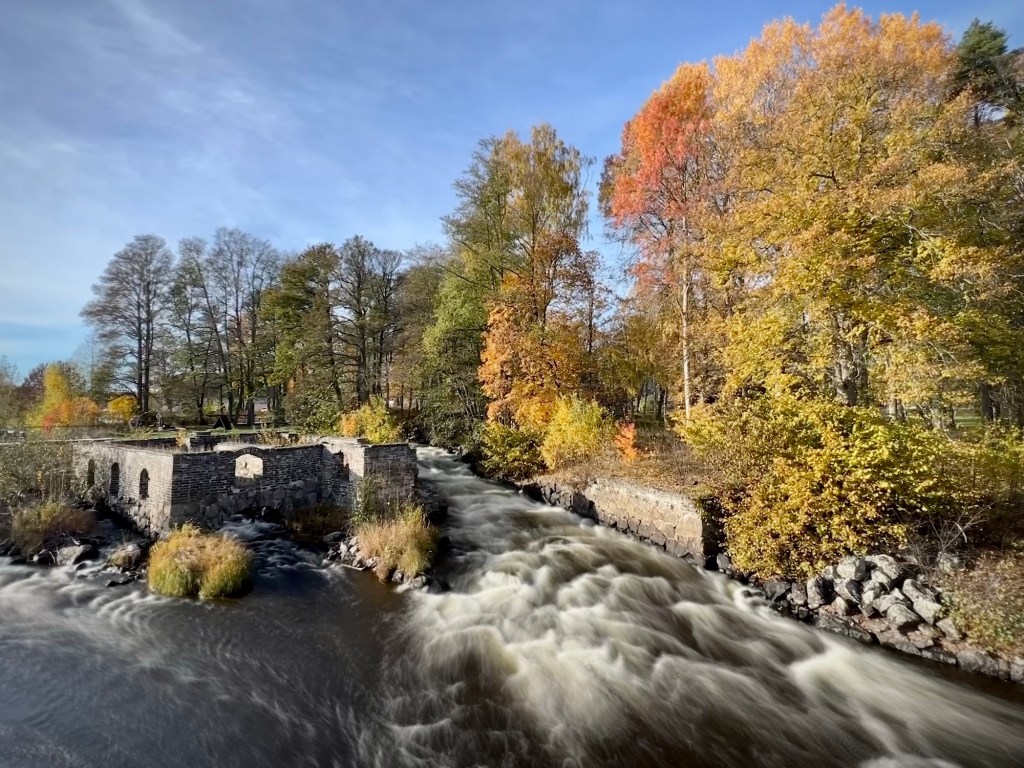
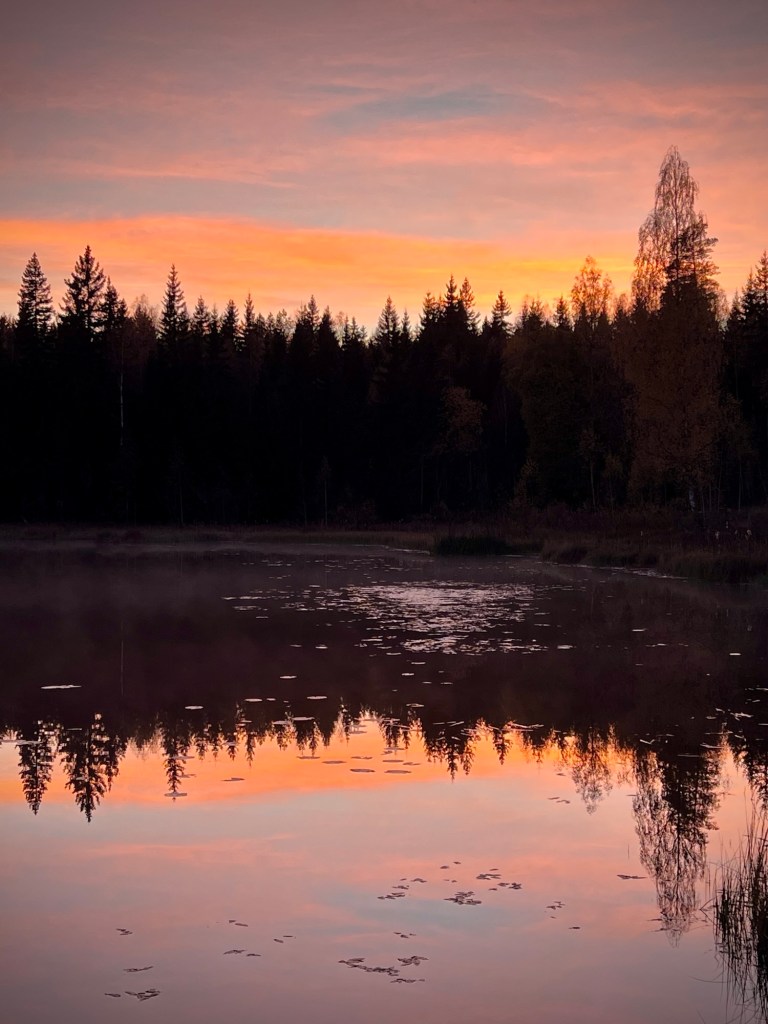
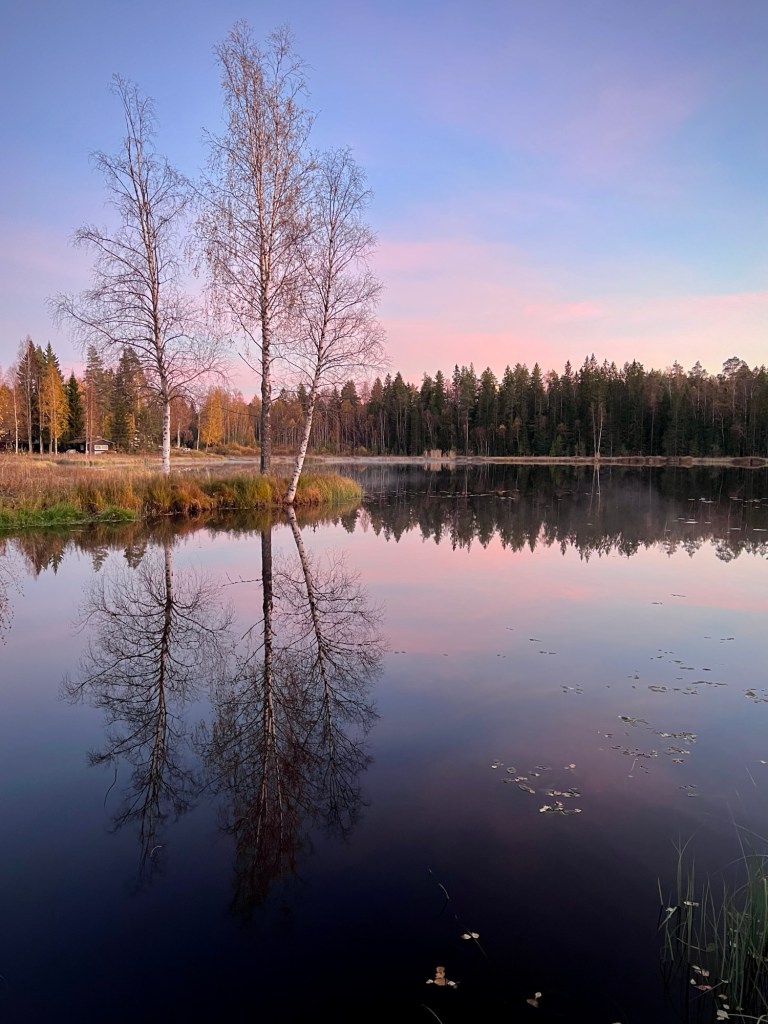
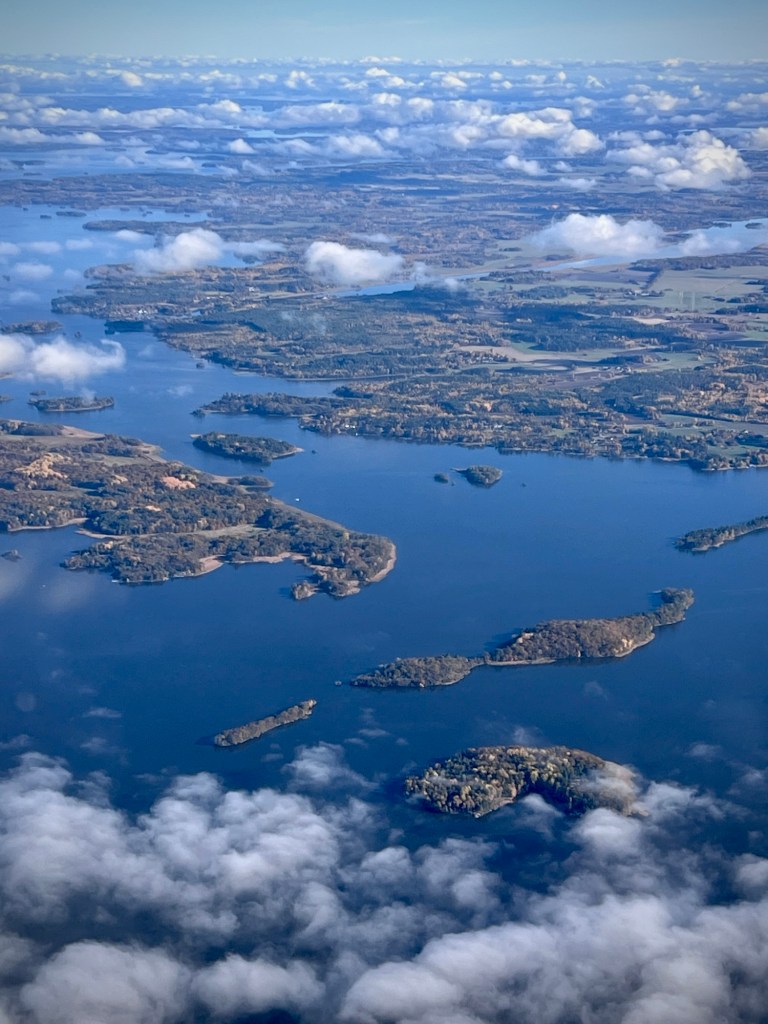
The last bigger trip of the year was our usual annual visit to central Sweden and we loved seeing the autumn colours coming out in October and gathering wild produce. We liked it so much that we’re heading there again in later October to hopefully see autumn in full swing.
Our year ended in on the west Somerset coast, which was a bit of a surprise as we thought we were staying in north east Devon. However, we enjoyed it nonetheless.
A bright, sunny but chilly few days brought to a close a year that delivered heat and drought for the spring and summer with heavy rains both in the early months and throughout autumn. It has been a year of whether extremes which we may need to become used to.
Without a big trip to far off lands in 2025, my wildlife watching was much more modest in scale. I saw 161 species of bird, not bad for me, with ruddy shelduck and Sabine’s gull the only new additions to my life list, which took me little further to my current 1,000 target. My mammal watching was particularly limited with only 21 seen, however, the warm and dry weather was great for butterflies. My recording of my butterfly sightings was probably patchy so I’m not confident how many species I saw but I suspect it was over the previous record of 14.
So I’ll end this post with some images of the year…
On a bright sunny Boxing Day afternoon, we went for a walk to a local high point in the countryside. Despite the sun, it was bitterly cold with a strong wind taking several degrees off the already low single figure temperatures.
As we got to a viewpoint we were faced with a sight of at least 16 red kites playing in the wind as it raced across the rolling fields. They soared, swooped and whirled around each other, diving towards the ground and back up to above the height of the low hills. At times they seemed to be playing with together but they also went off on their own to explore the fields before coming back into the group.
The cold wind soon drove us back into the shelter of the hedgelines and we left the kites behind, continuing to play in the wind.
Yesterday afternoon we made the relatively short journey to Coventry to visit Warwickshire Wildlife Trust’s Brandon Marsh nature reserve. We have been a few times over the last couple of years but this was the first time for a winter dusk.
We arrived mid-afternoon and wandered around the reserve’s tracks. The plentiful recent rainfall had made some paths and hides unreachable so our walk was somewhere shorter than usual.
As sunset grew closer, we walked down to the viewpoint overlooking Albert’s Reedbed and waited. The sky cleared and we had a bright sun lowering in the sky to shine light across the reeds. As we waited there was little sign of starlings; instead there was a steady stream of gulls overhead and pigeons occasionally crossing the view. After what seemed like an age, a single starling flew over the reedbed and disappeared from view.
A little while later a small flock of five started circling and after a few more minutes it started to attract more birds. The group continued to fly over our heads, slowly adding more and more starlings to its number but it then moved off and appeared to be heading away from our viewing point.
Then, from behind us a mass of birds appeared and started wheeling around the sky forming continuously shifting serpentine shapes. It suddenly dropped low over the ground and, to the sound of screaming children, rushed at head height over the gathering of watchers. This was the start of an amazing show of avian synchronised flying that was without doubt the best I’ve seen. The videos and images below speak for themselves…
It’s a while since I posted and the year has moved on a lot. The leaves are nearly all fallen from the trees and the light is decreasing rapidly. However, today could be mistaken for Spring. It’s warm(ish) with a strong sun and fluffy white clouds. Even some of the birds are tentatively singing.
It’s not to last, though, tomorrow is set for heavy rain all day and then as we go into the new week it looks almost wintry with a chance of frost.
I must do some more posts soon – finish my writing about Shetland and perhaps (a forlorn hope) another post on last year’s trip to Ecuador.