I just love a misty sunrise and this morning’s was just about perfect. Wandering down the track at the bottom of the lane I went to my usual vantage point overlooking the valley and gazed across a misty scene lit by an orange hazy sun.
This seems like spring almost at its peak with the dawn chorus intense and rich. I had a great array of birds singing and calling. There were the stalwarts of our gardens including blackbirds, robins, goldinches, great tits, blue tits, long-tailed tits, wrens and a song thrush. Some larger birds joining in including wood pigeons and stock doves, carrion crows and jackdaws. These were then enriched by those of the hedgerow and field, including some summer visitors: skylark, chiffchaff, blackcap and whitethroat. For a time they all merged into one single voice of nature, marking the rising of a new sun and the warm day to come.
Here’s a video which captures just a little of that (slightly spoiled by the odd car on the distant main road).
Writing this on bank holiday Monday, the weather is very different to yesterday when we had a lovely Easter walk through woods and parkland; now it’s raining under gloomy grey cloud.
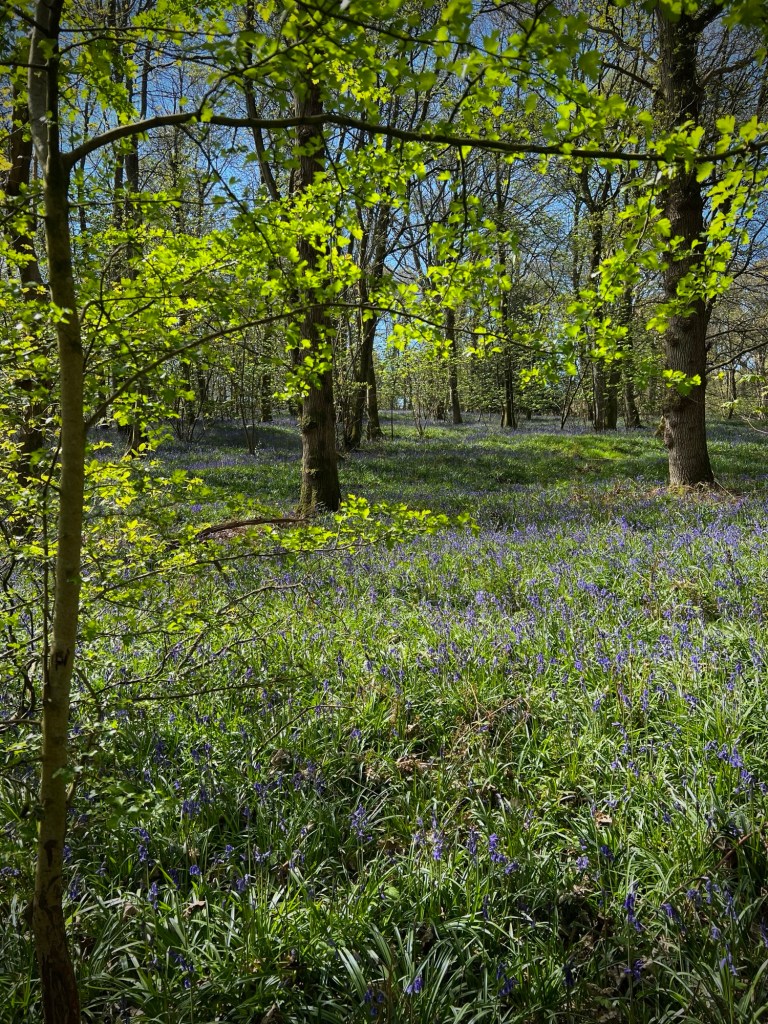
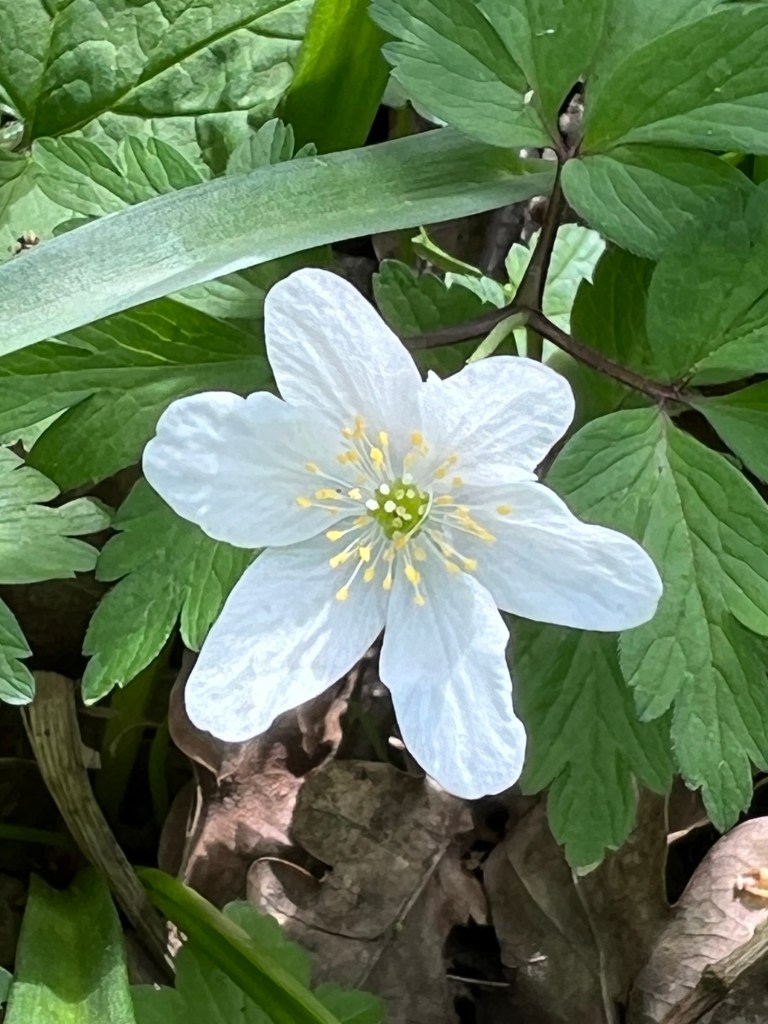
We headed out to one of our usual woodlands in search of bluebells. As we entered Badby Woods, not far from Daventry, it seemed we were too early, as many of the flowers had yet to open. However, walking on further, towards the western end of the woods, we came across great carpets of blooming bluebells. There were also smaller areas of celandines and a few wood anemones dotted around.
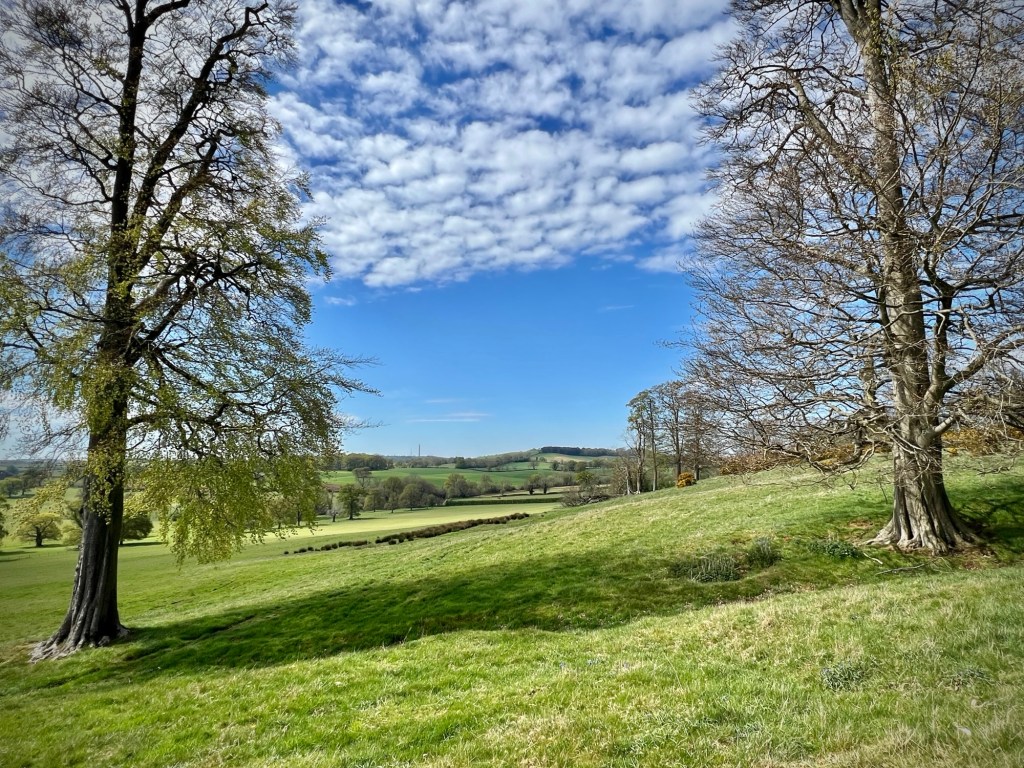
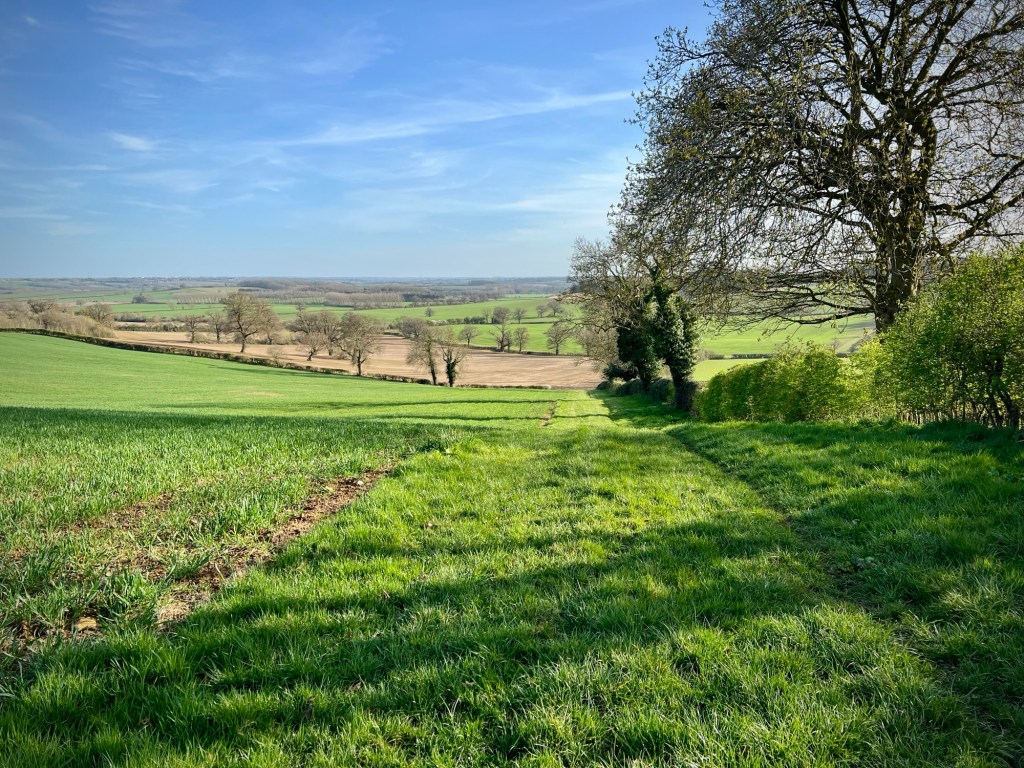
We usually just wander around the woods when we visit Badby, but yesterday we decided to wander onto footpaths through the grounds of Fawsley Manor. Approaching the edge of the steep hill above the house, we could see across a wide oven, rolling countryside, with its patchwork of fields and woods, out beyond the parkland below. A typical rural English scene and one we agreed to explore further over the coming months.
The weather was stunning for late April; a bright blue sky with a mackerel bank of cloud, little breeze, and a strong sun which made it feel almost hot when not in the shade.
The weather made the spring seem more vibrant with the leaves bursting from buds on the trees, their delicate, softness a constant to their vibrant greens, made almost luminous by the sun.
This was an almost perfect spring day, now making this typically drab bank holiday more miserable. The compensation being that the land really needs the rain having had very little for the past few weeks. On our walks this weekend, we’ve seen how the farmland soils are already starting to crack open due to lack of moisture, so a day of steadily falling rain will be a real help.
I have a night away in Newcastle-upon-Tyne for work and I was reminded that there are urban black-footed kittiwakes nesting on the buildings down by the river. After checking-in to my hotel, I took a wander down the hill to the water in search of these lovely, little gulls.
It wasn’t long before I could hear their calls echoing around the tall buildings and then they started to appear, flying beneath the Tyne Bridge high above my head. There, on ledges, on buildings and the bridge itself, were lines of kittiwakes nesting in a large sprawling colony.
I walked back up to the bridge and crossed partly over, giving me close views of the birds less than a metre away; they didn’t seem the slightest bit concerned.
I usually see these birds on the cliffs of Ramsey Island and other coastal spots but the colony in Newcastle is very unusual, being the most inland breeding site for the species.
I like a bit of an evening wander around a city or town when I’m staying away and this has been particularly good one – if a bit unusual to hear the sounds of the sea mixing with the noises of the very urban city centre.
Waking early as I usually do on a weekday, even when working from home, I put on my jacket and wandered down the lane to the sheep fields at the end.
Despite the warmer days, unseasonably warm this afternoon and tomorrow, the mornings remain chilly. My face, fingers and bare legs felt the cold after a few minutes but not enough to make me wish I’d chosen jeans rather than shorts.
Looking over the shallow double valley to the low hill and village beyond, there was a mist hanging over the fields and the sense of a frost in the deepest of the hollows. Behind that hill the electric orange from the soon to rise sun was adding sharp colour to the otherwise green-shaded monochrome of the pastures and hedges.
The sheep were quiet apart from the occasional light bleating of a lamb or maternal ewe but the birds seem to be not far of the height of their chorus. Dunnock, robin, blue tit, blackcap, wren, goldfinch, great tit, blackbird, song thrush and chiffchaff; they all added to the morning choir. Their songs and calls were almost loud enough to drown out all other sounds. Perhaps there are still a few spring arrivals missing from the list which will make the chorus even brighter.
Of course, the voice I’m waiting for the most is the swift – the sound of a summer dawn and perhaps only a month or so to wait.
On my 15-minute drive to the station this morning I had a lovely view of a barn owl as it lightly flapped its way across the road in front of me. It was a fleeting glimpse but long enough to see the patterns of its wings over the soft cream tones of its feathers.
It’s moments like this that make getting up early and heading out on the long journey to work from rural to city. My short drives to and from the station have had quite a few wild views lately including deer, badgers and foxes plus some lovely misty dawns.
I’ve long had an interest in rewilding, hoping that landscape-scale nature restoration projects can bring back some of the wildness that the UK has lost over time. Having taken trips to various parts of Europe watching wildlife, it is quite easy to see how impoverished and lacking we are as a nation in our natural environments. Whilst small local nature reserves have their place, I have always yearned for bigger, wilder landscapes where nature is in control and the hands of people can barely be detected. Rewilding has given me hope that we can get more of the wild back into Britain.
Rewilding, at its heart, is about letting nature get back to doing what it does best, without too much human interference. Think of it as giving the environment a chance to breathe, without all the fences, fields, and tidy boundaries we’ve imposed on it for centuries. It’s about reintroducing species that used to roam freely and restoring landscapes that were once wild but have been gradually lost to farming, development, and urban ecroachmentl. So, whether it’s bringing beavers back to our waterways or letting forests grow back over our largely treeless uplands, rewilding is nature’s way of getting a second shot at being itself.
The Knepp Estate in Sussex, which was once a traditional dairy farming estate, has been transformed into one of the UK’s most exciting, and most famous, rewilding projects since its shift away from intensive agriculture in the early 2000s. Now, with wild ponies, cattle, deer and beavers roaming freely across the 3,500-acre site, it’s become a thriving haven for wildlife, with species naturally returning while others have been given a helping hand. We paid a visit in 2020, once COVID-19 restrictions had been lifted, and spent the day wandering around a landscape long lost from most of England. We particularly wanted to see the white storks which has been reintroduced to the site and the project saw the first storks to fledge in England in the early 1600s. I also had my first ever glimpse of turtle doves; an increasingly rare site in the UK.
Last summer, while volunteering for a couple of days with the Bedfordshire, Cambridgeshire & Northamptonshire Wildlife Trust, I was told of an exciting project that the Trust was raising funds to support. Strawberry Hill, nestled in the quiet countryside near Knotting Green, Bedfordshire, was once a productive wheat farm. However, in the late 1980s, the landowner, Hugh White, made the decision to stop farming the 377-acre site, taking advantage of ‘set aside’ payments, allowing it to return to nature. Without the constant ploughing and cropping, the land slowly transformed. Dense scrubland and young woodlands emerged, creating a thriving habitat for a variety of wildlife, including nightingales, cuckoos, and turtle doves. Over time, the site became a refuge for many species, quietly evolving into a significant piece of rewilded land. This was rewilding before rewilding became a ‘thing’.
By the early 2020s, the Wildlife Trust recognised the importance of Strawberry Hill and took steps to secure its future. In 2022, they leased the land, and by 2024, they were able to purchase half of the reserve, thanks to generous funding from Biffa Award. The remaining portion required additional support, so BCN launched a crowdfunding appeal aiming to raise £1.5 million. The response was overwhelming, with nearly £500,000 raised from more than 3,800 individual donors, as well as contributions from trusts and private benefactors. As a result, Strawberry Hill is now permanently protected, ensuring that its unique ecosystem will continue to flourish for years to come.
Having heard about the site late last summer, I decided to wait until spring to make a first visit. I had intended to first go in May when the season would be in full flow, and I still intended to, but with time on my hands today, I decided to travel the 20 miles or so for an earlier visit.
With no facilities for visitors at the site (yet) and no formal parking, I left my car in a sensible place close to a footpath into the site. Strawberry Hill isn’t open to the public as such but it is cross-crossed and bounded by several well-maintained public footpaths and bridleways, providing quite extensive access through the reserve.
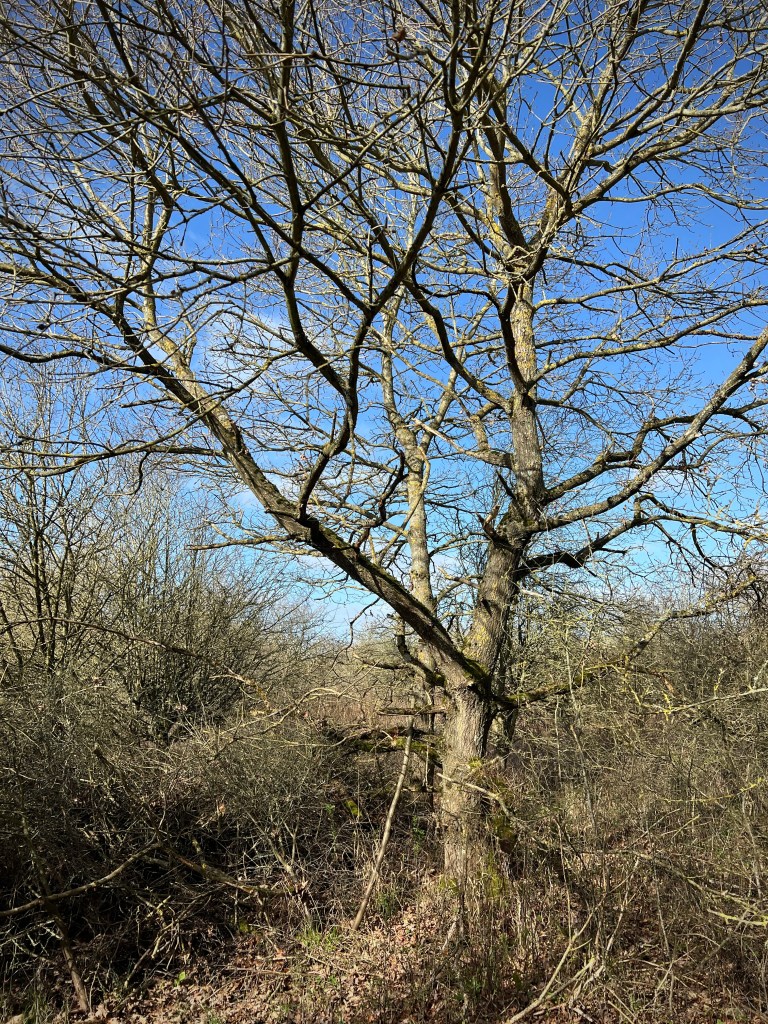
Heading into the reserve, I was immediately surrounded by scrubland interlaced with larger trees and open areas of grass. As I carried on, the scrub became thicker and there were fewer mature trees, except for those along the route of a land drain. Having seen the site from aerial photos and a video on the Trust’s website, I knew what to expect, and there are similarities with parts of the Knepp Estate. The path became more enclosed by scrub with occasional views deeper into the site through openings although the scrub was still evident beyond. The site has been left to nature longer than Knepp and so I expect the succession from open fields, to scrub and on to woodland may be further ahead, however, Knepp has continued to be stocked with large herbivores (at much lower densities than the previous dairy operations) which has brought a different dynamic to the ecosystem. It will be interesting to see what the Trust decides to do with the management of the site and how mammals, large and small will play a role.
Despite the strong winds today, the birds were very much in evidence, even for this early part of the season. I’m not sure I’ve ever heard so many Chiffchaffs in one area nor so many Bullfinches. There was also a good selection of other woodland and farmland birds in smaller numbers as well as signs of badger and muntjac deer. It’s still too early for many of the summer migrant birds to have arrived in significant numbers but I’m hoping a return in May will reveal good numbers that the habitat promises to attract. I’m particularly keen to return to find those turtle doves and nightingales.
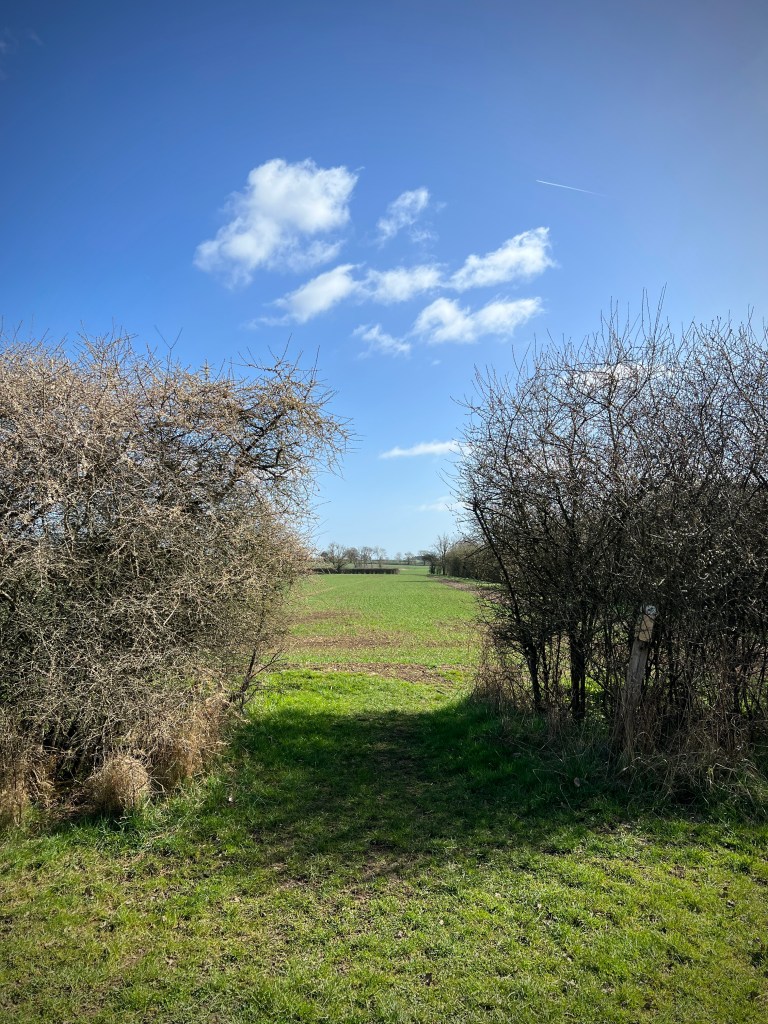
One thing that struck me more than anything about this first visit, is the stark contrast between Strawberry Hill and the surrounding farmland. Wandering around the site, as you get to the end of a footpath, you suddenly find yourself out into arable fields, like those this site used to be. You emerge from tentatively blossoming scrub and young woodland, through an opening in a hedgline, onto open, flat, windswept monoculture fields of young wheat or barley; you abruptly move from nature into modern intensive agriculture. It’s quite a jarring moment as you move from one space to another and it broke me out of a meditative state. Wondering slowly listening to birdsong is when I’m at my most mindful and ‘present’ in the moment; I’m about as relaxed as I can be while standing up. It brought home to me just how far modern agriculture, and the landscape it has created, is from nature; I’m hoping Strawberry Hill and other rewilding projects can have the same effect on many more people.
I’m really excited by this project and can’t wait to go back in a month or so but also to see how it progresses over the coming years.
What the site used to be…
If you want to know more, here’s a link to the Wildlife Trust’s website.
After some overnight rain before a chilly dawn, the view on my way to the station this morning was lovely. With the sun just creeping over the horizon and a mistiness covering the fields, I had to stop and take a few photos.
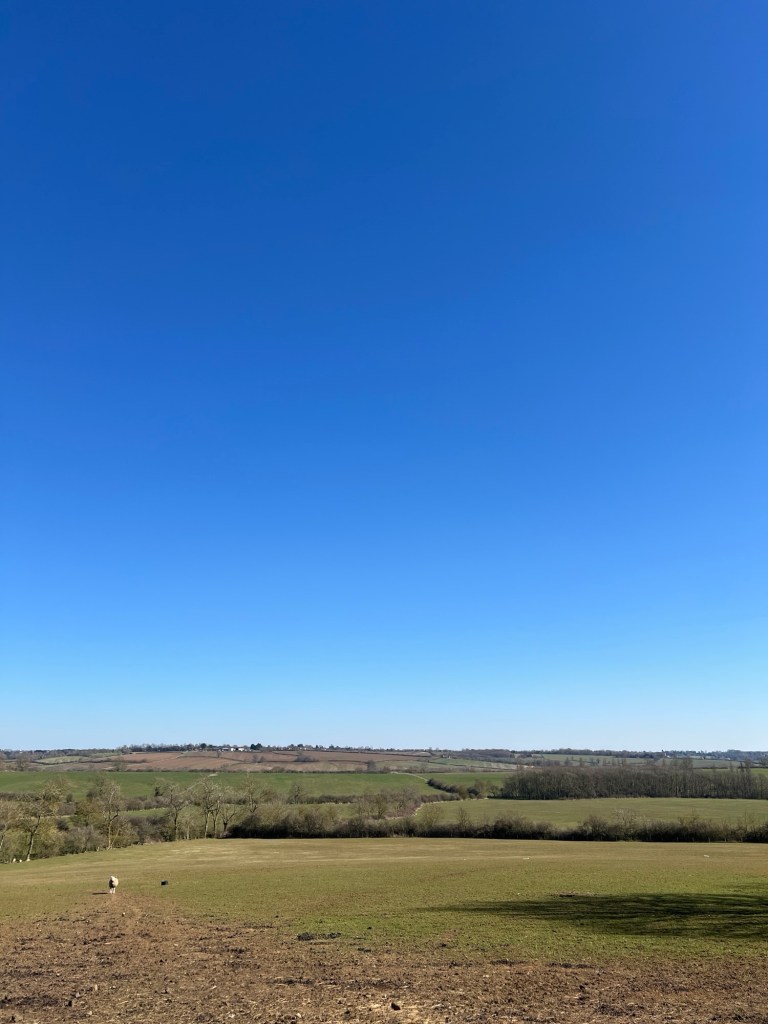
My lunchtime walk was under a completely clear blue sky and it has stayed like that all afternoon. I could feel the warmth from the sun but the view was deceptive as a very chilly easterly wind took away the sense that it was spring.
However, spring is here and, after a forecast frost tomorrow morning, the temperatures will start to reflect it, for a few days at least. Hopefully we will have a trip down to Kew Gardens on Saturday to see what spring is like in one of our favourite places.














 Daft Mumblings