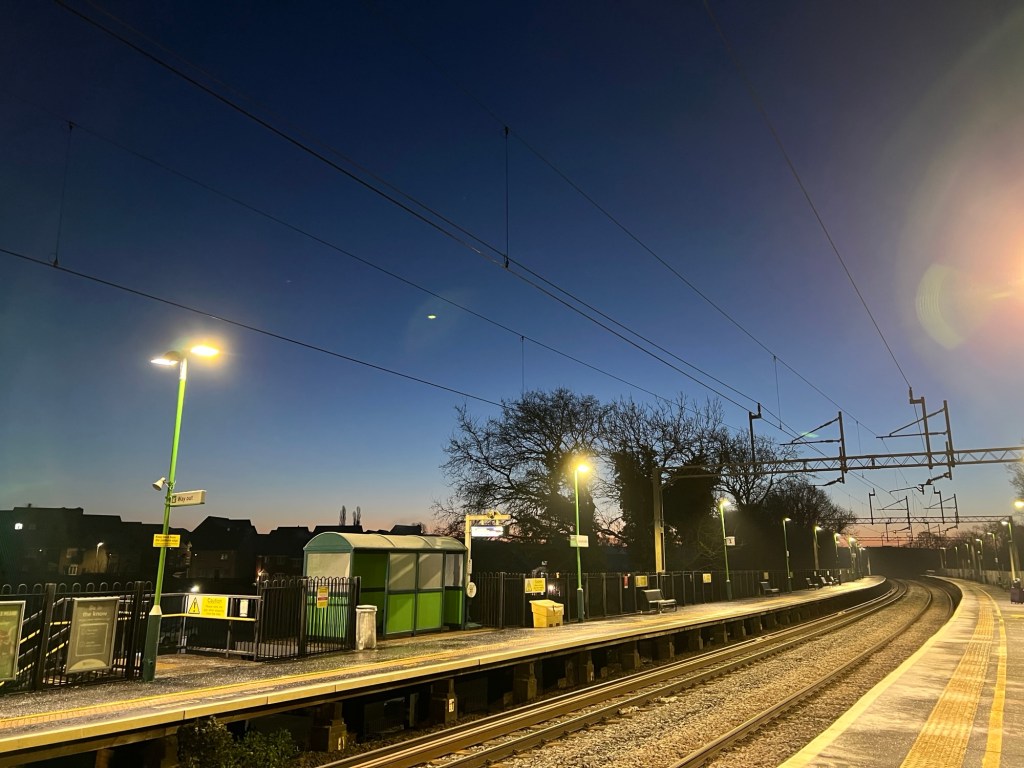
Standing on the railway station platform this morning, there was a clear sky and light on the horizon. This is the first time this year where there has been more than a smudge of dawn and today there is even an orange hue beneath the growing turquoise.
Not only a the light returning but so far are the sounds of birds. It might be just below freezing but the robins, blackbird and thrushes are all singing their dawn chorus – another first for me this year.
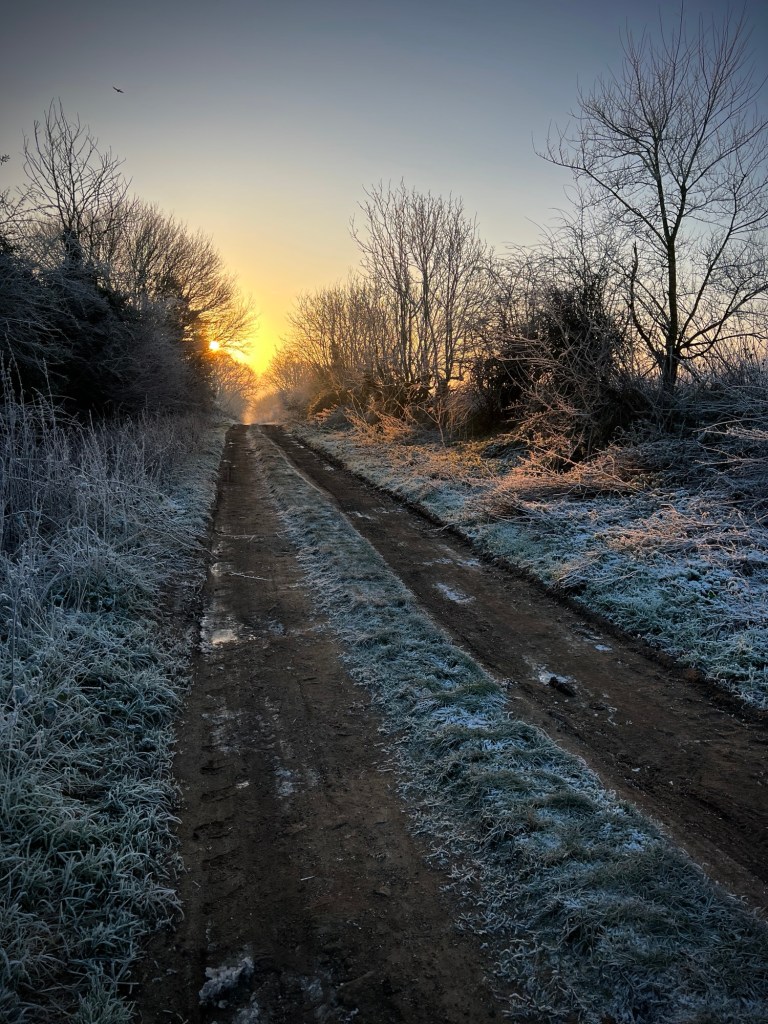
It may only be the 5th February and the temperature hovering around 5 degrees Celsius but with the sun out today there is a very hesitant feeling of early spring down the lane.
I heard a red kite calling overhead and a robin singing away. There are snowdrops scattered about and daffodils sprouting from the ground. Even the fields seem a little greener than they did.
However, despite the slight warmth coming from the sun, the chilling breeze stops too much hopefulness of the coming season building up – and we’re back to frosts tonight.
Today has been one of those cloudless but cold winter days which you long for through the almost endless grey cloudy dreariness of January. The sun seems shockingly bright, especially as it hangs low in the sky, dazzling your eyes and making you squint. The morning started with a slight frost and the temperature barely above freezing. There was a think layer of ice on the puddles and a real nip in the air. A sharp wind occasionally added to the chill but as we went for a walk the sun soon warmed us up as our dark clothes soaked in its rays.
Our walk wasn’t too long, only four miles but it gave us some different views of our local area, having not walked any of the particular paths before. The wildlife was quite quiet but for a flock of winter thrushes in the fields joined by some starlings and an occasional sky lark.
After what seemed like a long and dark week, getting out into the bright daylight was a bit of a tonic – unfortunately back to the greyness tomorrow.
At some point in January, as early as possible, I usually take a trip to a good wildlife spot to try to kick-off my lists for the year. Quite often this means heading east into the Fens or beyond on to North Norfolk. Yesterday, our choice was the Wildlife & Wetlands Trust’s centre at Welney. This reserve sits on the Ouse Washes; a huge flood management area around 30km long and, at its widest, almost 1km wide. It is the winter home to a great number of resident and migrant wildfowl and a brilliant place to start building up a list of species seen over the course of the year.
Yesterday was a typical January day in the Fens; cold, not far off zero degrees Celsius, with low, dark grey cloud and a mistiness hanging over the land. The light breeze was barely be felt with our backs but added a further chill when walking into it, taking the damp cold off the flooded washes and flat waterlogged fields, and seeping in through any gaps in our clothing.
Standing at the edge of the Washes, the flood water from the River Ouse covered almost every inch of the ground, leaving only small islands, the tops of fencing and gates, and the tall patches of reeds standing above the surface. On that surface was a spectacular congregation of wildfowl including all three British species of swan, numerous species of duck and a range of waders. Many of these can be seen at the wetland reserves closer to home but for some a visit to Welney and other East Anglia reserves is a must.
I particularly wanted to see the swans and was rewarded both at Welney and in the fields on the way. The Whooper Swans from Iceland are the most numerous but, as was the case when we visited last year, numbers were down significantly from previous times I’ve been there. The Bewick’s Swans are generally less numerous at the reserve and I haven’t seen any there, or anywhere else for a number of years. However, yesterday we saw one single bird out in the distance.
After wandering to the different hides along the bank about the water, we went for a walk around the Lady Fen trail to see what else we could spot. Like the weather, the life out on the fields was subdued and there was little to see apart from three species of egret and groups of corvids. We have seen owls on this walk before but had no luck this time, meaning a visit to the Nene Washes might be in order (it’s often possible to see four species in a short stop there). We also had two new species of mammal for the year; nice groups of Roe Deer and a single Chinese Water Deer out on the damp fields amongst the shallow flooded scrapes.
Overall, we saw 60 species of bird at the reserve and I’m sure we could have picked up a few more if we had stayed a little longer but the cold and gloom eventually got the better of us and we turned for home.
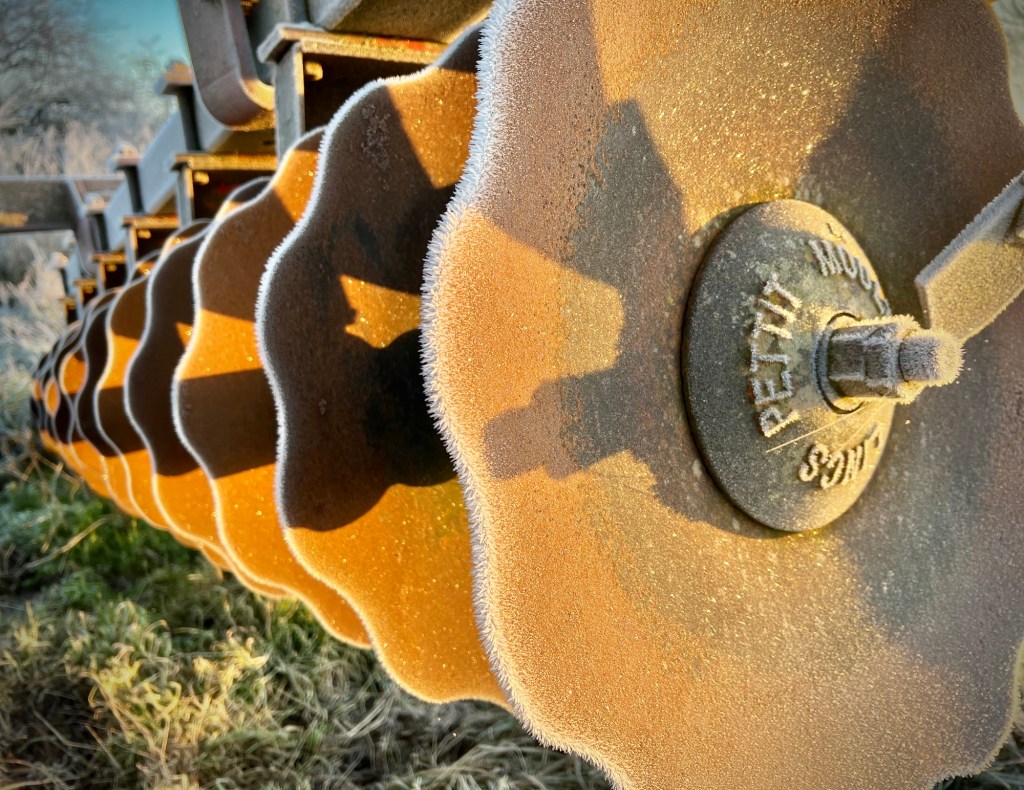
Finally, winter is showing itself. We have had sub-zero nighttime temperatures for a few days now and they look set to go on for a few more. We have had a few short spells of snow; some accumulated but each time was quickly gone. The frost is less transitory; in those pockets of shade out of reach of the weak new year sun, the ice sticks around well into the afternoon, and in some places, all day long.
The land seems subdued by the cold, and the wildlife hushed. On my lunchtime walk down the lane, there wasn’t much life about but for a small number of winter thrushes and a buzzard gliding low across the sheep fields. The only other sign of the wild was the faint scent of a fox, left behind as it wandered past last night.
I love the bright and cold days that make such a change to the grey dreariness we so often get in English winters. I’m glad to be working from home today so I can go for that walk but back to the office tomorrow – on a Friday!
Just as I was blocking out the last of a bleak mid-winter day, I noticed that the fog that had stubbornly hung around all day was finally starting to shift. Our house looks out over two shallow valleys (at least when the leaves aren’t on the trees) and I could see the tops of those valleys starting to peak out from above the fog. So I quickly put on my jacket and boots and walked down to the end of the lane to look over the fields and see if I could get some suitably wintry dusk photos. I’m quite pleased with the results below, showing how the increasing breeze was blowing the fog away…
It’s definitely a day for staying indoors. We woke to the forecast snow with the unusually bright light peaking in past our curtains. The light was from the snow on the ground and trees rather than the sun as that was obscured by a heavy and dripping fog cloaking the land.
The snow itself, the second fall of the winter (we missed the first while we were in Ecuador), wasn’t that lovely crisp white snow that squeakily crunches as you walk through it but that nasty wet and slushy snow that mixes with mud and turns to chilling puddles far too quickly.
The weather is bleak and so is the day, the last of a lovely Christmas break that unusually has lasted two whole weeks. We have taken down all the decorations and put them away in the loft for the next 11 months and my mind is turning to work once again.
I couldn’t stay locked up inside all day, despite how cosy it would be to do so. I ventured out to look for birds at a nearby reservoir to add to my, so far, very short list for the year. There is a White-fronted Goose about, mixed in with a flock of Greylags but it and they were not visible. Down by the water’s edge, I could see very little due to the blanket of fog but a small party of male Goldeye floated past and there were Mute Swans, Gadwall, Tufted Duck and Moorhen to add to the year’s tally.
The atmosphere by the water typified the bleakness of the day. Almost silent, the only sounds were the drips from the trees, an occasional subdued quack and the far off chime of a church bell, almost muffled by the cloud. The fog left a monochrome vision of the reservoir, nothing in the winter scene to add any colour, even the birds were black, white or grey.
Now for a warm and cosy evening indoors with a log fire, soft lighting and, maybe, a dram to round off the holiday.
The last part of our two-week trip to Ecuador in November 2024 was a four night stay in the Amazon Basin at the Napo Wildlife Center. It sounds a bit like a charity for re-homing injured sloths but it was actually one of the most amazing places I’ve ever stayed. This was my first visit to a rainforest and the part of the trip I was most looking forward to; it didn’t let me down.
After spending the previous ten nights at high altitude in the Andes, it was a slight relief that we returned to more usual levels for UK residents. The drive from our accommodation for the previous two nights at San Isidro Lodge took us from the foothillls down to the Amazon Basin, dropping from 6,700 feet above sea level to just 1,000 feet. The winding roads through the cloud forests provided a gradual descent that provided great views of the rainforest laid out in front of us. The long journey eventually took us to our gateway to Amazonia; the city of Coca, officially named Puerto Francisco de Orellana. The city sits at the confluence of the Coca and Napo Rivers, the latter which feeds directly into the Amazon River some 550 miles (as the macaw flies) away to the east.
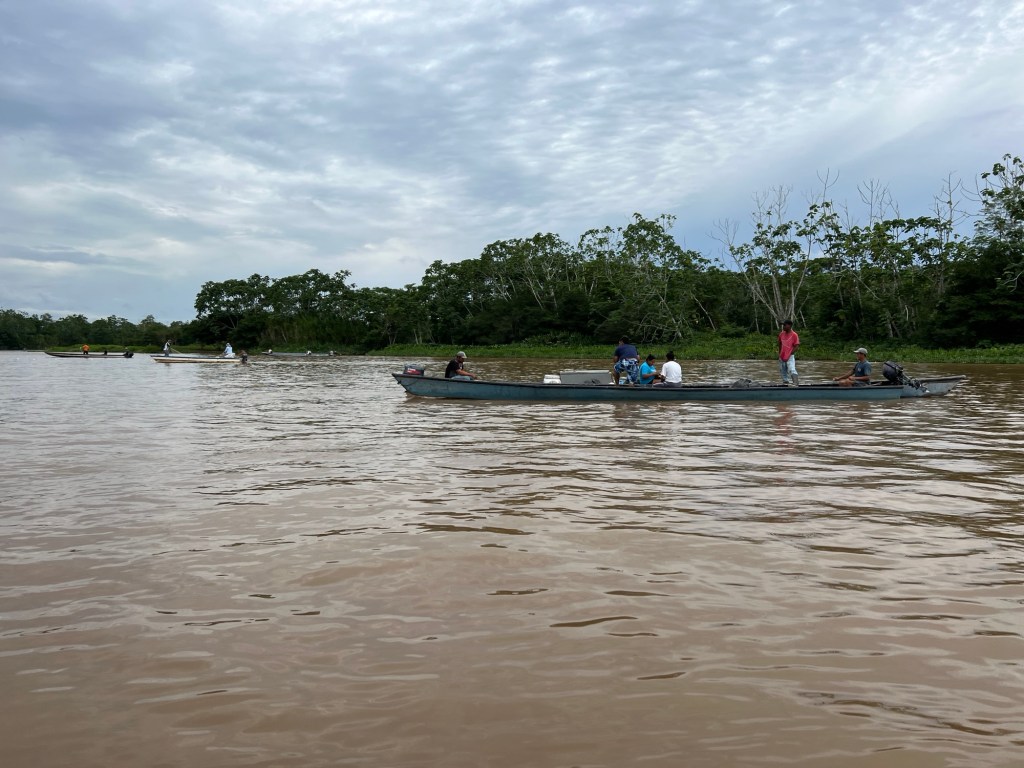
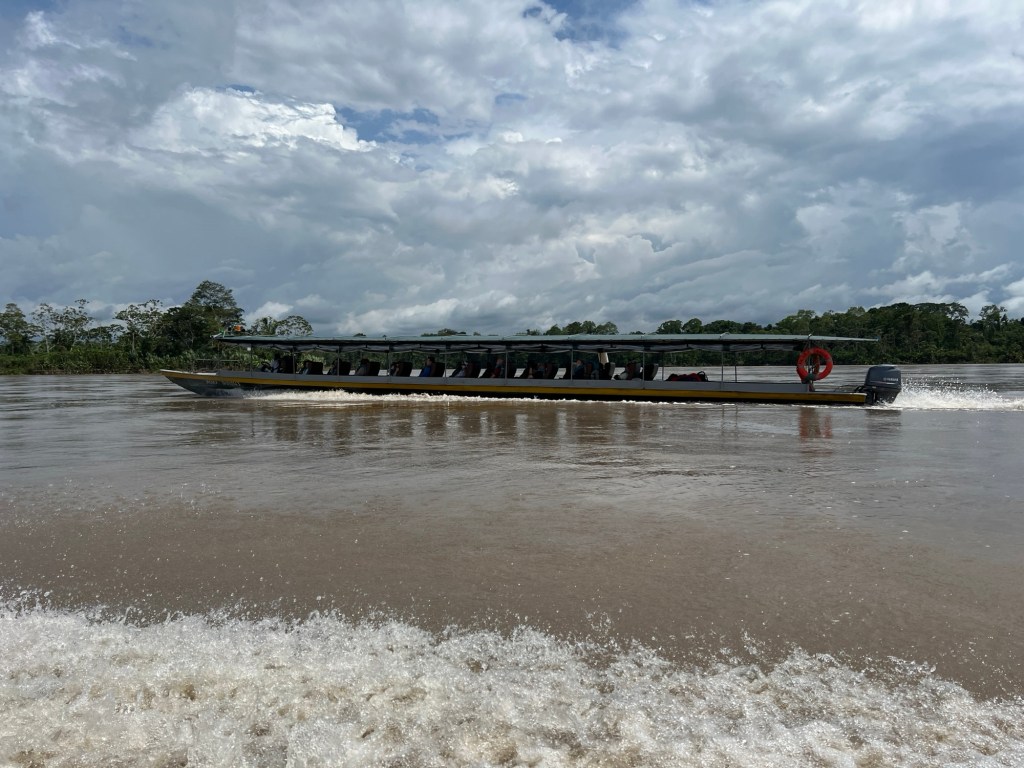
On the bank of the Coca River we boarded our long motorised canoe; this was a substantial craft with rows of coach seats, one seat either side of the central gangway, and a roof covering the passengers. We left the port slowly as we had to navigate around a number of hand-paddled canoes and the long fishing nets that floated downstream from each. After passing the fishers, we turned onto the Napo and the engines roared to pick-up speed and head down river. The journey took 2.5 hours, weaving a meandering line to keep to the deeper river away from large sandbanks and avoid trees floating or stuck in the river, as well as navigating around other craft.
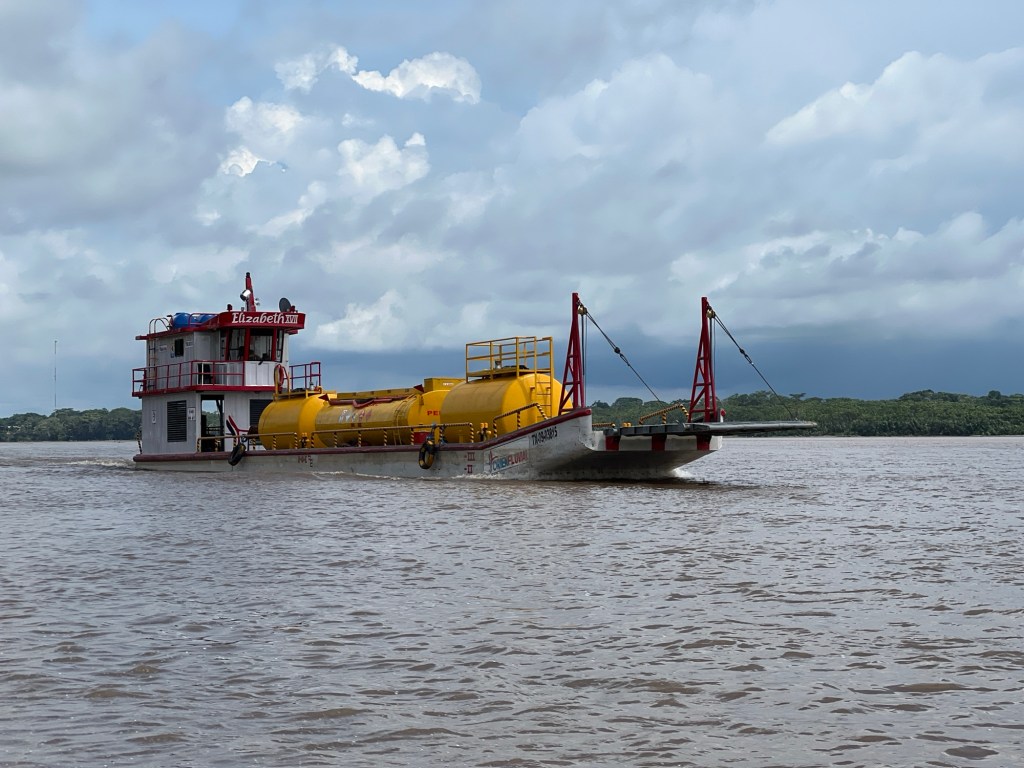
Leaving Coca, we quickly saw the rainforest cloak the river banks but there remained many signs of habitation and industry as we travelled onwards. The Amazonian oil extraction on which much of Ecuador’s economy relies was clear to see with larger boats taking oil tanker lorries up and down the river and we saw at least one large flame burning off gas from the drilling process. Thankfully, we left most of this behind as we approached the end of this stage of the journey. It had rained for a short while on the motorised canoe but not enough to get any one wet under the cover of the roof but this was an ominous sign of things to come.
We eventually turned off the Napo River onto Añangu Creek, coming to a little harbour where we changed from horse power to human power. As we got out of the large craft the heavens opened and we raced to cover to avoid being drenched. Our large bags were put into a ‘freight’ canoe to head off separately while we prepared ourselves for the canoe journey by putting our hand luggage into thick bin bags while getting our binoculars and cameras ready for anything we might see. The rain relented and the canoe teams dried off the seats for us before we headed up stream.
Our final leg of the day was two hours being paddled up the narrow creek under the rainforest canopy. For a short moment, as we set off the sun came out but then the rain returned. We all put our ponchos on and tried our best to keep ourselves dry but it became impossible against the scale of rain I don’t think I’ve ever experienced before; we soon understood just why this is called the ‘rainforest’. When we arrived at the Napo Wildlife Center (Napo) we were all pretty much drenched. Most of us had UK-sourced ponchos which didn’t stand a chance; those that were available from the canoes were so much better. It could possibly have been worse as the rain started to fill up the canoe and we eventually had to start bailing the water out to ensure our feet stayed dry(ish) and the canoe didn’t get too low in the water for the creek to start coming in over the top.
Despite the rain, the last leg had two real high points. Firstly, we spotted a Three-toed Sloth high up in the trees. It was making its way through the canopy at a much faster speed than most would usually expect, probably to find somewhere better to shelter from the heavy rain. This would be first and only slighting of a sloth for the whole trip, which was a bit of a disappointment but as you will read, we saw a lot more wildlife over the next four days.
The second high point was meeting a family of Giant River Otters. As seems to be normal, we could hear them before we saw them; the loud squeaks and squeals giving their location away before their heads popped up almost alongside us. They swam parallel to us for about 30 seconds before turning away up a side stream. We momentarily forget about the rain and I managed to get the following video from under my poncho.
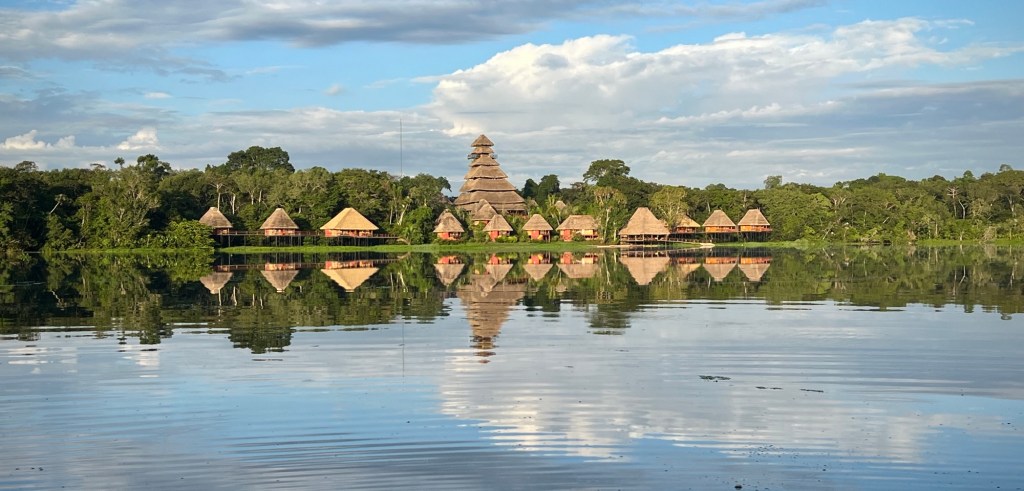
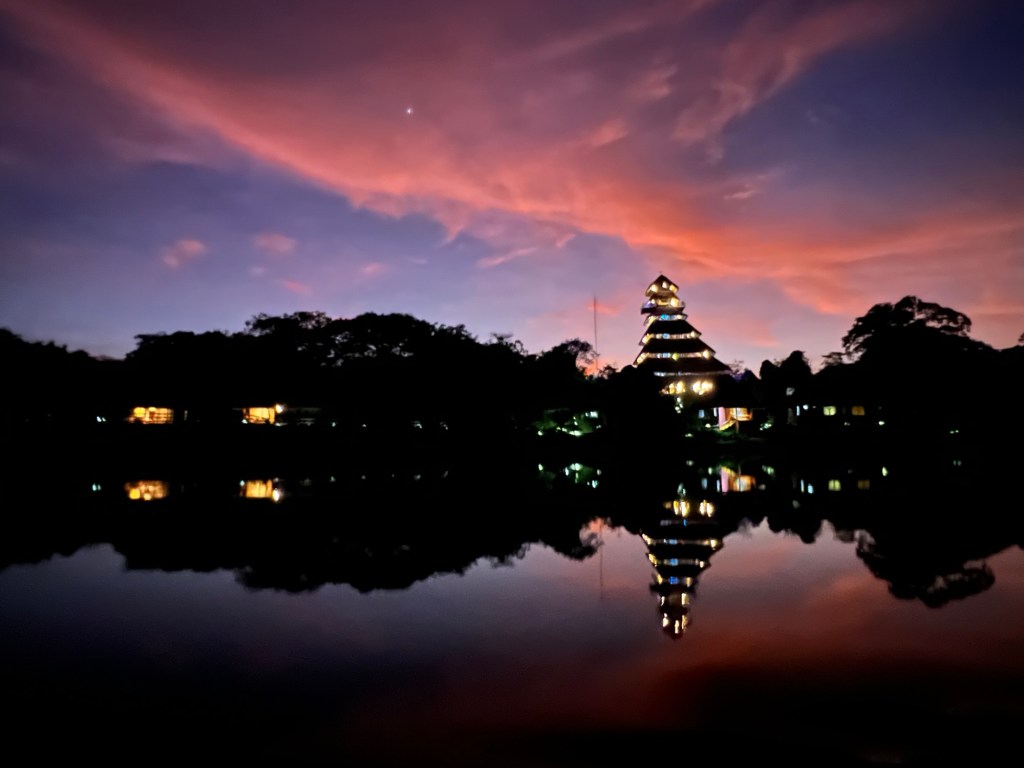
The creek eventually widened and opened up into a lake, across the far side of which stood Napo. The thatch-roofed cabins on the shoreline we dominated from behind by a seven storey observation tower. As we arrived, there were steps up onto a pier which led to an open-sided reception hut which finally gave us respite from the last two hours of rain. We were given our keys and directions to our own individual cabins which would be our ensuite bedrooms for the next four nights.
Napo is located in Yasuní National Park, a region renowned for its rich biodiversity. Established in 2004 by the Kichwa Añangu community, the center was created as a means to safeguard their ancestral land while promoting sustainable tourism. Nestled by Añangucocha Lake, the eco-lodge includes 12 standard cabins and eight suites, all fitted with modern comforts.
Napo is fully owned and run by the Kichwa Añangu community, who act as guides and hosts (and excellent canoeists!). They collaborate with organizations such as the Tropical Nature Conservation System to ensure the preservation of the rainforest. As we found, the community’s extensive knowledge of the area’s flora and fauna enables them to provide visitors with an immersive and educational experience.
With the loss of altitude, after leaving the Andes behind, came the gain of both temperature and humidity. We experienced this from the moment we arrived at Añangu Creek, once the cooling effect of the high speed boat has gone. With temperatures in the low to mid-30s and humidity hovering around 100% at times, our stay was usually pretty sticky but never too uncomfortably so.
We settled into a similar routine we had been living with for the earlier stages of the trip; we got up very early while it was still dark, between 4:30am and 5:00am and we usually went to bed before 9:00pm. Living this way actually meant that we never really settled into normal Ecuadorian time (-5hrs GMT); we were living some odd mid-Atlantic time instead.
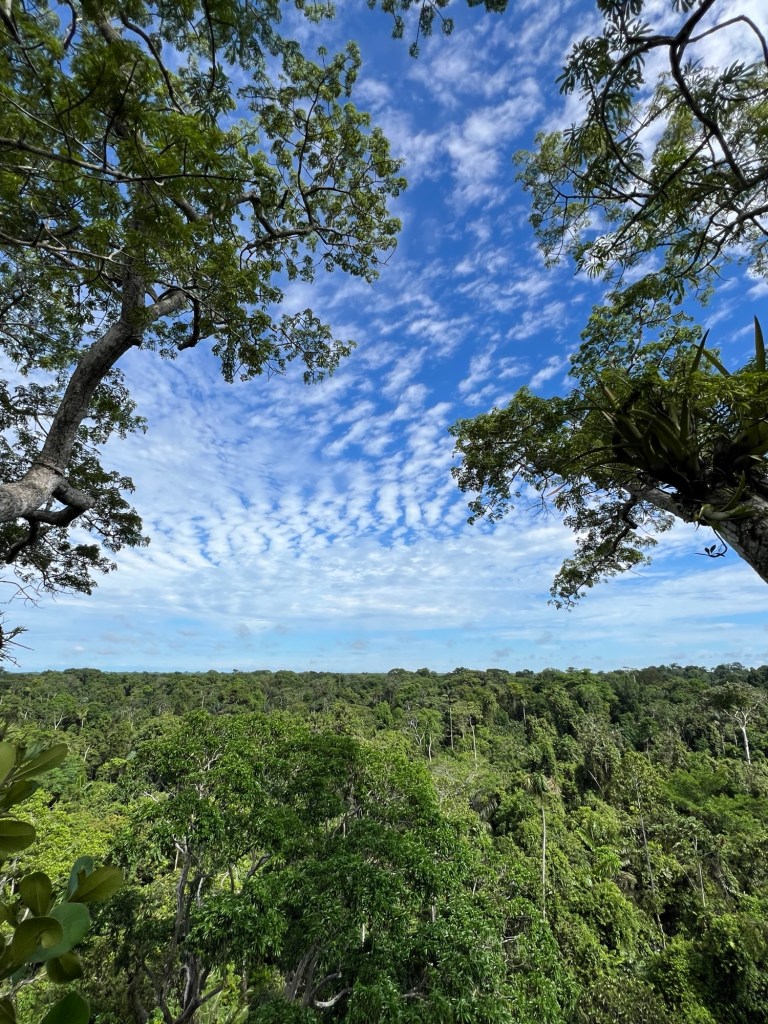
On the first morning of the three full days at Napo, we canoed out from the Center across the lake and landed at a jetty from where we walked 30 minutes into the forest. We arrived at the base of a 100ft observation tower and made the ascent from the dark, hot and humid ground up to bright and cooler platform in the crown of a tall tree. From this point, we had a 360 degree panorama across the top of the rainforest, perhaps one of the most spectacular views I’ve ever had. Staying up there for several hours we were treated to views of howler and spider monkeys, macaws and parrots flying by, as well as toucans and vultures and a range of smaller birds. Eventually, the heat started to build and we made our way down to the floor again. Our walk back to the canoe gave us encounters with insects including leaf-cutter ants and stunning dragonflies.
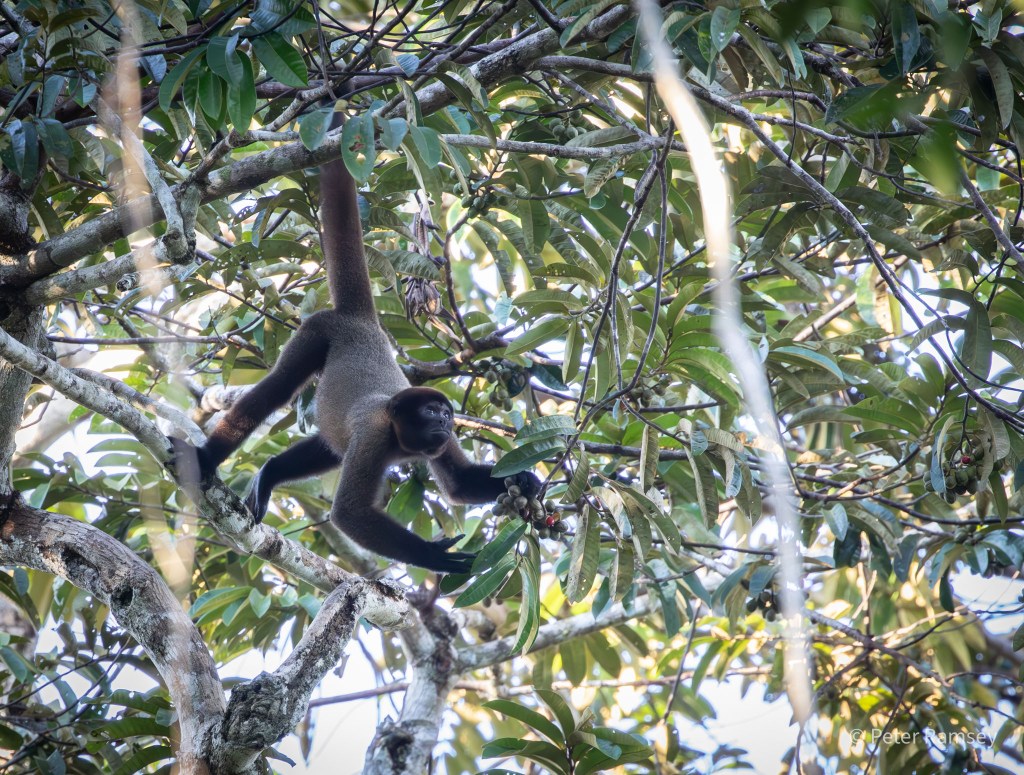
After lunch and a rest from the hottest part of the day, we headed out in the late afternoon to canoe one of the other creeks that links into the lake. We almost immediately heard the sounds of giant river otters again, not far beyond the mouth of the creek. The calls and splashing easily gave them away but they were hidden behind vegetation at first before eventually three came into view and swam close by before heading back into cover again. Whilst we could still hear them, they didn’t reappear and we moved on further along the river. We then came across a small group of Napo Saki Monkeys high up in a tree and mostly obscured behind branches and leaves. We did manage to get good views of these slightly odd looking creatures and some decent photos too. Shortly afterwards we also had good views of Woolly Monkeys above our heads, hanging by their tailed as they moved through the trees. This was followed by groups of parrots and a pair of Blue & Yellow Macaws high up in the forest.
Returning to the lake, the sun was starting to set with huge white clouds lit up orange in the quickly dying light. Before returning to the shore, we went down the main Añangu Creek and enclosed by darkness under the forest canopy, the sounds of insects rose as the evening descended on us. Here we saw bats flying low over the water and fire flies in amongst the riverside reeds. As we emerged back onto the lake a huge cayman lay floating motionless in the creek entrance.
The second full day at Napo started with the unforgettable and slightly unsettling sounds of Howler Monkeys calling into the darkness. They were in a tree just behind our room, roaring out their territorial claim to other families in the surrounding forest. This was the start of what was to be a day surrounded by monkeys of many shapes and sizes.
Our early morning canoe transfer took us back down Añangu Creek to a jetty from which we wandered down a long, raised walkway into the forest. Almost immediately we came across another group of Howlers calling from the trees and stayed to watch them for a while. We then wandered onwards seeing groups of capuchin, squirrel, woolly and spider monkeys moving through the forest.
A three-hour walk become hot and sticky as the sun rose higher. After a break at the far end, we returned to the canoe more more quickly than expected; our gentle wandering hadn’t taken us as far as we thought. On the return canoe journey we saw more howlers and some distant spider and capuchin monkeys. We had one final stop and left the canoe at the river bank for a short walk to see some Spix’s night monkeys. High in their hole, in the fork of a large tree, three small but big-eyed faces stared out at us as we looked up at them.
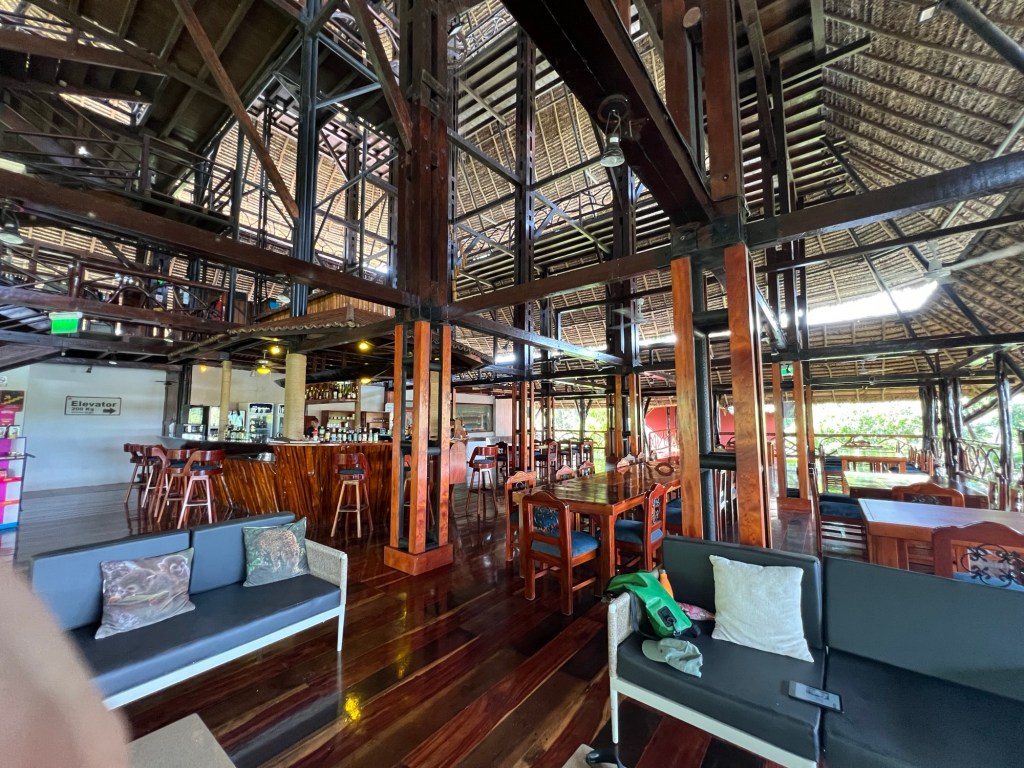
Our afternoon was spent up the very impressive observation tower at the heart of Napo. This seven-storey 60 foot tower matches the huts it dominates having thatched roofs at each level but that hides the huge steel structure beneath. Not only does it provide views out across the rainforest, it also provides the main social space for the Center with the dining room, bar and lounge on its ground floor, a shop on the first floor and other sitting areas on the further floors above.
From the top of the tower we watched the wildlife for several hours including both birds and monkeys. The Russet-backed Oropendolas were particularly busy bringing building materials for their nests hanging from the trees amongst the Center’s cabins.
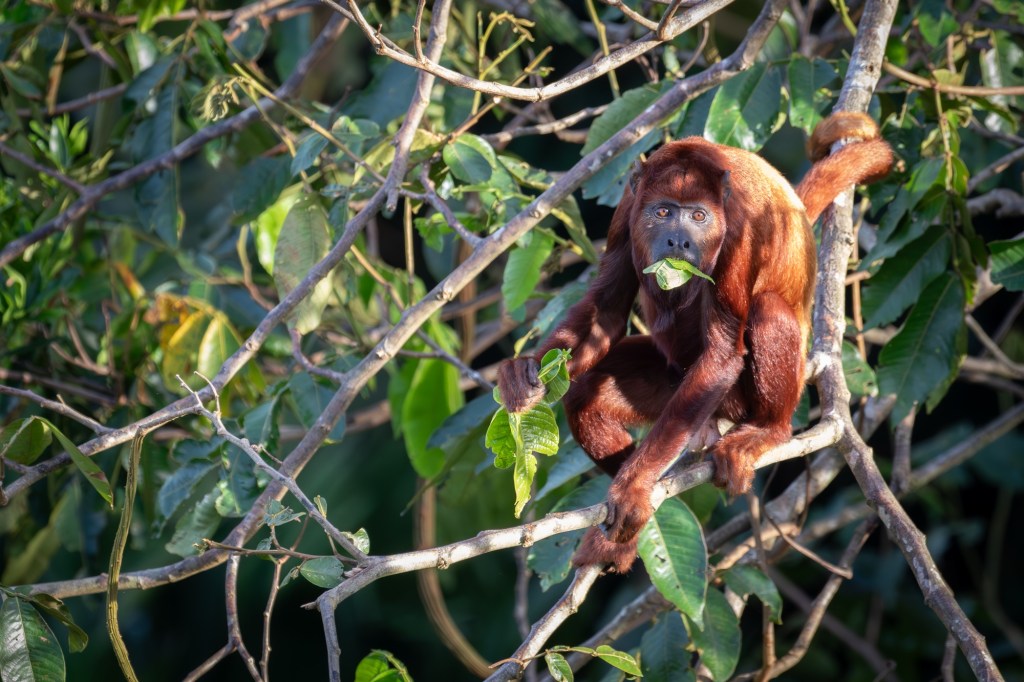
We could hear two groups of Howler Monkeys calling at each other in the distance but slowly one group came closer. A large male climbed across into a tree just by the tower and started to eat. Having left our cameras in our room, we quickly rushed down to get them. On the way back up we realised that we would be at eye level with the monkey if we stayed on the fourth floor. There we stopped and couldn’t believe quite how close we were. In one of the photos below, zooming into the monkey’s eyes you can see the triangular silhouette of the tower.
After dinner, the final action of the day was a night walk through the jungle. We spent 45 minutes wandering along the tracks behind the Center looking for wildlife. It was all a bit quiet until we caught some bats in my detector and found a tarantula just at the rear of the tower.
Earlier that evening we had seen a distant thunderstorm with forks of lightning firing out form the large clouds but it seemed to have passed up by. At midnight we were woken by a huge thunderstorm passing directly overhead, the like of which I’m not sure I’ve ever experienced before. I had to jump out of bed and get a few videos out on the shelter of the veranda but they were taken once the worst of the thunder and lightning had passed.
The morning of the last full day at Napo was a slow-starter despite getting up at 4:30. The rain didn’t relent until later in the morning so we delayed our trip until 8:00. We headed out all the way down the Añangu Creek back to where we changed canoes on the way in, seeing Golden Mantled Tamarins on the way. From there we walked 30 minutes to a ‘parrot lick’ where we waited for macaws and parrots to arrive. The birds come from miles around to obtain vital nutrients that they can’t get from their food elsewhere.
After a bit of a wait, we were lucky to see scarlet macaws coming in to feed. At first they seemed reluctant to drop down from the trees but after one was brave enough, they came in small groups. They squabbled over space amongst the rocks providing the chance for some lovely pictures despite the low light conditions.
On the way back we had brilliant views of spider, squirrel and capuchin monkeys with some of them being very close to the water while others jumped across the river at tree-top level.
After these amazing days at Napo we spent the last afternoon high up in the observation tower having a look at the wildlife from above.
The final morning of our stay in Ecuador was the earliest of them all; we were up at 3:15 and being paddled away from Napo at 4:30. Setting off in the dark we felt a few spots of rain, so we donned the canoe’s ponchos, hoping not to have the same torrential downpours we experienced on the way in. While the rain didn’t come in the end we quite soon came across a different problem. A tree had fallen overnight and was straddling the river from one side to the other, completely blocking our way. However, we need not have had the worries that immediately came to us. The canoe team leapt to action, along with those of two other canoes that joined us. They cleared with machetes an area of vegetation on the bank for all the passengers and luggage to wait on. Another canoe soon appeared and wedged itself under the tree levering it high enough for the other empty canoes to pass through. We and our luggage were then put back into the canoes and we were off again down the creek in around 30 minutes.
Waiting on the bank in the early morning light
Our change over to the motorised canoe was quick and dry, and we headed back up river for the 2.5 hour journey to Coca.
After four nights in the Amazon our arrival back into Coca seemed like a return to normal in the hustle and bustle of urban life. It was made to feel even more so by the quick transfer to the nearby airport, and what appears to be a modern terminal, and boarding a Boeing 737 for the very short flight back to Quito.
The stay as Napo wasn’t just the highlight of our trip to Ecuador, it was one of the best wildlife experiences of my life. My first visit to a rainforest was spectacular and a time spent in nature that will be hard to top.
A note on the accommodation. Our ensuite room was the best we had on our trip (the others were pretty great too, I have to add); the cabin was spacious with very high ceilings beneath its conical roof. Our bed was huge, with an enveloping fly net, and was turned down for us every evening. There was a ceiling fan as well as one standing on the floor, which helped the air to circulate around the room. The cabin wasn’t sealed as the windows were fly screens but there were curtains for privacy.
The food served was buffet style, which came as a bit of a relief given the huge portions we had been given at most of the places we ate. The quality of the food was great and the choice quite wide, with three courses for lunch and dinner (if you wanted them).
Napo Wildlife Center can host up to 40 guests at one time, accommodated in 20 cabins. Generally, guests all ate at the same time (but not always), but the dining area, lounges and bar never felt crowded and once away from the Center, different groups rarely bumped into each other.
This may have been a stay deep into the Amazonian Rainforest but it was a long way from being a basic existence and much more like a luxury safari lodge.























 Daft Mumblings