We’ve just been across the lane to put our neighbours’ chickens and ducks away for the night and we’re treated to the sight of a few noctule bats flying high above us.
They’re one of the UK’s largest bats with a wingspan of between 32cm and 40cm, much larger than the pipistrelles we more commonly see.
They were flying around at tree-top level, looping around us and diving on their prey – a quite spectacular dusk view.
Sadly, I had to cancel my trip to Ramsey Island over August bank holiday week. Unforeseen circumstances at home meant that plans had to be changed and my trip was put off until next summer.
However, this did give me an opportunity to try out some local conservation volunteering instead. My company gives me two paid days per year to volunteer for social or environmental causes, so with Ramsey no longer happening I searched quickly for local opportunities. I soon found a two-day task with Northamptonshire Conservation Volunteers.
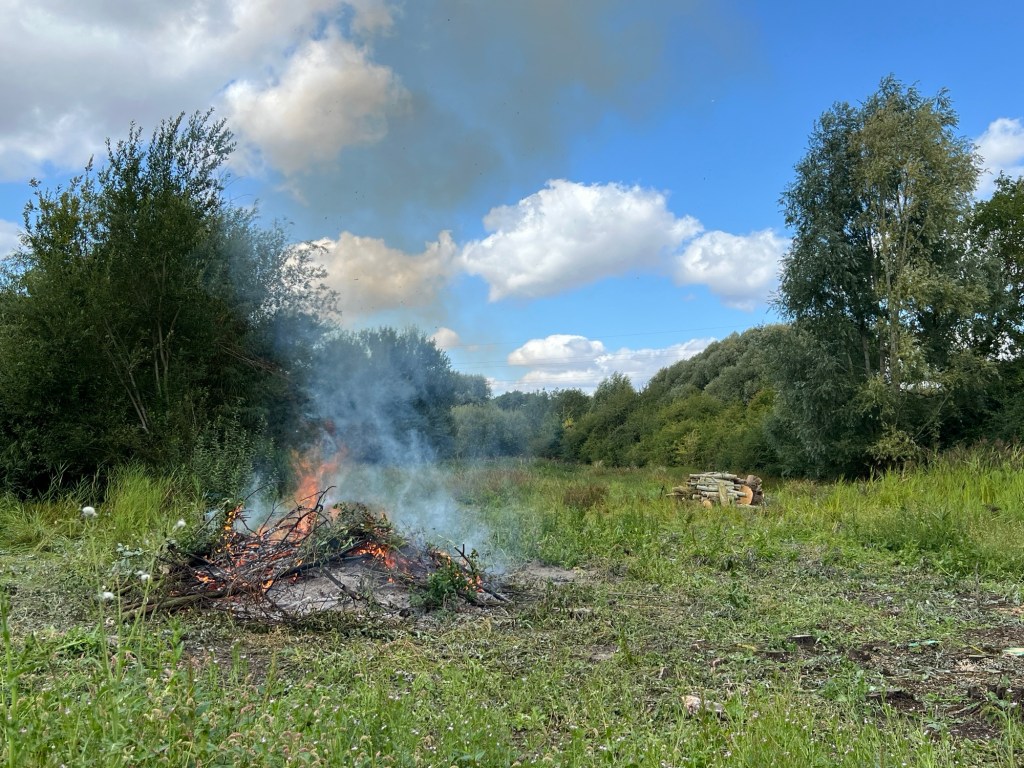
Last Wednesday I headed out to Abington Meadows Nature Reserve near Weston Favell. On a warm but grey morning I met rangers from Bedfordshire, Cambridgeshire and Northamptonshire Wildlife Trust and a small group of other volunteers at the edge of the meadows. We walked out to the centre of the site, each of us carrying a bow saw and pair of loppers. We stopped at a central area where the rangers had already used a chainsaw cut down a number of willow trees. Our task was to cut up the fallen trees and to put them on a fire.
Whilst cutting down trees and setting fire to them might not seem the most conservation-minded thing to do, I have learnt over many years of volunteering that it’s an often vital activity in maintaining many protected sites. With so many of our water meadows and reedbeds having been lost since the Second World War, those that remain need to be managed. This is to prevent natural succession leading to them being overtaken by willow and eventually drying up. In this case, this was exactly what was happening. The trees needed to be burned as the amount of willow taken down couldn’t all be taken off the site and if left on the ground it would re-grow not just from the stumps but also the cut down timber and brash.
So, for two days, I cut up the fallen trees and put them on the fire and, when the originally cut down trees had all gone, we cut down some more by hand to reduce the willow further.
This was an activity that took me back to some of my original conservation volunteering in Cheshire nearly 13 years ago. I have spent many a Sunday out of a Cheshire Wildlife Trust wetland site doing exactly the same task and over that time have seen what a significant positive impact a group of volunteers can have.
The only sad thing about this experience is that so many of the similar opportunities are only during weekdays when I’m out at work. However, I did learn of a couple of weekend volunteer groups which I might have to give a try.
Whilst it is still summer, there has been a marked change in the weather over the last couple of days. The wind has strengthened, and temperatures have dropped and we’ve had our first downpours for what seems like weeks.
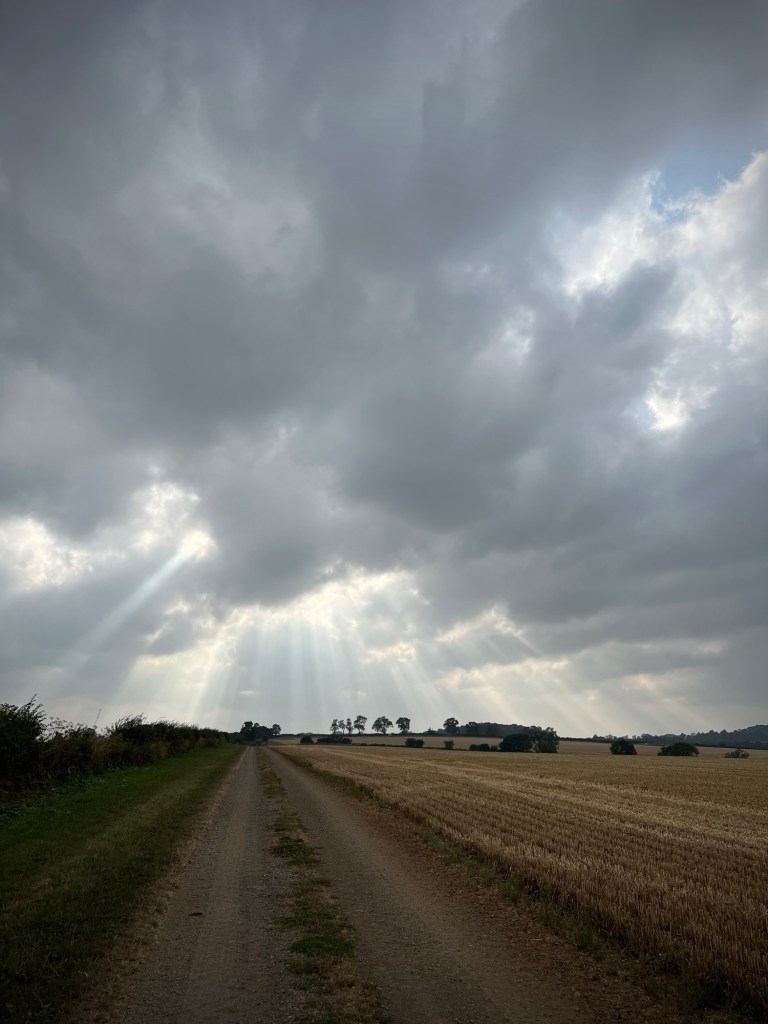
On my evening bike ride yesterday the weather resulted in a rather brooding atmosphere across the rolling countryside with dark clouds and a haze hanging low over the land (the result of Canadian forest fires I’ve been told).
I just hope the weather improves for my trip to RSPB Ramsey Island next week!
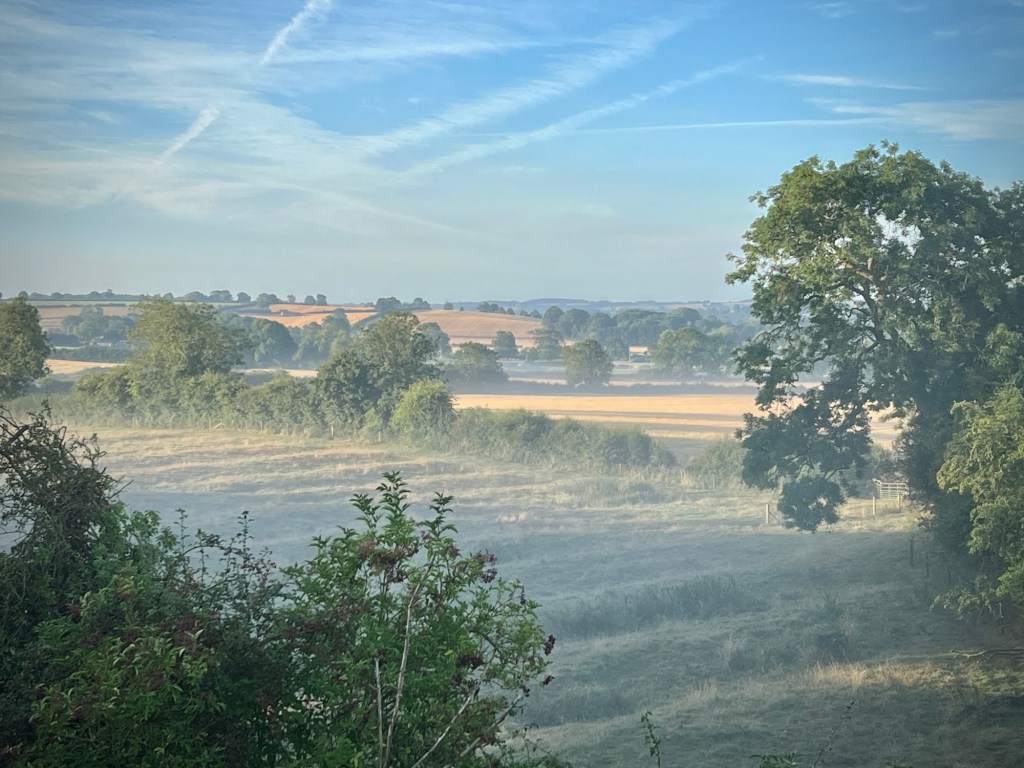
There was a notable nip in the dawn air this morning and it felt a bit cool to be outside in shorts and a t-shirt. There was also a heavy dew with the water droplets lying heavy on the grass and hanging from the gate that I often lean on to look over the valley. Being out early was rewarded with a nice sunrise and some great patterns in the sky…
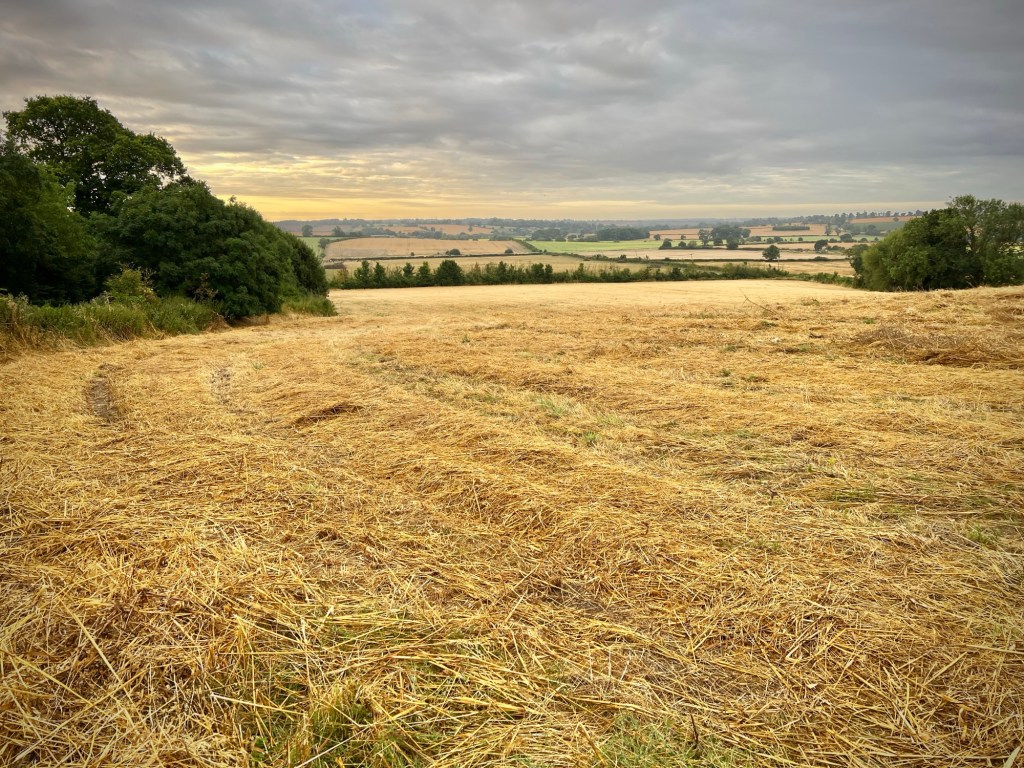
After the recent heat, and the generally great summer weather we’ve been having for the past few weeks, today is a bit cooler. The land seems more dull now, with the crops having been cut and the lack of significant rain parching the plants. The skies are a lot quieter too with the passing of the breeding season and the departure of the swifts. The latter is a particular sad moment for me as I love them and long all autumn and winter to see them again.
After the hottest day of the year yesterday, this morning there is a low covering of mist over the fields behind the rural railway station from which I catch my train to work. Today promises to be an other warm day and I expect the mist will burn off quite quickly but it seems is this another small tentative sign of autumn?
After seeing a large gathering of swallows on powerlines yesterday, this afternoon our garden has witnessed perhaps dozens of swallows and house martins in the sky above.
It has been a lovely summer’s afternoon spent mostly in a hammock or deckchair under our magnolia tree, listening to and watching the birds darting, chasing and circling above us. At one stage around ten swallows gathered on a TV aerial next door to noisily chatter to each other while a smaller group seemed more intent on heading southwards. The sky certainly has been busy with hirundines and perhaps some signs that summer of birds is drawing to a close.
However, we will still be left with our residents. The red kites and buzzards have been drifting over, crying out as they pass. A pair of ravens played in the breeze on their way up the valley. We also had a bullfinch drop buy, a bit of a rare site in our garden.
The weather has been much more like a good summer over the last few weeks and the next seven days look good too. So I’m hoping that the swallows and house martins stay a little longer and we can enjoy the sites and sounds of summer for a little while more.
Our annual trip to Sweden has come to a close again and as usual it provided a stark reminder of just how nature-depleted the UK is. A thought I’ve had since I returned was how glad I am to be living in a rural village rather than a city; the contrast would be even greater and my gloominess about the state of nature in the UK even worse.
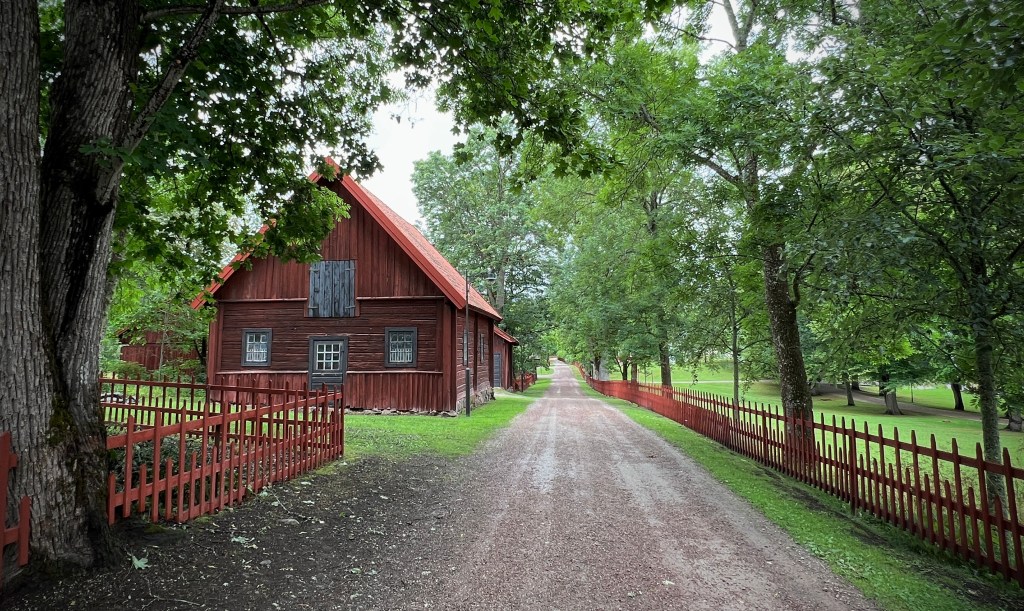
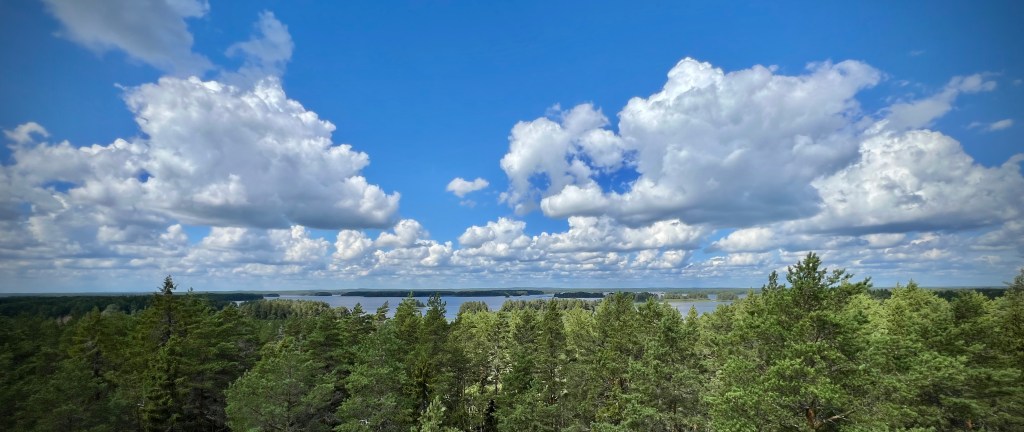
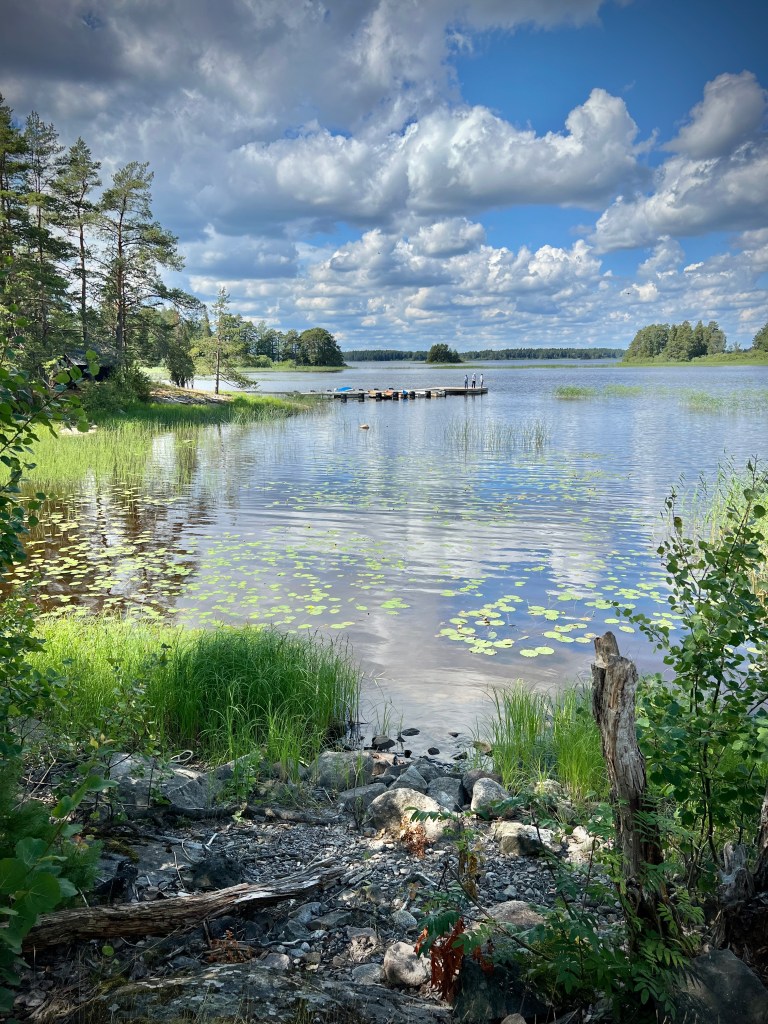
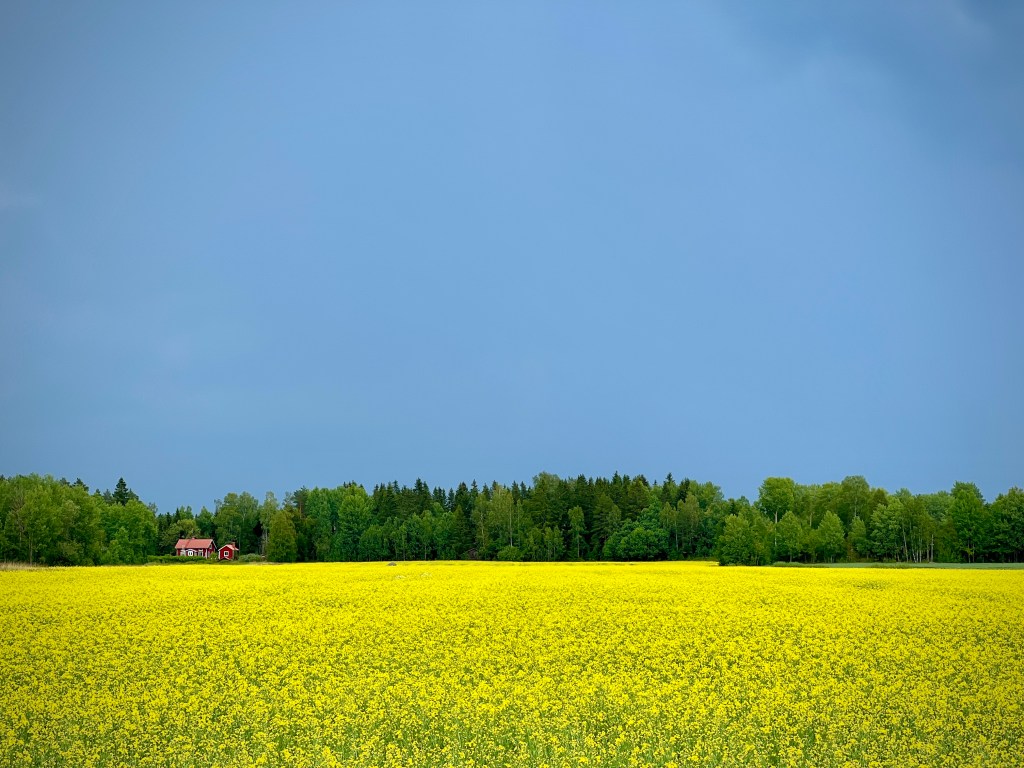
We are fortunate to be able to stay in a very lovely Swedish summer house out amongst the forests, meadows and lakes of central Sweden, about 125km north-west of Stockholm. The location is on the break between southern and northern Sweden; just a little further south, the landscape opens up into large arable fields and further north the forest cover is much greater. Our home for a week or two each year, feels a little softer where the influence of agriculture is lighter and the wild a little more, without being deep wilderness.
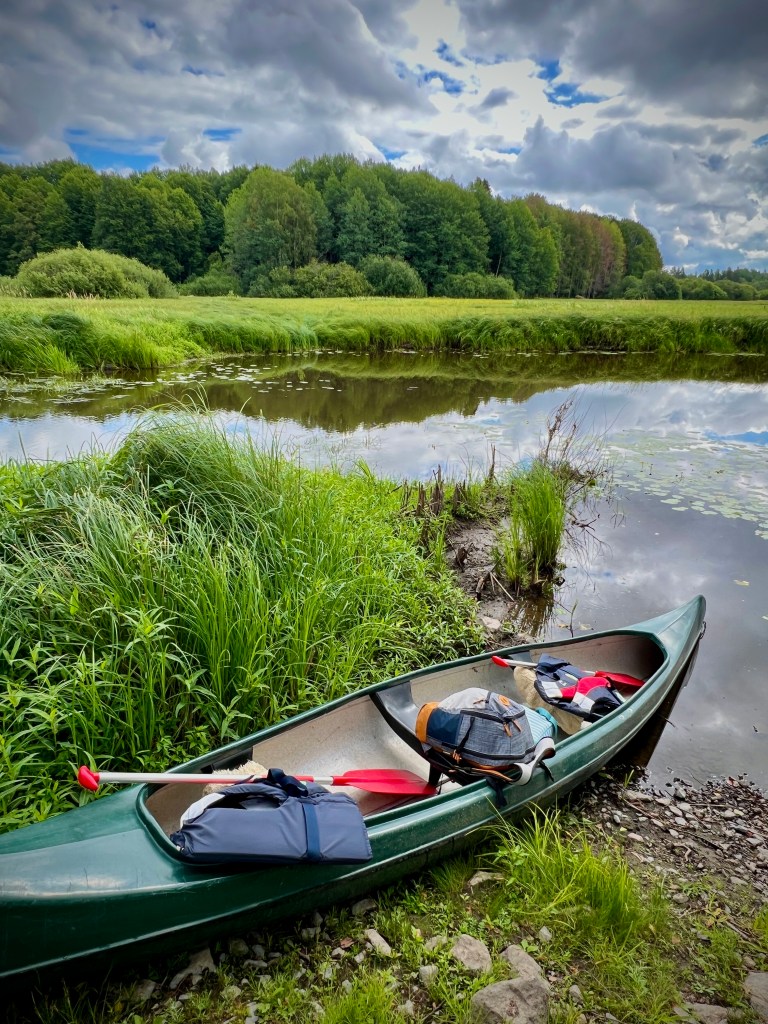
Over the course of the week, we went canoeing on a nearby river, went swimming on the local lake just a short amble from the summer house and we visited the national park an hour to the north. Each of these activities was accompanied by wildlife but even just sitting on the deck at the from on the house brought wildlife sights and sounds.
Whilst the birdlife in this year’s trip wasn’t as plentiful as last year – two weeks in June being more productive than one week in July – the birds around the house still provided some little stars including marsh tit, willow tit and the very lovely crested tit, and on a few evenings we saw roding woodcock on an aerial ‘racetrack’ above the tall treetops.
As shown in a previous post, the mammals in the garden included brown hare, badger and fox but this year we missed seeing any red squirrels and we didn’t spot the beavers down on the lake. We did see plenty of roe deer, including one doe with two fawns, as we drove through the countryside but we weren’t as fortunate as my sister-in-law who saw a cow and calf European Elk as she drove home from work on our last day.
Out on our canoeing trip, the raptors were the stars of the show with a distant and very high white-tailed eagle, a hobby exploding from a reedbed, a honey-buzzard drifting slowly past and two ospreys circling above us as we paddled across a lake.
Swimming in the warm waters of the lake has quickly become my favourite activity of a Swedish holiday (after only learning to swim well in the last few years). In turn, my favourite part of that is to float on my back and watch the swifts chasing around the skies above and the dragonflies hawking over the water’s surface.
Our stay wasn’t all birds and mammals though as we had a very good view of a sunbathing adder as we walked through a lovely bit of forest after we had cooked sausages on an open fire in front of one of the wind shelters that are dotted around the countryside. The wildflowers seems more plentiful than at home in Northamptonshire, the roadside verges packed with flowers of many kinds although the lovely, but invasive, lupins were mostly well past their best.
All this nature, that was so easy to find, is in stark contrast to nature at home. To be fair, Sweden is a much bigger country and one fifth (or so) of our population, so the human footprint is always likely to be bigger in the UK. However, the tolerance of larger wild animals is much greater (albeit not without its debates), the use of chemicals in farming appears less and the almost unstoppable desire for ‘tidiness’ in the countryside does not seem to be present. Overall, the balance of human control over natural processes seems far less and as a result wildlife and wider nature are far better for it.
I wrote a post a few years back about my ‘yearning for nature’ and each trip I take to Sweden makes that yearning for wild places and an abundance of wildlife even greater.
Just to make a bit of a mockery of this post, most of this post was written sitting in my sunny back garden, on a warm summer afternoon, when a fox jumped onto and walked along the top of wall opposite, swifts, swallows and buzzards were in the sky above and I could hear green woodpecker calling from a nearby tree and a red kite crying in the distance. It’s not all bad in the UK and my little corner of Northamptonshire has quite a lot of wildlife, but it’s just not as rich as I wish it was.
We had a lovely country walk today, albeit one in rather gloomy and drizzly weather. As we finished and arrived back at the car, we came across a gathering of swallows on some village power lines.










 Daft Mumblings