With a day to spare between getting home from our New Year trip to Devon and returning to work, we did plan to go on one of our favourite local walks. However, the weather was pretty awful so we spent the morning de-Christmasing the house. The afternoon looked little better but with the rest of the week likely to be spent working in my office at home (due to the train strikes), I decided I had to get out of the house, even it is was for a short while. We’re lucky to have Pitsford Reservoir about a ten minute drive away and it’s our nearest nature reserve, With a gap in the rain, I jumped in the car and headed that way.
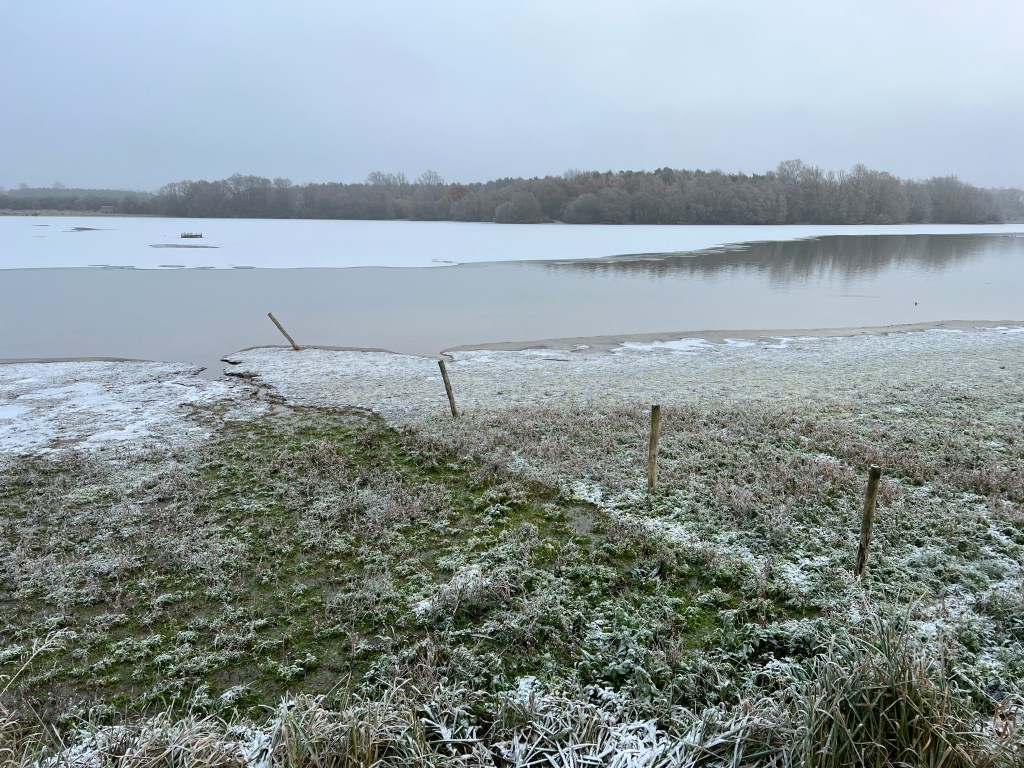
After all the hot weather and the drought over the summer, the water has been very low, even with significant local rainfall over the course of the autumn. However, on my first trip to the shores this year, the water is now back up to its high winter levels. This means that there is now very little exposed mud around the lake therefore little space for waders to feed; I saw only a handful of lapwing on my short walk.
On the other hand, the wildfowl are at very large numbers around the site and they gave me a good start to my year list of birds I’ve seen. There were good numbers of wigeon, mallard, teal, gadwall, tufted duck, and great crested grebe alongside smaller numbers of pochard. Thankfully, I didn’t see any signs of avian influenza; last time I counted 11 dead mute swans around the lake edge but I saw none today.
Elsewhere away from the water, there we plenty of fieldfares and redwings alongside groups of finches, tits and yellowhammers as well as tree sparrows in their usual place at the bottom of the track down from the main road to the western shore. Overall, I added 33 birds to my year list, not bad for an hour’s wander along the short of Scaldwell Bay.
The two images below are the same spot in the bay, looking from the Bird Club Hide, taken just over three weeks apart; the lower and partly frozen water in the first compared to the much higher water levels in the second.
This is my annual post looking back at the year as it comes to a close and reflecting on my interactions with nature over the past 12 months. Personally, this has been the most momentous years with nature playing a pivotal part throughout.
The year started, as it is now ending, with a short break with friends in Devon. On our first walk of the new year my bird watching got off to a good start with a whinchat and a flock of cirl buntings seen as we walked along the very blustery coast path. January also brought a visit to the Nene Washes; this large nature reserve in the Fens in Cambridgeshire is an easy drive from our home in rural Northamptonshire and was a revelation. Over the course of a couple of hours we had great views of flocks of lapwing and golden plover, a large flock of common cranes, some hunkered down short-eared owls and quartering marsh harriers and, surprisingly, a glossy ibis.
After a third bout of COVID delayed our trip, we eventually got to Sweden in May, a week later than planned. With family living there, I’ve made many trips to the country over more than 20 years but the pandemic put a halt to that and this was the first visit since the summer of 2019. It was an excellent trip for wildlife with the Swedish spring in full swing. Over the week we spent staying out in the countryside, we saw 80 species of bird and had some excellent wildlife moments. While grilling sausages in Fjarnebofjarden National Park, we were flown over by a white-tailed eagle which was then mobbed by an osprey, and each evening we watched beavers in the lake close the the summerhouse we stayed in. The scenery was also as lovely as ever, with the spring flowers bursting into life with wood anemones spreading in vast carpets in the forests.
Then came the biggest event of the year. We travelled up to Scotland, onto the Isle of Skye, to get married on a remote hillside on the Summer Solstice. The wedding was set in nature, in the most spectacular of locations on the Trotternish Ridge overlooking the Sound of Raasay and to Wester Ross in the distance. Nature played a full part, helping to make it the most memorable of days. As the wedding started, a cuckoo called and continued to call throughout, with backing from an occasional skylark and meadow pipit. We spent the rest of the day travelling around the surrounding countryside and coast having pictures taken in some of the most lovely locations Skye has to offer. A week on Skye was followed by a further week on the Isle of Harris and together they made a fortnight of ceremony and time in nature.
As August changed into September, I finally made a trip back to stay on Ramsey Island, my first stay since my three months there in 2019. As summer makes way to autumn, the island transitions from a breeding site for thousand of birds to a pupping site for hundreds of Atlantic grey seals. My week was spent monitoring the seal pups as well as all the usual tasks welcoming and introducing visitors to the island. Sadly, that was to be my last time with Dewi, the island’s sheepdog, who passed away later in the autumn. He was the best dog in the world, both very good at his day job rounding up the sheep and as soft as a brush – there will be a lot of people missing a cuddle with Dewi.
October brought the biggest wildlife event of my year with a weeklong trip to the South Luangwa National Park in Zambia. Returning to Africa felt like the closing of a circle in some ways. Having met my wife, Sarah, on my previous trip to Africa, to the Kalahari, in 2019, and all events that have happened since, not least the pandemic, the trip signalled a return to normal, but in a very wild way. We had some great sightings of both mammals and birds; prides of lions resting in the dawn, large families of elephants wandering through the scrub, a huge herd of buffalo slowing walking to a watering hole, colonies of southern carmine bee-eaters swirling over our heads at dusk and the eery calls of spotted hyenas echoing around the campsite in the pitch black of an African night.
Now as the year ends, we are down in Devon again to mark New Year’s Eve and another wild year is ending. Over the course of 2023, I’ve seen or heard 257 species of bird and now have house list of 66 since we moved in at the beginning of February 2021. This year also brought me my 500th bird species and my life list stands at 522. I also saw 54 species of mammal, more than any previous year and 14 species of butterfly.
This has, without any doubt, been the best of years, for so many reasons, but none can match getting married standing on a wild hillside on a Scottish island on the summer solstice – the perfect spot for the perfect moment.
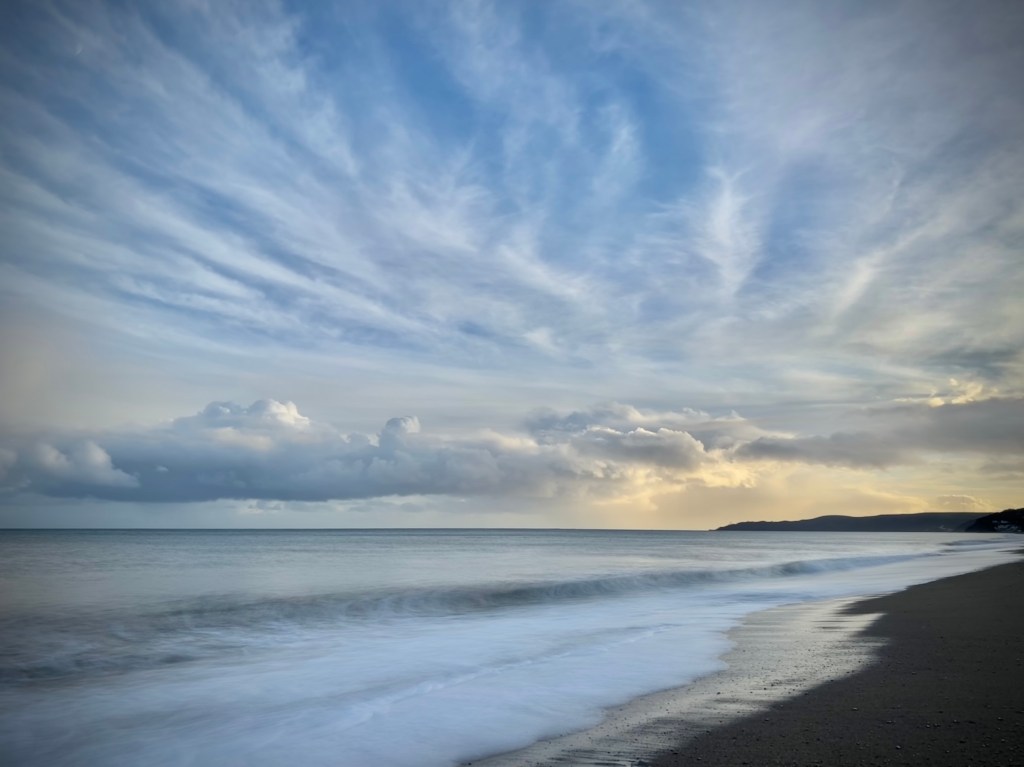
I’ll end my post with a picture from just down the road from where we are staying – taken at dusk on the beach at Slapton.
After getting married on the Isle of Skye in June, we caught the ferry from Uig and crossed the Minch to the Isle of Harris for a week-long honeymoon. The islands had been a distant backdrop to parts of our wedding day in the knowledge that we would be spending a special time out there.
We went to Harris for the solitude, landscapes and wildlife and we weren’t disappointed but there are other sides to the island that are very worth exploring, and I’ll start with those first…
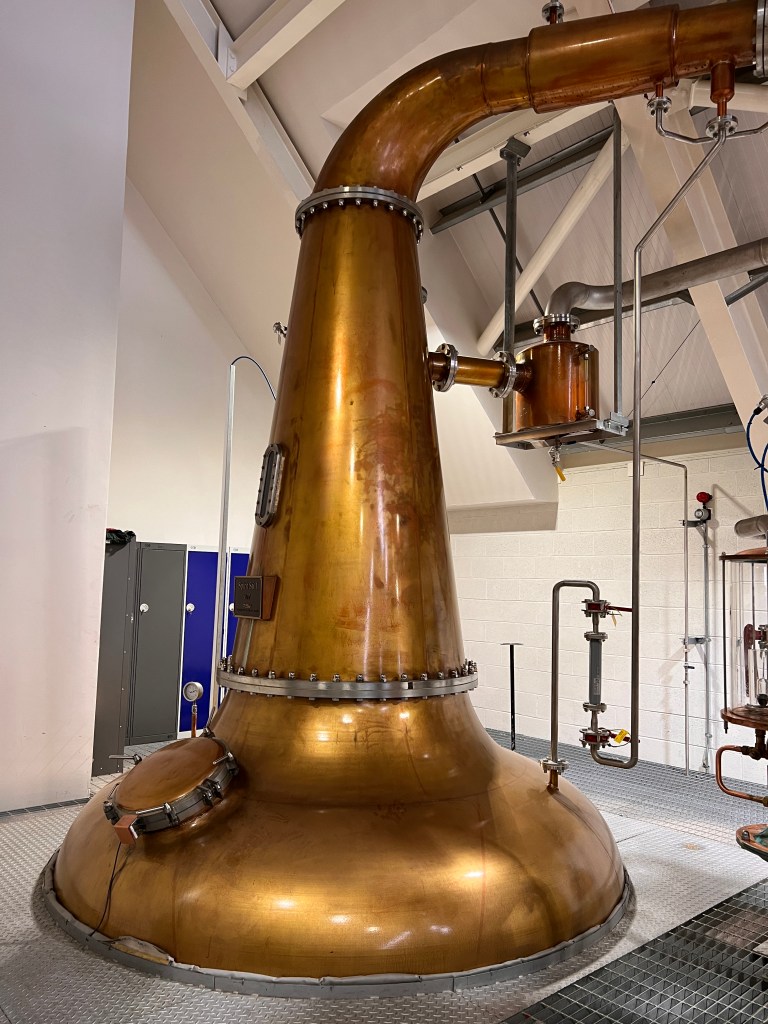
Harris is foodie heaven with all sorts of local produce to sample. One of the island’s most recent and increasingly famous exports is its gin. The distillery is nestled in Tarbert, the largest village on the island, and stands proud as a welcoming sight as passengers disembark the ferry. The gin’s bottle is as well-known as the very good gin itself, the glass designed to reflect the scenery of the island and the colour of the seas washing over the spectacular beaches. We had a tour around the distillery which primarily focused on the main reason for the place’s existence; to produce whisky. However, the first releases have yet to become available as the distillers are waiting for perfect moment when the maturing process had brought the flavours they have been waiting for. In the meantime, the much quicker to produce gin has been doing a roaring trade. The tour was excellent, with an opportunity to try the unaged whisky spirit and an existing whisky produced elsewhere which is similar in flavours to the one the distillers expect to release. I can’t wait for the first bottles of the Harris whisky to become available to the public but there’s no sign of it yet – I suspect it will sell out very quickly.
There’s more to Harris food and drink than just gin (and eventually whisky), however. There is a great range of small producers selling directly to the public and new and novel ways to buy it. Croft 36 is a particular favourite, selling a range of homemade, and very high quality, ready meals and baked goods out of a shed at the southern end of the island at Northton. We had quite a few meals from honesty box-style shed and were very grateful to them for setting some meals aside for us so that we could pick them up on the day we arrived – they often sell out very quickly each day, so if you leave it late, you may miss out!
We also visited Lorna’s larder for lunch. What looks to be a typical road-side food van actually serves outstanding seafood to its very plentiful customers who pop-in as they pass or travel some distance especially. When we called by, one of us had monkfish, chorizo and scallop skewers and the other had a seafood tasting box of monkfish, haddock and calamari, both served with great and plentiful chips.
The other gastronomic highlight of our stay was an evening at Flavour; it is an usual restaurant out on a business park on the road between Tarbert and Scalpay. We managed to book the only taxi on the island (it would serve anyone well to book early!) to take us from our cottage to the restaurant meaning we could have a drink with the food that thoroughly deserves to be accompanied by a good glass or two. The restaurant is unusual in that diners all sit down together, in one sitting, all at shared tables in the kitchen. The five tables of four get to watch the chef (Chris Loye) and his team prepare an eight-course tasting menu in front of their eyes and Chris takes his time to both explain each of the dishes to the guests and then wander between the tables for a chat. I have to say, the food was spectacularly good and worthy of top restaurants in major cities, so to find such greatness in a business unit on the outskirts of a village in the Outer Hebrides was a very pleasant and thoroughly enjoyable surprise to the say the least.
Since I was last on Harris some of the local shops have improved and the community shop down at the southern end of the island, at Leverburgh, was great. It sold a mixture Co-op branded products and great local produce meaning that my expectation that we should take a lot of food with us from Skye, was totally misplaced. Through a combination of the community shops, small pop-up shops and a variety of eateries, you can eat very well on Harris and there’s much that you will want to cram into your luggage to take home with you too!
Moving on from the food, most people must surely go to Harris for the scenery. Having been to all of the larger Outer Hebridean islands, and quite a few of the Inner Hebrides and Orkney, I think it’s true to say that Harris has a landscape all of its own (although with hints of elsewhere). There are two distinct parts of Harris; the North and the South. North Harris appears to be part of the much larger Isle of Lewis but the landscapes of the two islands are vastly different. Lewis is largely flat, or, at least, very lightly rolling but North Harris is the most mountainous part of the Outer Hebrides with a high, winding mountain pass connecting South Harris to Lewis. Whilst South Harris has hills, they are generally not as high as in the North and the landscape is much more varied. A large proportion of the South is moorland which appears to be mostly more rock than vegetation, and this is particularly marked on the east coast as you drive up the Bays Road and Golden Road. This deeply indented eastern coastline, dotted with small villages and hamlets, is where many families wear cleared to from the much more green and lush west coast. The west is where you find the fabulous beaches of Scarista, Mhor, Borve, Lar, Niosaboist, Seilebost and, most famous of all, Luskentyre. This last beach is simply spectacular and, perhaps, by my experience, the best beach in Scotland. Its shallow gradually sloping sands are vast when exposed as the tide goes out but when the sea comes back in, the blue, greens and turquoises of the water lapping over the light-coloured sand are something anyone who loves beaches should go to see. At the western end of the beach, the views are provided with a backdrop of the North Harris mountains, which together with the beach, has to be one of my favourite views.
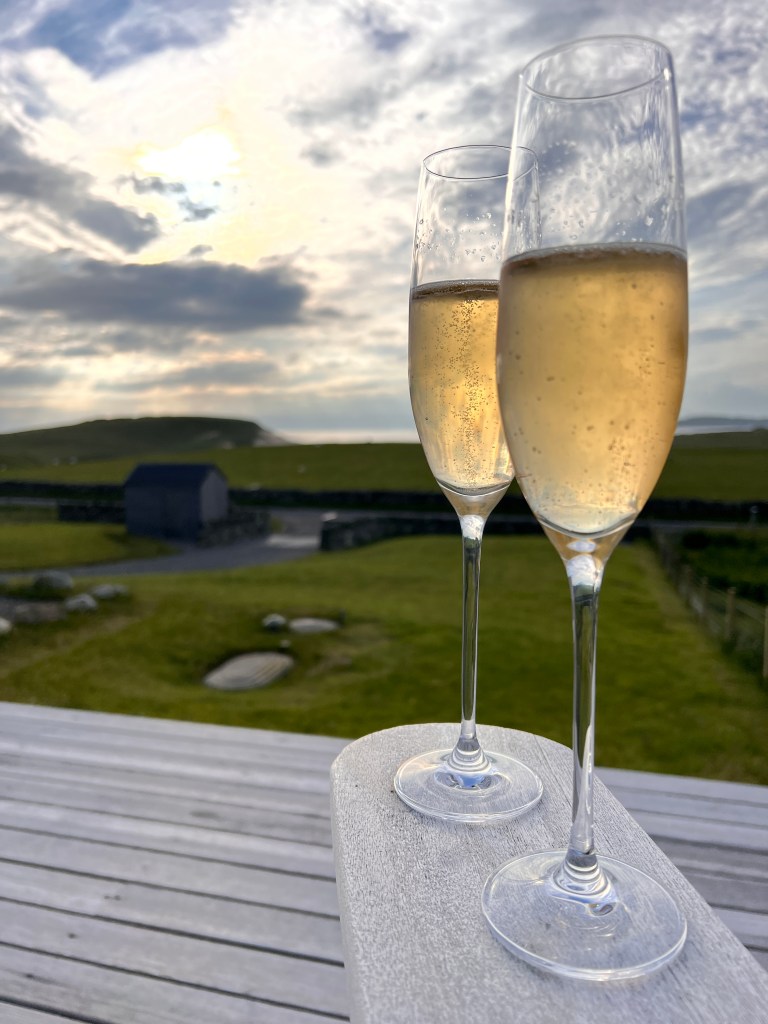
On Harris, you very much feel at the edge of the world; facing west, only St Kilda sits between Harris and North America. Travelling around the island, there are constant glimpses of the other Outer Hebrides, Skye, other Inner Hebrides and the mainland behind. These are places of big skies and big seas. Being on Harris in June, the daylight hours were long and the full darkness never descended across the land. The days could be warm with the strong sun beating down and any shelter making the sun’s rays felt. However, rough weather is never far away and it changes almost by the minute. My two stays on Harris have coincided with lovely hot weather at home in central England but that never quite reached where I was staying. This time on Harris, we sat out on the cottage decking with evening G&T’s and had sunny walks along the beaches but we also had to pack and wear our full wet-weather gear; packing for all four seasons is a must for a trip to Harris.
An island on the edge means that it has the wildlife of the edge. Our times spent watching that wildlife started with that ferry crossing and it continued each day afterwards until our crossing back. There were more seabirds around that I’ve seen before on a crossing of The Minch with razorbills, guillemots, black guillemots, cormorants, shags, kittiwakes and other gulls, gannets, max shearwaters and puffins aplenty. There were also several pods of porpoise breaking the surface of the water but most memorable of all were the three separate minkie whales, including one that leapt almost clear of the water before landing with a large splash not far off the port side of the ferry’s bow.
Once on land, we saw a good range of birdlife counting nearly 60 species combined with those seen at sea. On top of the seabirds, we saw golden eagle several times including watching one being mobbed by two (possible) merlins as we walked the Coffin Road. On the same walk we also had great views of a greenshank mobbing us as we crossed the moorland. On the beach at
Scarista we came across both arctic and little terns nesting on the sand above the high tide line. They were very much out in the open and we had to be careful to choose a path around them to avoid the nests; unfortunately other walkers seemed completely oblivious, even when being angrily attacked from above as they strolled through the nesting sites. Finally, sitting on the decking at the front of our cottage the common gulls would swoop across the sheep pastures, the snipe would occasionally drum above our heads and a concrake would often calls from the roadside marshland 100 metres or so away.
We hoped to see more wildlife on a boat trip around Harris but the one disappointment of our trip was its cancellation. It was meant to do the almost complete circumnavigation of Harris, starting in East Tarbert and finishing in West Tarbert, each side of the narrow piece of land separating North Harris from South Harris. However, the state of the sea was too rough and didn’t improve for the rest of the stay, so we will have to try again on our next trip to the Outer Hebrides. This was the second holiday on Harris where the boat trip has been cancelled, so boat trips are booked more in hope than expectation.
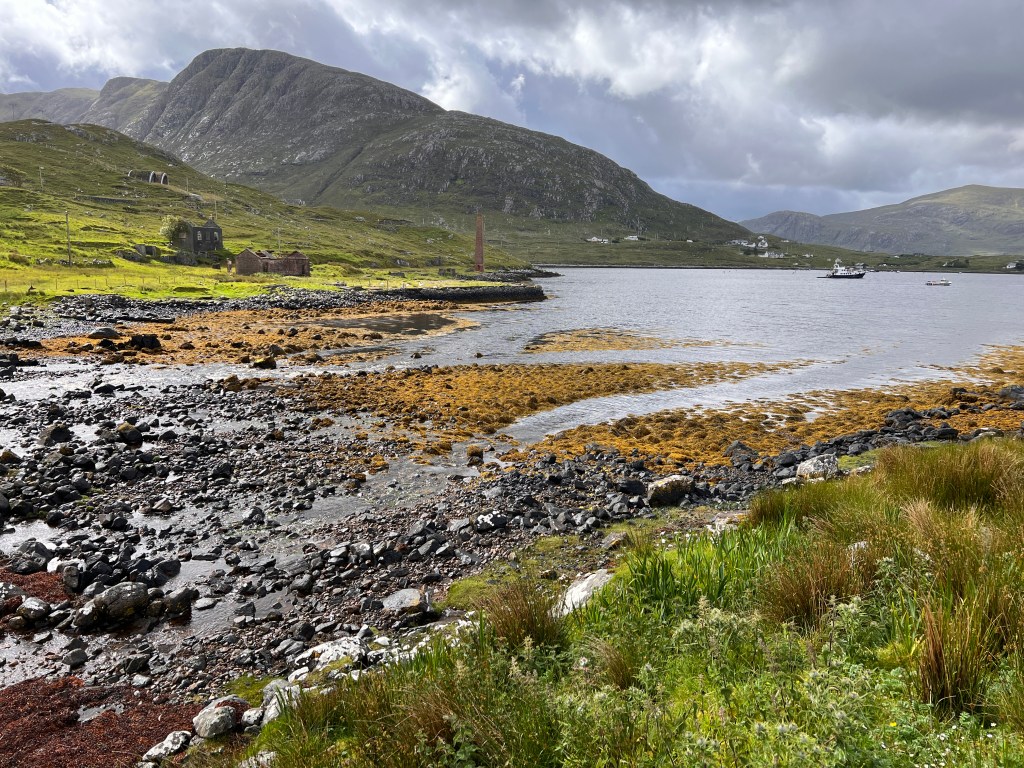
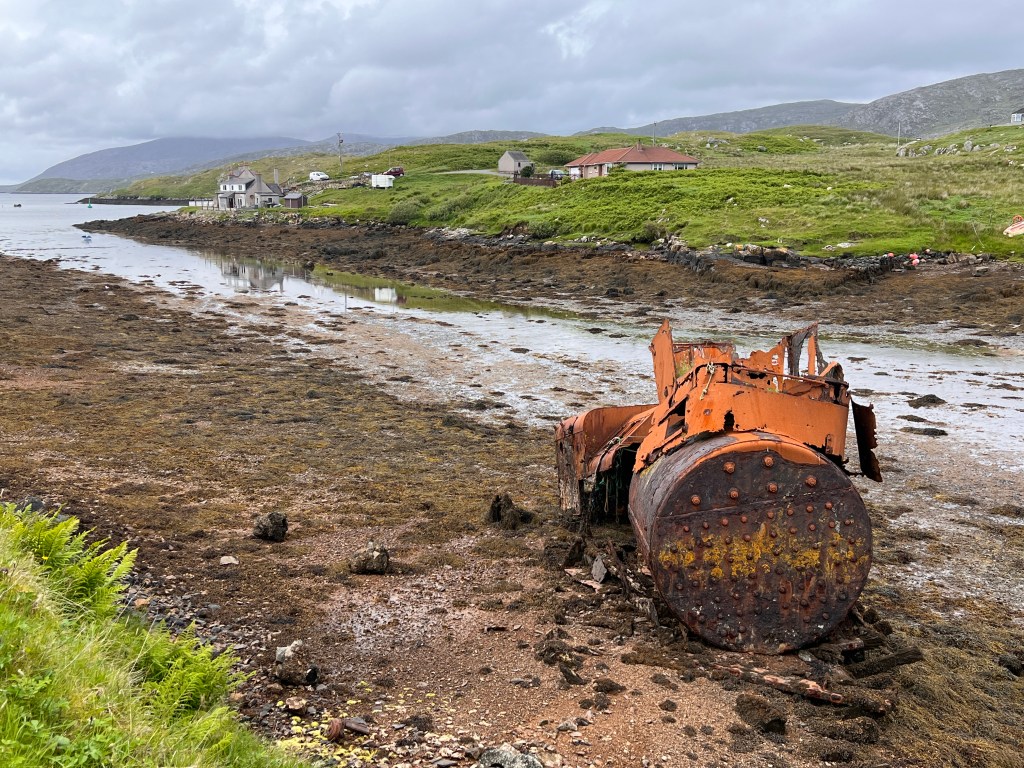
One place that will stick in my mind that we visited is Rhenigidale – the last village in the whole of Scotland to be joined to the road network. Prior to 1990, the village was only accessible by boat or by hill track from Tarbert. However, the memory isn’t actually of Rhenigidale; instead, it is of another village slightly back from end of the road, Gearraidh Lotaigear. Now long abandoned, the village reignited by slight obsession with dereliction. I find landscapes of former settlements and industrial places, particularly of more recent centuries, very drawing, both fascinating and melancholic; cleared and abandoned settlements on the Scottish islands feed this interest like few other places I’ve been to.
A short walk from the road, down that narrow rocky hill track, the village is laid out below, set on the south-east steep slopes of Todun, as the mountain’s streams fall down into Loch Trolamaraig. The stone buildings and walls are very clear to be seen, with the landscape slowly reclaiming them, its progress only kept in check by the grazing sheep. While most of the buildings look many centuries old, there is one which looks much newer and actually looks similar to other buildings on Harris and Scalpay that are still used or in a much earlier state of dilapidation. There are even remains of household furniture on the surrounding grass, evidence that the previous inhabitants lefts no so many decades ago. Each time I have visited an abandoned village in the Hedbrides I have been flown over by an eagle (and sometimes by up to four!) but it was not to be this time. Instead, we had a cuckoo flyby, which was quite fitting given one had called constantly during our wedding on Skye the previous week.
As it was our honeymoon we decided to pay a little more for our holiday cottage than we normally would and the Sheep Station 2 was an amazing small home of luxury. From our research, Harris has a great array of accommodation for a range of budgets, from high end holiday homes to hostels, and campsites that must have some of the most spectacular views in the UK. Combined with the food, however, Harris has a very high quality tourism offer and this is supported by other products we took away with us. We brought home some of Harris’ most famous export, its tweed, having also worn it for the wedding. Our cottage had smart notes of tweed in the wall art and furnishings and we couldn’t resist buying a throw and cushion to give our bedroom a few signs of our week on the island. We did resist bringing more art home with us, but we did buy a copy of the amazing photography book we found in our cottage. ‘Saorsa’ by Ian Lawson is a very high quality book depicting the landscapes, people and wildlife of Harris and it will keep our memories of our honeymoon alive for many years to come.
Overall, then, Harris is a place of wild landscapes and nature, of fine dining and drinking, of excellent and famous local produce, and provides a very high quality holiday experience. Harris also provides a choice of how and where to stay, whether on a budget or wanting to spend a bit more for an even more special time away. It’s not just for honeymooners but for anyone who loves wild, remote and beautiful places but also wants to eat well and take something of Harris home with them.
We couldn’t resist heading out this morning before the sun had risen to wander across the fields at the end of our lane. Under clear skies and with frost under foot, we crossed a few fields and then stood watching the sun rise over the distant rolls of the Northamptonshire countryside. As we were about to head back, a hare jumped up from its hiding place and ran off across the arable field.
With starlings nesting in our loft in the spring, generally making a noise up there much of the rest of the time, and frequently taking over the bird feeders in the garden, we tend to forget the winter spectaculars they are famous for.
However, one of the local bird blogs revealed last weekend that there is a starling murmuration at one of our nearby nature reserves, Summer Leys. After a day of DIY, we headed over there late on this afternoon.
It was a bright, completely clear evening as we stood by a gate overlooking some pasture and a reedbed in the distance. It took a while for the first groups of starlings to come into the area but then they just kept on coming…
For the first time in over three years, I’m back on Ramsey Island, volunteering for a week with the RSPB. After spending three months here in the spring/summer of 2019, it seems a very long time since I was last here and so much has happened in the meantime.
Hopefully, this might re-energise my blogging a little…
We were just relaxing in the shade of our magnolia tree when we heard a rustle in the undergrowth and there popped up this little chap.
It’s years since I saw one, in fact it’s so long I can’t think when it was. So this is another mammal to add to the ‘seen’ garden list on top of our nightly hedgehogs and less frequent foxes plus loads of bats.
Just hoping he’s not going to destroy our lawn like the last two did over winter.
We occasionally get asked by our neighbours to feed their cat and chickens while they are away. This weekend after closing the chickens into their coop for the night, we stayed in the paddock for a little while to see what wildlife would turn up.
Our neighbour’s paddock is often used for sheep but we know from signs we have previously seen that there may have a variety of wildlife visiting each night. As we sat with our backs to the hedge, we waited in the cooling evening air for the wildlife to turn up. It didn’t take long for the first to make an appearance; two types of bat flying over our heads hawking for insects along the hedgeline. Shortly afterwards, the sheep started to make quite a lot of noise and they moved up towards the top of the field. Soon afterwards, a fox trotted past us and down the field, probably having been to see if the chickens were still up.
In the distance we could hear a little owl calling in the growing darkness and we eventually saw a brief glimpse of our main target for the night, a badger breaking cover but soon disappearing again before we could get a good look. We eventually had to wander back home but on the way we heard a rustling in the undergrowth and found a hedgehog out for his evening rounds.
That wasn’t the end of the wildlife, however. For two nights I put out my new trail cam to see what else uses the paddock at night. Whilst my trail cam skills haven’t got any better, I did manage to get reasonable images of badgers, a fox and, slightly more surprisingly, a muntjac. This last find must been in the field only moments before I turned up to release the chickens and pick up the camera.
After a walk in the last of the sun this evening, as we returned to our car, we saw three roe deer grazing in the open arable fields. We stood and watched them for a few minutes as they grazed on the new shoots, well aware of our presence and looking up in our direction every so often. A blackbird and a small flock of yellowhammers provided the backing music to the view as the sun brought a orange hue to the greening fields and hedgerows.
It was exactly for moments like this that we moved to the countryside, fleeting moments that being a connection to nature. In the 40 years I lived in Cheshire, I didn’t once see roe deer in the surrounding countryside. We’ve now seen them twice in these fields below Hanging Houghton and plenty of muntjacs a number of times in various places across the area.
We eventually drove away after the three deer moved into the hedge line, only to find there were actually four together in the fields, a buck and three does.
Not the best image from my phone; three deer just visible at the bend of a hedge.
My first post of the year made an aim to get back into conservation volunteering after leaving so much of it behind when I moved home last year. I’ve already made a good start with a breeding bird survey grid square secured for this spring and a week on RSPB Ramsey Island in September.
I may have said before that whilst my wildlife interests are wide and I spend a fair bit of time focused on birds, I’m particularly interested in mammals. I’ve tended to find that volunteering opportunities for mammals are much more difficult to come by. However, after following the local badger group on social media for a while, I decided to join and see how I could get involved. The first step has been to get training to do sett surveys and to look for setts when out on our walks around Northamptonshire as well as closer to home.
A few weeks ago on a chilly Saturday morning I attended a training session provided by Northamptonshire Badger Group. Run outside at a live sett, the morning of training gave me a very good introduction to many aspects of badger’s lives. The purpose of the training was to introduce me and the other attendees to badger ecology and how to undertake surveys of their setts. We learnt about the different types of sett, how to know whether they are in use including the the field signs to look out for, some of the legal background and how to spot a blocked sett. I have also bought a couple of books to widen my knowledge of badgers and booked myself on a day-long course on badger-related crime provided by the Badger Trust.
Since the training we have been out for a few walks around the Northamptonshire countryside and have surveyed seven setts so far and provided the details to the country badger recorder. In just one walk yesterday we found four setts on a six mile route. It’s unwise to provide details of the locations in the public domain as there are plenty of people out there who wish harm to both setts and the badgers living in them, so I will be careful with any information I post on here..
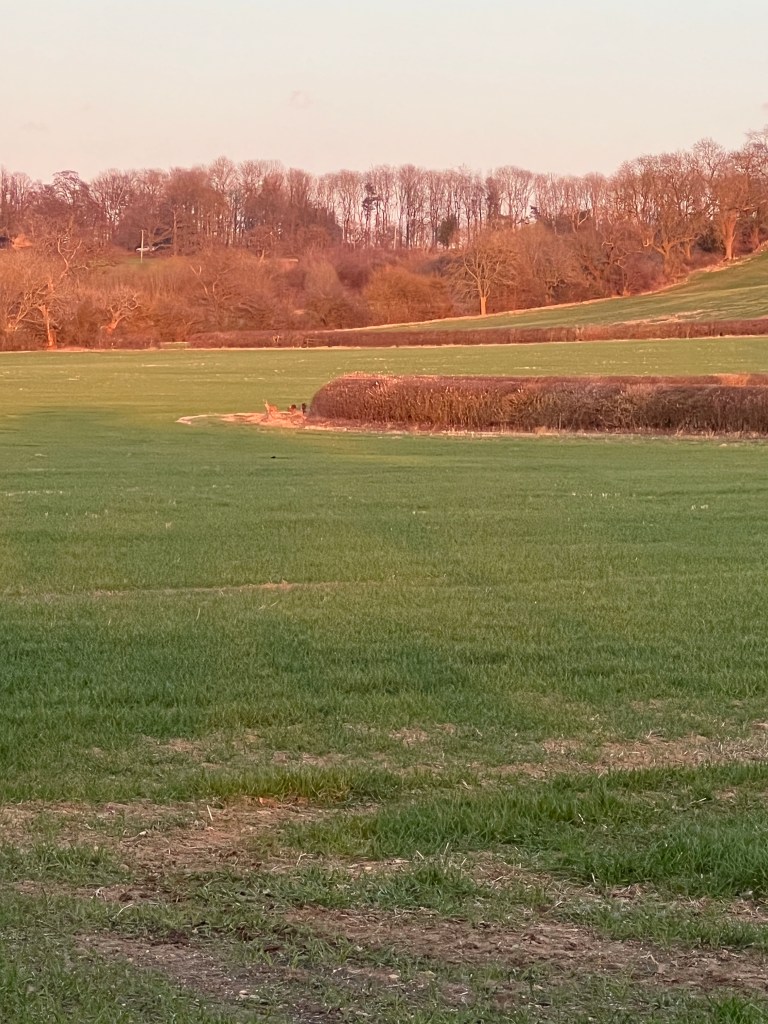
However, below is a photo of the fourth sett we found yesterday. It included a huge hole in the middle of a crop field with other holes on the edge of the planted area and some more in the adjoining copse, all within a short distance of the public footpath we were walking on. The farmer had avoided the huge hole and planted around it. It is illegal for anyone to interfere with a sett, so ploughing over the hole would have been an illegal act, but I’m hoping the farmer did this out of care for wildlife. The hole was so big that it could also have damaged the tractor if they had tried to go straight over it.
I’m hoping this is the start to being able to do more to help the wildlife of Northamptonshire after being very pleasantly surprised at how rich nature in the county is compared to my former home are in Cheshire.












 Daft Mumblings