A last reward from the final bird survey of the year

After being foiled by the weather since the beginning of November in my attempts to complete a winter bird survey at Blakenhall Moss, I finally managed to get it done a couple of days after Christmas.

I do these surveys for Cheshire Wildlife Trust (CWT) at their Blakenhall Moss and Bagmere reserves and need to make at least two visits to each site over the course of the winter; one in November/December and the other in January/February. I did the first Bagmere survey on 1st November in a short weather window but there hasn’t been any suitable weather (dry and still) since or at least on days when I’ve been free.

IMG_7740

Blakenhall Moss

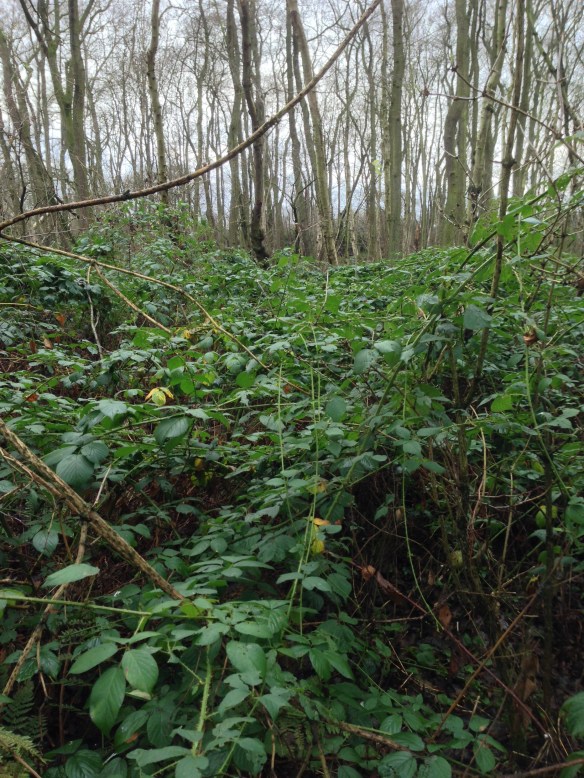
The last breeding bird survey visit I made to Blakenhall was back in May and the site has become even more overgrown by brambles. The reserve sits in a large depression in the Cheshire countryside and the Wildlife Trust has cleared the woodland from the site, except for a narrow band of trees around the boundary. The drainage ditch from the site has also been blocked and the water levels have now risen. This has left only a relatively limited area through which the bird survey can be undertaken, in a large loop through the remaining woodland. However, the bramble growth and the higher water levels made the survey very difficult and I spent more time bashing through the brambles and wading through the water than actually observing and listening for birds. Some parts of the survey route are now almost impassable and I suspect that the next year will see the brambles blocking the survey route altogether.
IMG_7734

Pesky Brambles

Despite the difficulties getting around the site, I did manage to complete the survey, although I suspect the disturbance I caused getting around may have distorted the findings. I recorded 21 species including three of particular interest. I found marsh tit and and lesser redpoll, two red-listed species, and a good-sized flock of teal. The teal first wintered at Blakenhall last year, following the raising of the water levels and the flock has returned but is now slightly larger.

Another positive finding was that the invasive species work that I’ve done at the site with Crewe & Nantwich Conservation Volunteers (CNCV) has been a success. There were several areas of the site that were overgrown with rhododendron and several visits were made to clear the largest of the areas of this non-native species. After a full growing season since the area was cleared, I found only a small amount of regrowth and this could easily be removed with one further visit (maybe some of the bramble could be cleared at the same time!).

IMG_7737

A small amount of rhododendron re-growth

Whilst not necessary, I also took advantage of the weather window to do a second November/December survey at the Bagmere reserve and it was well worth it. It has been quite concerning that during the past 12 months willow tits haven’t been recorded at the site. Over the course of the year I have done seven surveys at Bagmere and undertaken several tasks with CNCV but haven’t recorded these birds during any of those visits. As I was on the return leg of this survey, having made my way to the far end of the site, I stopped to watch a small roving flock of birds. Amongst the blue tits and a goldcrest were two other birds but I couldn’t confirm what they were to begin with. Marsh tits and willow tits are virtually identical and I find it impossible to visually tell them apart, however, they make distinctly different sounds. After waiting for a while one of the birds made its harsh call which made it immediately recognisable as a willow tit – they’re back!
IMG_7741

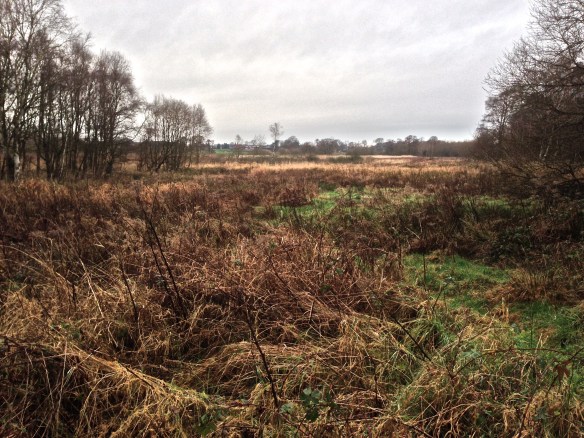
Bagmere

The previous recordings I have made of these birds at Bagmere have been made easy by their willingness to make their calls but perhaps they’ve just been a bit quieter than usual over the past few months and I need to take more time during surveys to ensure I don’t miss anything.

Well, that’s it for my surveys in 2015 (breeding bird surveys and winter bird surveys at Bagmere and Blakenhall for CWT and a breeding bird survey near Bulkeley and a House Martin Survey for British Trust for Ornithology; and a cliff-nesting bird survey by jet-boat with the RSPB) but there will be more to come in 2016. Hopefully these will include surveys of the house martin nest on my house – it’ll make a change to do surveys from a seat in my back garden rather than bashing my way through brambles and wading through flooded bogs!

CNCV: Christmas Task

Today was the Christmas Task for the local conservation group I volunteer with and like last time out we spent the day at Wybunbury Moss National Nature Reserve.

IMG_7704

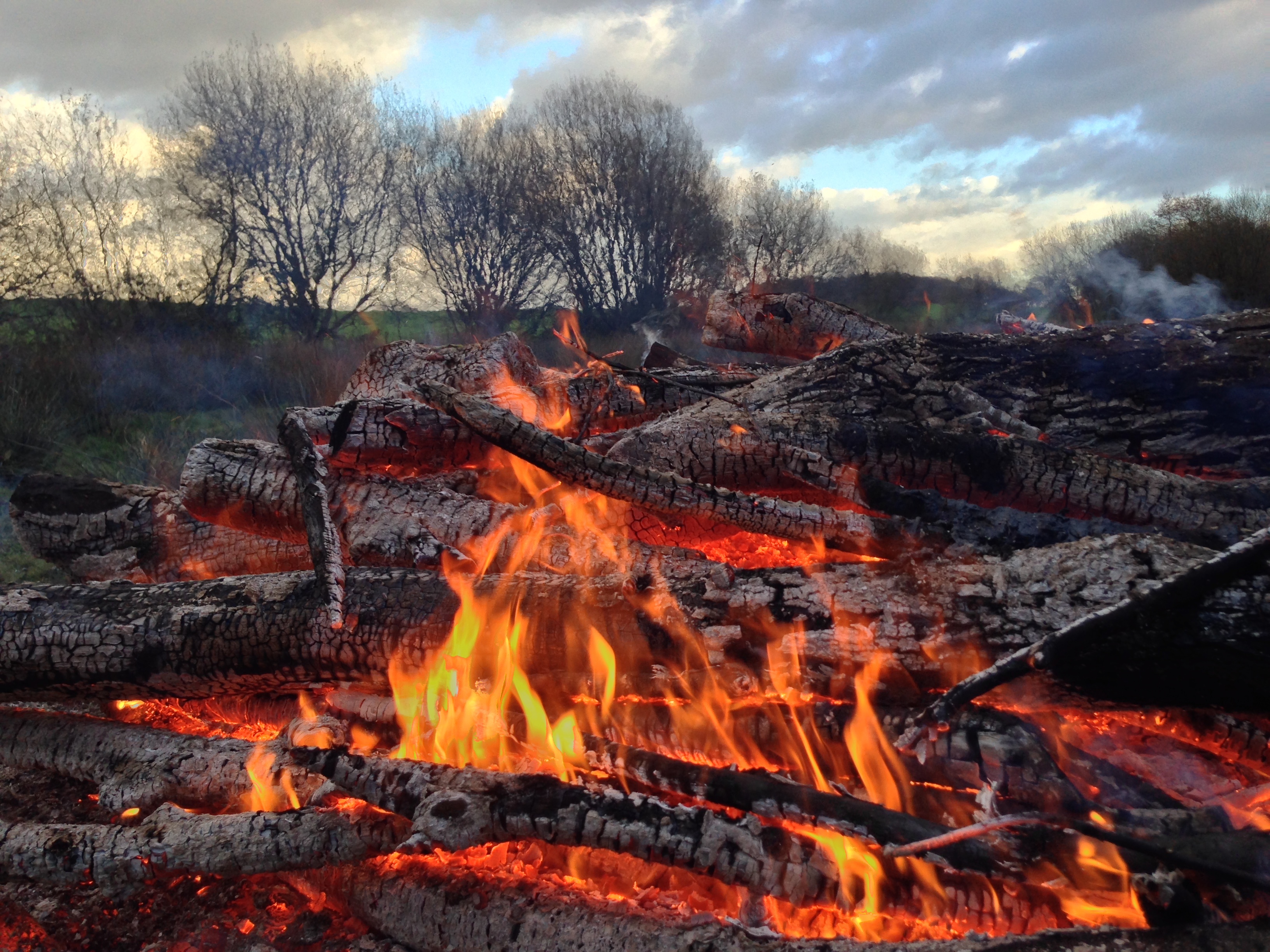
Today’s task was to make good use of the burning platform that we built from logs a fortnight ago.  Natural England has been working at the site over recent weeks and our task was to burn the brash left behind by the tree removal operations.

It wasn’t all work and at lunch, with the fire having burnt through most of the brash, it was time to get stuck into the Christmas food.  Soup, potatoes and mince pies were followed some time later by the sausages I cooked over the hot embers of the fire.

IMG_7714

To finish off the day we had (non-alcoholic) mulled wine and chestnuts roasted over the last of the fire’s heat – proper Christmas food – and all consumed under a rare clear and bright blue sky.

IMG_7726

Crewe & Nantwich Conservation Volunteers: Wybunbury Moss

I spent today with CNCV working for Natural England at Wybunbury Moss National Nature Reserve.  Whilst I often go for a walk on the footpaths and permissive path around the outside of the Moss, today was a rare opportunity to spend time out on the Moss itself.

IMG_7677-3

Natural England employed us to thin the woodland cover on the edge of the Moss, taking out birch trees and using the large logs to build a fire platform.  Natural England has been much of the woodland thinning itself, so our task in two weeks time will be spent trying to burn as much of the brash as the fire will take.  Our next outing will also be our Christmas task – everyone chips in with some festive food and we use the fire to heat it, while keeping ourselves warm too.

Whilst today’s task wasn’t particularly cold to begin with, the driving rain in the morning soaked us and by mid-afternoon everyone was starting to feel the chill – an early finish was certainly welcome!

Working on the Moss itself is a real privilege as there is no public access to  the site due to the dangerous nature of the ground. Under as little as a metre of moss and peat, lies a lake which is up to 12 metres deep – walking across the Moss, the surface moves and ripples.  If it wasn’t for the odd house or two visible from then centre of the Moss, you could easily think you were standing in the middle of a wilderness area – it’s quite a special place.

Two visits to Bagmere

Last Sunday I went to Bagmere with Crewe & Nantwich Conservation Volunteers (CNCV) to work for Cheshire Wildlife Trust. We got on with our usual task of fighting back the encroachment of tree saplings onto the fenland landscape and burning what we cut.  Unfortunately, the wood has to be burnt on site due to inaccessibility for vehicles and the distance from the road.  However, it’s no hardship for most of us and some (well me, actually) always look forward to the colder months when we can have a big fire – there’s no better way to finish a task than sitting around a fire in the last of the day’s sun, as the flames die down and the last of its heat keeps you warm – marvellous!

IMG_7527

I returned to Bagmere on yesterday to start my winter bird surveys for the season.  Like the breeding bird surveys I do for Cheshire Wildlife Trust, I visit the Trust’s Bagmere and Blakenhall Moss reserves to record bird species.  Unlike the surveys in spring and early summer, the winter versions are simpler as I only note the number of individual birds of each species I see.

Walking around the reserve on Saturday was lovely, the sun had broken through the early morning fog and a bright blue sky emerged.  I spent just less than an hour walking from one end of the reserve to the other and recorded 22 species altogether.  I didn’t find anything unusual but it was good to start the surveys with a reasonably good list.

Unfortunately, as with the four breeding bird survey visits between March and June and last of the previous winter bird surveys in January, I didn’t record willow tits, a red-listed species.  This means that I haven’t recorded them at all so far this year across all the survey visits and several tasks with CNCV.  The Wildlife Trust installed some nest boxes for them in the early spring, in the area of the reserve where I had last recorded them and I spent some extra time in that area to see if they were around.  It would be a depressing finding if they have disappeared – this is only the second full year of surveys I have done at the reserve, with my surveys being the first ever undertaken at the site.

IMG_7551

Crewe & Nantwich Conservation Volunteers

I don’t normally blog about the local volunteering I do with Crewe & Nantwich Conservation Volunteers – not sure why – but I think it’s about time I started.

I’ve been volunteering with the group for four years, heading out into the South Cheshire countryside every other Sunday to do practical tasks for a number of different organisations.

Our tasks are varied and focused on helping to conserve or enhance particular habitats and environments. We often undertake similar tasks over several Sundays to enable us to complete larger jobs. Our tasks tend to follow the seasons with our cycle of chopping, burning, invasive species removal and meadow raking being very familiar to long serving volunteers. We also do some more obviously constructive tasks such as the bench installing and path building we did last weekend.

Over the course of each year we generally do tasks for Cheshire East Council Ranger Service, Cheshire Wildlife Trust and Natural England, although for a past couple of years we’ve also done some tasks for a private landowner.

The group doesn’t have an official motto but ‘Conservation & Conversation’ works pretty well – although something related to fire or biscuits could be just as apt!

The group moved into the 21st Century a couple of years ago with the launch of our own Facebook page and Twitter feed through which we keep follower up to date with our latest tasks.

As we move into the latter part of the year, my favourite kind of tasks start again – cutting down trees and setting fire to them!  It may sound counter-intuitive to do this in the name of conservation but it is vital in helping to preserve some of the rarest habitats we have.  Whilst I’m a believer in letting nature have its way, I also understand that if we did so without any management at all, we would end up losing some habitats that are now few and far between in the UK.  That we have to do this at all is more than just a shame and entirely the fault of humans.  Sometimes we need to take what would normally be odd action to help undo the harm we have done – if we don’t do something, some habitats may be lost forever.

Anyway, for me, there’s no better way to spend a chilly Sunday afternoon outside than chucking a few logs on a fire and spending a few hours poking it.

IMG_5154

A pink-tinted journey to a wet osprey shift

Setting off in the early morning light, I look upwards in hope, seeing clear blue sky and thin hazy clouds dissected by contrails. Out on the Cheshire Plain the fields are bursting with the results of the farmers’ toil – cattle, sheep and crops. The harvest can’t be far off; the once green shoots of spring have now grown into tall golden lakes of wheat and barley. The roadsides are marked by large stands of rosebay willowherb, adding a pink splash of brightness to the dominating dark green of the surrounding pastures, hedges and woodlands. Across the border, the sky is brighter still but the sun hasn’t yet broken through its cover.

The warmth in the car is deceptive; this might be the peak of summer but the passing air is cool. Pressing onwards into the hills, the hope is starting to fade as the clouds begin to enclose the view once more. There is mist amongst the forests of tall pines and dampness on the road where showers have already been. Turning onto the high moorland road, fine drops of rain start to appear on my windscreen. Approaching the top, there is another pink flower in abundance; the season’s final display of foxgloves, later than the others in the lower fields and hedgerows. More pink joins them, with thistles standing amongst the roadside sheep, both trying to resist the growing breeze.

The rain comes down, turning from fine drops, to drizzle and into a heavy downpour as I flow down into the villages and back onto the main road. Turning right at the pub, there’s one last set of rises and one last show of pink for the journey. As I crest the top of the hill above the hamlet, yet another display, with the heather blooming in small patches amongst the crags. The view is almost washed out as the rain comes down heavier still and as I make a final descent onto the floor of the Glaslyn Valley, all hope for a fine summer’s day seems lost.

There’s no opening of windows this time as I turn through the narrow gate onto the wooded track. The only sound accompanying me is the heavy fall of fat drops onto my roof. The trees and undergrowth look invigorated by the water, a deep and rich green covers the land. Out into the wet meadows, the weather seems to be autumnal not high summer. Over the railway line, past the caravan, across the river and the bund, the chicks are growing fast in their tree top home. Feathers have sprouted and wings are being stretched – a first flight can be only a few short weeks away.

IMG_6923This weekend, the turning of July into August, should be the high point of summer, when the weather is at its warmest. Instead, my shift down in the Glaslyn Valley was probably the wettest so far this year and the temperatures barely got into the mid-teens. The rain was coming down heavily when I arrived at Protection and was torrential at times during the day.

It was an uneventful shift, just how we want them really. The female spent a bit of time chasing crows and the male brought a large fish in at 2pm (a sea trout I think – I’m not very good at this fish spotting lark!). The sky began to brighten around noon, after another great outburst from the darkness above, but the hope of a nicer afternoon didn’t last long as the rain came down again not long after 1pm. Much later in the afternoon the sky brightened again, with a sliver of blue sky as well but it was a too little too late.

IMG_6927

Young great, blue and coal tits spent the day messing on the feeders outside the caravan – several even visited me inside and had to be persuaded to leave. There was up to a couple of dozen young and adults, and a constant twittering accompanied my day. Two great-spotted woodpeckers made frequent visits to the feeders too, one begging for food from the other. A peregrine also put in a fleeting and distant appearance, gliding at speed up the valley.

IMG_6694

The chicks have grown a lot since my last shift four weeks ago – they’re unrecognisable from their younger, more bobbly, little selves. Their adult plumage is coming along nicely and they certainly now look like ospreys. With the heavy rain at times during the day, the female tried her best to protect the chicks from the worst of it but they’re getting a little big for her now. They all looked a bit miserable as the rain came down and are probably yearning for some proper summer weather just like the rest of us.

There’s one more shift for me this year, in a couple of weeks’ time, and hopefully the chicks will be about to fledge and maybe summer will make an appearance too!

A conclusion to survey season

Last weekend I did my last bird survey of the breeding season, having had a busy few months of recording since the beginning of March. This year I’ve been doing surveys at two nature reserves for Cheshire Wildlife Trust, I’ve completed a Breeding Bird Survey for the British Trust for Ornithology (BTO) in a grid square near Bulkeley, I’ve taken part in the BTO’s House Martin Survey and I did a bit of surveying for the RSPB when I stayed on Ramsey Island.

The surveys for Cheshire Wildlife Trust, at its Bagmere and Blakenhall Moss reserves, were done once a month during March, April, May and June, and this year the overall bird lists for the sites increased further. Over the course of the four visits to Bagmere, 39 species were recorded and this was two less than last year. However, I also made a note of species when I spent a day there with Crewe & Nantwich Conservation Volunteers and that visit brought the total up to 45. It was disappointing not to record willow tits at Bagmere this year, a red-listed species, particularly as some nest boxes have now been put up for them; I haven’t seen them at the site since December last year. However, it was good to hear water rail on each visit and to add some new species including garden warbler and grasshopper warbler. This year I didn’t record any confirmed breeding species at Bagmere but I did record 19 probables and 12 possibles.

IMG_5461

At Blakenhall, the transformation from woodland to wetland continues to increase the species seen at the reserve. Up until a couple of years ago there would have only been woodland species but now there is a range of both wintering and breeding wildfowl. In total, 47 species were recorded, up from 35 last year and there were five species confirmed as breeding including blue tit, great tit, Canada goose, greylag goose and treecreeper. In addition, 12 probables and 22 possibles were recorded. There were some new species at Blakenhall too including grasshopper warbler, spotted flycatcher, swallow, shoveler, tufted duck and little owl.

IMG_5770

I’ve now completed two years’ of Winter Bird Surveys and Breeding Bird Surveys at Bagmere and Blakenhall, and these have set a baseline for the sites as they were the first surveys of birds done by the Wildlife Trust at the reserves. I’ve now recorded a total of 53 species at Bagmere and 59 at Blakenhall.

The House Martin Survey is being undertaken for one year only, to help to assess the state of the house martin population in the UK. My second visit to my allocated grid square added another nest to the one recorded during the previous visit in June. However, it was only the first one that appeared to being used, with adult birds visiting to feed chicks. Fortunately, there are more house martins in the area, with colonies just outside my grid square. It was also nice to see a good dozen or more floating around in the evening sky last night when I was at a BBQ only a couple of hundred metres from the boundary of my square.

My hopes were raised that the old house martin nest on the side of my house might still be used this year as I saw birds making fleeting visits over a couple of days and I found droppings beneath the nest when I came back from my two weeks on Ramsey Island. However, those hopes have gone as the birds’ interest didn’t last long and it’s now too late for a pair to breed in the nest. Maybe next year!

IMG_2465

I really enjoy doing the bird surveys, not only because I’m doing something practical to support conservation efforts, but also because it’s lovely to spend a couple of early hours on spring mornings wandering around nature reserves. However, I have to say that the bird survey I helped with on my first day on Ramsey Island was the most fun and memorable of the year. The seabird survey by jet boat in warm summer sunshine was spectacular and a world away from the freezing cold March morning at Bagmere when I crunched my way around the hushed, snow coated reserve with my fingers, toes and nose being nipped by the frost.

Sunshine, Ospreys and Test Match Special

I pull back the curtains and the day welcomes me with rain drops on the window and puddles on the ground; of course it’s raining, I’ve got an osprey shift! However, the rain has been and gone, and looking up, there’s blue. Leaving home and driving through the Cheshire fields, I can see what has gone, rain falling further east. Ahead is more clear sky and my shades go on as I cross the border. It may be sunny but there still a chill in the early morning air and the heating soon warms the car. Despite my expectations, breaks remain in the clouds and the sun goes in and out on my way. I choose the moor top route again but stop part way to look down on the stone bridge over the mountain river.

Passing through the gateway and over the cattle grid, my windows are already open and the woodland is full of bird song. The chiffchaff, willow warbler, robin and wren welcome me while the breeze helps to bring the scents of the damp-covered land into the car. The debris on the track cracks and snaps as I drive under the dappled sunlight. The roadside bluebells are now past their best but the summer flowers are starting to show; the first foxgloves are bursting up their stems. Leaving my car, a cuckoo calls from the hillside trees and buzzards are feeding on the recently ploughed field. The swallows skim low over grass and a redstart chatters in a lane-side tree.

Out in the open, the ground is now dry, made more so by the warm sun and cooling wind. In shelter it is almost summer-like; away from cover, when a cloud rolls over, it’s almost cold and could be the first days of spring. Hope still stands in the nest across the meadows, both birds are up in the tree-top bowl as I arrive. The two eggs have some time to remain intact until they start to be chipped at from inside.

IMG_6527

The early part of my shift made it almost easy to forget the soap opera-like drama of the past few weeks. Two ospreys quietly marking time while incubating a clutch of eggs in that well established nest and territory; they looked quite content in the sunshine. The peace and quiet wasn’t to last long as there were two intrusions in the first two hours. A third osprey was in the area and made concerted attempts to land on the nest. The male gave chase on both occasions and was gone for quite some time, trying to drive off the incomer. When the male returned in the company of the intruder, the female successfully drove it off and then had a brief skirmish with the local crows. Later on, when the male had gone fishing, the intruder returned but only made one dive at the nest before heading off east.

IMG_1389

This was the penultimate day of the meteorological spring and with the sun out it felt almost summer-like but the stiff breeze made it seem much earlier in the year when cloud cover returned. The trees also don’t quite seem to be in tune with the time of year with not all fully out in leaf. Maybe there’s a theme here in the Glaslyn Valley this year with the ospreys being behind the usual schedule too.

IMG_1277

I don’t often have an excuse to sit listening to Test Match Special for most of a day. For once, the internet worked well on my laptop so I had a shift accompanied by Geoffrey, Aggers & co. (with the backing of a constantly calling cuckoo). It wasn’t a great start to the day with the New Zealand tail wagging but after they were all out for 350, England had a good opening partnership – only for this to start falling apart when I was on the way home!

IMG_6531

That was my last shift for a while but hopefully usual osprey service has been resumed. Maybe, just maybe, there might be four ospreys in the nest next time I make my way west and down through that wooded valley.

House Martin Survey 2015

My spring bird surveys are just about coming to an end with only the June breeding bird surveys to do at two Cheshire wildlife trust sites. However, I’ve a new summer survey to do this year and it’s all about house martins.

This will be the fifteenth summer I will have lived in my house and each one has been accompanied by house martins breeding under the eaves. However, last year they only built the nest and didn’t successfully breed, this year they haven’t returned at all. Fortunately, there are martins on some of the surrounding houses but mine appear to have gone.

Whilst the birds did make a bit of a mess on my drive, that was more than made up for by the chortling sounds coming in through the landing window on warm summer evenings and early each morning. I fear that those sounds won’t return. These birds live on average for only two years, so a break of two years breeding on my house may mean they never return.

IMG_1225

It isn’t just my house that they are failing to return to. The rapid decline of this species means they are now amber listed – of conservation concern – but very little is known about them; this is where the new survey comes in. In 2015, 2,000-3,000 randomly selected one-kilometre grid squares will be surveyed to generate estimates of the national population. In 2016, a further set of surveys will be undertaken to monitor breeding activity at individual nests.

I’m very fortunate to have been allocated the grid square next to the one in which I live; it starts about 100 metres from my house. The survey involves three visits (I’ll explain the second two in a later post) and I completed the first last weekend. This visit to the grid square was a recce to make initial investigations into what nests are present in the area.

My allocated grid square is largely rural with a couple of small housing estates and a couple of sections of residential road. I wasn’t therefore expecting to have huge numbers of nests but I only found one within the whole square. I felt somewhat cheated by this as I observed three distinct groups of house martins flying around the area in the east, south and west of the grid square. I felt even more cheated by the fact that I found other nests literally a handful of metres outside the grid square which I’m unable to include in the survey. However, it is just as important what you don’t count in the square as what you do, so even feeling slightly cheated, I must only record the one nest.

Whilst these surveys won’t directly bring ‘my’ house martins back, I hope it will contribute to the understanding of the reasons for their decline. In due course, maybe that understanding will help to reverse the decline and, one day, I may again hear the chortling of house martins coming in through my landing window on a warm summer evening.

You can read more on these surveys on the British Trust for Ornithology’s website.

A record for my BTO Breeding Bird Survey

A few days ago I did the third and final spring visit to my British Trust for Ornithology (BTO) Breeding Bird Survey grid square. This was the second of the visits to undertake the survey itself, following a first visit back in March to record any changes in habitats from the same surveys last year. It was a lovely warm spring morning with the countryside full of activity, the landscape a lush green and the birds putting on a great show.

IMG_6459

As usual it took me about 45 minutes to complete each of the two 1km transects, recording all the species I saw or heard, including the number of individuals. I also recorded any mammals I saw or their signs. At the end of the survey, which finishes part way up Bulkeley Hill, I walked the rest of the way up the hill and then the long way around back to my car. The top of the hill gives some great views across the Cheshire Plain back towards home and it also gives nice views across the survey grid square.

IMG_6465

Whilst this was the second year I have done the survey of the grid square near Bulkeley, the site has been surveyed for nearly two decades. The first survey of the site was done in 1998 and the average number of species recorded each year since then, before I started the surveys last year, was 26. Last year I noted 32 species in total and this year I noted the highest ever figure of 39. Over the course of the last 18 years of surveys, 55 species have been recorded. Five of the species I’ve recorded in the last two years weren’t recorded previously (raven, linnet, meadow pipit, goldcrest and red-legged partridge).

My, now usual, busy spring is almost coming to a close with only a last osprey shift to come before the change in month brings a change in season. However, summer will also be busy and will hold more wildlife encounters.  I have a new BTO survey to do, I need to complete the surveys at the two Cheshire Wildlife Trust sites I monitor, I’m bound to have a few more trips to Glaslyn and the highlight of my year in nature is still to come – a fortnight on RSPB Ramsey Island.