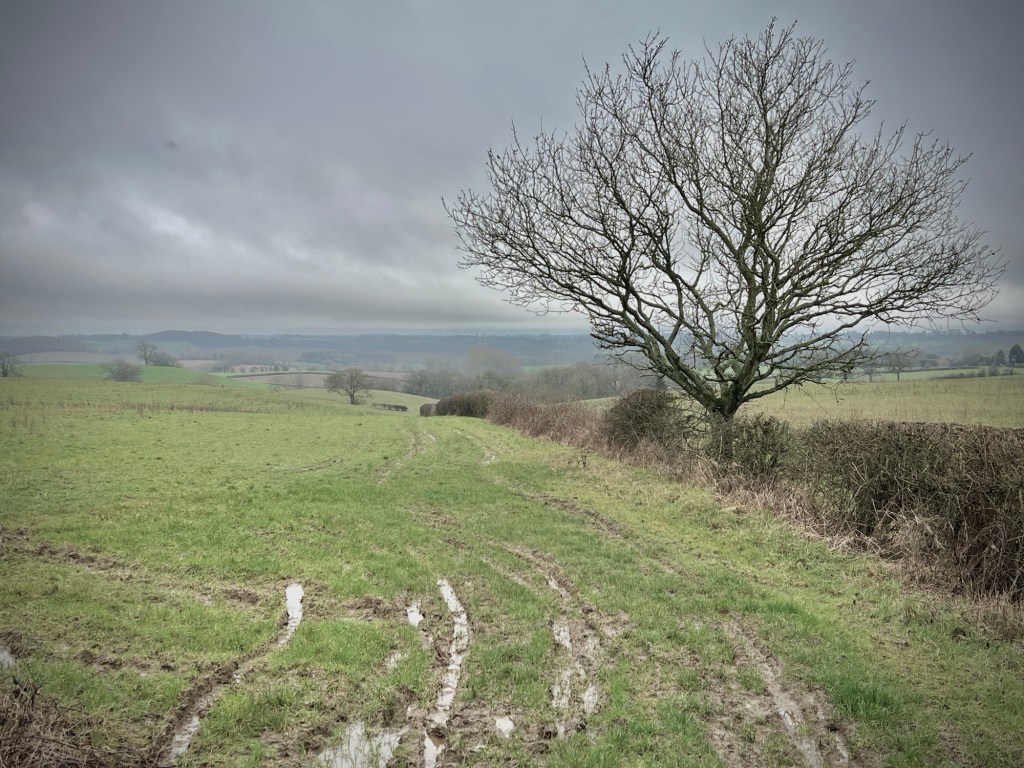
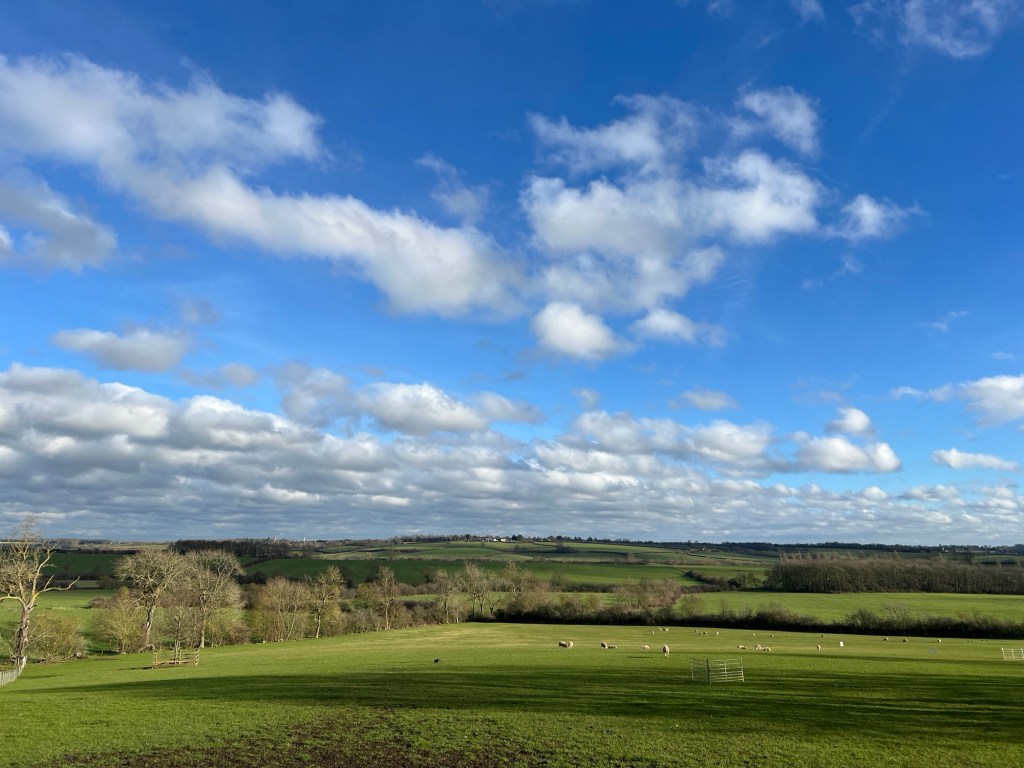
Our seemingly endless wet weather came to an end yesterday with some lovely sunshine. However, today the rain has returned and it kept me inside for the morning. I just had to head out and get some exercise, so despite more looming clouds, I went for a cycle through the drenched Northamptonshire countryside.
The ground is saturated after weeks of unrelenting rain and, after this mornings heavy soaking, many of the country lanes have streams running down them. The fields have a lot of standing water and at the bottom of the nearby low hills, water seems to be bubbling up through the ground.
The rain had stopped as I headed out but it started again as I turned for home from the furthest point of my ride. Just as I was about start wishing I hadn’t left the comfort of my home, a little bit of unexpected joy sprang up. Either side of the road were skylarks up in the sky singing away. If I closed my eyes and ignored the cold on my face and rain drops hitting my cycle helmet, it was almost possible to imagine it was spring.
Unfortunately, the rain started to drive down harder and any thought of warmer days was quickly put away, as I plodded on with the last few miles of my soaking wet cycle.
…but that little bit of joy on a dark, damp day, lifted my spirits for the week ahead.
Last weekend I treated myself to a new wildlife-watching telescope. I’ve been thinking about it for ages, and with a big birthday coming up later this year, I’m decided it was about time to take the plunge.
I have never properly tried digiscoping with my old much less powerful scope (using the scope as a lense for a camper or camera phone). When I bought my new one I bought a digiscoping attachment that works with my phone – much better than trying to line up the camera lens with the scope eye-piece by hand.
On a short visit to Pitsford Reservoir near to my home today, I gave the kit a first proper try and it worked quite well. This pair of goldeneye floating past of the lake was the best I could do – unfortunately I missed the male doing a short bit of displaying…
The weather today is far from sparkling, with cloak of grey cloud over the land; I’m hoping for far better results once the sun starts to reappear.
Despite leaving January behind and spring bulbs starting to break cover, today really does feel like the depths of winter. There may be no frost or snow but the low cloud gloominess and a brisk chilling wind make being outside particularly unpleasant; and that’s before the afternoon rain arrives.
I often find February to be the month where I really struggle with the dark days and the seemingly endless wait for spring. I’m hoping with more exercise, I’ll be able to avoid the worst of it. We might now be a long way from Christmas but I feel this is still a time for bringing both light and coziness into the house while we wait for the light to return.
We’ve just got back from a two-night stay in North Norfolk. This is one of our favourite places for a winter break with the wildlife along the coast some of the best you can find in what can a bleak season in England.
The over-wintering birdlife is our usual focus for our days out and this visit was no different. However, a change of plan gave us some spare time at the end of the second day and we took the long way back to our lovely rental cottage in the village of Blakeney. Rather than sticking to the coast road we headed a little inland and drove slowly along the single-track roads. The landscape here, back from the marshland coast, is of rolling arable land with a mixture of unfenced fields and others surrounded by high, thick hedging. In winter, these fields are either starting to show the first green shoots of this year’s crops or still lying to bare soil. Some of the fields without the early growing crops have been cleared of sugar beat or have been used to house free-range pigs.
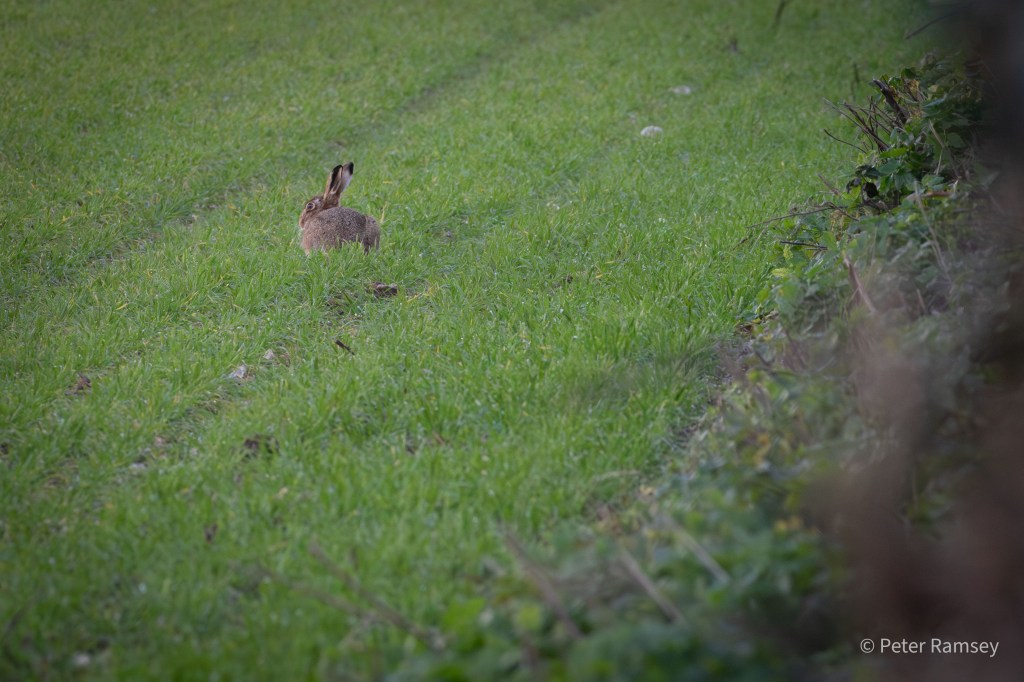
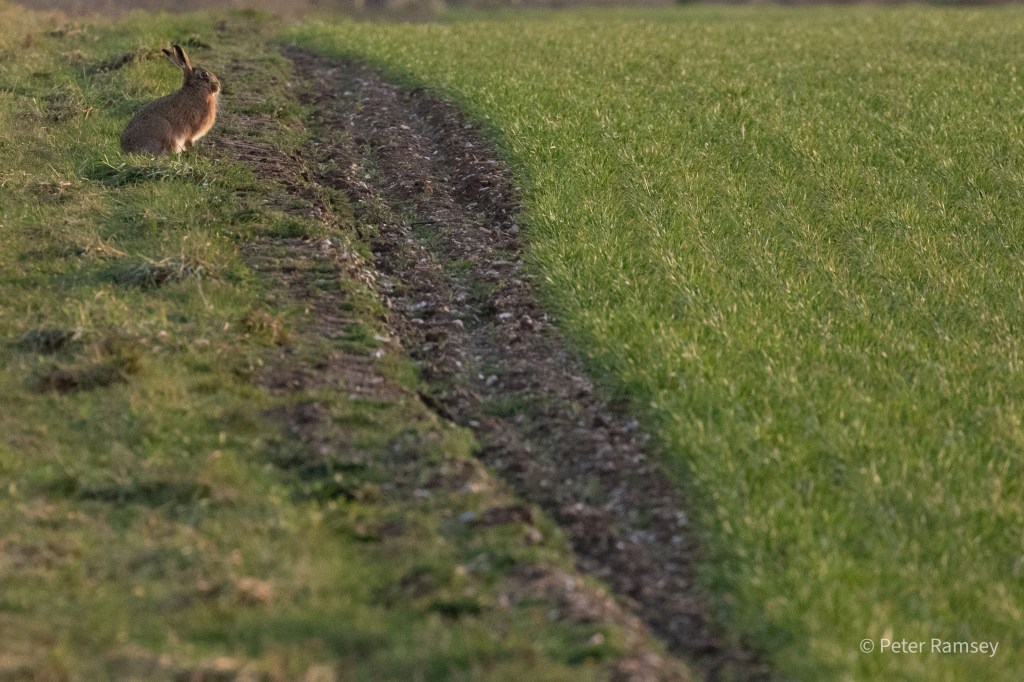
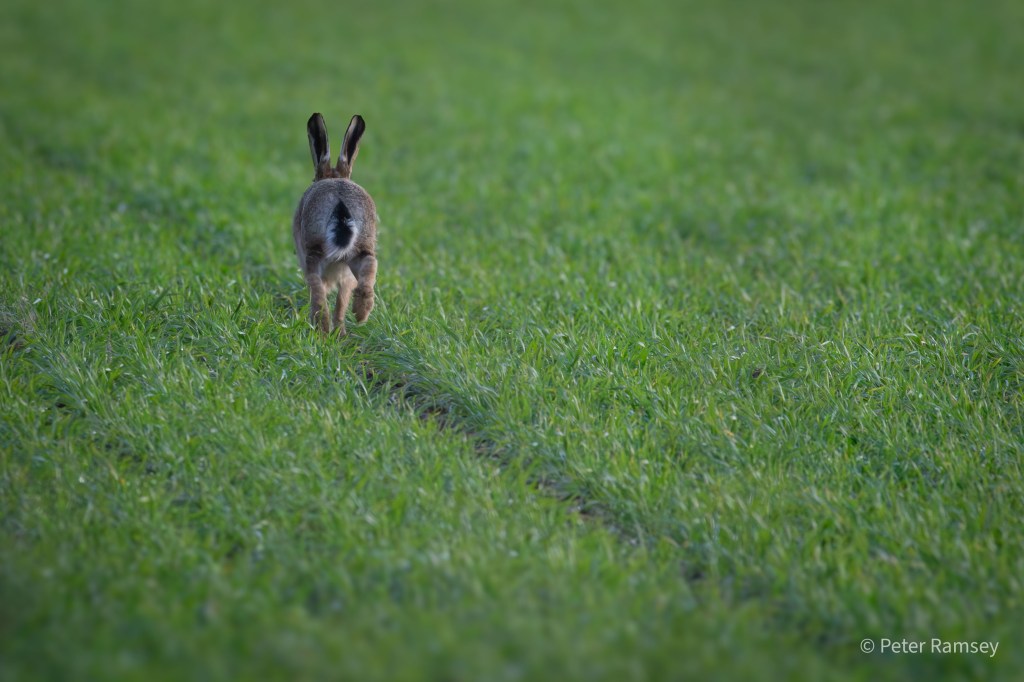
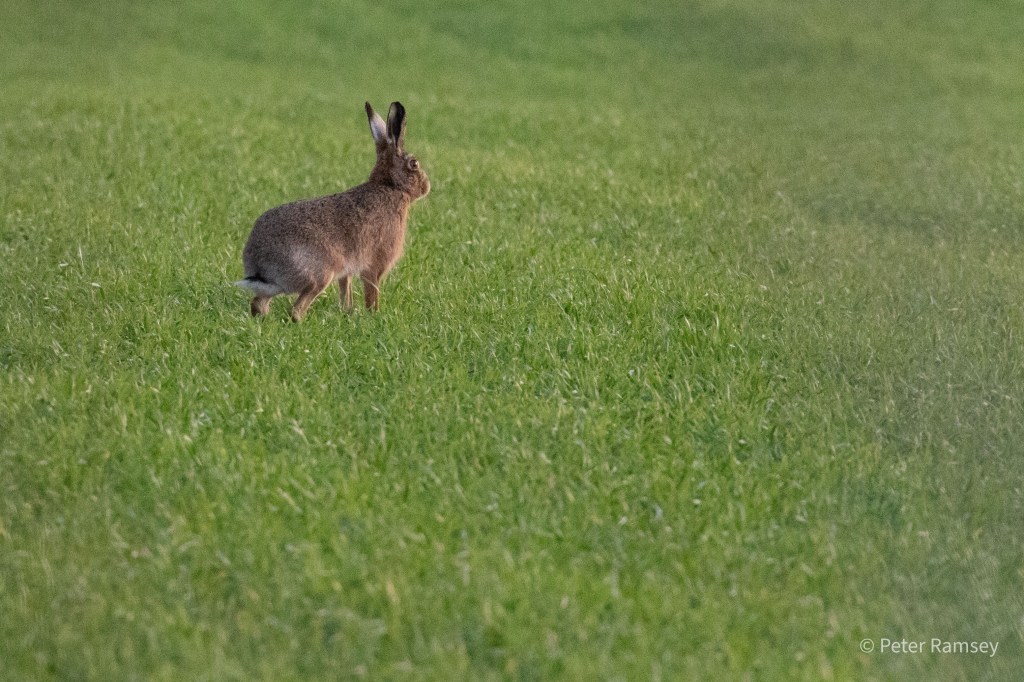
As we made our way along the narrow lanes, we stopped at field gateways or gaps in hedges to scan the land with our binoculars to check for wildlife. We almost immediately found a hare and as we progressed onwards we found more and more. Sometimes there was just a solitary hare sitting at the field edge but on other occasions there were pairs, either sitting close to each other nibbling on those fresh shoots or, in a few cases, starting to slowly chase each other across the open ground. This was perhaps the first signs of pairs coming together to breed, but it seemed a long way off the chasing and ‘boxing’ of the mad march hares.
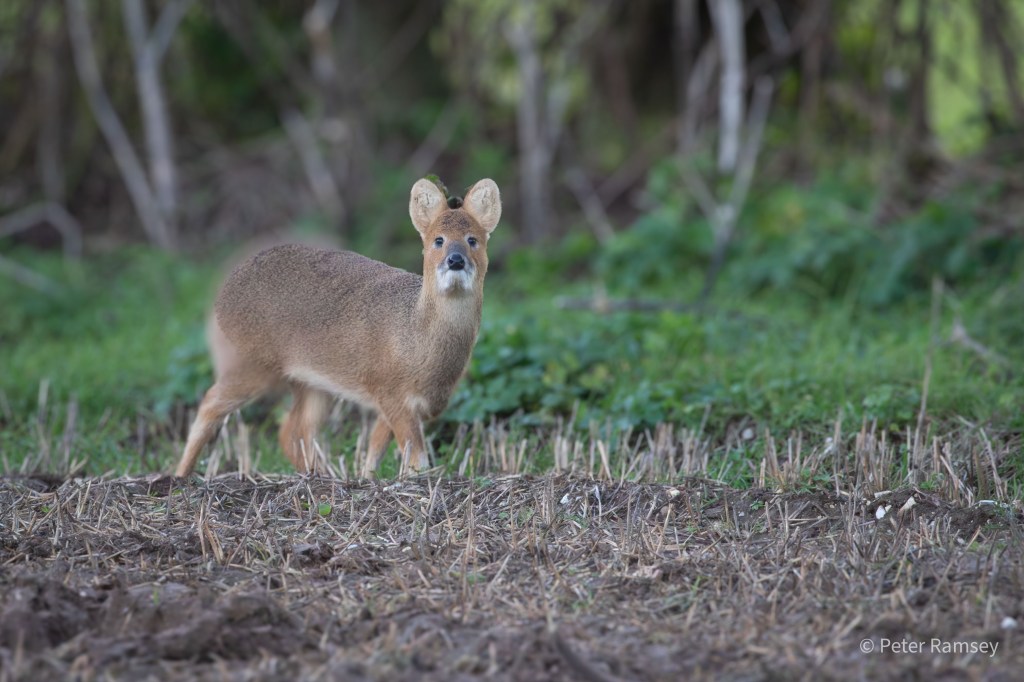
Also out in the fields we increasingly saw groups of deer as the light began to fail. We saw three species out there; the native roe and two imported species; muntjac and Chinese water deer. Most of the deer were too far away to photograph by one water deer stayed calmly close-by as we stopped the car to take a look.
In all, all we must have seen upwards of 40 hares in our slow drive back, over the course of an hour or so. This really highlighted just how rich in mammal life North Norfolk is as well as being home to so much bird life.
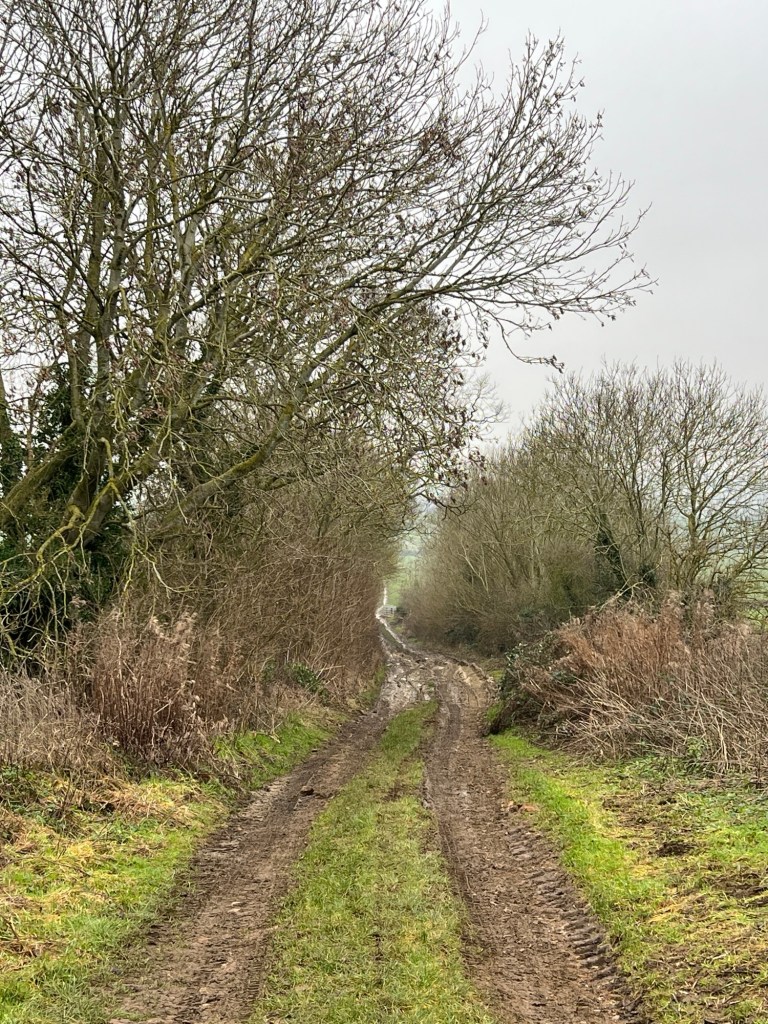
As we were about to finish our little driving safari we could hear a few geese nearby. We drove around for a few minutes unable to find them. Just as we were about to give up, we came to a muddy track alongside a hedge behind which we thought we could hear them. As we came to a gap in the hedge, we were given a view of a huge flock of pink-footed geese, numbering in the thousands, feeding on a sugar beet field. We arrived just in time to see them lift from their daytime feeding and head off to the safety of their coastal roost out on the mud of The Wash. For me, there is little that stirs my soul more than a mass of wintering geese calling as they fly into the night.
As we pass through the latter half of January and approach early February we are in the coldest weeks of the year. The first few days of next month mark Imbolc, the Celtic festival celebrating mid-winter and the slowly returning daylight. Tuesday already seemed to feel like the light is returning at pace with a bright sun and blue sky dotted with white fluffy clouds. Those clouds were being pushed rapidly by a strong southerly wind which brought warmer air that reached towards double digit temperatures. The birds seemed to be enjoying it with buzzards and red kites playing in the breeze and parties of rooks and jackdaws feeding in the fields.
This was all in stark contrast to the weather a couple of weeks ago when we had a light covering of snow (others not far away had a lot more). The weather then seemed fitting for winter and even thigh snow isn’t something we see that often. During some recent winters we have barely seen a snow flake let alone have a covering.
As I write, a couple of days later, we are back into the wet and windy kind of winter, a continuation of the autumn experience, albeit with lower temperatures. This gloom combined with the short days, doesn’t make it particularly attractive to set a foot outside but as the weekend comes around, spending some time away from the house is one of the best ways to fight the mid-winter blues.
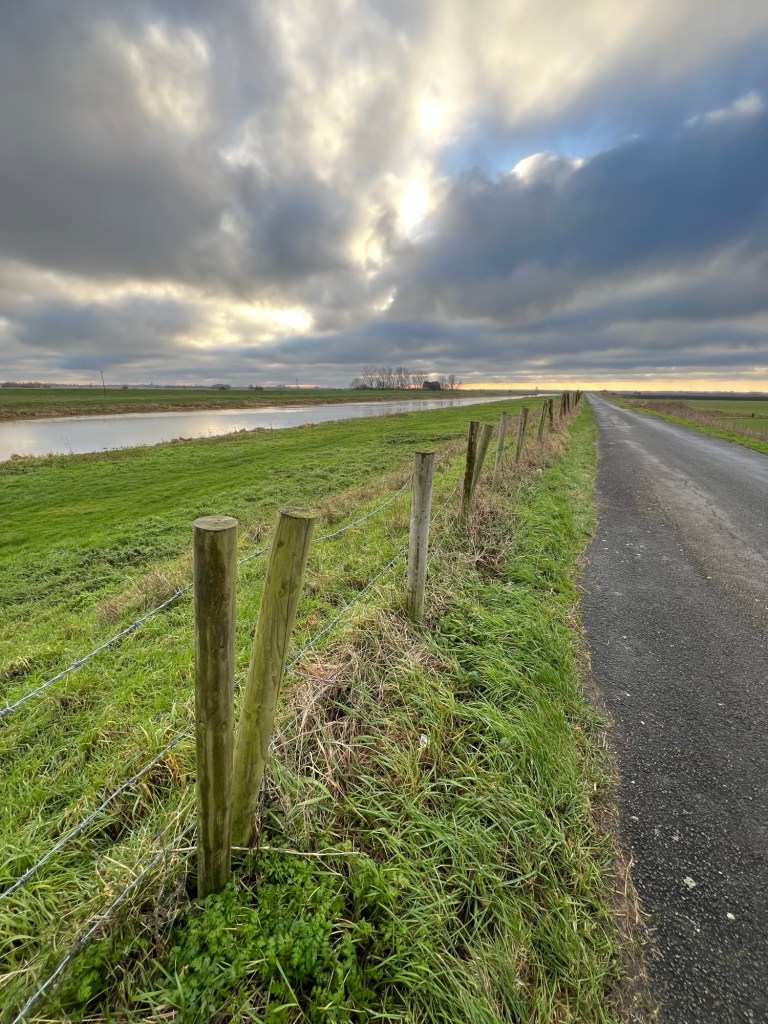
This is a usual time of year for us to spend a day out in the Fenlands of Cambridgeshire and Lincolnshire. With the sun bright over a frosty land, we headed out eastward in search of winter visitors and owls.
Our first stop was the Nene Washes, which was meant to be the main focus of the day. As we arrived the sun disappeared as low cloud and then fog enclosed the scene. This wasn’t a great start to our visit and it didn’t really get any better. Our visits over recent winters have coincided with flooding of the washes which attracts vast numbers of wintering wildfowl. Instead, today, to our surprise following a very wet autumn, there was barely anyway water at all and very few birds.
We heard very distant whooper swans and possibly a crane but as we walked along the high bund there was little to see bar a nicely perched red kite. There were also very few other people around; there’s usually a few people hanging about watching owls in the thick bushes behind the bund but today, virtually no one. It’s a significant task trying to find the amazingly well camouflaged long-eared and short-eared owls and we usually get a few pointers from those who have already found them, but with no one around, we gave up pretty quickly.
However, we bumped into a man who had just arrived from some birding sites near the ‘Deepings’ and he gave us a tip-off. With that information, we headed off in search of a bird that I have never seen before.
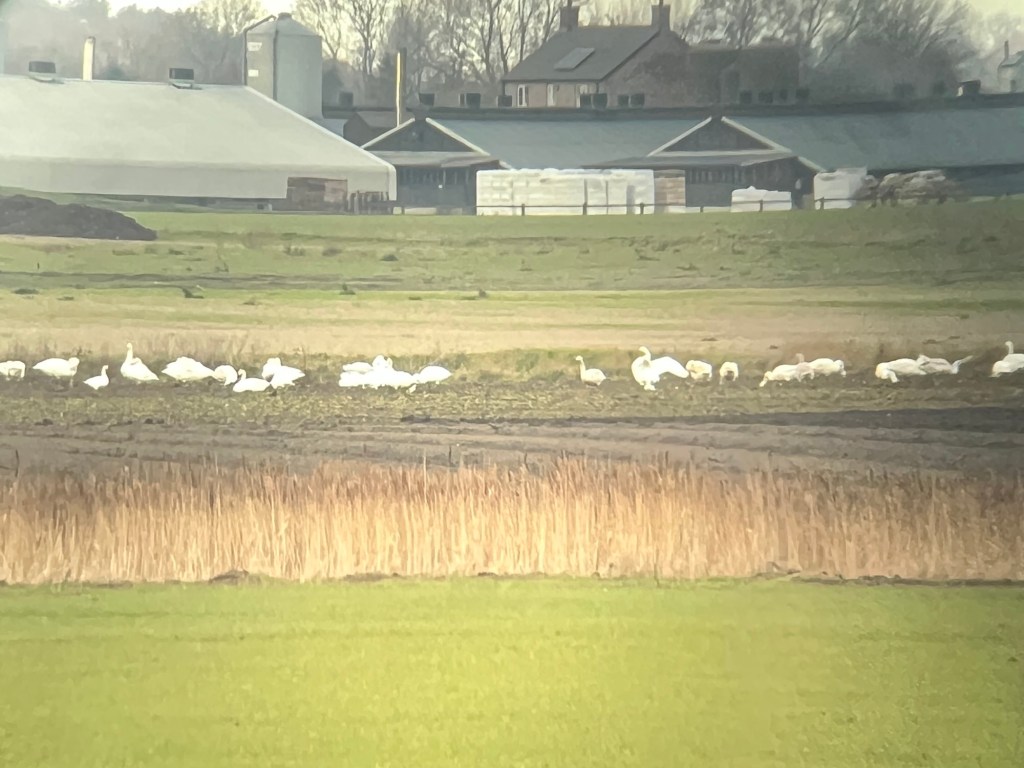
After about 30 minutes of driving along the long, narrow and often subsiding fenland roads, we came the spot we had been told about. In the distance was a large flock of wintering whooper swans and as we scanned through them we very quickly found the target of our search: a snow goose.
You can see the bird, third from the left on the following, very poor image taken through my scope.
I like a goose, particularly those that travel long distances to spend the winter in the UK, but snow geese shouldn’t actually be here. They are a North American and Siberian species that spend their winters on the far side of the Atlantic from us. However, they are a vagrant visitor to the UK albeit most that are seen have escaped from collections rather than being wild birds. In the case of this bird, I’m hoping it was the real wild deal given that it was amongst a flock of whoopers, which come here from the Icelandic breeding grounds.
Well, I’m going to count it as wild and therefore a genuine ‘lifer’ for me; the first I’ve seen in the wild and a great way to start the new year!
As we left the area we came across another flock of whoopers in a field very close to the road and we stopped to take a look…taking a nice video with, for me, one of the evocative sounds of winter…
On a bright sunny Boxing Day afternoon, we went for a walk to a local high point in the countryside. Despite the sun, it was bitterly cold with a strong wind taking several degrees off the already low single figure temperatures.
As we got to a viewpoint we were faced with a sight of at least 16 red kites playing in the wind as it raced across the rolling fields. They soared, swooped and whirled around each other, diving towards the ground and back up to above the height of the low hills. At times they seemed to be playing with together but they also went off on their own to explore the fields before coming back into the group.
The cold wind soon drove us back into the shelter of the hedgelines and we left the kites behind, continuing to play in the wind.
Yesterday afternoon we made the relatively short journey to Coventry to visit Warwickshire Wildlife Trust’s Brandon Marsh nature reserve. We have been a few times over the last couple of years but this was the first time for a winter dusk.
We arrived mid-afternoon and wandered around the reserve’s tracks. The plentiful recent rainfall had made some paths and hides unreachable so our walk was somewhere shorter than usual.
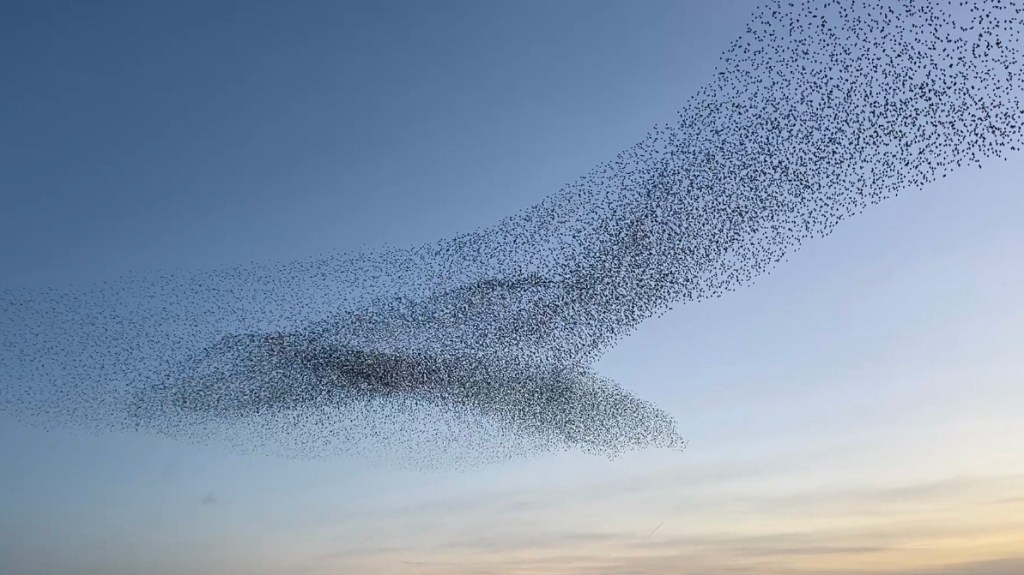
As sunset grew closer, we walked down to the viewpoint overlooking Albert’s Reedbed and waited. The sky cleared and we had a bright sun lowering in the sky to shine light across the reeds. As we waited there was little sign of starlings; instead there was a steady stream of gulls overhead and pigeons occasionally crossing the view. After what seemed like an age, a single starling flew over the reedbed and disappeared from view.
A little while later a small flock of five started circling and after a few more minutes it started to attract more birds. The group continued to fly over our heads, slowly adding more and more starlings to its number but it then moved off and appeared to be heading away from our viewing point.
Then, from behind us a mass of birds appeared and started wheeling around the sky forming continuously shifting serpentine shapes. It suddenly dropped low over the ground and, to the sound of screaming children, rushed at head height over the gathering of watchers. This was the start of an amazing show of avian synchronised flying that was without doubt the best I’ve seen. The videos and images below speak for themselves…
Meteorological spring has arrived and with it has come some very welcome spring weather. We woke on Saturday to a frost but also blue sky, and the sun stayed out all day. Today, it is much the same and it looks set to stay this way for the coming week. On Saturday we had to get out into the fine weather and, amongst our various stops, we paid a visit to Summer Leys nature reserve. While the weather was spring-like, the wildlife was still very much of the winter, with the waders and wildfowl that have been staying over the colder months.
Unusually for me at the moment, I actually remembered to take my camera with me. Whilst I didn’t get too many shots, I did catch this image of make shovelers chasing a female around a corner of the large lake at the reserve. There were quite a few of them, seemingly stirred into a bout of breeding activity by the change in the weather.
The other image I got was of the glossy ibis which has been frequenting the reserve for many months and attracting a few extra visitors Summer Leys. It was pretty easy to find yesterday, feeding exactly where one of the local bird blogs said it had been.
After a bit of garden work this morning, this afternoon I’m going to head out for my first cycle of the year. I can’t quite believe I haven’t cycled at all so far this year but running is generally my winter exercise activity. Now it’s time to transition back again.
Yesterday we headed over to the Cotswolds for a walk and to buy some cheese. The weather forecast looked set fair and as we drove west from Northamptonshire we could see blue sky ahead of us. Arriving at Bourton-on-the-Water there was the usual chaos at the main car park but we got parked pretty quickly. Even in late February the town is packed of visitors but we soon left them behind as we walked out of the urban area and into the surrounding countryside.
Our walk was a loop from Bourton to the Slaughters and back; only about five miles, but enough to stretch the legs after a week at work. The sun kept appearing from behind springlike fluffy clouds and we could feel a little warmth in its rays. However, there was also a keen cool wind which kept the temperatures down when we were out of the shelter of field walls and hedges.
As we wandered up a long rise we could hear skylarks above our heads and across the fields; the first time we’ve heard them this year. There was also a pair of red kites circling in the wind and hanging above the valley. Eventually, we dropped down the other side of the hill and into Upper Slaughter, the chocolate box village, lit up brightly by the sun.
In Lower Slaughter, after negotiating some muddy fields, we even managed to have lunch outside at the pub, only to then get wet as the rain came down on the last leg back into Bourton.
While the walk was the main purpose of the visit, we had to stop at Stow-on-the-Wold on the way home to visit the excellent cheese shop!
Yesterday was really the first taste of spring we’ve had but today has gone back to winter with strong winds, rain and lower temperatures. We’re still in February, so yesterday was really just a very early bit of springlike weather and I suspect we might have to wait a little longer for some more.





 Daft Mumblings