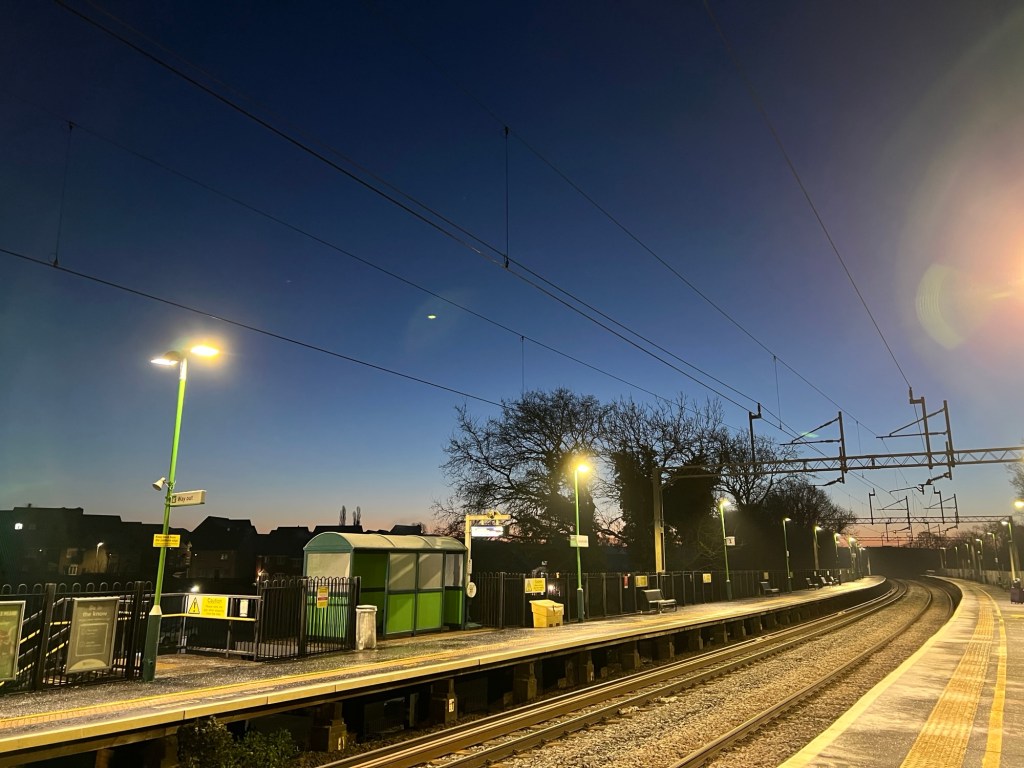
Almost two weeks on from my last post on this subject and the light has grown a lot as I stand on the station platform on the way to work. It’s now got to the stage where my use of my main beam on my car has reduced significantly as I drive through the countryside and now on the platform, I can see to the far horizon and Borough Hill.
I usually find February the most difficult of months, as we slowly start to move in from the dark and cold winter. This year, however, I haven’t found it so bad and the increasing light is starting to give me more bounce – what I call that positive energy inside me that often disappears during the winter. I’ve been exercising a lot recently which may have helped, with those endorphins raising my mood.
Even more positively, the weather looks good for Saturday and the temperatures are rising, so I’m hoping for an early springtime (almost) walk.
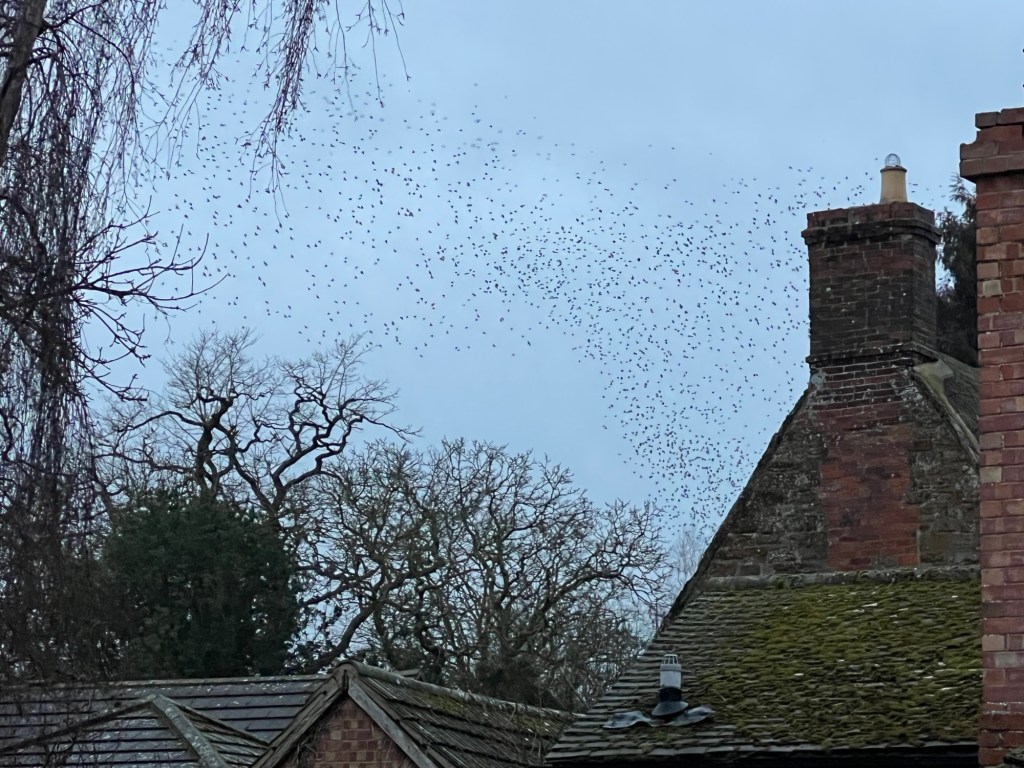
Yesterday evening as the light was starting to ebb away, we ventured out to see if we could watch the starling murmuration that has started to build above our village.
We had been having glimpses of it on previous nights from our upstairs windows but these were often obscured. So, we walked up through the village and watched the starlings doing their performance.
We weren’t disappointed as the flock was murmurating almost immediately and it continued to grow as the minutes wore on. The flock wheeled above the houses, breaking and reforming many times until they eventually started to fall to a large long bush in a front garden. The chattering in the bush got louder as more and more dropped in for the night.
After a quiet winter last year, the starlings are back in significant numbers in the village and a murmuration is starting to build. So far it’s been over a difficult part of the village to see them from but I’m hoping as the numbers build the display will move over more of the village.
There may have been spring-like signs earlier this week but today winter is very much making its presence felt. There is a keen north-easterly wind bringing cold air that cuts through any gaps in your clothes and chills you to the bone. It’s about 5 Celsius at present with the wind it taking it down to feeling around freezing. To make it look even worse there’s also a dark gloom hanging over us which, according to the forecast, will stick around all week!
This afternoon we ventured out into the cold and gloominess in search of more signs of spring. We found some at the nearby Lamport Hall. Each late winter the grounds are opened at weekends for people to see the display of snowdrops in the woodland and gardens. We haven’t been before but as the photos below show, it’s a very lovely display, even without any sunshine to brighten up the scene.
Standing on the railway station platform this morning, there was a clear sky and light on the horizon. This is the first time this year where there has been more than a smudge of dawn and today there is even an orange hue beneath the growing turquoise.
Not only a the light returning but so far are the sounds of birds. It might be just below freezing but the robins, blackbird and thrushes are all singing their dawn chorus – another first for me this year.
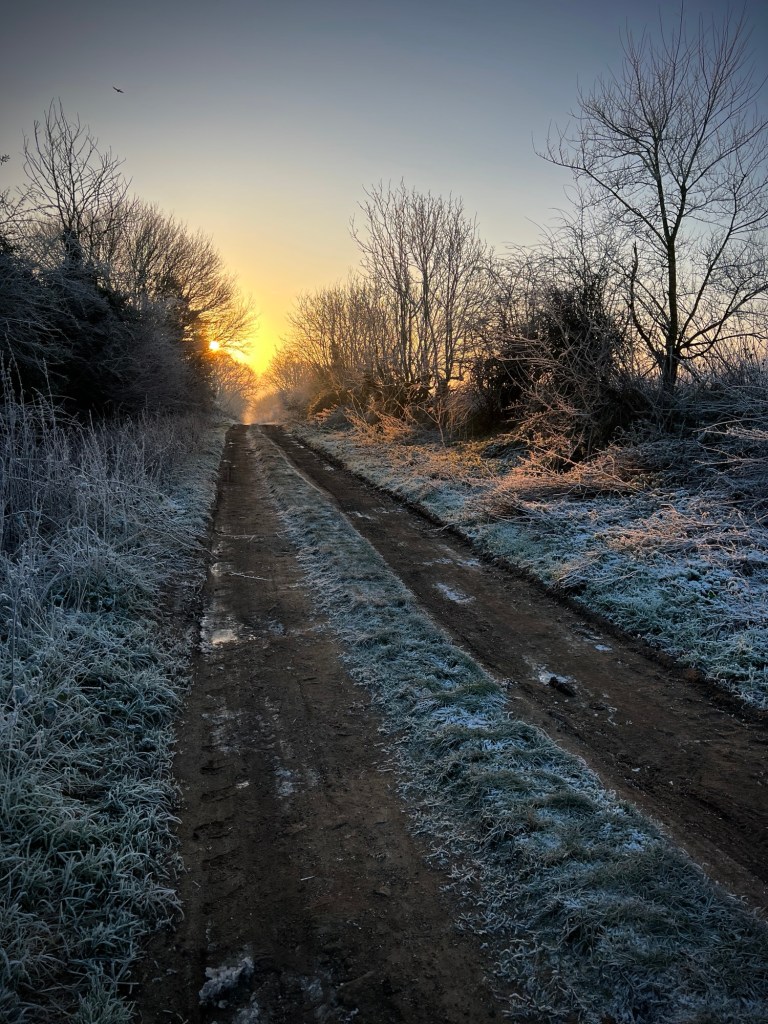
It may only be the 5th February and the temperature hovering around 5 degrees Celsius but with the sun out today there is a very hesitant feeling of early spring down the lane.
I heard a red kite calling overhead and a robin singing away. There are snowdrops scattered about and daffodils sprouting from the ground. Even the fields seem a little greener than they did.
However, despite the slight warmth coming from the sun, the chilling breeze stops too much hopefulness of the coming season building up – and we’re back to frosts tonight.
Today has been one of those cloudless but cold winter days which you long for through the almost endless grey cloudy dreariness of January. The sun seems shockingly bright, especially as it hangs low in the sky, dazzling your eyes and making you squint. The morning started with a slight frost and the temperature barely above freezing. There was a think layer of ice on the puddles and a real nip in the air. A sharp wind occasionally added to the chill but as we went for a walk the sun soon warmed us up as our dark clothes soaked in its rays.
Our walk wasn’t too long, only four miles but it gave us some different views of our local area, having not walked any of the particular paths before. The wildlife was quite quiet but for a flock of winter thrushes in the fields joined by some starlings and an occasional sky lark.
After what seemed like a long and dark week, getting out into the bright daylight was a bit of a tonic – unfortunately back to the greyness tomorrow.
At some point in January, as early as possible, I usually take a trip to a good wildlife spot to try to kick-off my lists for the year. Quite often this means heading east into the Fens or beyond on to North Norfolk. Yesterday, our choice was the Wildlife & Wetlands Trust’s centre at Welney. This reserve sits on the Ouse Washes; a huge flood management area around 30km long and, at its widest, almost 1km wide. It is the winter home to a great number of resident and migrant wildfowl and a brilliant place to start building up a list of species seen over the course of the year.
Yesterday was a typical January day in the Fens; cold, not far off zero degrees Celsius, with low, dark grey cloud and a mistiness hanging over the land. The light breeze was barely be felt with our backs but added a further chill when walking into it, taking the damp cold off the flooded washes and flat waterlogged fields, and seeping in through any gaps in our clothing.
Standing at the edge of the Washes, the flood water from the River Ouse covered almost every inch of the ground, leaving only small islands, the tops of fencing and gates, and the tall patches of reeds standing above the surface. On that surface was a spectacular congregation of wildfowl including all three British species of swan, numerous species of duck and a range of waders. Many of these can be seen at the wetland reserves closer to home but for some a visit to Welney and other East Anglia reserves is a must.
I particularly wanted to see the swans and was rewarded both at Welney and in the fields on the way. The Whooper Swans from Iceland are the most numerous but, as was the case when we visited last year, numbers were down significantly from previous times I’ve been there. The Bewick’s Swans are generally less numerous at the reserve and I haven’t seen any there, or anywhere else for a number of years. However, yesterday we saw one single bird out in the distance.
After wandering to the different hides along the bank about the water, we went for a walk around the Lady Fen trail to see what else we could spot. Like the weather, the life out on the fields was subdued and there was little to see apart from three species of egret and groups of corvids. We have seen owls on this walk before but had no luck this time, meaning a visit to the Nene Washes might be in order (it’s often possible to see four species in a short stop there). We also had two new species of mammal for the year; nice groups of Roe Deer and a single Chinese Water Deer out on the damp fields amongst the shallow flooded scrapes.
Overall, we saw 60 species of bird at the reserve and I’m sure we could have picked up a few more if we had stayed a little longer but the cold and gloom eventually got the better of us and we turned for home.
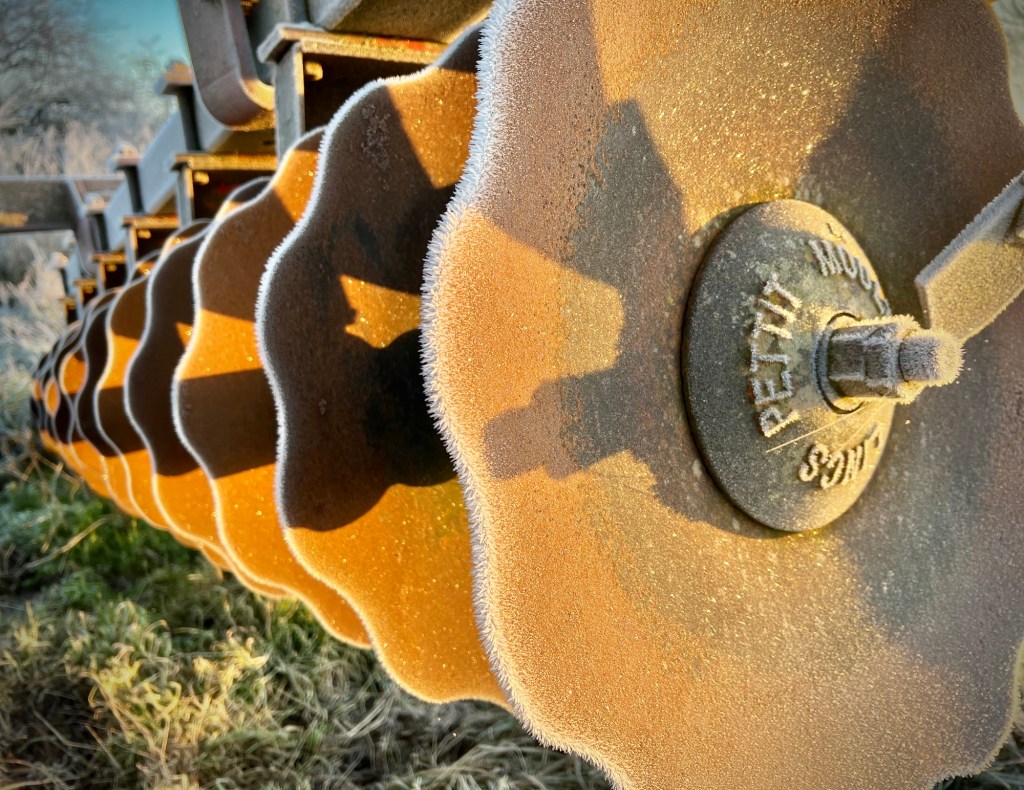
Finally, winter is showing itself. We have had sub-zero nighttime temperatures for a few days now and they look set to go on for a few more. We have had a few short spells of snow; some accumulated but each time was quickly gone. The frost is less transitory; in those pockets of shade out of reach of the weak new year sun, the ice sticks around well into the afternoon, and in some places, all day long.
The land seems subdued by the cold, and the wildlife hushed. On my lunchtime walk down the lane, there wasn’t much life about but for a small number of winter thrushes and a buzzard gliding low across the sheep fields. The only other sign of the wild was the faint scent of a fox, left behind as it wandered past last night.
I love the bright and cold days that make such a change to the grey dreariness we so often get in English winters. I’m glad to be working from home today so I can go for that walk but back to the office tomorrow – on a Friday!










 Daft Mumblings