Last weekend I treated myself to a new wildlife-watching telescope. I’ve been thinking about it for ages, and with a big birthday coming up later this year, I’m decided it was about time to take the plunge.
I have never properly tried digiscoping with my old much less powerful scope (using the scope as a lense for a camper or camera phone). When I bought my new one I bought a digiscoping attachment that works with my phone – much better than trying to line up the camera lens with the scope eye-piece by hand.
On a short visit to Pitsford Reservoir near to my home today, I gave the kit a first proper try and it worked quite well. This pair of goldeneye floating past of the lake was the best I could do – unfortunately I missed the male doing a short bit of displaying…
The weather today is far from sparkling, with cloak of grey cloud over the land; I’m hoping for far better results once the sun starts to reappear.
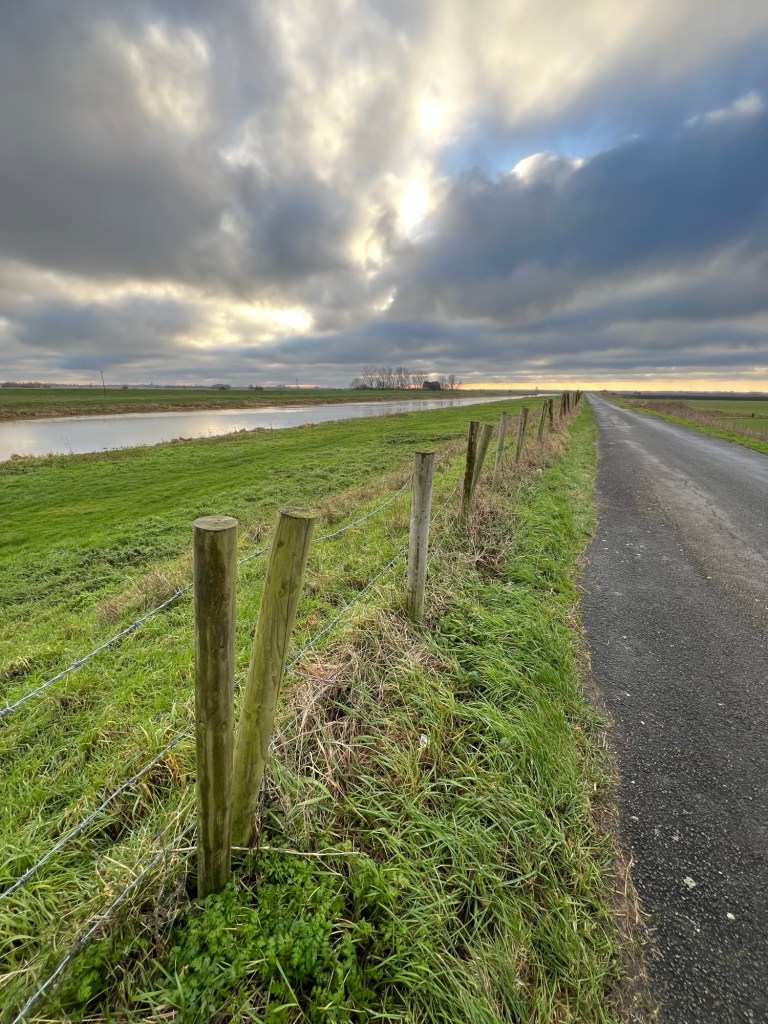
This is a usual time of year for us to spend a day out in the Fenlands of Cambridgeshire and Lincolnshire. With the sun bright over a frosty land, we headed out eastward in search of winter visitors and owls.
Our first stop was the Nene Washes, which was meant to be the main focus of the day. As we arrived the sun disappeared as low cloud and then fog enclosed the scene. This wasn’t a great start to our visit and it didn’t really get any better. Our visits over recent winters have coincided with flooding of the washes which attracts vast numbers of wintering wildfowl. Instead, today, to our surprise following a very wet autumn, there was barely anyway water at all and very few birds.
We heard very distant whooper swans and possibly a crane but as we walked along the high bund there was little to see bar a nicely perched red kite. There were also very few other people around; there’s usually a few people hanging about watching owls in the thick bushes behind the bund but today, virtually no one. It’s a significant task trying to find the amazingly well camouflaged long-eared and short-eared owls and we usually get a few pointers from those who have already found them, but with no one around, we gave up pretty quickly.
However, we bumped into a man who had just arrived from some birding sites near the ‘Deepings’ and he gave us a tip-off. With that information, we headed off in search of a bird that I have never seen before.
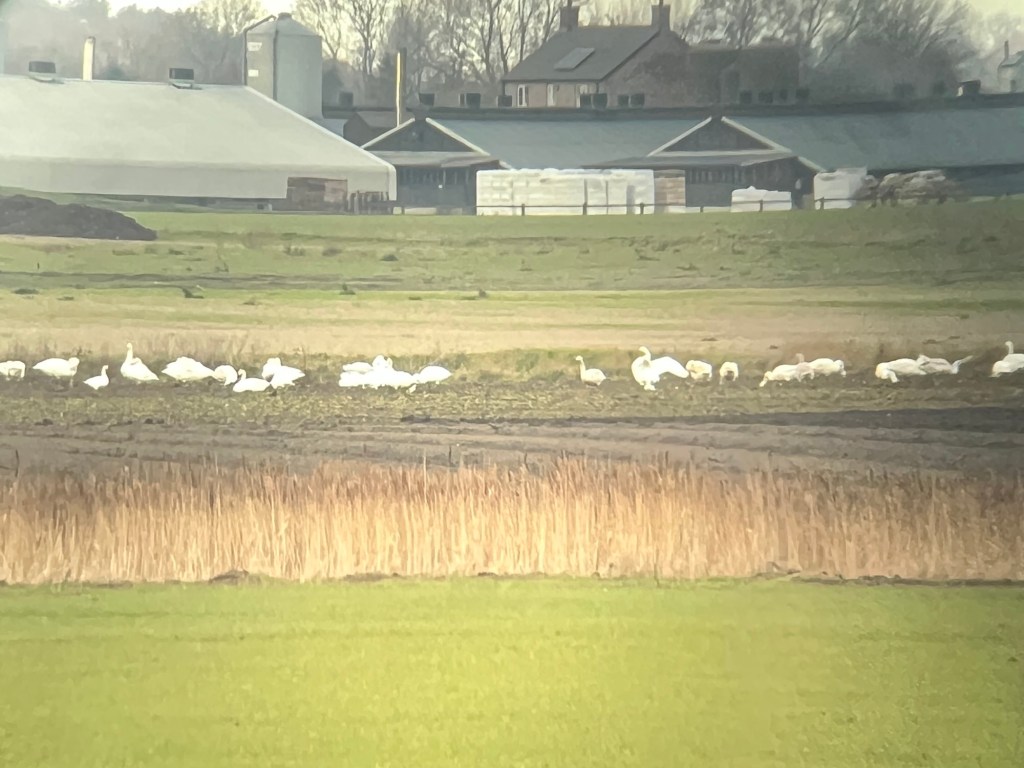
After about 30 minutes of driving along the long, narrow and often subsiding fenland roads, we came the spot we had been told about. In the distance was a large flock of wintering whooper swans and as we scanned through them we very quickly found the target of our search: a snow goose.
You can see the bird, third from the left on the following, very poor image taken through my scope.
I like a goose, particularly those that travel long distances to spend the winter in the UK, but snow geese shouldn’t actually be here. They are a North American and Siberian species that spend their winters on the far side of the Atlantic from us. However, they are a vagrant visitor to the UK albeit most that are seen have escaped from collections rather than being wild birds. In the case of this bird, I’m hoping it was the real wild deal given that it was amongst a flock of whoopers, which come here from the Icelandic breeding grounds.
Well, I’m going to count it as wild and therefore a genuine ‘lifer’ for me; the first I’ve seen in the wild and a great way to start the new year!
As we left the area we came across another flock of whoopers in a field very close to the road and we stopped to take a look…taking a nice video with, for me, one of the evocative sounds of winter…
On a bright sunny Boxing Day afternoon, we went for a walk to a local high point in the countryside. Despite the sun, it was bitterly cold with a strong wind taking several degrees off the already low single figure temperatures.
As we got to a viewpoint we were faced with a sight of at least 16 red kites playing in the wind as it raced across the rolling fields. They soared, swooped and whirled around each other, diving towards the ground and back up to above the height of the low hills. At times they seemed to be playing with together but they also went off on their own to explore the fields before coming back into the group.
The cold wind soon drove us back into the shelter of the hedgelines and we left the kites behind, continuing to play in the wind.
Yesterday afternoon we made the relatively short journey to Coventry to visit Warwickshire Wildlife Trust’s Brandon Marsh nature reserve. We have been a few times over the last couple of years but this was the first time for a winter dusk.
We arrived mid-afternoon and wandered around the reserve’s tracks. The plentiful recent rainfall had made some paths and hides unreachable so our walk was somewhere shorter than usual.
As sunset grew closer, we walked down to the viewpoint overlooking Albert’s Reedbed and waited. The sky cleared and we had a bright sun lowering in the sky to shine light across the reeds. As we waited there was little sign of starlings; instead there was a steady stream of gulls overhead and pigeons occasionally crossing the view. After what seemed like an age, a single starling flew over the reedbed and disappeared from view.
A little while later a small flock of five started circling and after a few more minutes it started to attract more birds. The group continued to fly over our heads, slowly adding more and more starlings to its number but it then moved off and appeared to be heading away from our viewing point.
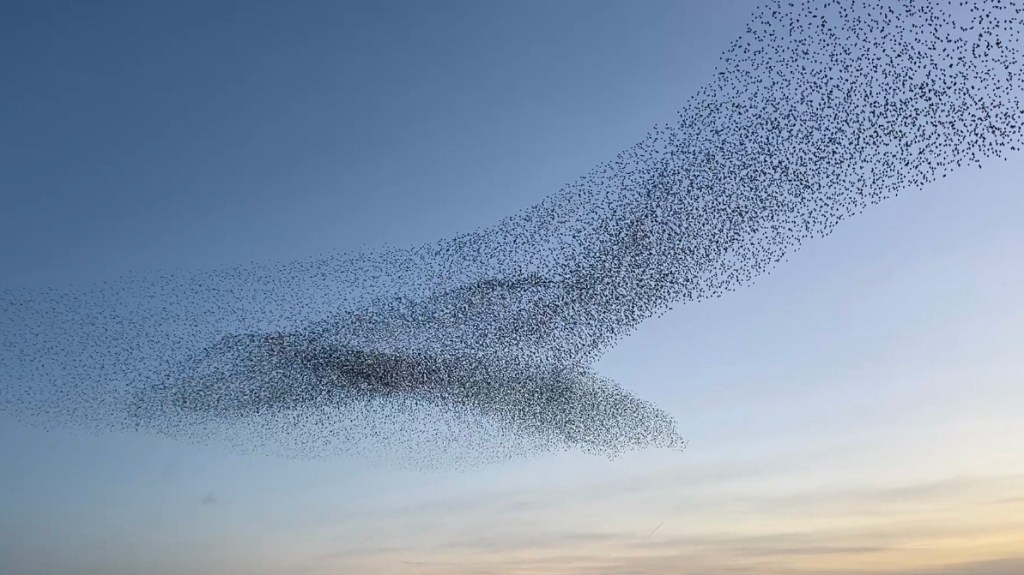
Then, from behind us a mass of birds appeared and started wheeling around the sky forming continuously shifting serpentine shapes. It suddenly dropped low over the ground and, to the sound of screaming children, rushed at head height over the gathering of watchers. This was the start of an amazing show of avian synchronised flying that was without doubt the best I’ve seen. The videos and images below speak for themselves…
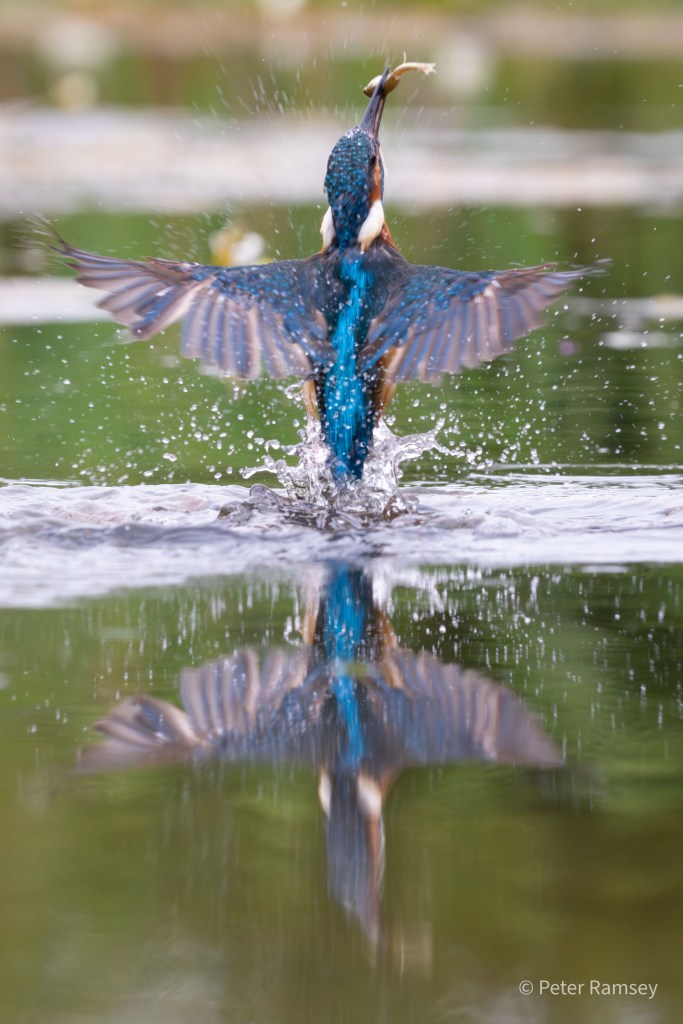
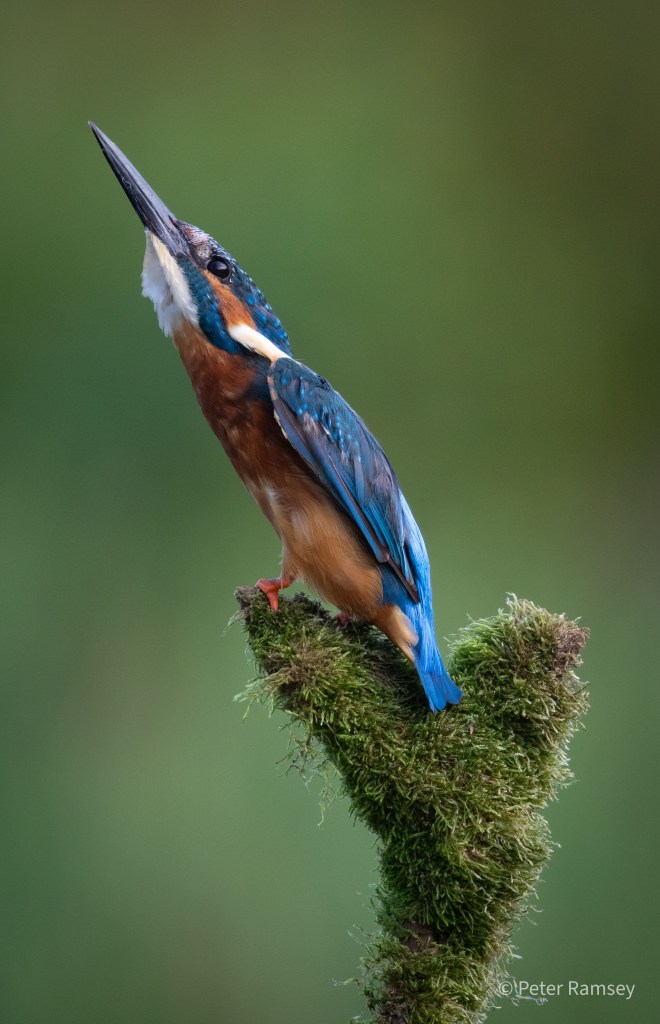
Last week we spent much of a day at a photography hide watching and taking pictures of kingfishers. Over eight hours with had at least ten visits from a couple of different birds. They came to perch just a few metres away, using it as a vantage point from which to spot and catch fish.
Despite the sometimes long waits between visits, the time flew past, and it barely seemed like the eight hours when we packed up at the end of the session.
It was perhaps one of the most mindful and relaxing ways to spend a day, between the short periods of activity when the birds turned up. We plan to return to this spot again but to also find more such hides; they provide great opportunities to capture images of wildlife!
Last weekend we had a night in Ross-on-Wye and two nights in Pembrokeshire. Unfortunately the weather stopped us getting across to Ramsey Island but we did have some great views of swifts. Ross is a very swift town with screaming parties all around the town centre. I also know a great spot just above the Cathedral in St David’s to do a bit of late evening swift watching.
One evening we watched the swifts circle about the valley and come into their nests in a house high above the cathedral. I don’t recall ever seeing them at their nest sites before and it was quite startling just how fast they fly up to their holes and enter with a thud.
Sadly, they’ll be gone soon and sightings have already dropped off around our house. We had a screaming party of 30 last week but I’ve only seen three or four birds at one time so far since we returns from Wales.
Despite doing quite a few osprey nest protection shifts in North Wales between 2012 and 2019, I never got to see one fishing. The nearest I’ve got to seeing one do so was some years ago in Swedish. I was canoeing down a quiet, slow-moving river when an osprey appeared a couple of hundred metres in front of us, rising up from the surface and shaking mid-flight to rid itself of the water in its feathers. We had missed the fishing attempt as it had been around a bend in the river; the bird had missed its target and flew away empty-taloned.
Today we went for a lunchtime walk to Pitsford Reservoir, only about 10-minutes drive from our house. We had a lovely amble alongside the waterside meadow on the nature reserve side of the reservoir. As it so often is, it was very quiet with only three other people seen in the hour we spent there (you need to be member of the local Wildlife Trust and obtain a permit, to visit the reserve).
We walked to the Bird Club Hide and sat in there for a while, using the eBird app to record the species of bird we saw. It does really feel like summer now with the common terns, sand martins and swifts all showing very well. There were also quite a few young birds about including geese, black-headed gulls and treecreepers.
However, the star of the show was an osprey which we spotted just as it lifted from the water’s surface, shaking the water off and holding a large fish. The gulls were flushed from their nesting rafts and gave pursuit but the osprey seemed unbothered by them as he disappeared into the distance. I say ‘he’ as it was most likely a male if the bird has a nest nearby and was catching fish for its chicks.
Here’s a very rubbish zoomed-in phone photo, clearly showing the fish in the osprey’s talons and there’s an equally rubbish video below that.
May has flown past in a flash and this year I feel I’ve missed much of it as I’ve been battling a stomach bug for several weeks. It’s a real pity as I think that May is the best of the months. It is the height of spring where the landscape transforms into its green lushness, so many wildflowers bloom and wildlife has an intensity like no other time of year. Stuck at home, I’ve only been able to witness the spring from the window and out in the garden.
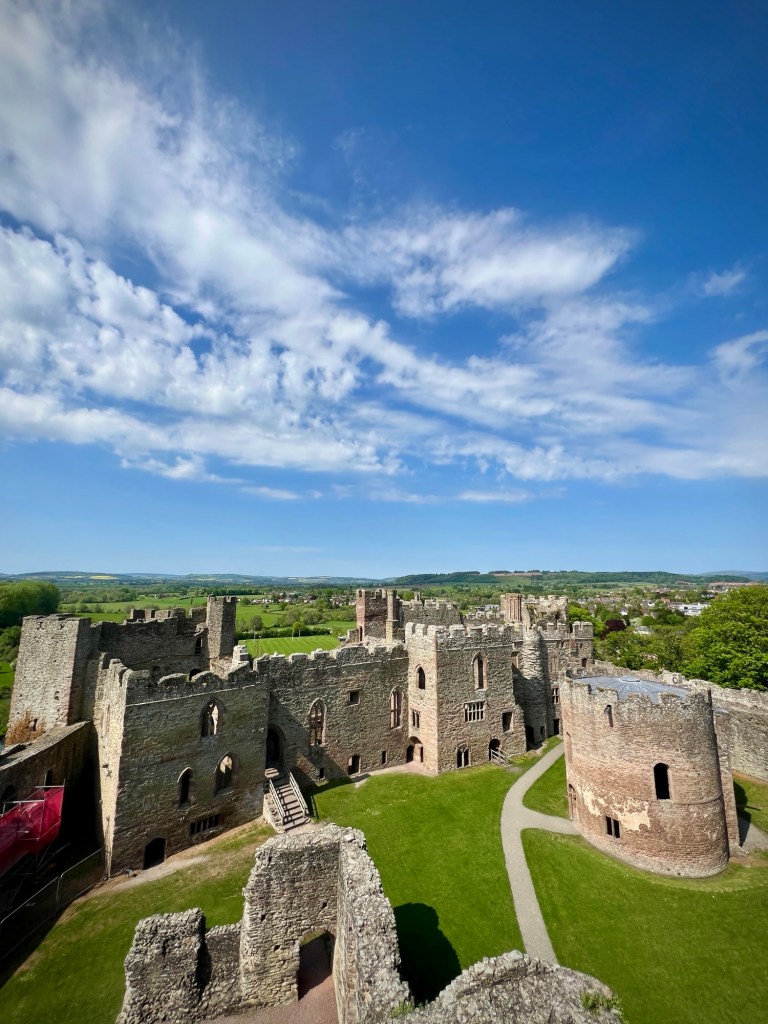
However, I haven’t missed all of the month. Over the first weekend of May we spent three nights staying in the centre of the very lovely Shropshire market town of Ludlow. It is a quintessential English country town with a castle, tightly packed narrow streets, a market square and a wide selection of local shops and eateries; and all this inside a loop of the River Teme. We stayed in a spectacular three storey townhouse in a courtyard off the main square, with views across the rooftops and in sight and earshot of the church tower and its musical bells.
On the drive in to Ludlow, it struck me just how remote and sparsely populated this part of England is. We live in a rural village but it’s what I would term ‘near rural’; in easy distance of a large town and, in fact, we can see Northampton, just a few miles away, from the end of our lane. Ludlow is in a very different position, sitting on a hill surrounded by rolling countryside and a larger town no nearer than 45 minutes away by car to the north, south or east. To the west is the even more remote and sparse mid-Wales and the nearest city, Birmingham, is 90 minutes away by car and nearly two hours by train. Staying there really did feel like we were a long way from anything truly urban and we were in a deeply rural place; and I loved it.
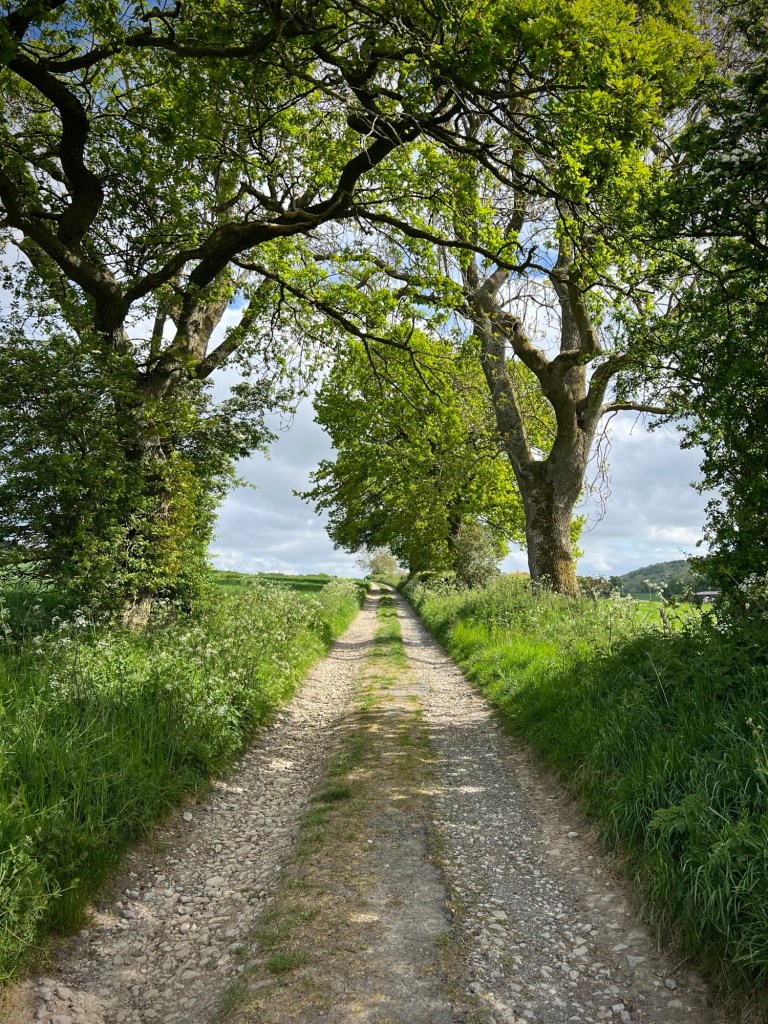
On one day we walked out of Ludlow on a loop across fields and back around and along the river. On the second full day we drove out into the villages and had another riverside walk. There were two very memorable wildlife moments on those two days; the first was finding a dipper feeding in the quick waters of a small stream and the second was coming across a sand martin colony on another river. The former was the first dipper I’ve seen in many a year and, perhaps, the first I’ve seen in England. The sand martins were in a natural colony of holes on the sandy vertical river bank. Whilst the dipper was a fleeting sighting, I could have stopped and sat for hours watching the sand martins; it was a very quiet, peaceful and isolated little spot where nature was just doing its thing. Here’s a couple of videos…
Despite being stuck at home for much of May, these are two wildlife memories which will stick in my head for quite a while.
Hopefully my recovery will continue as we’ve got our biggest trip of the year coming up in a couple of weeks and we’re hoping to spent a lot of time out in nature.
I have a night away in Newcastle-upon-Tyne for work and I was reminded that there are urban black-footed kittiwakes nesting on the buildings down by the river. After checking-in to my hotel, I took a wander down the hill to the water in search of these lovely, little gulls.
It wasn’t long before I could hear their calls echoing around the tall buildings and then they started to appear, flying beneath the Tyne Bridge high above my head. There, on ledges, on buildings and the bridge itself, were lines of kittiwakes nesting in a large sprawling colony.
I walked back up to the bridge and crossed partly over, giving me close views of the birds less than a metre away; they didn’t seem the slightest bit concerned.
I usually see these birds on the cliffs of Ramsey Island and other coastal spots but the colony in Newcastle is very unusual, being the most inland breeding site for the species.
I like a bit of an evening wander around a city or town when I’m staying away and this has been particularly good one – if a bit unusual to hear the sounds of the sea mixing with the noises of the very urban city centre.
Yesterday evening as the light was starting to ebb away, we ventured out to see if we could watch the starling murmuration that has started to build above our village.
We had been having glimpses of it on previous nights from our upstairs windows but these were often obscured. So, we walked up through the village and watched the starlings doing their performance.
We weren’t disappointed as the flock was murmurating almost immediately and it continued to grow as the minutes wore on. The flock wheeled above the houses, breaking and reforming many times until they eventually started to fall to a large long bush in a front garden. The chattering in the bush got louder as more and more dropped in for the night.













 Daft Mumblings