The darker side of the Bungalow

5R0A23065R0A2299

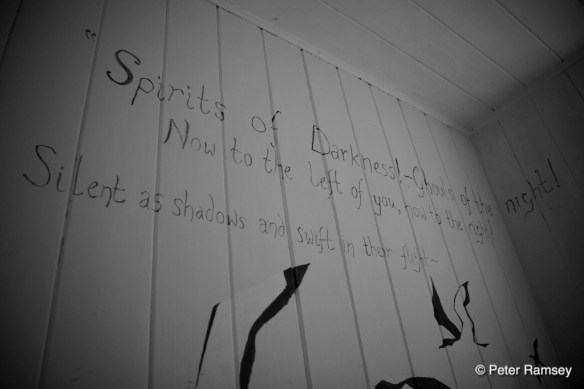
On cold, cloudy, damp and windy evenings, even in June, the normally cosy and welcoming Bungalow on Ramsey Island can take on a darker and brooding atmosphere.

But then someone switches on some lights and starts the fire and it all becomes cosy again..!

[Note: this post is the result of being stuck inside for the afternoon due to the rain and wind rushing past the Bungalow…for a more accurate view of what it’s like to stay in the lovely Bungalow please see this post from last year]


Monitoring Manxies

One of my main tasks in my first week on Ramsey Island has been helping with the Manx Shearwater survey. ‘Manxies’ are long-distance travelling seabirds which return to breed to the coasts on the western side of the British Isles each year, after spending the Northern Hemisphere winter off the eastern seaboard of South America.

These burrow-nesting birds were severely affected by rats on Ramsey but the eradication of the rodents 15 years ago has enabled the number of Manxies to slowly recover. The last survey in 2012 found 3,835 nesting pairs, and in 2016 it is hoped that numbers will have increased significantly.
IMG_8251

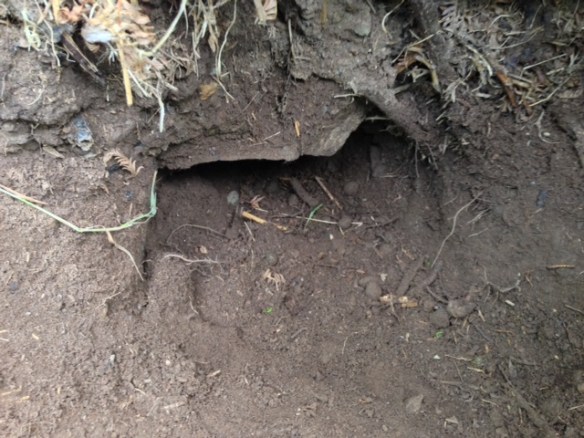
Following a survey of suitable nesting burrows earlier in the year (before the growth of bracken across the island made it much more difficult), the main survey involves the playing recordings of male and female Manxie calls down the burrows to check if any are ‘home’. My small role in the surveys was to help find the burrows into which the calls were then played. With the surveys now complete, the Island’s wardens now need to work out exactly how many Manxies are now breeding here.

5R0A1774 - small

It’s not just when undertaking the surveys that the sound of Manxies can be heard across the Island. One of the most memorable aspects of a stay on Ramsey is listening to the giggling and gurgling calls of the birds as they fly into their burrows near the volunteers’ Bungalow home. The birds only come to land at night, so the calls are an erie accompaniment to many a night’s sleep.

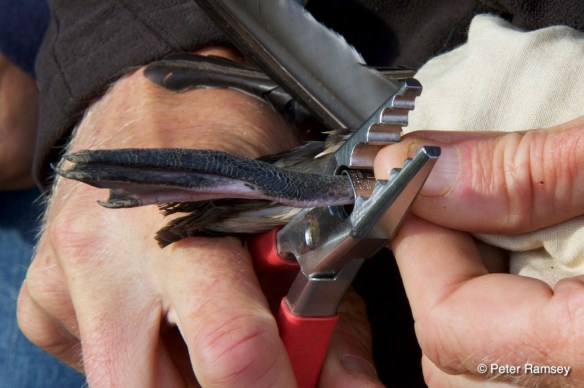
In addition to the natural burrows that the Manxies use for nesting, the wardens have installed a number of artificial nests and another task was to check whether these were occupied. While doing this, the wardens take the opportunity to ring individuals as part of their research and I was lucky enough to be there on one occasion during this stay – and even got to handle one!
5R0A1836 - small

One evening Manxie activity is to go out to the western side of the island at dusk to see the thousand upon thousand of these birds flying southwards, skimming just above the surface of the sea, to the much bigger colonies on the nearby islands of Skomer and Skokholm.

This link to the RSPB website provides a bit more information on Manx Shearwaters including a recording of their calls.

The first few days back on Ramsey Island

I’ve been on Ramsey Island, the RSPB’s reserve off the coast of Pembrokeshire, since Saturday but due to my stupidity have been without the internet until now. I was planning to blog each day but will have to start with a post about the first few days of my two-week stay.

The weather has been a bit mixed so far with the conditions only good enough for boats twice since I’ve been here. Yesterday, following two boatless days, we had a bumper load of visitors with an almost capacity crowd of 78. I did my first introductory talk of the year to a full boat shed, which didn’t go too badly and I even got a business card from a wildlife tour leader suggesting I should do a bit of tour leading myself!

On my first full day, the sheep shearers came across in the late afternoon to de-fleece the 96 Welsh Mountain ewes. I was a bit more actively involved this year, particularly in the first task which was to split the ewes from their lambs. The lambs were born over a few weeks from mid-April and have grown a lot since, so the task of dividing them from the ewes wasn’t without some of effort.

The shearers again amazed me with how quick they could get a fleece off a sheep with about one and a half minutes being  the standard. The closely-cropped ewes were soon reunited with their youngsters in the farmyard, all making a racket until they found each other.

5R0A1532

I’ve also helped with manx shearwater surveys and did a house martin survey at the farmhouse (despite what others have said, I was definitely not asleep!).  We also went out on Gower Ranger yesterday (the boat that links the island to the mainland) to do a kittiwake and fulmar survey of the cliffs that could not be seen from the island – a great way to do a survey!

The weather forecast indicates that boats may not come across for the next couple of days, so it will be quiet around the island again but I’m sure there will be plenty to get on with.  There will also be more time to look at the scenery and wildlife which are as good as ever.

5R0A1873-1


30 Days Wild – Day 7

An after work visit to a nature reserve (RSPB Frampton Fen) and saw a bird species for the first time (a ‘lifer’ as twitchers would call it).

There’s a pair of Mediterranean gulls sat together at the water’s edge to the left of the picture and facing right.  You can tell these apart from the black-headed gulls as the Med Gulls have black heads while the black-headed gulls have brown heads, a bit like the brown-hooded gulls I’ve seen in the Falklands which more appropriately have brown heads like the black-headed gulls – clear?

5R0A1216