
As spring turned to summer, our trip to Sweden in the second half of June once again revealed the richness of the country’s wildlife. Our stay in a summer house in the Swedish countryside enabled us to wander locally and further afield in search of birds, mammals and insects in a variety of landscapes.
The summerhouse is located about a third of the way up the country and around 125km north-west of Stockholm. It lies in an area where southern Sweden transitions into the north, a region of forest, lakes, meadows and bogs.
As always, the gardens and forest around the summerhouse provided a lot of wildlife watching. The warblers were a constant throughout our stay with willow warbler perhaps the backing soundtrack to each day. However, the other warblers were also prominent with blackcap, garden warbler and chiffchaff frequently heard. During the trip we also saw common and lesser whitethroat on our travels.
The area around the summerhouse is also good for a range of small birds including tits (blue, great, coal, willow and, my favourite, crested), nuthatch, treecreeper, house sparrow and tree sparrow and quite a few finches including chaffinch, greenfinch, bullfinch, goldfinch and siskin (in the image below). The garden also had frequent visits from both pied and spotted flycatcher as well as the occasional roding woodcock.

Mälaren, the great water body of interlinked navigable lakes that reaches inland from Stockholm, is about 55km south of where we stay and there are two lovely nature reserves reaching inland from the shoreline, one either side of the large town of Västeras. We visited both Asköviken, to the west, and Ängsö, to the east, for the first time. Both reserves have reedbed and grass marshland against the coast with old oak woodland behind. Oaks are not typical of what we might imagine Scandinavian woodland to be. However, in Southern Sweden, oaks in mixed woodland can be found in many places, and I’ve been to a few.
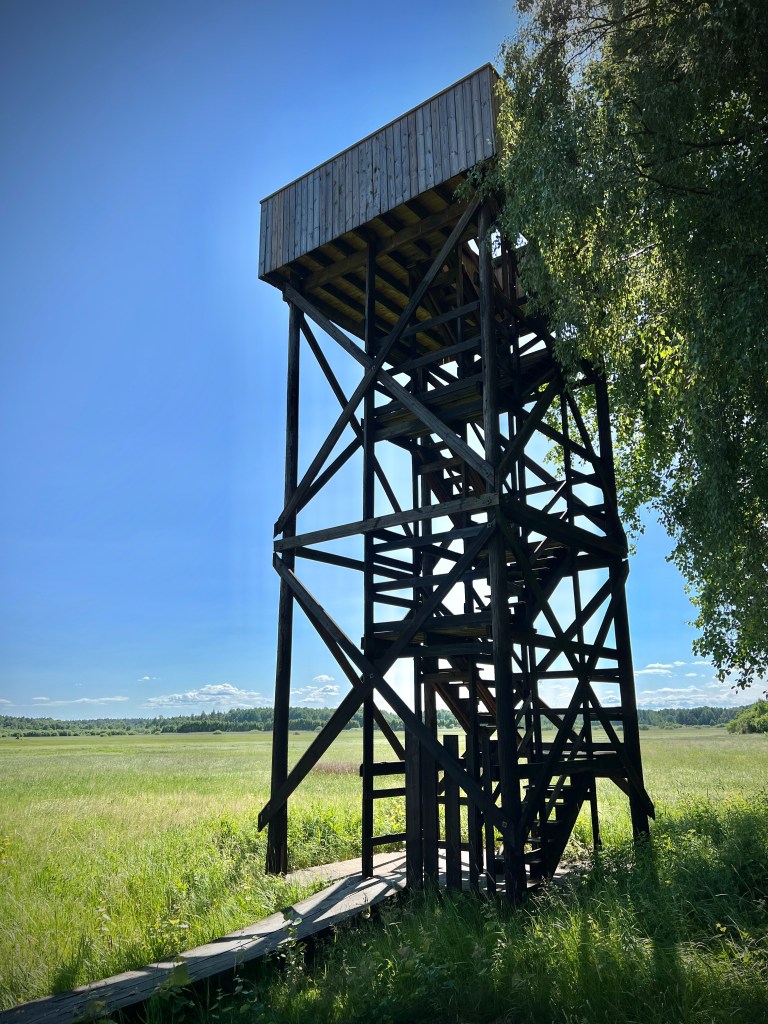
Both visits to the nature reserves provided rich pickings for birdwatchers, with Asköviken particularly memorable. Walking out to the bird tower on the water’s edge we came across tree pipit and red-backed shrike, and as we approached the tower heard a call somewhat like a parrot but it turned out to be my first ever icterine warbler. Normally, these birds are very hard to see and it seemed this one would live up to that reputation, however, once we were at the top of the tower, it flew into the top of a nearby tree where is stayed and called for quite a while (picked out in the image below).

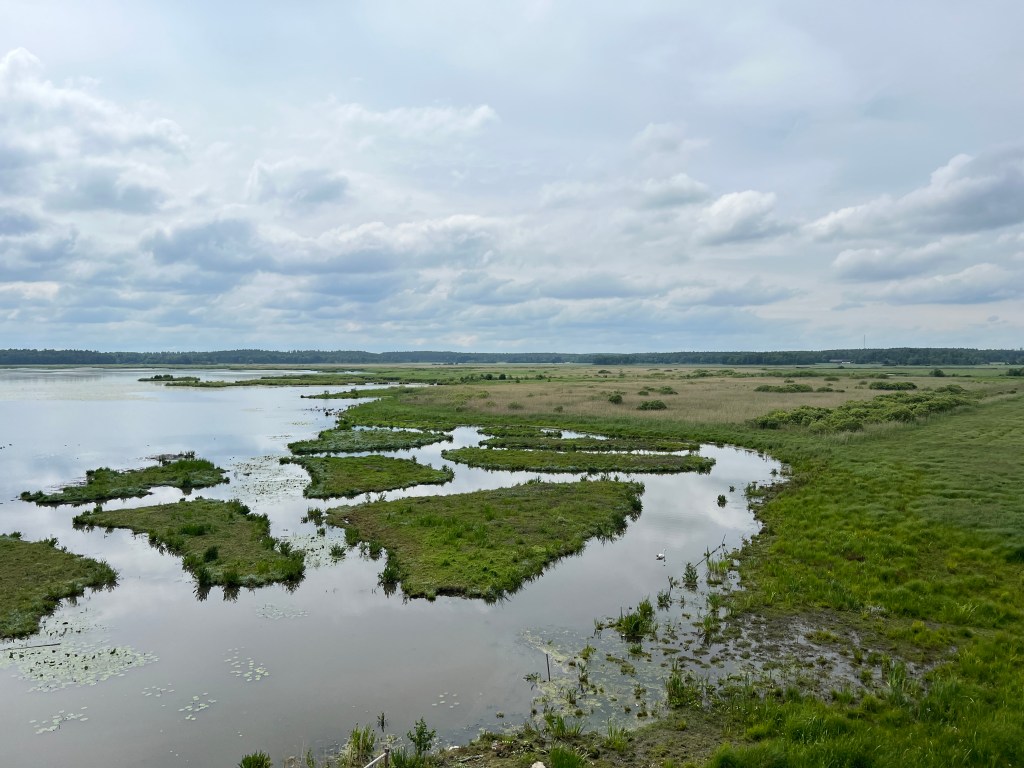
The bird tower gave us views out into Mälaren over the shallows and small, low islands. There were plenty of greylag geese and a few different ducks. The only waders we saw immediately were lapwings but after a while we saw two summer plumage spotted redshanks in the distance. Even further out, we saw the unmistakable silhouettes of two white-tailed eagles. They were both hunting and eventually dived down to an island and didn’t reappear. On the way back, I had another first as we walked through the woodland. A bird flew up from the ground and into a track-side tree. At first, I thought it was a thrush but looking again it turned out to be a wryneck, and a pretty grainy photo (below) confirmed it.


Amongst other woodpeckers we saw during the trip we green and great-spotted, and we heard a black woodpecker. We also saw a lesser-spotted woodpecker at Ängsö, the first I’ve seen since a winter trip to Poland in 2018.
One of my favourite places to visit within an easy distance of where we stay, is Färnebofjärden National Park and we took another couple of trips up there for to look for wildlife. We had intended to go to grill sausages at one of the riverside fireplaces but the lack of rain over the preceding months had led to tinder-dry conditions and a fire ban. However, we went anyway and we’re rewarded with a short view of a goshawk as it disappeared into the forest after crossing the water. On a second visit to the National Park we saw another white-tailed eagle from the bird tower at Skäkersbo as well as crested tots high up in the surrounding trees.
The trip overall was quite good for raptors. On top of the white-tailed eagles and the goshawk, we saw buzzard, kestrel, sparrowhawk, osprey (including three in one view) and hobby. I do usually see marsh harrier and sometimes red kite but not this time.
We also found a new spot to look for wildlife, to the south of the National Park, at Österbo, where there is a 700m boardwalk crossing what is usually a wet water meadow. On our visit there was little sign of water and little wildlife, but I suspect it’s a good location for migration stopovers for wading birds, waterfowl and cranes. We’ll have to go back in spring or autumn to check.
On the way back to the summerhouse, we very fleetingly saw a third and final ‘first’ in the form of a hazel grouse which flew in front of the car and landed on a track as we drove down a fast main road; unfortunately we couldn’t stop.
I’ve said before on my blog that my greatest interest in wildlife is actually in mammals rather than birds. Sweden’s is much richer in it mammalian life than the UK is, showing how our islands once were, a long time ago, and perhaps could be once again (but probably not in my lifetime).
We didn’t have any real standout mammal moments on this trip but we did see a few; albeit some being on our trail cam. We put it the camera out at night, both at the front of the summerhouse and in the forest immediately behind it. We recorded roe deer, red fox, red squirrel and badger but unfortunately, unlike our last stay, we didn’t record a passing European Elk. We also saw brown hare in the area around the summerhouse. As in 2022, we got good views of beaver at the nearby lake, but unlike last year, these weren’t every night and we didn’t get as close views.
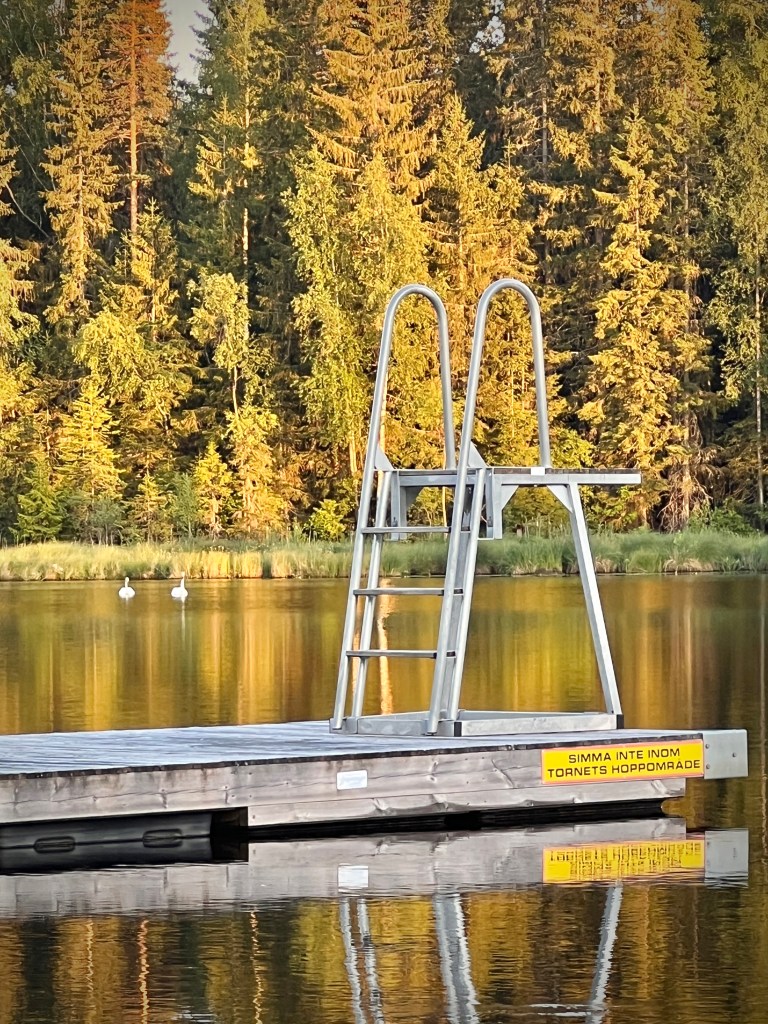
There were reptiles too with two types of snake. We saw a grass snake as we swam in the lake at the summerhouse and an adder as we walked along the forest tracks. We sometimes see slow worm in the garden but not this time.
We also spent a little time looking for insects and specifically looked out for one type of butterfly, finding a poplar admiral along a Dalarna forest track. On our first evening at the summerhouse we also saw a swallowtail. We were also pretty amazed by the sheer number of dragonflies and damselflies as we swam in the lake. Mating pairs would be hounded by packs of followers around our heads.


While seeing some birds for the first time is always nice, these weren’t the best wildlife memories of the trip. There were the swifts racing overhead as I swam in the lovely warm lake, there were the haunting calls of the black-throated divers as we relaxed by our waterside tent and, finally, the bugling of cranes echoing around the forest as we sat outside one evening. These were all quite magical moments that you get only from immersion in nature, even just for a few minutes.

All in all, we saw or heard 95 species of bird over two weeks, which I think must be a record for any holiday I’ve had except for guided trips to Africa.




 Daft Mumblings