We’ve just got back from a two-night stay in North Norfolk. This is one of our favourite places for a winter break with the wildlife along the coast some of the best you can find in what can a bleak season in England.
The over-wintering birdlife is our usual focus for our days out and this visit was no different. However, a change of plan gave us some spare time at the end of the second day and we took the long way back to our lovely rental cottage in the village of Blakeney. Rather than sticking to the coast road we headed a little inland and drove slowly along the single-track roads. The landscape here, back from the marshland coast, is of rolling arable land with a mixture of unfenced fields and others surrounded by high, thick hedging. In winter, these fields are either starting to show the first green shoots of this year’s crops or still lying to bare soil. Some of the fields without the early growing crops have been cleared of sugar beat or have been used to house free-range pigs.
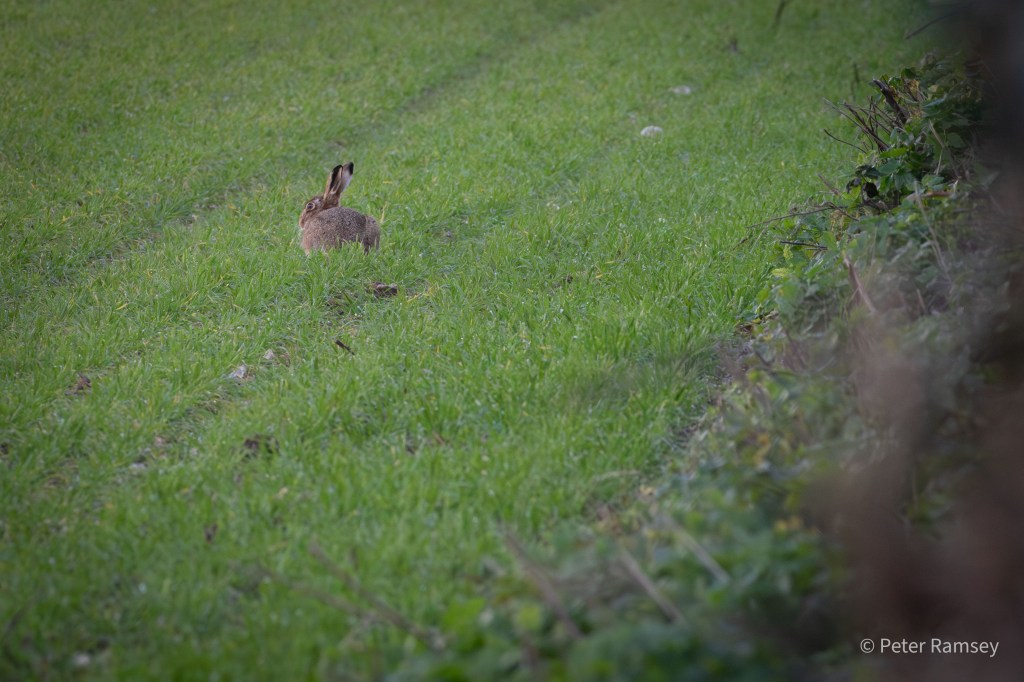
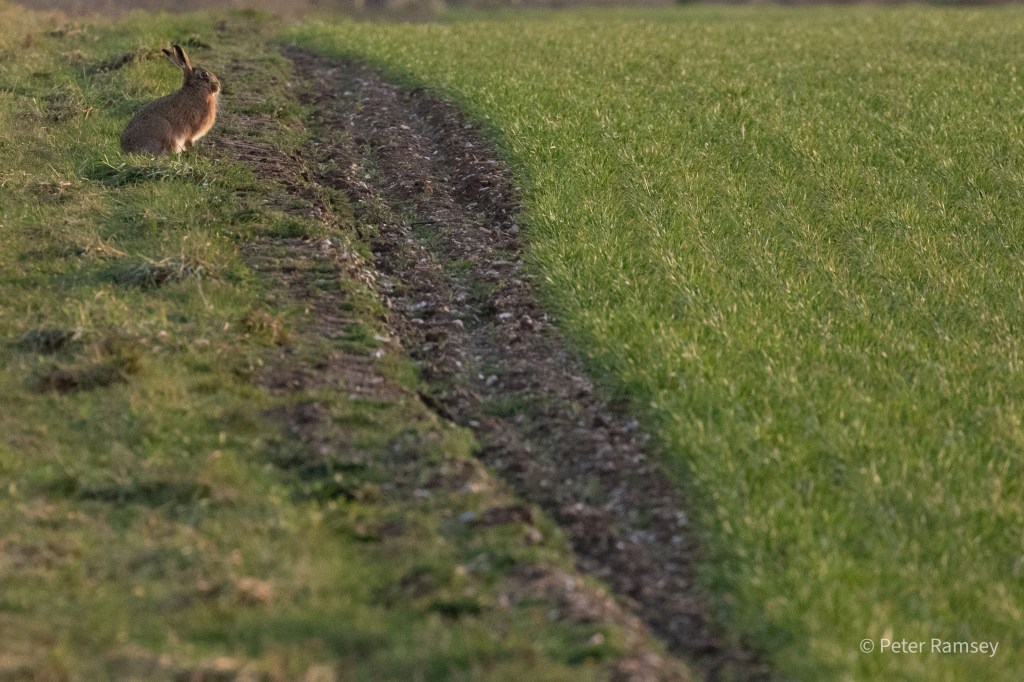
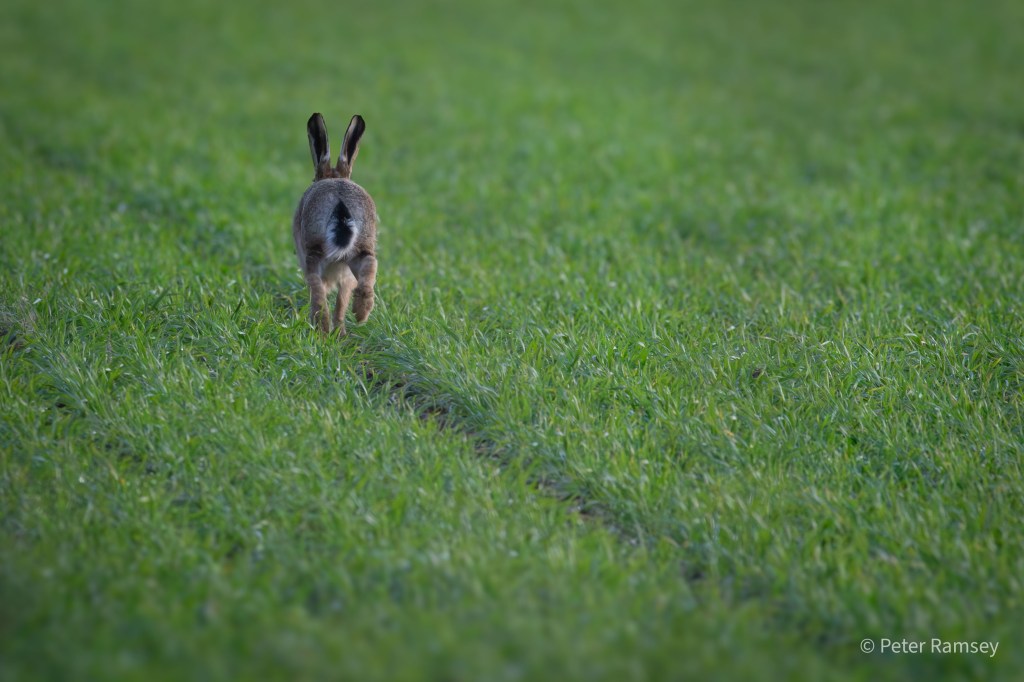
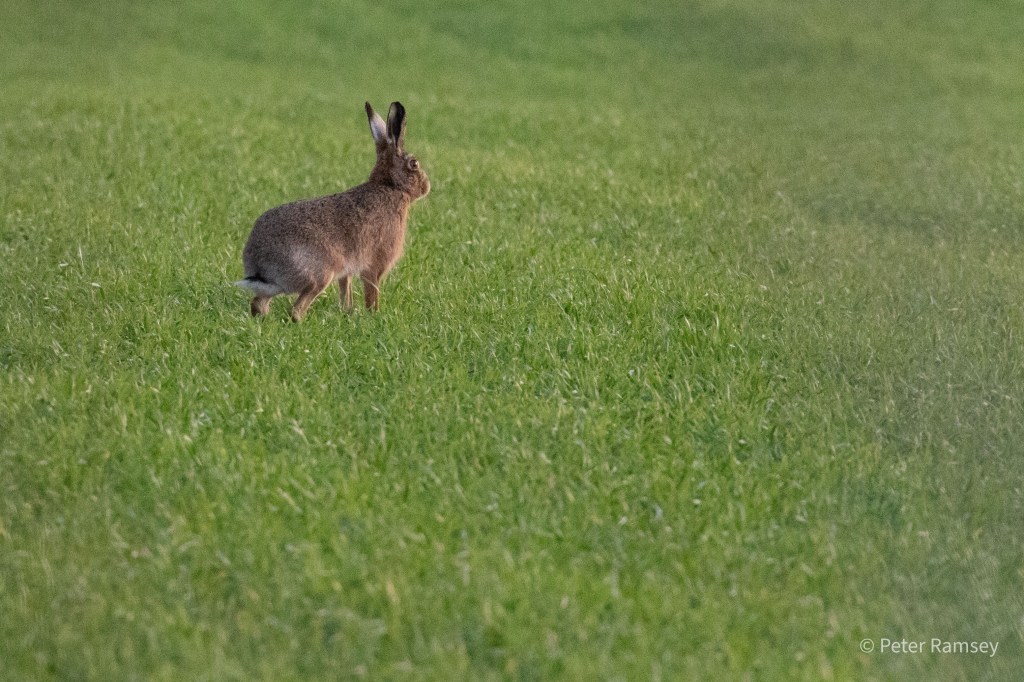
As we made our way along the narrow lanes, we stopped at field gateways or gaps in hedges to scan the land with our binoculars to check for wildlife. We almost immediately found a hare and as we progressed onwards we found more and more. Sometimes there was just a solitary hare sitting at the field edge but on other occasions there were pairs, either sitting close to each other nibbling on those fresh shoots or, in a few cases, starting to slowly chase each other across the open ground. This was perhaps the first signs of pairs coming together to breed, but it seemed a long way off the chasing and ‘boxing’ of the mad march hares.
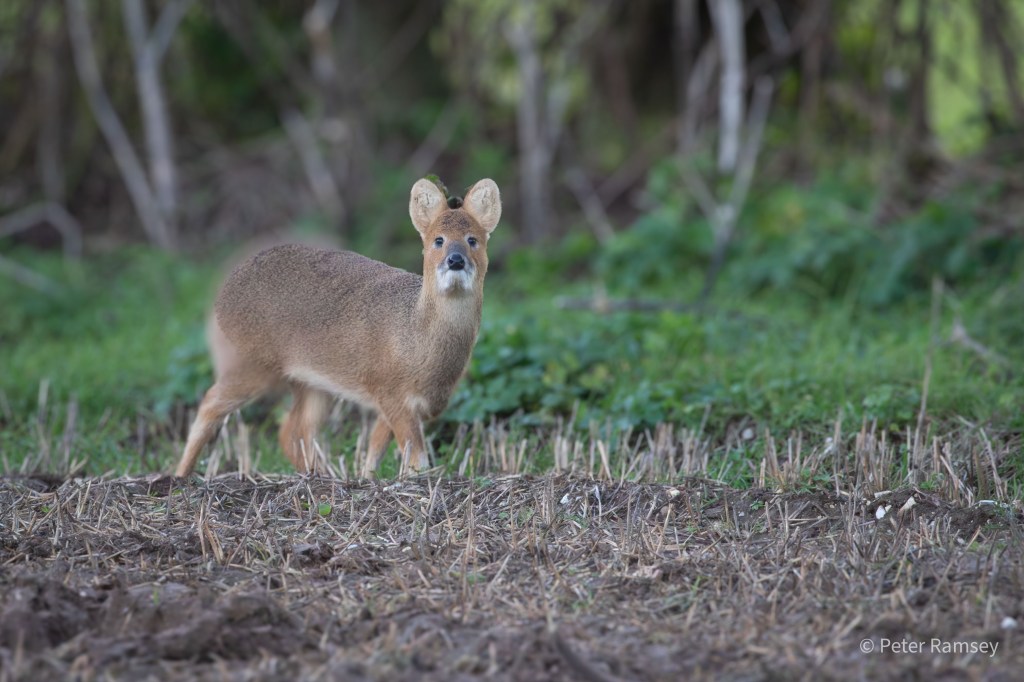
Also out in the fields we increasingly saw groups of deer as the light began to fail. We saw three species out there; the native roe and two imported species; muntjac and Chinese water deer. Most of the deer were too far away to photograph by one water deer stayed calmly close-by as we stopped the car to take a look.
In all, all we must have seen upwards of 40 hares in our slow drive back, over the course of an hour or so. This really highlighted just how rich in mammal life North Norfolk is as well as being home to so much bird life.
As we were about to finish our little driving safari we could hear a few geese nearby. We drove around for a few minutes unable to find them. Just as we were about to give up, we came to a muddy track alongside a hedge behind which we thought we could hear them. As we came to a gap in the hedge, we were given a view of a huge flock of pink-footed geese, numbering in the thousands, feeding on a sugar beet field. We arrived just in time to see them lift from their daytime feeding and head off to the safety of their coastal roost out on the mud of The Wash. For me, there is little that stirs my soul more than a mass of wintering geese calling as they fly into the night.
At some point in January, as early as possible, I usually take a trip to a good wildlife spot to try to kick-off my lists for the year. Quite often this means heading east into the Fens or beyond on to North Norfolk. Yesterday, our choice was the Wildlife & Wetlands Trust’s centre at Welney. This reserve sits on the Ouse Washes; a huge flood management area around 30km long and, at its widest, almost 1km wide. It is the winter home to a great number of resident and migrant wildfowl and a brilliant place to start building up a list of species seen over the course of the year.
Yesterday was a typical January day in the Fens; cold, not far off zero degrees Celsius, with low, dark grey cloud and a mistiness hanging over the land. The light breeze was barely be felt with our backs but added a further chill when walking into it, taking the damp cold off the flooded washes and flat waterlogged fields, and seeping in through any gaps in our clothing.
Standing at the edge of the Washes, the flood water from the River Ouse covered almost every inch of the ground, leaving only small islands, the tops of fencing and gates, and the tall patches of reeds standing above the surface. On that surface was a spectacular congregation of wildfowl including all three British species of swan, numerous species of duck and a range of waders. Many of these can be seen at the wetland reserves closer to home but for some a visit to Welney and other East Anglia reserves is a must.
I particularly wanted to see the swans and was rewarded both at Welney and in the fields on the way. The Whooper Swans from Iceland are the most numerous but, as was the case when we visited last year, numbers were down significantly from previous times I’ve been there. The Bewick’s Swans are generally less numerous at the reserve and I haven’t seen any there, or anywhere else for a number of years. However, yesterday we saw one single bird out in the distance.
After wandering to the different hides along the bank about the water, we went for a walk around the Lady Fen trail to see what else we could spot. Like the weather, the life out on the fields was subdued and there was little to see apart from three species of egret and groups of corvids. We have seen owls on this walk before but had no luck this time, meaning a visit to the Nene Washes might be in order (it’s often possible to see four species in a short stop there). We also had two new species of mammal for the year; nice groups of Roe Deer and a single Chinese Water Deer out on the damp fields amongst the shallow flooded scrapes.
Overall, we saw 60 species of bird at the reserve and I’m sure we could have picked up a few more if we had stayed a little longer but the cold and gloom eventually got the better of us and we turned for home.
Anyone who has scrolled through the pages of my blog will know I spend time each year on Ramsey Island, the RSPB reserve off the northern coast of Pembrokeshire in Wales, and I have grown very fond with it. However, I have a general love of islands, both large and small, and will take most opportunities to visit them when I can. Earlier this month we had a week-long holiday on the Northumberland coast, which presented a couple of such opportunities; the Farnes and the Isle of May. This post focuses on the latter.
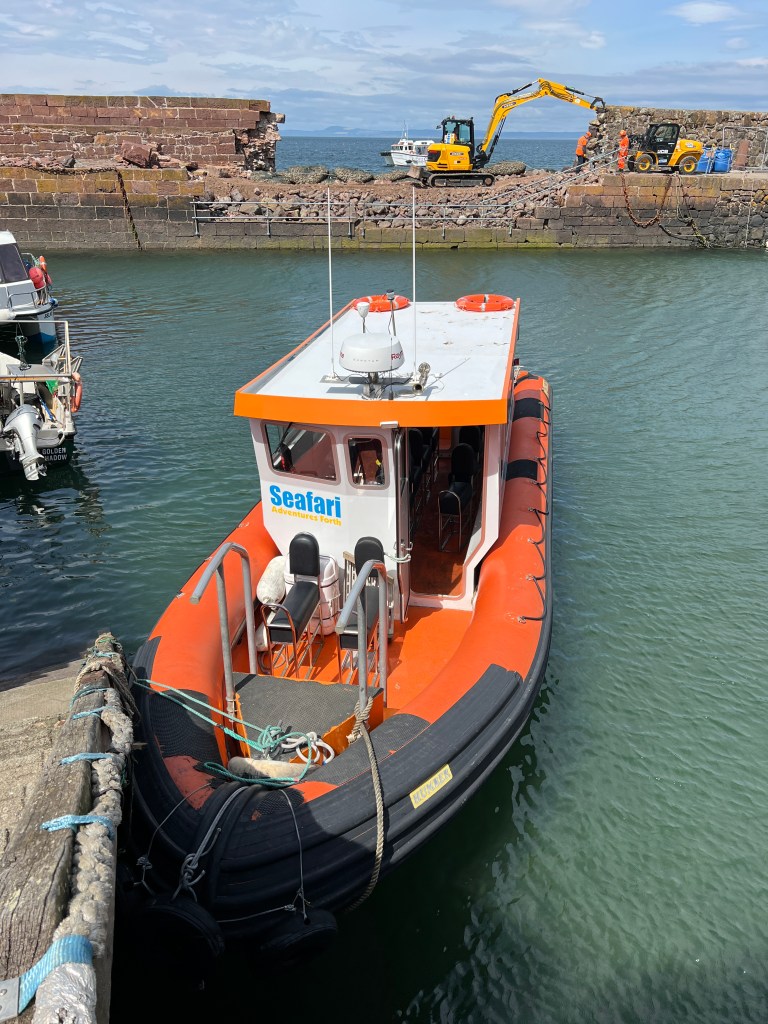
Our trip started at North Berwick, on the southern shore of the Firth of Forth, with a fast RIB (rigid inflatable boat) ride booked through the Scottish Seabird Centre. The town was a nice bonus to our day; an old town with narrow streets lying behind two long sandy beaches split by a rocky outcrop build out further by the sheltered harbour. We arrived early and spent some time wandering the quiet streets and along one of the beaches in the increasingly lovely, sunny weather.
We headed out on the RIB after lunch. Partially enclosed, it provided a lot more weather protection to the passengers (and crew) than other, open RIBs I’ve been on before. Sitting at the back, I did get a little damp on the trip across but not enough to be at all bothered. The sea was relatively calm and with a following wind and waves flowing with us, the journey was pretty bump-free.
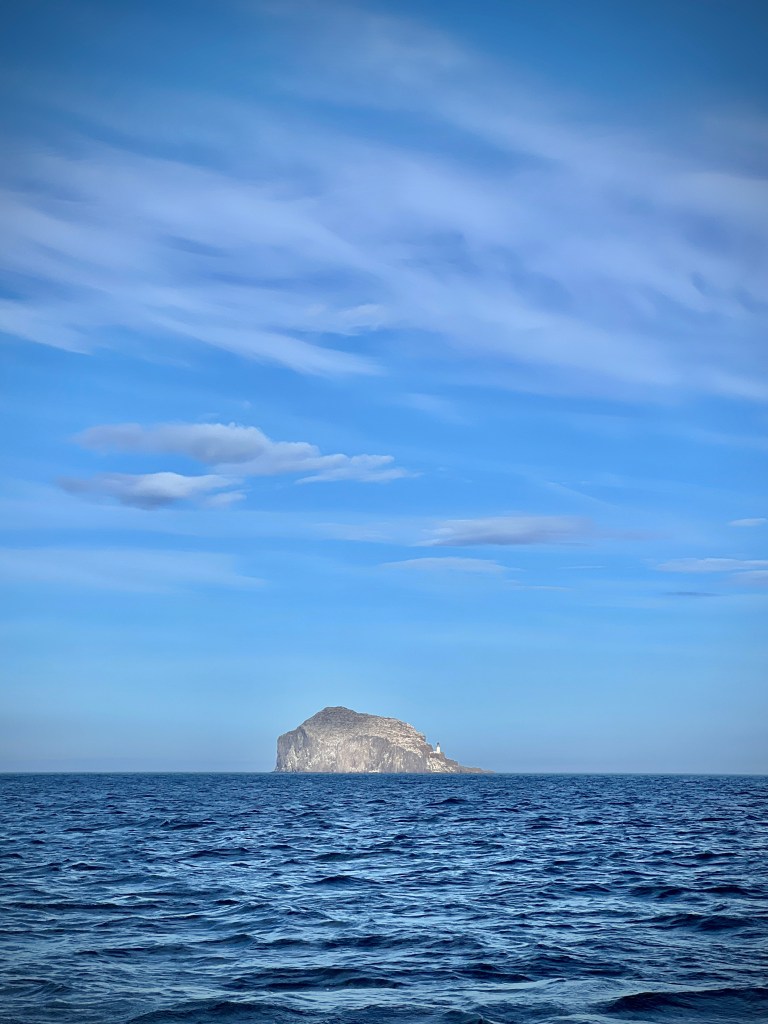
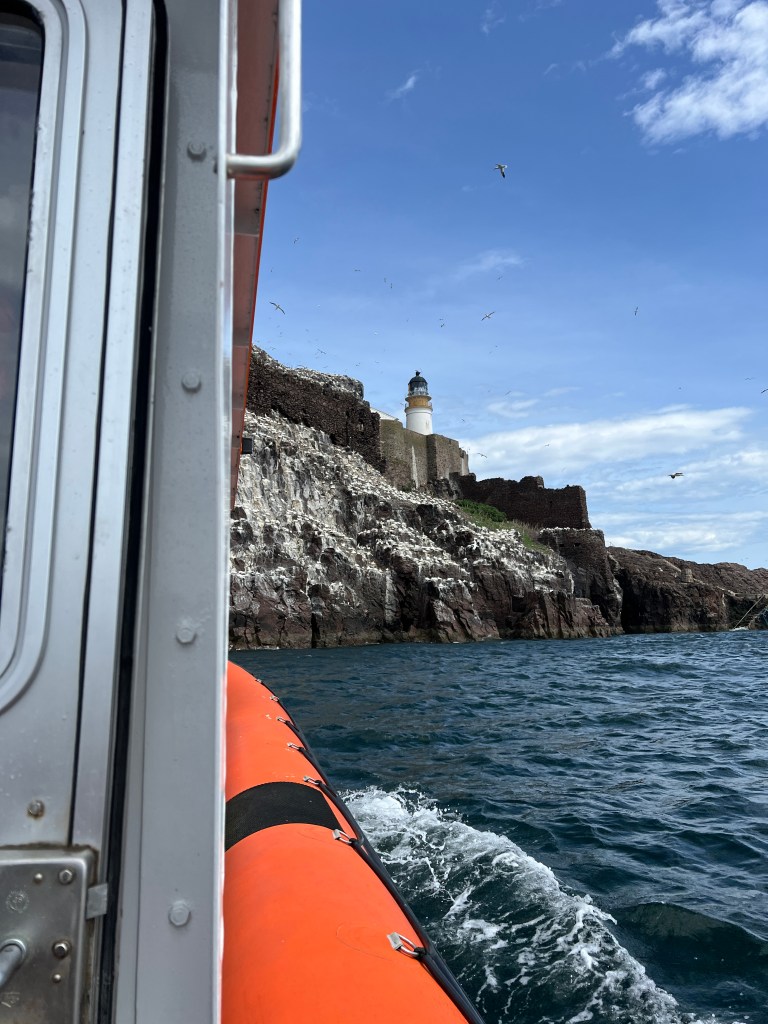
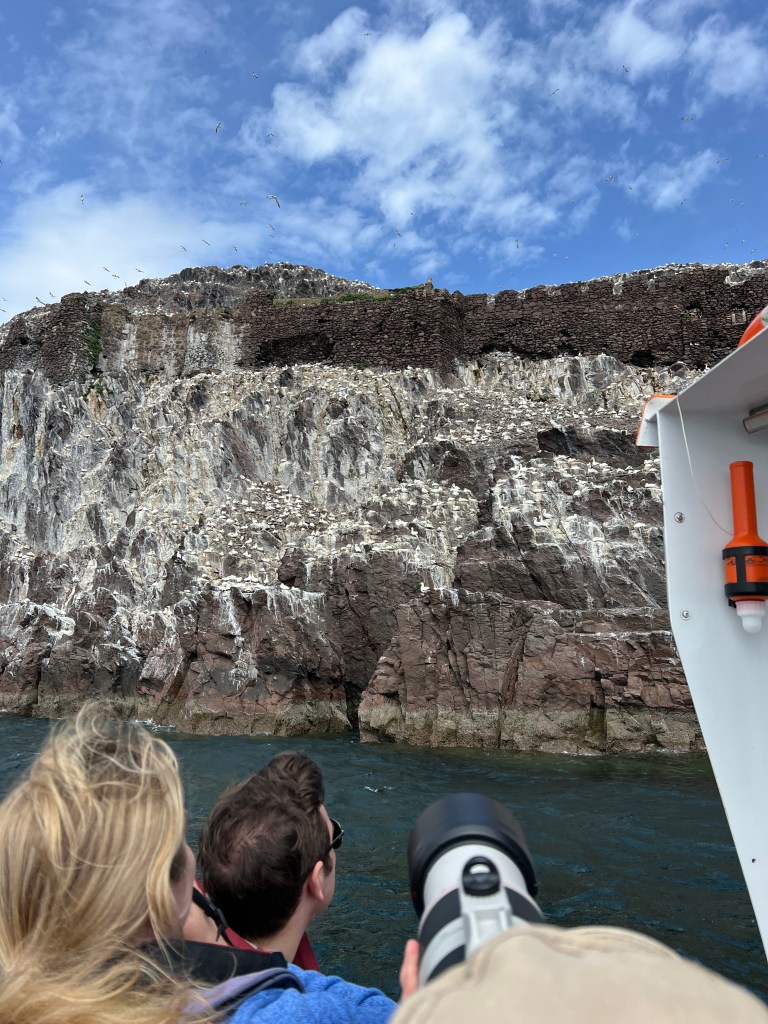
Before we arrived at our destination for the afternoon, we had an exciting stop on the way. Whilst on dry land, as we drove to North Berwick on our route to the coast, we started to get glimpses of a large mound in the distance. Eventually our view across the rolling countryside opened up and we could see the looming mass of Bass Rock. The 100m sheer cliffs stand abruptly in the sea, seemingly more cliff than island. On approaching the vertical sides in the boat, the Rock is a mix of light grey and white, the latter coming from its most famous inhabitants; the gannets belonging the the largest colony in the world. Before last year, ‘The Bass’ hosted more than 150,000 northern gannets but like so many of seabird colonies the population has been hugely hit by avian influenza and gannet numbers have dropped by around quarter in the past couple of years. However, the rock and its gannets still remain an impressive and unforgettable sight, especially as we peered up the looming cliffs from the boat below. There were gannets all around, those on the rock itself, others circling high above or coming into land, and some in and on the water around us. The noise was incredible with the thousands of birds raucous above our heads; pairs greeting each other amongst squabbles over nesting space. After a short stop floating by the gannets, we made our way to our main destination at the end of a 45 minute trip from North Berwick.
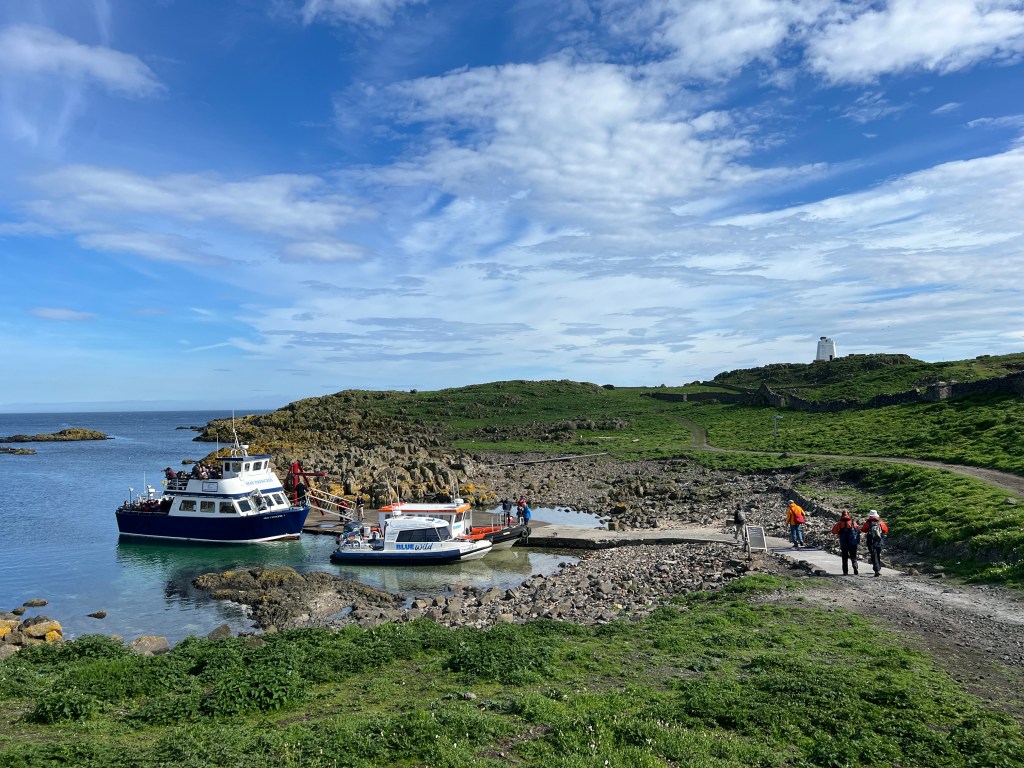
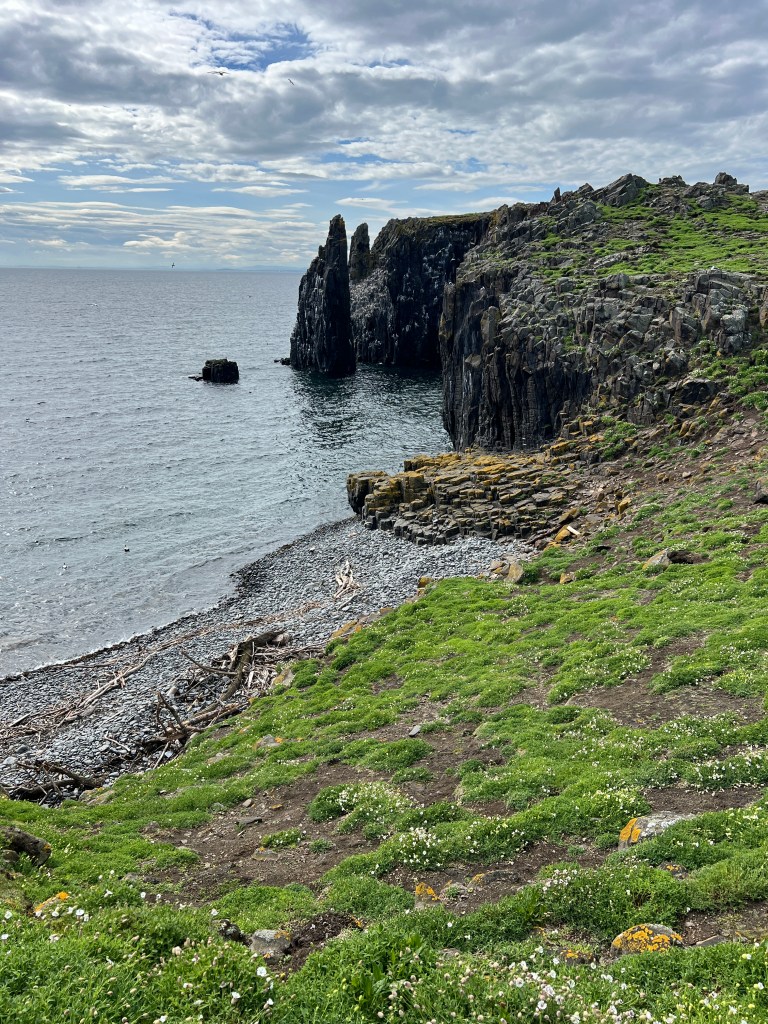
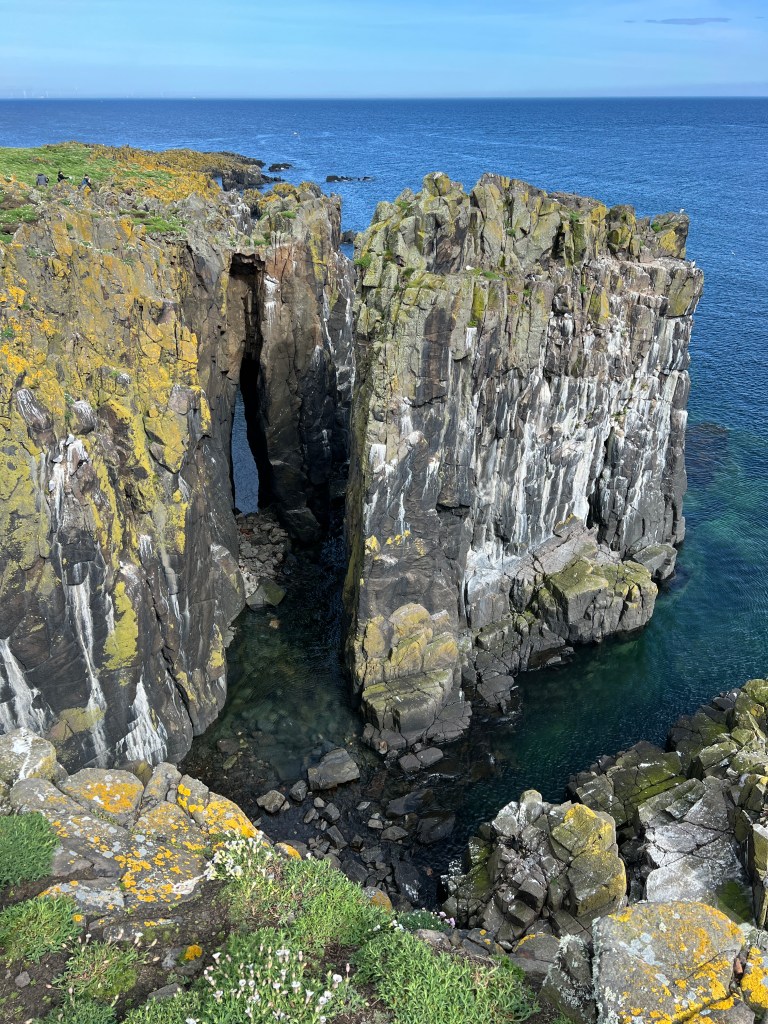
Lying towards the northern side of the Firth of Forth’s opening mouth, from a distance the Isle of May sits low in the water. It is a long, thin island, which is less than 2km in length, with the attached island of Rona, and less than 500m in width, running at an angle from broadly north-west to south-east. The 57 hectares aren’t flat with the land rising from the sea to a height of 50 metres. There are cliffs around much of the coast but the rise is more shallow on the western site from the beach and harbour. The island is a mix of grass on shallow soil, large areas of rock and jumbles of boulders, similar to so many exposed small islands at the edge of the UK.
As we landed, two more boats accompanied us, one of similar size to our RIB as well as a much larger boat carrying around 100 passengers, in all bringing around 120 people to the island for just under three hours.
We were welcomed by two of the island team, giving us a very brief safety message; keep to the paths, don’t stand on the puffins (or their burrows), keep away from the edge of cliffs and don’t step over the ropes, and, most importantly, don’t forget to return in time for the boat home!
Our trip came with a guide and as we hadn’t been to the Isle of May before we decided to take a trip with him and our other passengers around the paths of the island and up to the large central lighthouse.
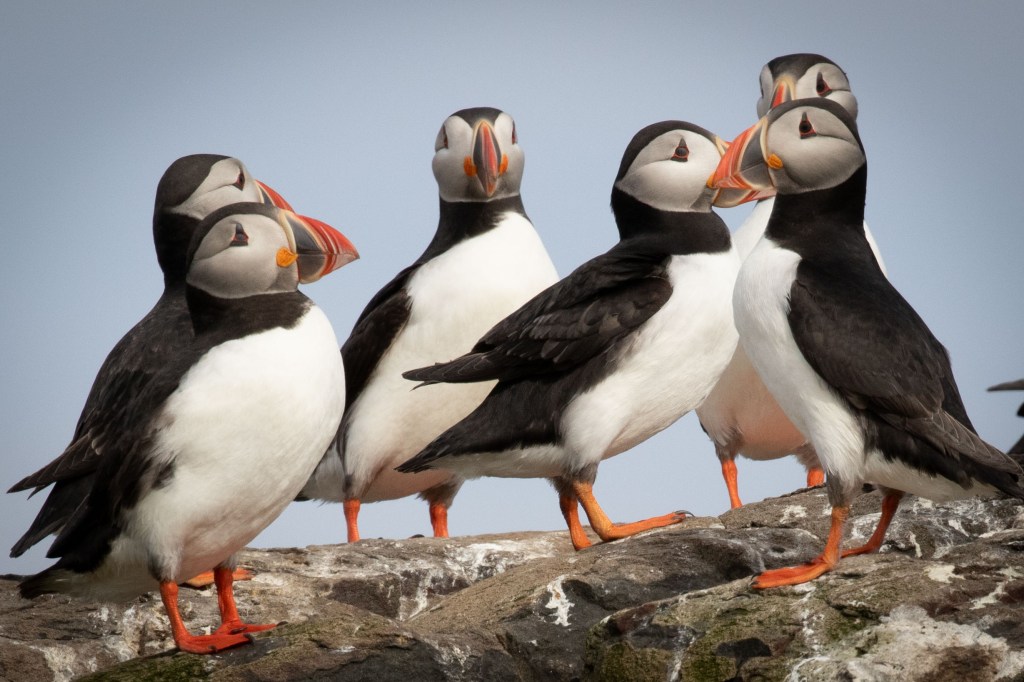
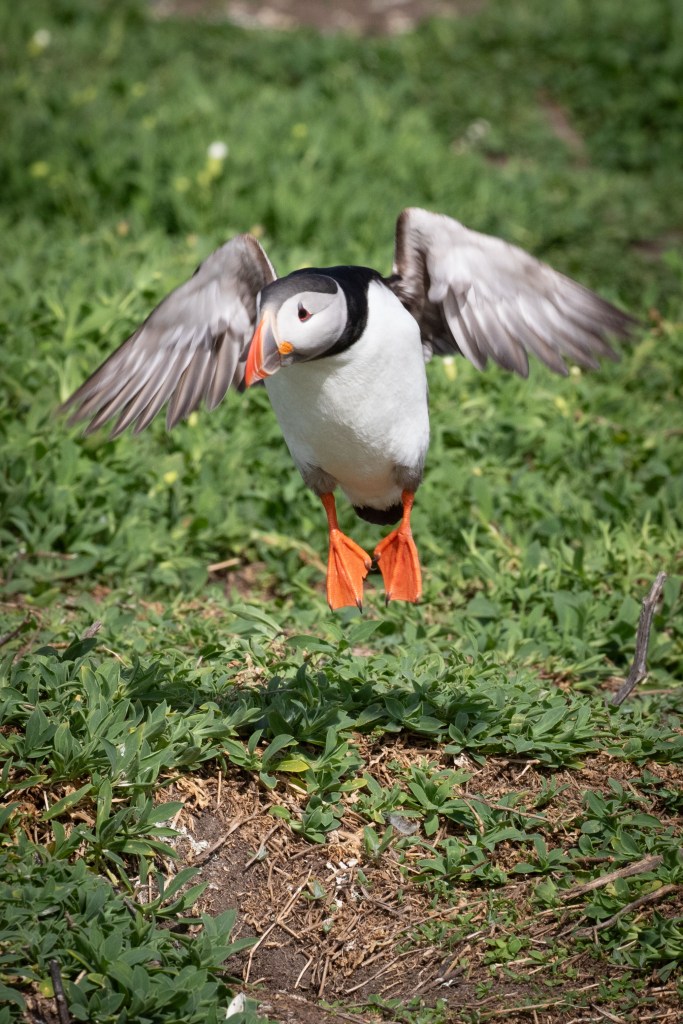
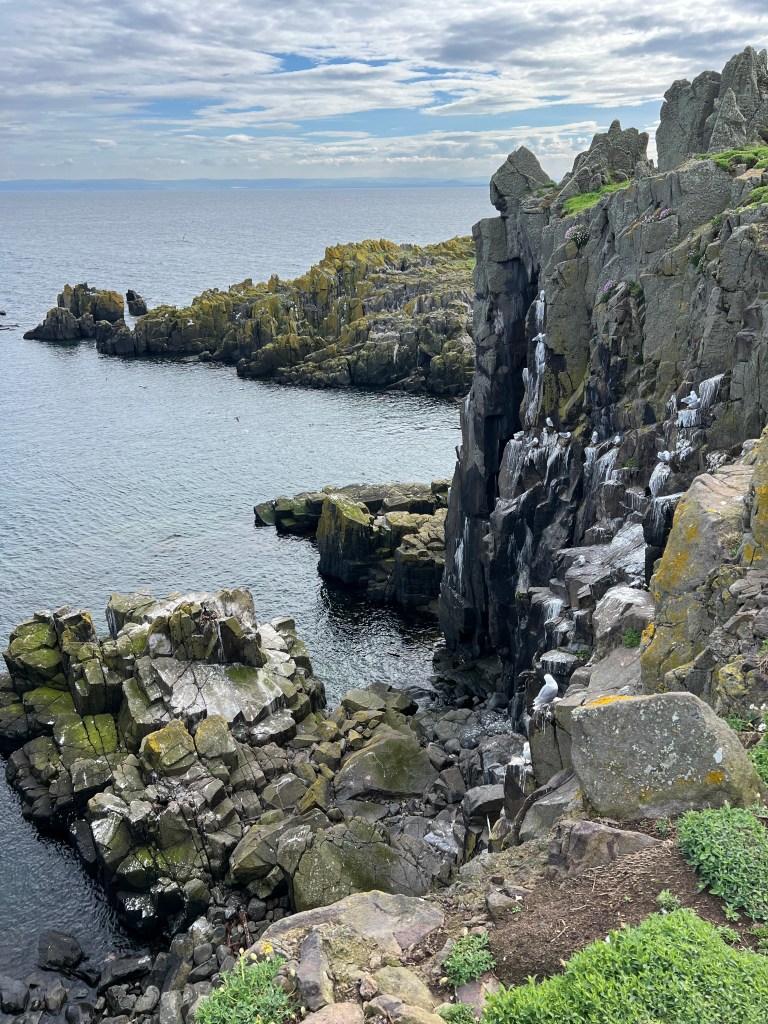
The main reason to visit the Isle of May was for its seabirds and we had a brutal introduction with one of the first sights being a huge great black-backed gull, with blood around its bill, tucking into one of other residents, a puffin. As we moved on we found many of the other inhabitants including other gulls including kittiwakes, razorbills, guillemots, shags and plenty of nesting eiders. Out at the cliffs we had great views of all of the seabirds on their nest sites and they didn’t at all seem bothered by the human onlookers quite close by.
Like a number of other islands around our coasts, the Isle of May hosts a bird observatory. It was Scotland’s first and is celebrating its 90th birthday in 2024. Particularly during spring and autumn migration they and their fellow observatories record the passage of birds north and south and are some of the best places to seen rarities. We saw the Heligoland traps they use for humanely catching and then ringing the birds but unfortunately it was a quiet day for the migration.
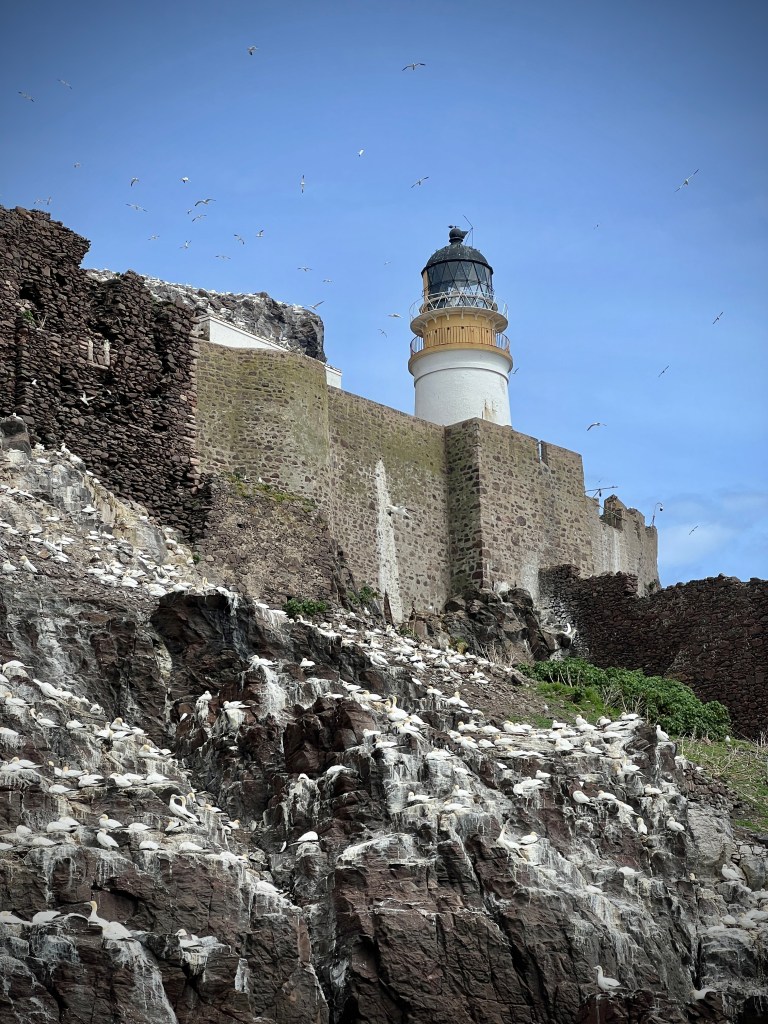
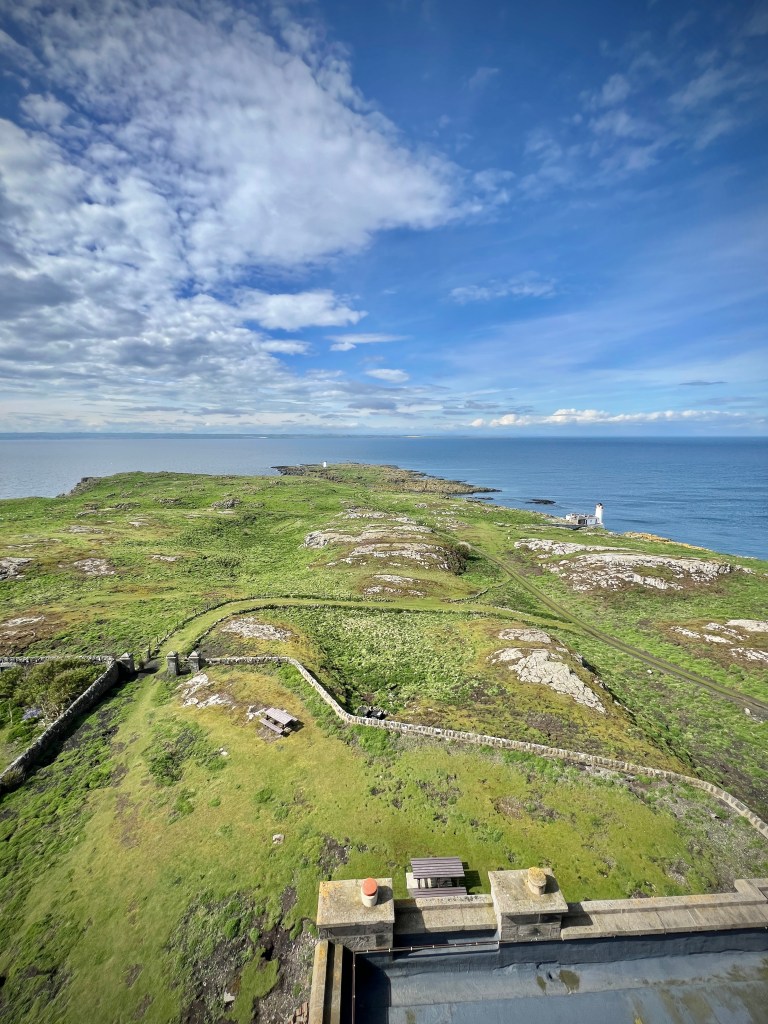
There is interesting human history on the island, surrounding its monastic, royal, military and nautical past. Of most interest to me were its series of lighthouses including the currently operational one sitting centrally. As we finished the guided part of our walk around the island we were allowed up this Robert Stevenson-designed gothic marvel from 1816. It is so different from many of the lighthouses I’ve visited. No slender white cone of a structure but an unpainted stone, almost castle-like block with a square tower upon which the light itself sits. We went all the way to the top of the tower, up several floors via the open spiral staircase and then a steep ladder at the end. From the top, the view over the island and across the Firth was spectacular, a 360 degree vista of the Scottish coast of East Lothian and Fife, towards Edinburgh and out into the North Sea. With the weather so clear and bright, I could have stayed up there for hours.
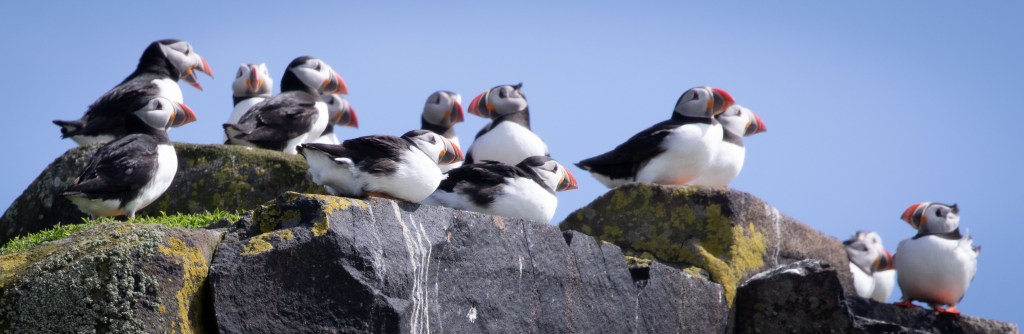
We concluded our visit with a walk back south and more seabird cliffs with steep drops down to the rocks and sea beneath. There were more puffins, razorbills, guillemots, shags and kittiwakes, and again, very obliging in their general nonchalance towards visitors.
As always with an island visit, there is never enough time and it was soon the moment to step back onto the RIB for the fast 35 minute trip back to North Berwick. I would very much like to spend more time on the Isle of May and the guide did suggest learning more about the volunteering opportunities with team of conservationists. For me to volunteer there, I would have to give up my Ramsey Island volunteering week, and I not quite sure I ready to do that! However, the Isle of May really does have its attractions; the birds and other wildlife, the lighthouses, the history, the landscape and the views, and I definitely would like to return, and spending a week there would be incredible. I could easily see myself loving the Isle of May as much as I do Ramsey (well, almost, maybe).
It’s been quite a few weeks since we last went for a country walk. We had to do a few household tasks yesterday, probably made a little less unwelcome by the weather being pretty unpleasant, particularly in the morning. However, waking this morning on what looked like a beautiful spring day, we headed out for a walk around part of Rutland Water.
Since we moved to Northamptonshire three years ago, Rutland is now less than an hour away. We have been to the wildlife trust nature reserve a couple of times over that time but today we decided to do a five mile circuit around the village of Hambleton and the peninsula on which it sits. The whole walk was under a mix of bright sunshine and fluffy spring clouds. The strength of the sun can now be really felt, being towards the end of March, but as soon as cloud covered it over, even fleetingly, there was still a chill in the air, especially out in the brisk wind.
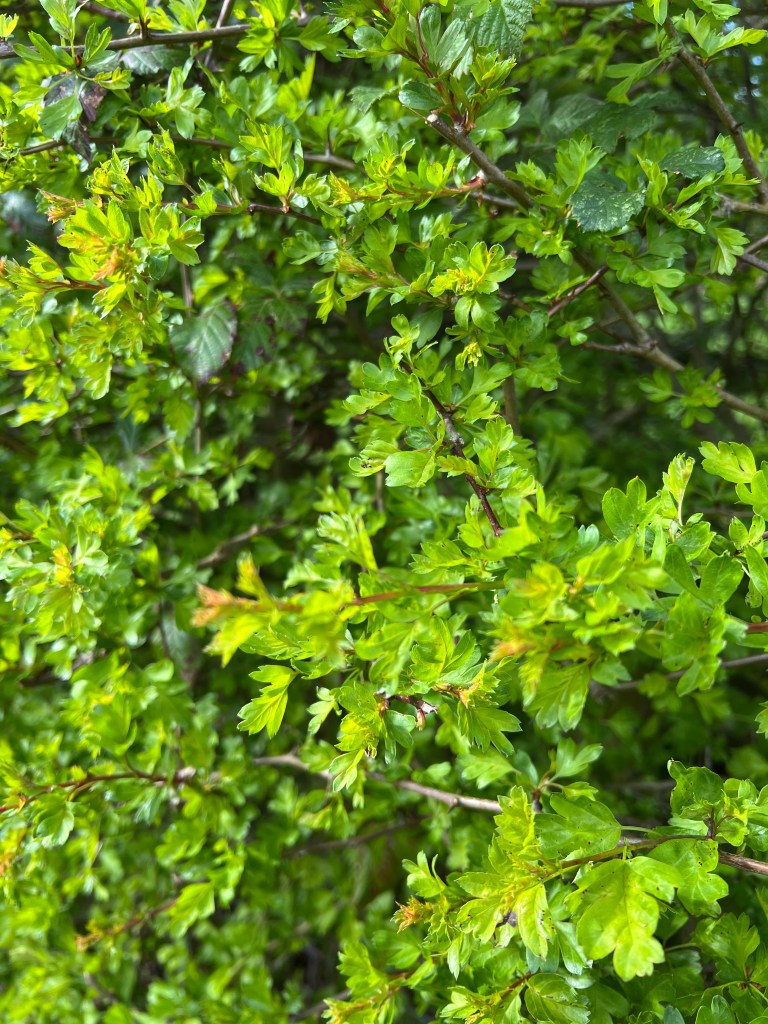
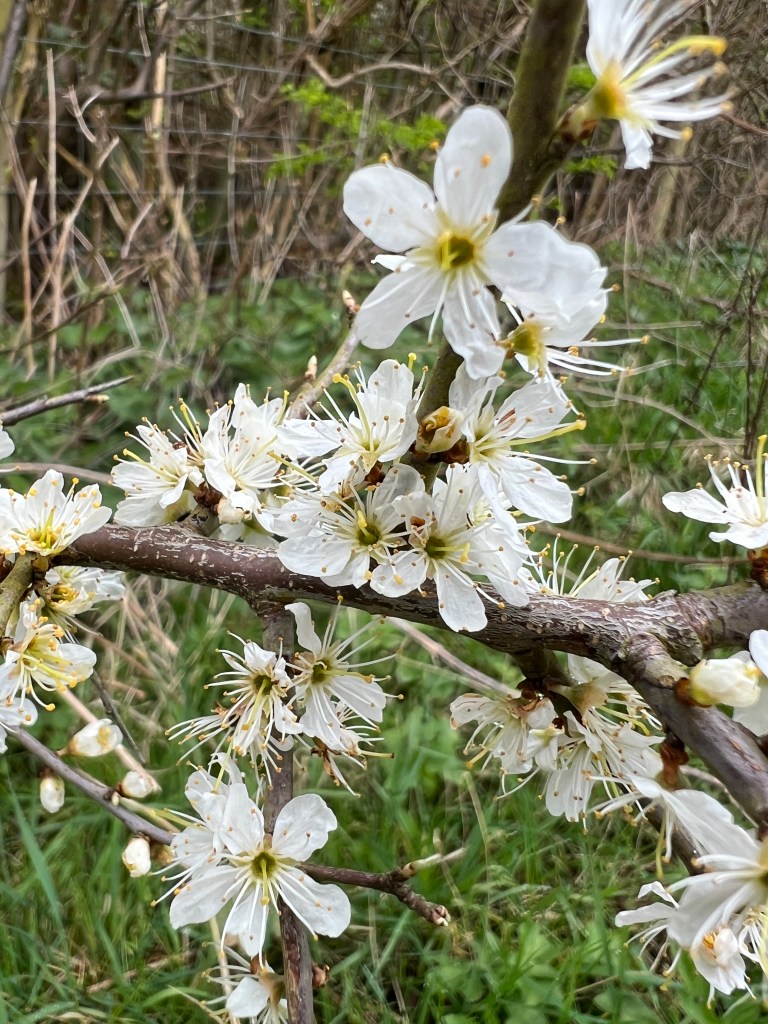
There were signs of spring all along the walk: in the fields, along the hedgerows, in the woods and along the shoreline. There are new lambs in the fields, hawthorns are now coming out into leaf and the blackthorn into blossom, and there are migrant birds starting to appear and sing.
I would like to pay a little more attention to the wild flowers this spring and there were plenty on the walk. There were delicate primroses in amongst the trees and celandines on the grass verges in addition to the blossom in the hedgerows. There must also be a great display of bluebells in some of the shoreside woodlands as there were big swathes of them bursting up through the leaf litter.
After what was a stunning five-mile walk we headed to the nature reserve. Firstly to look at a possible new purchase; it’s about time I bought a proper wildlife watching telescope and I just wanted another look at one before I take the plunge (possibly). The last visit of the day was to Manton Bay to see the newly arrived ospreys. The established pair have settled in and are already mating regularly, so it might not be long until the first eggs are laid.
This did remind me of one of my old usual spring haunts, at the Glaslyn Wildlife osprey nest protection site near Porthmadog in North Wales. I volunteered there for a number of years, spending quite a few nights but also many days in the old caravan amongst the wet meadows and drystone walk, just a couple of hundred metres from the nest. It was a joyful experience being surrounded by wildlife and helping to protect this beautiful but rare species. I saw this morning that the lucky volunteers no longer have to sit in an old caravan but have a new hide, perched up on stilts to avoid the water from the too often flooding river. The ospreys at the Glaslyn have yet to return this spring but I’ll be keeping an eye out on the webcams over the coming days.
I’ll finish this post with a few images of the lovely spring walk today…














 Daft Mumblings