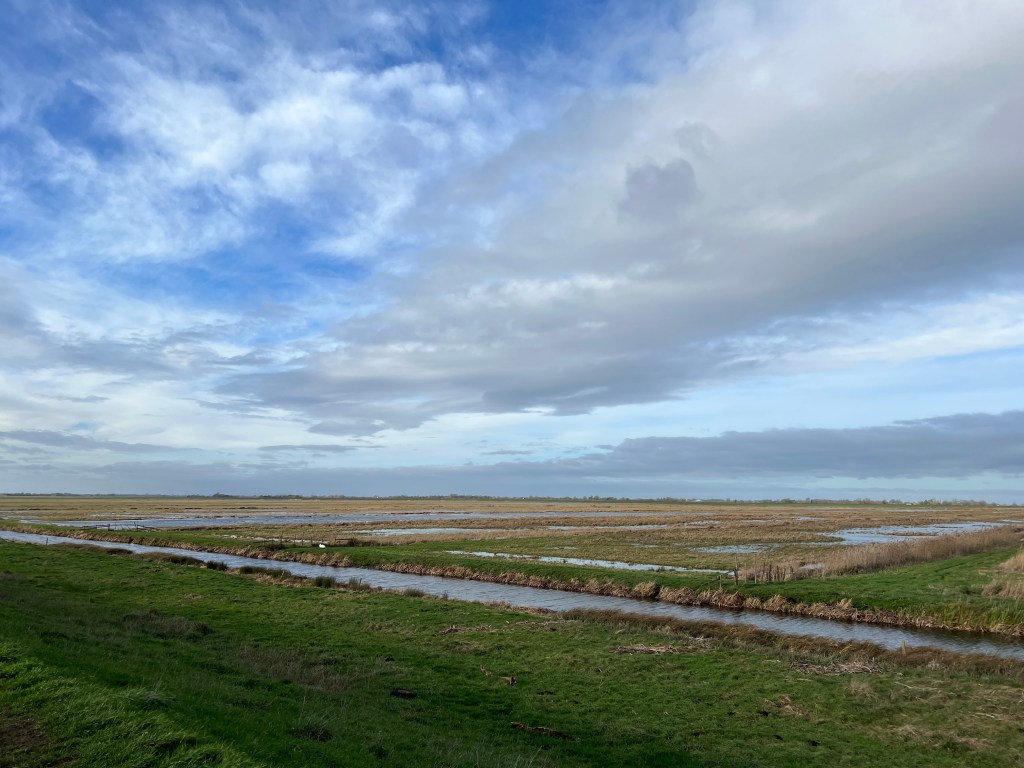
A cold day in the Fens

This is a usual time of year for us to spend a day out in the Fenlands of Cambridgeshire and Lincolnshire. With the sun bright over a frosty land, we headed out eastward in search of winter visitors and owls.

Our first stop was the Nene Washes, which was meant to be the main focus of the day. As we arrived the sun disappeared as low cloud and then fog enclosed the scene. This wasn’t a great start to our visit and it didn’t really get any better. Our visits over recent winters have coincided with flooding of the washes which attracts vast numbers of wintering wildfowl. Instead, today, to our surprise following a very wet autumn, there was barely anyway water at all and very few birds.

We heard very distant whooper swans and possibly a crane but as we walked along the high bund there was little to see bar a nicely perched red kite. There were also very few other people around; there’s usually a few people hanging about watching owls in the thick bushes behind the bund but today, virtually no one. It’s a significant task trying to find the amazingly well camouflaged long-eared and short-eared owls and we usually get a few pointers from those who have already found them, but with no one around, we gave up pretty quickly.

However, we bumped into a man who had just arrived from some birding sites near the ‘Deepings’ and he gave us a tip-off. With that information, we headed off in search of a bird that I have never seen before.

After about 30 minutes of driving along the long, narrow and often subsiding fenland roads, we came the spot we had been told about. In the distance was a large flock of wintering whooper swans and as we scanned through them we very quickly found the target of our search: a snow goose.

You can see the bird, third from the left on the following, very poor image taken through my scope.
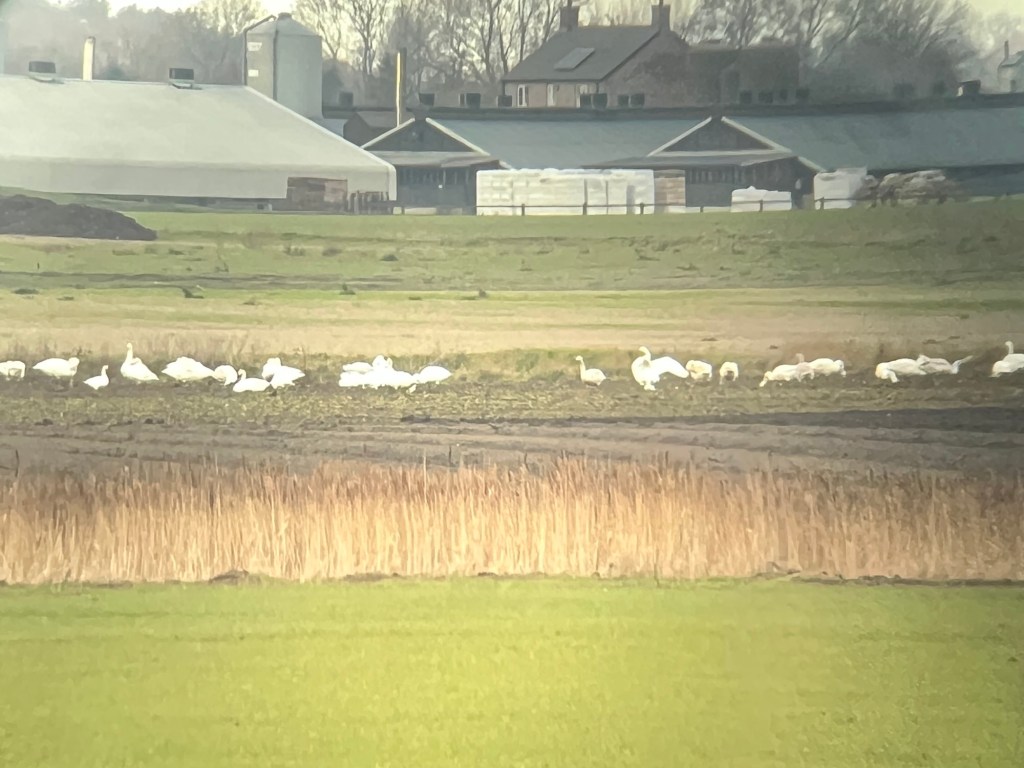
I like a goose, particularly those that travel long distances to spend the winter in the UK, but snow geese shouldn’t actually be here. They are a North American and Siberian species that spend their winters on the far side of the Atlantic from us. However, they are a vagrant visitor to the UK albeit most that are seen have escaped from collections rather than being wild birds. In the case of this bird, I’m hoping it was the real wild deal given that it was amongst a flock of whoopers, which come here from the Icelandic breeding grounds.

Well, I’m going to count it as wild and therefore a genuine ‘lifer’ for me; the first I’ve seen in the wild and a great way to start the new year!

As we left the area we came across another flock of whoopers in a field very close to the road and we stopped to take a look…taking a nice video with, for me, one of the evocative sounds of winter…
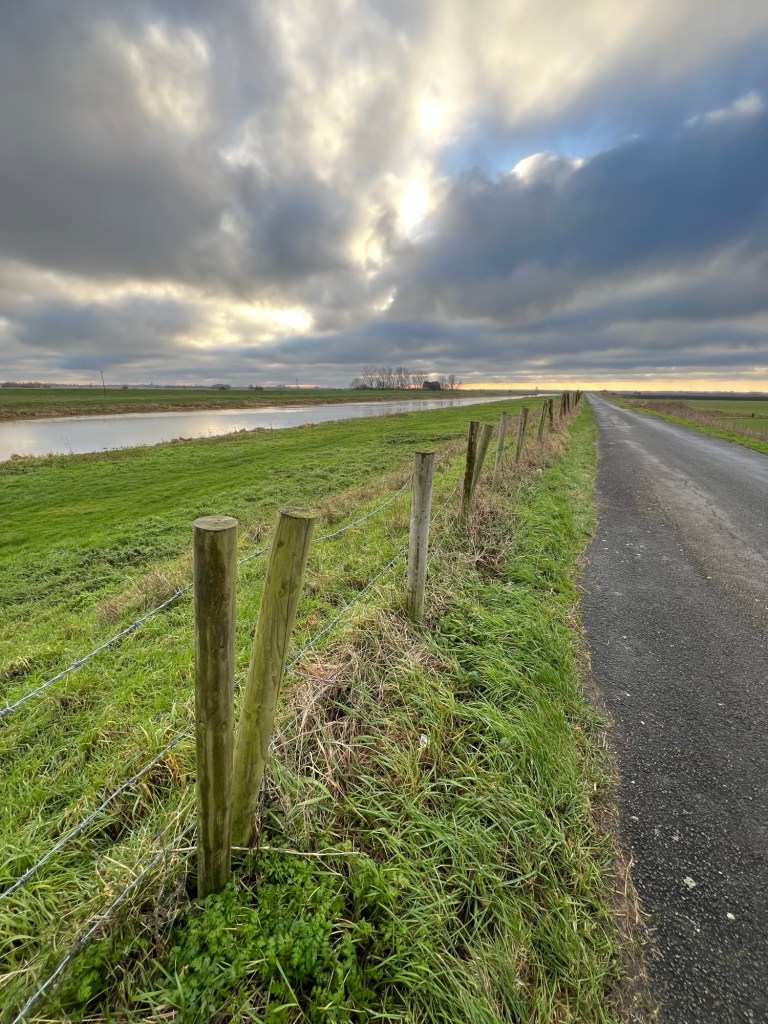
Still amazed by the Nene Washes

Last January we spent a day at the Nene Washes in Cambridgeshire and were amazed by the wildlife we saw. So, today we decided to take another trip across from Northamptonshire to see if it would be as good for a second time.

Well, we weren’t disappointed!

As soon as we arrived, we could see a few groups of people with cameras and scopes peering into some bushes. As we walked up we almost immediately saw a short-eared owl perched with a clear view in the front of a bush. A little further on there was a long-eared owl in another bush, although much harder to see as (my digi-scoping, as shown below, doesn’t improve). There were four long-eared owls altogether in the areas.

A little further down the embankment we tried to see a tawny owl in a large hole in an old tree but it wasn’t visible at all but as we turned back we had great views of a barn owl hunting over the tussocky grass.

We then spent a little while looking over the huge embankment-bounded flood plain of the River Nene and saw plenty of other birds including massed swirling flocks of wigeon, lapwing and golden plover. There were other raptors in the area including buzzard, kestrel, red kite and a mash harrier but we missed the hen harrier that had been seen earlier in the day. The other highlight for us was the sight of more than a dozen common cranes amongst the wildfowl flocks.

The Nene Washes really is a great place for winter wildlife and we might have stayed longer but for the strong, freezing wind. We had similar weather last year so hopefully next time it might be a little kinder to us.

Amazed by the Nene Washes

I’ve been to the Wildfowl and Wetlands Trust’s Welney reserve a few times, including late last year and the Ouse Washes on which it sits have been spectacular when I have visited in autumn and winter. However, I’m not sure I have ever really heard of the Nene Washes before but today has changed that as we spent a few late morning/early afternoon hours there.

Both ‘Washes’ are huge winter flood storage areas for their neighbouring rivers with the Nene site extending to 1,522 hectares, bounded by large embankments to keep the water from flooding the surrounding flat and low-lying fenland. The RSPB manages a portion of the site, amounting to around 280 hectares and it was this part of the Washes we visited today.

Walking routes from the car park are limited to heading east or west on the southern embankment overlooking the Washes. It gives great views over the site, from an elevated position, although it was particularly windy today making the use of a telescope and binoculars quite challenging.

We started off heading in the direction of a group of people looking into some fields and found them watching three short-eared owls. Two were hunkered down in a small hawthorn tree beside an old barn while the third was more in the open, perched on some logs in the middle of a neighbouring field. After watching them for a while we headed west and were soon told of a particularly special bird that had been seen to fly over and into a small, waterlogged copse. We quickly made our way down and it wasn’t long until we saw it on the woodland edge – a glossy ibis!!! I thought it might have been the first time I’d ever seen one; checking later, I had seen one before when in Botswana, but this was definitely a first sighting in the UK for me, of what is a comparative rarity.

After watching a the ibis for a little while and wandering a little further west to see what other birdlife was in the flooded fields, we headed back east towards the car. Walking east beyond the car park we had great views of perhaps the most lapwings and golden plovers I’ve ever seen – several thousand of each have been recorded there in the last few days. They were constantly being spooked by birds of prey and lifting in great clouds. Long broken flocks of lapwings headed along the Washes leaving behind the golden plovers which circled, rose and dived, shimmering as they caught the sun on their wings.

Of the raptors, we saw five marsh harriers in one binocular view, causing other flocks of birds to lift, including big groups of wigeon. There were also buzzards, red kites (of which we saw plenty more on the way from Northamptonshire) and a stooping and chasing kestrel.

Our main reason for going was to get a chance of seeing common cranes. It’s now well over two years since I last saw any, on my final trip to Sweden before the pandemic hit. For me, they are some of the most wilderness evoking birds, particularly their calls crying out across the landscape. There are very few in the UK compared to Sweden, where I have seen many thousands coming in to roost at the start of their autumn migration. I also frequently see pairs in the countryside when I visit family out in the Swedish countryside and hear when I sit in the summerhouse garden. Today we had very distant views of them out across the Washes landscape and heard them call momentarily before the strong wind whipped the sounds away. We saw at least 25 in a loose group; the wind was just too much to get a stable enough view to count more.

This really was a fantastic first visit to the Nene Washes and hopefully more visits will come.