North Norfolk in winter: A dusk ‘safari’ along the lanes

We’ve just got back from a two-night stay in North Norfolk. This is one of our favourite places for a winter break with the wildlife along the coast some of the best you can find in what can a bleak season in England.

The over-wintering birdlife is our usual focus for our days out and this visit was no different. However, a change of plan gave us some spare time at the end of the second day and we took the long way back to our lovely rental cottage in the village of Blakeney. Rather than sticking to the coast road we headed a little inland and drove slowly along the single-track roads. The landscape here, back from the marshland coast, is of rolling arable land with a mixture of unfenced fields and others surrounded by high, thick hedging. In winter, these fields are either starting to show the first green shoots of this year’s crops or still lying to bare soil. Some of the fields without the early growing crops have been cleared of sugar beat or have been used to house free-range pigs.

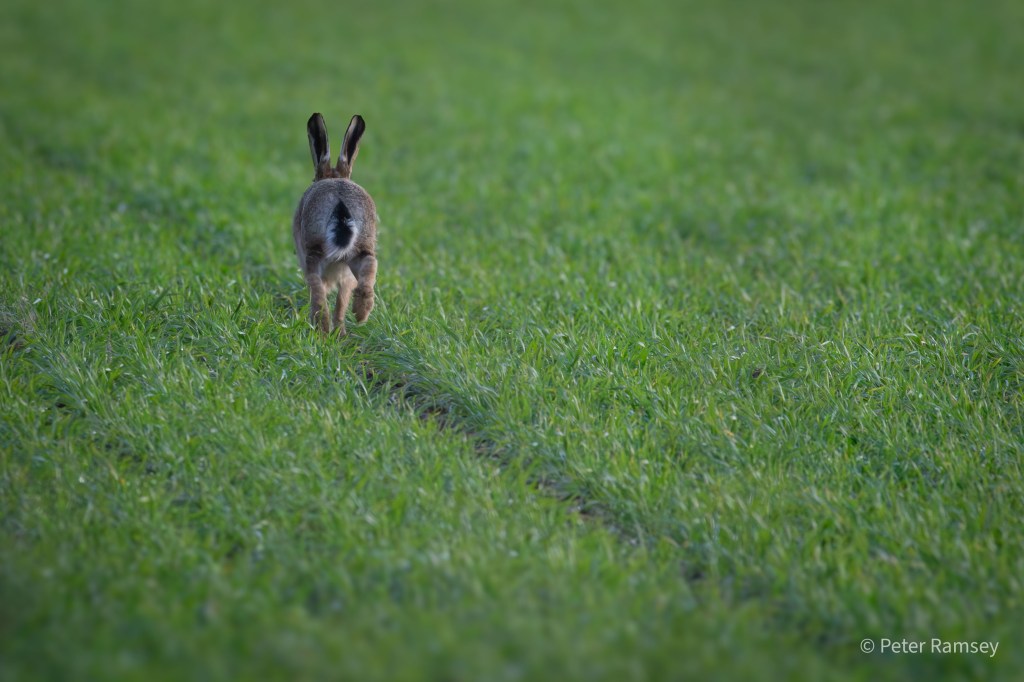
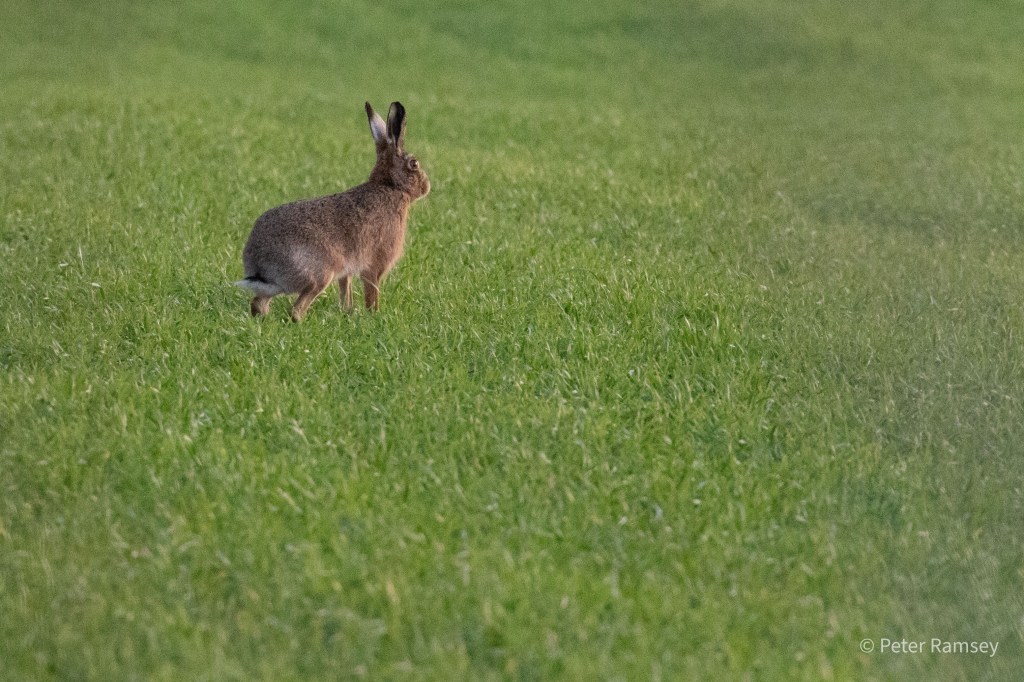
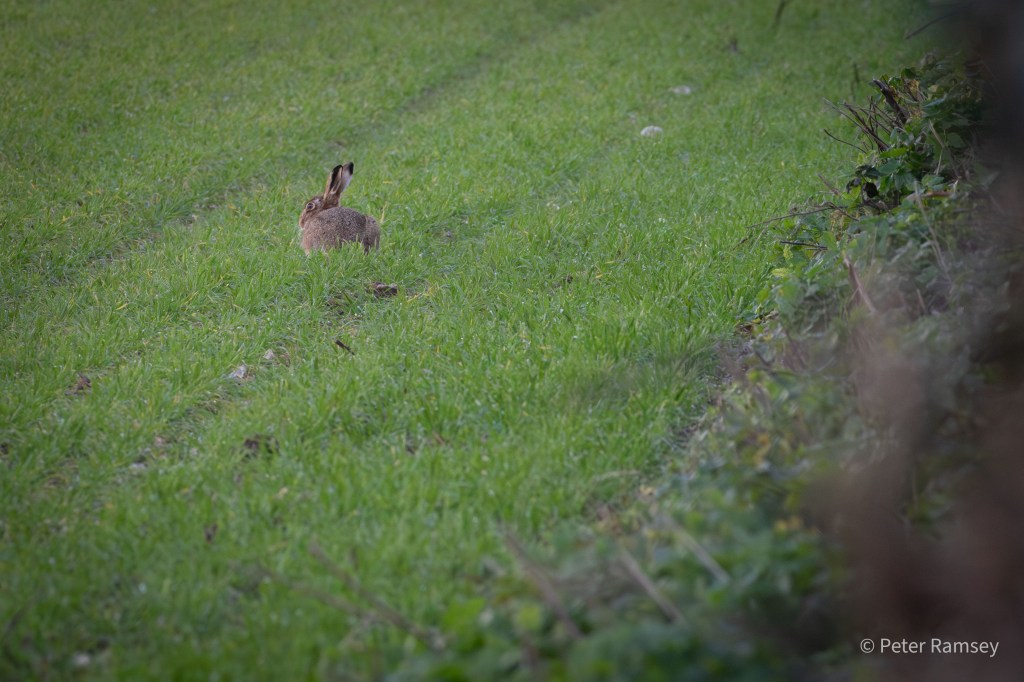
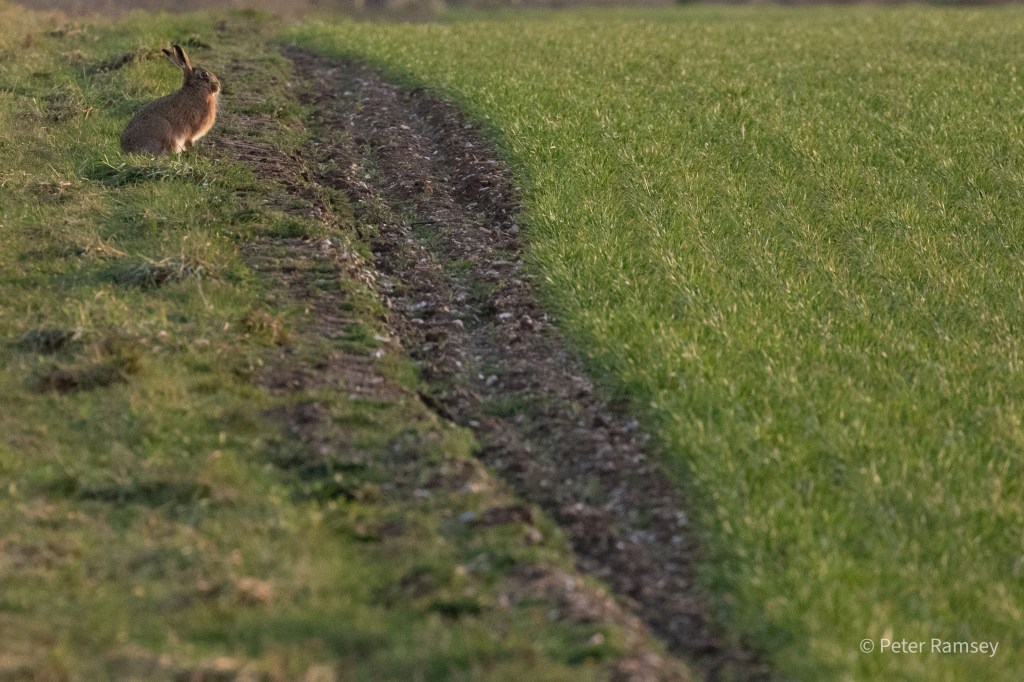
As we made our way along the narrow lanes, we stopped at field gateways or gaps in hedges to scan the land with our binoculars to check for wildlife. We almost immediately found a hare and as we progressed onwards we found more and more. Sometimes there was just a solitary hare sitting at the field edge but on other occasions there were pairs, either sitting close to each other nibbling on those fresh shoots or, in a few cases, starting to slowly chase each other across the open ground. This was perhaps the first signs of pairs coming together to breed, but it seemed a long way off the chasing and ‘boxing’ of the mad march hares.

Also out in the fields we increasingly saw groups of deer as the light began to fail. We saw three species out there; the native roe and two imported species; muntjac and Chinese water deer. Most of the deer were too far away to photograph by one water deer stayed calmly close-by as we stopped the car to take a look.
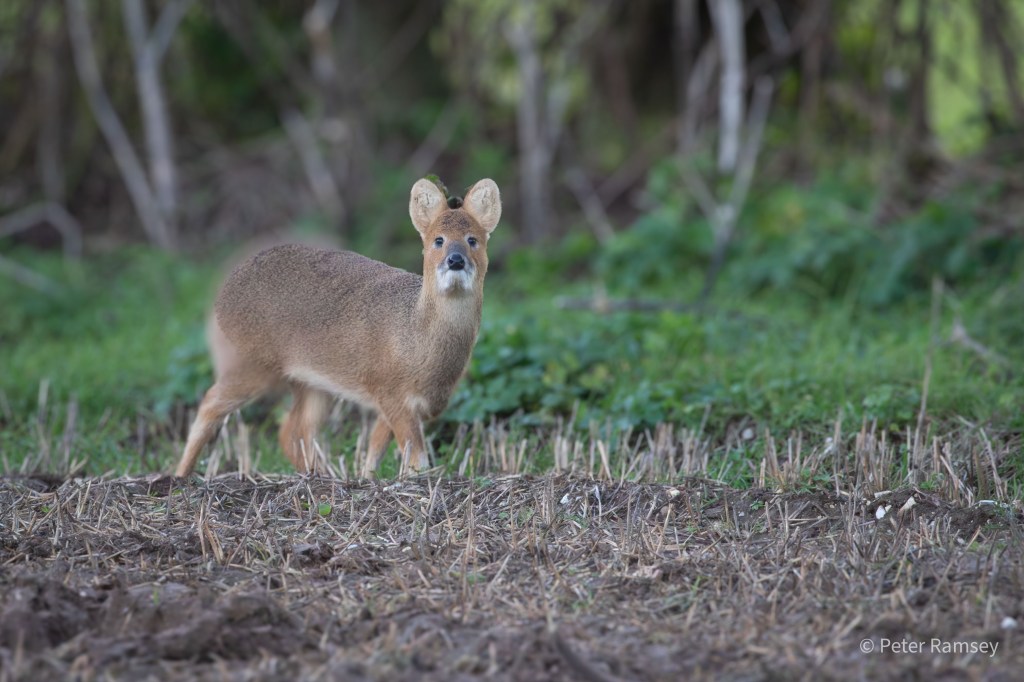
In all, all we must have seen upwards of 40 hares in our slow drive back, over the course of an hour or so. This really highlighted just how rich in mammal life North Norfolk is as well as being home to so much bird life.
As we were about to finish our little driving safari we could hear a few geese nearby. We drove around for a few minutes unable to find them. Just as we were about to give up, we came to a muddy track alongside a hedge behind which we thought we could hear them. As we came to a gap in the hedge, we were given a view of a huge flock of pink-footed geese, numbering in the thousands, feeding on a sugar beet field. We arrived just in time to see them lift from their daytime feeding and head off to the safety of their coastal roost out on the mud of The Wash. For me, there is little that stirs my soul more than a mass of wintering geese calling as they fly into the night.

A wintry day in north Norfolk

After a late meeting in Boston on Thursday, I decided to take Friday off and head over into Norfolk and spend the day wandering around some of the nature reserves that dot the coast.  Having had a few holidays and long weekends in the area, I know the sites well along the north coast and planned to fit a few in during the course of the day.

After a couple of dawn visits to RSPB Snettisham in the past, with great spectacles of both dawn flight of pink-feet geese and the hide tide wader root, I had thought about getting up very early again. However, looking at the weather forecast and the stage of the moon cycle the night before, I decided a dawn visit would probably be less fruitful than my previous two, so I decided to have a bit of a lie-in instead.  I eventually got to Snettisham at about 9am and as I headed out on the walk to the front, the dark, brooding cloud cover started to release icey snow, made more forceful by the strengthening breeze and rattling on the outside on my hood.

img_1275

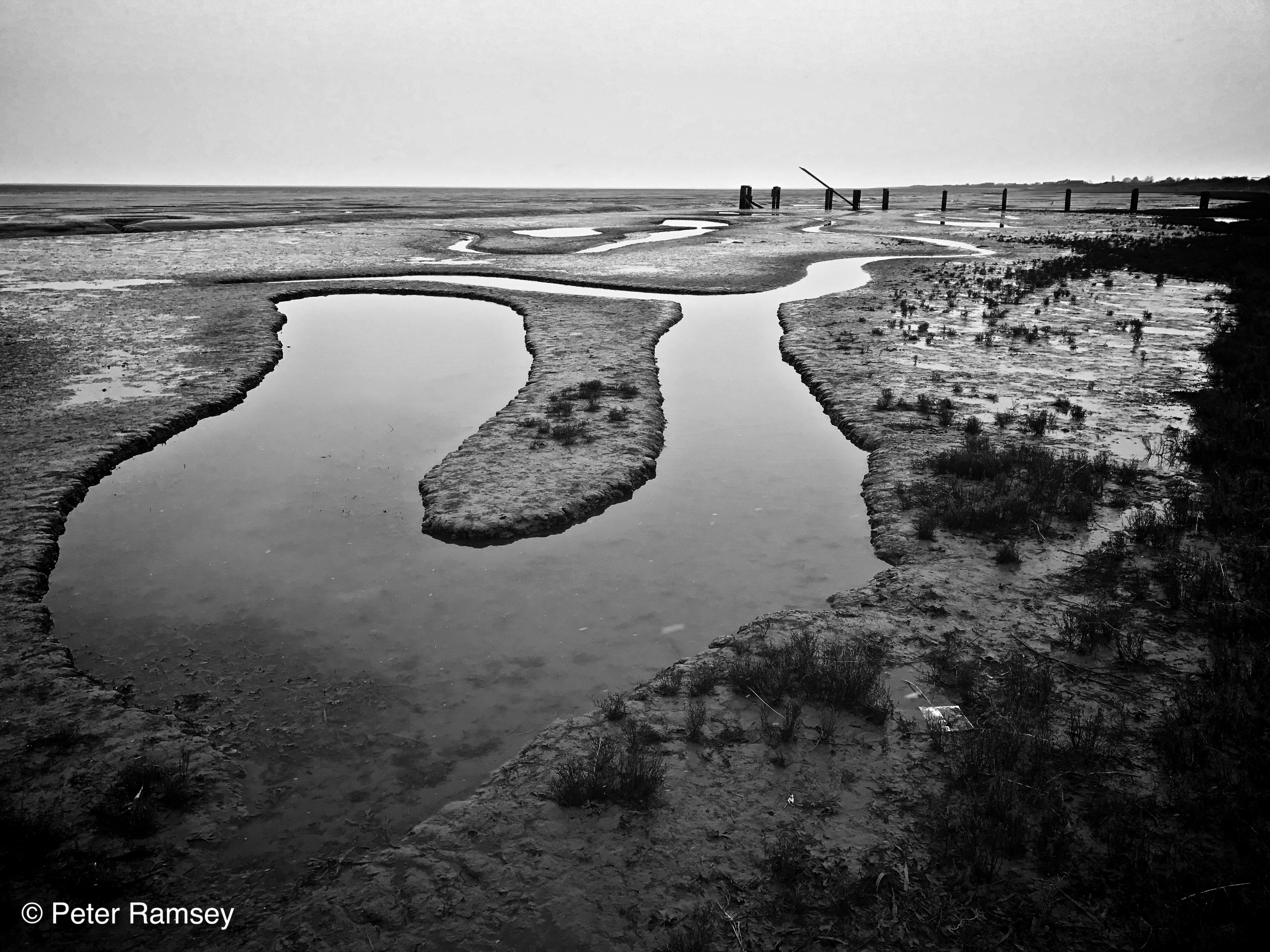
Passing the lakes on the way to the front, there were plenty of geese, ducks and lapwings, the latter occasionally lifting in large flocks spooked by a passing raptor.  On getting to the front, I found the sea was out, revealing square miles of mud, and out on that mud were thousands of birds.  Close to the shoreline were shelduck, curlew and a few redshank but out in the distance were masses of others including large groups of golden plover and knot.  As the wind became stronger and the snow came down heavier, I turned and made my way back to the car, crunching on the pebbly shoreline as I went.

Next stop was RSPB Titchwell, seeing a few brown hares in the fields on the way.  The weather had improved markedly by the time I got there and I headed straight out for the coast again. Stopping on the way, I talked to a group looking into the distance and had my first ever view of a water pipit and then (as usual) a very fleeting view of the electric-blue flash of a kingfisher as it darted past.  At the front, I had another first ever view, this time of velvet scoters – all in a nice group very close to the short line.  Further out was a much larger group of several thousand common scoter and I tried for ages to see long-tailed ducks and red-throated divers but to no avail.  On my way back to the car, I had a nice view of a male and female marsh harrier playing in the wind – one didn’t look too happy with the other.  There were also good-sized groups of brent geese busily coming in and out of the reserve making a change from the large number of pink-feet I usually see in the area but strangely missing on this particular day.

Onwards I went again and moved on to the Norfolk Wildlife Trust site at Cley.  The weather had drawn in again and the snow was coming down but I still decided to do the 3-mile walk  around the reserve including out to the sea shore.  With the weather proving troublesome, I didn’t see much wildlife on my way around but found the impact of previous poor weather was just as interesting.  I haven’t been to north Norfolk since the storm surge of late 2013 and the impact is noticeable, with the high shingle bank now flattened and partially spread out onto the reserve behind it.  Walking along the coast was hard-going in parts as a more recent storm surge had loosened the shingle.  While there was no storm surge this time, the force of the sea was still clear to see with the waves crashing onto the shoreline and the wind buffeting me as I made my way west giving a bit of welcome assistance.

On return to the car, I decided on one last stop before heading for my digs for the night and I went off to Holkham.  Parking on Lady Anne’s Drive, I walked along fields on the landward side of the woodland and went up to the hide.  During my brief stop, I had great views of four marsh harriers floating in the strong winds as they prepared to come down at dusk.  Back out into the weather again, I went to the beach but soon headed back inland as the wind strengthened again and down came more snow, starting to settle for the first time in the day.  As I approached the car, the snow was starting crunch underfoot as it froze on the ground; the going becoming more slippery with every metre.

img_1419

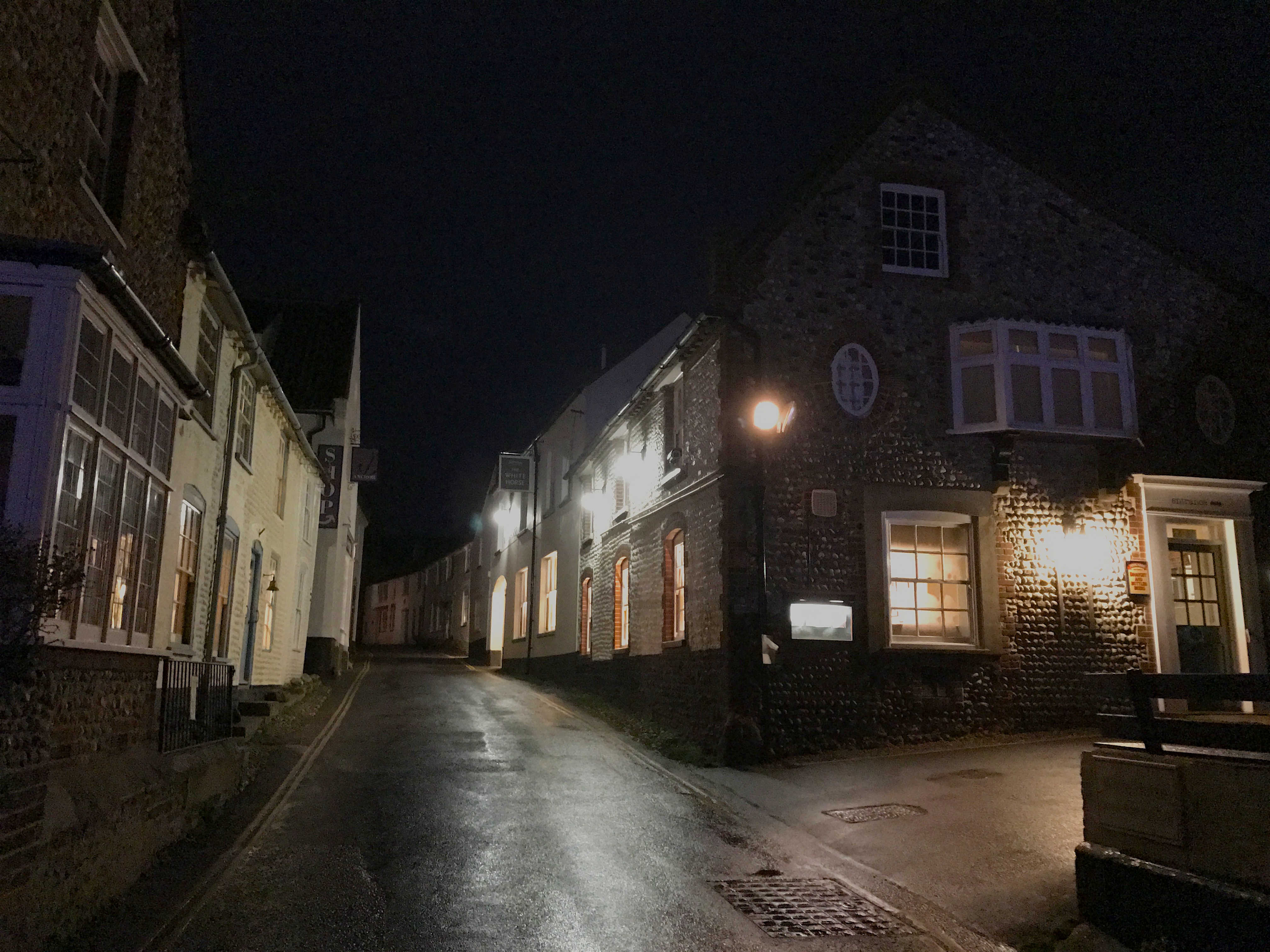
I drove on to Blakeney and the White Horse – a fine Adnam’s pub and hotel – which provided a comfy, warm room and lovely evening meal of local produce, all washed down with a few pints of their great beers.  Before turning in, however, I had to go for another walk and went out into the darkened streets of the village.  The snow had stopped and the wind had lessened, making it a nice, chilly late evening wander around the picturesque lanes of flint-faced cottages.  As I reached the final waterfront of the day, I couldn’t see far out along the river and across the marshes but could still hear nature out there.  One of my favourite calls of wild followed me back up the hill to the hotel – the evocative, enchanting, and to me, slightly melancholic call of the curlew.

img_1421

The great thing about Norfolk, I find, is that no matter what time of year you visit, there’s always plenty of wildlife to see.  Despite the slightly challenging weather of this short trip, I managed to see well over 50 species of bird and a few mammals. The good thing about visiting in winter, is that you can have large parts of the lovely place all to yourself.  Norfolk simply has to be on the anyone’s list who has an interest in wildlife and great English countryside.