
We’ve just got back from a two-night stay in North Norfolk. This is one of our favourite places for a winter break with the wildlife along the coast some of the best you can find in what can a bleak season in England.
The over-wintering birdlife is our usual focus for our days out and this visit was no different. However, a change of plan gave us some spare time at the end of the second day and we took the long way back to our lovely rental cottage in the village of Blakeney. Rather than sticking to the coast road we headed a little inland and drove slowly along the single-track roads. The landscape here, back from the marshland coast, is of rolling arable land with a mixture of unfenced fields and others surrounded by high, thick hedging. In winter, these fields are either starting to show the first green shoots of this year’s crops or still lying to bare soil. Some of the fields without the early growing crops have been cleared of sugar beat or have been used to house free-range pigs.
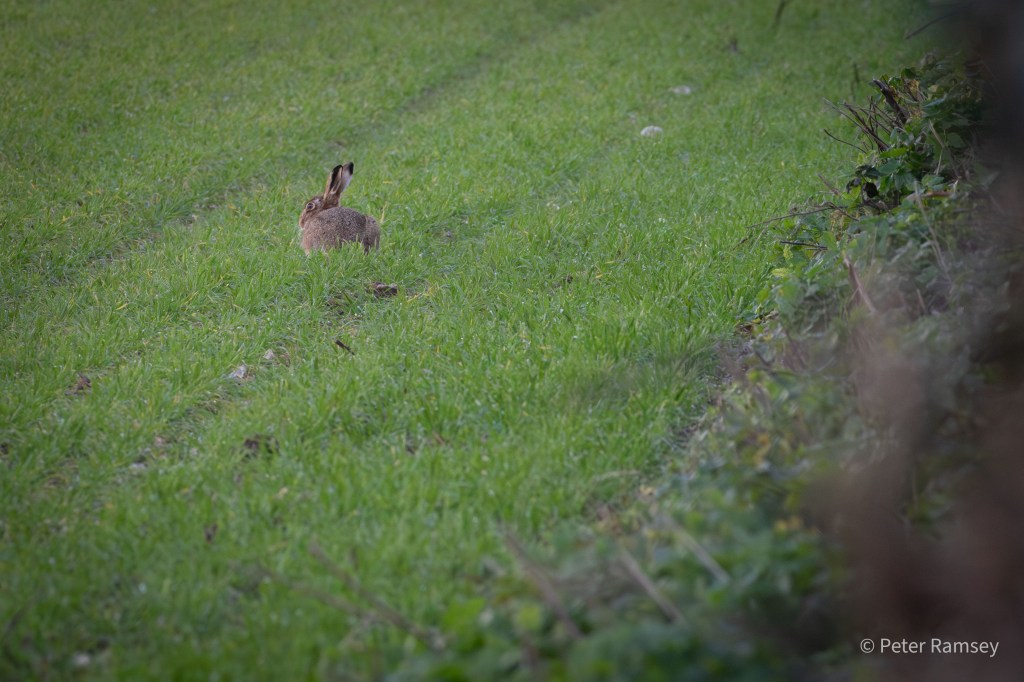
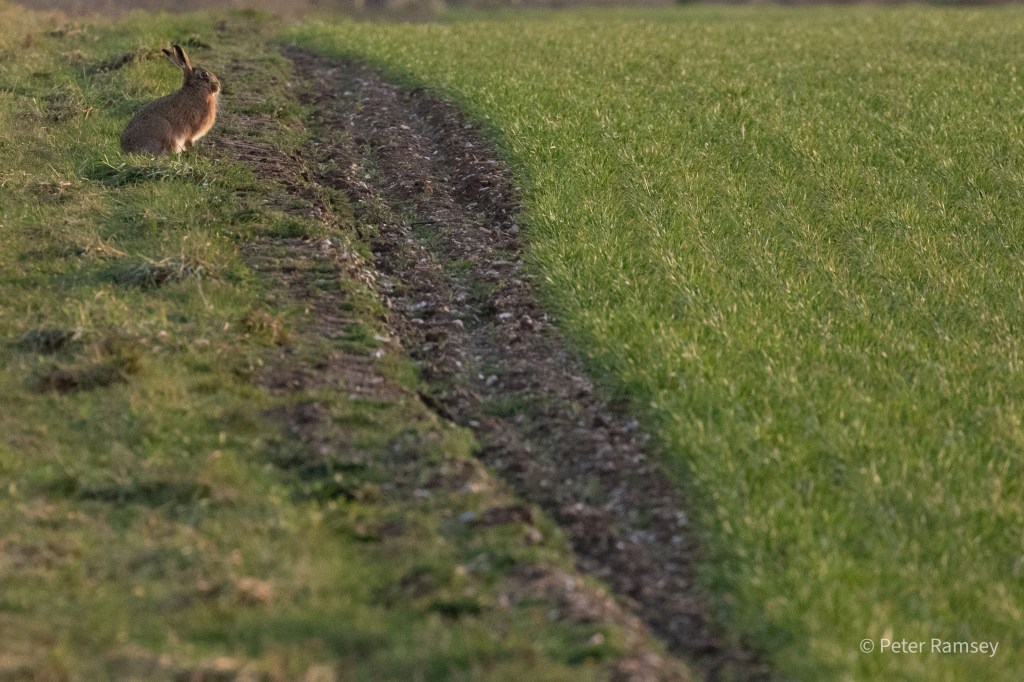
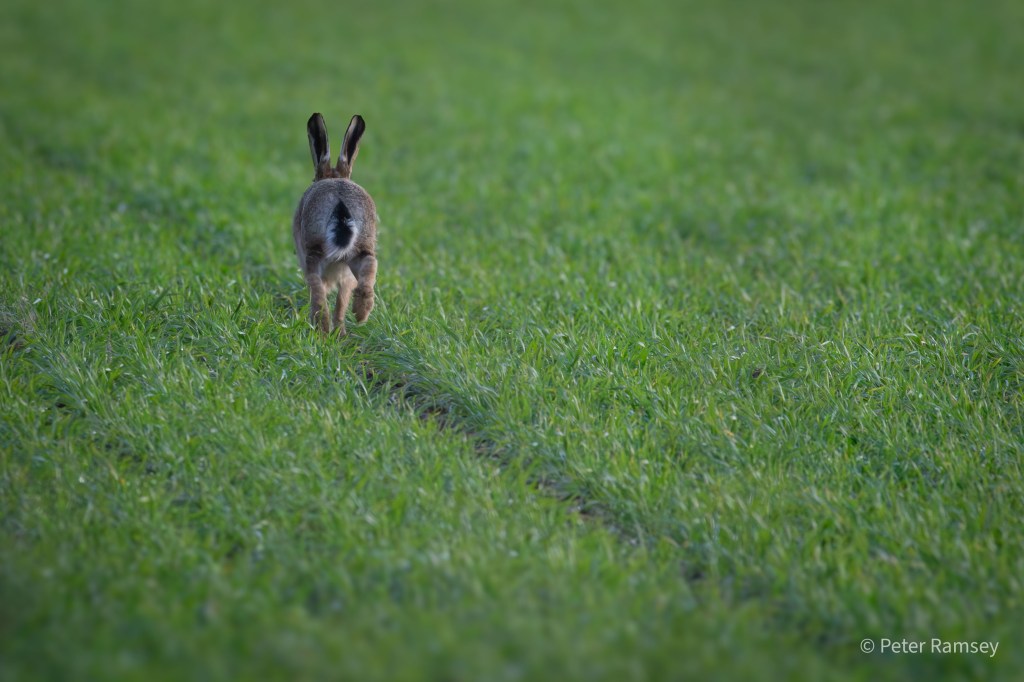
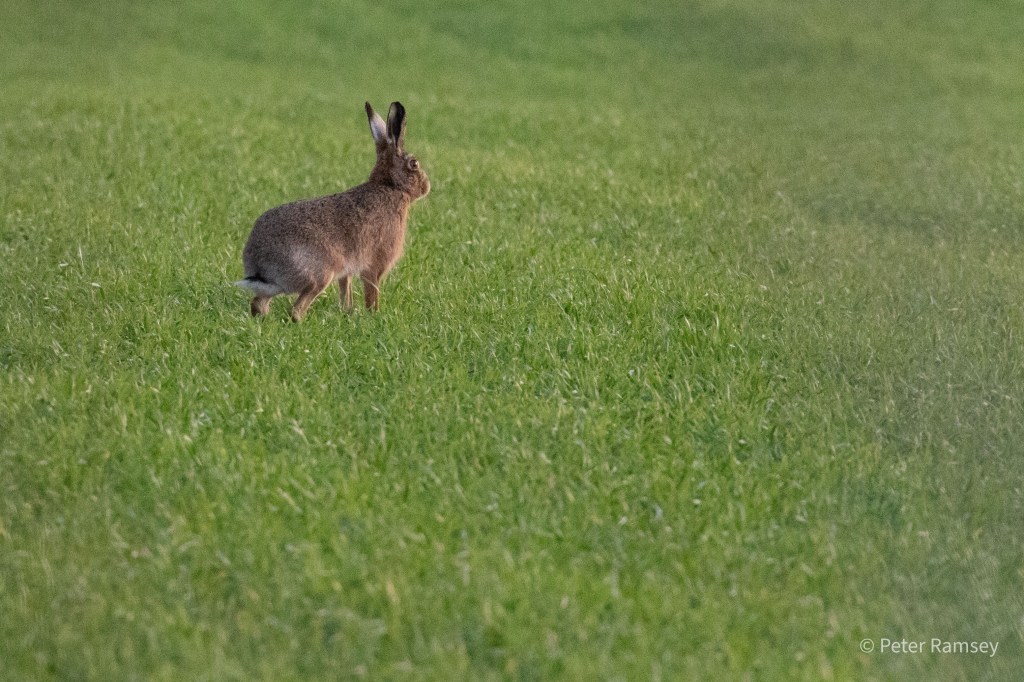
As we made our way along the narrow lanes, we stopped at field gateways or gaps in hedges to scan the land with our binoculars to check for wildlife. We almost immediately found a hare and as we progressed onwards we found more and more. Sometimes there was just a solitary hare sitting at the field edge but on other occasions there were pairs, either sitting close to each other nibbling on those fresh shoots or, in a few cases, starting to slowly chase each other across the open ground. This was perhaps the first signs of pairs coming together to breed, but it seemed a long way off the chasing and ‘boxing’ of the mad march hares.
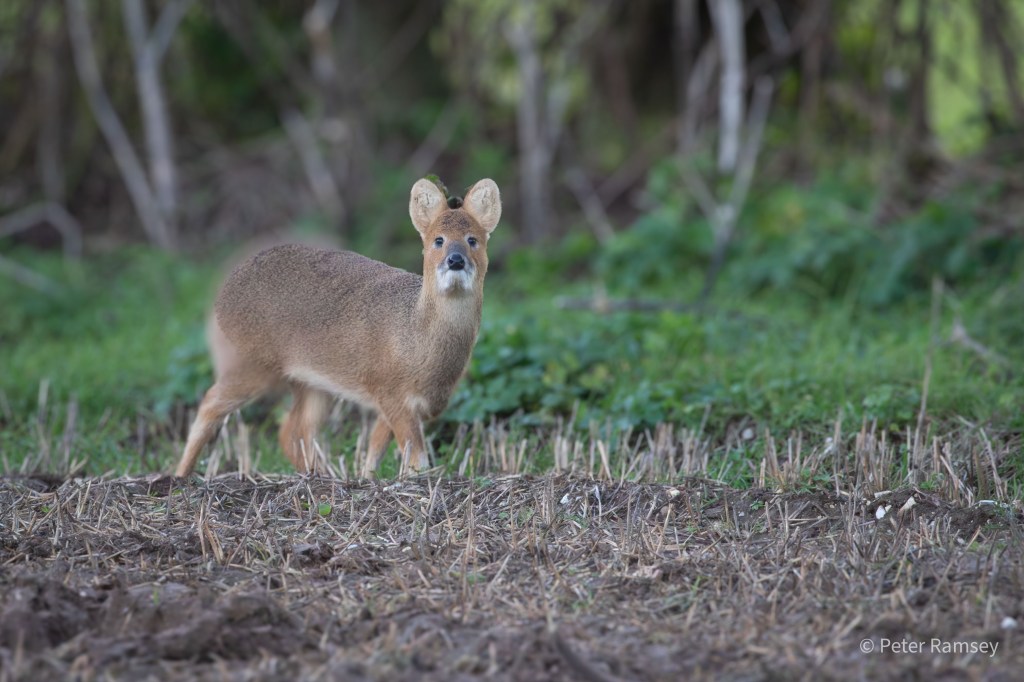
Also out in the fields we increasingly saw groups of deer as the light began to fail. We saw three species out there; the native roe and two imported species; muntjac and Chinese water deer. Most of the deer were too far away to photograph by one water deer stayed calmly close-by as we stopped the car to take a look.
In all, all we must have seen upwards of 40 hares in our slow drive back, over the course of an hour or so. This really highlighted just how rich in mammal life North Norfolk is as well as being home to so much bird life.
As we were about to finish our little driving safari we could hear a few geese nearby. We drove around for a few minutes unable to find them. Just as we were about to give up, we came to a muddy track alongside a hedge behind which we thought we could hear them. As we came to a gap in the hedge, we were given a view of a huge flock of pink-footed geese, numbering in the thousands, feeding on a sugar beet field. We arrived just in time to see them lift from their daytime feeding and head off to the safety of their coastal roost out on the mud of The Wash. For me, there is little that stirs my soul more than a mass of wintering geese calling as they fly into the night.
 Daft Mumblings