Despite doing quite a few osprey nest protection shifts in North Wales between 2012 and 2019, I never got to see one fishing. The nearest I’ve got to seeing one do so was some years ago in Swedish. I was canoeing down a quiet, slow-moving river when an osprey appeared a couple of hundred metres in front of us, rising up from the surface and shaking mid-flight to rid itself of the water in its feathers. We had missed the fishing attempt as it had been around a bend in the river; the bird had missed its target and flew away empty-taloned.
Today we went for a lunchtime walk to Pitsford Reservoir, only about 10-minutes drive from our house. We had a lovely amble alongside the waterside meadow on the nature reserve side of the reservoir. As it so often is, it was very quiet with only three other people seen in the hour we spent there (you need to be member of the local Wildlife Trust and obtain a permit, to visit the reserve).
We walked to the Bird Club Hide and sat in there for a while, using the eBird app to record the species of bird we saw. It does really feel like summer now with the common terns, sand martins and swifts all showing very well. There were also quite a few young birds about including geese, black-headed gulls and treecreepers.
However, the star of the show was an osprey which we spotted just as it lifted from the water’s surface, shaking the water off and holding a large fish. The gulls were flushed from their nesting rafts and gave pursuit but the osprey seemed unbothered by them as he disappeared into the distance. I say ‘he’ as it was most likely a male if the bird has a nest nearby and was catching fish for its chicks.
Here’s a very rubbish zoomed-in phone photo, clearly showing the fish in the osprey’s talons and there’s an equally rubbish video below that.
A Saturday and a Sunday morning spent working and putting together flat-pack furniture wasn’t the most inspiring way to end the week. However, after finishing the same set of bookshelves for the second time, we headed out to one of our closest nature reserves at Pitsford Water reservoir.
While putting my tools away at home, I had felt some early March warmth from the sun peeping out between the clouds. As we left the car and walked down to the water, the cloud dispersed and the sun’s strength was a bit of a surprise after such wet and grey weather recently. The warmth could be felt on our dark clothes being heated by the rays and the hide we went into felt like someone had left some (non-existent) radiators on. With no wind to speak of, and the cloud clearing further, this was a first real taste spring weather, despite the temperature still being some way below 10 degrees celsius.
We decided to head for Pitsford to see what might me a last sight of the wintering wildfowl before many of them head off to breed further north in the UK and a long way beyond. Given the relatively mild (if damp) first part of the year, it wasn’t a surprise to see that wildfowl numbers had already dropped significantly from their mid-winter highs. Pitsford is a winter home to thousands of birds with large numbers of widgeon, teal, mallard and tufted duck as well as a range of other waterbirds.
One of my favourite winter visitors to the reservoir is the splendidly feathered goldeneye – well, at least the male is, with the female being much more drab. They have already started displaying and pairing up, with the males in their finery performing a slightly odd manoeuvre, stretching their necks out and throwing their heads back, with a cartoon-like duck call. A (not very good) video of them doing this is below.
While the weekend is already sadly drawing to a close, our short walk did give me a little pick-me-up before settling in for Sunday dinner (maybe after a run in the last of the sunshine).
We’ve been having a quiet weekend after quite a few busy ones over the last couple of months. Not wanting to be stuck inside, despite the pretty poor weather for July (is it ever going to stop with the endless stream of showers and heavier rain?), we made a short trip to the nature reserve at Pitsford Water. As we made our way to the first larger hide in Scaldwell Bay, we met a birdwatcher who said he’d seen a black-necked grebe. After a little looking around with our binoculars, it couldn’t be seen, so we wandered off. A few hundred metres further on, we stopped and scanned the water’s edge some more, and there it was floating and diving in an area that had been hidden from view earlier. As my first black-necked grebe, this was a good return on a quick trip to the reservoir.
However, we wandered on to the hide and saw a big group of cormorants on the old tree stumps at the edge of the water and small numbers of black-headed gulls, with their summer plumage starting to fade. Sadly, we didn’t see many common terns at all, and I wonder whether they have been hit by bird flu this breeding season, as there were many more when we visited earlier in the spring. Hearing their calls has become one of my favourite sounds of the summer when visiting Pitsford.
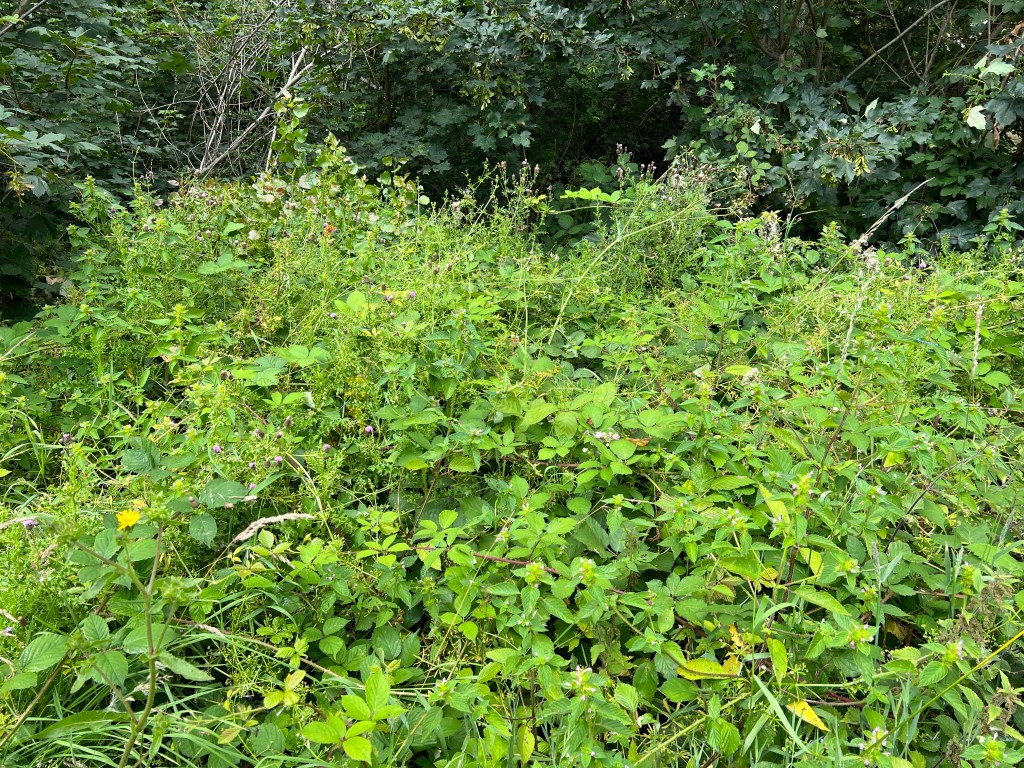
As we left the hide we came across a nice patch of brambles and thistles with really good numbers of butterflies feeding on the flowers – peacock, gatekeeper, painted lady, comma and large white – as well as large numbers of damselflies. Just as we turned to leave we also heard a marsh tit calling from the trees beyond – I still haven’t seen one this year but heard quite a few now.
As we headed home, it began to rain again, still no sign of a settled spell of summer weather.
With a day to spare between getting home from our New Year trip to Devon and returning to work, we did plan to go on one of our favourite local walks. However, the weather was pretty awful so we spent the morning de-Christmasing the house. The afternoon looked little better but with the rest of the week likely to be spent working in my office at home (due to the train strikes), I decided I had to get out of the house, even it is was for a short while. We’re lucky to have Pitsford Reservoir about a ten minute drive away and it’s our nearest nature reserve, With a gap in the rain, I jumped in the car and headed that way.
After all the hot weather and the drought over the summer, the water has been very low, even with significant local rainfall over the course of the autumn. However, on my first trip to the shores this year, the water is now back up to its high winter levels. This means that there is now very little exposed mud around the lake therefore little space for waders to feed; I saw only a handful of lapwing on my short walk.
On the other hand, the wildfowl are at very large numbers around the site and they gave me a good start to my year list of birds I’ve seen. There were good numbers of wigeon, mallard, teal, gadwall, tufted duck, and great crested grebe alongside smaller numbers of pochard. Thankfully, I didn’t see any signs of avian influenza; last time I counted 11 dead mute swans around the lake edge but I saw none today.
Elsewhere away from the water, there we plenty of fieldfares and redwings alongside groups of finches, tits and yellowhammers as well as tree sparrows in their usual place at the bottom of the track down from the main road to the western shore. Overall, I added 33 birds to my year list, not bad for an hour’s wander along the short of Scaldwell Bay.
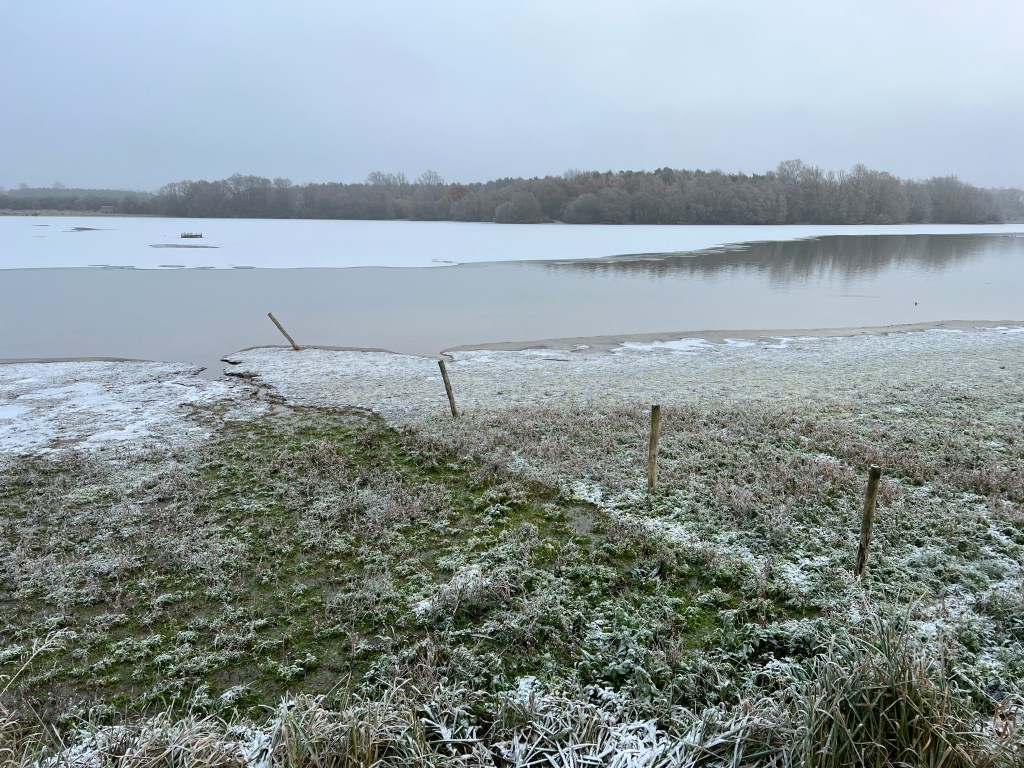
The two images below are the same spot in the bay, looking from the Bird Club Hide, taken just over three weeks apart; the lower and partly frozen water in the first compared to the much higher water levels in the second.
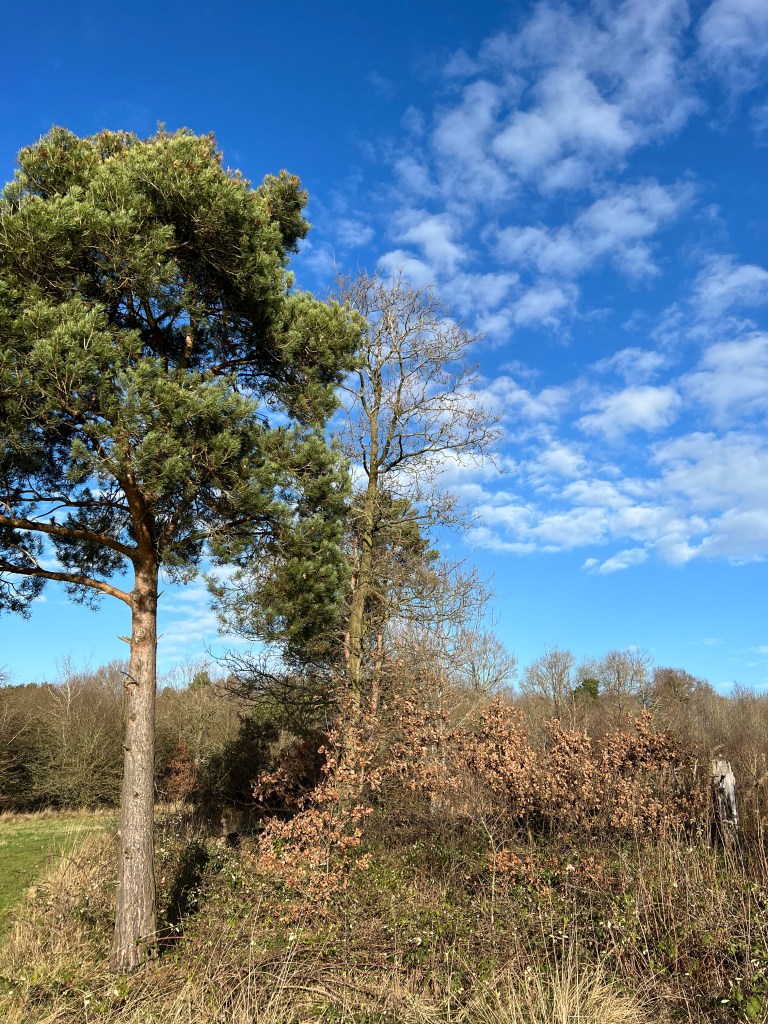
We had a quiet walk around part of Pitsford Water Nature Reserve today on what was a very bright and cloudless afternoon. There was some warmth in the sun and in sheltered spots it felt later in the year than the end of February. However, out in the open there was a chilly breeze, particularly across the reservoir, that took us back into winter.
Even the wildlife was a mixture between the two seasons. Along some of the tree-lined rides were some remaining winter thrushes feeding on the ground, the redwings and fieldfares ‘seeping’ and ‘chuckling’ as they flew off before our approach. Out on the water there were diminishing flocks of wintering wildfowl including wigeon, pochard and goldeneye. However, sharing the water were tentatively displaying great crested grebes and there were some springtime calls from a range of passerines in the surrounding woodland. A song thrush called loudly from within a thick hawthorn, and great tits sang amongst mixed flocks of other tits. I saw my first willow tit in a couple of years as well as the first tree sparrows of 2022 in their usual spot on the entrance to the reserve.
Finally, today it did seem that spring is just around the corner and the season is starting to turn, even if there is still plenty of time for cold days to take us back to winter again.
Today we had a sunny and frosty wander around the nature reserve at Pitsford Water. We’re fortunate that the reservoir is only a 10-minute drive away, so is one of our most common spots for a quick walk as well an occasional longer circuit. Today we decided to do the seven mile round trip of the nature reserve. The reserve covers one half of the reservoir’s 14 miles of shoreline and there is a lovely walk that can be started at either end of the causeway that cuts the water in half.
We parked on the Brixworth side of the water at the junction of the old road towards Walgrave that was severed by the building of the reservoir. Walking down what is now a track towards the water’s edge there were nice frosty views across the surrounding countryside and our first encounters with birdlife with reed buntings and yellowhammers feeding on the seed put out for them close to the gate onto the reserve. The signs here are very clear that a permit is needed to visit the reserve, which is amazingly quiet compared to the country park half of the shoreline. The permits can be obtained for free if you are a member of the Bedfordshire, Cambridgeshire and Northamptonshire Wildlife Trust or a day permit can be bought at the fishing lodge on the Holcot side of the causeway.
Starting out on our clockwise walk, we passed through the low, wet meadows on the water’s edge with good views of the water birds immediately with great gatherings of duck, a few flocks of greylag and Canada geese and good numbers of mute swans. The ducks were dominated by wigeon and teal but as we wandered on there were plenty of others including mallard, tufted ducks, pochard, shoveler, pintail, and eventually towards the end of the walk, a few gadwall.
The landscape then changes into shoreline woodland and open rides with intermittent views of the water. It is like this for much of the rest of the walk but views of the wildlife are helped by a number of good hides at irregular intervals. The woodland provided views and sounds of a different variety of birds with plenty of tits and finches flitting about the leafless branches. The trees right by the water also host a number of cormorant colonies and provide perches for herons and great white and little egrets.
About halfway around the walk, there is a spot overlooking the water with a picnic bench. This is a lovely place to stop and usually there is no one else around. In the summer, it’s nice to have lunch there watching and listening to common terns over the water. Today it was quiet but still nice to sit there in the sun, out of the cool breeze.
In the last of the bays, before getting to the causeway, we came across a new species for us, another duck; smew. Two males were hanging out with some wigeon and mallards on the other side of the water but we still had good views as they sat on the water between dives below the surface. The males are rather a flamboyant black and white bird and very easy to spot amongst the others. We had learned that they had been seen in the Holcot Bay area of the reservoir from a great local birdwatching website (Northamptonshire Birding), which is now one of our go-to places for news of wildlife around the area. Usually, things have disappeared by the time I get anywhere near where they might be, but this time, they were in the right place.
To end the walk, a chilly stroll across the causeway was needed, back onto the main road and close to the more public side of the reservoir. It’s amazing how quiet the reserve is and it’s easy to forget how popular the other half is. Usually, we barely meet anyone as we walk there but today there were a few more about, perhaps this is peak season for watching wildlife at Pitsford with the winter wildfowl being a particular draw.
After seven miles of relaxed walking, a few stops in the hides and occasional chats with fellow walkers, we got back to the car, having seen 52 different species of bird as well as our first hare and muntjac of the year. This really is a very special place to have almost on our doorstep and a great way to start the year of wildlife watching.










 Daft Mumblings