Leaves starting to come out in Albert Square.


Leaves starting to come out in Albert Square.
Looks almost like New York (well, maybe)
After yesterday’s lovely spring morning, today was much cooler and cloudier but I still ventured out reasonably early to complete the last of this months bird surveys. Cheshire Wildlife Trust’s Blakenhall Moss reserve was the focus again and I completed the survey in just over an hour; it may take longer on the last two surveys in May and June as the undergrowth increases in the woodland.
Over the course of this survey and the visit last month, I recorded a total of 39 species; that’s four more than the total over all four Breeding Bird Survey visits last year. This visit also took the complete bird list for the site to 56 with the addition of shoveler, red-legged partridge and grasshopper warbler. Both the shoveler and partridge appeared to be in pairs, so are probable breeders on the site. This is almost certainly the first time breeding on the site for shoveler following the woodland clearance and re-wetting work that has been done over the past couple of years.
The grasshopper warbler tested me a bit as I have only heard one once before (close to where I leave my car on the mainland when I stay on Ramsey Island) and only when the particular bird was calling in full flow – a constant, long grasshopper-like call. Just as I was completing the survey I heard a short, three or four second long low trilling coming from some brash but I couldn’t see the creature it was coming from. Several more short bursts came from the undergrowth, moving a couple of times but I still couldn’t get a view. After waiting quite a while, I left for home and checked the call on xeno-canto bird sounds library, suspecting that it was one of these warblers. I turned out to be right and it seems these summer visitors don’t give their full call when they first arrive, starting off in bursts before building up to the constant insect-like sound.
These birds are red-listed after significant long-term declines in their populations, although more recent times have seen promising increases. Checking my copy of the brilliant BTO Bird Atlas, the birds are relatively scarce along the Welsh border from south Cheshire all the way down to Gloucesteshire. Therefore, finding one at Blakenhall, if it stays, could be good news.

It wasn’t just the birds that were showing well this morning, there were other signs that spring is here. There were flowering marsh marigolds and the first few bluebells starting to bloom in the woods ringing the Moss and the blackthorn has broken out into blossom in hedgerows across the area.

I was up early this morning to do the first of two recording visits to my BTO Breeding Bird Survey site out at Bulkeley. Getting up was a bit of a struggle after what felt like a long week and doing circuit training last night – my aching muscles didn’t really like the early alarm. However, it was well worth it.

It was a lovely, bright and quite warm spring morning with a cloudless sky and only the hint of a cooling breeze. Even before I’d set off on the first of two one kilometre transects, the birds were performing for me with two buzzards soaring above the sandstone ridge of Bulkeley Hill, being mobbed by a raven and carrion crows. The summer migrants were also quickly in my notes with willow warbler, chiffchaff and blackcap all singing loudly and persistently. As I made my way into the second section of the first transect, a good flock of 30 jackdaws took flight after feeding in a hillside meadow.
The each transect took around 45 minutes to complete, with frequent stops to make notes and checking the species through my binoculars. Some sections were quicker than others with fewer species out in the open fields away from the wooded hill. The last section seemed the most intense of all, almost running out of space to make notes at the end. The birds seemed quite unconcerned about my presence in some places and I had very good views of chiffchaffs and blackcaps – maybe they had other, springlike, things on their minds. Overall, I recorded 29 species, which is just three shy of the total for the two visits last year.
Wandering around the countryside on a beautiful spring morning is a lovely thing to do anyway but doing a bird survey makes it even better. Listening and watching wildlife immerses me even deeper into the natural surroundings and makes the experience even more intense. While it is sometimes a struggle to get out of bed early at a weekend, it was certainly worth it this morning!
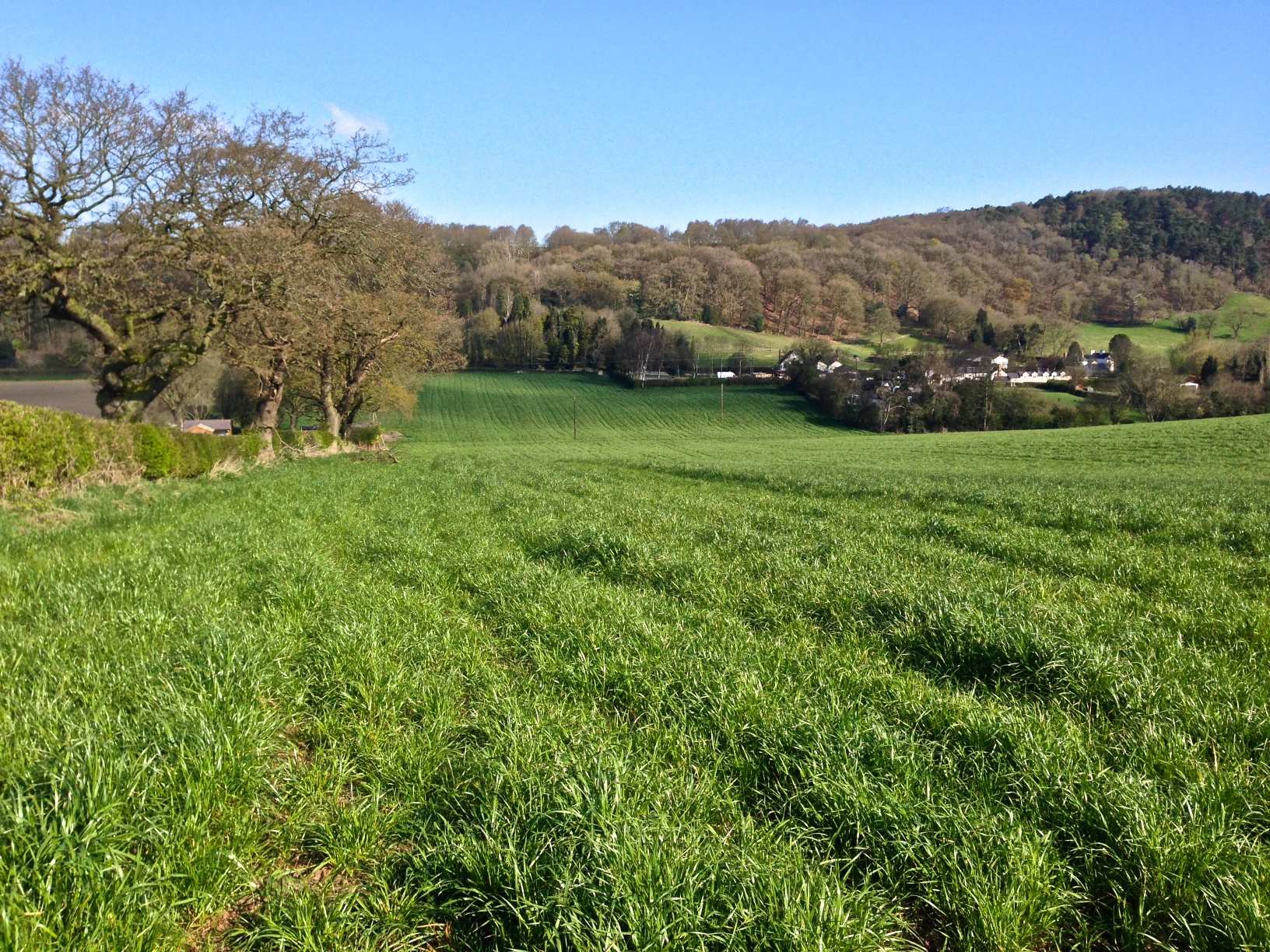
As I finished the survey I came across two lost scouts, looking confused as they tried to workout where they were on their OS map. It’s well over 20 years since I took part in the Cheshire Hike; the two-day event these lads were taking part in. Whilst it might be counted as cheating, I pointed out where they were and guided them in the right direction. Mapping reading was always a strength of mine when I was a scout but maybe they don’t teach the current generation as well as I was taught as I came across four more lost lads just a little further down the track. I decided I’d done my good deed for the day and left them to work it all out for themselves.
After the summer-like weather of the previous few days, the rattling of rain and blustering of wind against my bedroom window stirred me this morning and well before the alarm was meant to. The skies didn’t looking promising as I left the house in the early light and the windscreen wipers were needed as I drove out through the Cheshire countryside.
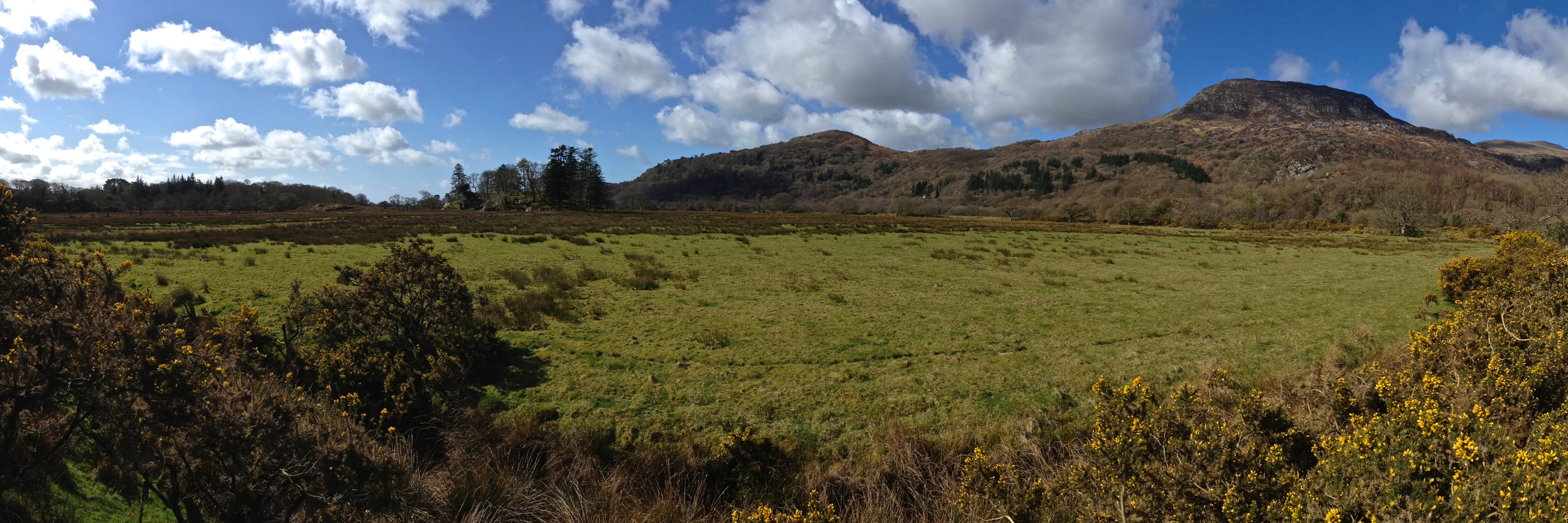
Across the border and into Wales, the signs of spring are growing in strength and reaching further and higher. The pastures are becoming a fresher and more vibrant shade of green and the roadsides are dotted with clumps of daffodils. The hedge rows are starting to break out their leaves and blossom, and there are young lambs in the fields on rolling hills. The views started to brighten and the rain died away as I continued on, until above Bala the clouds broke into wide blue skies and the land started to dry, helped by the strong wind. This time I stuck to the main road, rather than twisting moor-topping route, and made more gentle progress.
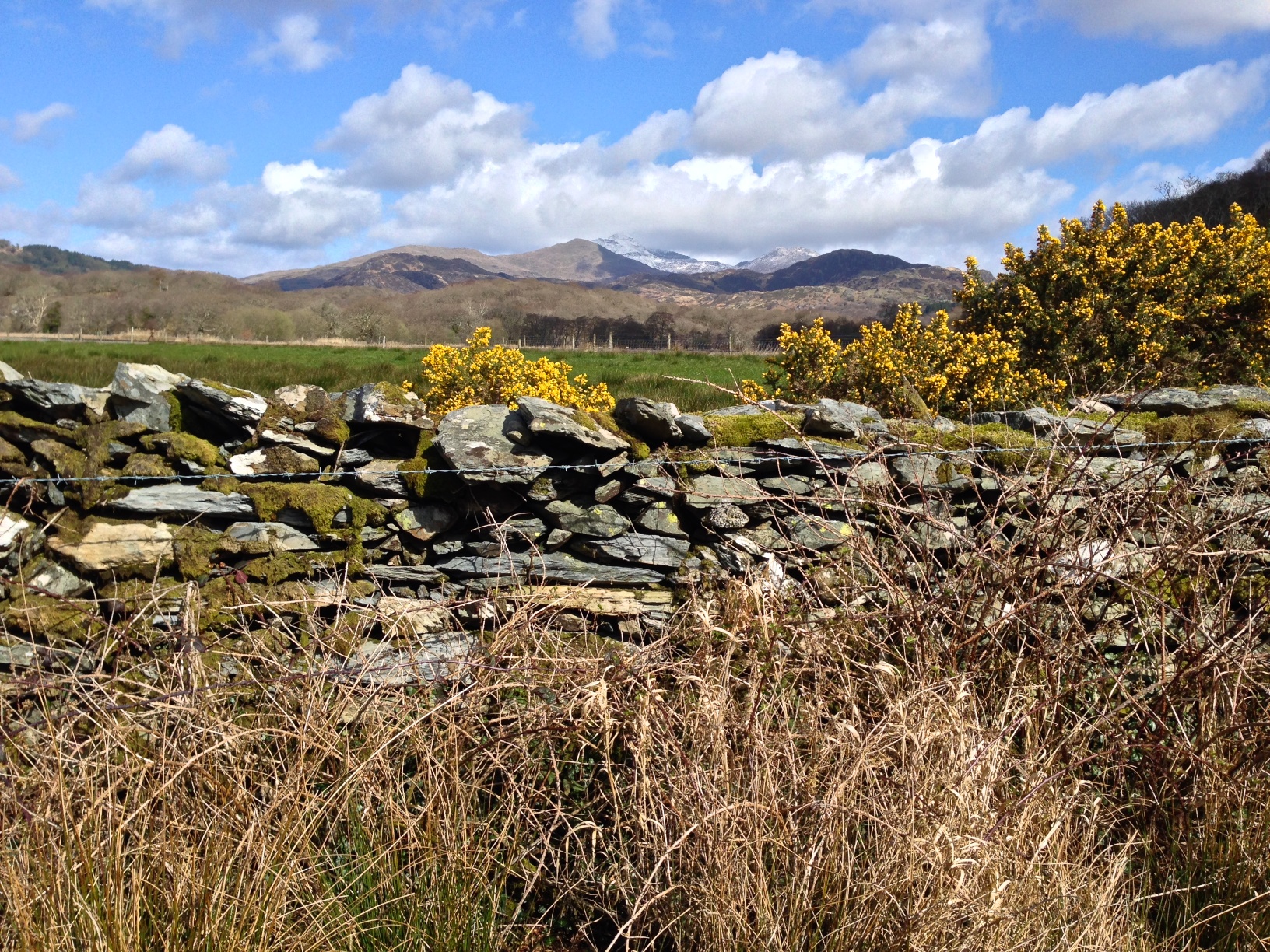
Turning through the narrow gateway there was no need for this smaller car to breath in so sharply. Onto the track, I opened the windows to let the sounds of the wooded valley wash in. The songs of wrens, tits and robins came through and that of a chiffchaff too, a certainty that spring must be here. The visible signs of the season are few in the Glaslyn Valley; it remains more winter than spring. Only the gorse is in flower and just a few leaves are starting to show. The scene is made all the more chilled with the back-drop of an ice-topped Snowdon and the cooling breeze that the sun cannot warm.
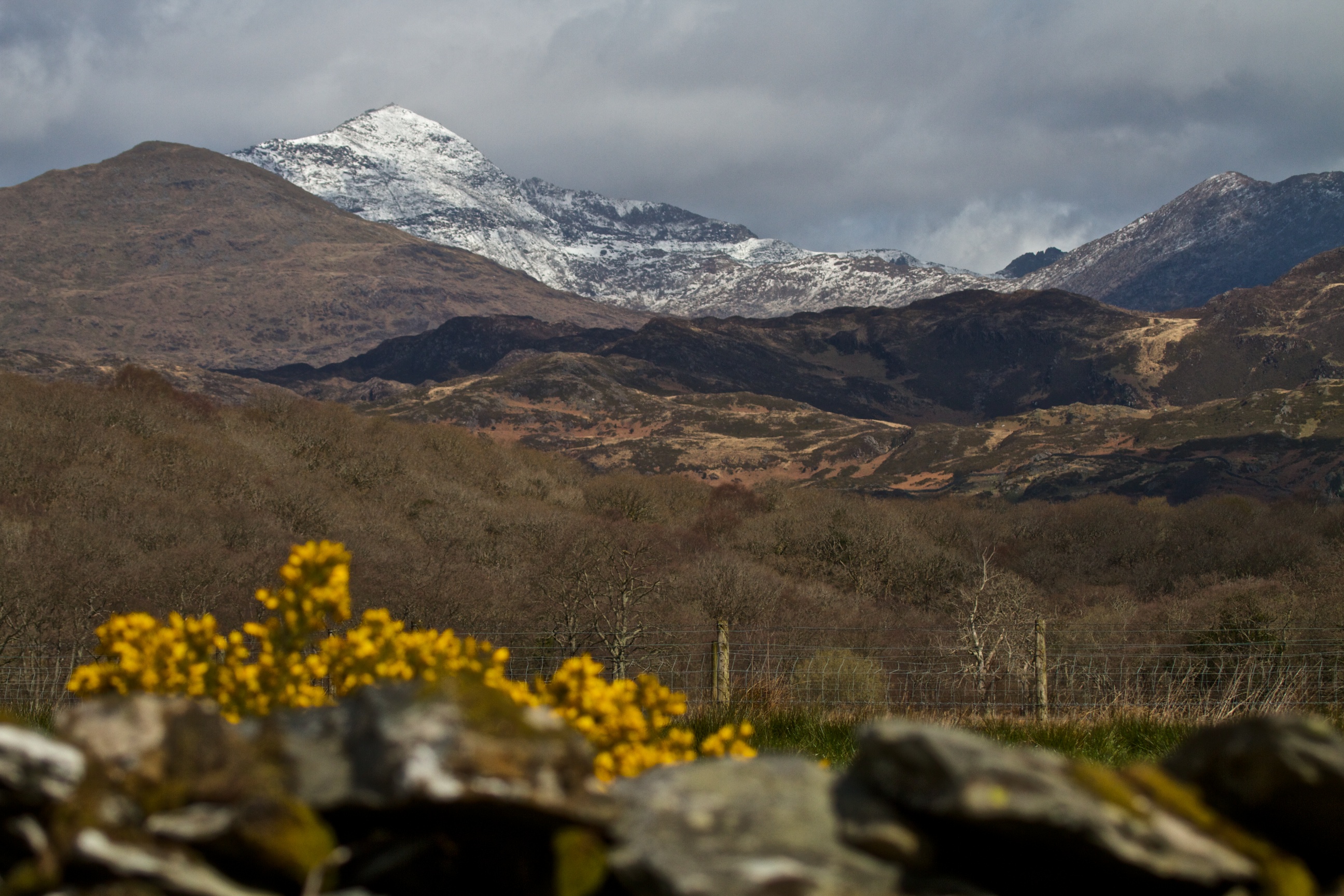
At the end of the track, across the bridge and over the wet meadow, the copse by the tumbledown barn still has a giant nest, somewhat hovering above the small outcrop. It is more empty than full and there is a loneliness about the ongoing vigil that is making a stand on its long-held claim. Whilst she has returned, he has not; the osprey partnership that has bred in this valley for over a decade has yet to reform. She has been back for over three weeks now and stands alone, waiting for him to join her.
Both ospreys usually return in the last quarter of March, with the male normally a day or so before the female. Since the nest was first found in 2004, the male has never returned later than 31st March and the female has only once returned in April (22nd). All hope of the male returning is not yet lost as poor weather, first over Africa, then Spain and then France, has led to many ospreys returning late this year. With an improvement in the weather has come a sudden mass movement over the past few days and this has seen many ospreys returning to their nests across the UK, including to Wales. So far, the Glaslyn male has not been amongst them.
Whilst the female is currently without her longstanding mate, she has not been completely alone. Since her return, she has had contact with a number of other ospreys including during my shift today. Just over two hours into my stint, the female had been away from the nest for a short period but then returned. Something didn’t look quite right, she looked different and I almost thought it could be the Glaslyn male for a moment, as the bird had larger white crown. I then noticed the leg ring; the bird wasn’t either of the Glaslyn pair but Blue 5F (blue being the ring colour). Over the course of the shift Blue 5F was seen flying around the area and the Glaslyn female seemed disturbed by her and left the nest on a number of occasions. The Glaslyn female also mantled while on the nest – an alarm or protective posture when the birds crouch down and form a canopy of their wings, in the same way they would when protecting chicks – but I couldn’t always see why. Eventually Blue 5F disappeared and the Glaslyn female was alone again when I left.
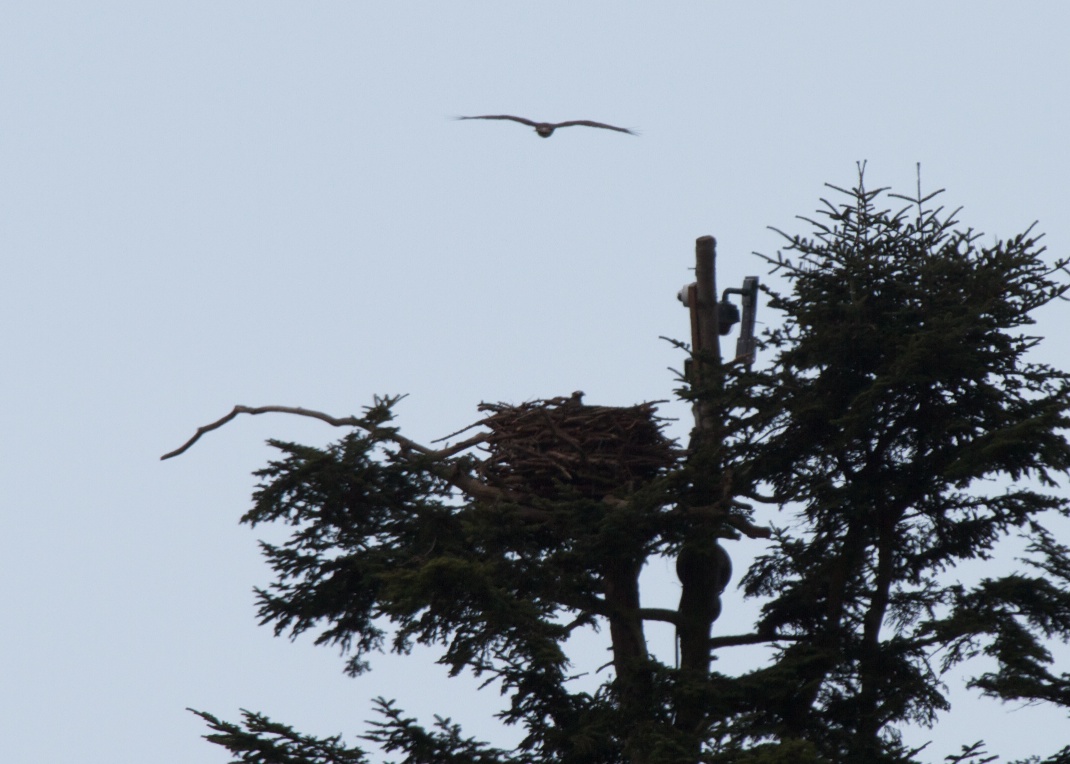
As Blue 5F is leg-ringed, it is easy to identify her; she is a 2012-born bird who fledged at Rutland Water. After leaving the nest, she migrated to Africa and spent 2013 and 2014 in Gambia, and this is the first time that she has returned to the UK. She is related to two other Rutland-born birds that are well known in Wales. She is a cousin of both Glesni and Blue 24, both of whom have returned this year. Glesni is the resident female at the Dyfi osprey nest and Blue 24 is the female who made a nuisance of herself at Dyfi last year (literally fighting Glesni on a number of occasions) and was also seen in the Glaslyn area too.
I’ve got another shift coming up in a couple of weeks, so I’m hoping by the time I return there will be a male in residence too. Whether that’s the Glaslyn male or not, I’ll have to wait and see.

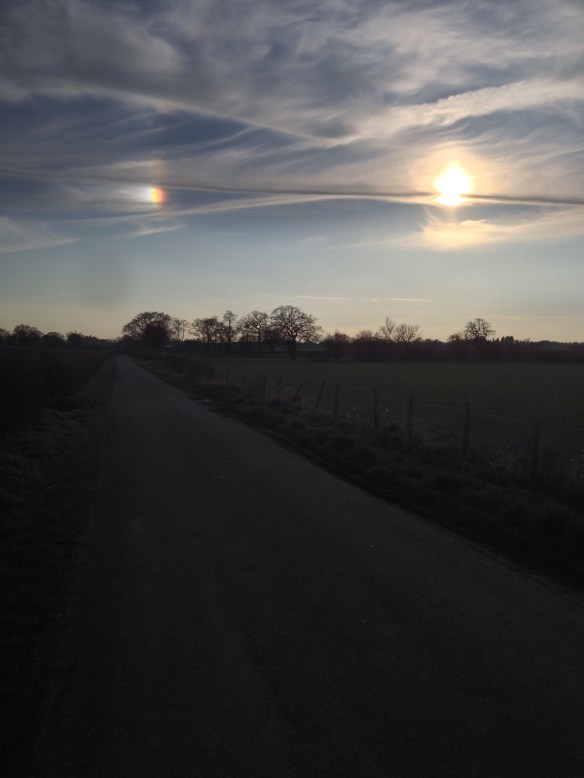
Nice sun ghost while I was out on my post work cycle this evening…
From my bedroom window, looking through the gaps between houses, I can see the open, flat fields of the Cheshire Plain and, in the distance, the sandstone ridge that dissects the west of the county. In all the time I have lived in my house in Wistaston, well over a decade now, I have only once walked the public footpaths through those fields. I’m not entirely sure what’s been stopping me from wandering around my neighbouring bit of countryside – it’s only two or three minutes walk away, after all – but I’ve finally been to explore. Last weekend I was stuck at home without my car, so I thought I would go out and have a look.  There’s a network of footpaths through the fields and a good loop walk which takes me out from the houses and deep into the fields and round into a shallow valley, through an area of country park (which includes Joey The Swan), and back onto the local residential roads. Taking about an hour for a slow wander, the route I have found takes in two main habitats in the form of the wide, open cow fields (cow-less at present) and a wooded valley. There’s plenty of water present, with a stream running through the valley and small ponds dotted around the fields (very typical of Cheshire). The fields themselves are also very wet at present after significant rainfall recently – a pair of wellies is a must at present!
I’m sure there won’t be any wildlife spectaculars as I wander around these footpaths but I’ve already recorded 29 species of bird, and a couple of mammals; the fields are much better for wildlife than I first thought. I have had a couple of nice sights too, with a good-sized flock of meadow pipits passing through on migration yesterday and a total of nine buzzards seen today, including a mating pair near their nest and a group of seven circling in the rising thermals. The sounds and sights of spring were very evident down in the wooded valley with willows coming out in flower, the chiffchaffs calling, a great spotted woodpecker drumming and a peacock butterfly feeding on some early blooms.
It’s quite ridiculous really, that it has taken me so long to find a local walk, straight from my doorstep, but now I’ve found it, I’m going to keep on using it.
Saunders is the fourth largest island in the Falklands archipelago and was also the fourth place I stayed during my trip last year. Whilst technically it is around 13 miles long and about the same wide, this is rather misleading as it’s an oddly shaped place. It has three parts joined by low isthmuses and if the sea levels were a little higher, Saunders would split into three. The largest section of the island has the only settlement, called Saunders Settlement, funnily enough! The island has mountains, open moor, marsh and grassland, and, at its edges, beaches and steep cliffs.
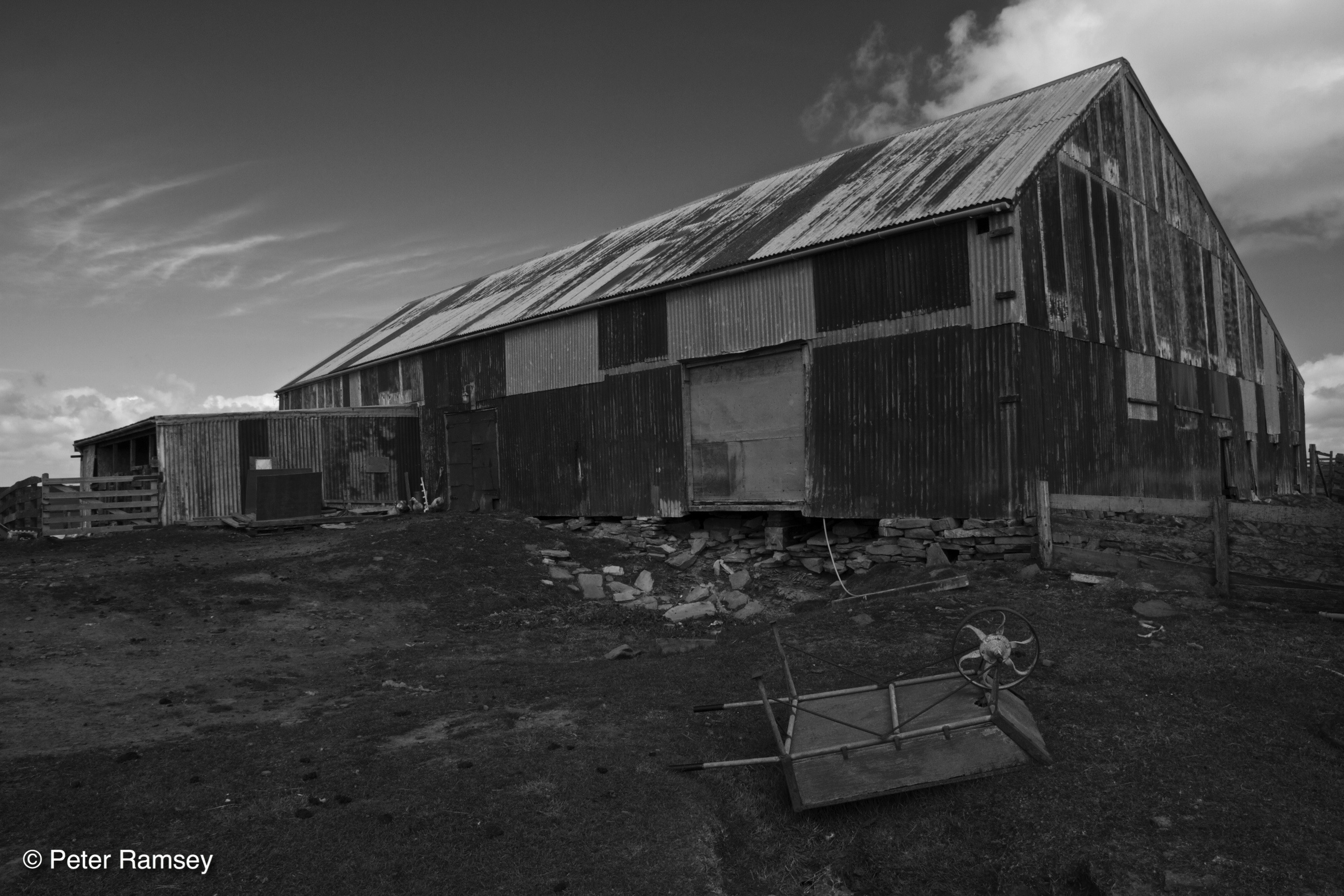
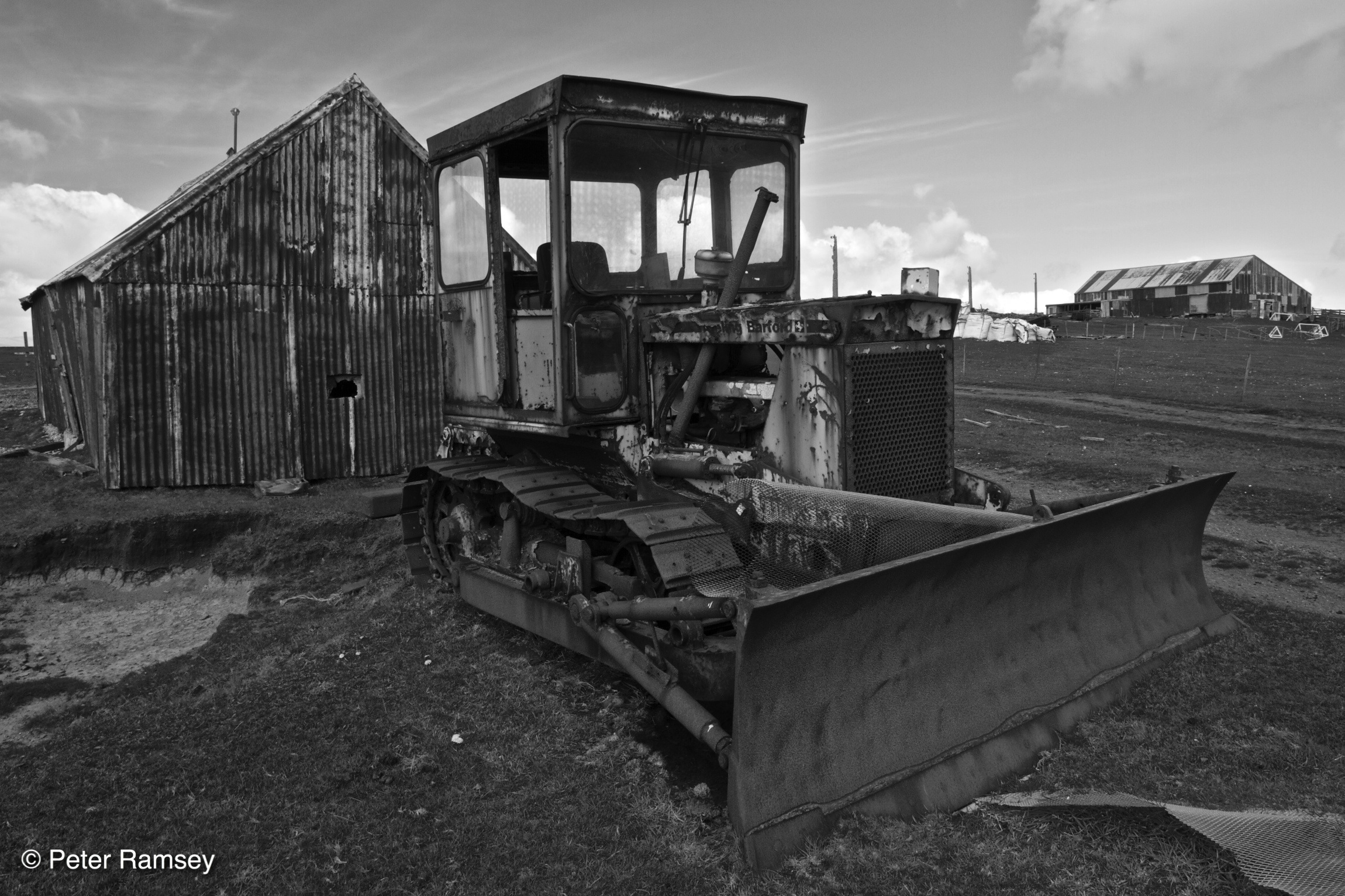
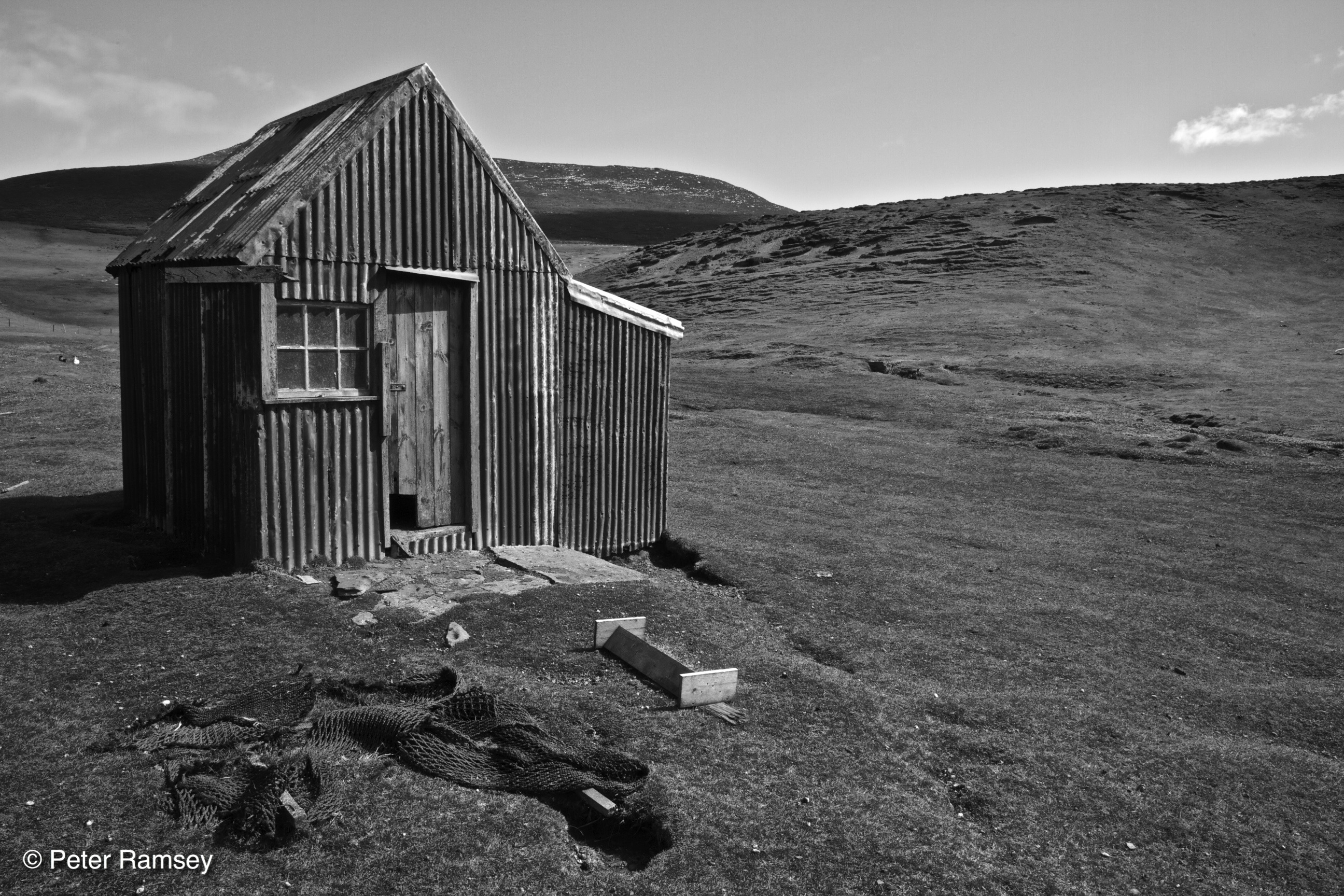
After landing on the island aboard a FIGAS flight, visitors are picked up by the island’s owners and transported from the landing strip, through the settlement, and out to the accommodation. The settlement is a typical jumbled collection of buildings, both the home-like and the agricultural, from sheds and shacks to houses and barns.
In amongst the buildings is the island shop – something of an experience! It’s a barn-like Aladdin’s Cave of food with high wooden shelves of packets and tins, in amongst a jumble of boxes across the floor and freezers with home-made ready meals. There’s no chance of going hungry there but a bit of self-catering provides a break from the great and hearty meals laid on elsewhere.
Whilst visitors can stay in the settlement, there seems little point as the most important sights are some distance away and there are two places to stay nearer to them. I stayed at the Rookery Inn on the north coast of the main part of the island, which is about an hour’s drive from the settlement. The other accommodation is at ‘The Neck’, by the north-western isthmus, which is one of the few places where visitors to the Falklands can find king penguins.
When first arriving, the Rookery Inn doesn’t seem all that inviting – it looks like a shipping container with windows. However, inside, it’s a comfy, clean and warm cabin, with an open-plan kitchen, lounge and dinning room, two bedrooms and a shower room. It’s actually a little calm, metal-box oasis in the middle of nowhere. It was the simplest of the accommodation I stayed in but that was very much part of its charm. The white wrinkly-tin walls set off by the luminous red wrinkly-tin roof, it stands out in its surroundings but any building would do there. It looks out over the cliffs to the South Atlantic, the wind blowing straight into its face.
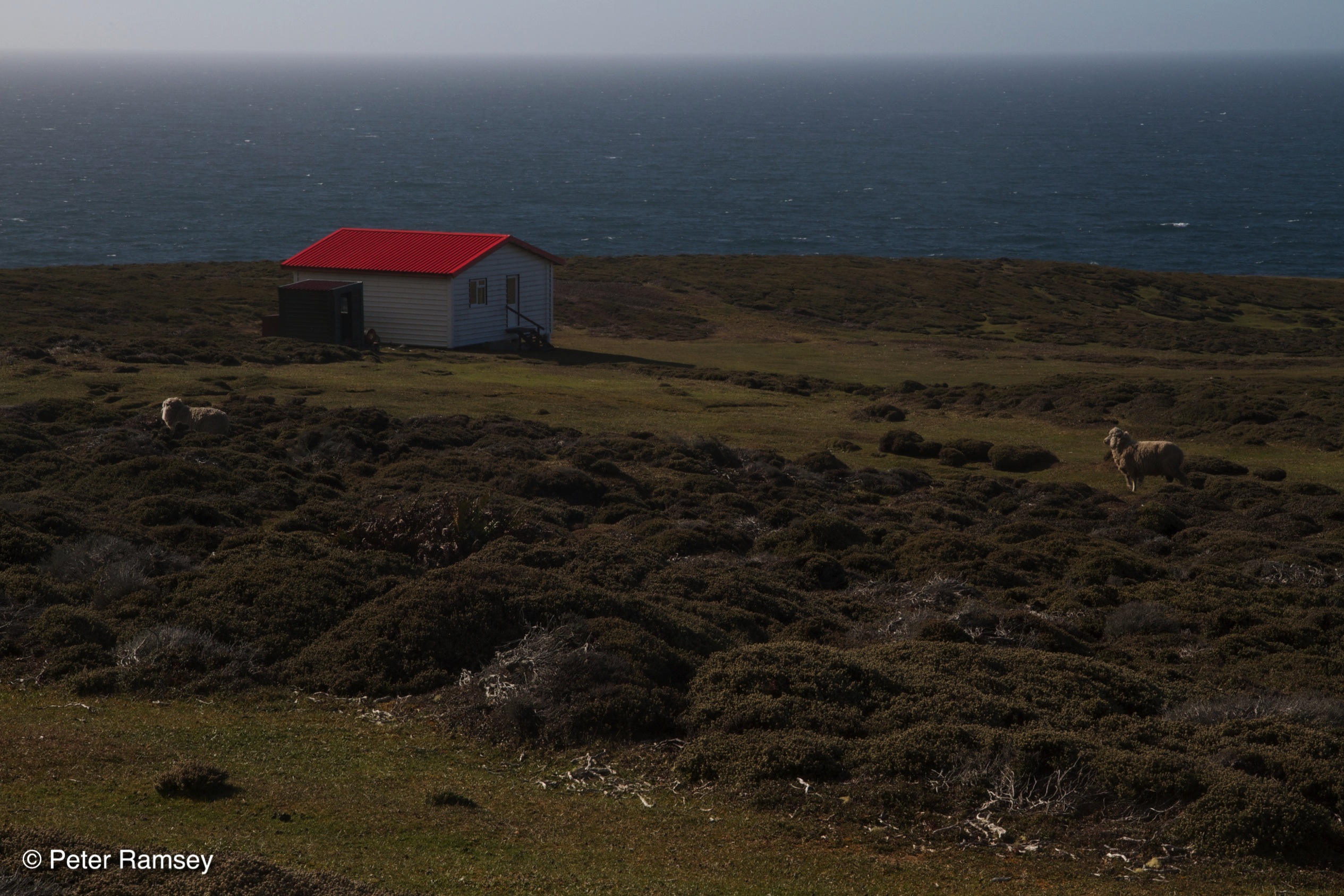
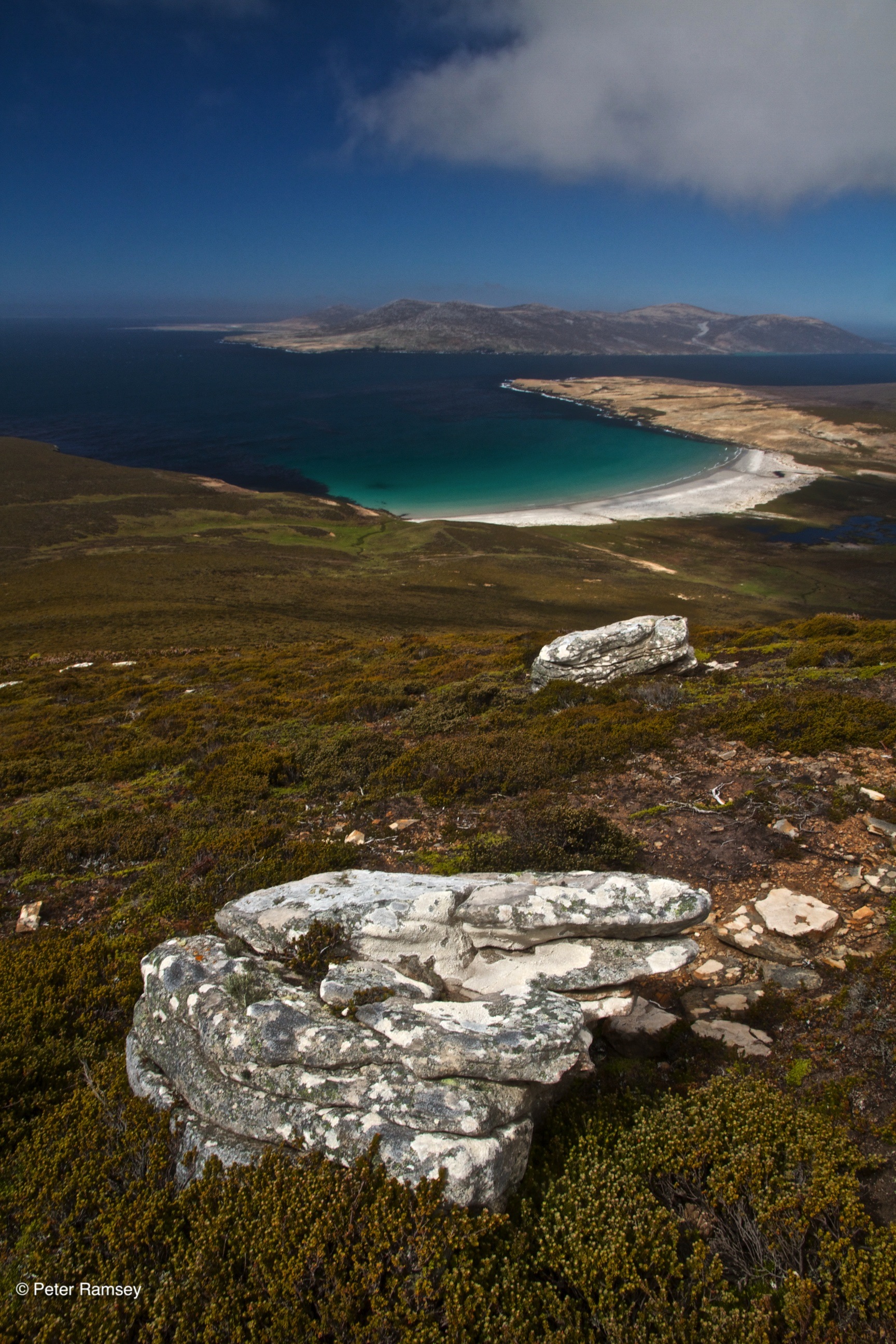
I arrived in the morning and was at the cabin by lunchtime. I spent the rest of the day walking up the nearby Rookery Mountain (422m) and then down towards the nearby beach. On top of the mountain the winds off the ocean have scoured the rocks and boulders, leaving strange carvings, almost like solid lenticular clouds.
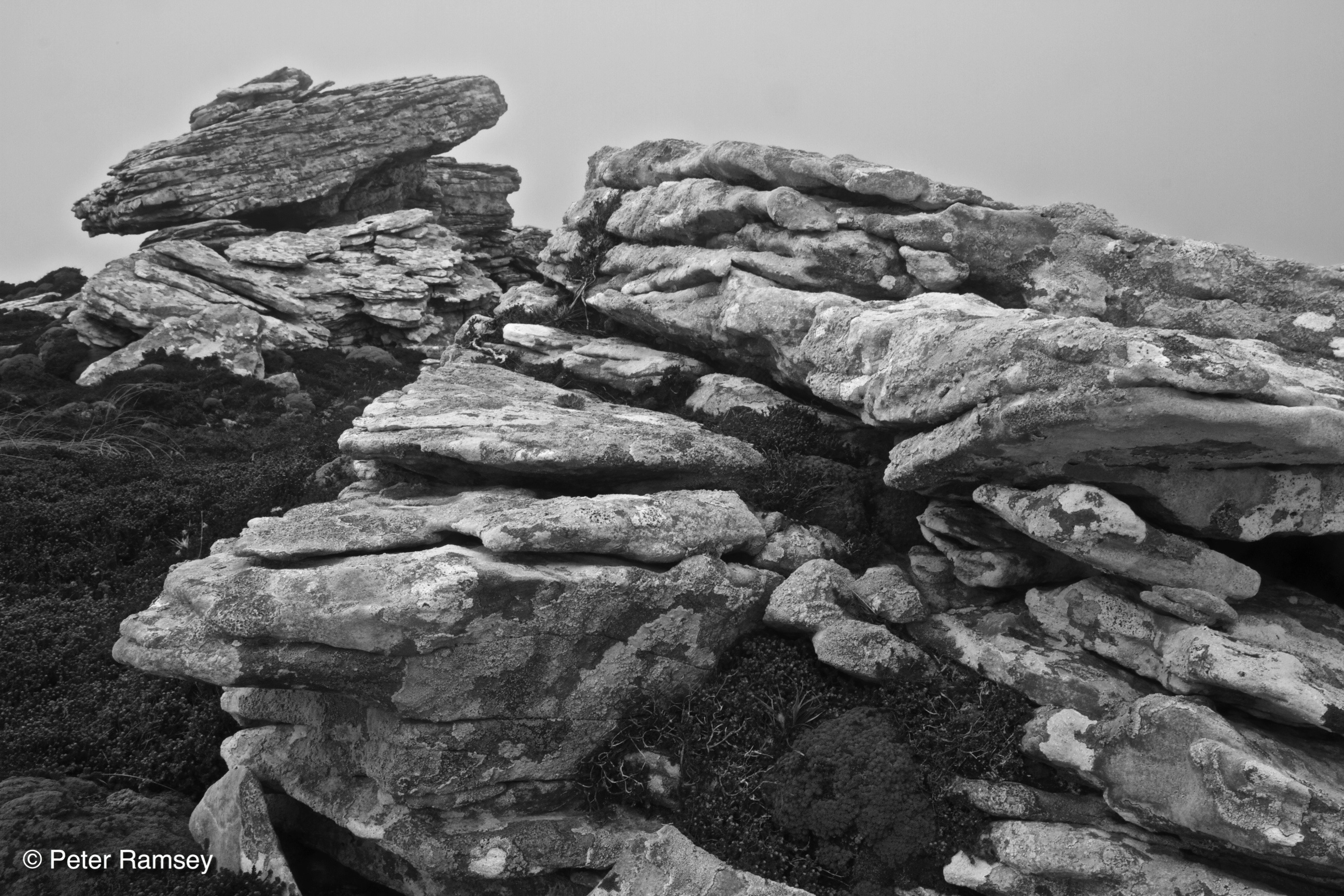
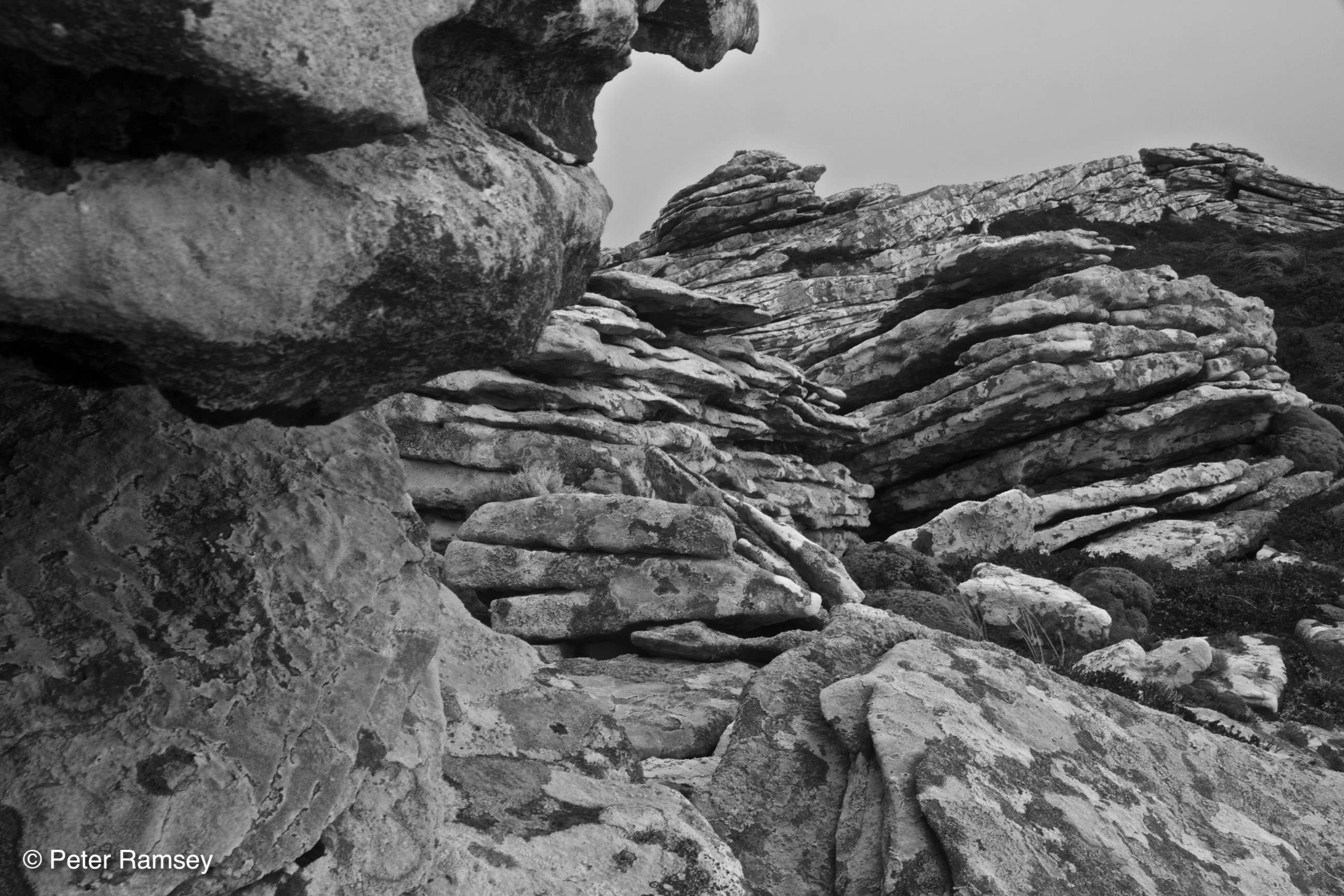
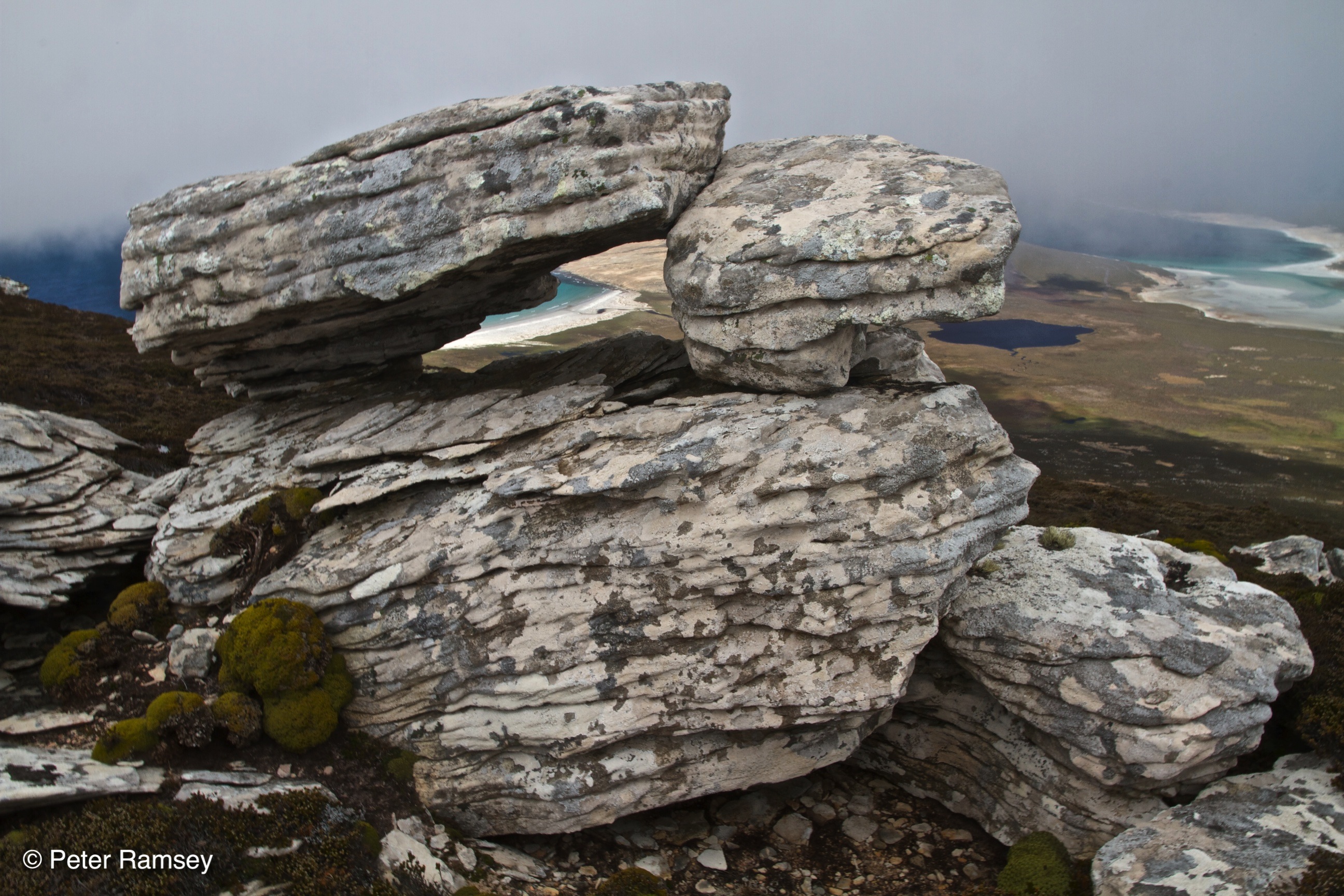
Writing of clouds, the afternoon would have been almost cloudless except that the island was making its own weather. The brisk wind blowing in off the ocean was lifted as it hit the land and rose up the steep mountainside. As it reached the ridge, the air condensed and clouds formed, cloaking the tops in a fog which reached out across island.
The beaches on Saunders are like many of those elsewhere in the Falklands – bright light-coloured sands washed over by turquoise waves. Standing on top of Rookery Mountain towards the beaches, with a stunningly deep blue sky overhead made for an equally stunning view.
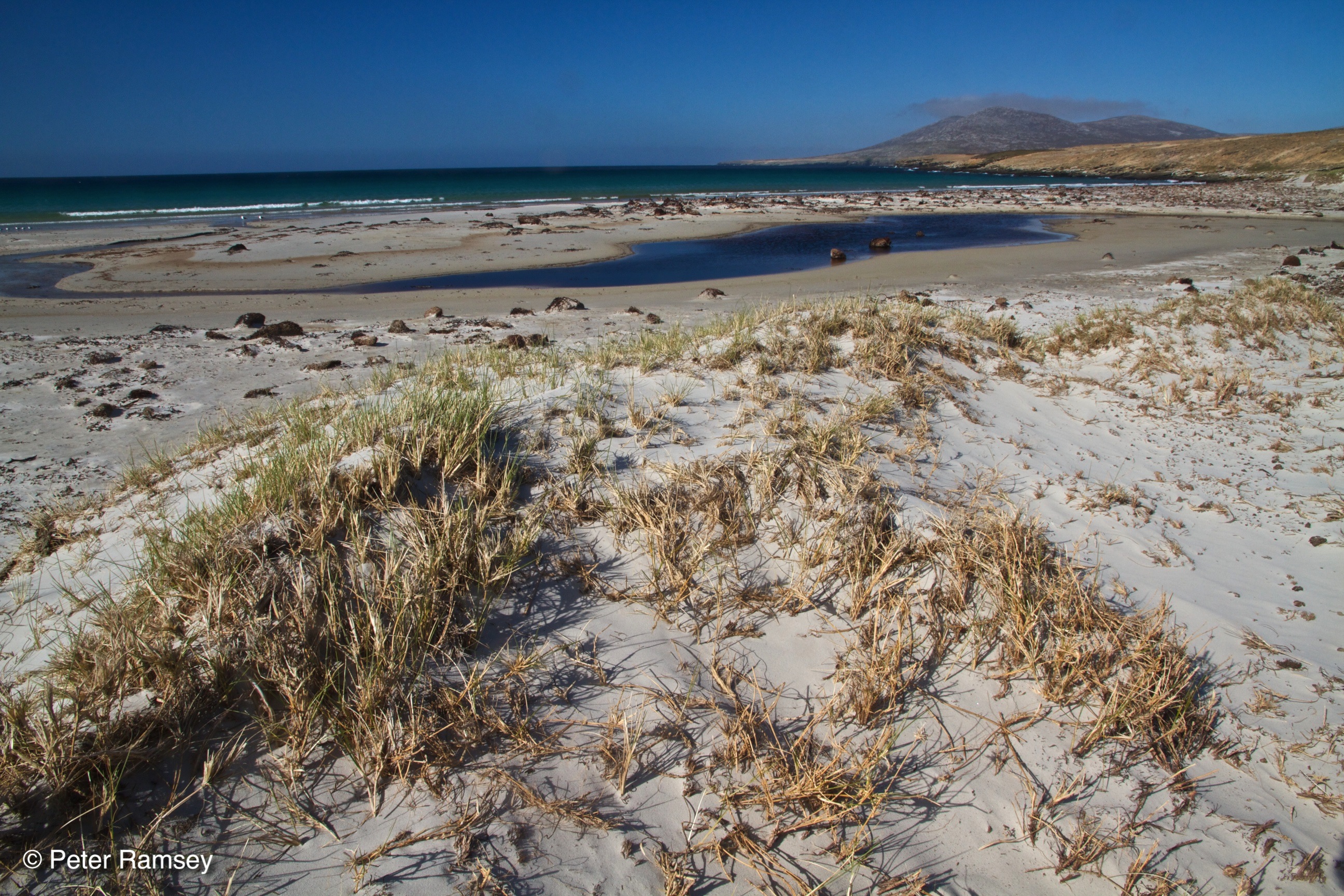
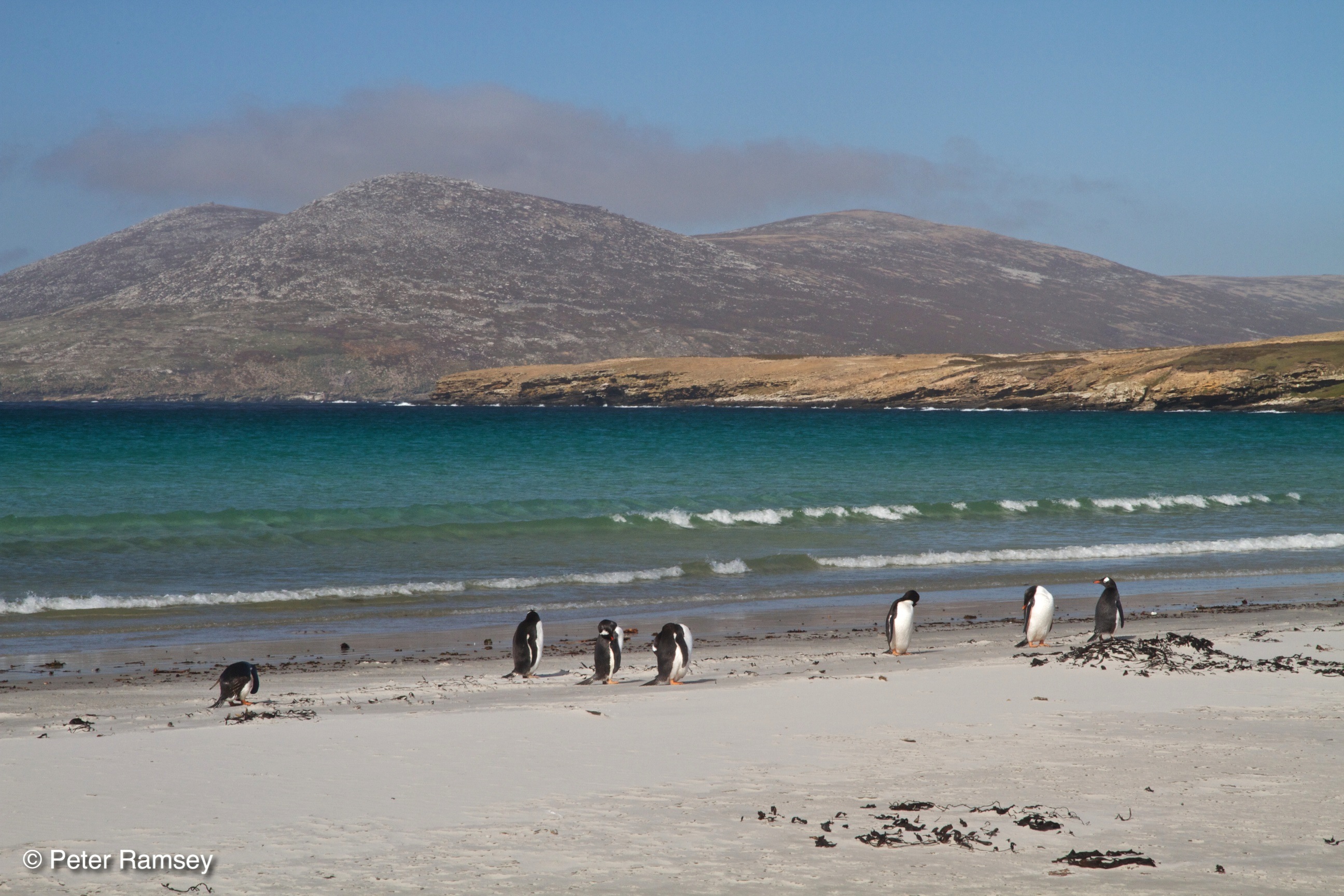
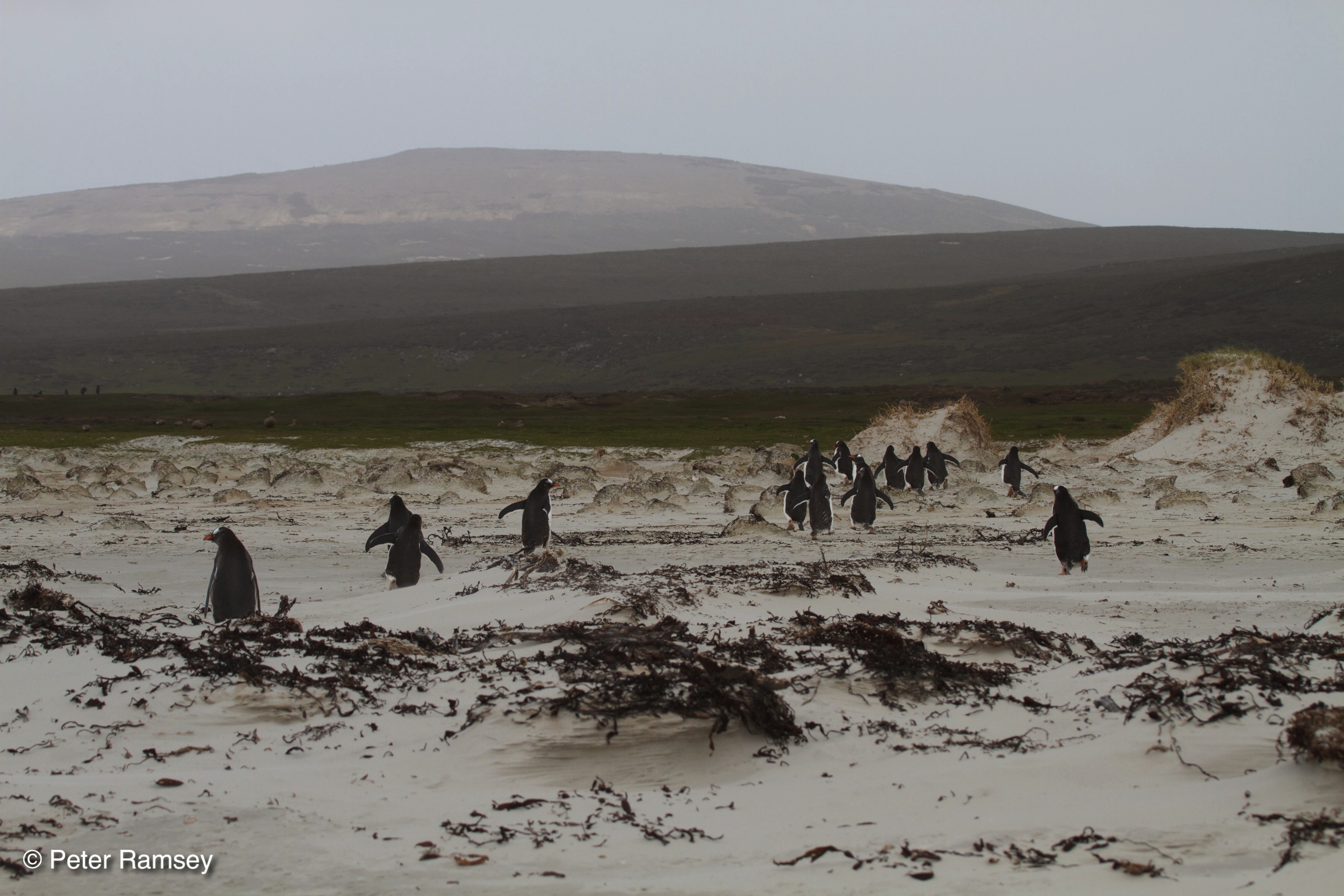
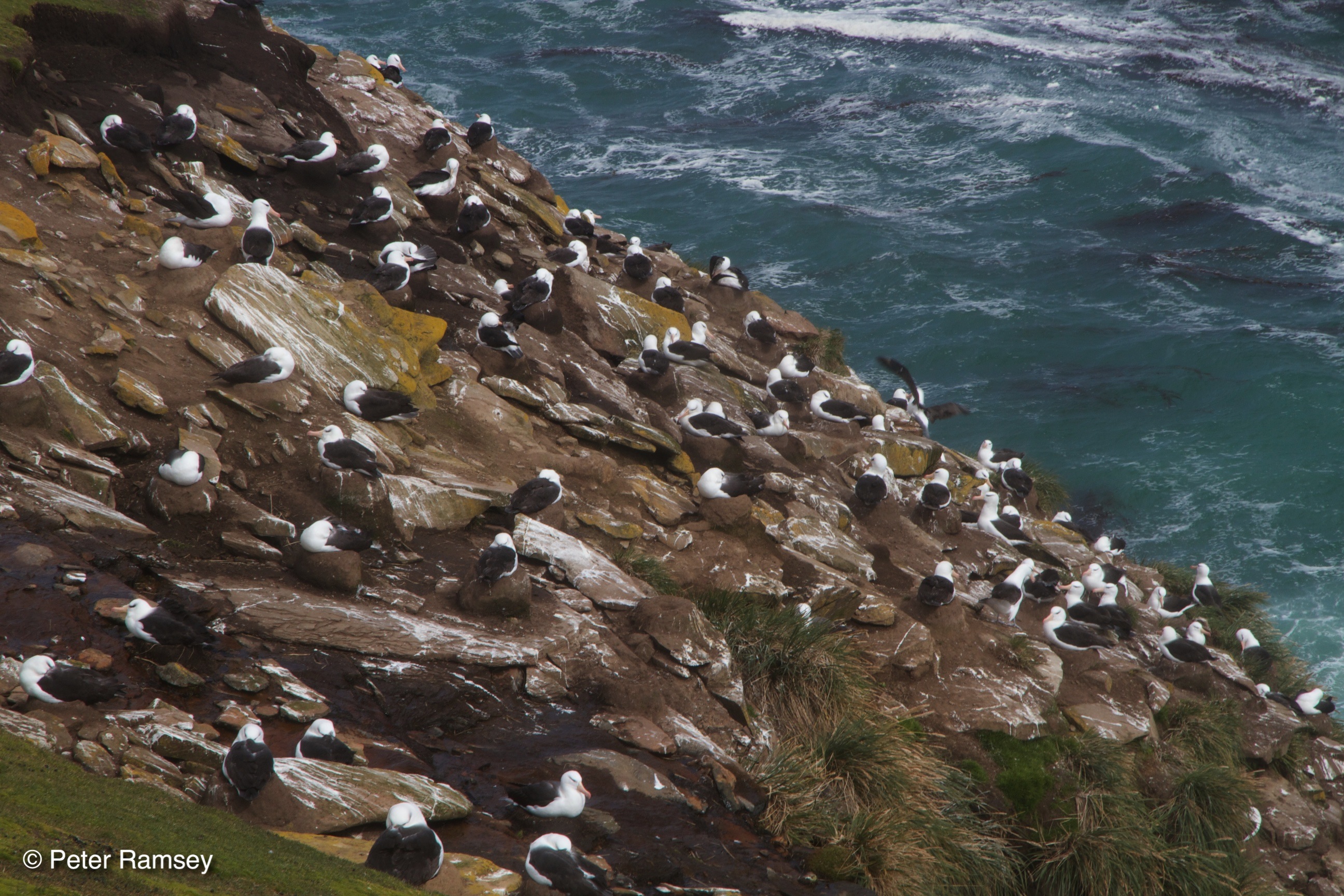
Saunders is another of the Important Bird Areas designated by Birdlife International in the islands and the wildlife has got to be the main reason to visit. Around 50 bird species have been recorded on the island with around 40 breeding or probably breeding. All five species of penguin found breeding in the Falklands can be seen at Saunders. Of particular note are the 7,000 pairs each of gentoo and rockhopper penguins and 4,000 pairs of magellanic penguins, as well as 11,000 pairs of black-browed albatrosses. The Rookery Cabin is a great place to stay to see all of these species with the breeding cliffs for the albatrosses starting almost outside the door and the large rockhopper colonies (rookeries) being just a 25 minute walk away along the cliff tops. The magellanic and gentoo penguins can be found down at the beaches with the former nesting in burrows just behind the sand and the latter wandering further inland to their colonies.


Sitting at the top of the cliffs near to the cabin, I watched the albatrosses for hours as they glided past on the stiff ocean breeze and came into land – another place where they could skim just over my head. The cries of the birds reverberated along the steep rocky edges, all mixed in with the sounds of the ocean below and the wind whipping across the ground. The view laid out in front was of miles of cliffs dotted with the white birds sitting on their nests with others coming and going – a true wildlife spectacular.

Further along the cliff top was the rockhopper rookery – I first found it during the first evening as night was starting to fall. After cresting rise after rise, I eventually started to hear and smell them, some distance before topping the final ridge and seeing the round colonies in an open cliff top valley. The penguins form several large breeding groups in the short-clipped grass above the tumbling cliff which these diminutive penguins bounce up and down. This was the location where the BBC filmed parts of its ‘Penguins – Spy in the Huddle’ series – this clip shows their troubles getting up the cliff!
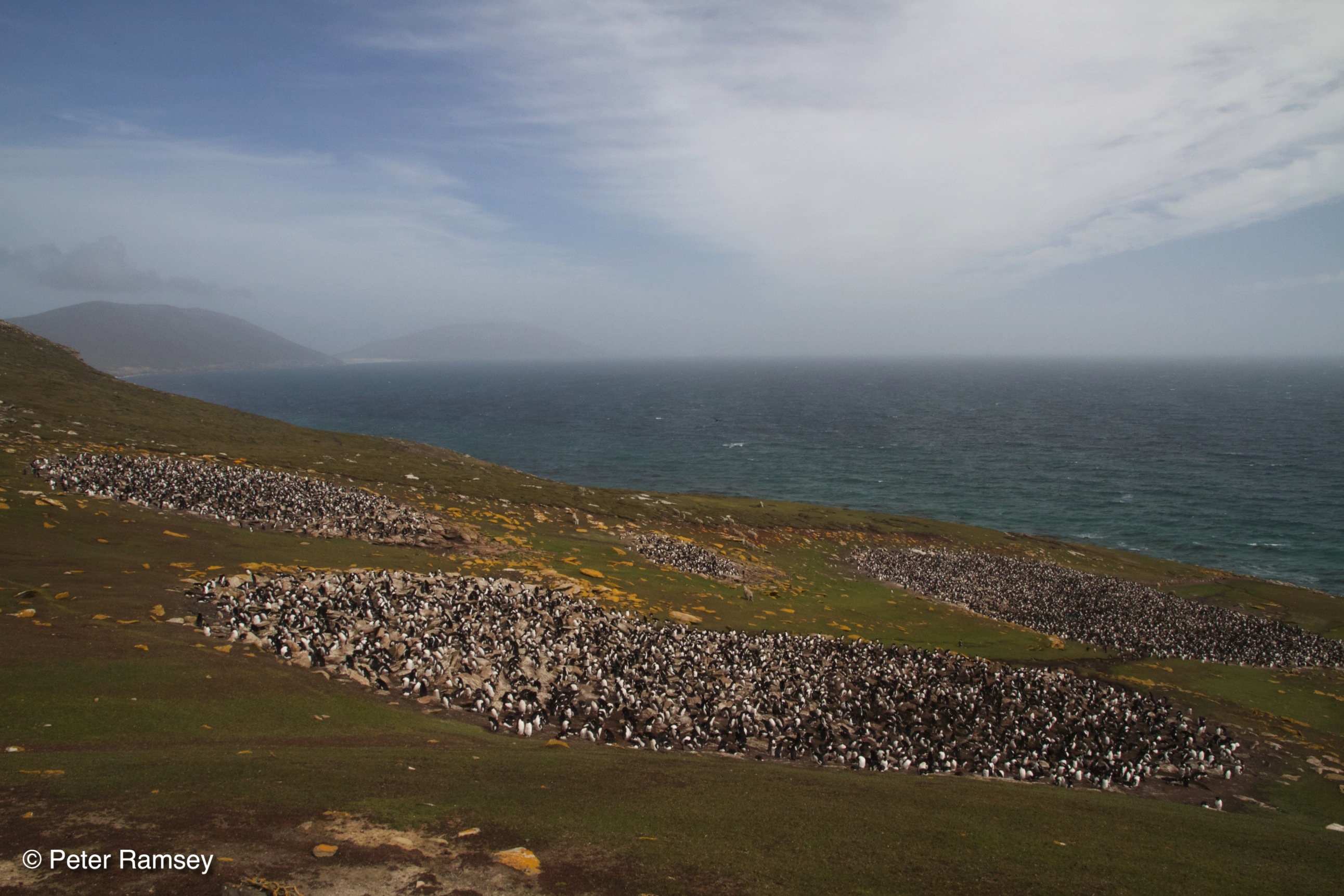
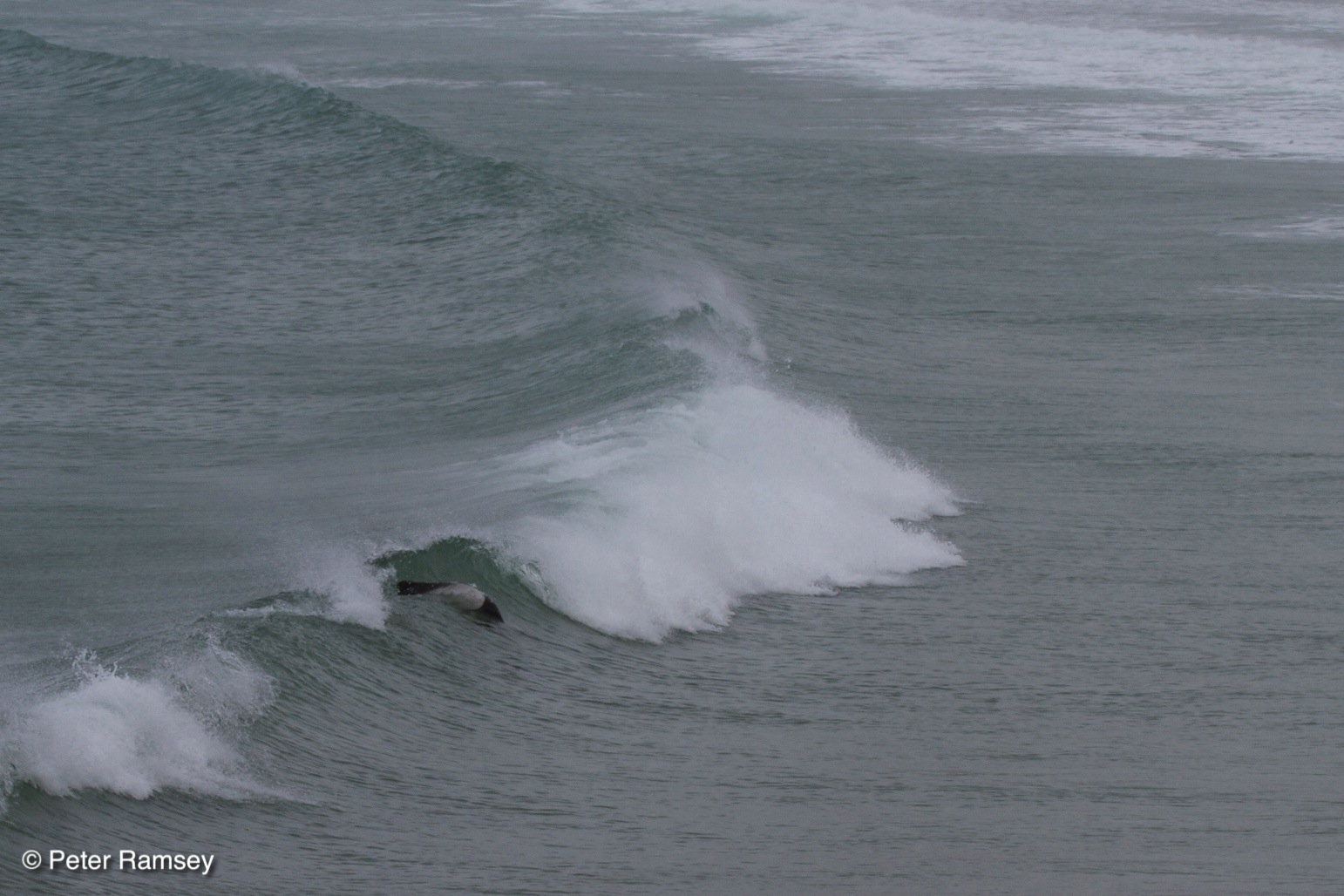
For the only full day on the island, I spent more time with the rockhoppers and wandered along the cliffs amongst the albatrosses, and then walked down to the further beach, back towards the settlement. There was plenty of time to watch the Commerson’s dolphins playing in the crashing surf and to wander amongst the gentoo and magellanic penguins.
The original British settlement in the Falklands, Port Egmont, was established on Saunders in 1765. Yes that seems a long time ago and the tumbled down remains of the first buildings lie there true to that but there is a sense of continued history on the island that is perhaps stronger than elsewhere because of their presence. The links from that first settlement to the events of 1982 and on to now are in the aura of the place and almost tangible; in fact, they are. You can touch the stones of those first buildings, you can touch the Argentinian landing craft now lying derelict on the beach and you can touch the ‘there and now’ in everything. Throughout my stay amongst the islands, there was a true sense of an ongoing history, of people living it and of a place touched by it. Yet, what is obvious there is that our impact on the land is but a tiny scar in its history; the natural history is so much more, so much richer.
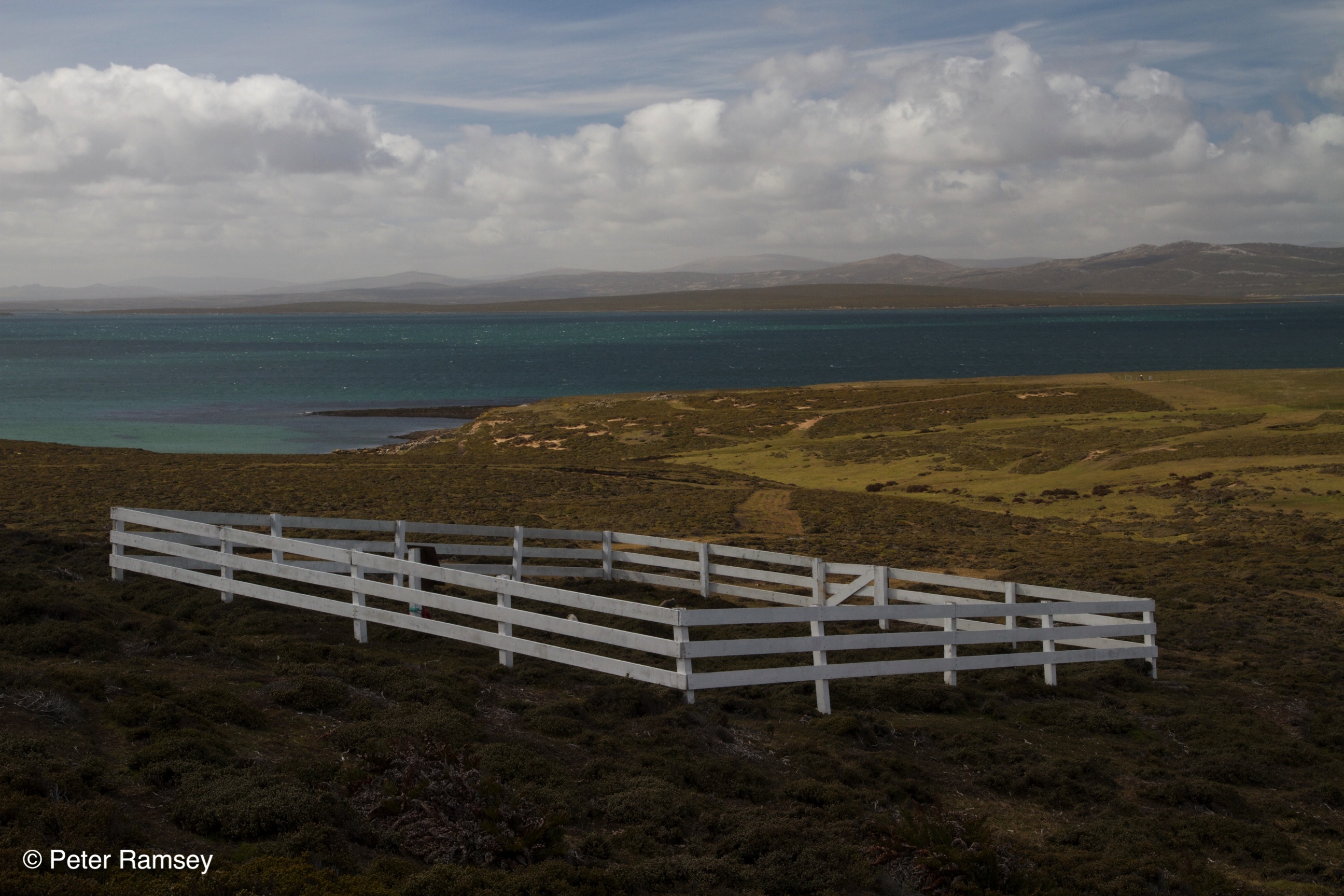
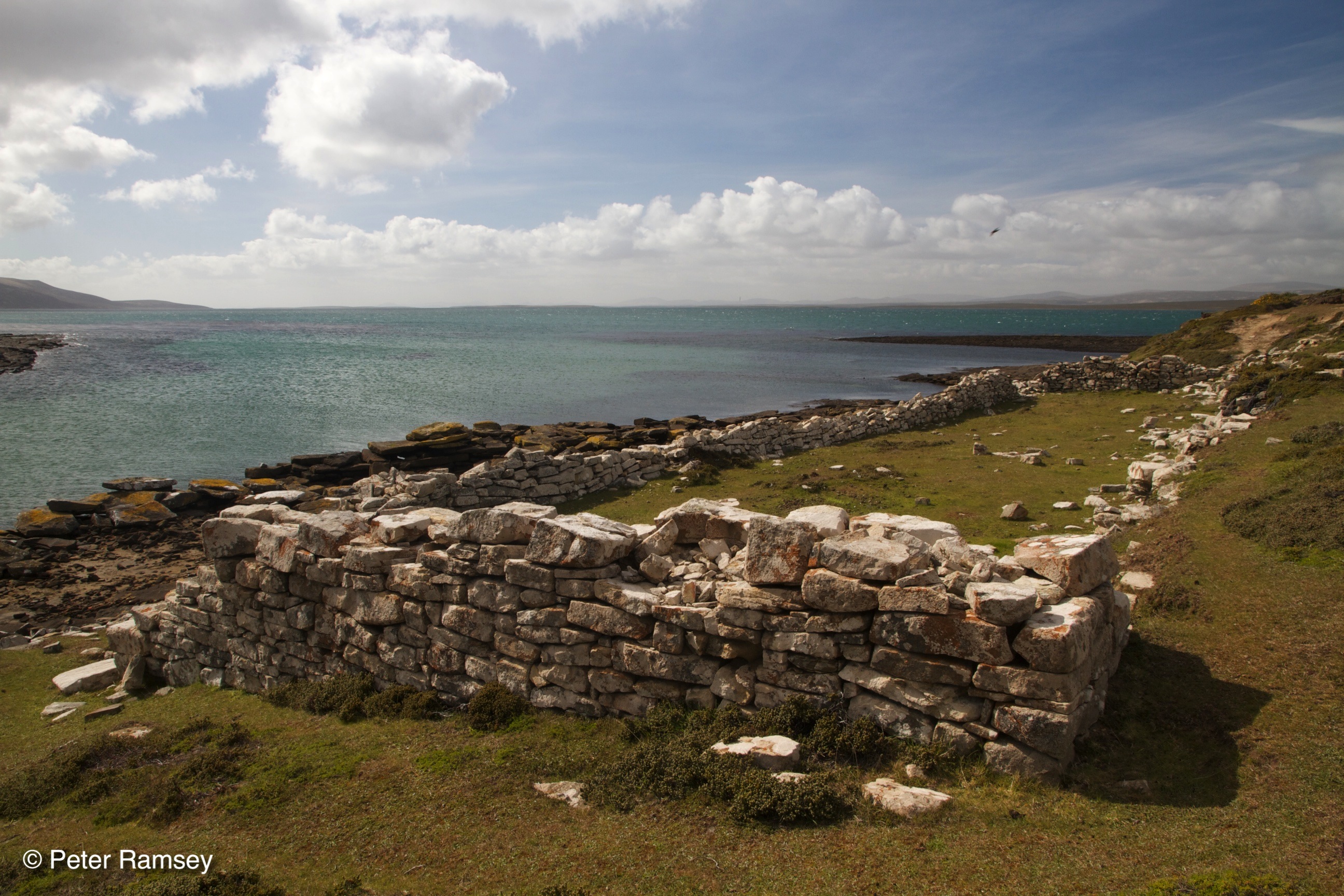
Like elsewhere amongst moors, bays, mountains and beaches, the people are the link to the past and the future. In my hour long journeys to and from the cabin, I learned a little more about the experiences of those living there both now and in 1982. The views were strong but considered, robust but practical, and above all else, there was a sense of being in tune with the land.
Saunders is where I felt the most like I was on the edge of the world and that’s what made the cabin all the more homely – comfort on the edge. With seeing no one for 24 hours, with the exception of a passing ship, and a view out into the harsh South Atlantic, there was nowhere else I stayed quite as remote or quite like it.
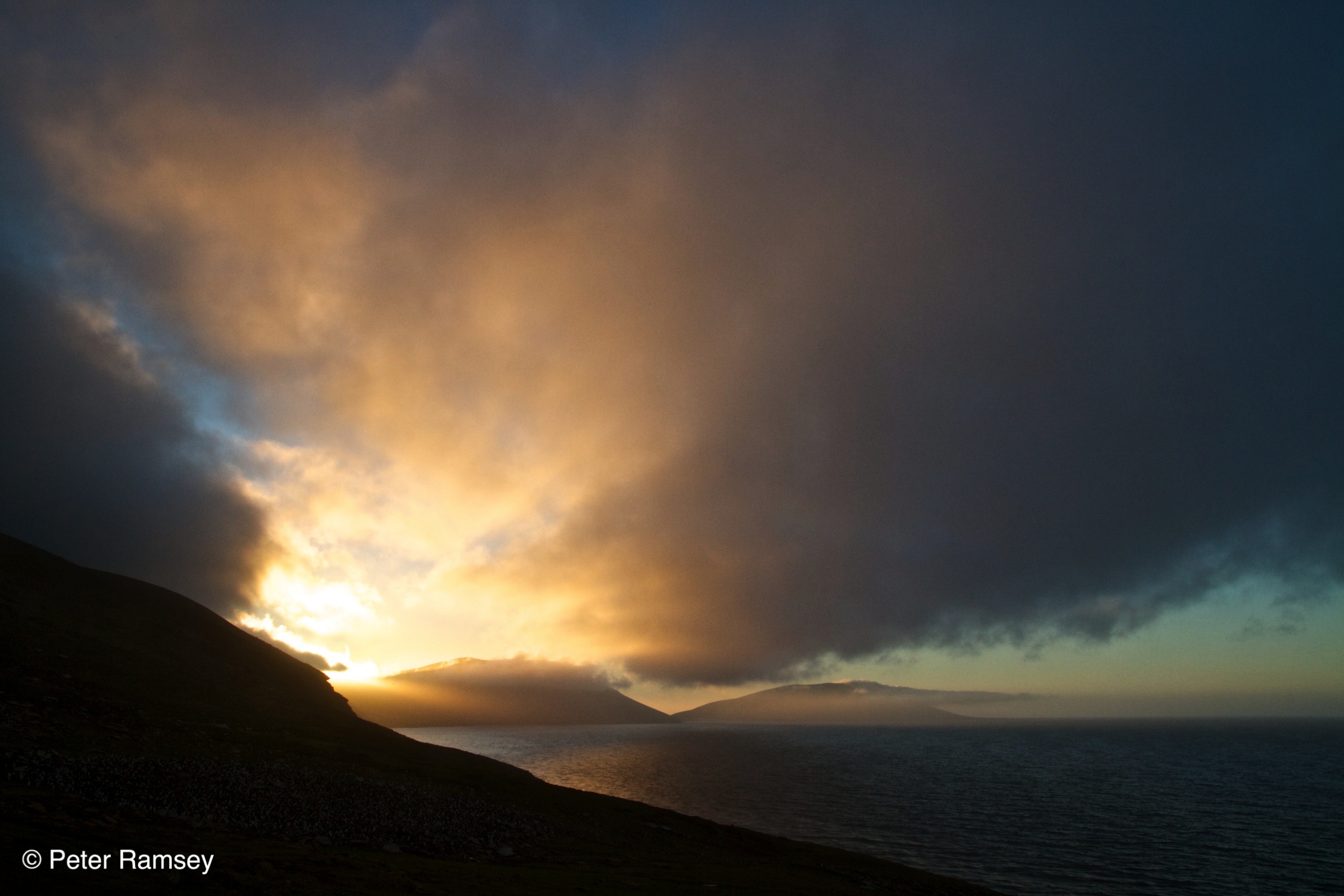
I wrote previously that Pebble Island was like the Falklands in miniature; I don’t quite think the same can be said for Saunders. However, Saunders does typify the Falklands in some ways – it is what it is, the place has a ‘take us as you find us’ kind of way about it and it is no pastiche of itself, made softer or gentler for outside eyes. Will I go back? Almost certainly!
 Daft Mumblings