Proper Autumn

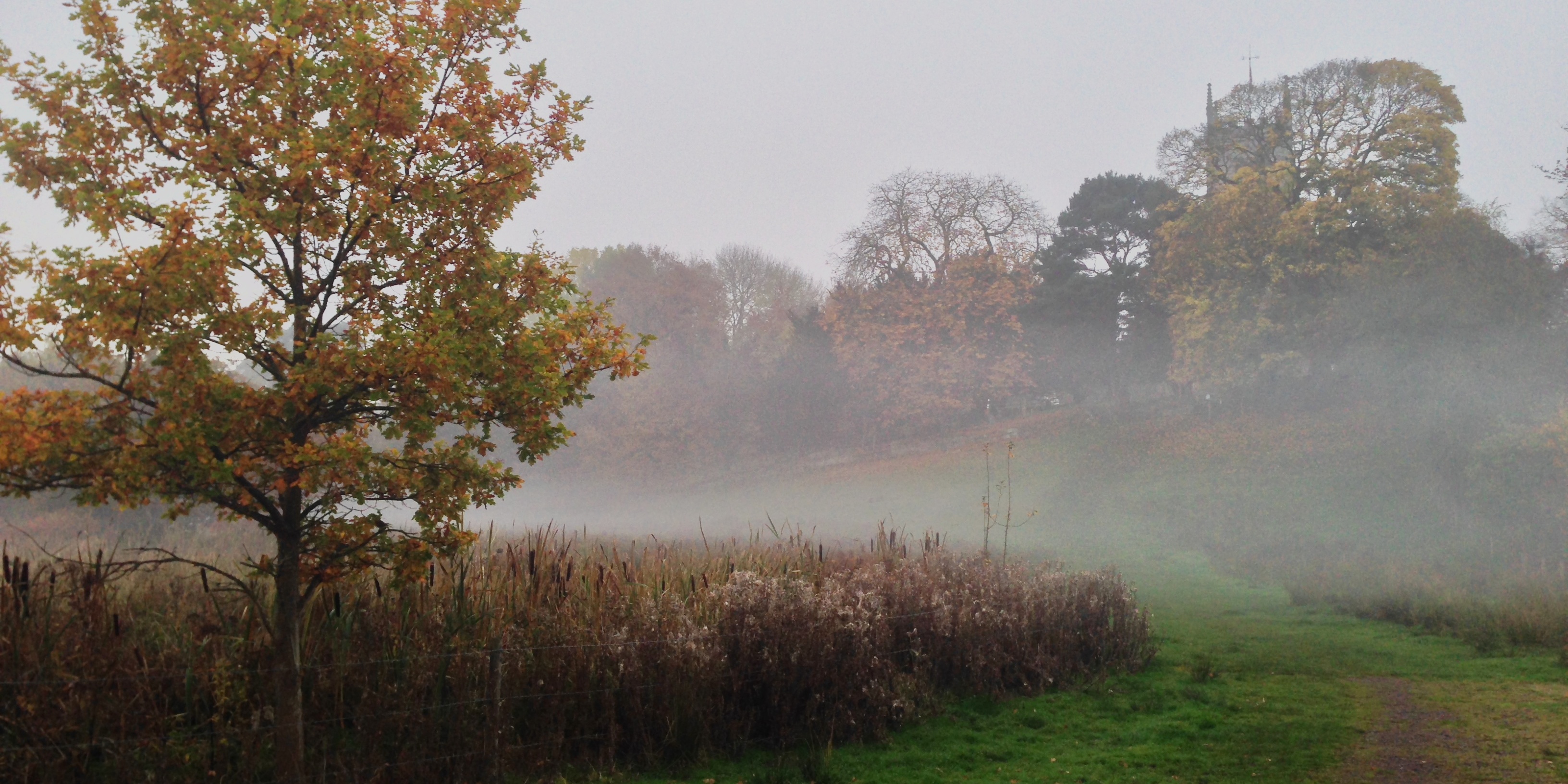
Yesterday, as I often do if I have a quiet Sunday afternoon, I took a wander around Wybunbury Moss.  It had been a misty day but it had cleared in places.  The trees were shedding their leaves which have turned into a fine range of yellows, reds, oranges and golds. The last of the fruits and berries remain on the branches, yet to be picked by the birds.  There were signs of badgers clearing out their setts, ready for winter and some of our colder-month visitors were passing through.

IMG_7558

As I walked around my usual route, the sun dipped below the trees and the colder air began to sink into the hollow in which the Moss lies.  The mist started to form once again and as the last of the light, an eerie silence fell on the landscape, the land-hugging clouds seeming to mask any sounds from outside.

IMG_7568

And the cradle will fall

I was working from home last Friday and noticed that there were lots of comings and goings from my house martin nest. I could see them constantly flying past my landing window and assumed that they had finally fledged. As a first brood, I was getting slightly concerned that I had yet to see the chicks fly – this being late in the year. I was relieved then when I saw them flying past.

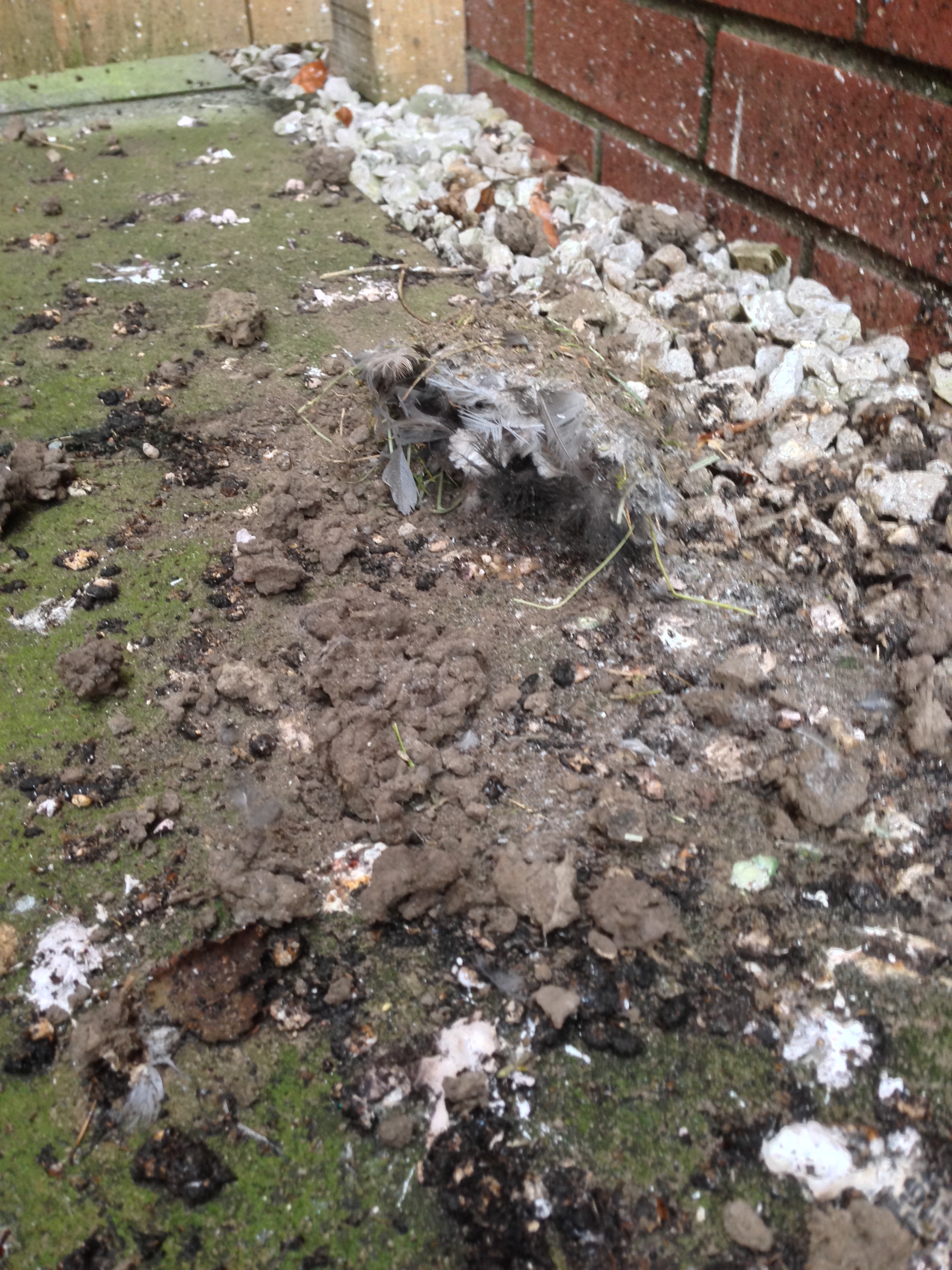
However, as I left home in the afternoon I noticed something on my driveway – the nest!

IMG_7071

The nest was from last year and perhaps, weakened over the winter, it could not withstand the weight of an almost fledging brood. Whatever the reason for its failure, it seems the chicks were forced to fledge whether they liked it or not.  The birds were still flying up to where the nest had been, trying to cling on to what little remained of the mud home attached to the wall.

When I retuned home on Sunday, the birds were nowhere to be seen. I hope they’ve found somewhere else to roost overnight, particularly with the temperatures becoming more autumnal. Whether the chicks will have gained enough strength to migrate yet is another matter entirely. I’ve not seen many house martins in the area since I returned so maybe they have already moved on.

After giving up on the nest ever producing any chicks this year, I was very surprised and happy to hear and see a brood being nurtured high up on the side of my house in mid-August.  Now that they’ve fledged, and hopefully begun their migration south, I have some renewed hope that I may be able to conduct the 2016 BTO House Martin Nest Study using a nest on my own house – I’ll just have to wait and see!

How happily wrong could I be?

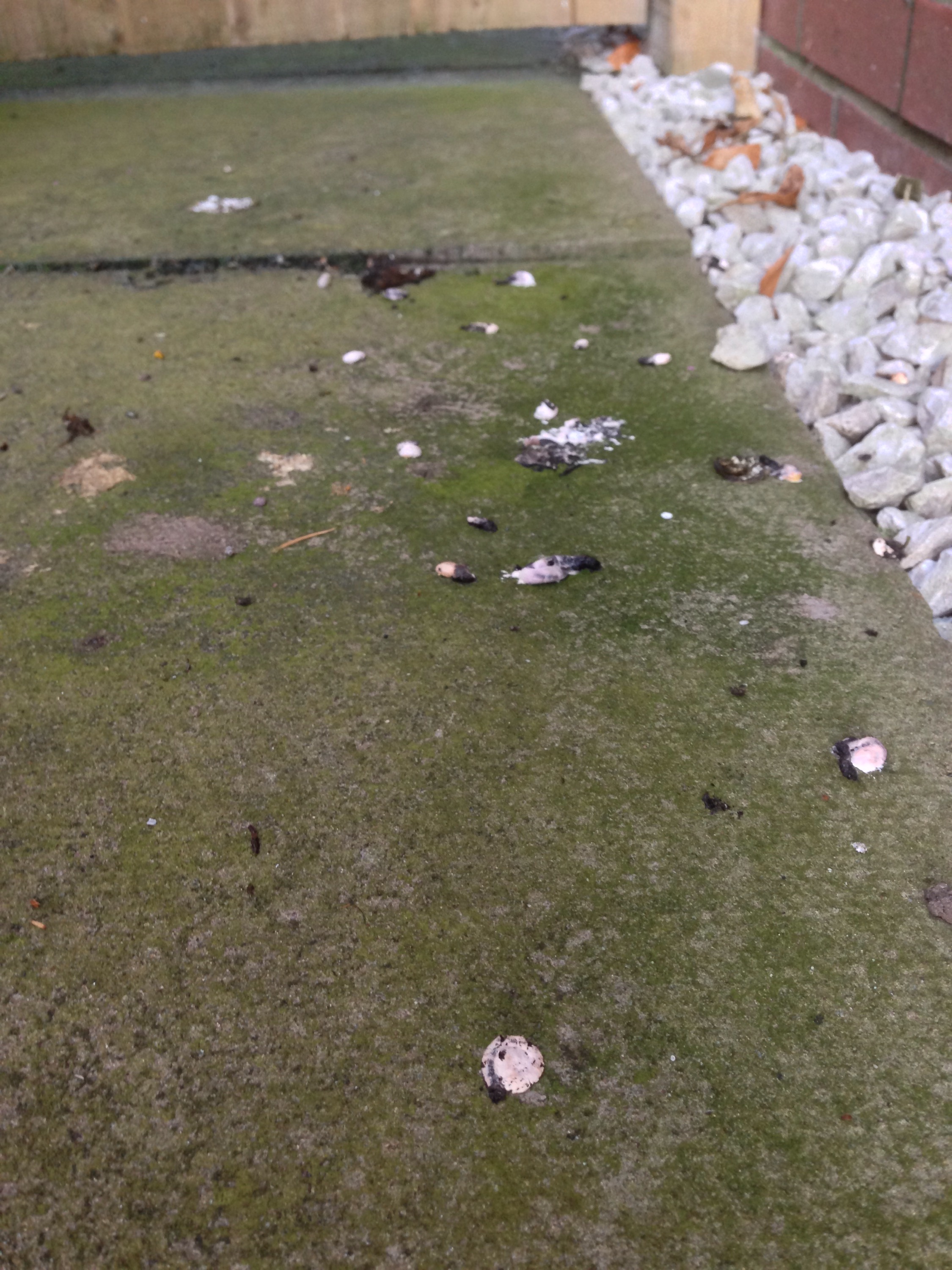
In my last post, I said it was too late for the house martins to raise a brood on my house this year – well, that’s exactly what they are doing!  A few days ago when I got home from work I noticed that the patch of droppings beneath the nest had continued to grow and then I heard the chirping coming from the nest above.

Today when I was out cutting my grass, I walked beneath the nest a few times and on each pass the chicks chirped loudly.  Looking up, I could see three little heads poking out through the narrow gap between the mud nest and the eaves.

IMG_7077

Whilst it’s not at all unusual for house martin nests to be holding a brood of chicks at this time of year, I think it probably is quite unusual for a first brood to be so late.  These chicks will have a bit of catching up to do with their neighbours as the skies around my house have a few families of house martins flying around in groups.

Last weekend I was out at the Fenn’s, Whixall and Bettisfield Mosses and that area had very good numbers of both house martins and swallows.  The swallows appeared to be preparing to leave for their warmer wintering grounds in South Africa, with large groups collecting on the power lines alongside the canal.

IMG_6980 (1)

Whilst summer is turning to autumn, it’s nice to see the migrants haven’t quite finished their breeding for this year.

A glimmer of house martin hope

With the summer migrants already starting to leave the country I had long ago given up any hope that the house martins would return to my house to breed this year…and they haven’t.

However, I was given some hope that maybe next year could be different. After spending much of the last two weeks working away, I returned home last Friday to find a small, but significant, scattering of droppings below the nest on the side of my house. It’s way too late for a pair to be starting to breed so I’m not too sure why house martins have started to use the nest. Maybe they’re youngsters who are now too large to all fit in their own nest – I’ll have to do some research.

I’m probably just grasping at straws but there is now a little more hope that they’ll return. There is a second house martin survey to do next year, monitoring an individual nest – it would be great it is was one on my own house!

Harvest Time

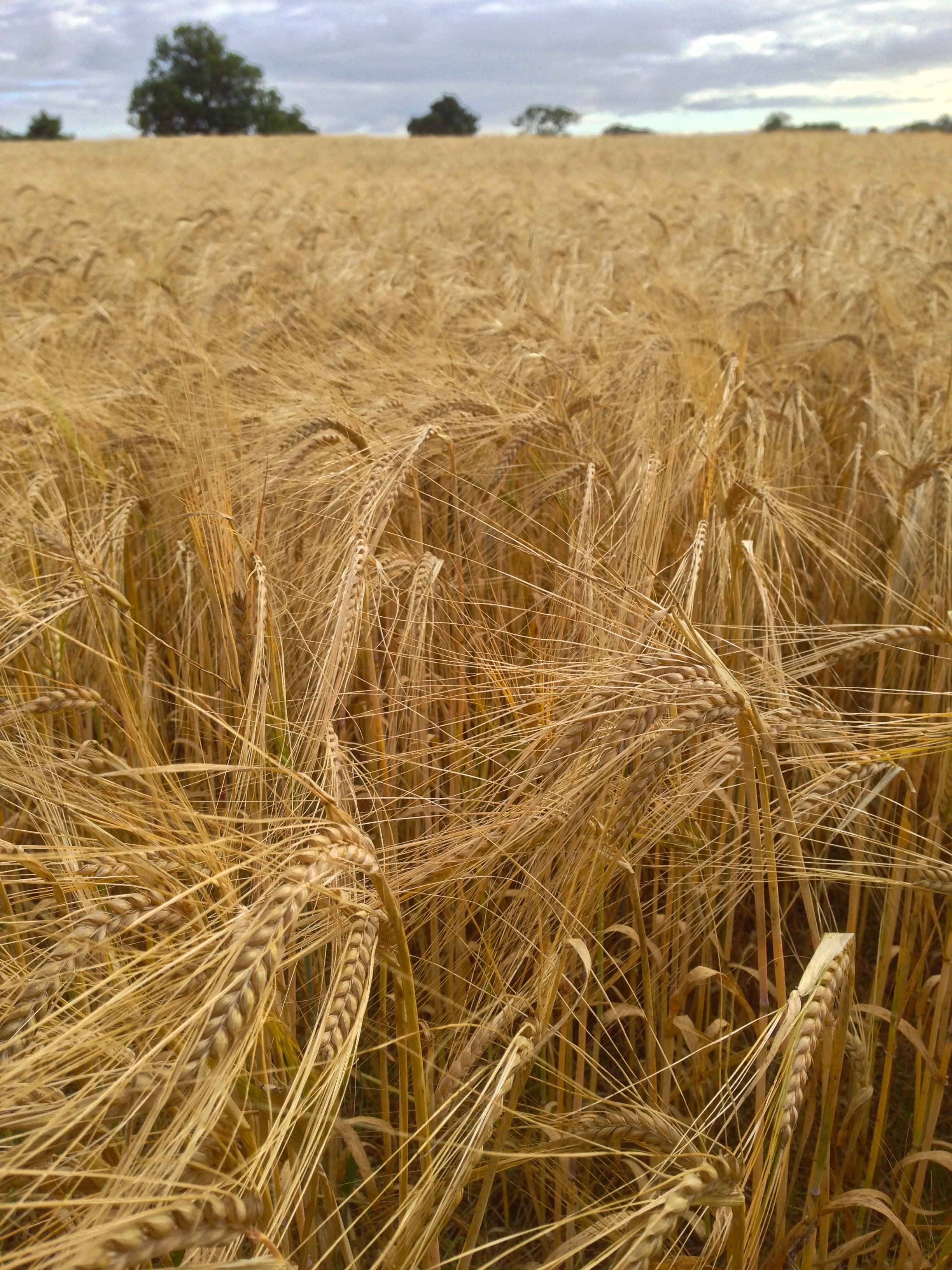
I went for a cycle yesterday afternoon, the first for ages, and could see that harvest is well under way.  Cheshire is more dairy than arable but there are still quite a few fields given over to growing crops, including grain, potatoes and maize.

I’ve been pedalling around my usual route for years and I’ve mentally noted when the fields are harvested, particularly those on the road between Sound and Ravensmoor.  The timing of harvest this year is similar to last, perhaps a bit later, however, the few years before last saw much earlier harvest, back in mid-July.

In my mind, harvest should be in August or even September, and mixed in with the change of season into autumn – I’ve already noticed the earliest hints of a change in season.

IMG_6958

First sign of autumn…

…and we haven’t had summer yet!

When I opened the curtains this morning there was a low mist over the fields and as I left the house the temperature was well down into the single digits. We are now some way past the peak of the sun’s strength but this should still be the height of summer.

An early autumn, anyone?

(PS that’s a view from the train this morning not the one from my house, unfortunately)

The silence of dawn

This morning I woke about half an hour before my alarm and lay in bed cherishing those last few minutes before I had to crawl out from under my duvet. As I lay there, with a cool breeze flowing in through the window and the light starting to seep around the edges of the blinds, I noticed how quiet it was outside. There was near silence, apart from the ever present background rumble of a distant main road.

The peace was momentarily punctuated by a singing wren but he soon stopped. In the far distance there was a carrion crow calling as it flew over the cattle fields and an occasional short argument between jackdaws in the nearby sycamores.

Where has the vibrant and energised dawn chorus gone from the months past? Where is the song thrush starting its calling from the darkness, where is the blackbird slowly joining in and where is the robin backing them up?

It’s a sign that already the breeding season has moved on.

There are several reasons why the dawn chorus stops at this time of year. Some birds have finished breeding so there’s no need sing; they don’t maintain a territory once their fledglings have gone. Others may still have chicks in the nest and don’t sing to avoid attracting predators. Also, once breeding is over, the adult birds moult which makes them more vulnerable to predators; singing would just increase the risk.

It did strike me, lying there in almost silence, almost without bird song, that one day this could be the norm, even at the height of spring. Despite the efforts of conservationists, including amateurs like me, birds populations are continuing to decline. Without greater action, by many more people and organisations, a vibrant and rapturous dawn chorus could be a thing of the past – already it is much diminished.
White-winged Black Tern

Last week while working in Lincolnshire I stayed overnight near Boston.  With a spare evening, I decided to take a look around RSPB Frampton Marsh, which is just south of the town.

While there I saw a nice range of wildlife including some I don’t see very often including spoonbills, avocets and little egrets. However, there was one bird that really caught my eye.  I’m not a twitcher, or even a birder, more a general nature enthusiast, but I have to say I was quite excited to see a rarity while wandering around the nature reserve.

A white-winged black tern was flying back and forth over the wetlands enabling those there to get a good view of it. According to the Collins Bird Guide, there are around 40 records of these lovely birds in the UK each year, so I was pretty lucky to see it and even get (a pretty rubbish) photo of it.  It’s a stunning looking bird in its summer plumage with its black body, and white and grey wings.

IMG_6422

Wybunbury Moss in High Summer

The next four weeks or so are, on average, the warmest of the year and the summer should be at its peak.  It doesn’t seem like high summer as I write this as the rain is falling and the temperatures are in the teens.  However, yesterday was a bit better and I took a walk around Wybunbury Moss, something I haven’t done for quite a while. IMG_6853 My now regular circular walk through the woodlands and meadows around the outside of the Moss really help to give me a sense of the moving seasons and how this small bit of countryside changes as the year moves on.  I got a good list of 30 birds yesterday (all recorded using the BirdTrack smartphone app, which uploads records to the British Trust Ornithology’s database) but the Moss is much quieter now than previous months.  The great rush to breed is now reducing and there was less bird song to be heard; July is a time when many birds are moulting after their broods have fledged so they tend to sing much less. Whilst the birds are quieter, the wild flowers are much ‘louder’ now and there’s quite a good show at Wybunbury.  Wandering around the area I saw plenty of flowers I knew and plenty I’ve yet to learn the names of but those I could identify included red campion, honeysuckle, rosebay willowherb, foxglove and common spotted orchid. In addition, the brambles aren’t just flowering, they’re starting to show the first signs of a good crop of blackberries. IMG_6857IMG_6855IMG_6859IMG_6854IMG_6852 As well as birds and flowers, there were a few butterflies around to be seen including large white and spotted wood.

There were also some mammals around including rabbits and the little dexter cattle being used to manage the grassland around the outside of the Moss.  They look a bit like Spanish fighting bulls but they’re quite friendly and are more like large pointy-horned dogs.

IMG_6862 On a slightly depressing note, the autumn migration has already started with the swifts starting to make their long return journeys south.  Thankfully, there’s still quite a few weeks of summer left!