Pupping time for Grey Seals on Ramsey Island

September on Ramsey Island is right in the middle of grey seal pupping season. I have to say that, despite views to the contrary, my real wildlife interests are in mammals rather than birds, so a couple of weeks on the Island at this time of year gives me an opportunity to take a look at some of the UK’s biggest.

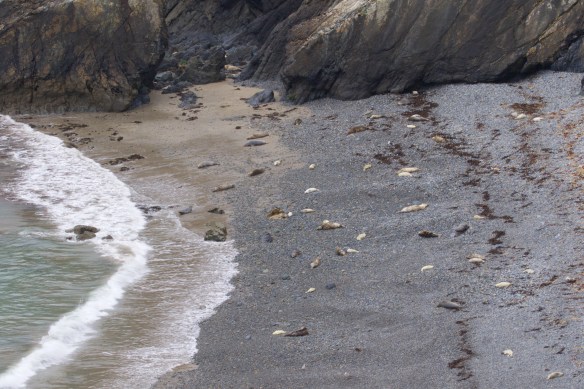
Ramsey is the largest pupping location in south-west Britain and around 500 to 700 born on its beaches each year between August and November. Walking around the island, the calls of the adults and pups can be heard coming up from the shoreline in most places and I could even hear them whilst I was lying in bed this morning.
5R0A8544

My time on Ramsey this year hasn’t just been spent looking at them for fun, I have also been helping with the ongoing monitoring work that the RSPB do. I have been helping out with two sets of work. The first involves taking photographs of the adults; the images are then uploaded onto a database which has pattern recognition software and can identify individual seals. This enables the seals to be tracked between different locations on Ramsey and much further afield.

The second monitoring task has been surveying the pupping beaches every three days. The surveys involve counting all pups, all females on the beaches, females in the water, all males and any dead pups (old or recent). The pups are also categorised according to a set of aged-related parameters:

  • Class I – new born – very loose baggy skin, wet/red umbilicus – 14kg
  • Class II – 6 to 10 days old – starting to fill out but still an obvious neck, no loose skin folds on the body
  • Class III – 11 to 15 days old – Outline rounded to barrel shaped, no wrinkles, no neck
  • Class IV – 16 to 20 days old – Patches of white natal fur moulted to reveal first-year pelage underneath
  • Class V – 21 days + – Fully moulted, independent and weaned – 45kg

It’s quite amazing just how fast the pups grow and that in just three weeks they are weaned and independent. Growing at an average rate of 1.5kg a day on the rich milk of their mothers, they soon turn from yellowy-white wrinkly bags of wet fur, through to miniatures of their parents.

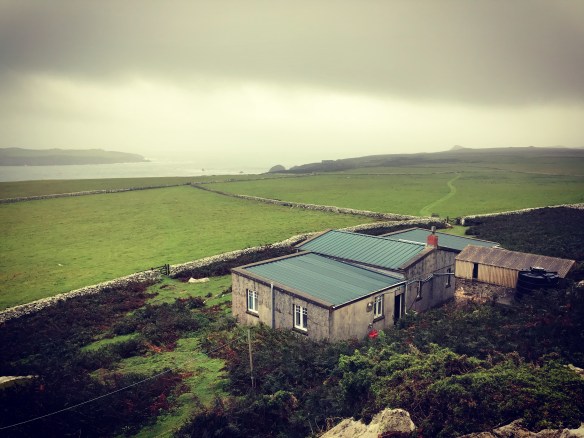
Aber Mawr, just south of the Bungalow where the volunteers stay, is the largest bay on the Island and also the largest pupping beach. The first count I did there revealed 91 pups but a few days later, following a storm, there had been a drop of nine. Compared to some of the storms last year, however, the pups got off quite lightly. Storm Orphelia, in October 2017, washed away many pups with the count across the Island dropping from 120 to 31. We’ll have to wait and see what further storms come their way this year.

5R0A8554 (1)

More to come on the seals…

A brief sunny spell…

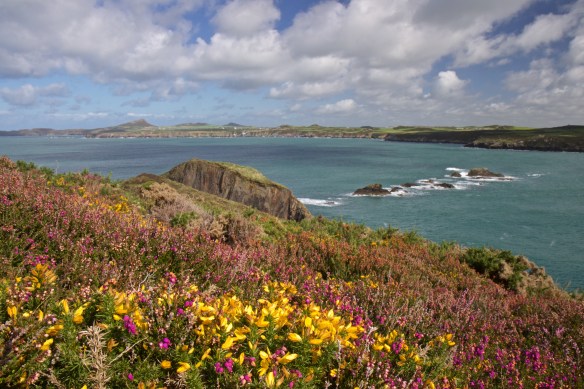
After what has seemed like endless days of cloud, rain and wind, yesterday afternoon turned sunny and in the shelter from the wind provided by the east coast slopes of Ramsey Island, it was momentarily summer again. I went out to take photos of seals on some of the pupping beaches – largely for scientific purposes – but I did get some nice more artistic shots of them and this scene below.

5R0A8843

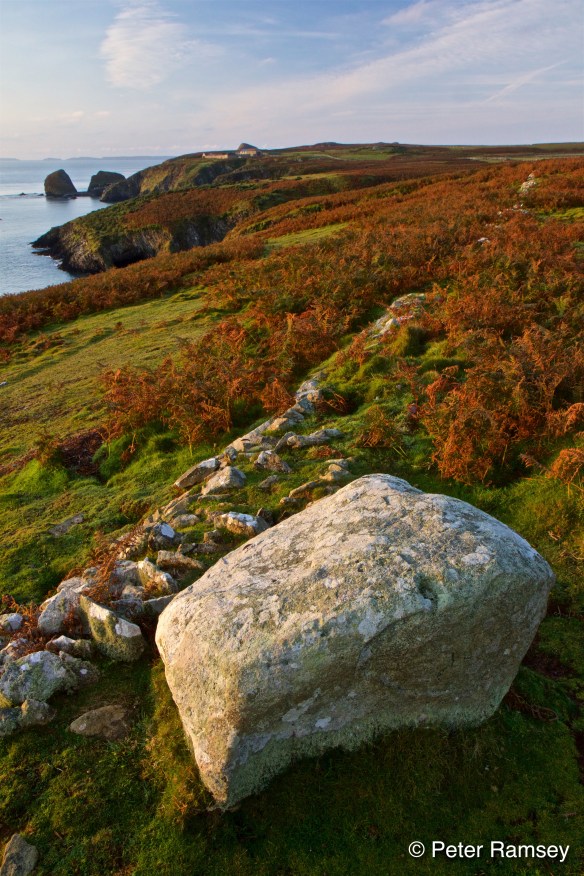
This shot is looking north-eastwards across the Bitches (the reef of rocks stretching out from the Island’s coast), and onto the Pembrokeshire Coast. In the left-middle distance are the two RNLI Lifeboat Stations and on the left is the small peak of Carn Llidi, with St. David’s head disappearing further beyond. There aren’t many flowers left blooming on the Island but there are a few pockets of gorse and heather still out in the early autumn sun.

September on Ramsey Island

Last year I was lucky enough to have an extra week on Ramsey Island, on top of my usual fortnight. I’ve been volunteering each year for the RSPB on the Island since 2012 but before that extra week, I had never stayed in September. Having enjoyed that week, I decided that I would book my fortnight this year in September too as opposed to my usual springtime stay.

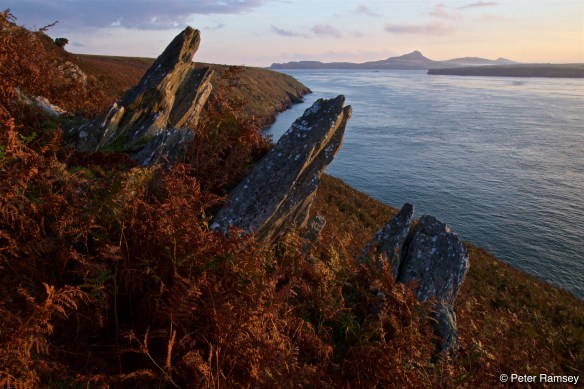
Ramsey Island in September is very different from earlier in the year. Gone are cliff-nesting seabirds and so have many of the other birds from the Island’s sheep fields and maritime heathland. All but the last few flowers have disappeared, with the final purple flushes of the heather dotted here and there. Even the bracken is falling over with the deep green turning to reds, oranges and rustiness.

I arrived on Saturday but there haven’t been any visitor boats since. Usually there are incoming boats at 10am and 12pm bringing up to 40 visitors each but the wind has been strong enough to prevent them from running, so there have only been four of us on the island for the past few days (Greg, the site manager, Alys, a student studying the seals and two of us volunteers). It looks like this will continue until at least Saturday with more wind forecast and the seas not having much chance to subside.

It’s been lashing it down with rain again today, so we spent time painting the Bungalow (where the volunteers stay) but we also went out to do the latest round of surveys of the grey seal pupping beaches – more on those in a later post.

I’ve been a little slow with my blogging of late but hope to have a few more posts before my stay is over…

IMG_0561

A short trip to Pembrokeshire

Last weekend I had a short trip down to Pembrokeshire for a spring day visit to Ramsey Island and a first visit to Skomer. Unfortunately, the weather got in the way and no boats sailed to Skomer on the first day and I had my shortest ever visit to Ramsey on the second. As always seems the case, it was a stunningly lovely day when I arrived on Ramsey but the weather from the previous day was still having an effect. Two volunteers were being taken across on the 10:00am boat and I caught a lift, only to be told an hour later that all boats for the rest of the day had been cancelled due to swell and I had to be taken off. My small island jinx this year seems to have struck again; I waited a whole week to get to St Kilda last month but failed due to strong winds.

However, there’s more to Pembrokeshire than simply the islands. I went for a wander along the coast path near to Strumble Head. Despite the wind and rain, the spring flowers were putting on a great show with thrift, spring squill, bluebells, cowslip, primrose and gorse all out on the cliff tops. The flowers were also out in the roadside verges and high hedgerows with the red campion particularly abundant. Pembrokeshire is blessed when it comes to the springtime and when the sun came out there couldn’t have been anywhere prettier on that May day.

I also sampled more of the local Pembrokeshire food, dining at St David’s Kitchen in the evening, including a plate of Ramsey Island mutton, and had great fish and chips from The Shed at Porthgain – the best I’ve had in a very long time.

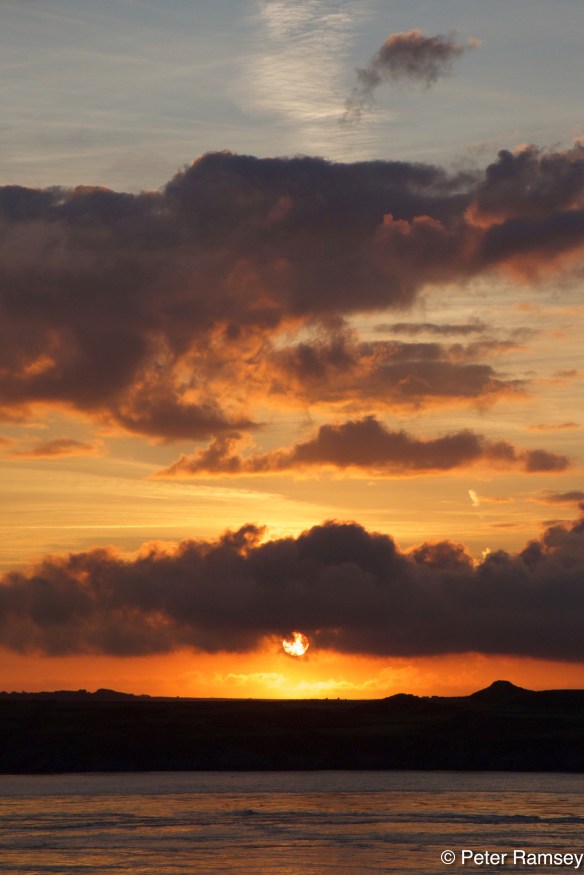
St David’s was also looking it’s best and the sunset on my last evening was spectacular…

IMG_8747

Pembrokeshire really is a hidden gem; it’s like Cornwall, but without the crowds.

Back again…

I feel privileged enough as it is to spend a fortnight each year volunteering on RSPB Ramsey Island but this year I’m luckier still – I’ve just landed for an extra week! It might be a short stay as I’ve arrived a day late, due to strong winds yesterday preventing the boat from running and I may have to leave as early as Thursday for the same reason. However, it’s just great to be back and to see the Island in its autumn colours.

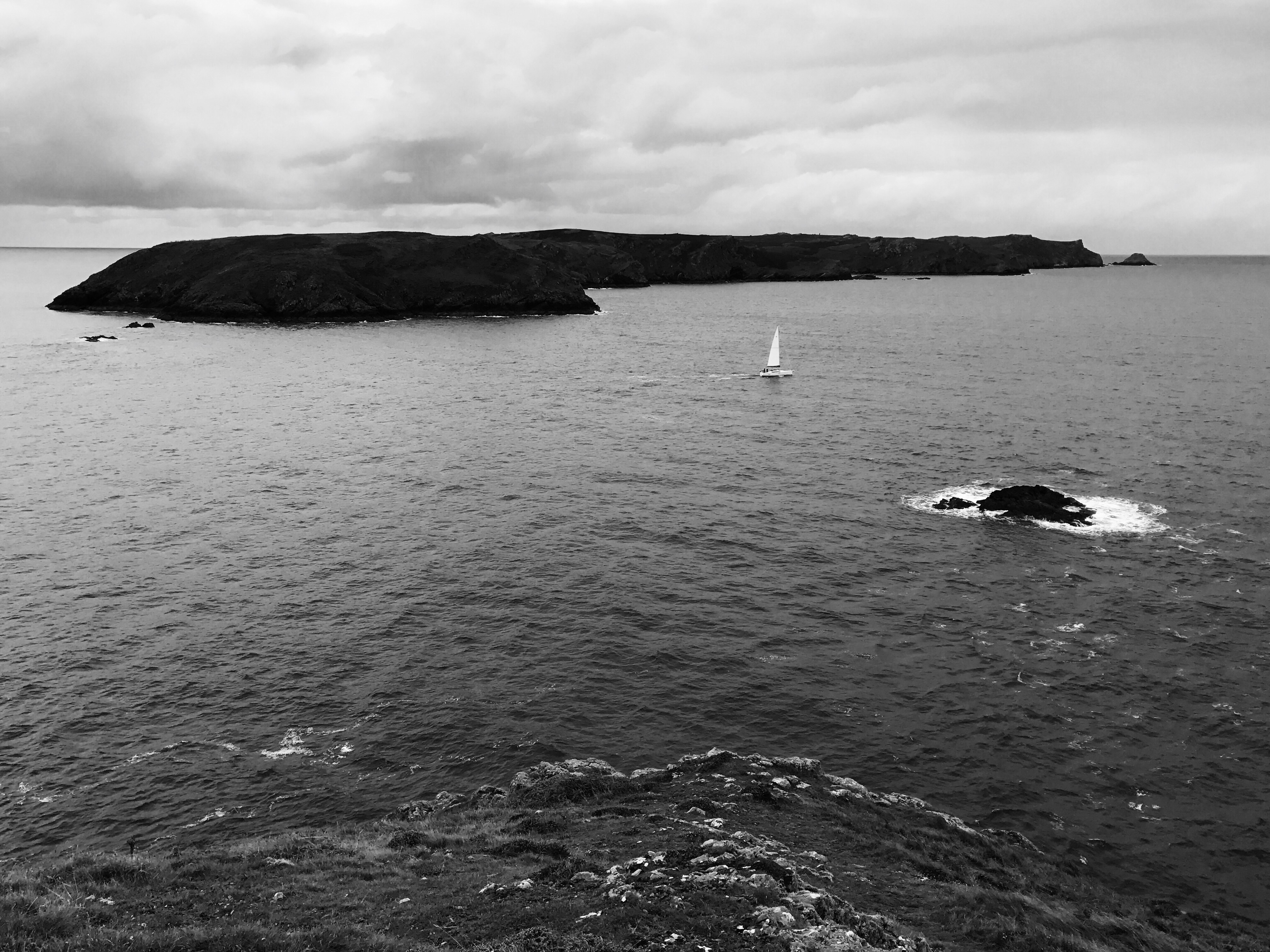
With a day to spare in Pembrokeshire yesterday I spent a few hours touring around parts that I have only previous seen from a distance while on the Island. It was a dark and foreboding kind of day for the most part so the photos below are all in black and white.

Working with the sheep

One of the great things about volunteering on Ramsey Island is the chance to get involved (even in a small way) in the running of the farm, and in particular looking after the sheep.  During my last two stays shearing took place, and last year I helped to round the sheep up and separate the ewes from their lambs ready for the shearers to do their stuff.  Today, the ewes were given their anti-fly treatment and had to be rounded up with their lambs from the nursery fields and taken into the barn.  Dewi, the island sheepdog (and without doubt the best dog in the world!), did most of the rounding up, although I did play the role of sheepdog in one field and ‘expertly’ drove a few ewes and their lambs to join the rest (and without as much as a ‘come by’ or ‘away’ having to be shouted at me!).

Here’s a few pictures…

Giving nature (Manxies) a home

Ramsey Island is home to a wide range of wildlife; small and large, rare and common.  At present, however, significant efforts are going into, literally, making homes for one particular species; Manx Shearwaters.

When Ramsey was bought by the RSPB in 1992, there were only around 500 pairs of Shearwaters nesting on the island. The presence of rats had reduced the numbers of this species, and of other ground nesting birds, to levels far below those on the nearby rat-free islands of Skomer and Skokholm.

Back in the winter of the turning millennium, a successful rat eradication exercise was undertaken on the island. Since then, the benefits of doing so have shown in the increasing numbers of ground and burrow nesting birds. The last survey of Shearwaters, undertaken last year, and ‘helped’ by me, revealled that the upward trend was continuing with nearly 5,000 pairs recorded.

Whilst the increasing numbers of Shearwaters is very positive news, there’s still much work to do.  Monitoring the population remains a key activity for the RSPB on Ramsey and this task is made easier by constructing nest boxes through which easier access can be gained to the birds while they are breeding.  The birds usually nest at the far end of rabbit burrows and this makes them tricky to get of off but the nest boxes, with a door in the roof, make the job very simple. The monitoring includes checking on the health of the birds as well as ringing them.

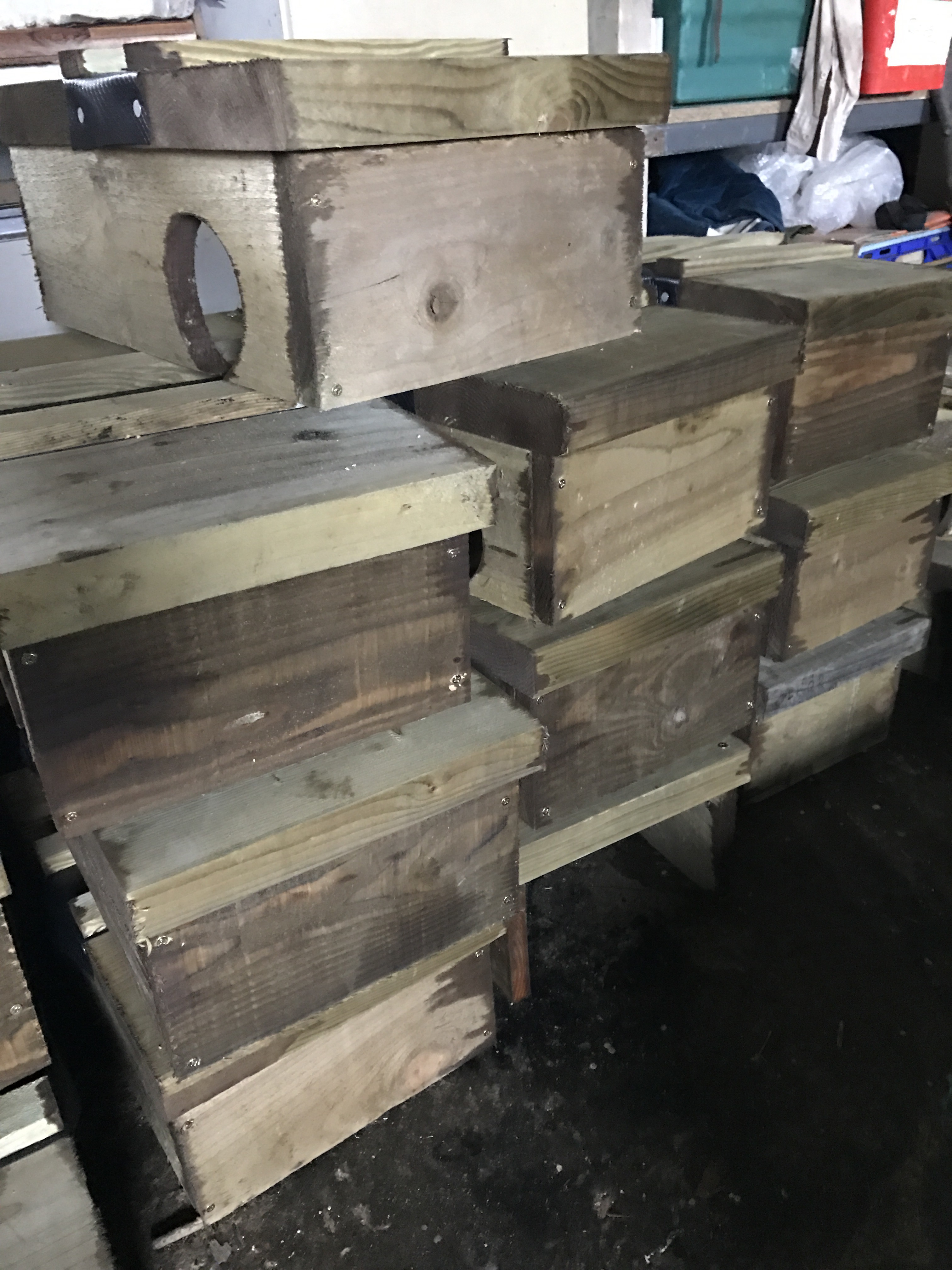
One of my first jobs on the island this time was to help make nest boxes, some of the 100 to be installed on the island’s sheltered east coast.  They’re relatively simple wooden boxes to build, with three of the four sides enclosed, one of the longer sides having a round hole cut into it, no bottom, and a thick roof, one half of which is hinged to give access for monitoring.  Once installed, the round hole is fitted with a three-foot long tube through which the Shearwaters reach the nest chamber.  In total, I put together 11 boxes and they’re now waiting to be installed.


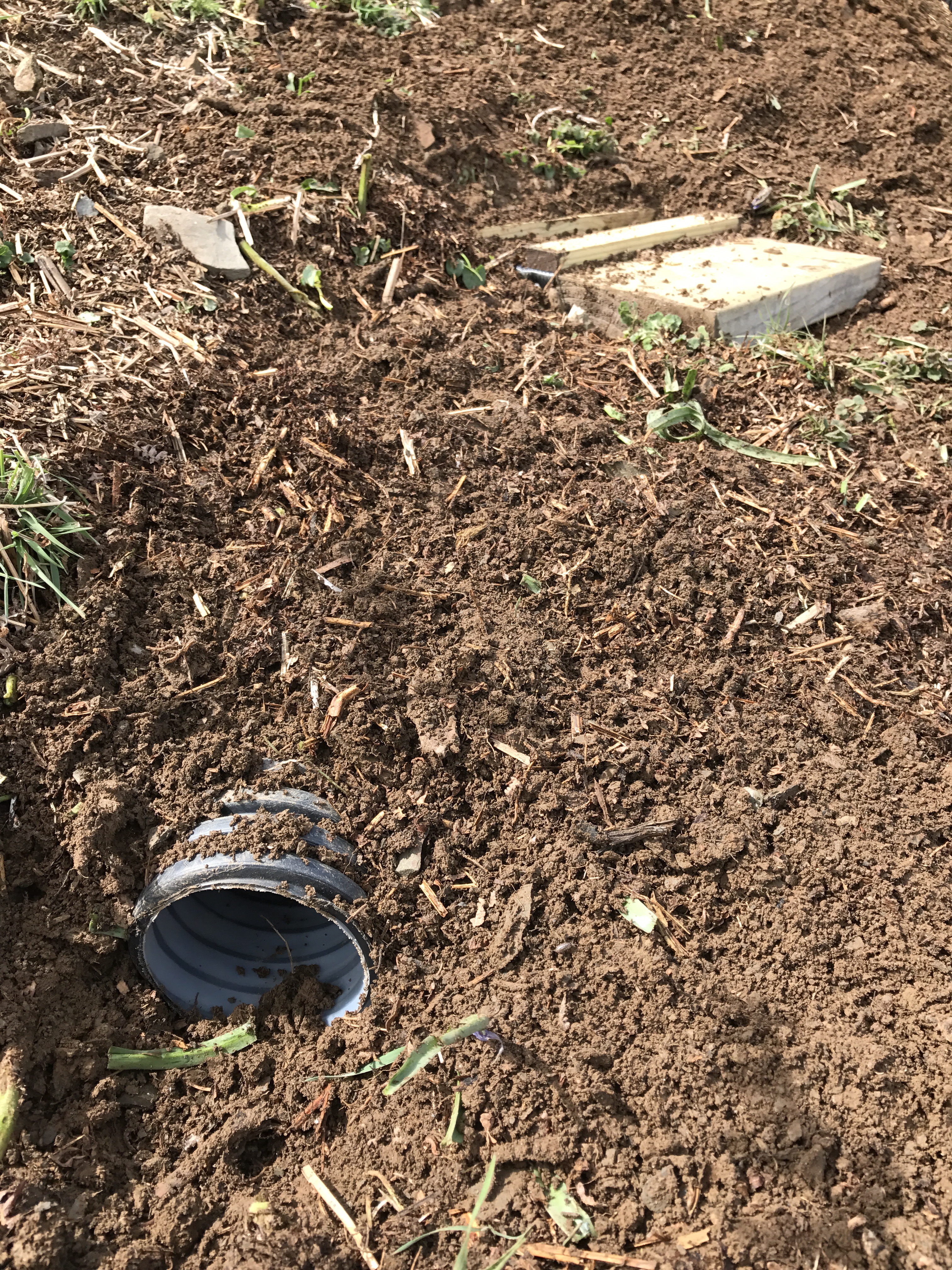
During the last couple of afternoons, we’ve spent a while out on that east coast and installed more than a dozen boxes.  The installation is also quite straightforward but requires a bit of hard graft. A hole just large enough to ‘plant’ the box is dug in the sloping side of the island, deep enough for the front of the box to be nearly flush with ground level. With the box in place, a channel is dug from the hole in the side and the is tube installed. All that is required then is for the back half of the box and the tube to be covered with soil and the job is nearly done. The last touches are to put some soft nesting material on the bare earth beneath the box and put up a small piece of bracken at the box end of the entrance tube; if this gets knocked over, it’s a tell-tale that the box has been visited by a Shearwater (or one of those pesky rabbits).


I’ve installed four boxes so far, and they’re more to be done.
One of the aspects of a stay on Ramsey that makes it so special is lying in bed on a dark night and listening to the odd chuckling and gurgling sounds of the Shearwaters as they come back from the sea and head to the burrows.  Hopefully, making homes for them will help to play a role in further increasing their numbers and make the nocturnal sounds on the island even more special.