After seeing a large gathering of swallows on powerlines yesterday, this afternoon our garden has witnessed perhaps dozens of swallows and house martins in the sky above.
It has been a lovely summer’s afternoon spent mostly in a hammock or deckchair under our magnolia tree, listening to and watching the birds darting, chasing and circling above us. At one stage around ten swallows gathered on a TV aerial next door to noisily chatter to each other while a smaller group seemed more intent on heading southwards. The sky certainly has been busy with hirundines and perhaps some signs that summer of birds is drawing to a close.
However, we will still be left with our residents. The red kites and buzzards have been drifting over, crying out as they pass. A pair of ravens played in the breeze on their way up the valley. We also had a bullfinch drop buy, a bit of a rare site in our garden.
The weather has been much more like a good summer over the last few weeks and the next seven days look good too. So I’m hoping that the swallows and house martins stay a little longer and we can enjoy the sites and sounds of summer for a little while more.
Our annual trip to Sweden has come to a close again and as usual it provided a stark reminder of just how nature-depleted the UK is. A thought I’ve had since I returned was how glad I am to be living in a rural village rather than a city; the contrast would be even greater and my gloominess about the state of nature in the UK even worse.
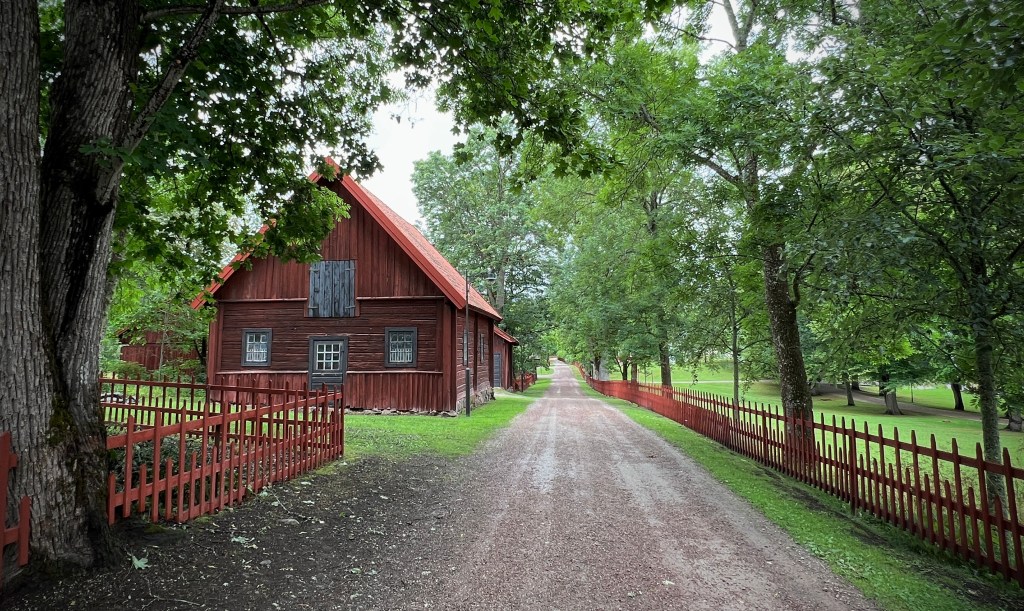
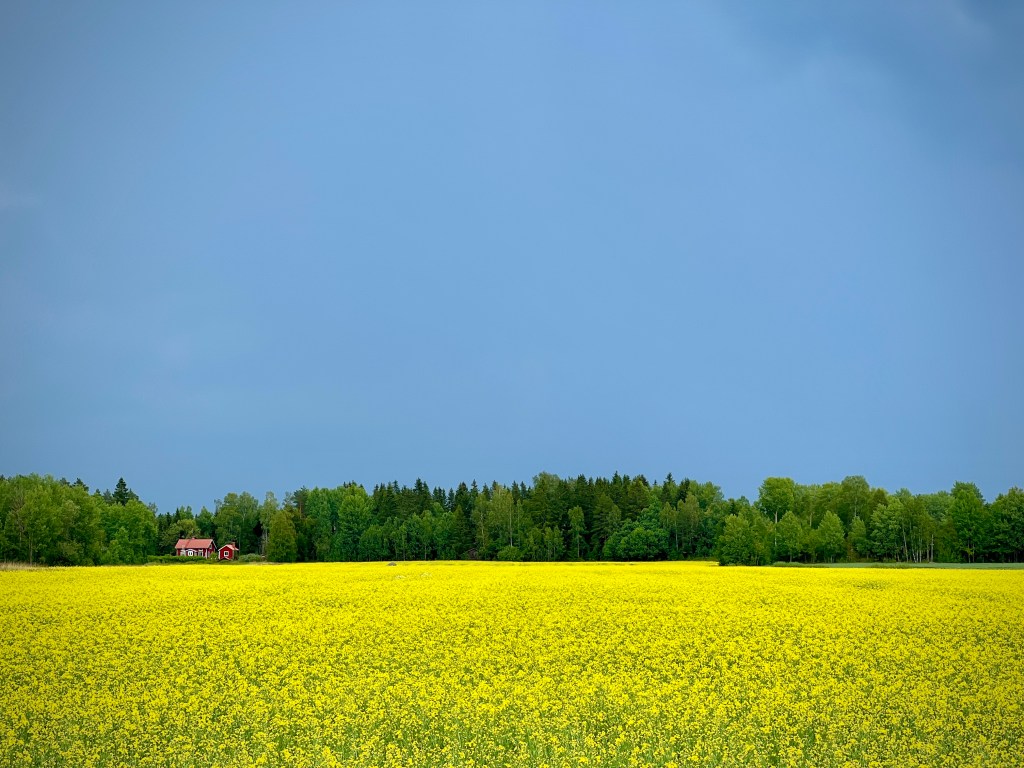
We are fortunate to be able to stay in a very lovely Swedish summer house out amongst the forests, meadows and lakes of central Sweden, about 125km north-west of Stockholm. The location is on the break between southern and northern Sweden; just a little further south, the landscape opens up into large arable fields and further north the forest cover is much greater. Our home for a week or two each year, feels a little softer where the influence of agriculture is lighter and the wild a little more, without being deep wilderness.
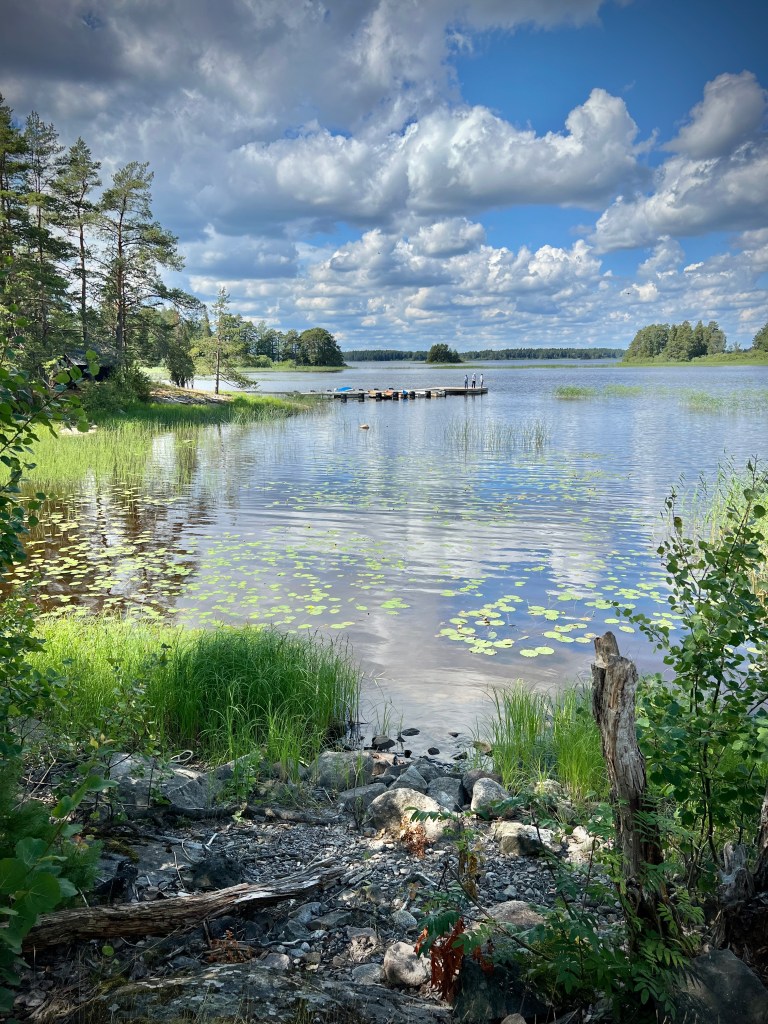
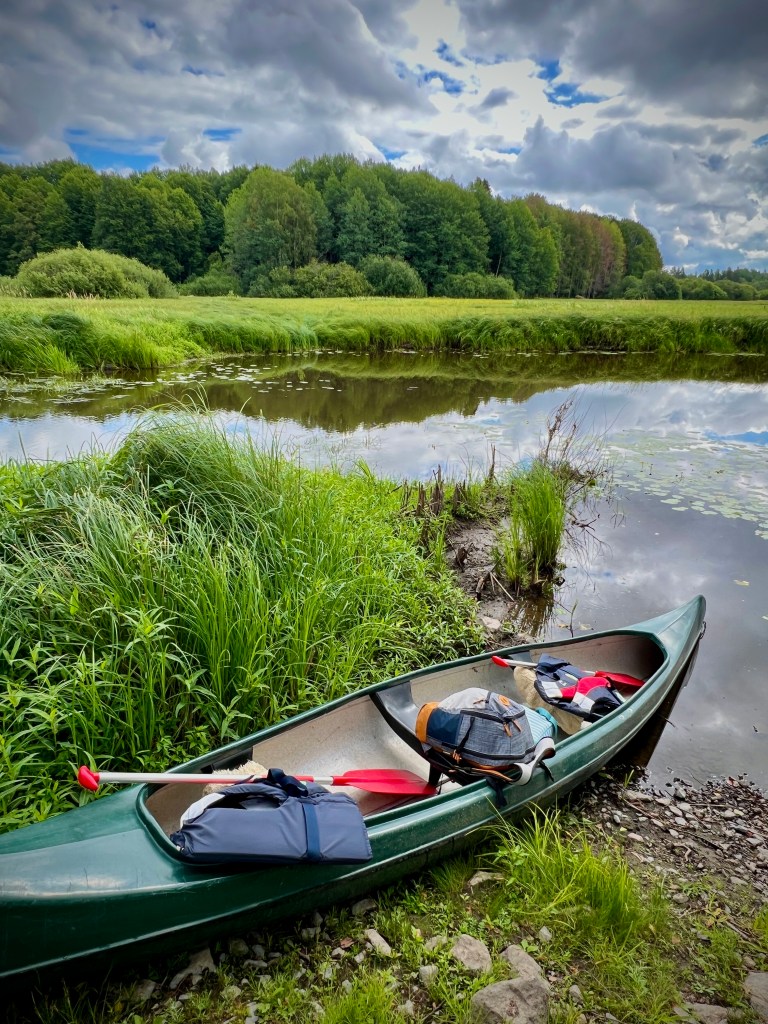
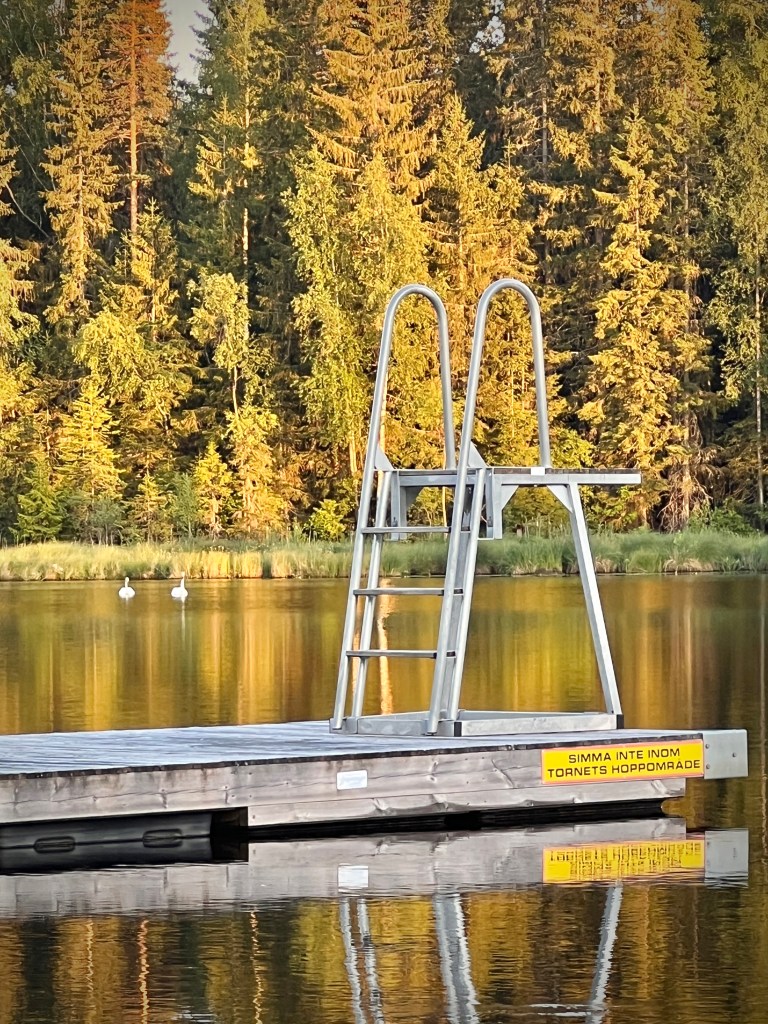
Over the course of the week, we went canoeing on a nearby river, went swimming on the local lake just a short amble from the summer house and we visited the national park an hour to the north. Each of these activities was accompanied by wildlife but even just sitting on the deck at the from on the house brought wildlife sights and sounds.
Whilst the birdlife in this year’s trip wasn’t as plentiful as last year – two weeks in June being more productive than one week in July – the birds around the house still provided some little stars including marsh tit, willow tit and the very lovely crested tit, and on a few evenings we saw roding woodcock on an aerial ‘racetrack’ above the tall treetops.
As shown in a previous post, the mammals in the garden included brown hare, badger and fox but this year we missed seeing any red squirrels and we didn’t spot the beavers down on the lake. We did see plenty of roe deer, including one doe with two fawns, as we drove through the countryside but we weren’t as fortunate as my sister-in-law who saw a cow and calf European Elk as she drove home from work on our last day.
Out on our canoeing trip, the raptors were the stars of the show with a distant and very high white-tailed eagle, a hobby exploding from a reedbed, a honey-buzzard drifting slowly past and two ospreys circling above us as we paddled across a lake.
Swimming in the warm waters of the lake has quickly become my favourite activity of a Swedish holiday (after only learning to swim well in the last few years). In turn, my favourite part of that is to float on my back and watch the swifts chasing around the skies above and the dragonflies hawking over the water’s surface.
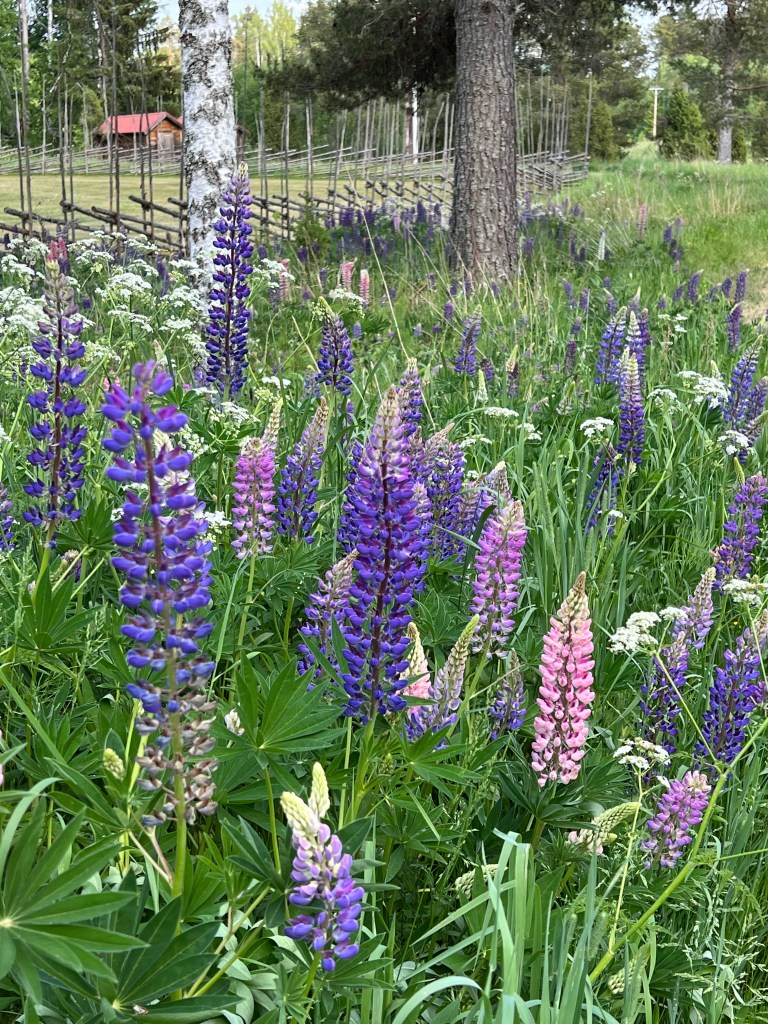
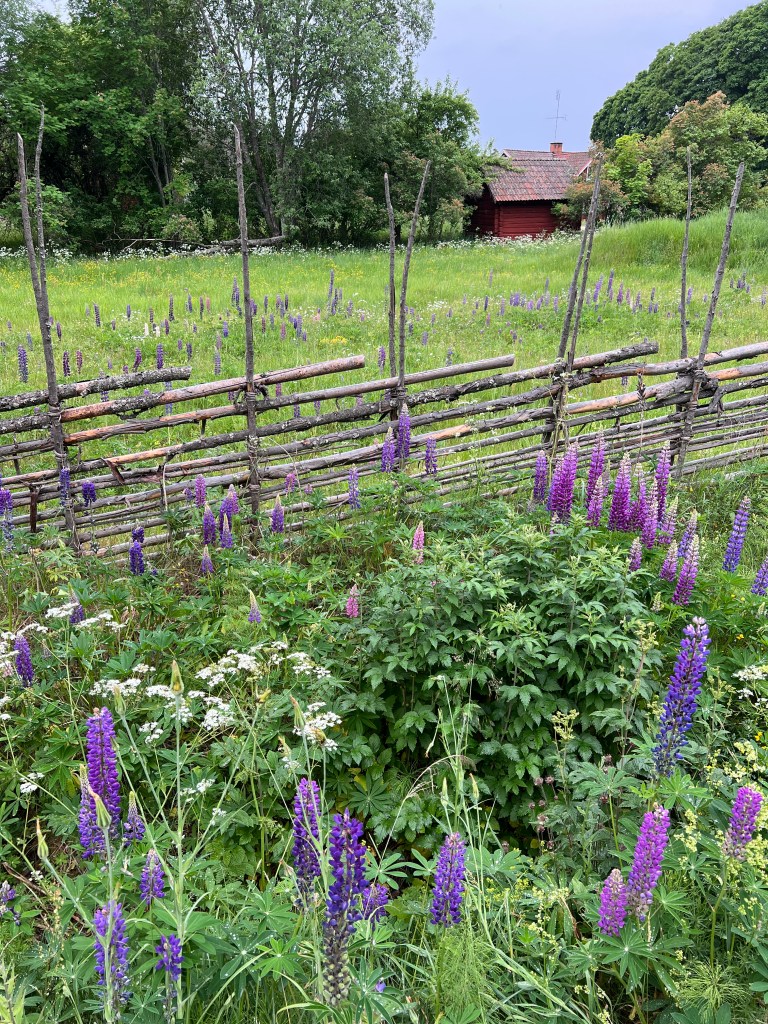
Our stay wasn’t all birds and mammals though as we had a very good view of a sunbathing adder as we walked through a lovely bit of forest after we had cooked sausages on an open fire in front of one of the wind shelters that are dotted around the countryside. The wildflowers seems more plentiful than at home in Northamptonshire, the roadside verges packed with flowers of many kinds although the lovely, but invasive, lupins were mostly well past their best.
All this nature, that was so easy to find, is in stark contrast to nature at home. To be fair, Sweden is a much bigger country and one fifth (or so) of our population, so the human footprint is always likely to be bigger in the UK. However, the tolerance of larger wild animals is much greater (albeit not without its debates), the use of chemicals in farming appears less and the almost unstoppable desire for ‘tidiness’ in the countryside does not seem to be present. Overall, the balance of human control over natural processes seems far less and as a result wildlife and wider nature are far better for it.
I wrote a post a few years back about my ‘yearning for nature’ and each trip I take to Sweden makes that yearning for wild places and an abundance of wildlife even greater.
Just to make a bit of a mockery of this post, most of this post was written sitting in my sunny back garden, on a warm summer afternoon, when a fox jumped onto and walked along the top of wall opposite, swifts, swallows and buzzards were in the sky above and I could hear green woodpecker calling from a nearby tree and a red kite crying in the distance. It’s not all bad in the UK and my little corner of Northamptonshire has quite a lot of wildlife, but it’s just not as rich as I wish it was.
I’ve been struggling to keep up my early morning wanders down the lane to the fields. I’m not quite sure why; I’m a creature of habit and I haven’t yet secured a walk into my morning routine.
This morning I pushed myself out of the door as it was such a lovely, bright and sunny dawn. I was rewarded with the sight of a fox trotting up the track towards me. We stood there for a few moments staring at each other and then it turned tail and scampered back down the track and off into what was the poppy field.
These are the kind of brief moments such walks are made of – I really must make them frequently.
Like many may have lately, we have looked at some of Dr Michael Mosely’s books. This morning I took one bit of his advice and headed out for an early walk down the lane and then around part of the village.
It was a cracking start to the day with not a single cloud in the sky and very little chill in the air. The bright sun intensified the colours of the scenery and the only sounds were of an array of birds and my feet treading on the sandy track and village tarmac.
I was rewarded with a very special moment. Walking up one of the little villages lanes, the ironstone church was lit up, almost orange in the sun. Flying and chasing around the steeple were ten or so swifts. At first they flew silently, sometimes slowly on their flickering wings and other times chasing in small packs circling the tower. Then came their screams; the sound I long for all winter and which lasts in our skies for far too few summer weeks. I stood there for a few minutes lost in the screams and effortless wings; a short spell cast by this perfect midsummer moment.
My lunchtime walk yesterday took me to the fields at the end of the lane. After looking over the sheep in the shallow valley, I turned back to wander home but was stopped by a single poppy, its sharp red standing out amongst the surrounding greens. As I walked up the slight rise into the field opposite I came across a view that brought immediate joy and brushed away the generally grumpiness of the hours before.
It wasn’t a stunning red carpet but a softer scattering of poppies amongst the other plants in the field. It gave the impression of a past times when poppies might appear anywhere in the arable fields when they weren’t so finely managed to remove any competition from the farmed crops. We have found fields a few miles away purposely sown with wild flowers which have much great spectacles of blooming. However, this little spot at the end of a quiet lane, hidden away and out of sight, felt more natural and out of the hands of man.
There were quite a few more poppies yet to flower, so I’ll be making more lunchtime trips over the next few days…
Out on a cycle last week I spotted a field with wildflower border but not a lot seemed to be blooming. Returning to the same spot today, we found a view of blooms laid out before us with perhaps a lot more to come…we’ll be returning over the next few weeks to see how the field is getting on…
With the weather finally giving us some relief from the seemingly endless rain of the past many months, I’ve started to explore on my bike some of the off-road routes in the countryside surrounding my home.
I tend to be a road cyclist these days although in my younger years I did enjoy mountain-biking but trips were few and far between. Where I used to live in Cheshire, it never really crossed my mind to search out alternatives to the tarmac country lanes, save for the occasional ride down some of the nearby canal towpaths. However, here in Northamptonshire where I now live, it seems there are more opportunities to get off the roads and onto routes away from the traffic.
A mile or so from our village is the Brampton Valley Way which is the former railway line between Northampton and Market Harborough. It provides a 14-mile off-road route through the countryside with fairly frequent places to join or leave it. This route is a spine through the area which I’m now using to link to other traffic free corridors.
Now that we’ve had a reasonable amount of dry and warm weather, the off-road routes are starting to become less muddy, opening up more choices of route. I’ve been looking over the Ordnance Survey maps of the area and it seems to be cross-crossed not just by footpaths, which can’t be cycled on, but also by bridleways and byways, all of which provide possible cycle routes.
So, over the last couple of weeks I’ve tried out some new routes and have been rewarded with some little hidden gems of vistas, some lovely moments with wildlife, and more peace and quiet away from the roads.
If the rain keeps away sufficiently, I’m hoping the summer can be one spent finding more quiet corners and less visited corners of the countryside.
As spring turned to summer, our trip to Sweden in the second half of June once again revealed the richness of the country’s wildlife. Our stay in a summer house in the Swedish countryside enabled us to wander locally and further afield in search of birds, mammals and insects in a variety of landscapes.
The summerhouse is located about a third of the way up the country and around 125km north-west of Stockholm. It lies in an area where southern Sweden transitions into the north, a region of forest, lakes, meadows and bogs.
As always, the gardens and forest around the summerhouse provided a lot of wildlife watching. The warblers were a constant throughout our stay with willow warbler perhaps the backing soundtrack to each day. However, the other warblers were also prominent with blackcap, garden warbler and chiffchaff frequently heard. During the trip we also saw common and lesser whitethroat on our travels.
The area around the summerhouse is also good for a range of small birds including tits (blue, great, coal, willow and, my favourite, crested), nuthatch, treecreeper, house sparrow and tree sparrow and quite a few finches including chaffinch, greenfinch, bullfinch, goldfinch and siskin (in the image below). The garden also had frequent visits from both pied and spotted flycatcher as well as the occasional roding woodcock.
Mälaren, the great water body of interlinked navigable lakes that reaches inland from Stockholm, is about 55km south of where we stay and there are two lovely nature reserves reaching inland from the shoreline, one either side of the large town of Västeras. We visited both Asköviken, to the west, and Ängsö, to the east, for the first time. Both reserves have reedbed and grass marshland against the coast with old oak woodland behind. Oaks are not typical of what we might imagine Scandinavian woodland to be. However, in Southern Sweden, oaks in mixed woodland can be found in many places, and I’ve been to a few.
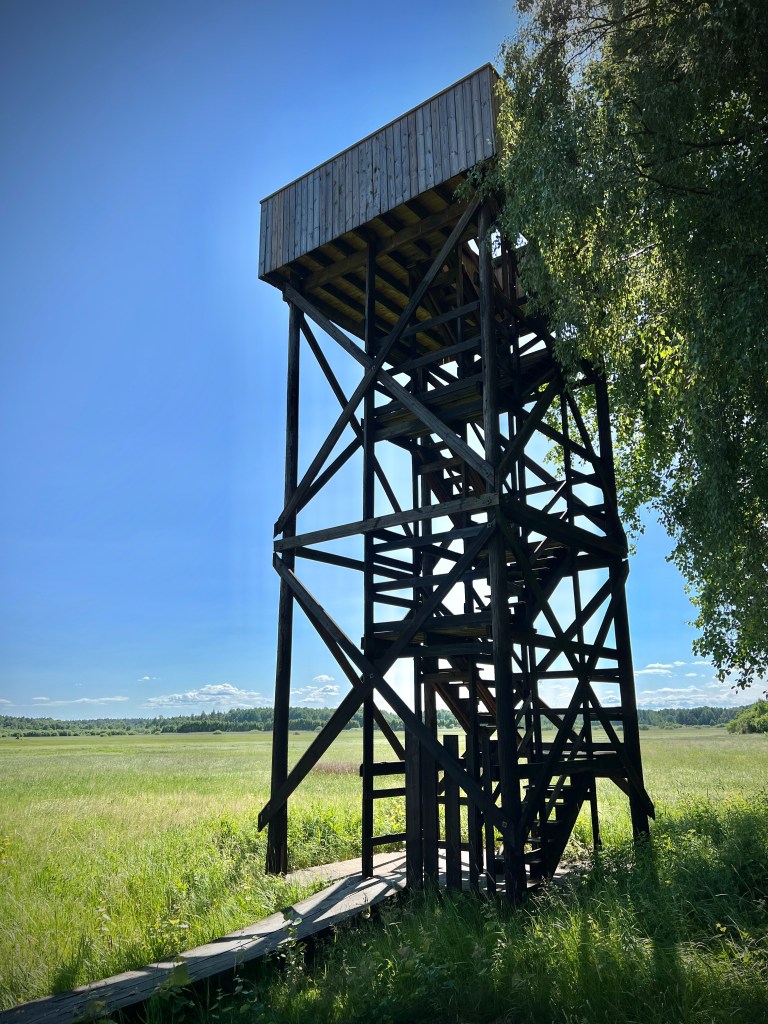
Both visits to the nature reserves provided rich pickings for birdwatchers, with Asköviken particularly memorable. Walking out to the bird tower on the water’s edge we came across tree pipit and red-backed shrike, and as we approached the tower heard a call somewhat like a parrot but it turned out to be my first ever icterine warbler. Normally, these birds are very hard to see and it seemed this one would live up to that reputation, however, once we were at the top of the tower, it flew into the top of a nearby tree where is stayed and called for quite a while (picked out in the image below).
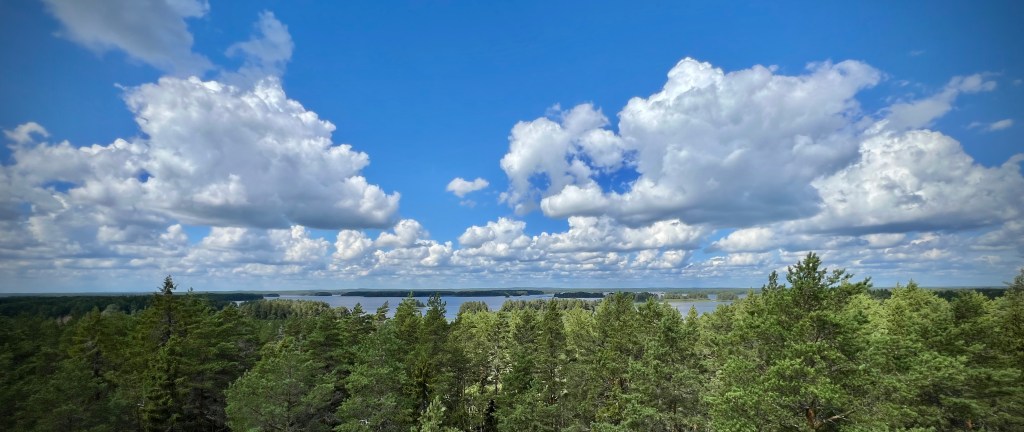
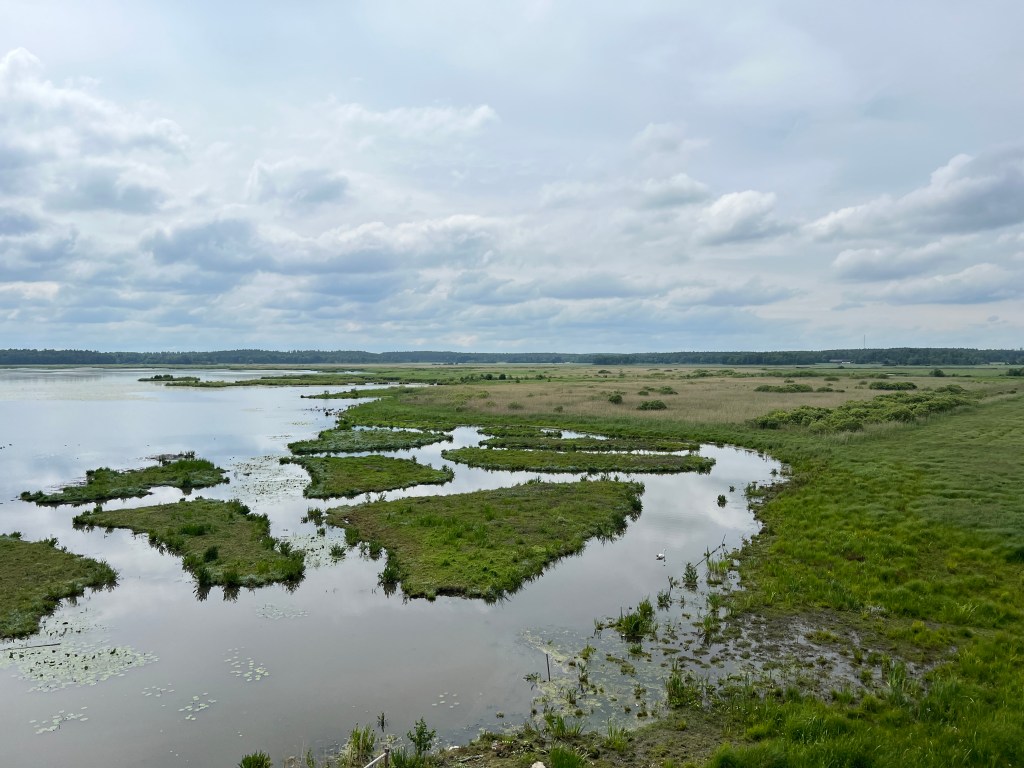
The bird tower gave us views out into Mälaren over the shallows and small, low islands. There were plenty of greylag geese and a few different ducks. The only waders we saw immediately were lapwings but after a while we saw two summer plumage spotted redshanks in the distance. Even further out, we saw the unmistakable silhouettes of two white-tailed eagles. They were both hunting and eventually dived down to an island and didn’t reappear. On the way back, I had another first as we walked through the woodland. A bird flew up from the ground and into a track-side tree. At first, I thought it was a thrush but looking again it turned out to be a wryneck, and a pretty grainy photo (below) confirmed it.
Amongst other woodpeckers we saw during the trip we green and great-spotted, and we heard a black woodpecker. We also saw a lesser-spotted woodpecker at Ängsö, the first I’ve seen since a winter trip to Poland in 2018.
One of my favourite places to visit within an easy distance of where we stay, is Färnebofjärden National Park and we took another couple of trips up there for to look for wildlife. We had intended to go to grill sausages at one of the riverside fireplaces but the lack of rain over the preceding months had led to tinder-dry conditions and a fire ban. However, we went anyway and we’re rewarded with a short view of a goshawk as it disappeared into the forest after crossing the water. On a second visit to the National Park we saw another white-tailed eagle from the bird tower at Skäkersbo as well as crested tots high up in the surrounding trees.
The trip overall was quite good for raptors. On top of the white-tailed eagles and the goshawk, we saw buzzard, kestrel, sparrowhawk, osprey (including three in one view) and hobby. I do usually see marsh harrier and sometimes red kite but not this time.
We also found a new spot to look for wildlife, to the south of the National Park, at Österbo, where there is a 700m boardwalk crossing what is usually a wet water meadow. On our visit there was little sign of water and little wildlife, but I suspect it’s a good location for migration stopovers for wading birds, waterfowl and cranes. We’ll have to go back in spring or autumn to check.
On the way back to the summerhouse, we very fleetingly saw a third and final ‘first’ in the form of a hazel grouse which flew in front of the car and landed on a track as we drove down a fast main road; unfortunately we couldn’t stop.
I’ve said before on my blog that my greatest interest in wildlife is actually in mammals rather than birds. Sweden’s is much richer in it mammalian life than the UK is, showing how our islands once were, a long time ago, and perhaps could be once again (but probably not in my lifetime).
We didn’t have any real standout mammal moments on this trip but we did see a few; albeit some being on our trail cam. We put it the camera out at night, both at the front of the summerhouse and in the forest immediately behind it. We recorded roe deer, red fox, red squirrel and badger but unfortunately, unlike our last stay, we didn’t record a passing European Elk. We also saw brown hare in the area around the summerhouse. As in 2022, we got good views of beaver at the nearby lake, but unlike last year, these weren’t every night and we didn’t get as close views.
There were reptiles too with two types of snake. We saw a grass snake as we swam in the lake at the summerhouse and an adder as we walked along the forest tracks. We sometimes see slow worm in the garden but not this time.
We also spent a little time looking for insects and specifically looked out for one type of butterfly, finding a poplar admiral along a Dalarna forest track. On our first evening at the summerhouse we also saw a swallowtail. We were also pretty amazed by the sheer number of dragonflies and damselflies as we swam in the lake. Mating pairs would be hounded by packs of followers around our heads.
While seeing some birds for the first time is always nice, these weren’t the best wildlife memories of the trip. There were the swifts racing overhead as I swam in the lovely warm lake, there were the haunting calls of the black-throated divers as we relaxed by our waterside tent and, finally, the bugling of cranes echoing around the forest as we sat outside one evening. These were all quite magical moments that you get only from immersion in nature, even just for a few minutes.
All in all, we saw or heard 95 species of bird over two weeks, which I think must be a record for any holiday I’ve had except for guided trips to Africa.
We’ve been having a quiet weekend after quite a few busy ones over the last couple of months. Not wanting to be stuck inside, despite the pretty poor weather for July (is it ever going to stop with the endless stream of showers and heavier rain?), we made a short trip to the nature reserve at Pitsford Water. As we made our way to the first larger hide in Scaldwell Bay, we met a birdwatcher who said he’d seen a black-necked grebe. After a little looking around with our binoculars, it couldn’t be seen, so we wandered off. A few hundred metres further on, we stopped and scanned the water’s edge some more, and there it was floating and diving in an area that had been hidden from view earlier. As my first black-necked grebe, this was a good return on a quick trip to the reservoir.
However, we wandered on to the hide and saw a big group of cormorants on the old tree stumps at the edge of the water and small numbers of black-headed gulls, with their summer plumage starting to fade. Sadly, we didn’t see many common terns at all, and I wonder whether they have been hit by bird flu this breeding season, as there were many more when we visited earlier in the spring. Hearing their calls has become one of my favourite sounds of the summer when visiting Pitsford.
As we left the hide we came across a nice patch of brambles and thistles with really good numbers of butterflies feeding on the flowers – peacock, gatekeeper, painted lady, comma and large white – as well as large numbers of damselflies. Just as we turned to leave we also heard a marsh tit calling from the trees beyond – I still haven’t seen one this year but heard quite a few now.
As we headed home, it began to rain again, still no sign of a settled spell of summer weather.
















 Daft Mumblings