A cracking new frame for Manchester Town Hall – need to try a few new angles…
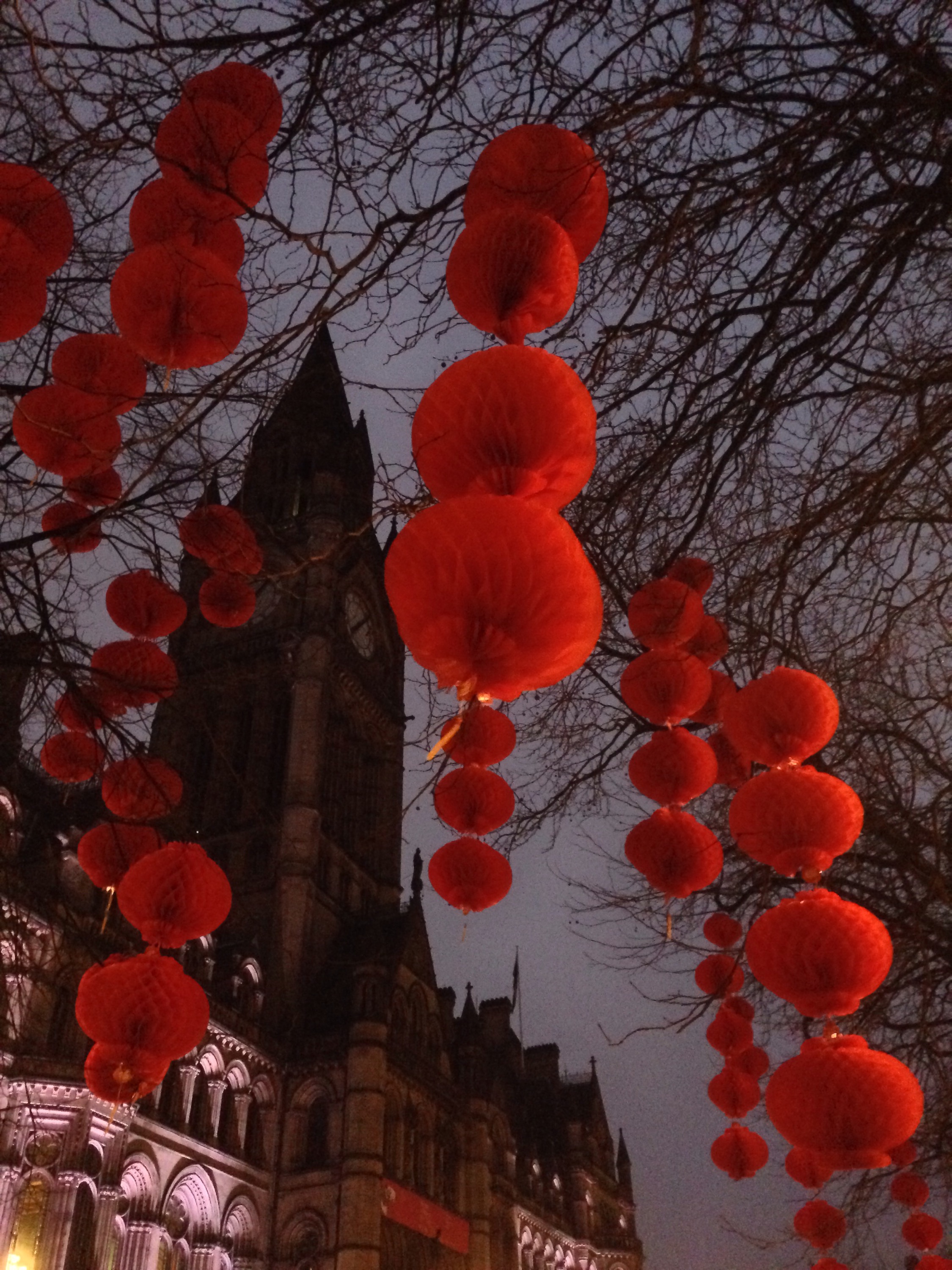

A cracking new frame for Manchester Town Hall – need to try a few new angles…
For the first time in ages (probably two months), the sun was still shining when I left the office today – despite the temperature, maybe spring is on its way!

In a previous post about my trip to the Falklands, I wrote about the mammals of the islands (and great they are too!) but I have to write about the birds too. The Falklands, quite simply, must be one of the most amazing birdwatching locations in the world and not just because of the penguins.

I have to admit here that I do keep a list of birds I see, but as part of a larger list of wildlife I encounter each year including mammals, reptiles, amphibians and butterflies. My target was to see at least 50 species that I had never seen before and I very nearly got there. I saw 52 species on the islands but these included three that we have in the UK; peregrine, house sparrow and mallard (the latter two were introduced by settlers). So 49 wasn’t a bad final total and, if added to the two species I saw on Ascension Island (common myna and yellow canary), I got just over my target (if cheating a little).

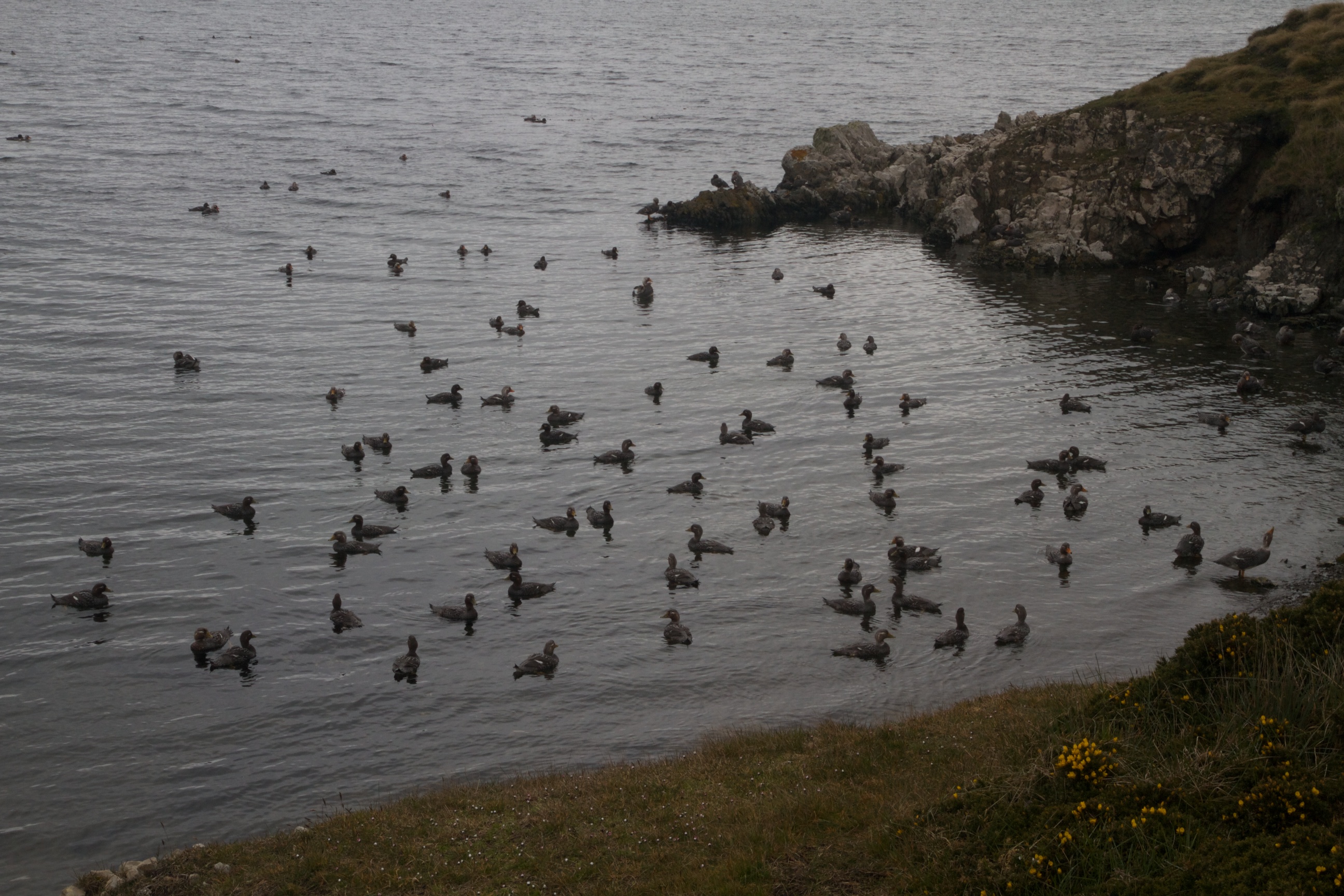
In someways, the Falklands is a bit like another place I have visited for the wildlife, Iceland, as there is not a huge number of common species but the islands have a mass of individual birds to make the place spectacular. The birds are also very tame and have almost no fear of people, which makes getting up close (within limits) very easy. Being a group of small islands in the middle of the South Atlantic, you might think that seabirds would dominate but there is also a good range birds associated with freshwater and inland areas. It’s very difficult to know where to start describing all the bird species so I will mention just a few; the highlights! Geese were everywhere on the islands, and of the four species, the upland goose is the most ubiquitous (and quite tasty – I had upland goose pate a couple of times). The steamer ducks including the flightless Falkland species are also widely seen and they are part of the typical island coastal scene.


There are few raptor species in the islands but those that are there can be spotted quite frequently. Turkey vultures are seen more than most and it’s common to see small groups of them circling high above the settlements while others are found alone, quartering the long grass. The variable hawks are in many places and, like buzzards, seem to like sitting on the top of high perches like telegraph poles. Peregrines are less frequently observed but I had a dusk encounter with one when I was wandering back from the rockhopper colony on Saunders Island; it circled slowly around me, checking me out, before landing a short distance away. It let me get very close before it took off and disappeared over the hill.


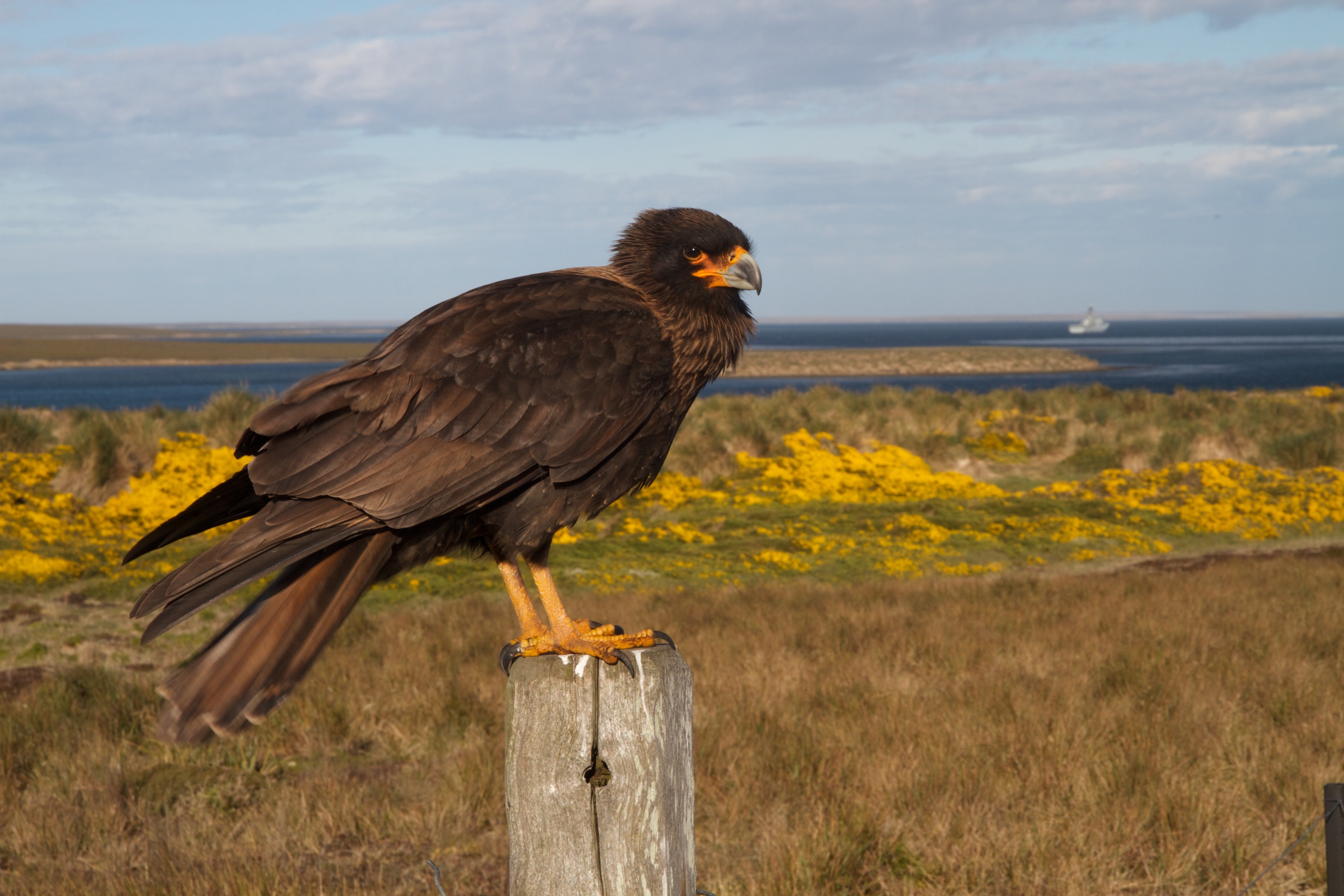
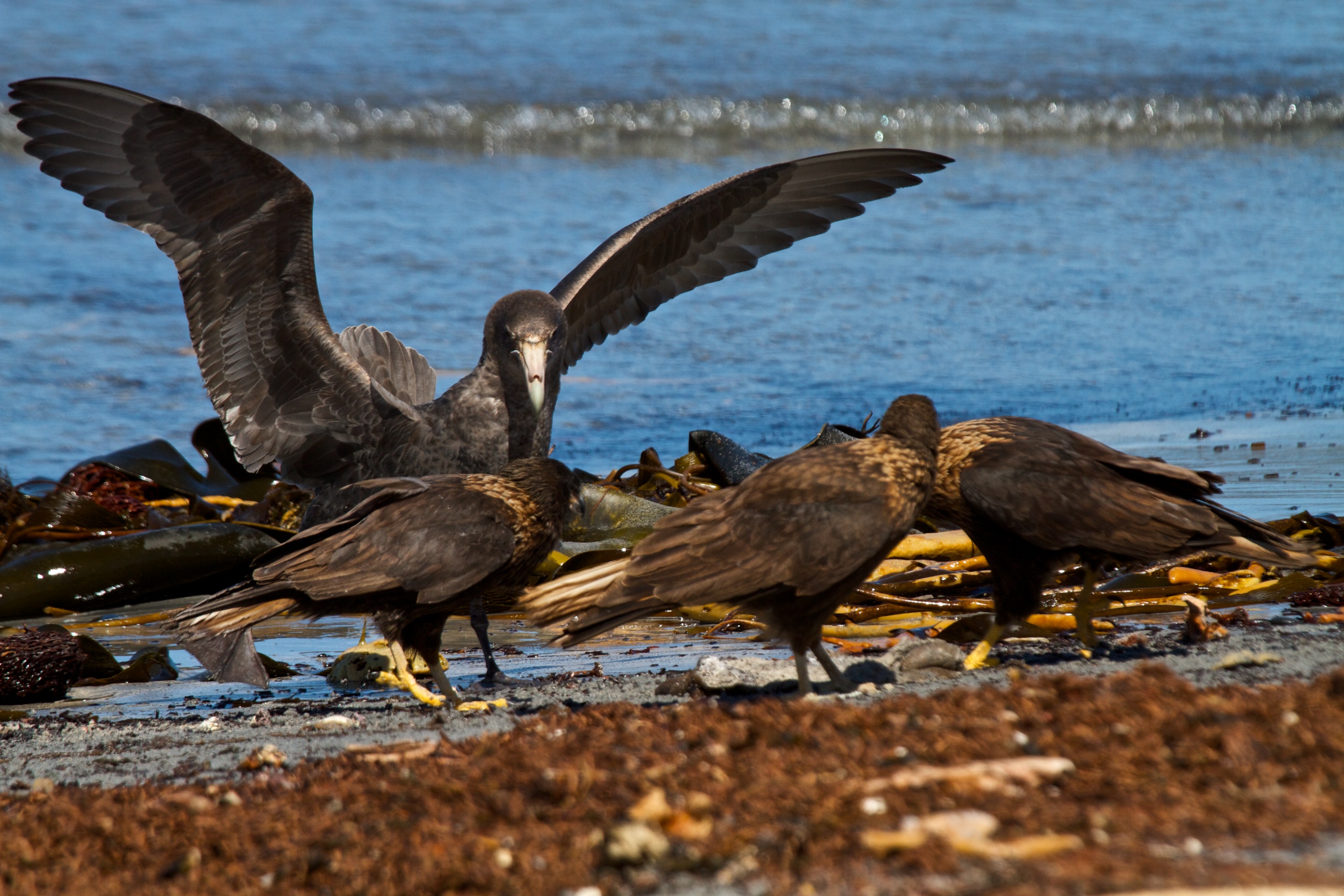
The caracaras also have to be mentioned and no visit to the Falklands appears to be complete without being targeted by one of the striated variety, or Johnny Rooks as they are known locally. I was the focus of their unwanted attentions on a number of occasions with them usually trying to steal my sunglasses or lunch (never successfully, gladly). They are quite comical, yet cunning, and when they know they have been spotted, will act nonchalantly and pretend to be uninterested but will suddenly aim straight for you if you get distracted. They can be quite fearsome and don’t stand any nonsense from each other or, in fact, much larger birds like the impressive south giant petrel. Their screeching at each other and general commotion while quarrelling over food was a very common sound down on some of the beaches I visited.

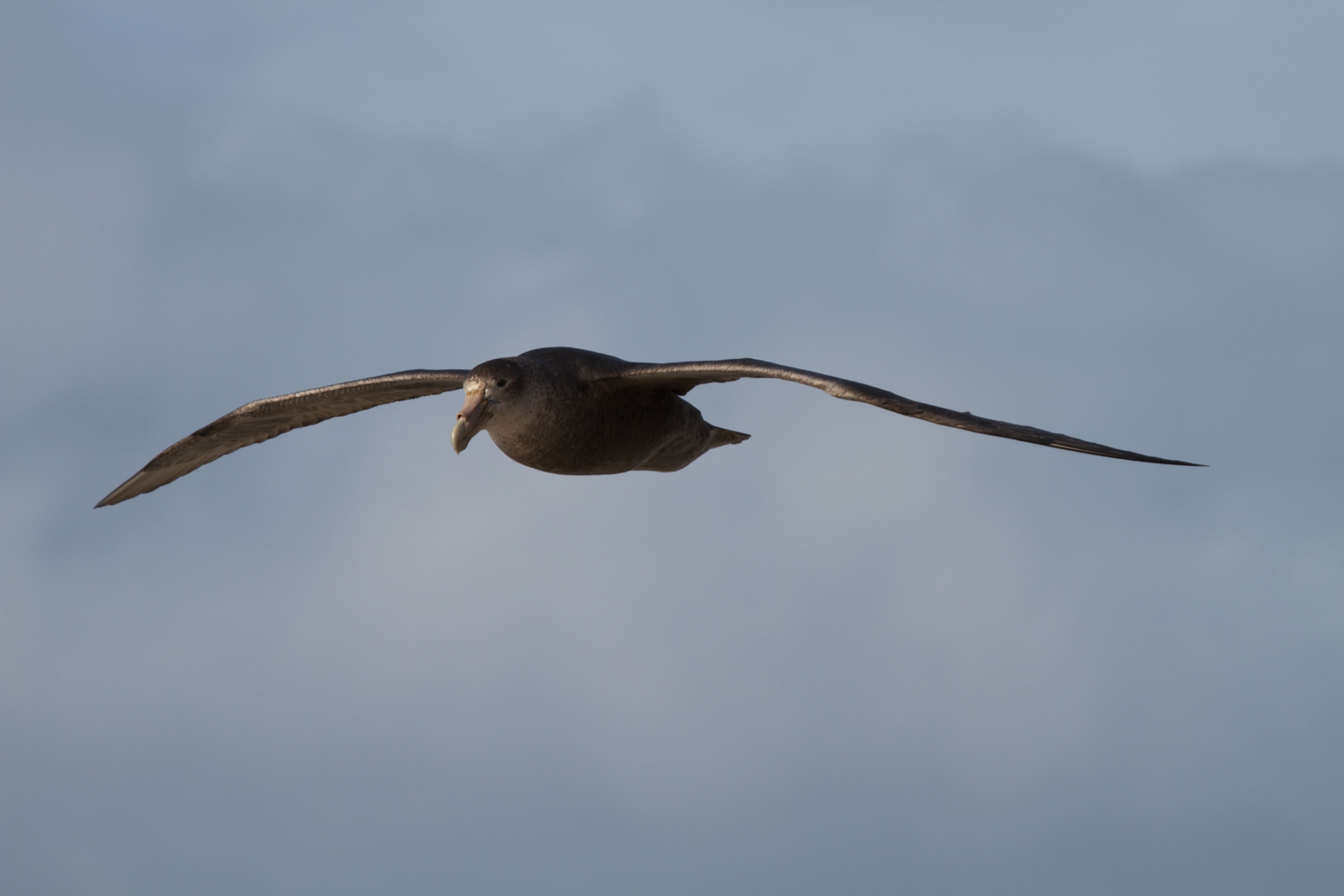
One of the most impressive birds around the islands is the southern giant petrel, or ‘stinker’ to the locals. These huge, dark, sinister-looking birds with great long wings (2 metre span) are carrion eaters and spend their days gliding along the coasts or across the inland moors searching for their next meal. Graceful in the air, they are awkward on the ground and look almost prehistoric, with a strange dance when they try to claim possession over a carcass.
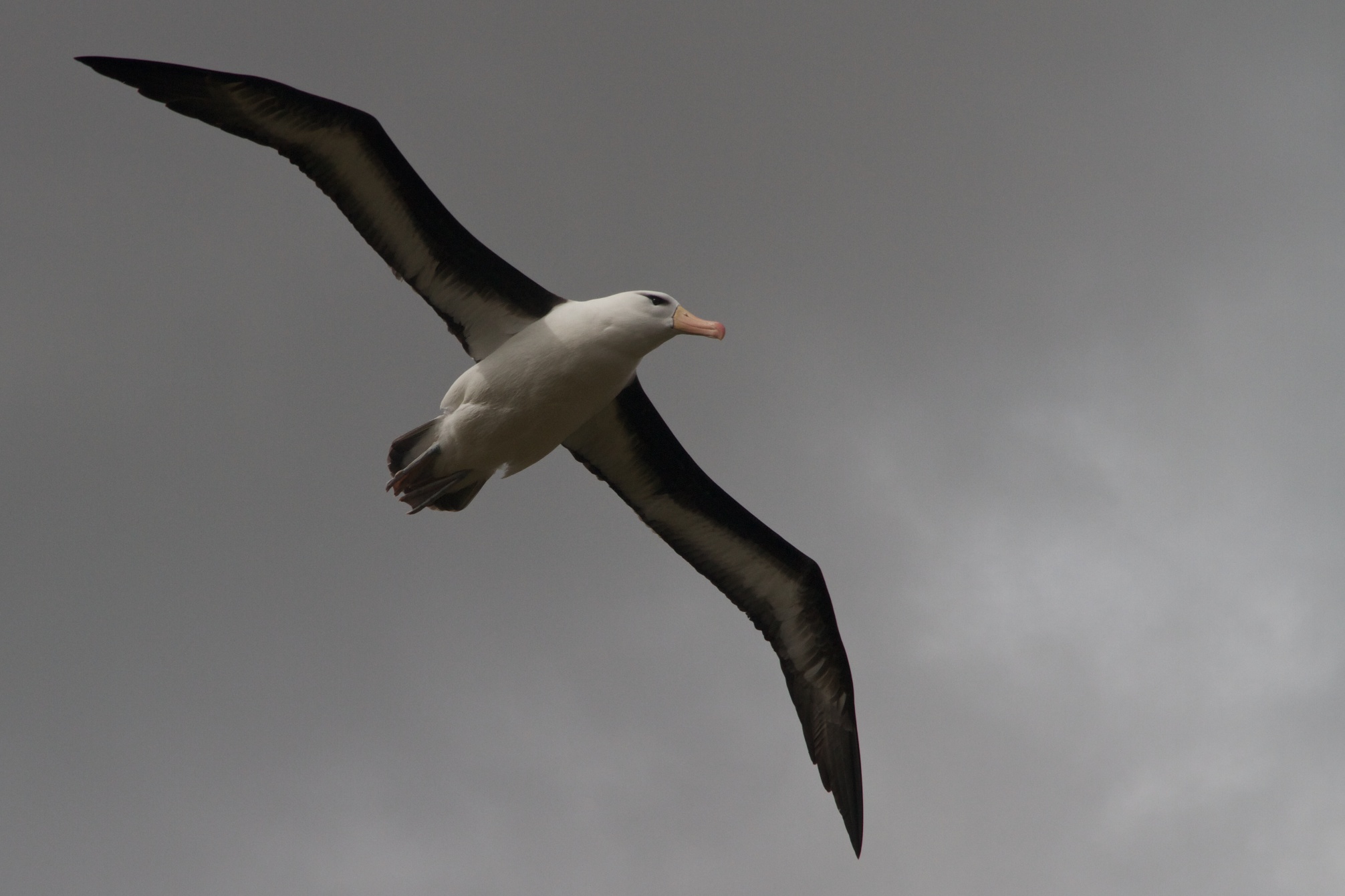
However, they are not quite as big or as the beautiful the black-browed albatross with a wingspan of up to nearly 2.5 metres. There are around 400,000 pairs in the Falklands and I saw them at two of their large colonies on West Point Island and Saunders Island. It was breathtaking to see these huge birds coming in to land against very strong headwinds and sometimes gliding just inches above my head. The sound of them calling to their mates is also one of the sounds of my trip and I could spend days sat within the colonies watching them come and go.



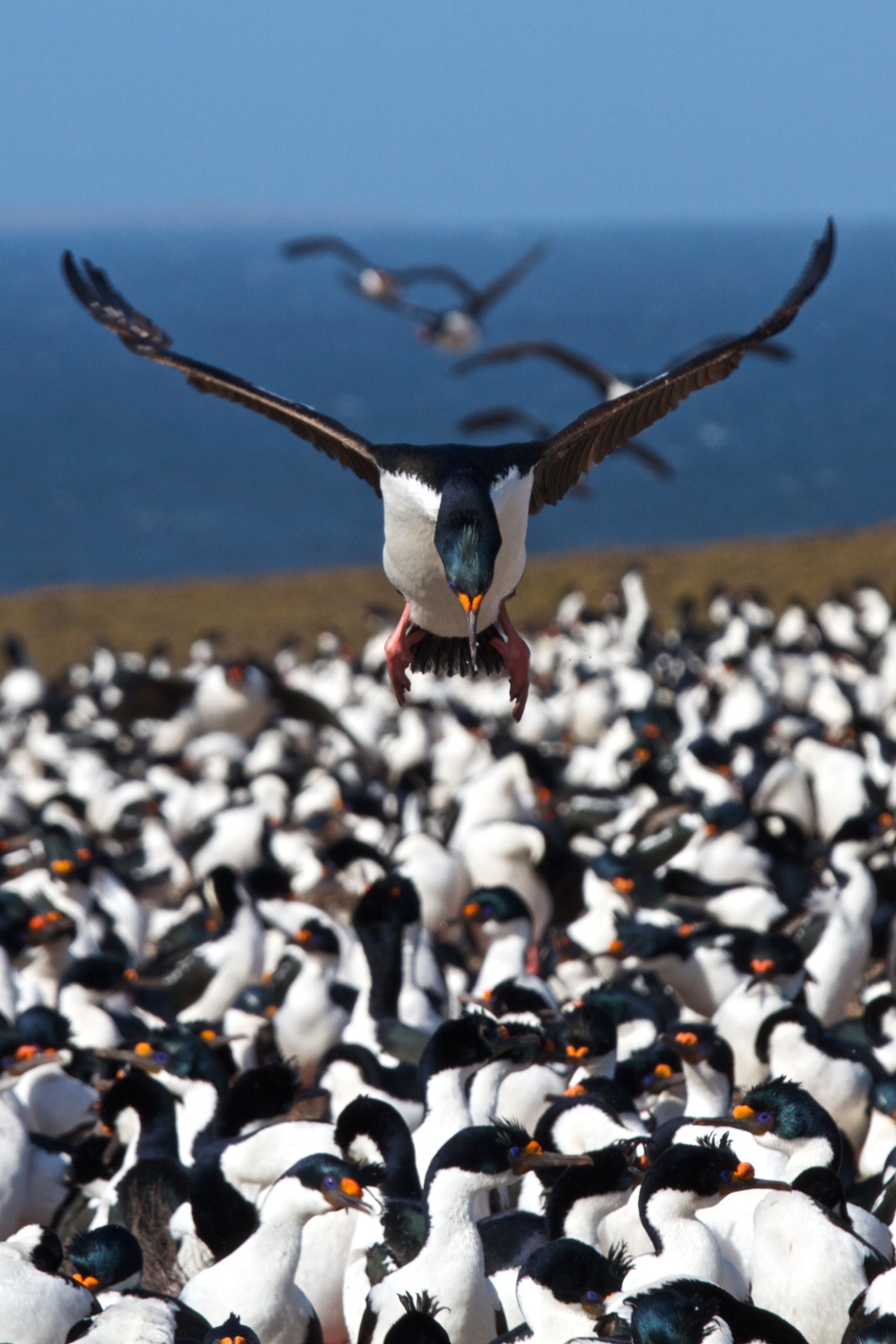
The colony of imperial shags on Bleaker Island was one of the most impressive sights with thousands of birds tightly packed together with only pecking distance between their round nests. The constant stream of birds arriving and leaving the colony increased as dusk came and the sight of the moon rising behind them against a lavender sky is one of the most vivid memories of my trip. These birds look to be black and white but in the right light, their plumage turns to almost metallic iridescent greens and blues.


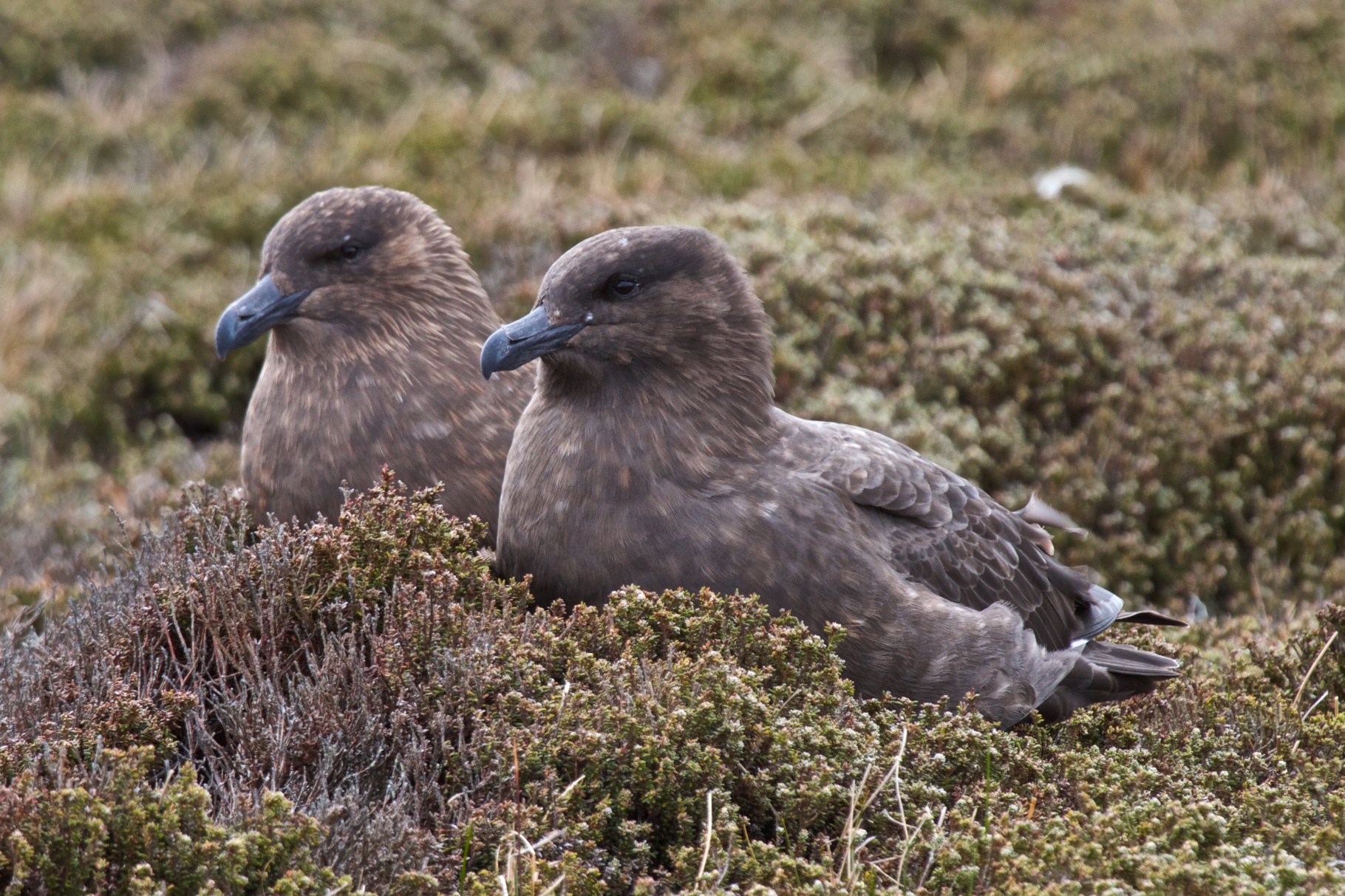
Where there are large numbers of nesting birds, the Falkland skuas are sure to be found. The dumpiness of the birds on the ground belies their ferocity and they can have a go at humans as well as their usual feathered quarry. Walking around the outside of a penguin colony, the ground was usually dotted with the broken shells of the eggs stolen by the skuas.
Lastly, what many people seem to come for – the penguins; you just can’t ignore them. It was great to see all five Falklands species and most in good, or even stunning numbers. The rockhoppers are the most approachable of the species and will often come to inspect you and make it hard to keep the regulation six metres away. They are also the most comical of penguins and seeing one of them sneezing must be one of the cutest sights in the animal world. There are good-sized colonies on a number of the islands I visited including Pebble, Saunders, Bleaker and Sea Lion.

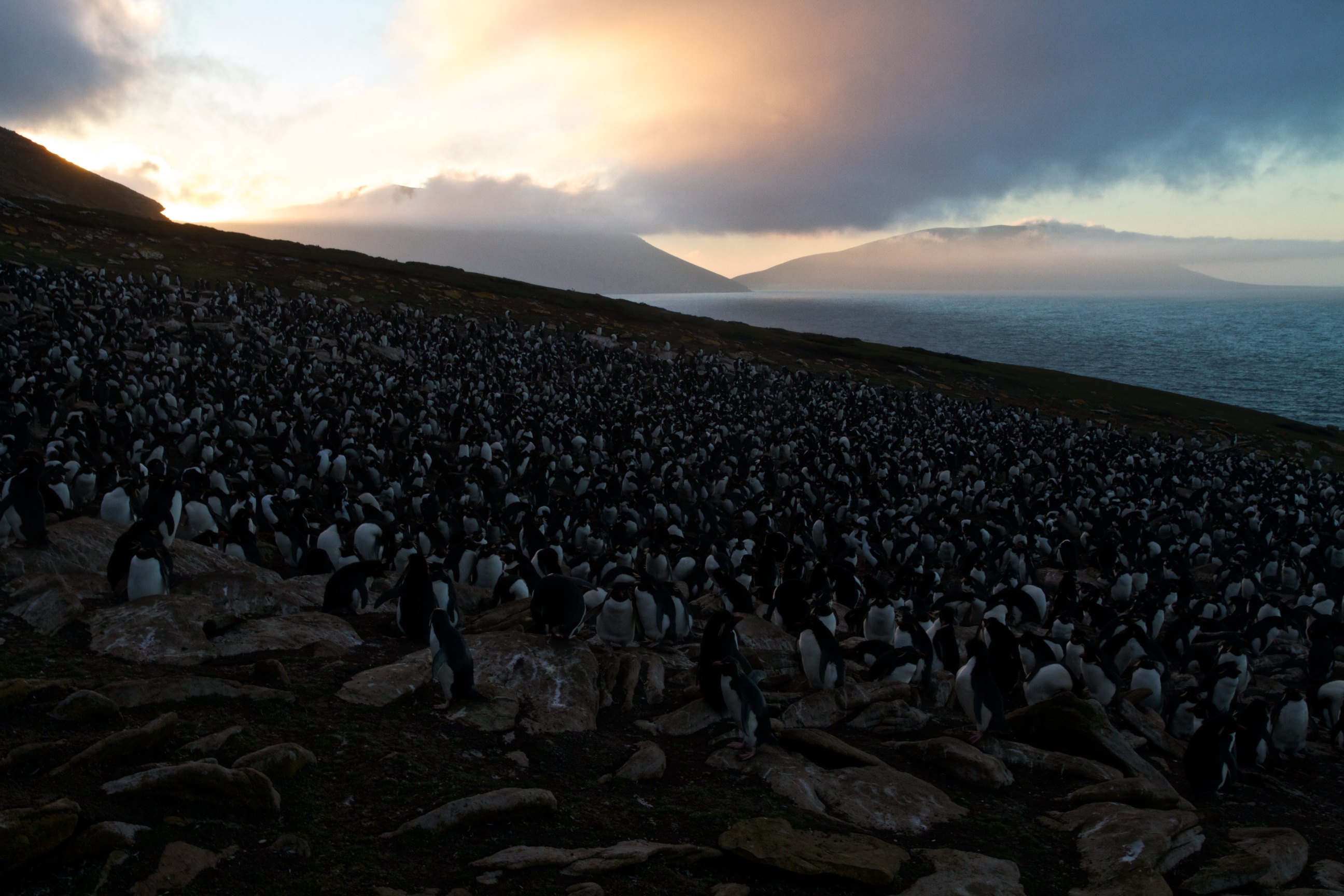

Another of the best memories of my trip was approaching the colonies at the Rookery on Saunders Island, just as dusk was falling. I walked along the hillsides above the ocean hoping that cresting the next rise would reveal where the rockhoppers were but it was the sound, then the smell, that reached me well before the sight. I could hear and smell them from at least 100 metres away and below at least two rises. As they came into sight, the huge colonies laid out in front of me, with the ocean and further coast of the island set as a backdrop; the setting sun dropping behind the hills. The macaroni penguins, which look very similar to the rockhoppers, are very limited in numbers on the islands I visited and I only saw them on Pebble Island, with them having to be pointed out to me. The magellanic and gentoo penguins are much more wary than the rockhoppers and less approachable. They tend to run off well before you get close to them but I managed to get some nice scenic shots of gentoos on some of the beaches. The gentoos and magellanics nest in smaller colonies than the rockhoppers but, again, I saw them on a number of the islands I visited including Pebble, Saunders and Bleaker.


Without doubt, the king penguins are the most beautiful of the Falklands species. They are also the most difficult to find. Whilst they can be found on Saunders Island, I was staying quite a good walk away from their colony, so I made the very memorable trip from Stanley out to Volunteer Point. It takes over two hours to drive to the point, half on the dirt tracks and half off-road – getting there is an adventure in itself. However, seeing them in their colonies and on the nearby beaches is one of the must see scenes of the Falklands.


There is so much more to write about the birds of the Falklands but I don’t think I quite have enough time. I might return to this subject in due course but I will also have to return to the islands to see them again! The following is the complete list of birds I saw in the Falklands:
Black-necked Swan
Flying Steamer Duck
Falkland Island Steamer Duck
Upland Goose
Kelp Goose
Ashy-headed Goose
Ruddy-headed Goose
Crested Duck
Chiloe Wigeon
Mallard
Cinnamon Teal
Speckled Teal
Silver Teal
King Penguin
Gentoo Penguin
Rockhopper Penguin
Macaroni Penguin
Magellanic Penguin
Black-browed Albatross
Southern Giant Petrel
White-tufted Grebe
Silvery Grebe
Imperial Shag
Rock Shag
Striated Caracara
Turkey-Vulture
Southern Caracara
Peregrine Falcon
Red-backed Hawk
Snowy Sheathbill
Magellanic Oystercatcher
Blackish Oystercatcher
Two-banded Plover
Rufous-chested Dotterel
Magellanic Snipe
White-rumped Sandpiper
Dolphin Gull
Kelp Gull
Brown-hooded Gull
South American Tern
Antarctic Tern
Falkland Skua
Dark-faced Ground Tyrant
Tussicbird
Falkland Grass Wren
Cobb’s Wren
Falkland Thrush
House Sparrow
Falkland Pipit
Black-chinned Siskin
Long-tailed Meadowlark
Canary-winged Finch


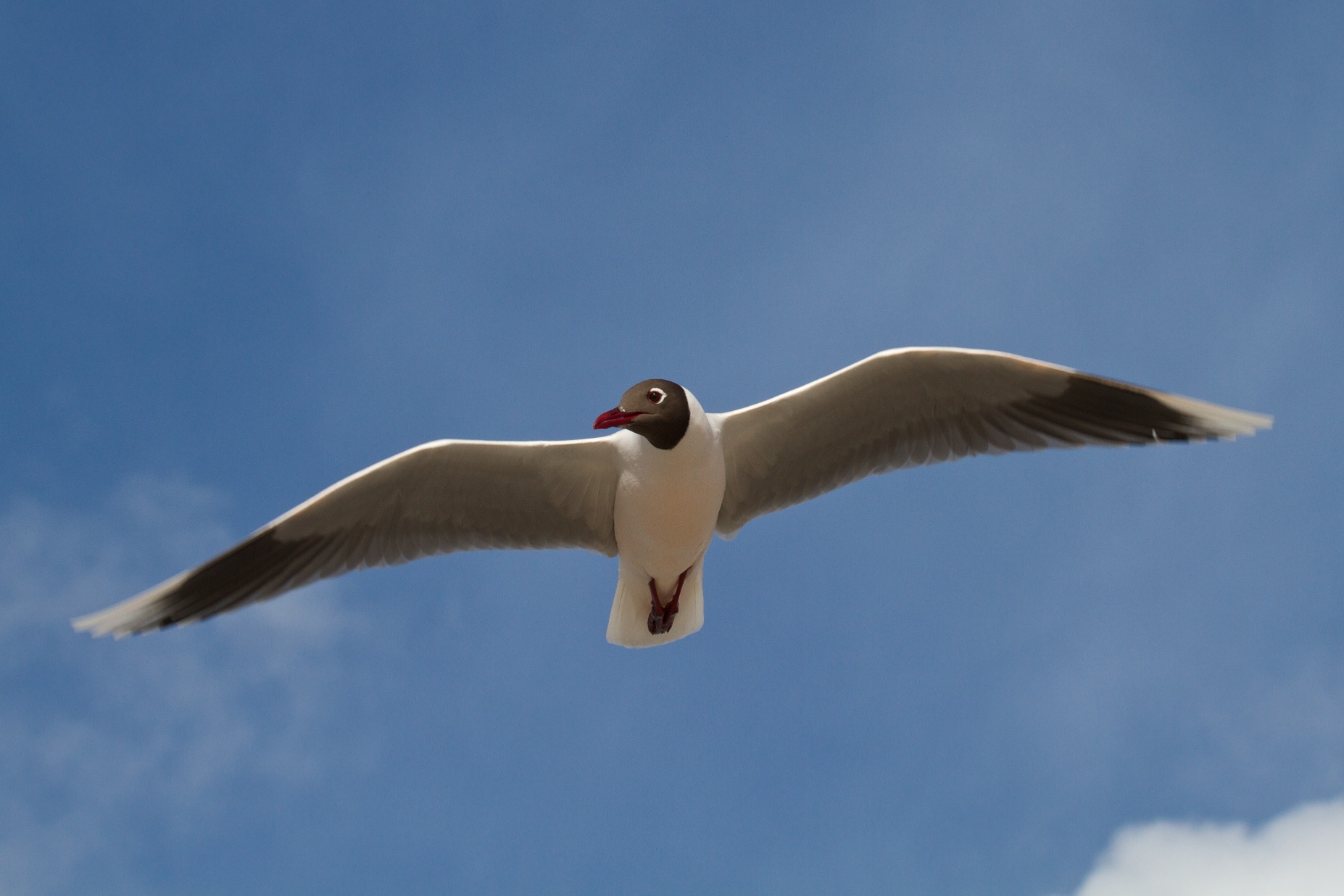


Last weekend I went to the Manchester Beer and Cider Festival at the Velodrome. A winter visit to a beer festival is starting to become a bit of a tradition and spending a day in the warm, drinking good beer with a group of mates makes a change to getting wet and cold outside doing conservation-type things! I particularly like beer festivals in great venues and they don’t come much more spectacular than the Velodrome – especially with practice sessions going on most of the day. Some of the bars we around the outside of the track but the main event was in the middle – reached by a tunnel under the boards.
I went on the last day of the festival but unlike last year in Derby, there were still plenty of beers left. I was particularly excited to try my first draught pint of the Purple Moose Brewery’s Dark Side of the Moose. After having had many a bottle of this fabulous beer (after getting some freebies via volunteering at the Glaslyn Osprey Project – it’s made locally in Porthmadog), I’ve had to wait ages to have my first proper pint of it; I wasn’t disappointed!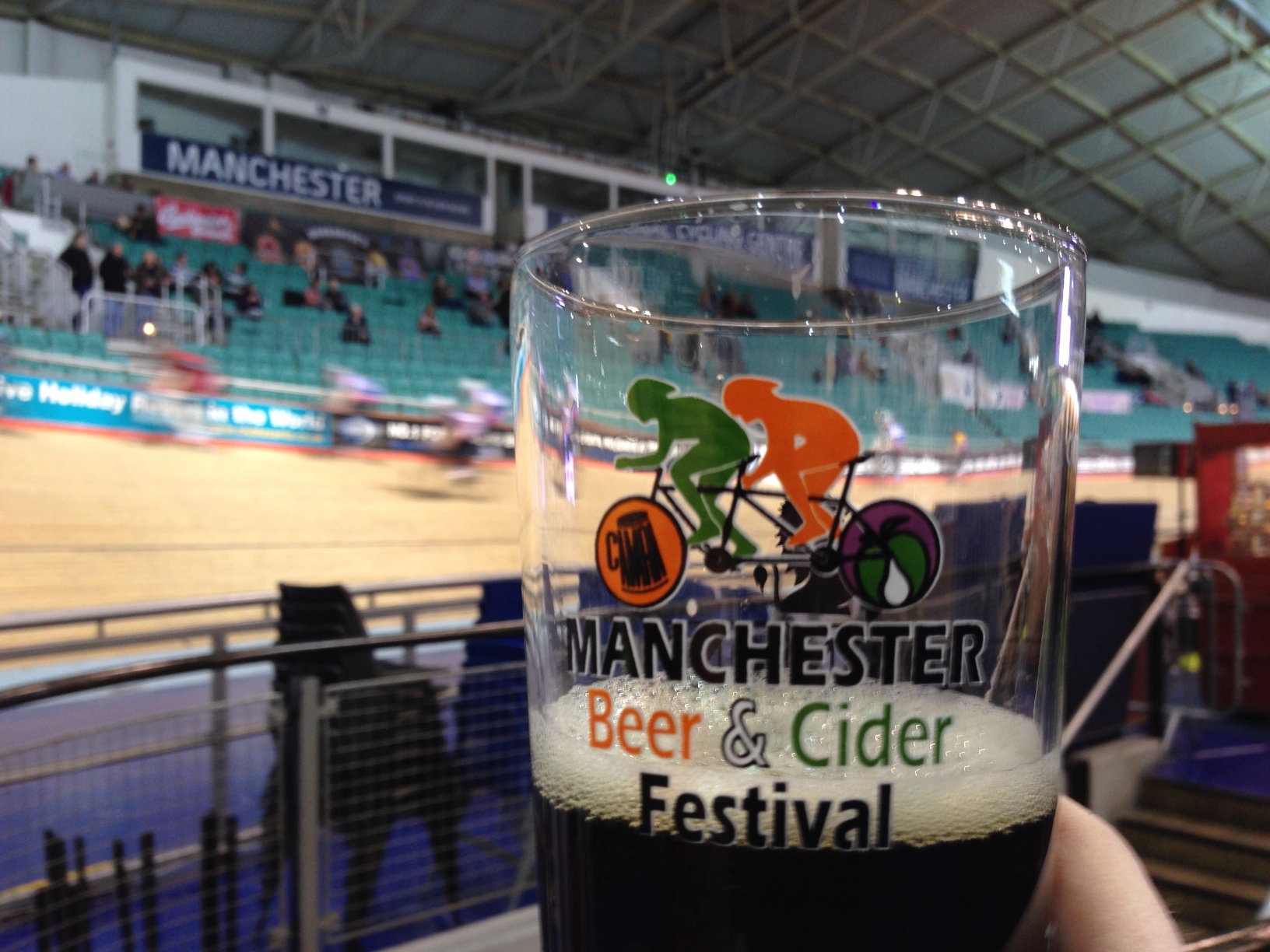 However, I was disappointed by the lack of cheese – at the event in Derby last year, I bought a big cheese platter (and had it all to myself!) but this time there was only a pretty poor looking ploughman’s stall.
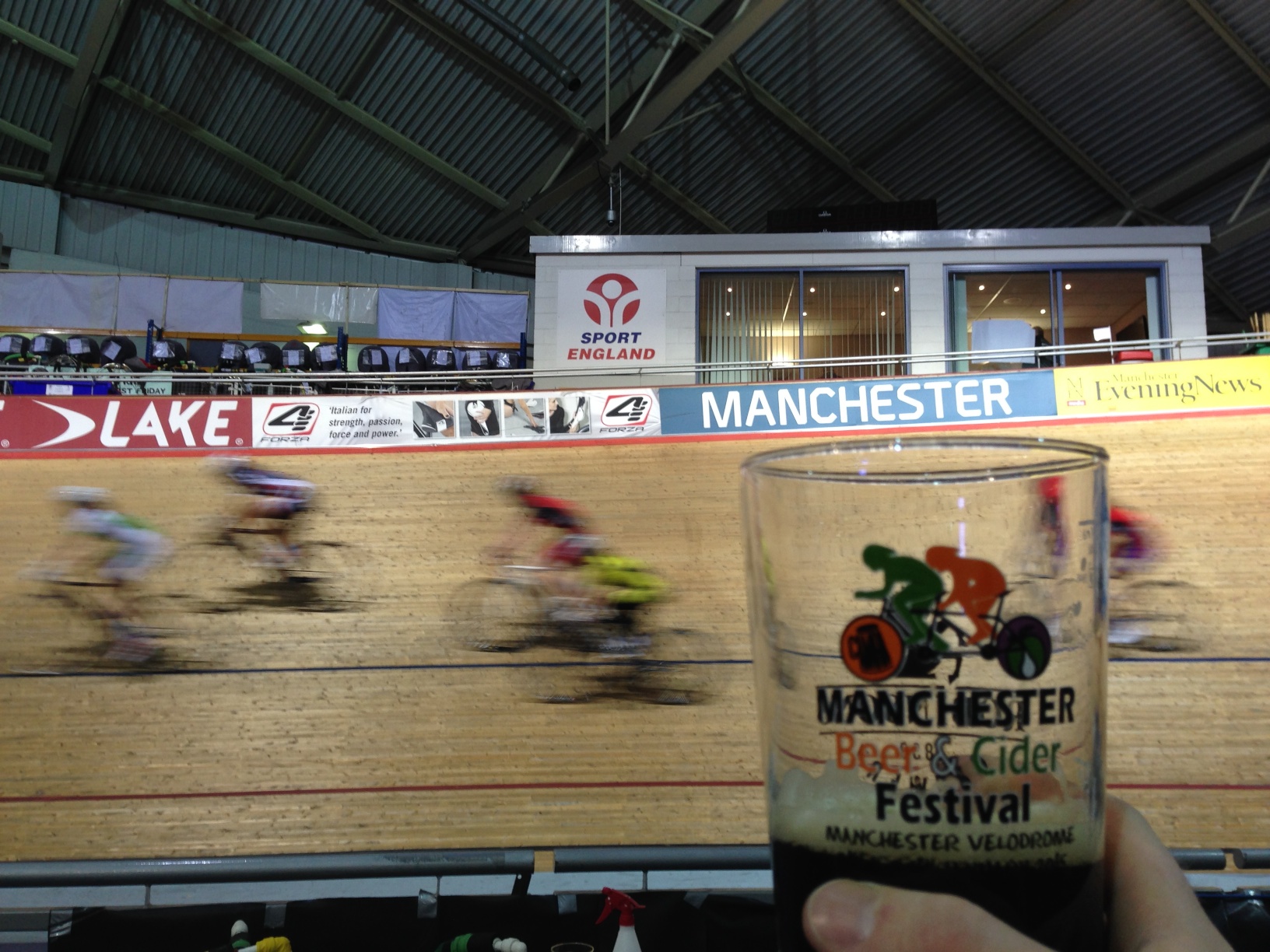 Now I need to find another festival to go to at another great venue.
A couple of days ago I did a second bird survey of the winter at Cheshire Wildlife Trust’s Blakenhall Moss reserve. I have to do one survey for November/December and another for January/February but if I have the time, I plan to do one per month (and the same for the Trust’s Bagmere reserve).
I recorded 28 species on this visit, which brings the total for the winter surveys so far to 35. The Marsh Tits were present, unlike the first survey, and a flock of around 30 teal was still at the site. Following the removal of the majority of the trees from the site and the raising of the water levels, to return it to its former moss state, the recorded bird species has changed with wetland birds now adding to the woodland species still present on the site.
The cold, bright and frosty morning made for a very atmospheric walk through the remaining areas of woodland around the outside of the site. The flooded woodland looks almost like a mangrove swamp.


After a bit of a break from writing up my Falklands trip, I thought I would publish a few more blog posts over the coming weeks – the first one about Pebble Island.
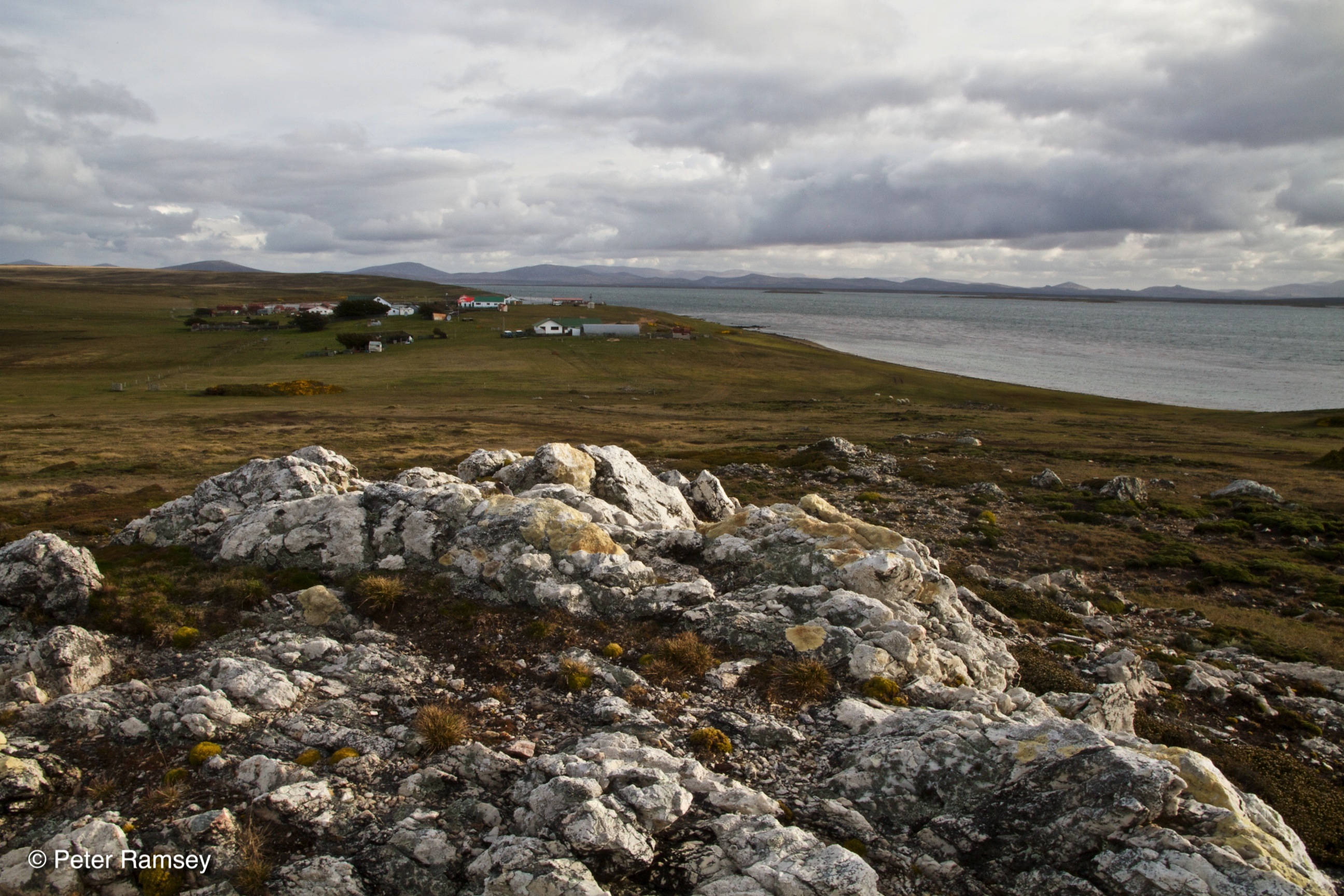
Pebble was the first of the offshore islands I stayed on during my trip and it certainly has a bit of everything; scenery, history and wildlife. In fact, I would say, from what I have seen elsewhere, it is the Falklands in miniature. The island has mountains and long sandy beaches with turquoise seas, a human history made more vivid by the events of 1982 and wildlife in abundance.
Pebble is the eastern-most of the larger islands off the north coast of West Falkland. It’s a big island with an area of 88 square km, 30km long and just less than 10km across at its widest and you would struggle to walk it in a day. It has a very small population, mostly comprising the owner and staff of the tourist hotel (Pebble Island Lodge).
Like most of the Falkland Islands, Pebble is an odd shape with an indented coastline and some wide open bays, it has rocky cliffs and large swathes of open diddle-dee heath. The rugged and hilly west of the island is very different to the lower lying and marshy east and the two larger landmasses that make up the island are joined by a narrow isthmus on which sits the only settlement. The main landing strips sit just to the west of the settlement up a small rise towards the first of the three hills on the island, conveniently named First Mountain – the others being Middle Mountain and Marble Mountain. I visited the beach where there were once tonnes of semi-precious pebbles (after which the island is named) but after over-exploitation, there are very few left and I didn’t see a single one.

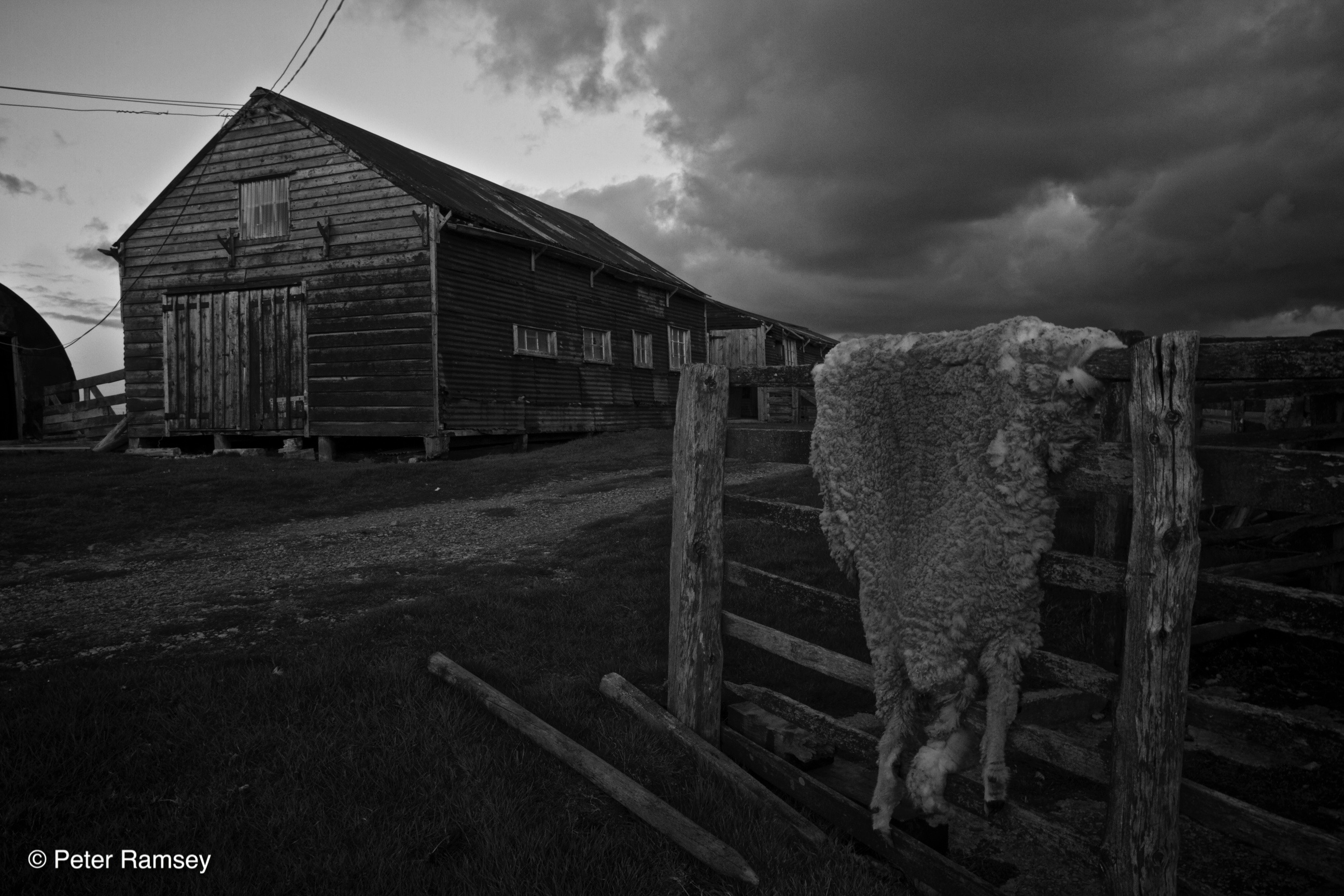
The population was once much bigger, with the settlement being larger than the current handful of residents need. It is a typical Falklands village with too many buildings for the present population, many appear semi-abandoned, but the buildings that are used are in good repair and cared for. The old farm buildings down by the jetties are particularly spectacular in their deteriorating stark and rustic charm and lit an interest in me to capture images of these places around the other islands I visited.


The war had a particular impact on Pebble as, unlike the majority of the offshore islands, it had a significant Argentine presence and it was used as a forward operating base for some of their aircraft. Within easy reach of San Carlos Water to the east, the location chosen for the British landings, Pebble and its aircraft were a serious threat to the amphibious task force. To remove this threat, the British special forces mounted a night-time raid which took out 11 aircraft and rendered the landing strip unusable (although it was the Argentines who blew up the strip).
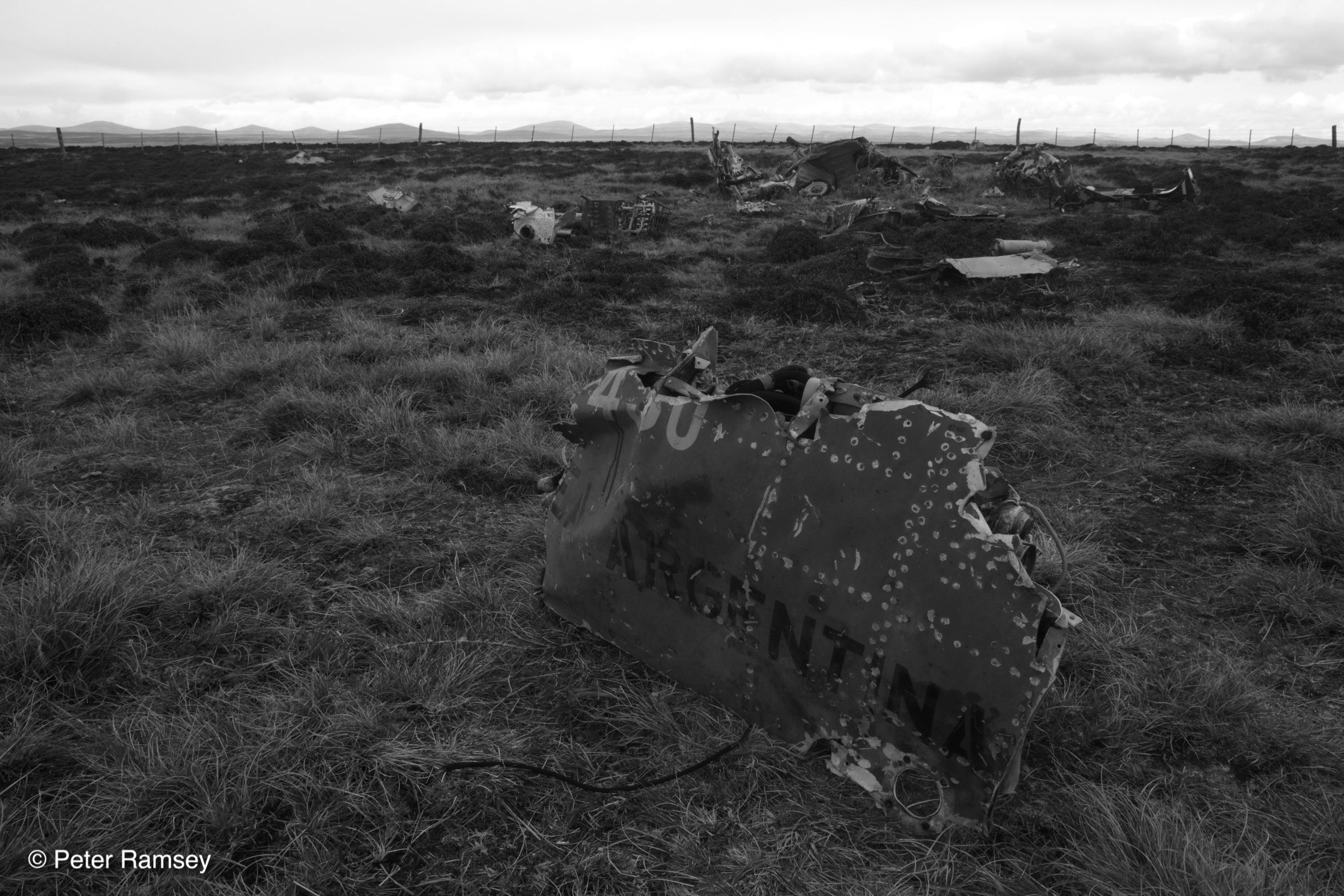

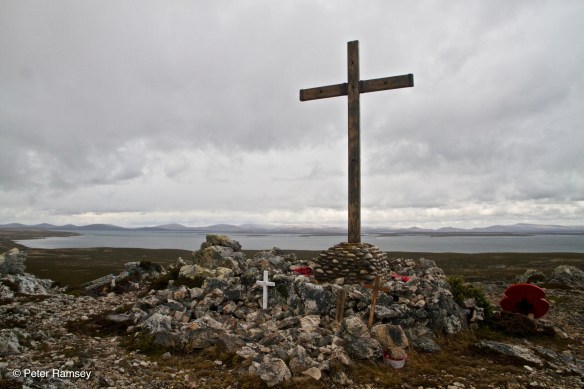
There are also significant signs of the wider war on the island with the debris of two shot down Argentine Dagger aircraft strewn across the land and a memorial to mark the crash site of an Argentine Learjet. High up on First Mountain also stands a cross marking Pebble as the closest land to the final resting place of the British destroyer, HMS Coventry. After successfully taking down numerous Argentine bombers, with her frigate partner HMS Broadsword, she finally succumbed to one of the air raids she had been helping to protect the British bridgehead from.
And then there’s the wildlife! The Island has been designated as an Important Bird Area by Birdlife International due to its abundance of avian residents. Pebble was the first place I saw penguins; a nice little group of Gentoos on Elephant Beach on my first afternoon. There are coastal Gentoo colonies but also an inland colony to which the penguins trudge over a kilometre from the coast, while a big Rockhopper colony spreads out above the cliffs where the diminutive birds bounce up and down the steep rock face. There are also a small number of macaronis amongst the Rockhoppers and colonies of Magellanics along the coast. To the east, there are good numbers of wetland birds and, as usual, plenty of geese everywhere and many of the smaller birds that can be found throughout the islands. I saw Commerson’s dolphins surfing the crashing waves coming into one of the wide bays and had a distant view of a sea lion on one of the smaller outlying islands.
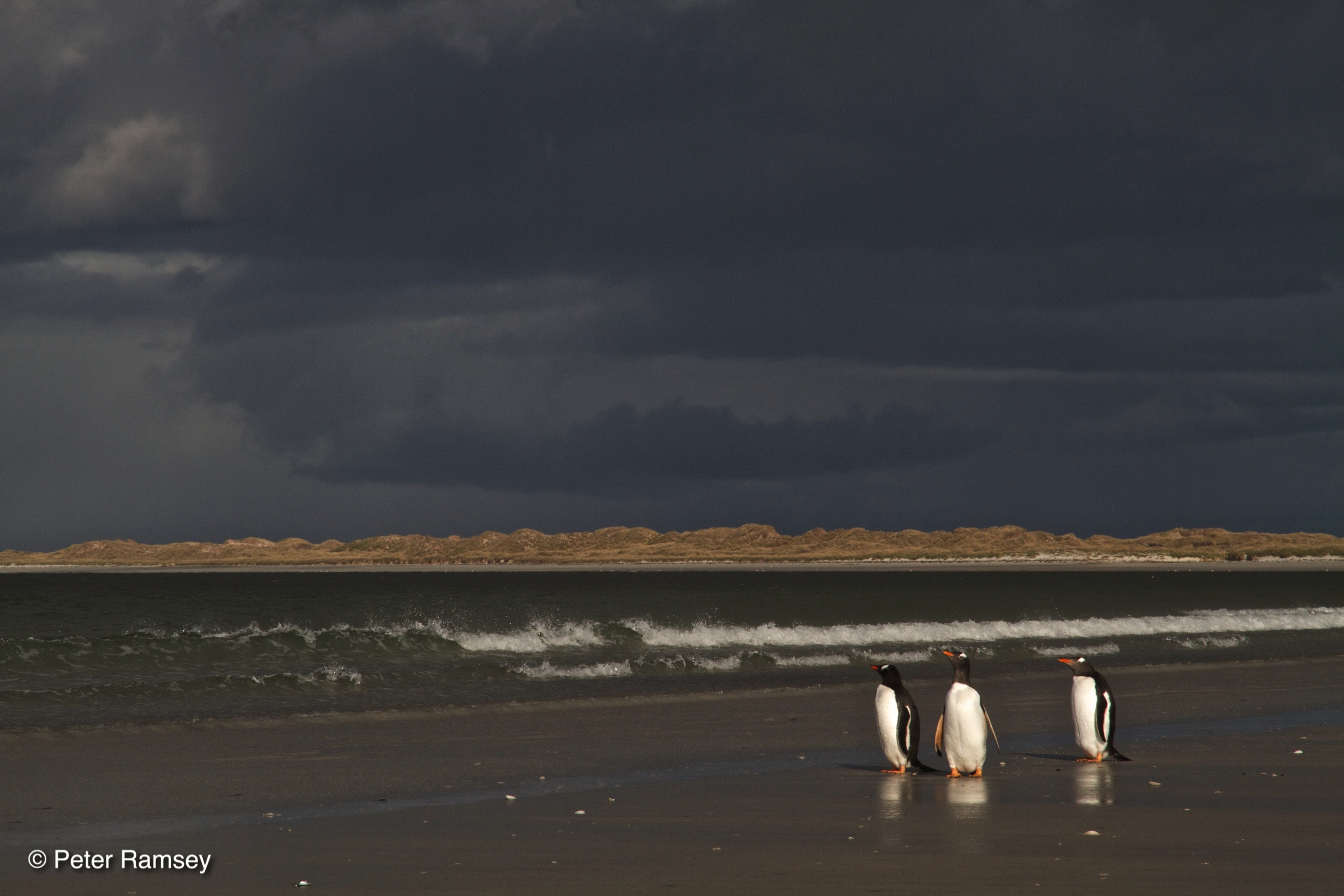
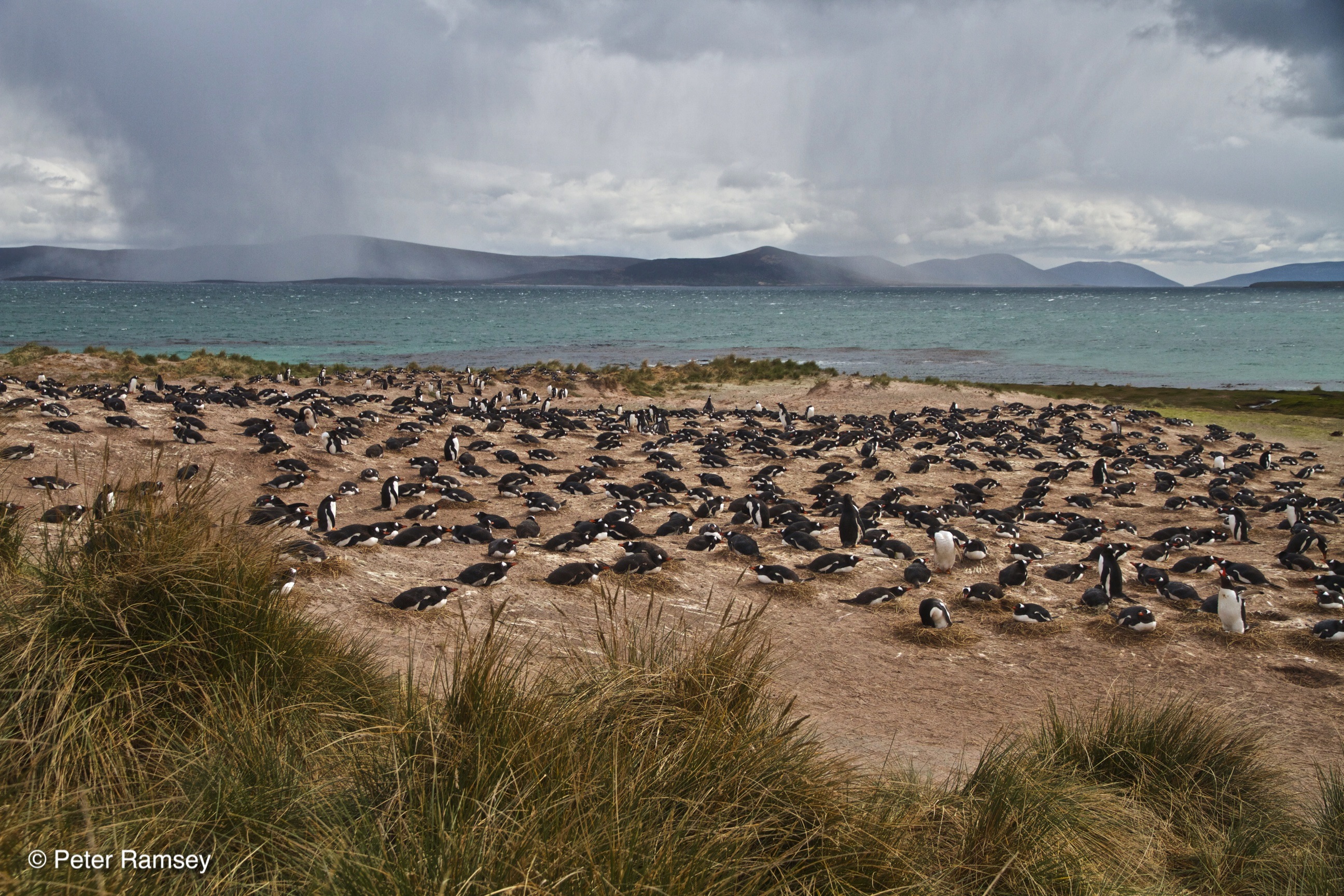
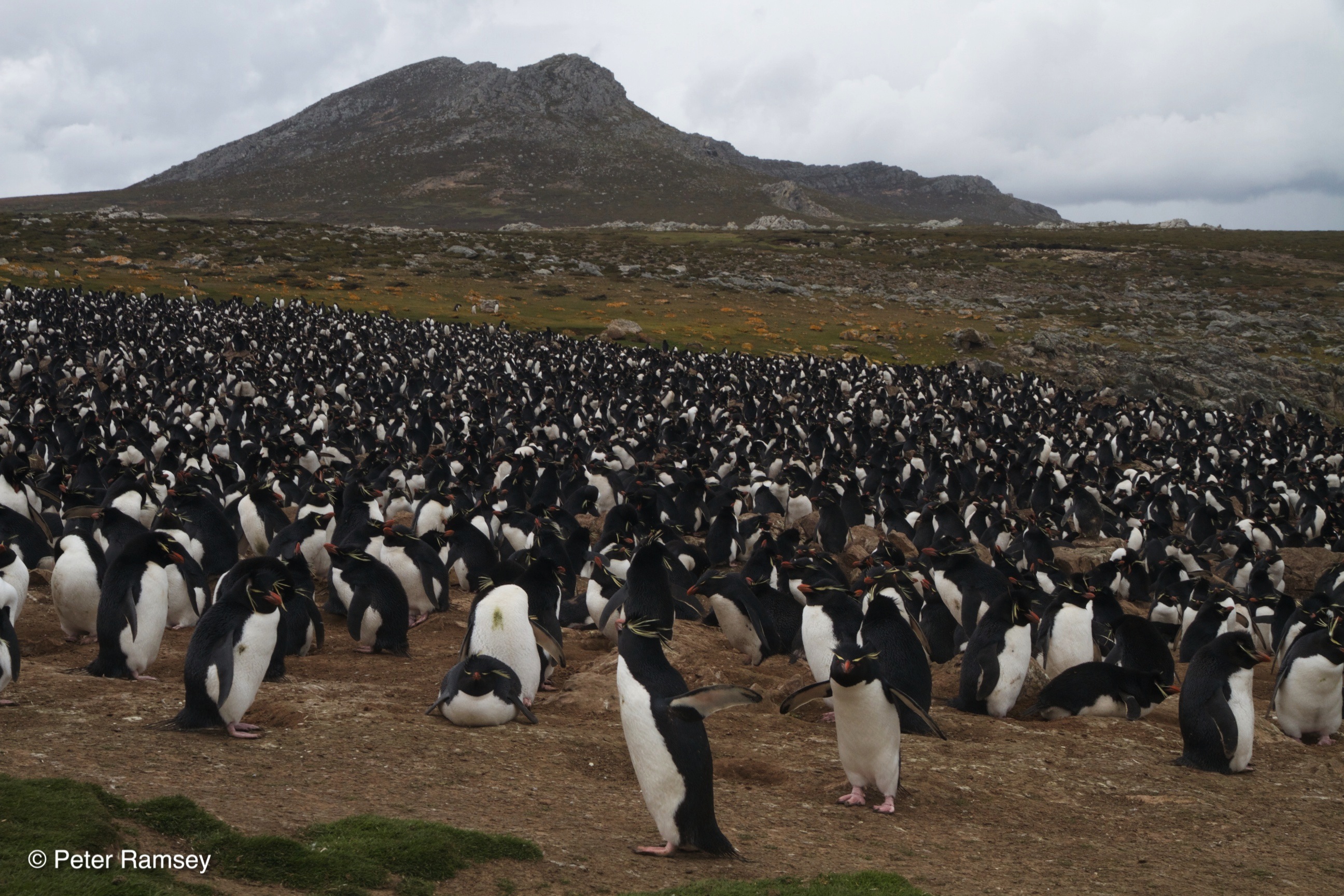
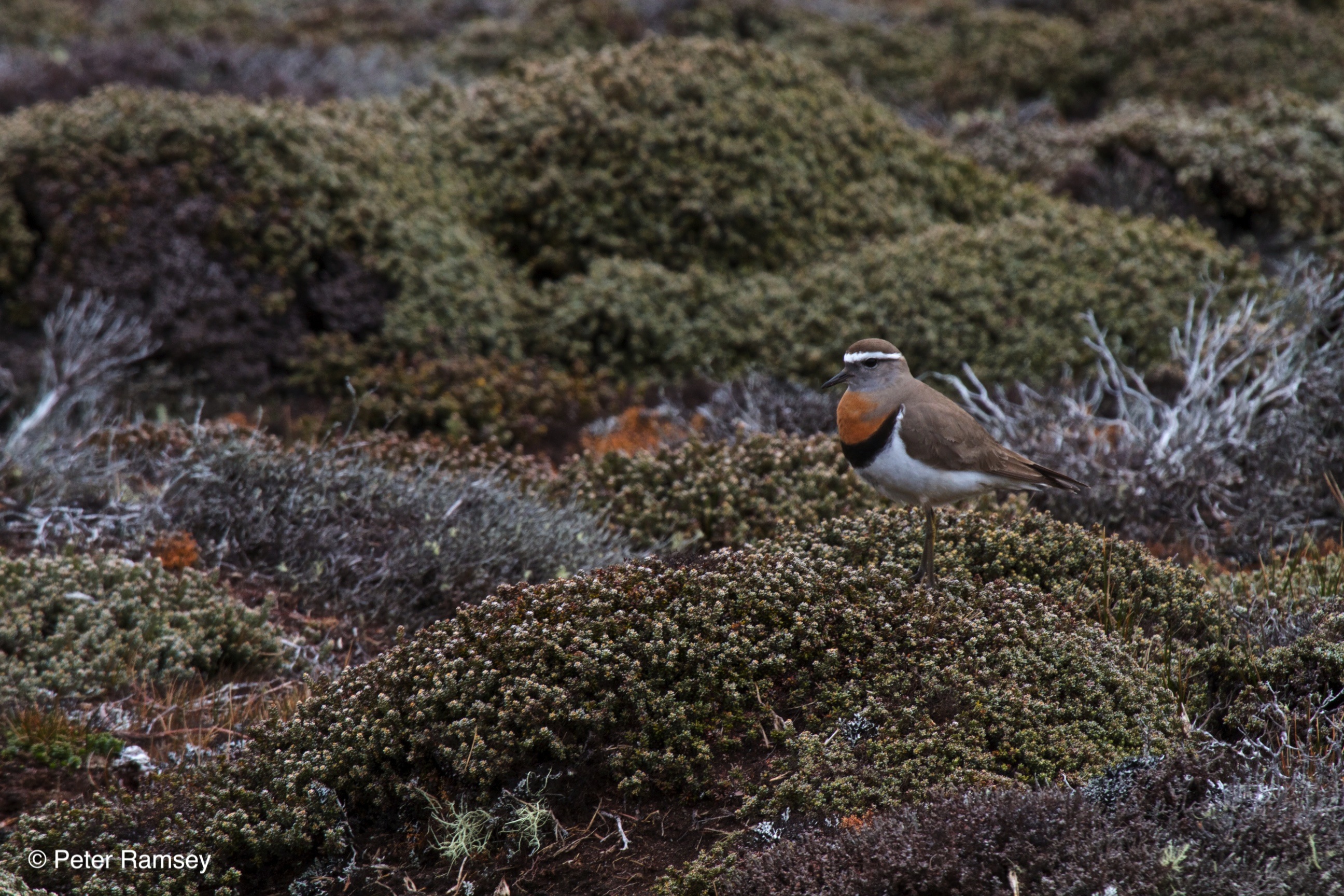
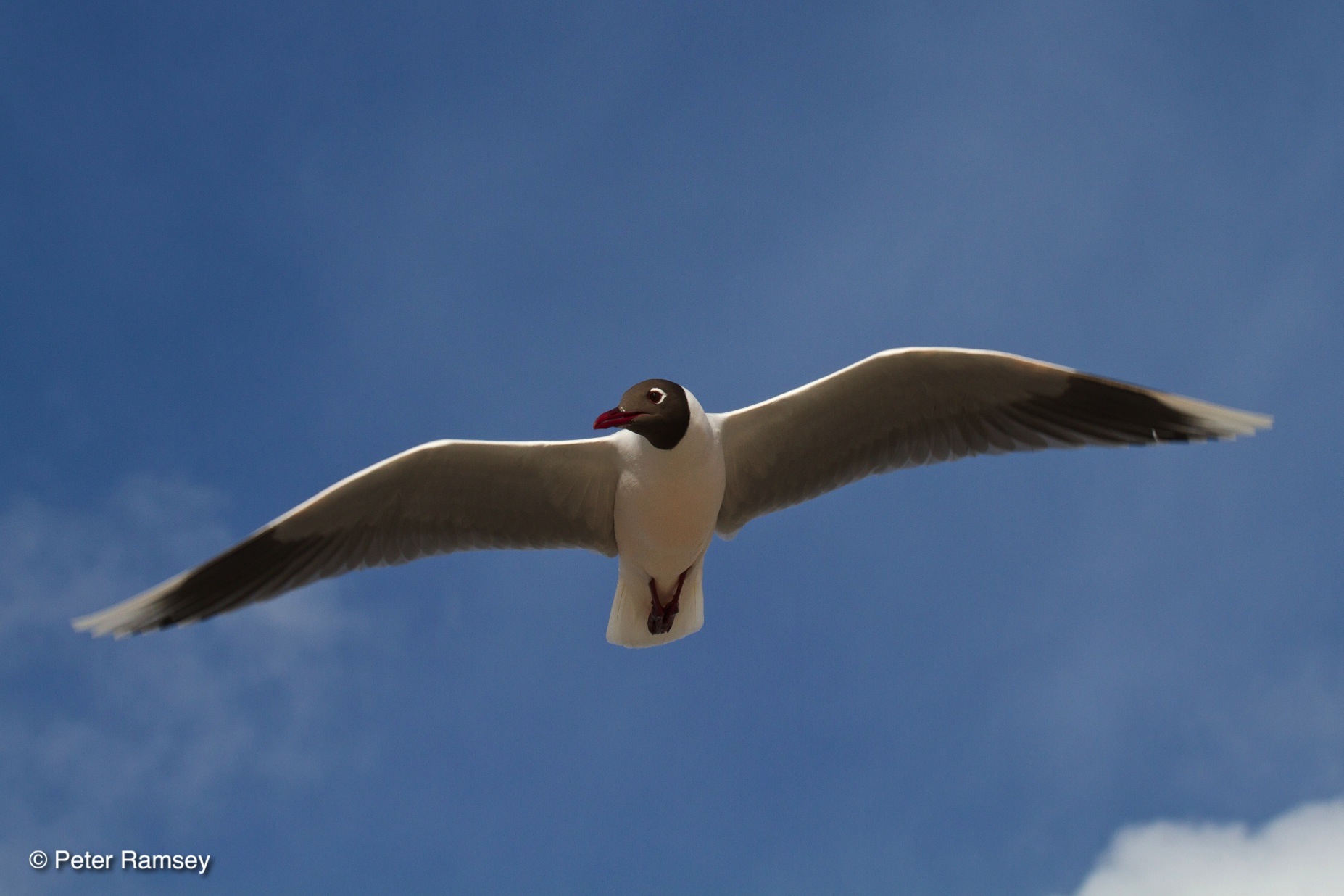
The weather while I was there was probably the most changeable of anywhere I stayed, with bright sunny bright blue skies, dark menacing clouds, strong winds, a hail storm and snow showers passing through, all in less than 48hrs.
Like most of the islands, Pebble has a soul all of its own, which is now made most vivid in my memory by the sunset on my first evening. I wandered down to the jetties near to the settlement and walked amongst the old farm buildings. As I moved out onto the beach, a flock of gulls rose into the blustery air against a backdrop of dark brooding clouds broken by the bright light of the setting sun. Out in the distance were many small islands with the mass of hills on the West Falkland mainland standing behind. The wind rushing past couldn’t drown out the angry cries of the birds as they called alarm at the presence of stranger amongst them. The breeze brought rattles, creaks and groans from the resisting buildings while the slowly setting sun picked out the details in the wood and metal walls, roofs and doors. A remoteness seemed to come over me – the emptiness of the view out to the far off islands and hills, the isolation of the once bustling but now quiet settlement and the wildness of the weather and the calls of the gulls – truly spectacular!

With all this to offer, Pebble has to be on my list for a return trip down south.
(My stay on Pebble Island was made all the more special by the people – Riki, Brad, Cat, Leigh and Walter. Pebble Island Lodge is a great place to stay with comfortable accommodation and lovely food! I particularly have to thank Brad for a great day-long tour of the west of the island – my TripAdvisor write-up can be found here)

My festive spirit this year is the fabulous Lagavulin Distiller’s Edition. It’s matured in Pedro Ximenez (PX) casks but still has the great smokey flavours of the classic Lagavulin. It’s a bit like the Bruichladdich PX I had last Christmas but much better (in my humble opinion!).

Earlier this week I went along to the second sitting of the Rally For Nature in London, an idea of Mark Avery taken up by the RSPB, League Against Cruel Sports and The Wildlife Trusts. If you’re following the plight of the natural world you probably already know that the State of Nature report published last year found 60% of species in the UK to be in decline, and that in 2013 in England no hen harrier chicks were raised at all as a result of intense persecution of raptors & terrestrial carnivores on grouse moors. You may also know that the natural world provides many physical & mental health benefits, and that a lack of it is linked to health inequalities in our society as shown by a report from this year – very important, since an estimated 1 in 4 of us suffer from mental health issues at some stage during our lives (myself included), thus ‘ecotherapy’ may do a lot for relieving the strain on the NHS.

For all these reasons and more, I sat amongst strangers and old friends alike whilst Martin Harper, director of conservation for the RSPB, spoke about the proposed weakening of the EU Directives for Birds & Habitats, cornerstones of UK wildlife protection in the UK, and we could contribute to their defense. Stephen Trotter, of The Wildlife Trusts, spoke about the Nature & Wellbeing Act, an Act to reconnect society with nature for our own sakes and bring about both the recovery of nature & a reversal of habitat fragmentation. Finally, the League Against Cruel Sports CEO Joe Duckworth spoke out against wildlife crime for which the vanishing hen harrier has become an icon. MPs from the Labour, Liberal Democrat, Green & Conservative parties also offered words of encouragement throughout the day, but no word from UKIP, presumably because their party members were hatching another plan to farm elephants.

With all these briefings explained, everybody (including Bob the campaigning red squirrel, a fox and a badger) marched to Westminster and in to the St Stephen’s entrance to the House of Commons to ask for an audience with their representative MP; during this walk I kept trying to sneak into photos with the organisation heads, succeeding once, which I believe is called ‘photobombing’. I appear on Mark Avery’s blog, in the sixth photo down, result!
Disappointingly, my MP was absent from the House of Commons on the day, but I did see the impact that others were making when asking their MPs to defend the natural world, and it did indeed seem to be an effective way of campaigning for change. I’m feeling empowered by the process and I have arranged to meet my MP on the 9th of January. I’ll only have 15 minutes, but this should be enough time to outline the Nature & Wellbeing Act and its benefits to people, as well as the problem of rising wildlife crime – not just for hen harriers, though two of those that I protected this year have already been lost (likely destroyed), but also for increasing illegal badger persecution. The Badger Trust’s 2013 report on badger incidents shows that in 2012 there were 353 incidents, but 657 in 2013, 151 of which were badger baiting. An invite for a walk in the woods where I regularly film wildlife might be an idea, to explain why the priority species that live there need habitat connectivity.
If I get time, I’ll also see if he will put his name to the Marine Charter, already supported by 147 MPs, 44 organisations and 8 million people, which aims to fully implement a strong network of Marine Conservation Zones and Marine Protected Areas so our depleted oceans can properly recover. I may also ask him if he has changed his mind on his support of culling badgers following the 2014 shambles…
After the meeting I’ll post an update about whether he is supportive of these environmental efforts. In the mean time, why not get involved and arrange a meeting with your own MP to stand up for wildlife and our natural heritage? They work for you, after all.

Photos courtesy of Mark Avery, from his blog post on the event.
A familiar route once again but the first time in over a season’s length. I turn through the narrow gateway and over the cattle grid. The trees start to enclose as I make my way down through the wood once more. The winding, rising and dipping track has a new surface of fallen leaves and small twigs as autumn comes to a close. The summer shade has melted away and left naked, bent and twisted branches reaching out and interlocking over the narrow way. The vibrant green of the earlier months has gone and there is a new richness to the scene with the rusting bracken providing a foundation to the ambers, oranges and reds in the trees. However, the colours of the peak of a bright effervescent autumn are fading to the last drops of the season. Out on the wet meadows, with decaying dampness in the air, the dark, brooding clouds are letting a few drops of fine rain fall onto the ground as I approach the gate, crossing the grass that now has a touch of yellow. The site is almost silent now and would be but for a few calls of a chaffinch and a light breeze in the woods. The tops of the surrounding hills and mountains are covered in low mist, partly shrouding their purple-hinted rises. In the distance, what must be out above the sea, the suppressing clouds are parting and a brighter light is beginning to emerge but I have to leave and won’t see the land under a more vibrant autumn sun. Across the river and the low field, there stands a tree empty of the summer’s focus. Now long gone, it is like the family was never here but the nest lies up there, without its owners but ready for their return, just marking time through the long, cold and dark winter months.
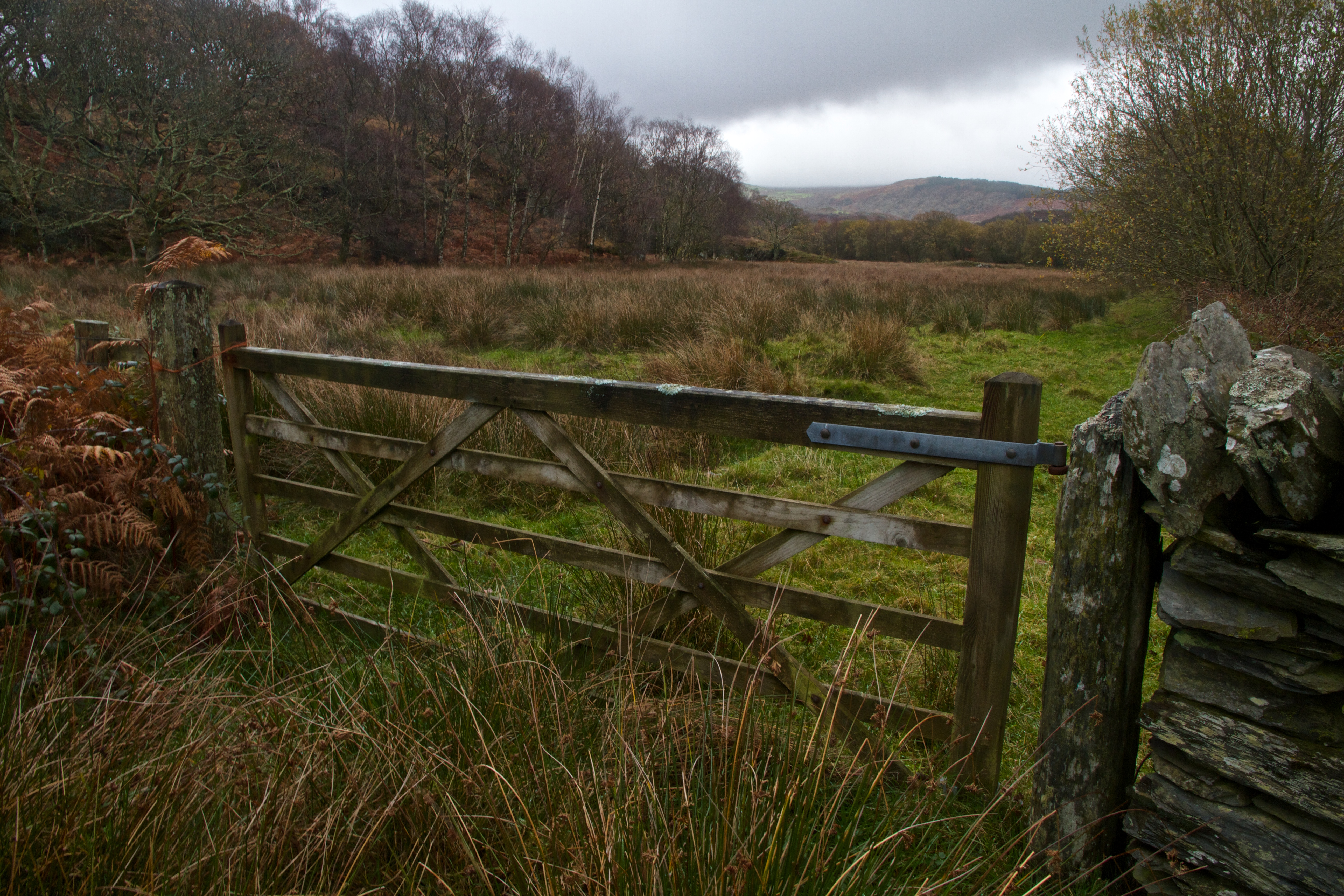
Well, I lied in a post back in July, that I wouldn’t see that old track again until next spring. I just had to go back; to see the valley at another time, a quieter time, a more sombre and more moody time. The Glaslyn Valley is so different from the height of the summer but just as beautiful and it’s a pity I couldn’t make a visit at the height of the autumn colours. The life in the valley was certainly of the season with jays calling from the woods, ravens cronking as they drifted across the sky and redwings ‘seeeeping’ on their journey through. The only fresh signs of life were new blooms on the gorse, while all other flowers have long gone from the fields, woods and field margins.
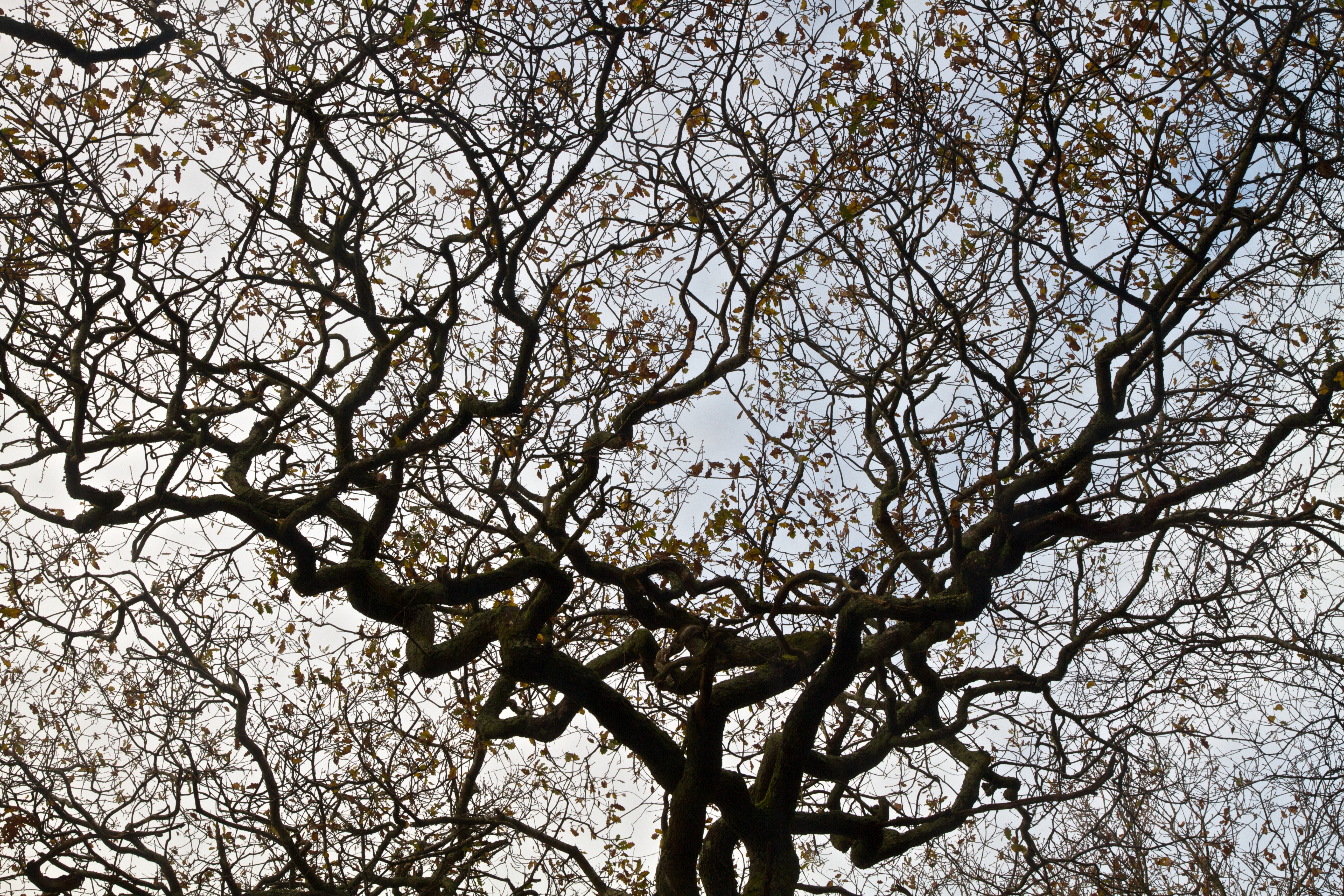
After blogging over the spring and summer, I wanted to make a visit to the valley in the autumn or winter, so I could see and show how it changes through the colder months and seasons. With a meeting for public interest company that runs the osprey project planned for yesterday, a trip across had a dual purpose – to see the valley when the ospreys aren’t there and to keep up to date on plans for next year.
The meeting highlighted just how much great work the company and its volunteers have done over the past year and revealed some very promising plans for next. In all, over the last 12 months, nearly 5,500 volunteer hours have been put into running the project, from re-establishing both the viewing and protection sites, to all the hours put in watching over the nest and showing visitors views of the ospreys. Almost starting from scratch, it is simply amazing what this small group of volunteers has achieved over the past 12 months. Taking over the running of the project from a huge national charity was a daunting task and I’m sure others would have failed, and yes, there have been difficulties on the way. However, they have achieved what they have set out to do and now have plans to build on this and make next year even greater. There are proposals for a new visitor centre which should be open seven days per week during the breeding season, and the nest will be protected 24 hours a day while the risk to the ospreys, their eggs and eventually their chick persist.
Next year, they will need even more volunteers and more volunteer hours to ensure success, and yes, I will be back, hopefully doing some night shifts and maybe there might be a few blog posts too!
 Daft Mumblings