Breeding Bird Surveys

On Sunday last week and Friday and Saturday this week, I did the second round of four monthly Breeding Bird Surveys for Cheshire Wildlife Trust and my first Breeding Bird Survey for the British Trust for Ornithology (BTO).

The survey at the Wildlife Trust’s Bagmere reserve, on Sunday last weekend, picked up Willow Tits again, so they are probable breeders at the site, and there could be up to three territories.  However, I didn’t pick up any water rails this time, but there are two more surveys to do (in May and June) so hopefully I’ll note them again.

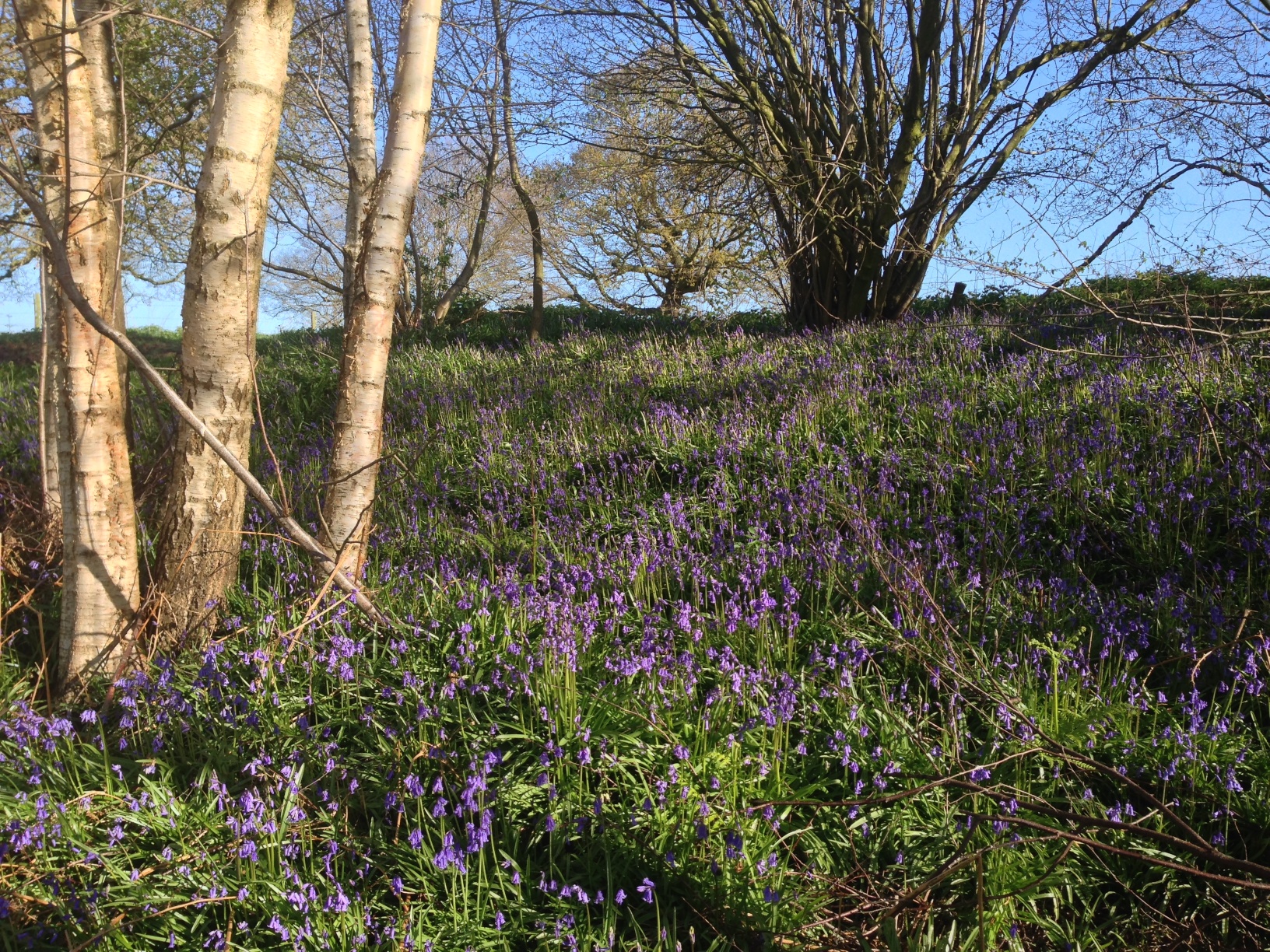
The Blakenhall survey was on Friday, which was a fabulously bright but chilly morning.  There was a low mist across the field as I walked to the reserve and Spring was in full swing with the bluebells now out, or at least on the sunnier slopes around the Moss.
Image

Hearing the bird song was a little more difficult this time as there’s now a mixed flock of greylag and canada geese around the reserve and they were making a racket. The stars of the survey must have been the blackcaps, with eight seen around the site, including a group of three chasing each other around.

Embed from Getty Images

Another highlight was seeing a pair of Marsh Tits, which I’d hoped to see last time but didn’t come across them.  Like the very similar looking Willow Tits, they are a red-listed species and have suffered 22% declines since the 1970s, although this is less severe than the decline in numbers of Willow Tits.  They are also a local rarity, so it was good to see them at Blakenhall as part of the survey – I’ve seen them before at the site when doing some conservation volunteering with the Wildlife Trust.

The BTO Breeding Bird Survey is more onerous than the Wildlife Trust version and takes twice as long.  On Saturday morning I did the first of the two surveys I’m doing in the grid square near the Cheshire sandstone ridge, centred around the Bickerton Poacher pub.  The survey requires two (roughly) parallel 1km transects to be walked making note of all the birds seen or heard.  Each 1km transect is divided into five 200m sections and the birds seen or heard are noted within 25m, 100m or over 100m.  Whether the birds were identified by song, call or sight is also noted as are signs and sightings of mammals.

The survey was done on another bright sunny morning and walking around the Cheshire countryside was a real pleasure.  There were no real species of note although the three buzzards circling above the hills were pretty special and I came across a couple of red-legged partridge.

Image

Breeding Bird Survey – Blakenhall Moss

This morning, accompanied by Jack, one of my conservation volunteering colleagues, I did the first of the breeding bird surveys at Cheshire Wildlife Trust’s Blakenhall Moss reserve.  It was not only the first of the year, but also the first ever at Blakenhall.

Just like the survey I did last week at the Trust’s Bagmere reserve, this was the first of four Spring visits to record breeding activity.  The survey follows a set route, walking at a slow pace and stopping every so often to observe and listen.  After a while you get really in tune with the bird calls and, if not careful, stop looking.  Surveyors record the species and number of individual birds seen, as well as noting any activity that may indicate breeding.  This is the Wildlife Trust’s version of the Breeding Bird Survey and differs from the more onerous methodology used by the British Trust for Ornithology.

Image

The route around Blakenhall isn’t the most straight-forward.  As I’ve blogged previously, the site was taken over by the Trust last year and they have already made significant progress to return to the site to its previous state as a sunken mire.  The site was covered in woodland but the majority of this has now been cleared, with only a ring of trees left around the outside.  The drainage outfall from the site has been blocked and the water level has risen significantly. The higher water level and the fallen trees and brash left over from the tree removal (and winter storms) have made walking the survey route much more difficult.  It was very easy to walk into deep water above welly-top level, so we had to skirt around the edge of the site to avoid the deepest flooded areas.

Image

Unexpectedly, the weather this morning was lovely, with bright sunshine taking the edge of the early chilliness and the forecast rain stayed away.  There was an iciness to the wind but the dip in which the Moss sits provided some shelter.

Spring really is getting into full flow at the Moss with the birds leading the way.  I saw my first hirundine of the year when a sand martin flew past at speed; it won’t be breeding at the site but there was plenty of singing from those that will be.  The chiffchaffs have arrived and are in good voice, their name reflecting their song – chiff-chaff-chiff-chiff-chaff-chaff-chaff-chiff-chiff-chaff.  The loudest of them all was the smallest – the wrens really do punch above their weight when it comes to singing and there are plenty of them at Blakenhall.  The plants are also coming into life with the bluebells having grown more each time I visit and some of the trees just starting to burst into leaf.

The survey took an hour and a half; it could have been quicker but we spent time trying to avoid the deep water.  Over that time we recorded 26 species (two less than at Bagmere last week) and there was one of particular note. We saw a pair of lesser redpoll, small finches that like alder and birch woodland, of which there is quite a lot remaining around the edge of the site. They are a red-listed species and decreased by 10% in England between 1995 and 2010 and are a rare breeder in the area.   I saw them at the same spot a few weeks ago and it is possible that these birds have been wintering here and will move to other areas soon but hopefully they will be breeding at Blakenhall and the next three surveys may confirm this.

Embed from Getty Images

The complete list included blackbird, blue tit, bullfinch, buzzard, canada goose, carrion crow, chaffinch, chiffchaff, coot, dunnock, goldfinch, great spotted woodpecker, great tit, greenfinch, jackdaw, jay, lesser redpoll, long-tailed tit, mallard, nuthatch, pheasant, robin, sand martin, treecreeper, woodpigeon and wren. It’s interesting to note the water birds amongst the woodland species as these will not have been at the site this time last year, before the woodland was largely cleared and water levels raised.

I’m no expert in bird calls and this was confirmed by one bird that has got me stumped.  It sounded like a drumming snipe (which is very recognisable) but I’m sure it was a vocalisation and not the drumming sound made by a snipe’s wings.  I certainly need help with this one.  It was also disappointing not to see any marsh tits as I’ve seen these on previous visits to Blakenhall and this would have been a good record for the site – hopefully next time.

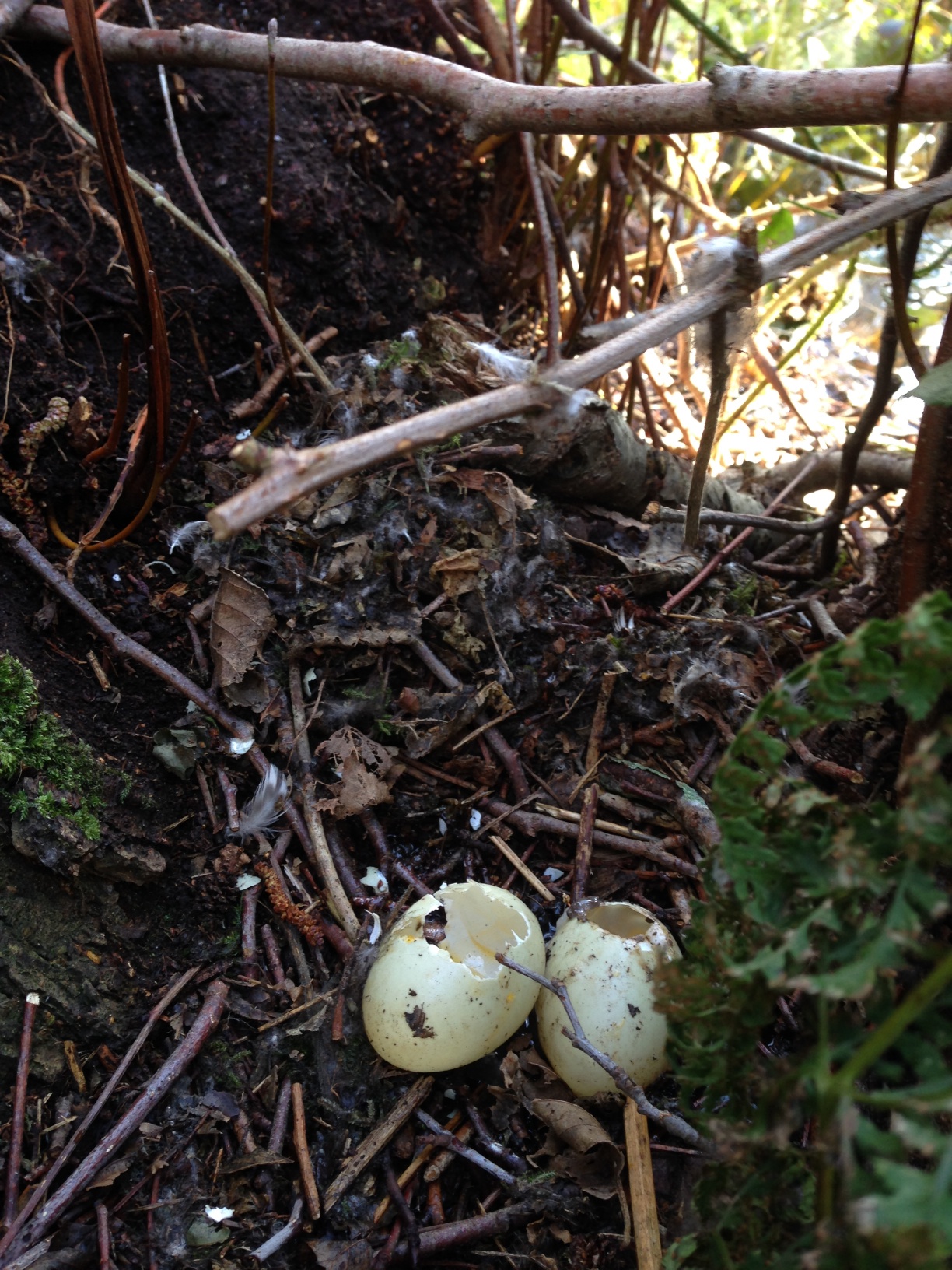
We found one bit of evidence to confirm breeding of one species during the survey – a mallard nest – but unfortunately, as you will see in the photo below, the pair will have to give it another try!

Image

Jack and I were in agreement at the end of the survey that it really is a great way to spend a Saturday morning – going for a wander around a woodland in the early springtime listening to the sounds of birds all around.  I can’t wait for the next visit!