An end to a warm autumn day

It certainly has been an unusual start to the season with the weather still in summer mode.  Many of the autumn signs are there, and have been for some time; the changing of the leaves, the darkening of the evenings and the cooling of the mornings.  Yet the days are warm and I’m still seeing the last few swallows and house martins around.

I went for another of my increasingly regular wanders around Wybunbury Moss a couple of days ago.  The wood at the edge of the Moss was quiet, with most of the summer migrants gone, and it took a took a lot longer to notice a good handful of birds amongst the trees or flying over.  There were roving mixed tit flocks passing from cover to cover, a sure sign that the breeding season is over, but I was also still seeing dragonflies over the open Moss – summer remains. The trees around the Moss are certainly changing colour; in fact one or two are almost bare already, while others seem to be in their high summer prime.

Wandering back to the open fields, I got a rarely seen view of a green woodpecker being chased by a sparrowhawk.  I hear woodpeckers at the Moss quite regularly but they are usually great spotted. I hear the greens only a couple of times a year and probably only see one once a year.  The woodpecker was yaffling away as is sprinted low across the Moss, while the hawk didn’t seem all that intent on catching its quarry, as it glided behind.  I’ve had some nice sights at the Moss over the last year or so but its often the case that you have to spend a lot of time at a location to get that kind of glimpse of wildlife.

As dusk started to fall and I walked up the slope towards the church tower, out of the bowl-like depression in which the Moss sits, I could feel the temperature increasing; there had certainly been a nip in the air open fields.  The bowl was acting as a sink, with the cooling air flowing downwards into the lower lying ground and what remained of the day’s warmth, was rising upwards with me.

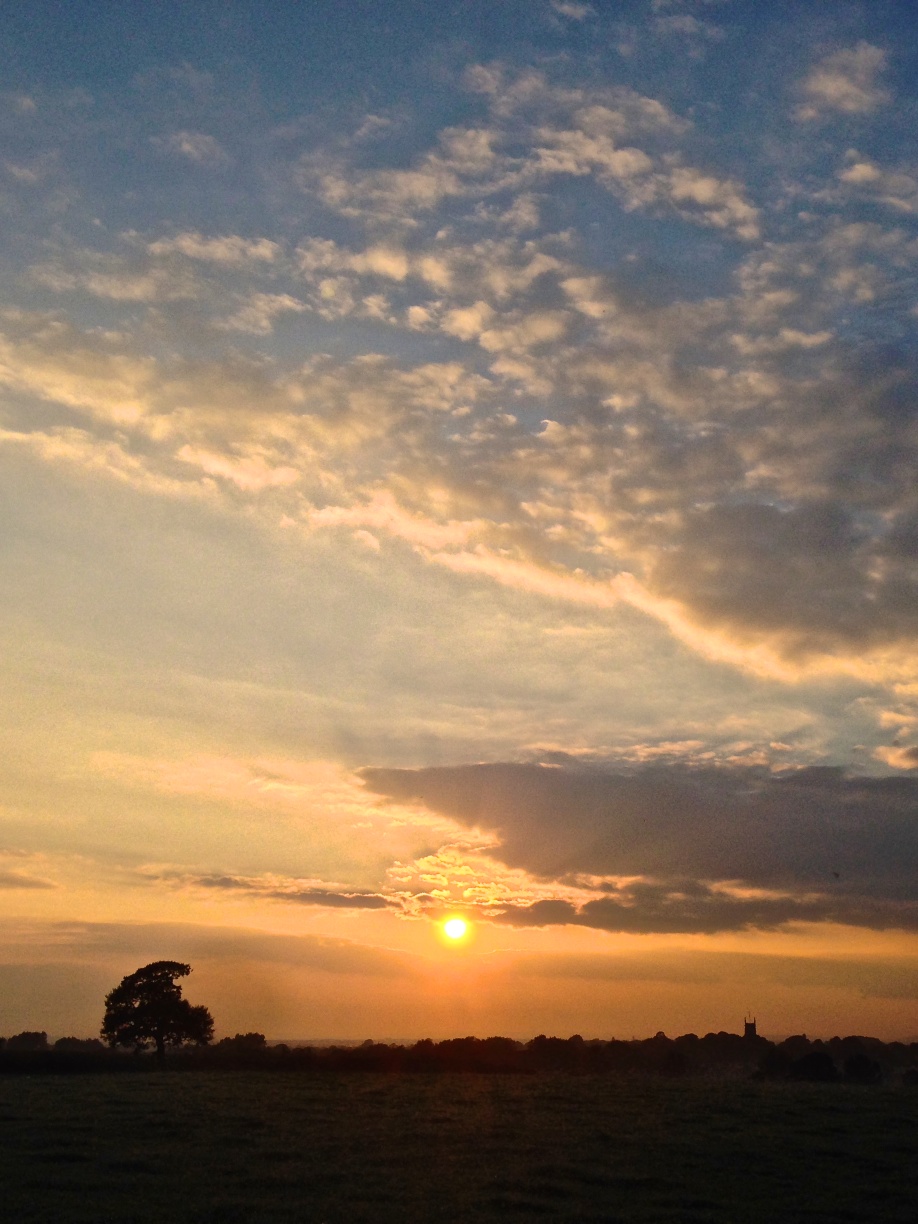
Driving away, I got a glimpse of the sunset over Wybunbury, the church tower standing out in silhouette. The last of the sun’s rays were still warm but the air flowing in through the open car window was cooling by the minute. 2
Wybunbury Moss in Spring

Yesterday I went for a walk around my local nature reserve, Wybunbury Moss.  I volunteer there quite often with the local conservation group I’m part of but I also like to go for a walk at the Moss and probably do so every three weeks or so.

I usually use the British Trust for Ornithology’s (BTO) BirdTrack app on my phone to record all the bird species I see and hear.  Yesterday, I recorded the most bird species I ever have done at the Moss, a total of 31.  One of the great things about BirdTrack is that you can go onto the BTO’s website and see all the records that you have submitted.  Interrogating my records for Wybunbury Moss reveals that I have recorded 57 species at reserve since January 2013.

While many of the species were fairly common, I did note both Raven and Willow Tit.  Ravens are starting to recover their former territories and I often see them at the Moss – for me their calls give me a real sense of wilderness.  The Willow Tits, as I’ve blogged previously, are a local rarity and have been in significant decline over the past few decades, so it was good to note them at the Moss again.

I first saw the ravens within the woodland that surrounds the Moss and they were calling quite irately for some time.  There was suddenly a call in return and I spotted a sparrowhawk nest high up in a fir tree.  Now I know where it is, I will have to return with my camera to see if I can get some shots of the youngsters after they leave the nest.

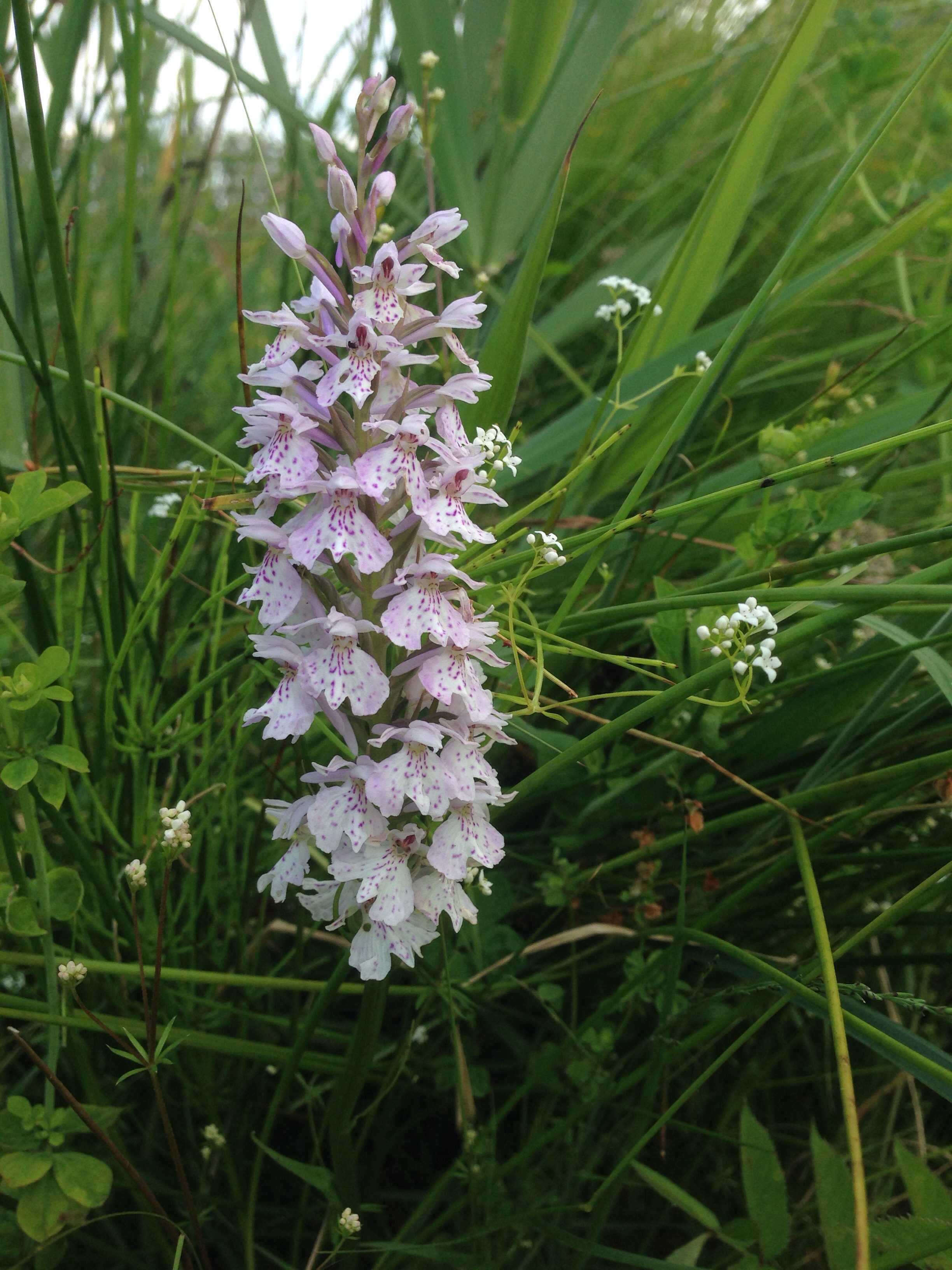
On the way out of the Moss, I passed through an area of wildflower meadow and took the following shot…


Visiting the Moss on a frequent basis means I get a real sense of the changing seasons.  From the first warm spring day spent on the Moss itself clearing fir tree saplings, to hearing and seeing some of the first migrant birds returning to breed and the trees coming out into leaf, to the wildflowers starting to bloom in the meadows. The season has been pretty special so far.


A hidden gem…

I spent most of Sunday with the local group I volunteer with, Crewe & Nantwich Conservation Volunteers (CNCV). I almost didn’t go; after a long day Osprey sitting on Saturday and getting up early to do a bird survey, part of me just wanted to go home and relax. What a mistake that would have been!

Image

Wybunbury Moss is a fairly regular haunt for CNCV and it’s always a good task each time we go there. However, this day was special. While I’ve been at plenty of tasks in the woodland and meadows around the outside of the Moss, I’ve never worked on the Moss itself and what a place it is!

The Moss is a schwingmoor or quaking bog – essentially, a glacial depression that has filled with water and then, over time, has been covered in a layer of moss, which in turn has become peat.  This has resulted in what appears to be a solid surface but in fact is just a three metre skin floating on a 13 metre deep lake.  The ‘solid’ surface does indeed quake and visibly wobbles if you jump on it.  It’s not a very safe place to be and is not open to the public but plenty of people in the group have experience of the Moss and know where to go, and more importantly, where not to.

Image

I arrived late after doing the bird survey and struggled to find the group but I eventually came across them lying in the Sun drinking tea and scoffing biscuits (not an unusual sight). When we decided to get back on with the task (they had already done some work to be fair), we spent the rest of the day pulling pine saplings from the surface of the Moss. Carried on the wind, pine seeds scatter easily and far from their parent trees, growing well where they land. If not controlled every so often, the woodland would start to encroach further and further onto the Moss.

ImageImage

ImageImage

We spent a few hours in total, under bright blue skies, with a strengthening Sun and fluffy white clouds, pulling the saplings and eventually we cleared them all. We did a final walk around the site just to make sure and then headed home. I parked some distance away, so wandered around the rest of the reserve on the way back.

We recorded a great deal of wildlife while we went about our task, including 31 species of bird, 5 species of butterfly and common lizard. There were also signs of fox, badger and rabbit. However, the most special sighting was of the first swallows of Summer flying past.

The reserve is a truly lovely place to spend a day and standing in the centre I could easily imagine that I was in the middle of the Scandinavian wilderness, particularly when the ravens went ‘cronking’ past. I feel privileged that I could visit a place that not many people can. To be honest, it really was a joyful day – and I was absolutely buzzing (in fact I couldn’t shut up about it!).

So few people seem to know that this place is there – probably a good thing too, as a few visitors would start disappearing if they ventured out onto the Moss. It really is a hidden gem, somewhere special and somewhere worth working for and protecting – and just on my doorstep too!

 24