
One last foxglove photo…
Reply

The title of this post may be ‘home with a view’ but as I write this there’s no view at all as low cloud is blowing past the front door.

The Bungalow is the Ramsey volunteers’ home for their stay, whether it be one or two weeks for the short-termers or six months for the intern. Sat on the eastern side of Carn Ysgubor in the north of the island, the Bungalow looks out across the drystone wall-bounded sheep fields to Ramsey Sound. Beyond the water is the mainland with lifeboat station at St Justinian immediately opposite the front door and St David’s nestled in the shallow folds of the patchwork quilted Pembrokeshire countryside. Off to the north can be seen Whitesands Bay, the distinctive hill of Carn Llidi and St. David’s Head; to the south is St. Bride’s Bay and usually a few tankers at anchor waiting to enter Milford Haven harbour. One of my favourite ways to pass my spare time on the island, whether first thing in the morning or last thing at night, is to sit on the Bungalow’s doorstep and look out over this grand view – in fact, I know of no better view.

The Bungalow is about 1km from the Farmhouse, where the wardens live and which is the main focus for all activity – it’s a pretty special commute each morning and evening. The Bungalow is also a short walk from the sea-watching hide, off to the north-west, which gives great views of the manx shearwaters as they pass each evening.
The Bungalow was built as a family summerhouse by a former owner in 1907 – that’s about all the history I know but will endeavour to find out more the next time I stay!
The building is made up of one main sitting-cum-dining room with north and south ‘wings’ attached – a little bit less grand than it sounds! The north wing houses the kitchen, the main bathroom and the intern’s en-suite bedroom. The south wing has the three bedrooms for the other volunteers (two singles and one twin). While the outside looks rather stark and not very summerhousey, the inside is characterful and quite cosy (especially when there’s a gale blowing outside!). All rooms are brightly coloured and most have birds painted on a few walls – the main room has a particularly good collection, especially around the fireplace.

The wood burning stove in the main room is the only source of heating in the whole building and it is usually lit in the early evening on cold spring or autumn days. In warmer periods, the Bungalow is a cool retreat from the strong sun but volunteers can still need an extra layer in the evenings when the sun dips behind the hill. There is electricity, from solar panels, and there is enough for lighting and charging small device such as cameras and mobiles. The hot water comes from a calor gas fired boiler which provides for great showers.


Sitting in a nature reserve, the Bungalow has it’s share of wildlife, both inside and out. Inside, there are some other residents to keep the volunteers company, including Vincent the Vole and Seb the Shrew. Outside the front door, the red deer often wander by, rabbits hide in the bracken and bats can flit past in the evenings. Clearly, there are also loads of birds but it is at night that the Bungalow has it’s most distinctive avian visitors. Anyone who stays in the Bungalow will be woken at some point by the loud, almost indescribable sound of manx shearwaters flying past in the darkest part of the night.
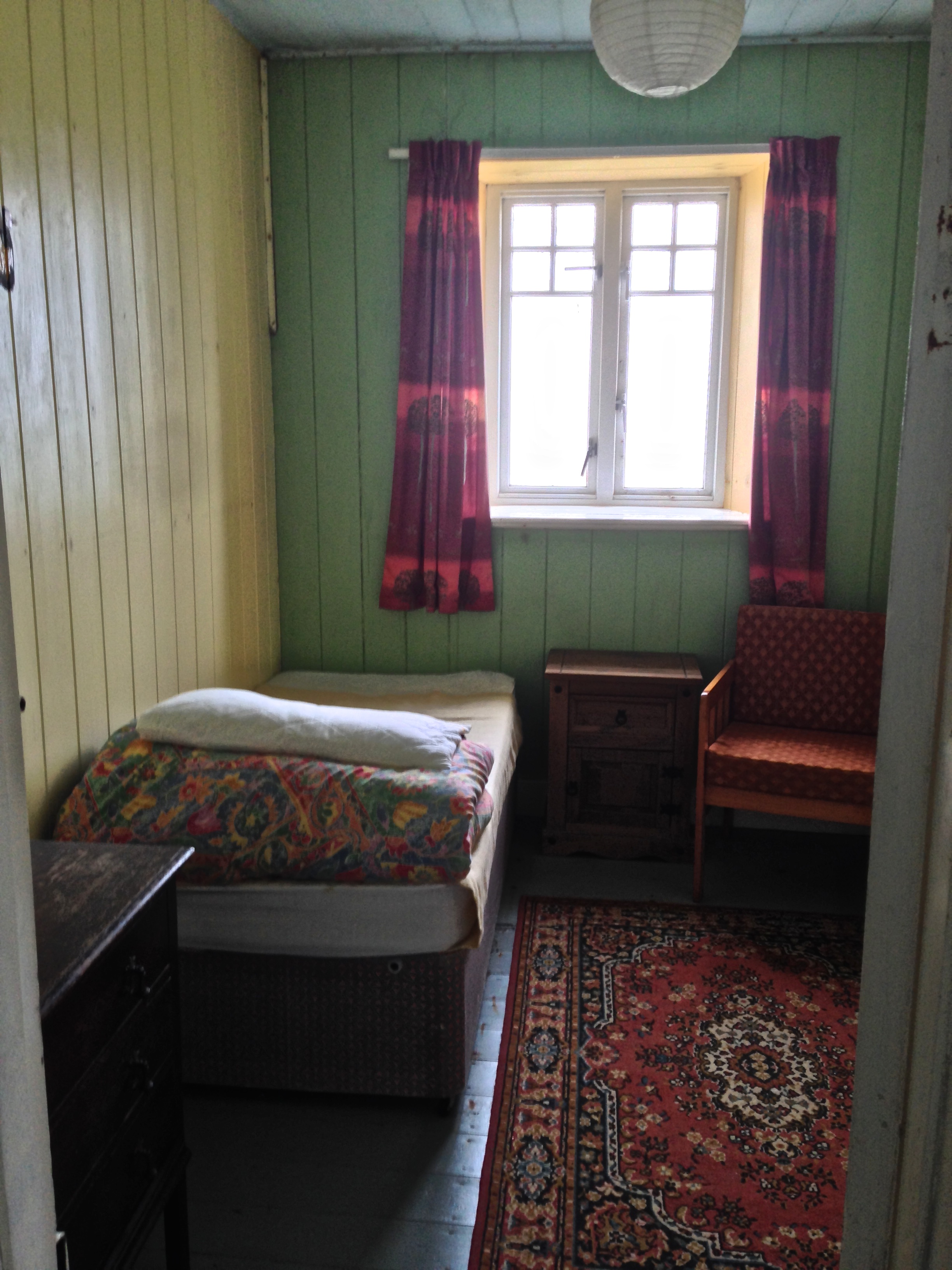
Tips for someone planning a stay in the Bungalow? Bring a hot water bottle, a head torch for reading in bed at night, a sense of humour, plenty of food, and alcohol to share. There is also the unwritten rule that no food may leave the island – the longer-staying volunteers will probably check your luggage on departure just in case you’ve tried to sneak any off.


Tonight there was a rather moody sunset off Ramsey Island, with the bright late afternoon giving way to clouds and strengthening winds. The sunset may not have been particularly remarkable but the scene beneath was.
Looking carefully at the waves beneath the cliffs, a few birds passing close to the water’s surface could just be made out. Looking even more carefully (I’d forgotten my binoculars), the few birds turned into swarms as hundreds passed by every minute, and closer to land than I had seen previously.
These birds were manx shearwaters, of which about 4,000 pairs nest on Ramsey. Their numbers have increased from around 800 pairs before rat eradication in 1999/2000. To avoid predators, shearwaters only make landfall at night. This is quite tricky at this time of year as the period of darkness is so short. The sound of shearwaters passing the Bungalow at night is one of the most memorable aspects of a stay on Ramsey Island – this link will provide you with an idea of the sounds volunteers hear when lying in bed at night.
However, these birds were not coming to Ramsey; instead they were likely to be heading to the islands of Skomer and Skokholm, 12km and 17km south of Ramsey respectively. In total, around 165,000 pairs of shearwaters nest on the two islands, therefore, the swarms passing beneath Ramsey’s cliffs this evening will easily have numbered in the thousands, during even the few minutes I was standing watching them go by.
Many people think that long distances have to be travelled around the world to see great wildlife spectacles, however, there are some incredible natural events right on our doorstep.
After four previous stays on the island, today I finally got around to doing an introductory talk to visitors. Each group of visitors (arriving on either the 10am or 12pm boat each day) is given a brief introduction to the island by either Greg or Lisa (the Island’s permanent residents) or Lizzie or Kate (6-month intern and 3-month summer volunteer) but today I thought I’d try my hand at it. The talk gives an explanation of how the island was bought by the RSPB, what the facilities are, where the walking trails go, and what wildlife can be seen and where. The talk also gives a bit of health & safety advice and reminds visitors what time the last boat leaves.

I was all ready to do the talk for the first boat this morning only for it to be carrying just one visitor, so I talked him through the trail guide rather than giving the full-blown presentation (it would have been a bit odd!). However, there were 25 visitors on the second boat at noon, so I gave it a proper go.
I was slightly taken aback to be faced by a group mostly made up of teenagers (on a creative writing trip from Marlborough College), but I think it went okay and I didn’t make anything up – and most important of all, they were all turned up for the last boat back across Ramsey Sound at 4pm.
There’s always something nautical happening around Ramsey, whether it be Gower Ranger bringing visitors to the island, the RNLI lifeboats going out on a shout, ferries passing in the distance or yachts sailing through the Sound. Much larger vessels can also usually be seen from the island and there are often a few moored in St. Bride’s Bay – Ramsey is at the northern tip of the bay.

I’ve got to admit that I’ve had a bit of an interest in ships since I was small, so staying on Ramsey Island gives me an opportunity to indulge in a bit of ship spotting! The ships moor in St. Bride’s Bay while waiting to go into Milford Haven harbour or to ride out storms; at the moment there’s six sitting out there.
There’s a website, marinetraffic.com, which provides information on ships around the world and enables the ships in St. Bride’s Bay to be identified.
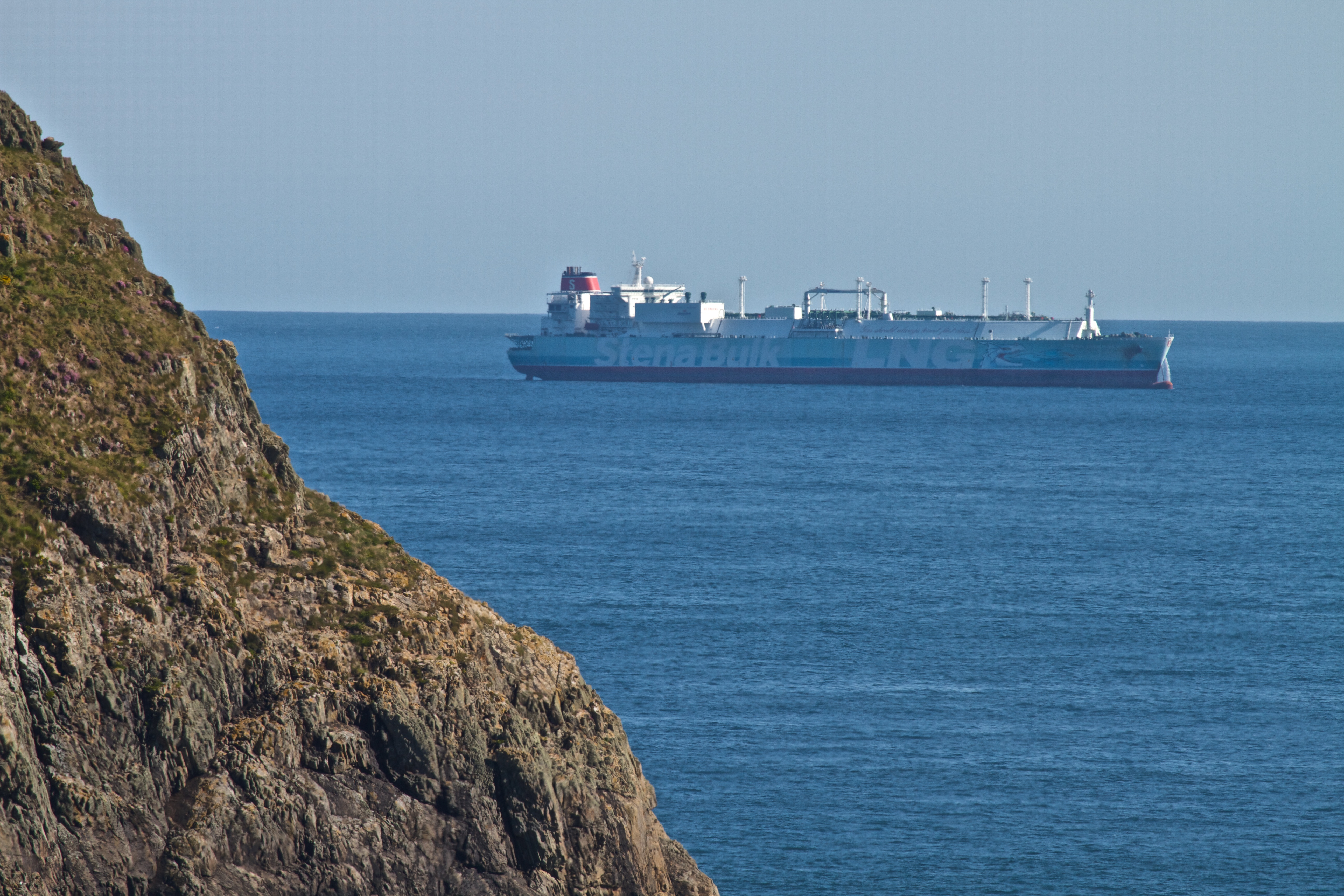
Below is the Stena Clear Sky, a Liquified Natural Gas carrier, which has been sat off Ramsey since I arrived a week ago.
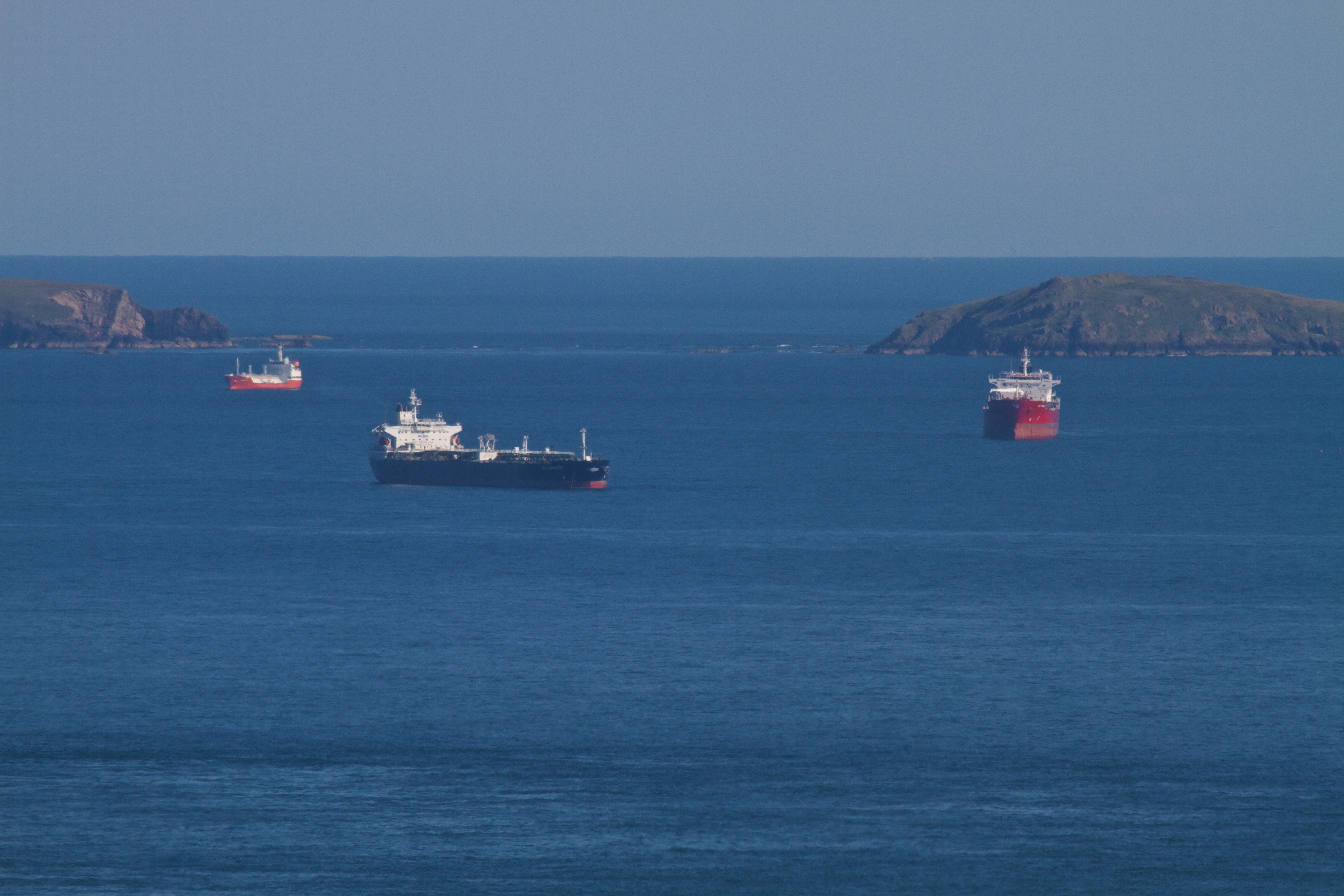
Left to right below are the tankers Ramona, New Conquest and Elisabeth.
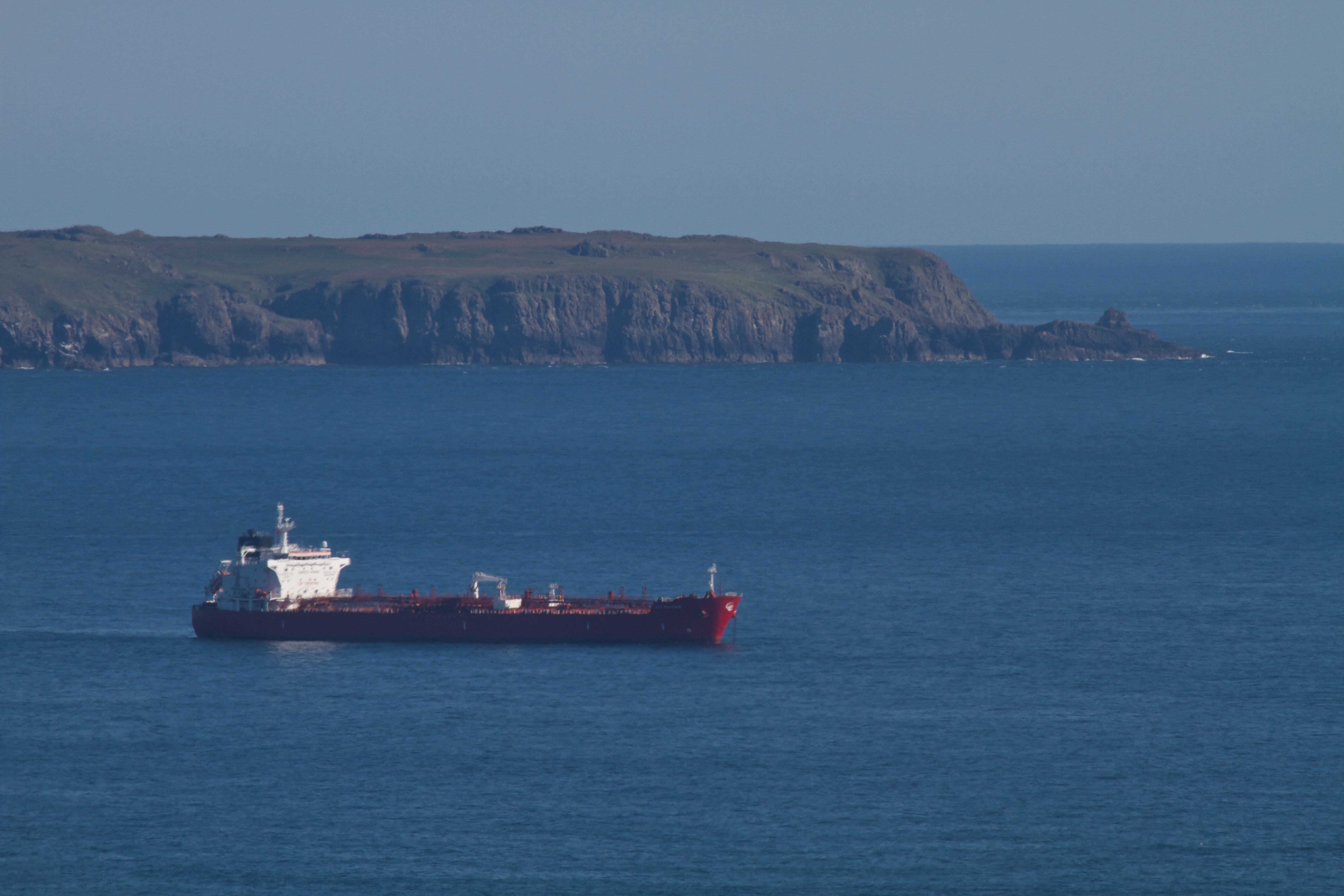
Also in the bay ARE STI Mayfair (below, with the island of Skomer in the background) and BRO Distributor, also both tankers.
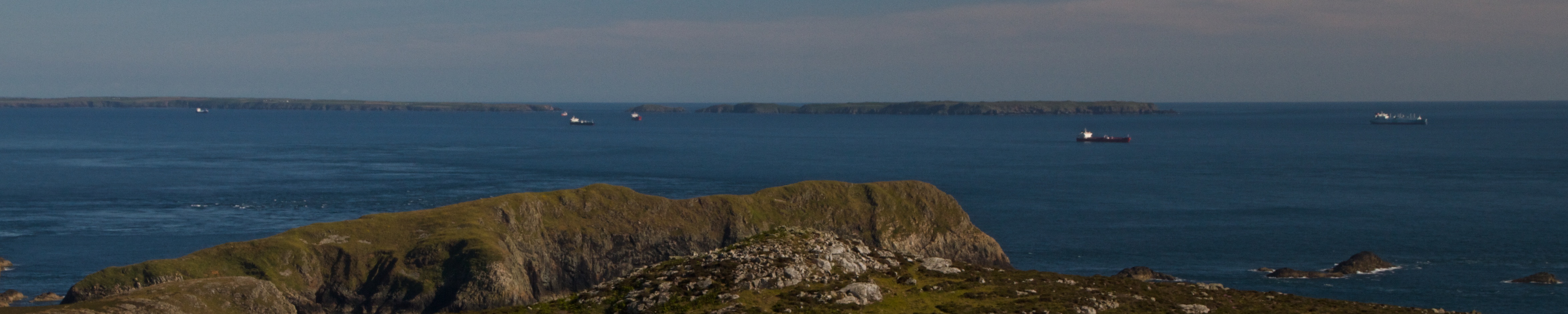
The ships often come and go at night so there can be different ships each morning, but often they sit out there for a number of days. There are also some regulars and I have seen BRO Deliverer and her sister ship BRO Distributor before.
Now, I need to get out of bed and see what’s sitting out there this morning!
After the stunning day we’ve just had weather-wise, I just had to go out and get the best of the light of the ‘golden hour’ before sunset…

It’s been a very bright and warm day on Ramsey Island; it started off bright with a cold breeze but for the breeze to drop and the sun to gain in strength during the afternoon.
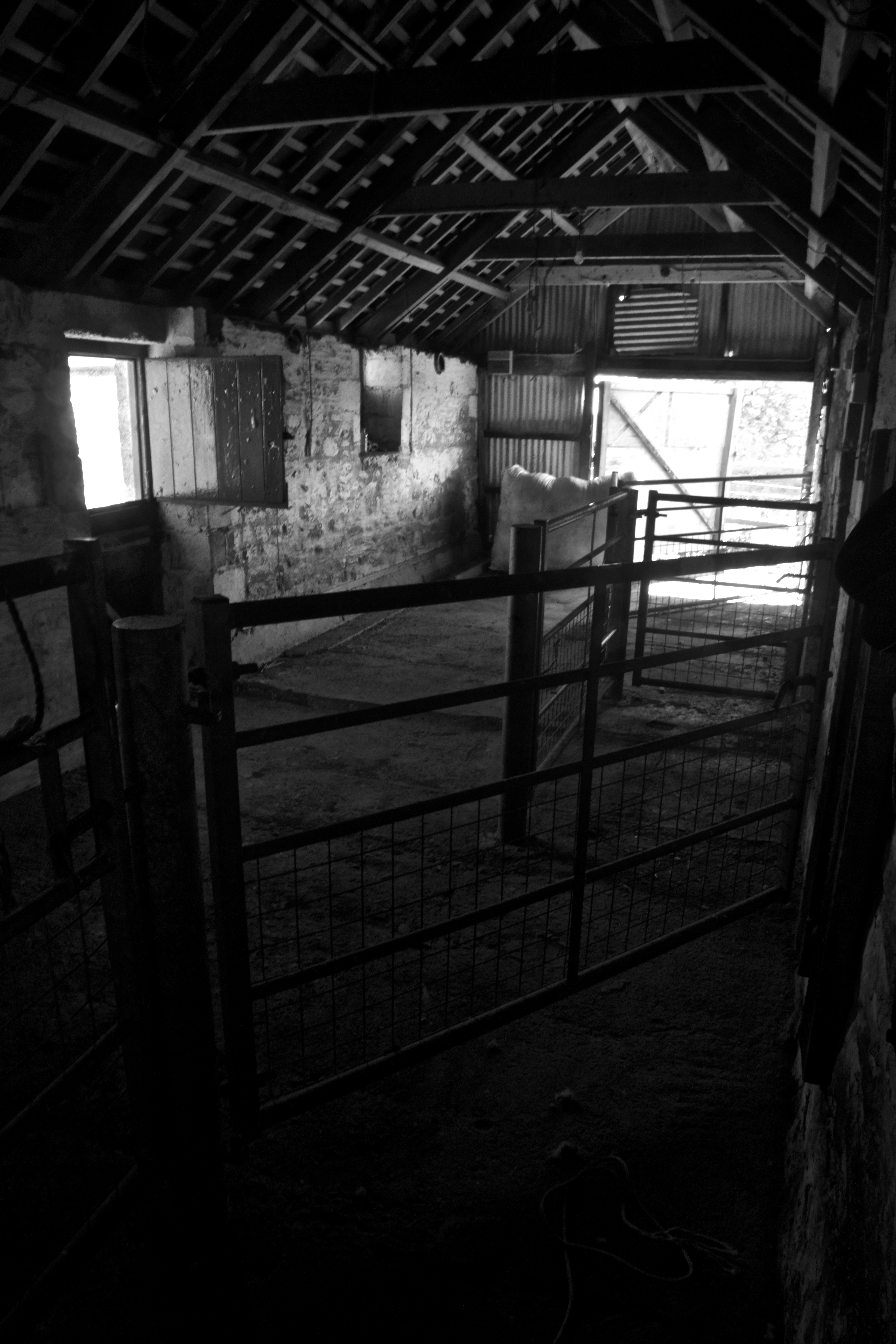
Today has been a typical day of volunteering with visitor boats met, visitors made tea and coffee, sweeping the shearing sheds, checking on chough nests to see if the young have fledged, and finally a bit of thistle control (cutting them down with machetes).
After the visitors left for the day and the radio enthusiasts had been loaded into the Gower Ranger following their three-night stay in the farm buildings, I went for a wander around the island. I spent a while sat at the top of Carn Llindain (the island’s highest point) looking out across Ramsey Sound towards the mainland. With such clear skies, I could also see the Smalls Lighthouse and (very faintly) the Irish coast.
Below is the view from the top of Carn Llindain looking over the farm buildings and Ramsey Sound to St. David’s and the Preseli Hills in the distance.

On my evening wander I also tried to get some shots of the wildlife; below is one of many young fledglings flitting around the island – this one being a Wheatear.


After the hinds wouldn’t position themselves in an orderly way the other evening, the stags made up for it today by mooching around the foxgloves immediately outside the Bungalow this afternoon…
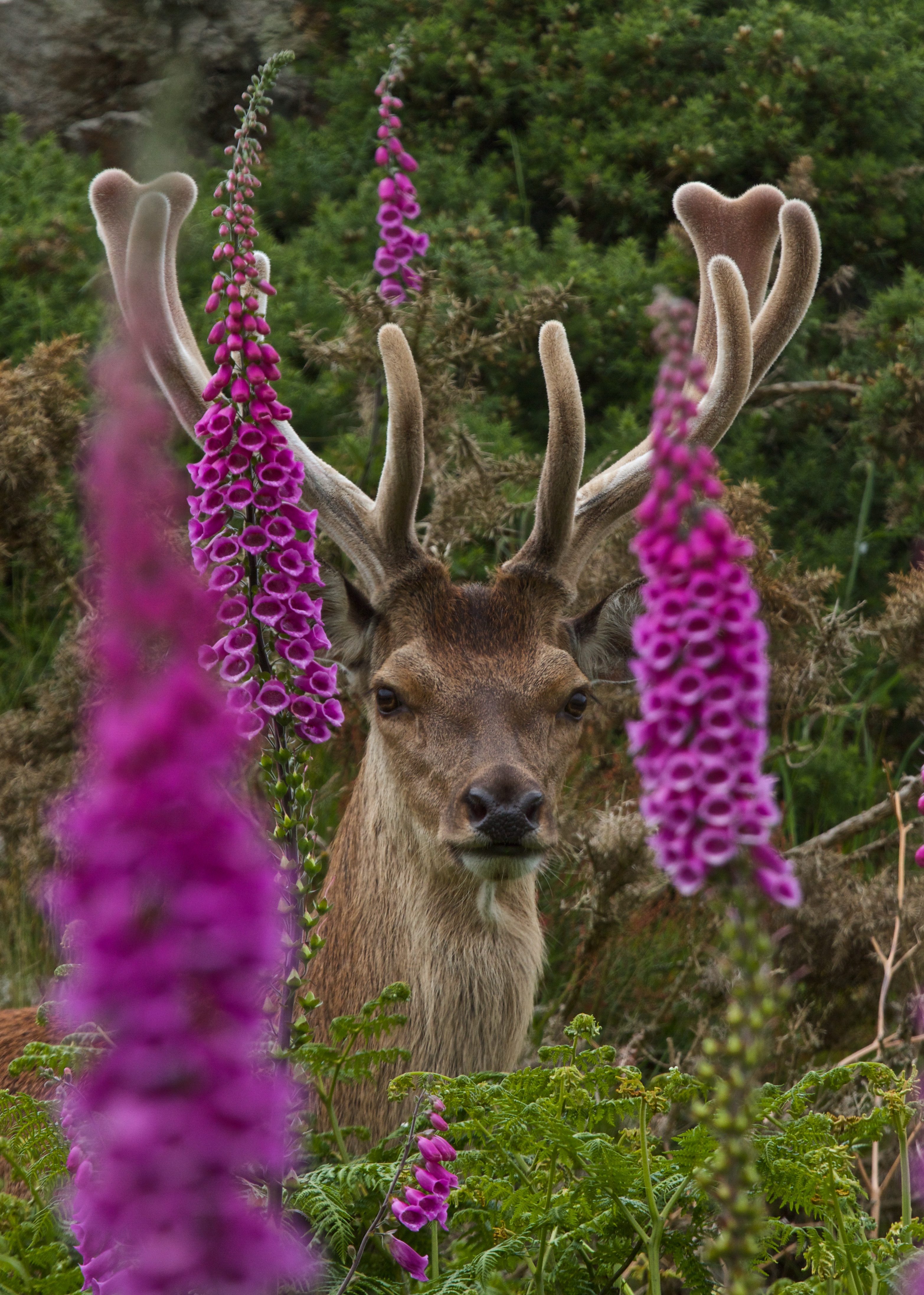

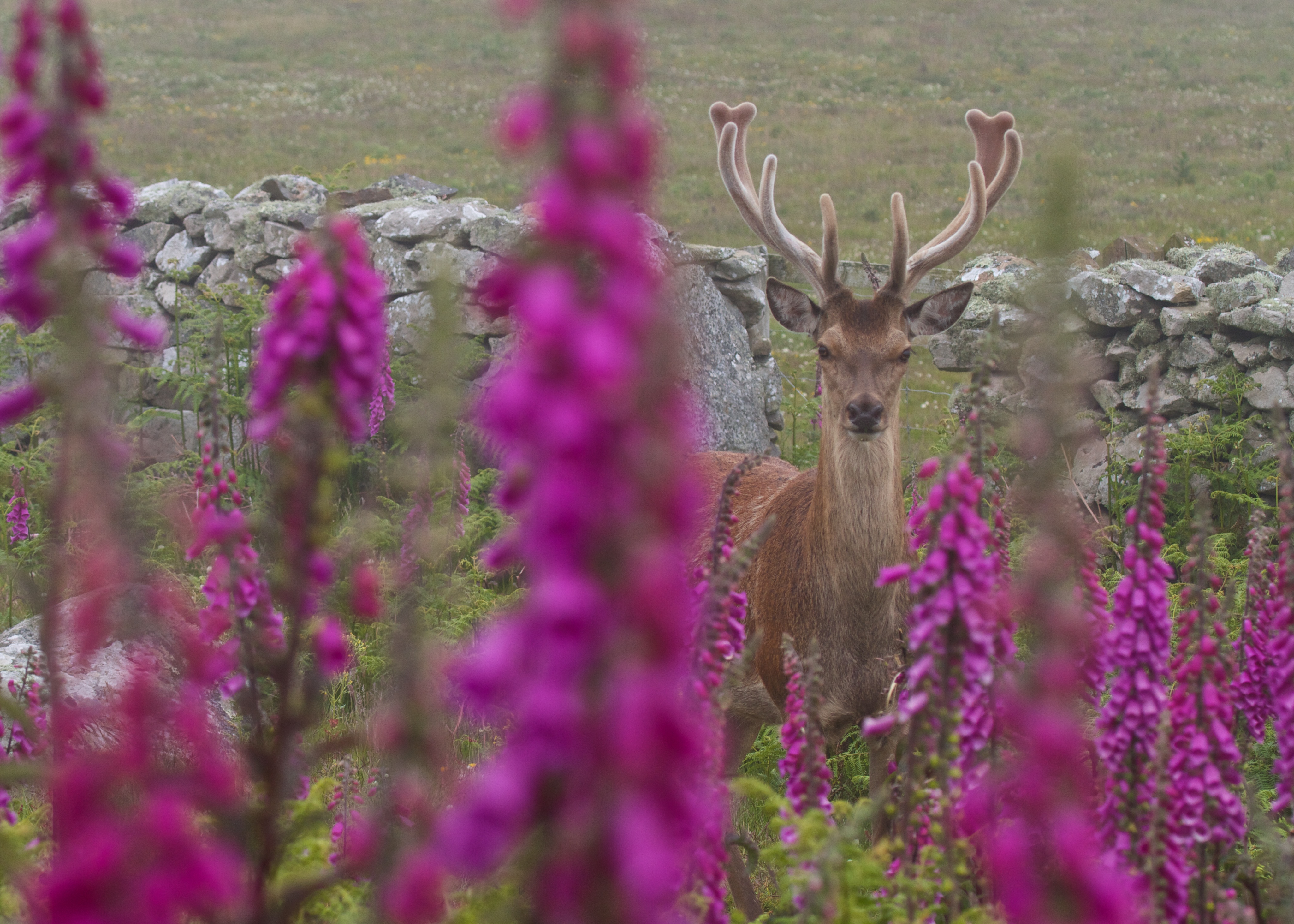
There are 14 red deer on the island, left over from a deer farming enterprise in the 60s and 70s, with four stags and 10 hinds…and possibly some calves hidden away somewhere in the long bracken.


 Daft Mumblings