Mid-winter? The lowest ebb?

It’s been a strange winter so far; well, it’s hardly winter is it? Surely 2015 was just one long autumn with occasional bright day to give hope which was cruelly ripped away again by the now predictable misery of cloud, wind and rain.

IMG_7747

With the first signs of spring appearing over Christmas (I saw flowering brambles and hawthorn coming out in leaf), it seems strange that we haven’t even got to the point in the seasons when the northern hemisphere should be at its lowest ebb. The end of January and early February should be the coldest period of the year but up until very recently the signs have been that the usual lowest ebb might not even happen this time around.

Yesterday morning as I left home, well before even the slightest rumour of light appeared on the horizon, a robin was singing from a nearby hedge and as I left my car at the station a song thrush called out from the darkness. I previously wrote a post about the first time last year that I had heard the birds starting to sing as I left home – the date of that post was well over a month later than the first time I heard the initial notes of the dawn chorus this year.

I’m sure my body clock is still waiting for last summer to happen and I think without a bit of proper winter weather it might go completely out sync with the world.

Maybe the weather over the past year and particularly the recent warm few weeks has been exactly that…weather. Alternatively, it could be that El Niño is having an effect, causing our temperature and rain records to be broken. However, it could also be that global warming is starting to take hold, to some extent, and the exceptionally early blooming of flowers and bursting of leaf buds is something we may need to get used to – we certainly will if predictions come to pass.

If global warming means the weather over the past 12 months is a sign of things to come, I might just have to move to somewhere that still has proper seasons.

I thought that the time birds started singing at dawn was more linked to light levels that weather but perhaps the higher temperatures have kickstarted their territorial behaviour early. But what wider effects will changing climate have on flora and fauna? I’m no expert but there are some obvious implications – habitat loss, changing levels of food availability and shifting of migration patterns.

Take just one species – ospreys (okay, they don’t really do the dawn chorus but humour me!) – what could global warming do to them? They have two habitats to rely on, at either end of their migration. Will rising temperatures mean that their food source changes? Will fish stocks deplete or current species move out and new ones move in? We can only wait and see…and hope.

In just a couple of months the ospreys will begin their journeys north from their wintering grounds. In North Wales there is a group of dedicated volunteers who will once again spend days and nights protecting a nest from egg collectors and showing the public views of the birds from a visitor centre. Their hard work is undertaken in the hope that their efforts will help establish a larger and sustainable population of these birds not just in Wales but across the UK.

However, in the long term, if equal efforts aren’t made by everyone, to reduce their environmental impacts and help to restore what has already been lost, it could be that the work of these volunteers, and thousands like them working elsewhere, is permanently undone by climate change; the work of the few undone by the many.

The biggest threat is the indifference of the many leaving the fight to the few; this is not a fight that the few can win, it can only succeed if fought by the many. Without that effort, it could be that missing the lowest ebb of the seasons this winter is just one of a growing number of signs that the life our environment as a whole will irrecoverably ebb away.

(P.S. In writing this, I am, of course, a hypocrite; I do enjoy those two-hour drives each way for a protection shift!)

Long-eared Owl

I recorded a ‘lifer’ today (what twitchers call a bird that you haven’t seen before – not that I’m a twitcher, or a birder for that matter, I’m more of an all-round nature enthusiast!).

IMG_7763

Long-eared Owl – it is, really!

I think the above photo shows that I’ve got to the limit of my phone’s photographic abilities – time for a New Year present to myself, I think!

Happy New Year!

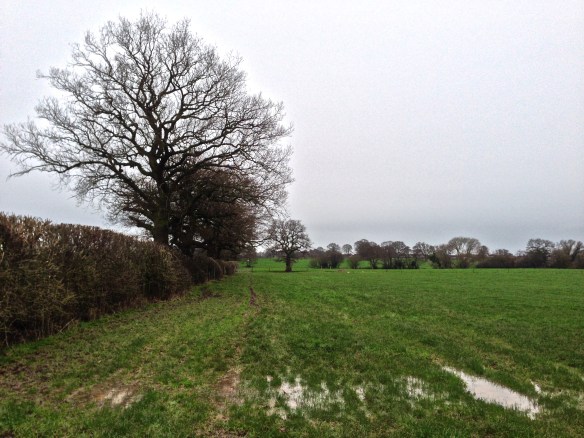
I started the year with a walk around my local patch of countryside – driving somewhere would probably have been a bad idea after last night!

There’s been a change in the weather overnight – it’s still wet and windy but there’s now a bit of a chill in the air and there was a light frost this morning before the rain resumed.  It’s been a while since I walked the nearby footpaths and the rainfall over the last couple of months has left the land saturated and it took longer than usual to walk the loop due to a bit of slipping and sliding in the mud.

IMG_7757

It might be a quiet start to my year but I’ve got lots planned with more bird surveys for Cheshire Wildlife Trust and British Trust for Ornithology, local volunteering with CNCV, hopefully some protection shifts with Bywyd Gwyllt Glaslyn Ospreys and a fortnight with the RSPB on Ramsey Island in June.  I’ve also put my name down for a new volunteering opportunity – I fancy a bit of a change and something new to do this year.  On top of all that, I’ve just booked a week on North Uist in April and I’ve got a trip to Sweden in July plus I might get a couple of wildlife holidays in too (possibly Finland and Poland).

Plenty to look forward to and hopefully plenty to blog about too!

A last reward from the final bird survey of the year

After being foiled by the weather since the beginning of November in my attempts to complete a winter bird survey at Blakenhall Moss, I finally managed to get it done a couple of days after Christmas.

I do these surveys for Cheshire Wildlife Trust (CWT) at their Blakenhall Moss and Bagmere reserves and need to make at least two visits to each site over the course of the winter; one in November/December and the other in January/February. I did the first Bagmere survey on 1st November in a short weather window but there hasn’t been any suitable weather (dry and still) since or at least on days when I’ve been free.

IMG_7740

Blakenhall Moss

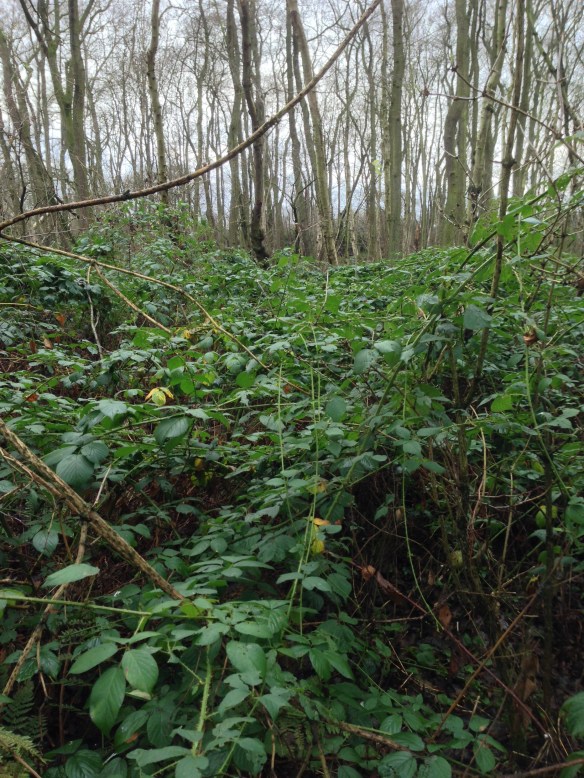
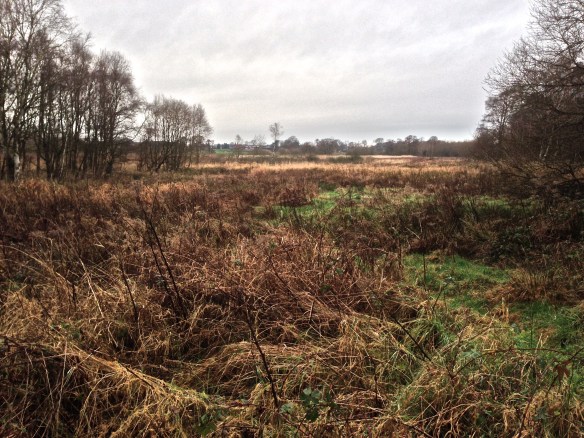
The last breeding bird survey visit I made to Blakenhall was back in May and the site has become even more overgrown by brambles. The reserve sits in a large depression in the Cheshire countryside and the Wildlife Trust has cleared the woodland from the site, except for a narrow band of trees around the boundary. The drainage ditch from the site has also been blocked and the water levels have now risen. This has left only a relatively limited area through which the bird survey can be undertaken, in a large loop through the remaining woodland. However, the bramble growth and the higher water levels made the survey very difficult and I spent more time bashing through the brambles and wading through the water than actually observing and listening for birds. Some parts of the survey route are now almost impassable and I suspect that the next year will see the brambles blocking the survey route altogether.

IMG_7734

Pesky Brambles

Despite the difficulties getting around the site, I did manage to complete the survey, although I suspect the disturbance I caused getting around may have distorted the findings. I recorded 21 species including three of particular interest. I found marsh tit and and lesser redpoll, two red-listed species, and a good-sized flock of teal. The teal first wintered at Blakenhall last year, following the raising of the water levels and the flock has returned but is now slightly larger.

Another positive finding was that the invasive species work that I’ve done at the site with Crewe & Nantwich Conservation Volunteers (CNCV) has been a success. There were several areas of the site that were overgrown with rhododendron and several visits were made to clear the largest of the areas of this non-native species. After a full growing season since the area was cleared, I found only a small amount of regrowth and this could easily be removed with one further visit (maybe some of the bramble could be cleared at the same time!).

IMG_7737

A small amount of rhododendron re-growth

Whilst not necessary, I also took advantage of the weather window to do a second November/December survey at the Bagmere reserve and it was well worth it. It has been quite concerning that during the past 12 months willow tits haven’t been recorded at the site. Over the course of the year I have done seven surveys at Bagmere and undertaken several tasks with CNCV but haven’t recorded these birds during any of those visits. As I was on the return leg of this survey, having made my way to the far end of the site, I stopped to watch a small roving flock of birds. Amongst the blue tits and a goldcrest were two other birds but I couldn’t confirm what they were to begin with. Marsh tits and willow tits are virtually identical and I find it impossible to visually tell them apart, however, they make distinctly different sounds. After waiting for a while one of the birds made its harsh call which made it immediately recognisable as a willow tit – they’re back!

IMG_7741

Bagmere

The previous recordings I have made of these birds at Bagmere have been made easy by their willingness to make their calls but perhaps they’ve just been a bit quieter than usual over the past few months and I need to take more time during surveys to ensure I don’t miss anything.

Well, that’s it for my surveys in 2015 (breeding bird surveys and winter bird surveys at Bagmere and Blakenhall for CWT and a breeding bird survey near Bulkeley and a House Martin Survey for British Trust for Ornithology; and a cliff-nesting bird survey by jet-boat with the RSPB) but there will be more to come in 2016. Hopefully these will include surveys of the house martin nest on my house – it’ll make a change to do surveys from a seat in my back garden rather than bashing my way through brambles and wading through flooded bogs!

CNCV: Christmas Task

Today was the Christmas Task for the local conservation group I volunteer with and like last time out we spent the day at Wybunbury Moss National Nature Reserve.

IMG_7704

Today’s task was to make good use of the burning platform that we built from logs a fortnight ago.  Natural England has been working at the site over recent weeks and our task was to burn the brash left behind by the tree removal operations.

It wasn’t all work and at lunch, with the fire having burnt through most of the brash, it was time to get stuck into the Christmas food.  Soup, potatoes and mince pies were followed some time later by the sausages I cooked over the hot embers of the fire.

IMG_7714

To finish off the day we had (non-alcoholic) mulled wine and chestnuts roasted over the last of the fire’s heat – proper Christmas food – and all consumed under a rare clear and bright blue sky.

IMG_7726

Crewe & Nantwich Conservation Volunteers: Wybunbury Moss

I spent today with CNCV working for Natural England at Wybunbury Moss National Nature Reserve.  Whilst I often go for a walk on the footpaths and permissive path around the outside of the Moss, today was a rare opportunity to spend time out on the Moss itself.

IMG_7677-3

Natural England employed us to thin the woodland cover on the edge of the Moss, taking out birch trees and using the large logs to build a fire platform.  Natural England has been much of the woodland thinning itself, so our task in two weeks time will be spent trying to burn as much of the brash as the fire will take.  Our next outing will also be our Christmas task – everyone chips in with some festive food and we use the fire to heat it, while keeping ourselves warm too.

Whilst today’s task wasn’t particularly cold to begin with, the driving rain in the morning soaked us and by mid-afternoon everyone was starting to feel the chill – an early finish was certainly welcome!

Working on the Moss itself is a real privilege as there is no public access to  the site due to the dangerous nature of the ground. Under as little as a metre of moss and peat, lies a lake which is up to 12 metres deep – walking across the Moss, the surface moves and ripples.  If it wasn’t for the odd house or two visible from then centre of the Moss, you could easily think you were standing in the middle of a wilderness area – it’s quite a special place.

Washed-up Starfish

A couple of weeks ago I had a weekend away in Lincolnshire and on one of the days I went for a walk at Gibraltar Point, one of the local Wildlife Trust reserves.  While I was there, walking along the beach, I came across hundreds, perhaps thousands, of washed-up starfish.  It was a sad sight on what was otherwise a beautiful walk along the sands.  It was a typical autumnal day with a keen wind and dark clouds threatening to deliver their load at any moment, the rain held off for a while but eventually soaked me.  Despite getting very wet, it was a lovely way to spend an afternoon.

IMG_7653

When I got home at the end of the weekend, I looked up what could have caused the mass washing-up of the starfish and came across a newspaper article from nearly three years ago – another similar incident not far north up the coast.  I was worried that this might have been caused by man but it appears it was probably just the result of bad weather.