Flying into high summer

Shorts seemed to be the order of the day as I left home but I became more uncertain about that decision as my journey wore on. All the signs of the season at its height were there; all apart from the sunshine of the previous few days. Even in the early morning, holiday-makers were on their way west into Wales; caravans being towed, people carriers packed to their limits and all manner of sporting kit piled onto roofs or hanging off bootlids. The hedge-bordered roads were slower than usual, giving more time to take in the scenes. The lambs have grown almost as big as the ewes, getting fat on the lush deep-green grass given strength by the heavy rain showers and strong sun. In other meadows, the farmers were cutting hay into long lines ready to be gathered into bales and stored away for the winter. The roadside flowers are less plentiful than on previous journeys but there are flushes of rosebay willow herb, the occasional foxglove still blooming, and brambles showing that there may be a good blackberry crop to come.

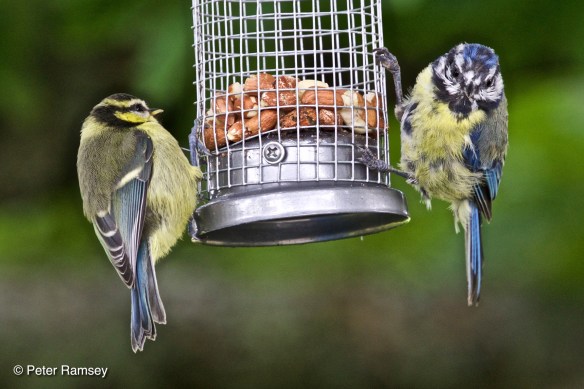
Turning onto the track, heading down to protection, the space for vehicles has become even more confined with bracken and bramble ever further encroaching into the way. In some places the farmer has cut the verges but in others the car flicks the vegetation as it passes. All sounds of spring have gone and there is silence on the way towards the meadows. Parking the car, it’s a muddy walk, the cows having made a mess of the gap between the fields and the rains having made it worse. As I approach the site, there are small birds aplenty on the abundance of feeders, blue and great tits, nuthatches and chaffinches, accompanied by a couple of great spotted woodpeckers.

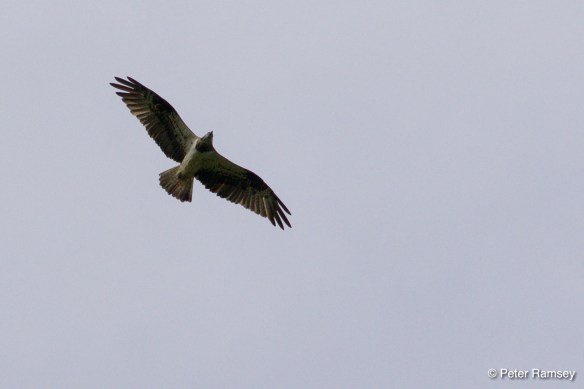
Inside the caravan there is anticipation and excitement as the long wait for the second chick to fledge is coming to an end. As I step in W8 lifts from the nest and a bird is seen circling around the trees beneath but it’s W7 confusing things and W8 was only momentarily airborne and still within the confines of the nest – the wait goes on into the hours of my shift.
5R0A4296

It was a busy and tense shift compared to the last few and as a last shift of the year, one to provide memories to take away. The will-he-won’t-he? question remained unanswered until almost the very end of my time. W7 having fledged two days previously, W8 was expected to make his maiden flight away from the nest at any time. After confusion when I first arrived, he ‘helicoptered’ above the nest a few times and transitioned between nest and perch and back again but seemed very hesitant to make the big step and leap away from his natal home.

There were intrusions into the parent-protected airspace around the nest with up to three intruders at one time, and the parents giving chase and entering into dog-fights, stooping and rising to ward off the unwelcome visitors.

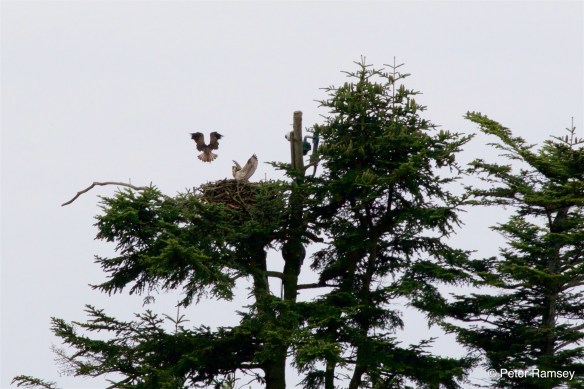
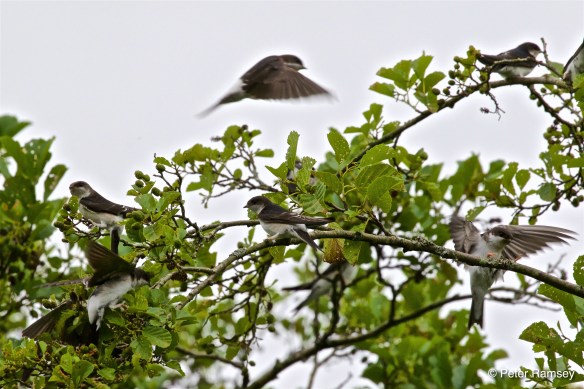
As I was about to give up hope, there was a cheer from the forward hide. My attention had been taken off the live stream and I had been watching a crowd of house martins circling and landing on a nearby tree but I rushed back into the caravan to see an empty nest. Grabbing my camera, I had a distant view of a madly flapping W8 flying around the tree and coming into land back in the nest, almost on top of his sister.
5R0A4540

My last shift of the year ended on a high and as a drove back up the wooded track for the last time, windows open to take in the last of the valley air for another osprey season, there were two successfully fledged chicks sat in that high up nest. It will only be a matter of weeks until they make the journey south – but hopefully to be seen again in two or three years’ time.
5R0A4477

Time Moves On

A subdued atmosphere hangs in the trees as I head down the track today, the sounds of spring have fallen away and the only noises are the thwack of bracken against the wing mirrors and the crack and crunch of twigs under my tyres. There’s a coolness in the breeze coming through the open window and a muffled light, stifled by the thick woodland cover and held back by the patchwork of passing clouds. Out onto the open valley floor, between stone walls and damp meadows, the air becomes warmer but quicker, the breeze increased to windy gusts, chilling in the gloom. The seasons have moved on here, spring prime gone and summer just beginning. The plants have grown to their full height but faded from their bright freshness to darker, fixed tones and early flowers are a distant memory, even some later blooms are starting to fall. The fruits of the dawn chorus are out in the open, young finches, tits and thrushes feed, chase and squabble in the trees and bushes, all under the eye of a waiting hawk. I get a first sight of the other young in the valley, high above the fields in the tall copse. My last visit was spent in wait for eggs to first crack but so much time has passed since then; the chicks are almost in full feather and beginning to flex their wings. It won’t be long until those wings are lifted into the summer air.

5R0A3223

It was a quiet shift today with the chicks resting in the cup of the nest for most of it, with a bit of preening and wing flexing; there was more snuggling than arguing. They are also starting to stand properly on straightened legs, bringing them to their full height, although not yet up to their parents size. Mrs G was either sat on the perch or on the nest much of the time or occasionally chasing crows, and I didn’t see Aran until early afternoon when he returned with a trout. It all got a bit panicky for them mid-afternoon when the farmer came into the field by the nest with his dog to check on the sheep. Both adults took to the air and flew around for a while but she returned to the nest after a short time and he disappeared into the distance; the chicks seemed oblivious. He returned later with what looked like a whole sea trout (could easily be wrong as my fish ID skills are pretty poor). It got quite windy towards the end of my shift; I thought the caravan was going to lift off it’s wheels at one stage!

This slideshow requires JavaScript.

During my shift I had a strong feeling of time moving on; the seasons, the year, the years, and the subdued atmosphere I sensed on my arrival seeped into my thinking. The five weeks since my last shift has brought changes to the valley; the plants have grown, flowers bloomed and fallen, and birds fledged. I’ve missed the early stages of the osprey chicks’ growth since hatching and they don’t seem far from the size of their parents.

I had a sense that the year is moving past at speed. It doesn’t seem long since the Glaslyn training event in the dark days of late winter, spring has been and gone, and summer is already upon us (although no one has told the weather apparently!); it won’t be long until osprey parents and fledglings start their journeys south. The busiest period of my, now usual, conservation year is coming to an end with bird surveys finished, my two weeks on Ramsey Island gone and not many osprey shifts left.

I also had a sense of greater scale of time moving on. I have a significant birthday to mark soon, one I’m not altogether comfortable with but one to mark all the same. It’s strikes me that there’s only so much time in life to make a difference – whether that time be the hours in the week, the weekends in the year, or the years in a life. It’s easy to let time pass unmarked and let life drift and that risks missing chances to make an impact and a difference. It got me thinking about conservation and what contribution I make. I’ve already had my ‘midlife crisis’ moment, an early one if that’s what it was; it was now nearly five years ago when I started 12 months away from work and began my stop/start journey through conservation – including a month, altogether, with Mrs G and 11/98.

In the decades of my life so far, so much of nature has already been lost. What the new generation is beginning with, the environment, the plants, birds, insects and animals, is so diminished from what my generation started with and that in turn was much diminished from previous generations. There is a risk that the new generation may use what they inherit as the benchmark norm, to see that as what nature should be like, as others have done so before. Those benchmarks are lowering with every new generation and mine only has so much more time to lift it back up to a higher point from which our successors can take it on.

What has been lost over that time was put into sharp focus by the State of Nature report in 2013 – a copy of this sobering document can be found here. The report highlighted many frightening trends including that a group of 155 species it had data for, some of the most threatened in the UK, had declined by 77% over the last 40 years with little sign of recovery and that the UK has lost 44 million breeding birds since the late 1960s.

However, over the last five years, I’ve been involved with a range of conservation organisations and projects, some large and some small, some well established and some just starting out. Whilst what we have now is much diminished, these organisations give hope and there are good signs amongst all the bad. When I came into the world, there were barely any ospreys in the whole of the UK and none at all in Wales. Over time this has changed and not only are they thriving in Scotland, there are now growing pockets of populations in England as well as in Wales. The work of the volunteers at Glaslyn and many others like them, have helped to reverse the decline of this species and bring the growth in numbers – there just needs to be many more people making efforts to bring success to other parts of nature.

5R0A3502

Time moves on…no one knows yet what impact recent decisions will have on conservation, with potentially so much to do, what time will be given in government to the environment and nature? What will happen to the existing legislation and policies? With these challenges, of politics, governance and available time, is the chance for this generation to repair the damage of the past slipping away?

There may be opportunities as well as problems but that’s the exciting thing about time, it keeps moving on…and not always in the direction we hope or expect.

5R0A3569

A waiting game…

Sat in the shelter of the caravan, the rain beats down heavily on the roof. The drops from the overshadowing trees drum the loudest as the wind cascades them off the soaked leaves. The bolt hole rocks as the breeze picks up and the gloom deepens with ever darker clouds moving quickly across the view out of the plastic windows.

Above the noise of the downpour, other sounds break through; the sheep out in the wet meadows, a cuckoo in the distance and a chaffinch on top of the drystone wall. The river is rising, fed by the water running off the hills and mountains, the peak of its flow yet to come and its height uncertain. The screen shows a miserable sight; an osprey sat in a large, slowly swaying nest, protecting two speckled eggs from the shower, rain running off its soggy feathers; a picture of dejection.

The slackening of the rain and then its halting, brings some relief and hope that a flood won’t come. Despite the rain and breeze, it’s not cold; what occasional light shines from between the clouds warms through the windows. As the weather begins to clear, there’s more activity, with swallows and house martins darting across the fields and a woodpecker constantly moving from nest tree to feeders and back again, some eggs have already hatched.

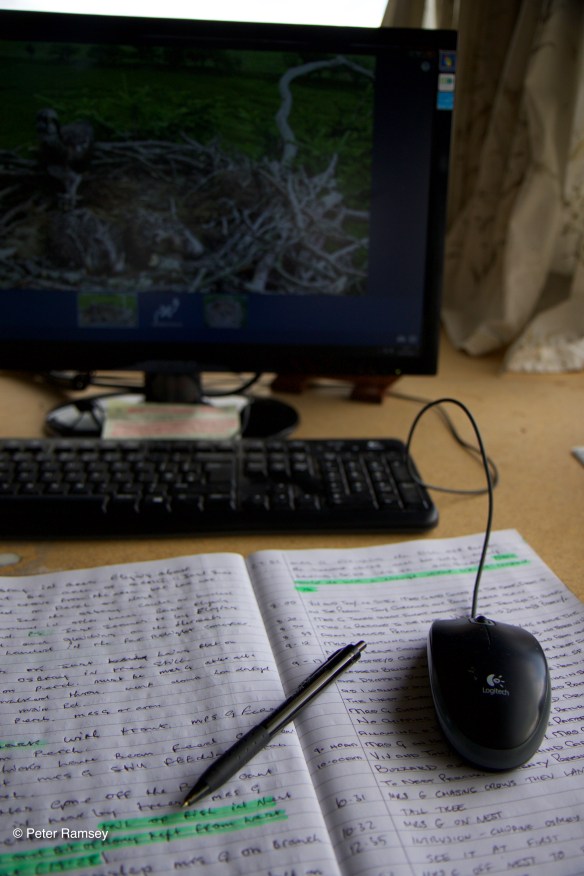
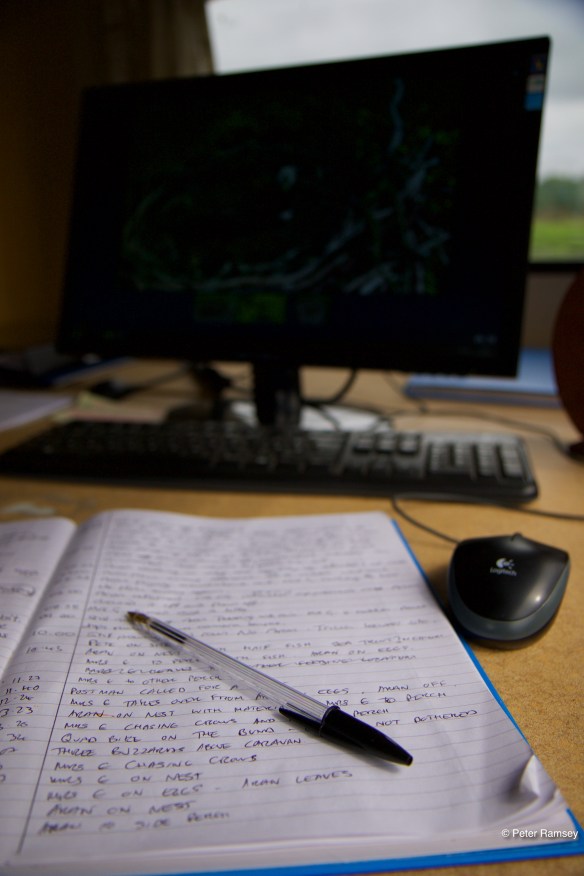
Back inside the caravan, watch is kept, notes are scribbled, a sandwich is eaten, time is marked, the waiting goes on…

5R0A8688

Slowly but surely the time for the osprey eggs to hatch is getting closer but there are still many hours of sitting and waiting in the protection caravan or out in the forward hide before there is a first sight of this year’s chicks. There are still many night hours to come, in the dark watching for the movement of an egg collector in the shadows. There are even more daylight hours to come, sitting inside away from the rain, or walking in the growing warmth of sunnier periods. All hours, however, are spent surrounded by nature, its sights, sounds and scents.

I was given two unusually close views of Aran today; first he landed in a tree on the caravan side of the river, a perch much nearer to the caravan than I have ever seen before, and then he flew past even closer with some nesting material a minute or so later.

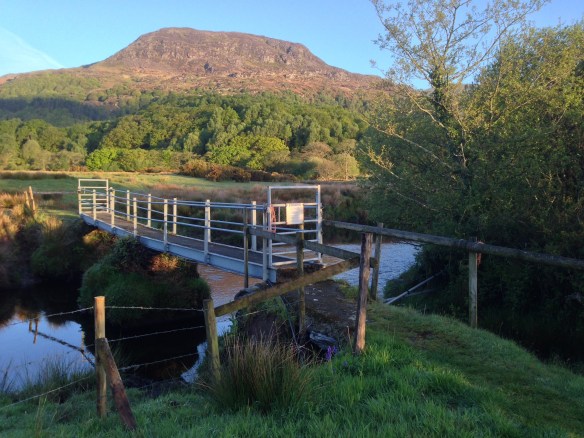
Apart from the close views, it was a quiet shift today, just as I like them. There was no drama of intruding ospreys or other unwanted visitors, just a day spent in the valley looking at the spring views and listening to nature all around. As my hours came to an end, I wandered down to the bridge over the swollen and faster-moving river; my favourite spot not quite as comfortable as I like it with the strong breeze still present despite the passing of the rain.


It will be five weeks until I have another shift and hopefully much will have happened in the Glaslyn Valley in the meantime; all being well, there will be a couple of new ospreys in the nest when I return.

5R0A8730

An osprey intrusion into spring primetime

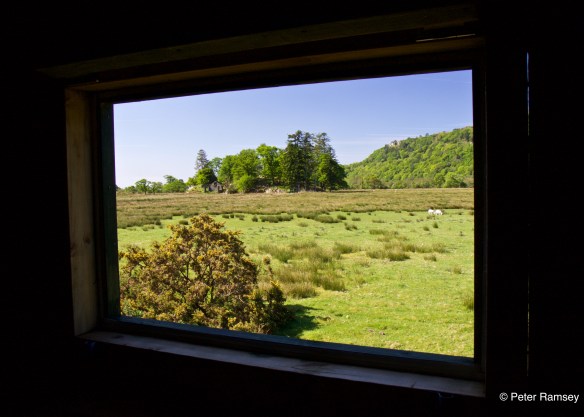
Looking from the darkened shelter, out across the drying wet meadows, there is clear, striking blue above reflected by the softer blue haze beneath the trees. The branches are no longer bare, with an electric green wash having transformed the wooded valley and hillsides. A robin sings softly from the gorse with flowers now fading and a bee bumbles past in search of fresh blooms. The sheep are out on the low clipped grass amongst the taller and thicker stands of dark rush; the lambs quietly graze at the fresh shoots while the ewes lie lazily in the warming sun. A pied wagtail wanders it erratic way along the ditchside while dangly-legged flies hover above. A crow wafts past as the furthest views take on a liquid state in the growing shimmer of the midday heat.

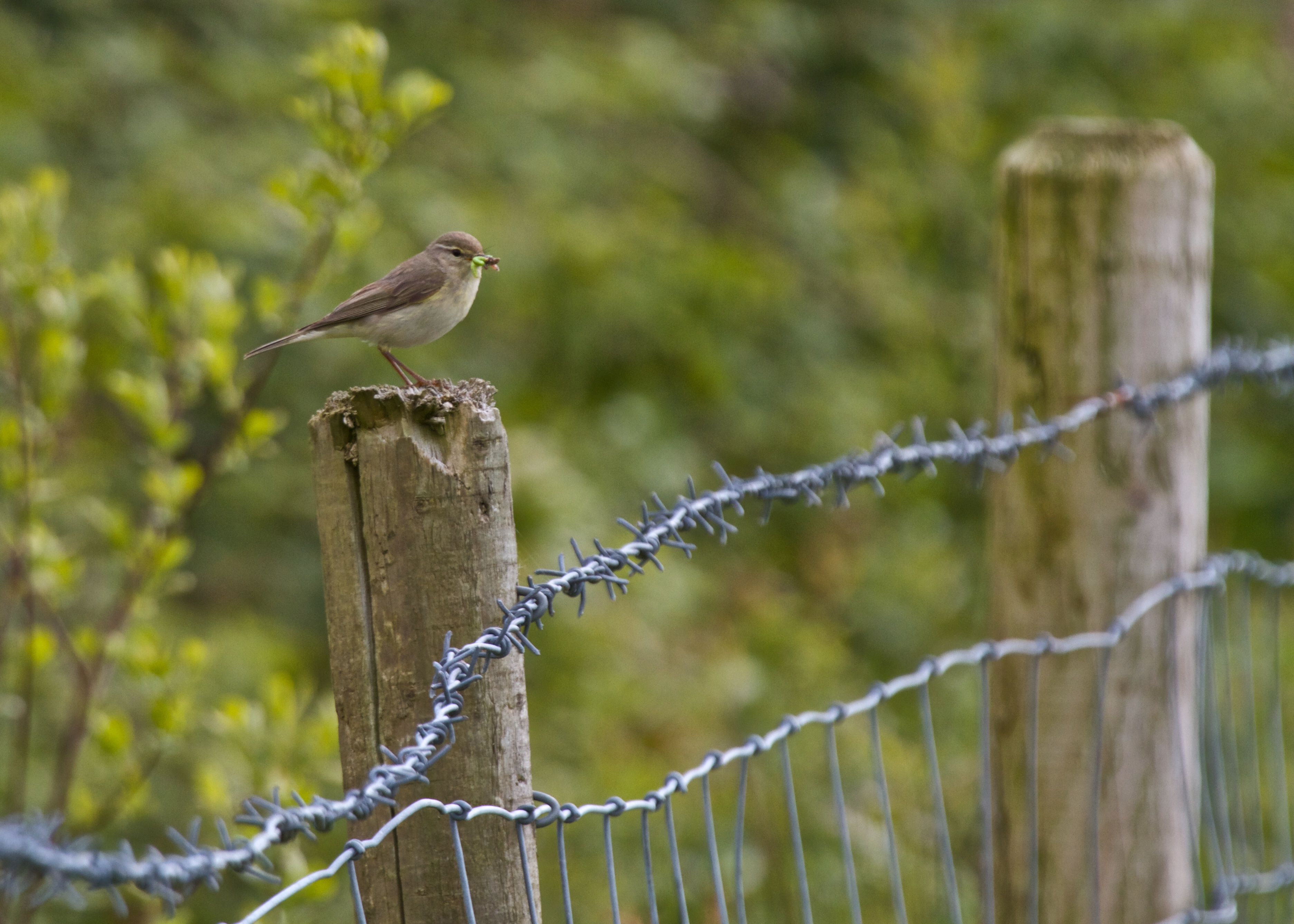
The spring sounds are all around; not the eruption of the dawn chorus but business of the progressing season at the height of the day. Swallows chat quickly as they chase low across the meadowland floor and a blackbird makes a quick passage between bushes in flight from the searching hawk. Through the edge of trees a willow warbler descends its notes and the chaffinch tumbles its song, both supported by a broader orchestra of avian musicians. Percussion is played by the drumming woodpecker while the distant cuckoo calls out through the wood in the wind. A song thrush adds a tunefulness to the setting whilst its mistle cousin rattles on its flight from stand to stand. Above the hill tops ravens cronk their conversational tones and then float down towards the valley and past on the strengthening breeze.

In the distance, contrails mark out the sky as jets head west towards the sea and ocean beyond. A buzzard pair begin to climb on the up rushing thermals, crying out as they make turn after turn, they suddenly stoop together, grappling and parting, to rise back up again.

The buzzards are joined in their effortless ascent by another pair of wings making use of the lift. It stands out larger than the pair and makes shorter, higher pitched cries as it gains height. Further calls come from the small copse out across the fields; calls of protective alarm and maternal concern. Up in the high nest is a clutch speckled eggs, under the gaze of the rising winged intruder, now gliding up towards the sun and disappearing into the dazzling brightness.

5R0A7933

I’m not the most emotional of osprey observers but even I let out a few gasps last night watching the antics of Blue 2R on the video stream. I was sure she had stood on an egg while clumsily marching around the nest, open-taloned and occasionally aggressive. When I woke this morning, I had to check the live feed before setting out on my way to my favourite wooded valley. Fortunately things seemed to have calmed down somewhat but Blue 2R was still around when I turned up. Soon after I sat myself down in the forward hide, she lifted up from the nest and ascended high up into the sky and eventually disappearing into the glare of the sun. Aran soon returned with a fish and it was hungrily taken by Mrs G – peace restored but for how long?

I spent the first half of my shift out in the hide; oddly over the past five springs I have spent very little time out there but today I made up for it. Under a near cloudless sky, I sat in silence, listening and watching the scenes of spring unfold in front of me, all in surround sound and the most vivid of colours. This little spot has almost no intrusion from manmade sounds with the exception of the occasional car and passing plane, so it’s a perfect spot to really sink yourself into the sights and sounds of springtime.

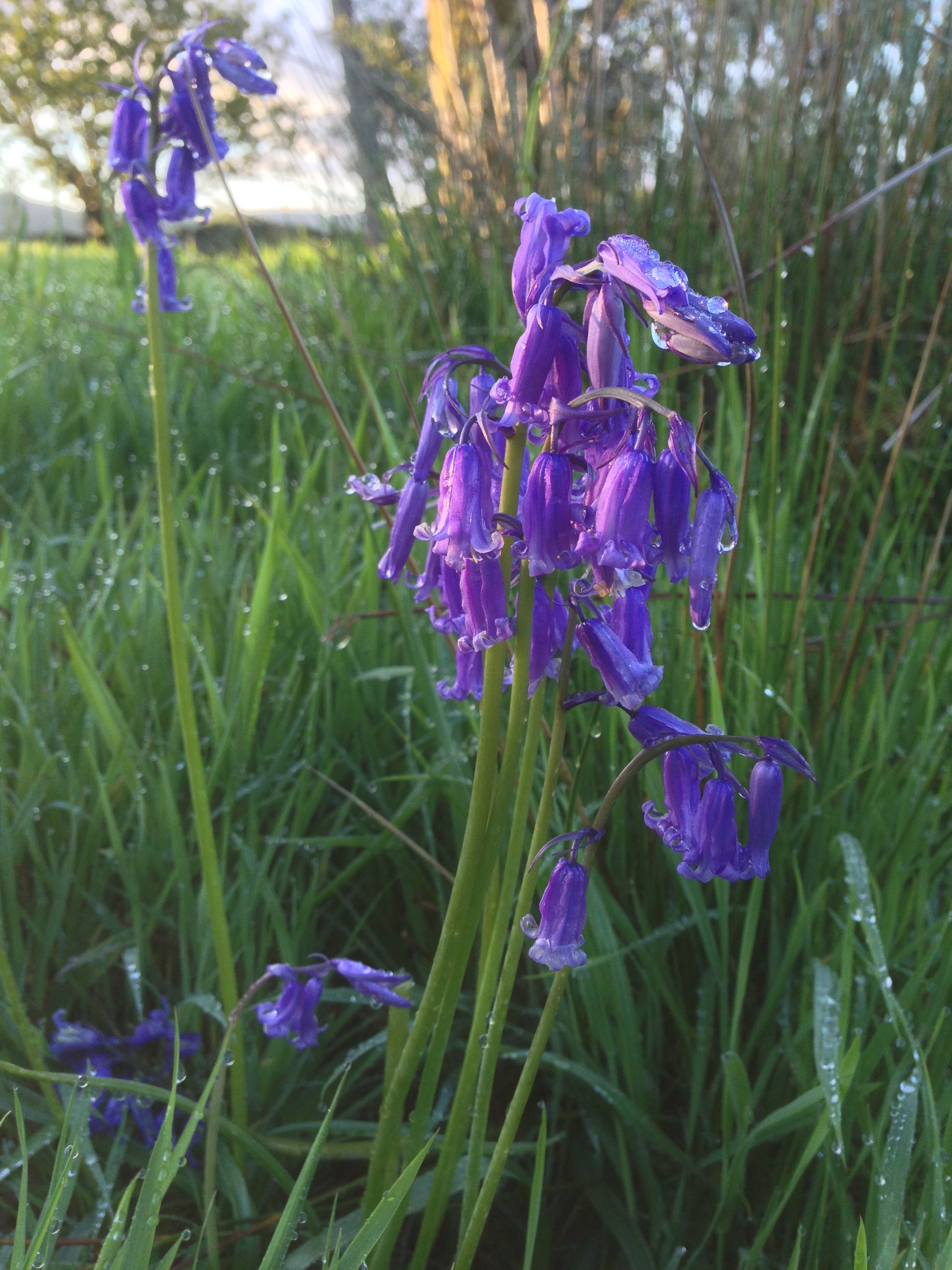
I love this time of year, when the colours are at their freshest and the wildlife is most active. The green of the trees is indescribably bright and intense, the freshly emerged leaves yet to be dulled by the sun and weather. The bluebells on route were just as bright and the track to protection is painted more blue than I can remember from previous years.

It wasn’t perfect weather though (I’m so hard to please) as the easterly breeze brought a coolness to the day that deceived the views under the strong sun and clear sky. I should however just be grateful that I didn’t have to write another post of how my journey here started off dry and ended up drenched. If my shift next week is as lovely as this one was, I’ll be very happy!

5R0A7784

Why we protect nests…

The brightness doesn’t look set to remain as I turn onto the quiet Sunday morning roads. The clouds are building in compliance with the forecast, spreading beneath the blue sky, pushed on by the strengthening breeze. In the countryside spring is still battling to win through; after a week of four season confusion, there’s still no sign of the much longed for warmth. The trees and hedges are doing their bit, leaves breaking out and blossom starting to form but the sense that summer may not be far away is dulled and diminished. Turning from main road to country lane, there are signs that work in the fields is bringing forward the time for growth; fields ploughed, muck spread and seeds drilled. The pastures are also starting to build their crop; grass growing stronger and brighter, helped by the rain and occasional sun. The short drive doesn’t give me much time to ponder the scenes I pass but time enough to observe more of the constant changing patterns in the countryside. There’s also time to start considering the purpose of my journey and it’s continued need…

5R0A7535

This morning I was out in the countryside again but this time to do my second shift protecting a nesting pair of peregrine falcons.

As I arrived it was thankfully less chilly than my first shift and there is now a heater to keep the volunteers warm. I also arrived later in the day as I wasn’t on the dawn shift, which would have meant getting up well before 5:00am and the need for even more layers. All was quiet as I took over the watch, with the male stood above the nest and the female, unseen, incubating the eggs below. There was soon activity however, as both falcons took to the air to drive off a buzzard that came far too close to the nest for their comfort. I later saw the buzzard doing its rollercoaster display but much further away from the nest.

This is the first year I’ve volunteered with the peregrine team, after a number of seasons doing shifts protecting the osprey nest at Glaslyn. I’m still volunteering at Glaslyn but thought I would help out somewhere closer to home.

The Glaslyn osprey nest has thankfully so far managed to avoid the fate of many other raptor nests; being raided for its eggs. After so long with no successful attempt to harm the nest, it’s easy to think that the threat isn’t there and doing a Glaslyn protection shift is simply a bit of fun and an opportunity to spend some time close to nature. Any sense of complacency that may have started to creep in has quickly been knocked out of me by volunteering at the peregrine site.

It’s only three weeks since my first shift at the beginning of the ‘protection season’ but already there have been a number of incidents at the peregrine site involving people more than likely trying to take the eggs or destroy the nest. I’ve also learnt of at least one other clutch of peregrine eggs in the area that has already been taken.

Having got used to the relative safety of the Glaslyn nest, it’s quite shocking to know that other nests are under what appears to be constant threat of attack. Raiding raptor nests seems like something from the past; it’s ridiculous that in our ‘modern’ world there are still people who think it is their right to harm wildlife for their own benefit. Whether it be for sporting gratification or protecting sporting interests, satisfying a need to collect rare objects or purely for financial gain through serving a demand for wildlife trade, there are still many people who will act with ill intent towards raptors and their nests.

This shows quite starkly that at Glaslyn we can’t lower our guard and that there are those out there who may wish harm to the nest. Whilst I wouldn’t want to scale the Glaslyn nest tree myself, there are some who would and could. Compared to Glaslyn, the peregrine nest is in a no less awkward, inaccessible or dangerous location to attack yet people appear to regularly try to get to it. Furthermore, whilst the peregrine nest may be targeted by a wide range of interests (egg collectors, falconers, pigeon-racers, etc), the range of interests that threaten the osprey nest isn’t much narrower.

As long as there are people who will prey on raptor nests, there need to be others who are willing to spend time trying to ensure they don’t succeed. Just because no one has successfully targeted the Glaslyn nest to date doesn’t mean there are aren’t people willing to take significant risks to get at it. I’m no longer open to even the slightest sense of complacency.

A sunny start to osprey season

Spring is in full swing as I head out for my first osprey protection shift of the year but as I make may way across the border, the season seems to go into reverse. Into the hills, a familiar story begins to play out, with the cloud growing and blocking out the early brightness, my car beeps as the temperature falls below five degrees. It is not only rain that starts to fall from the sky but sleet, snowflakes thrown in to make my hopes for a nice day fade.

Up onto the top of the moors, hope no longer seems lost as the first few breaks in the gloom start to form and the sun shows its strength as the moisture on the road begins to lift. Steam rises from the tarmac and the car parts the mist which gathers in the hollows. Patches of fog hang over the fields and forestry blocks, drifting across my path on an increasing breeze. As I reach the crest before dropping down into the valleys, the scene opens up below and in the distance is the sea, shimmering blue beneath the strong glare of the newly emerged sun.

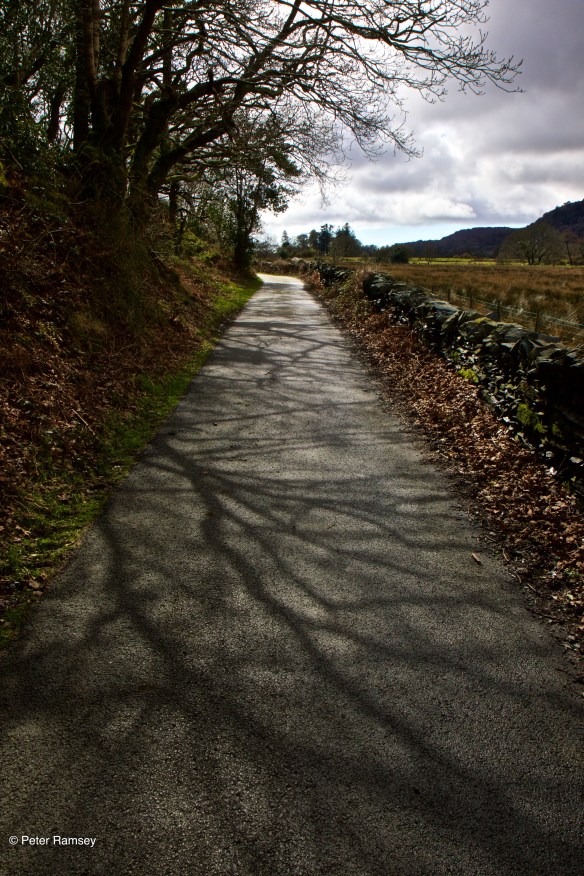
Turning through the gateway, the brightness is unexpected, the clouds diminishing as each moment passes. Driving through the wooded valley, the leafless branches of the enclosing trees cast shadows; I’m driving along a zebra-patterned track.

Leaving the trees behind, emerging out into the flat wet meadowland, little of the cloud remains. The sun falls strongly onto the land but the wind has a sharp chilling edge and the mountains tops have a new coat of white, showing winter, not spring. Here the season is less progressed, the permanent residents may have been singing for a while but the summer migrants are few in numbers and weak in their calls, yet to make this place their own. Those that have arrived seem unsettled, one in particular; she stands alone in the nest at the top of the fir tree copse looking out into the distance, patiently waiting for another to return.

5R0A1699

Writing is a bit of a struggle, the flu that has knocked me for over a fortnight still drags on my energy, both physical and creative. Others don’t seem to have such trouble; buzzards, four or five at a time, were performing their aerobatics, rising into the sky only to stoop into a rapid dive before racing back up high again. At one point in the day, they got too close to the nest and they were chased by the newly arrived female osprey, protecting her claim while waiting for her new partner from last year to make an appearance.

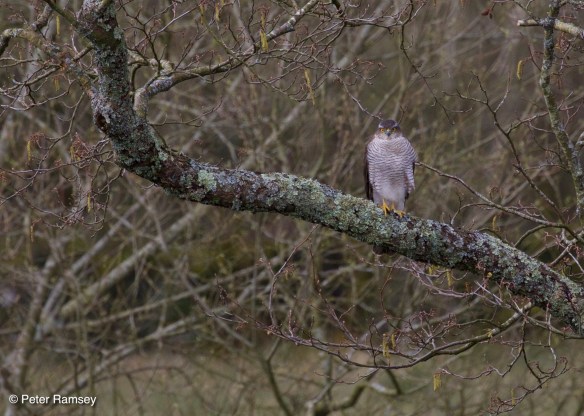
There were plenty of other birds present in the Glaslyn Valley today but few signs of other new arrivals. The great tits, chaffinches, meadow pipits, pied wagtails and robins were all busy going about their days feeding and calling loudly from tree, bush, wall and post. As well as the buzzards, other raptors were about, with a red kite sailing past and a large sparrowhawk staring fiercely at me from a low branch. The corvids were in evidence too with carrion crows and jackdaws feeding in the fields and an occasional raven ‘cronk’ could be heard from the hillsides. The summer migrants though were thinly spread, no hirundines yet and the slightest of hesitant calls from a willow warbler came from a nearby wood.

5R0A1743

The landscape seems a bit further behind here too with only the willows showing leaves so far although there are buds coming on other trees. The gorse is showing its bright yellow flowers but the grass has yet to turn a more vivid shade of green.

Maybe this osprey breeding season will be as melodramatic as the last, with the female having returned but the new male from last year still yet to appear. There’s plenty of time for him to come back though as it wasn’t until the end of last April that we first saw the handsome new partner for ‘Mrs G’. During the day, both before and during my shift, there were several ‘intrusions’ by other ospreys including by Blue 24, one of the usual suspects who has an eye on the Glaslyn nest. No doubt much will happen before my next shift in May.

5R0A1944

I finished my shift in my favourite spot, sat on the bridge in the sun, listening to a robin and song thrush and watching a peregrine circling high above the woodland – perfect!

From Spring into Winter and (Almost) Back Again

There’s mist over the land as I head out on a welcome journey not done since the height of last summer (if there was a ‘height’). The roads are quiet and I make good time as the hazy sun brightens the countryside around. There are signs of spring along my route; daffodils and snowdrops at the roadside and the hawthorn hedges starting to burst new leaves. There’s also new life in the fields with the first of the lambs out in the low-lying pastures; the grass just starting to turning a richer green.

As the border is crossed and the road rises into the hills, the initial optimism for another rich early-season day falls away as the clouds draw over the longed-for sun and darkness covers the route ahead. It’s soon that I’m passing the reservoir and the first drops of fine rain need to be cleared from my windscreen but the high moorland route still beckons and I increase the pace once turned at the junction. The gloom is even deeper up here and my journey is slowed, lowland mist now upland fog. As I descend into the enclosed valleys, hopes are dashed that dropping out of the cloud will bring a halt to the fine but blanketing rain. There are no signs of brightness across the damp pastureland that divides the mountains and the sea; water lying in the fields are sure signs that these are familiar conditions.

After a break in my journey I eventually make my way down the track in the secluded wooded valley. In the trees and out in the damp water-logged pastureland, spring still seems to be a distant thought, the signs of the new season present in the lowlands yet to appear here. Whilst the birdsong has more strength, it is subdued by the weather and there seems little to sing for with water clinging to every tree, rock and blade of grass.

There may be few signs of spring in the valley but it is on its way and so is a wave of avian visitors, sweeping slowly northwards from warmer lands. Amongst them, hopefully, will be two pairs of wings, returning to an old nest high up in the fir tree copse out in the centre of the damp fields. With them are the hopes of a growing band of followers, hopes of a return of an old favourite and her new partner, and hopes of slightly less drama than last year.

IMG_5749
There is something very familiar about the text above, not just the journey but the weather pattern too. I made the same first trip to the Glaslyn Valley this time last year with signs of spring at home but the weather then enclosing as I made my way towards Snowdonia. The only difference this time was that on my return journey the bad weather had spread into the lowlands too.

The trip was made for the training day for the volunteers with Bywyd Gwyllt Glaslyn Wildlife; this is the community group that took over the Glaslyn Osprey Project from the RSPB in 2014. This will be fifth season that I’ve volunteered at the ‘Protection Site’ where the osprey nest is monitored to stop thieves stealing the eggs. Volunteers also help to prevent disturbance of the birds by walkers on the public footpath that passes close to the nest.

2015 was an osprey rollercoaster by previous standards. There had been the same pair of birds using Glaslyn nest for over a decade but last year the male failed to return and the female was left waiting at the nest. Over the following weeks there was a succession of males trying to mate with her but it was the third that finally settled down with her and managed to raise two healthy chicks which migrated south at the end of the summer.

Last year saw great strides forward by the group including a new visitor centre and video streaming from nest cameras going live on the internet towards the end of the season. Hopefully, the cameras will be live on the website soon and this year the whole breeding season can be watched from the comfort of my own sofa (or desk at work for that matter!).

Live streaming is expensive to run, particularly from such a remote location and it costs thousands of pounds each year and the equipment will need replacing from time to time. Therefore, an appeal has been launched to raise funds to pay for this year’s live streaming and to contribute towards replacement equipment when it is needed in due course. The details of the appeal can be found here.

That trip really marked the start of my spring of conservation volunteering which will also include bird surveys, practical land management tasks and maybe some other nest protection work, but sitting in the quiet of the Protection Site ‘spy cave’ watching over the ospreys really is a highlight – can’t wait for my next trip down that wooded track.

Mid-winter? The lowest ebb?

It’s been a strange winter so far; well, it’s hardly winter is it? Surely 2015 was just one long autumn with occasional bright day to give hope which was cruelly ripped away again by the now predictable misery of cloud, wind and rain.

IMG_7747

With the first signs of spring appearing over Christmas (I saw flowering brambles and hawthorn coming out in leaf), it seems strange that we haven’t even got to the point in the seasons when the northern hemisphere should be at its lowest ebb. The end of January and early February should be the coldest period of the year but up until very recently the signs have been that the usual lowest ebb might not even happen this time around.

Yesterday morning as I left home, well before even the slightest rumour of light appeared on the horizon, a robin was singing from a nearby hedge and as I left my car at the station a song thrush called out from the darkness. I previously wrote a post about the first time last year that I had heard the birds starting to sing as I left home – the date of that post was well over a month later than the first time I heard the initial notes of the dawn chorus this year.

I’m sure my body clock is still waiting for last summer to happen and I think without a bit of proper winter weather it might go completely out sync with the world.

Maybe the weather over the past year and particularly the recent warm few weeks has been exactly that…weather. Alternatively, it could be that El Niño is having an effect, causing our temperature and rain records to be broken. However, it could also be that global warming is starting to take hold, to some extent, and the exceptionally early blooming of flowers and bursting of leaf buds is something we may need to get used to – we certainly will if predictions come to pass.

If global warming means the weather over the past 12 months is a sign of things to come, I might just have to move to somewhere that still has proper seasons.

I thought that the time birds started singing at dawn was more linked to light levels that weather but perhaps the higher temperatures have kickstarted their territorial behaviour early. But what wider effects will changing climate have on flora and fauna? I’m no expert but there are some obvious implications – habitat loss, changing levels of food availability and shifting of migration patterns.

Take just one species – ospreys (okay, they don’t really do the dawn chorus but humour me!) – what could global warming do to them? They have two habitats to rely on, at either end of their migration. Will rising temperatures mean that their food source changes? Will fish stocks deplete or current species move out and new ones move in? We can only wait and see…and hope.

In just a couple of months the ospreys will begin their journeys north from their wintering grounds. In North Wales there is a group of dedicated volunteers who will once again spend days and nights protecting a nest from egg collectors and showing the public views of the birds from a visitor centre. Their hard work is undertaken in the hope that their efforts will help establish a larger and sustainable population of these birds not just in Wales but across the UK.

However, in the long term, if equal efforts aren’t made by everyone, to reduce their environmental impacts and help to restore what has already been lost, it could be that the work of these volunteers, and thousands like them working elsewhere, is permanently undone by climate change; the work of the few undone by the many.

The biggest threat is the indifference of the many leaving the fight to the few; this is not a fight that the few can win, it can only succeed if fought by the many. Without that effort, it could be that missing the lowest ebb of the seasons this winter is just one of a growing number of signs that the life our environment as a whole will irrecoverably ebb away.

(P.S. In writing this, I am, of course, a hypocrite; I do enjoy those two-hour drives each way for a protection shift!)

Sunshine, Ospreys and Test Match Special

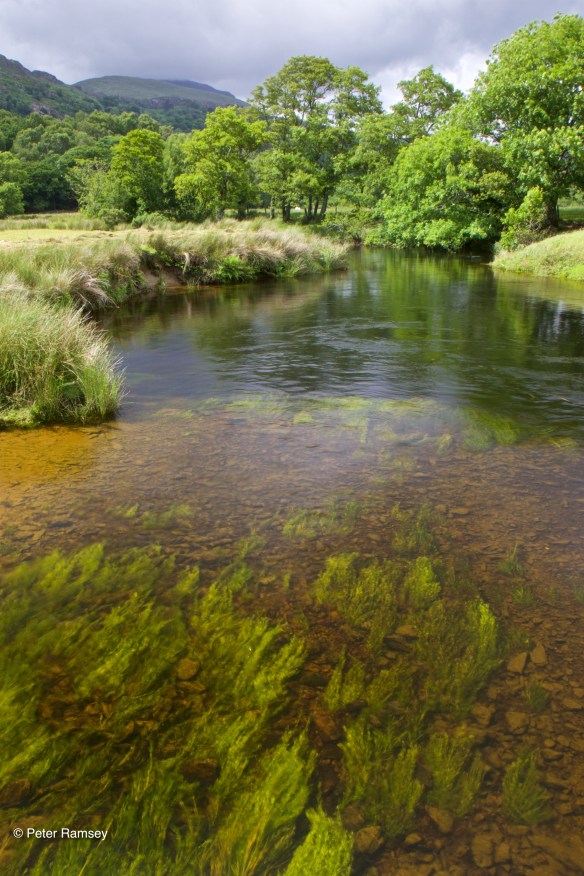
I pull back the curtains and the day welcomes me with rain drops on the window and puddles on the ground; of course it’s raining, I’ve got an osprey shift! However, the rain has been and gone, and looking up, there’s blue. Leaving home and driving through the Cheshire fields, I can see what has gone, rain falling further east. Ahead is more clear sky and my shades go on as I cross the border. It may be sunny but there still a chill in the early morning air and the heating soon warms the car. Despite my expectations, breaks remain in the clouds and the sun goes in and out on my way. I choose the moor top route again but stop part way to look down on the stone bridge over the mountain river.

Passing through the gateway and over the cattle grid, my windows are already open and the woodland is full of bird song. The chiffchaff, willow warbler, robin and wren welcome me while the breeze helps to bring the scents of the damp-covered land into the car. The debris on the track cracks and snaps as I drive under the dappled sunlight. The roadside bluebells are now past their best but the summer flowers are starting to show; the first foxgloves are bursting up their stems. Leaving my car, a cuckoo calls from the hillside trees and buzzards are feeding on the recently ploughed field. The swallows skim low over grass and a redstart chatters in a lane-side tree.

Out in the open, the ground is now dry, made more so by the warm sun and cooling wind. In shelter it is almost summer-like; away from cover, when a cloud rolls over, it’s almost cold and could be the first days of spring. Hope still stands in the nest across the meadows, both birds are up in the tree-top bowl as I arrive. The two eggs have some time to remain intact until they start to be chipped at from inside.

IMG_6527

The early part of my shift made it almost easy to forget the soap opera-like drama of the past few weeks. Two ospreys quietly marking time while incubating a clutch of eggs in that well established nest and territory; they looked quite content in the sunshine. The peace and quiet wasn’t to last long as there were two intrusions in the first two hours. A third osprey was in the area and made concerted attempts to land on the nest. The male gave chase on both occasions and was gone for quite some time, trying to drive off the incomer. When the male returned in the company of the intruder, the female successfully drove it off and then had a brief skirmish with the local crows. Later on, when the male had gone fishing, the intruder returned but only made one dive at the nest before heading off east.

IMG_1389

This was the penultimate day of the meteorological spring and with the sun out it felt almost summer-like but the stiff breeze made it seem much earlier in the year when cloud cover returned. The trees also don’t quite seem to be in tune with the time of year with not all fully out in leaf. Maybe there’s a theme here in the Glaslyn Valley this year with the ospreys being behind the usual schedule too.

IMG_1277

I don’t often have an excuse to sit listening to Test Match Special for most of a day. For once, the internet worked well on my laptop so I had a shift accompanied by Geoffrey, Aggers & co. (with the backing of a constantly calling cuckoo). It wasn’t a great start to the day with the New Zealand tail wagging but after they were all out for 350, England had a good opening partnership – only for this to start falling apart when I was on the way home!

IMG_6531

That was my last shift for a while but hopefully usual osprey service has been resumed. Maybe, just maybe, there might be four ospreys in the nest next time I make my way west and down through that wooded valley.

A Glaslyn Nightshift – Volunteering at its Best!

Leaving the house, after a brighter day, the weather knows I’m on my way to Glaslyn; the drizzle starts to fall as I close the door behind me. I join the end of the slow moving traffic, families heading into Wales for the long weekend, bikes on racks and caravans towed behind. Passing through villages and making turns, the cars move aside one by one, until I’m alone on the narrow twisting route down into the valley. As I descend, the clouds begin to break and the last rays from the sun pick up highlights on the mountainsides.

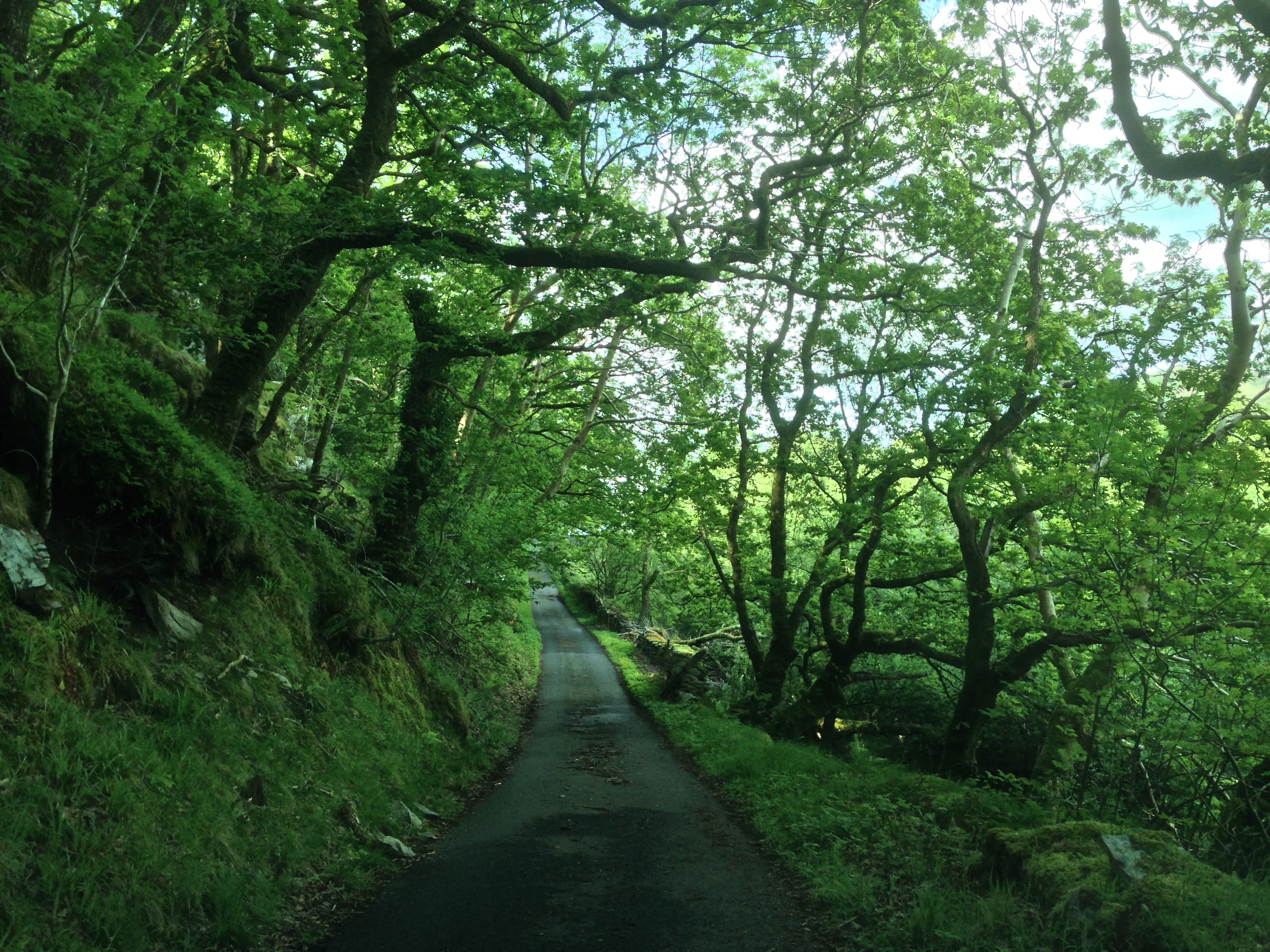
Turning onto the track, I do the usual and lower my windows, no rain dripping in this time. The woodland path is dotted with fallen blossom and the undergrowth is beginning to encroach; the vibrant green still prominent despite the failing light. The last sounds of the day float into the car but the night is coming upon the valley as I break out into the open meadowscape. It’s not a bird that flits in front of the car as I reach the gates but a single bat, out early in the growing gloom. As I open the door and stand in the fresh air, a dampness clings to me, the rain of the past few days has left behind humidity from which mist is rising and enveloping the hillsides. Across the fields, over the river and behind the bund, the nest overlooking the small copse has a single new hope, an egg being incubated; a last chance of the year?
IMG_6478

After the windy and rainy night shift of two weeks ago, it was with excitement that I arrived at protection yesterday. I was welcomed by bats flying around the field by the caravan, some just skimming above my head, and the sounds of owls in the woodland. I’ve done quite a few night shifts over the past four springs but this was the first without either rain or the old generator that used to power the camera systems. Without those two annoyances, the night was peaceful and all the more vivid for it. The bats were stunning, different sizes circling and darting through the trees and over the fields. The owls screeched and hooted at each other, both barn owl and tawny. A distant fox called and the occasional trilling of a grasshopper warbler could be heard as I made my way over to the forward hide.

The hide, just a bit nearer to the nest than the protection caravan, gives an unobstructed view across the field towards the tree. The last of the evening light was just failing as we set up in the hide, the mist starting to settle at the bottom of the valley as well as clinging to the hillsides and a silence descending on the scene. The moon made fleeting appearances and the stars begin to flicker in breaks between the clouds. After a couple of hours, I returned to the caravan to monitor the cameras while Gwyn remained in the hide.

Since my last shift another egg has been laid, the sixth so far, but there’s a difference this time as it is being actively incubated, unlike the previous ones. When I arrived for my shift, the female was nestled down for the night atop the egg, looking more comfortable than the last time I saw her at the end of a rain-sodden shift. She seemed restless throughout the night but all in all it was quite uneventful during the darker hours.

IMG_6495

As the light began to rise, at around four o’clock, I made my way back through the field, over the bridge and along the bund, to the forward hide. Rejoining Gwyn, we listened to the dawn chorus and waited for the first rays of sunlight to touch the dew-washed land. The birds laid on a great opening to the day with song thrushes, blackbirds and redstarts providing the backing track to a cuckoo calling across the meadows. As the day grew in its strength the signs of the night still remained until just before the sun broke from behind the mountains of Snowdonia; tawny owls still hooting in the woods and the occasional bat remaining out to catch a late meal. A cronking raven passed overhead making a first flight of the day and a lesser spotted woodpecker made its undulating flight past the hide, narrowly missing a low flying buzzard.

The day began for the ospreys as the male returned from his overnight roost but it was only when we returned to the protection caravan that we noticed the reason for the female’s nocturnal restlessness; a second egg now in the nest – a further hope raised for success this year.

IMG_6497