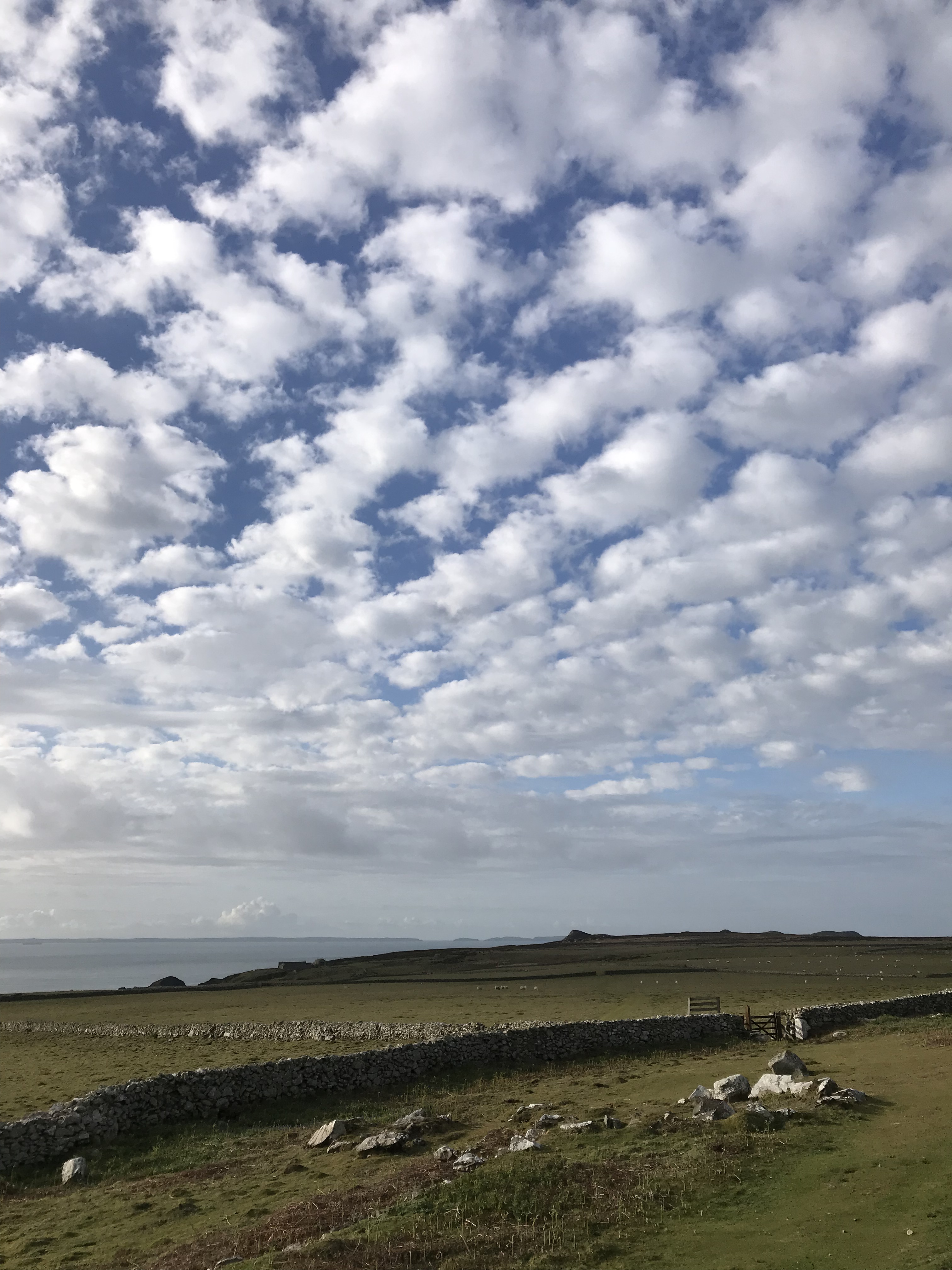
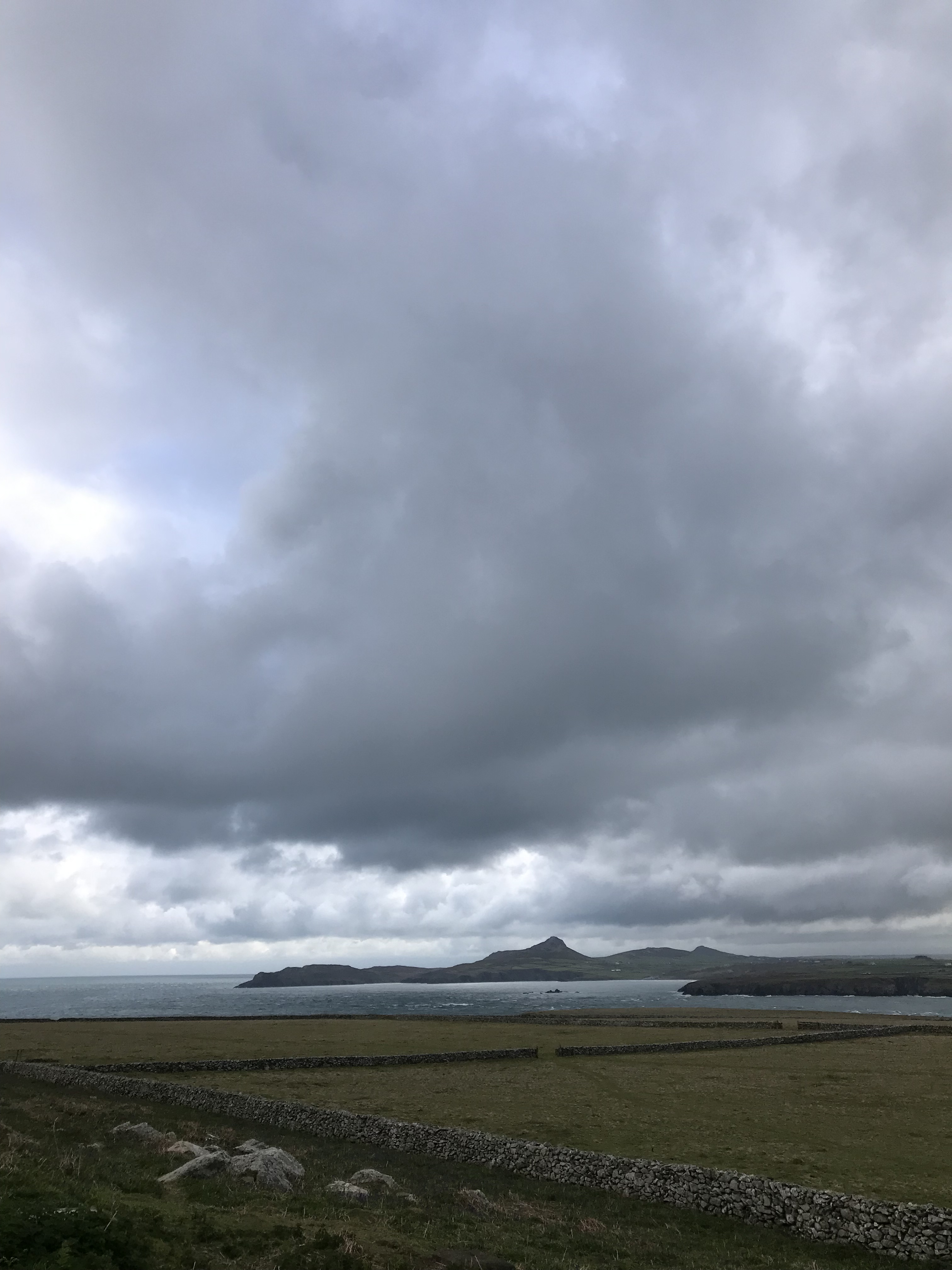
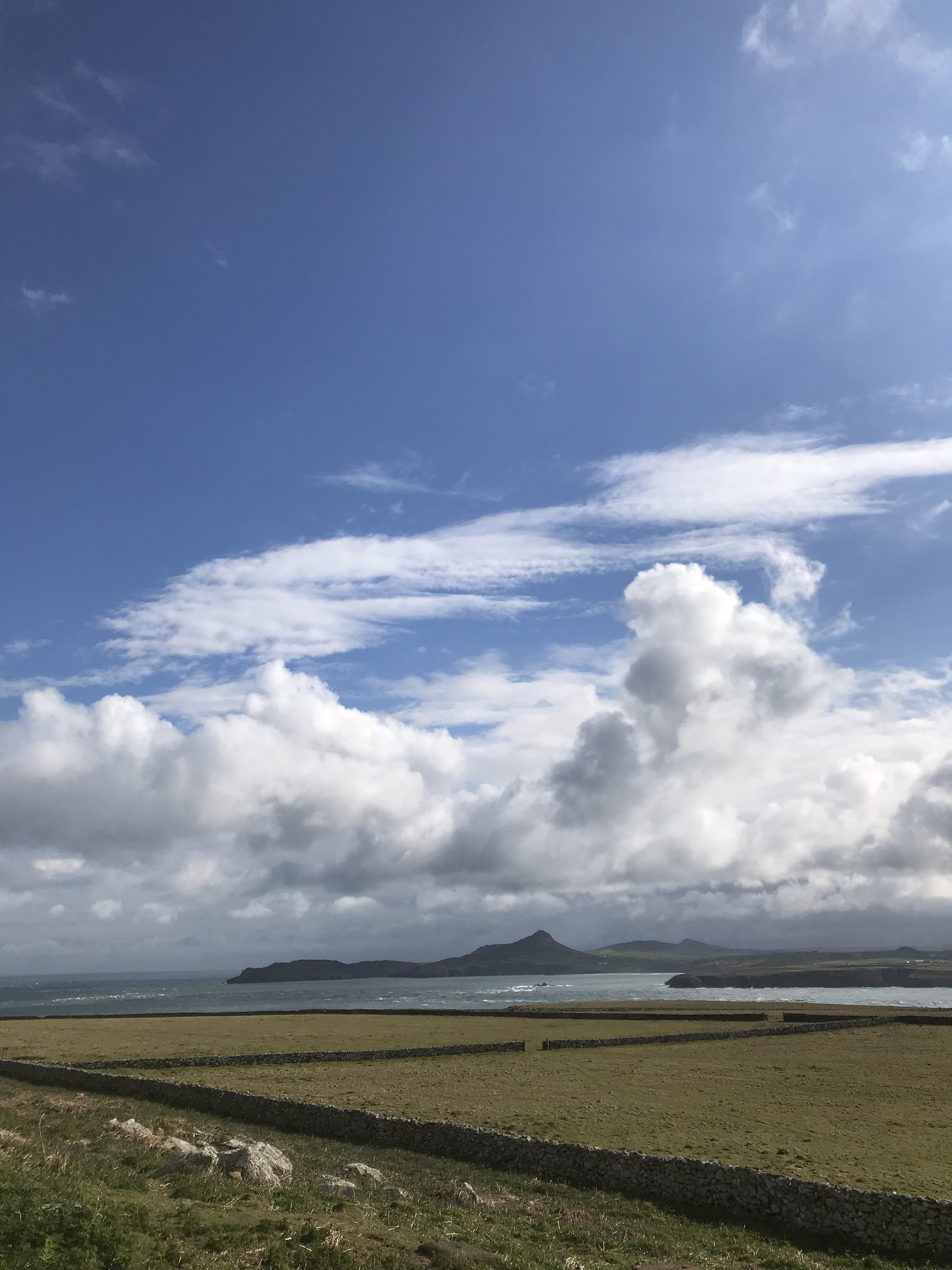
Just as I returned to the Bungalow yesterday afternoon after our work for the day had finished, there was a spectacular sky over the north of Ramsey Island and looking out towards Whitesands Bay and Carn Llidi on the mainland. This is probably my favourite view from the island and the photo I took may be my favourite of all those I’ve taken during my stays here…
After arriving a day late due to the weather, my first week on the island was a little short and certainly went quickly. However, as I’ve come to expect, each day has been different and never dull.
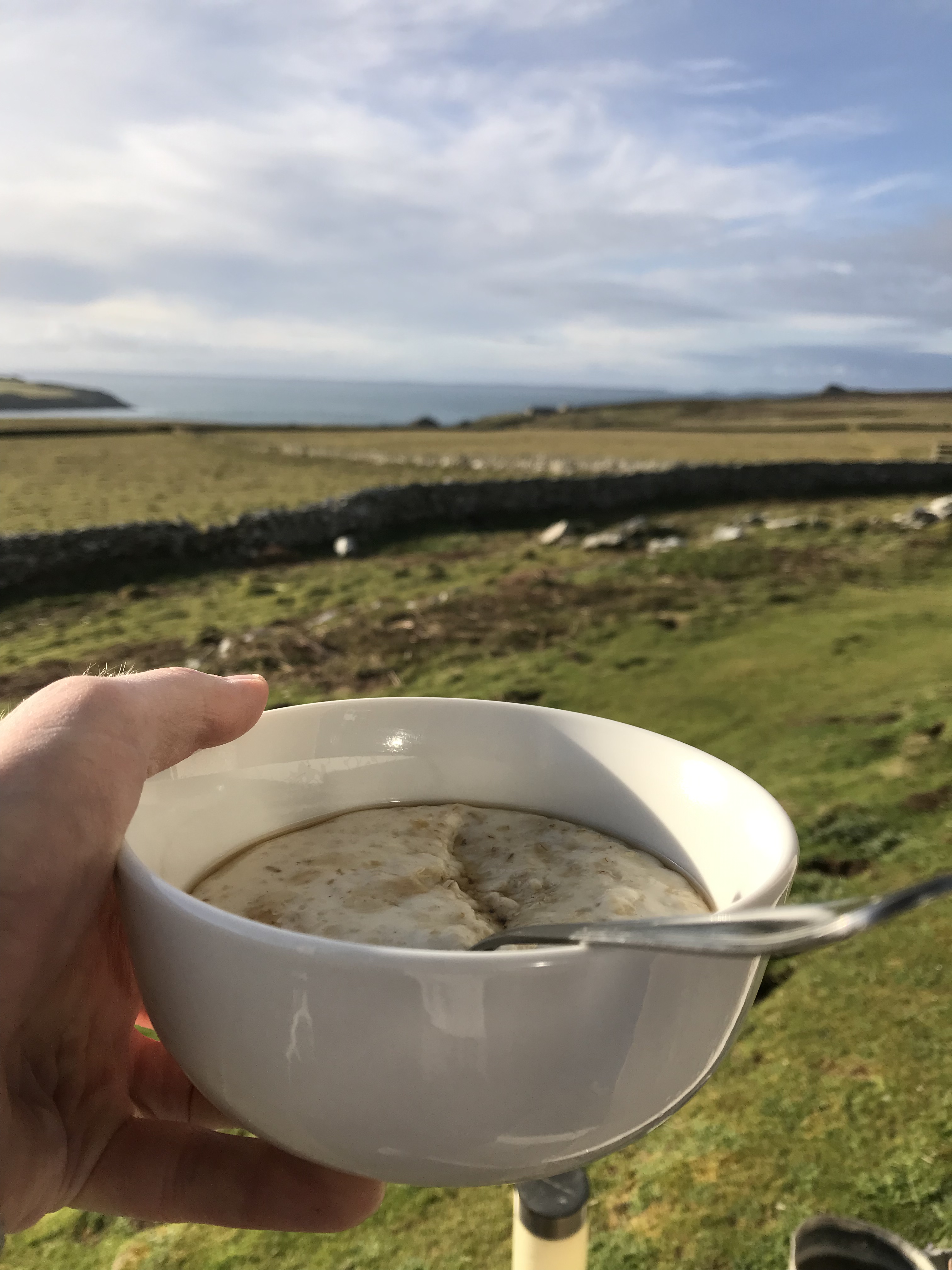
Unusually for me, I’ve been finding it difficult to get out of bed – in my other life I get up at 5:30 each morning . We don’t have to leave the Bungalow until about 9:15 and it doesn’t take long to get ready but I’d like to get up earlier than 7:30 – that’s a full two hours later than usual for me. However, a significant reason for my reluctance to leave my snug and warm bed is that it has been freeeeeezing each morning and it’s not an immediately enticing thought to leave my bed behind. The temptation of making a nice bowl of porridge (or gruel) has each morning eventually got me out of my pit. Food has been a constant in my mind for most of the week, whether it be trying to make lunch more exciting, increasing my evening repertoire (as of today now including a decent pizza!) or just settling down at the end of the night with a slice (or two) of my fruit cake and a wee dram.
The weather has been quite variable. We have only had visitor boats on Wednesday, Thursday and Friday due to strong winds and as I write this, on Saturday evening, the winds are strong again and blowing straight into the end of the Bungalow where my room is, making it even more of an icebox. Despite the wind, today has been gloriously sunny and in shelter it has been quite warm under the strong sun and I may have caught a bit of it. This has been the case for a few of the days; when the cloud clears it could almost be summer.
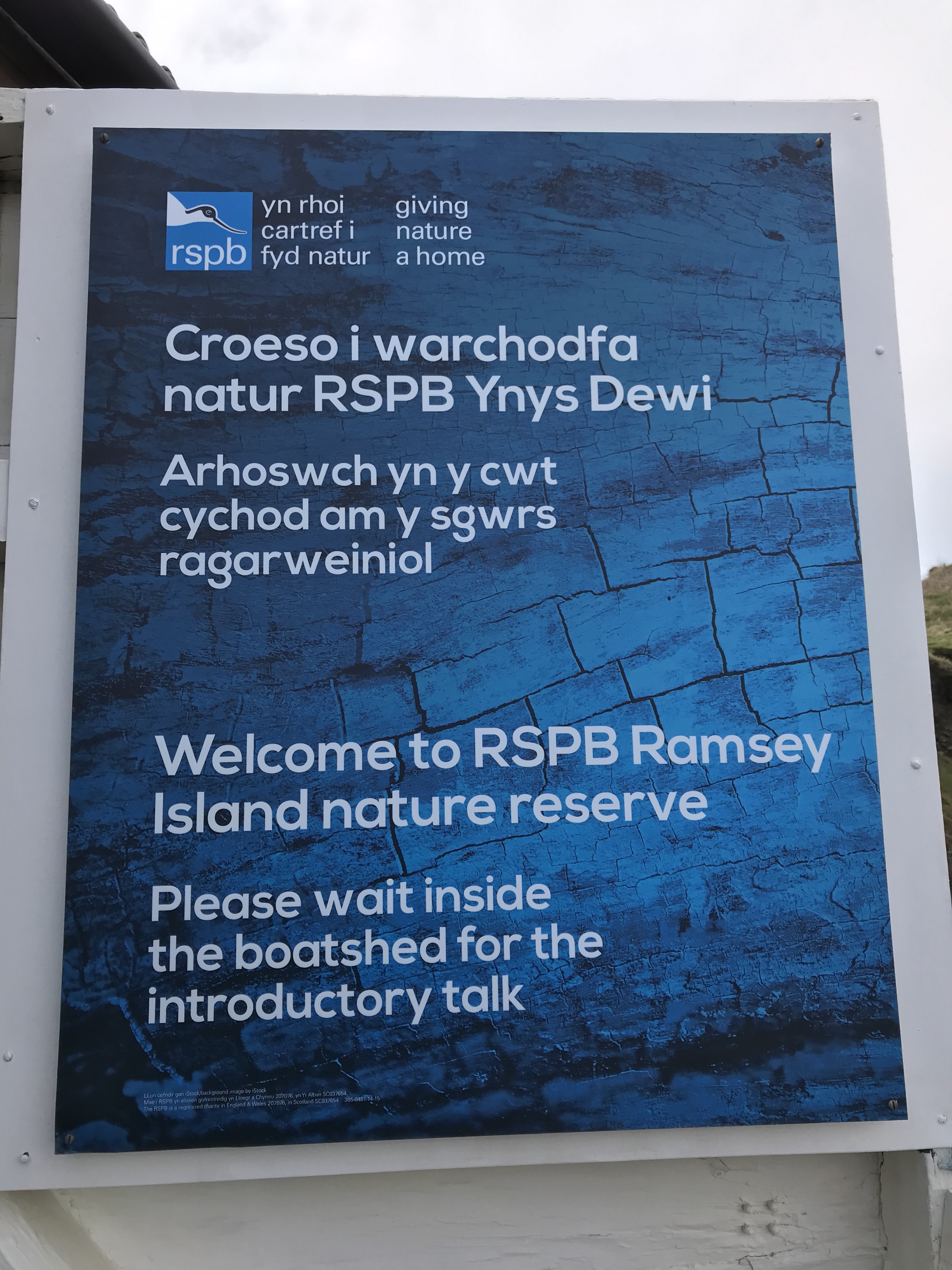
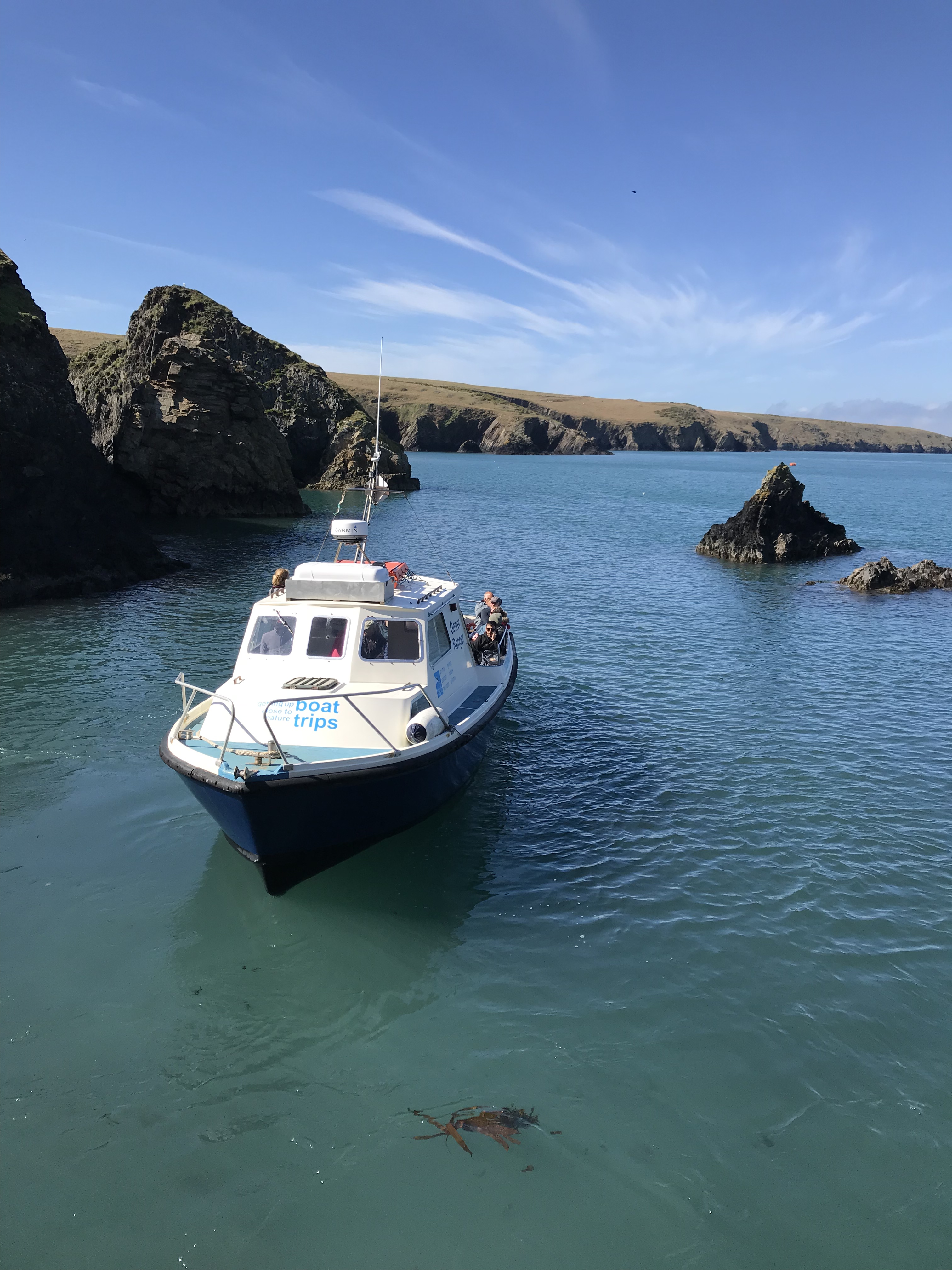
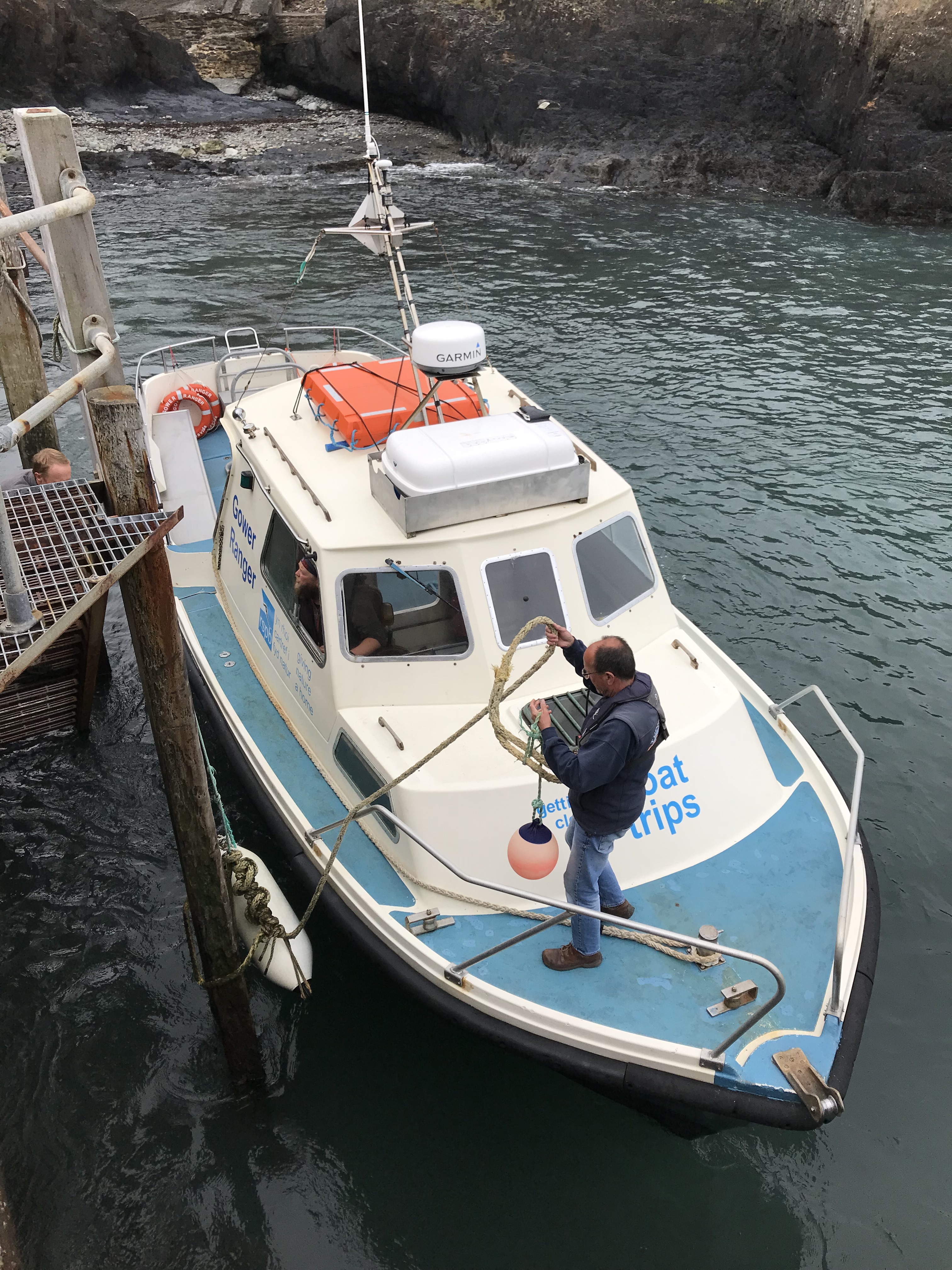
I didn’t feel that my stay had really got going until I did my first introductory talk. A primary role for all volunteers on the island is to help with the visitors, assisting them on and off the boat, Gower Ranger, as she arrives at 10am and 12pm and takes the remaining visitors off at 4pm. Volunteers also run the small shop in the farmhouse selling drinks and snacks at each boat arrival and for a longer period prior to the 4pm departure. A key part of my role over the three months will be doing the introductory talks when each boat arrives. The visitors are shown into the boat shed and they get a 15 minute talk about the island, where they can walk and what they can see. I love doing them and it’s a great opportunity to promote the work of the RSPB and enthuse about the island in general and the nature it supports.
In addition to the visitor tasks, John, the other volunteer, and I have been doing a range of monitoring and practical work. Our first tasks were to do watches at eight of the nine chough nests around the island. We spent up to an hour at each, noting down the activity to see if a pair is actively using the nest – three of my four definitely appear to be being used, while the fourth was a little inconclusive. We will repeat these watches over the coming weeks and I’ll do other bird survey work to support monitoring of breeding bird populations.
The practical work was varied and fun, including:
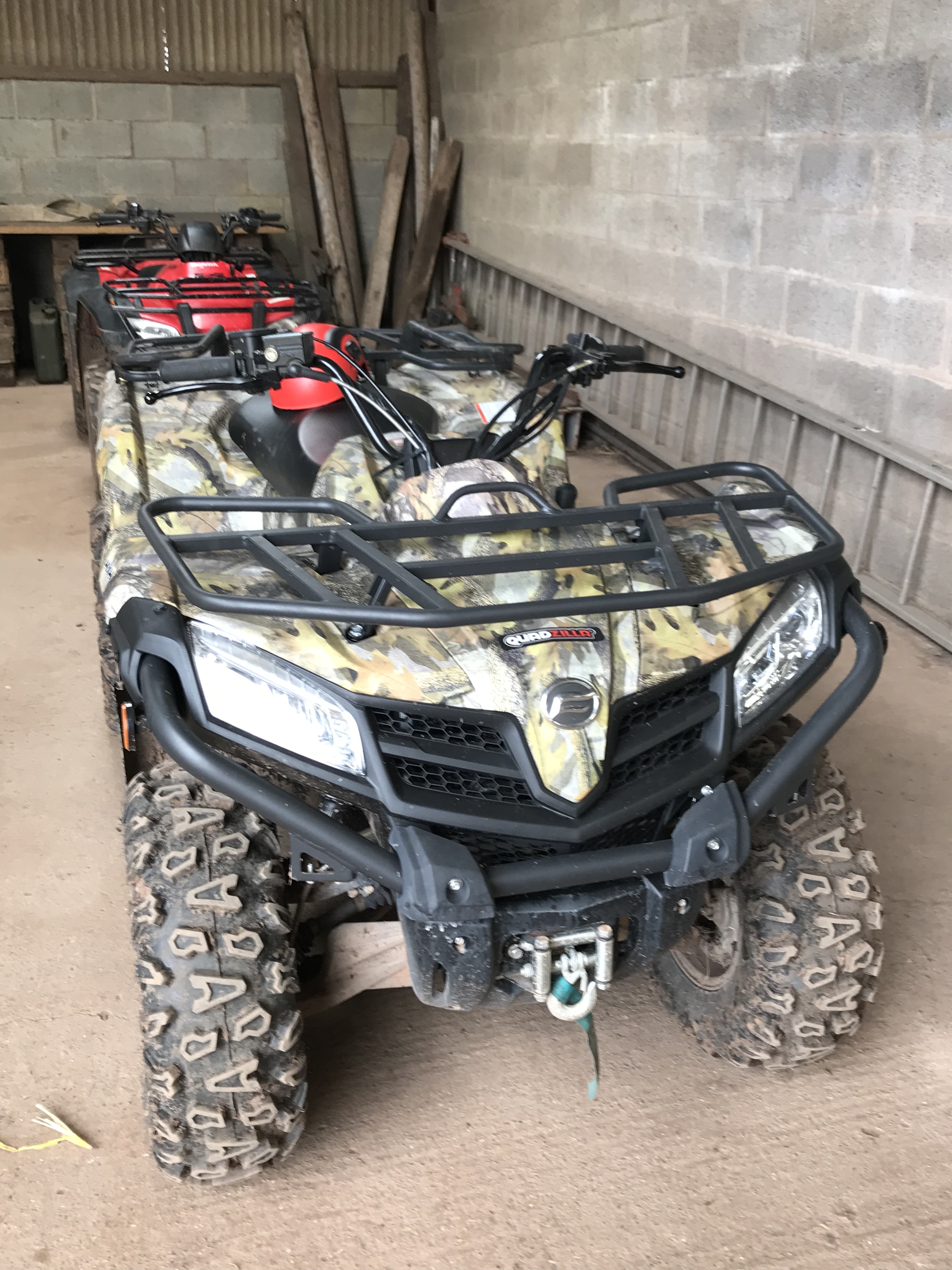
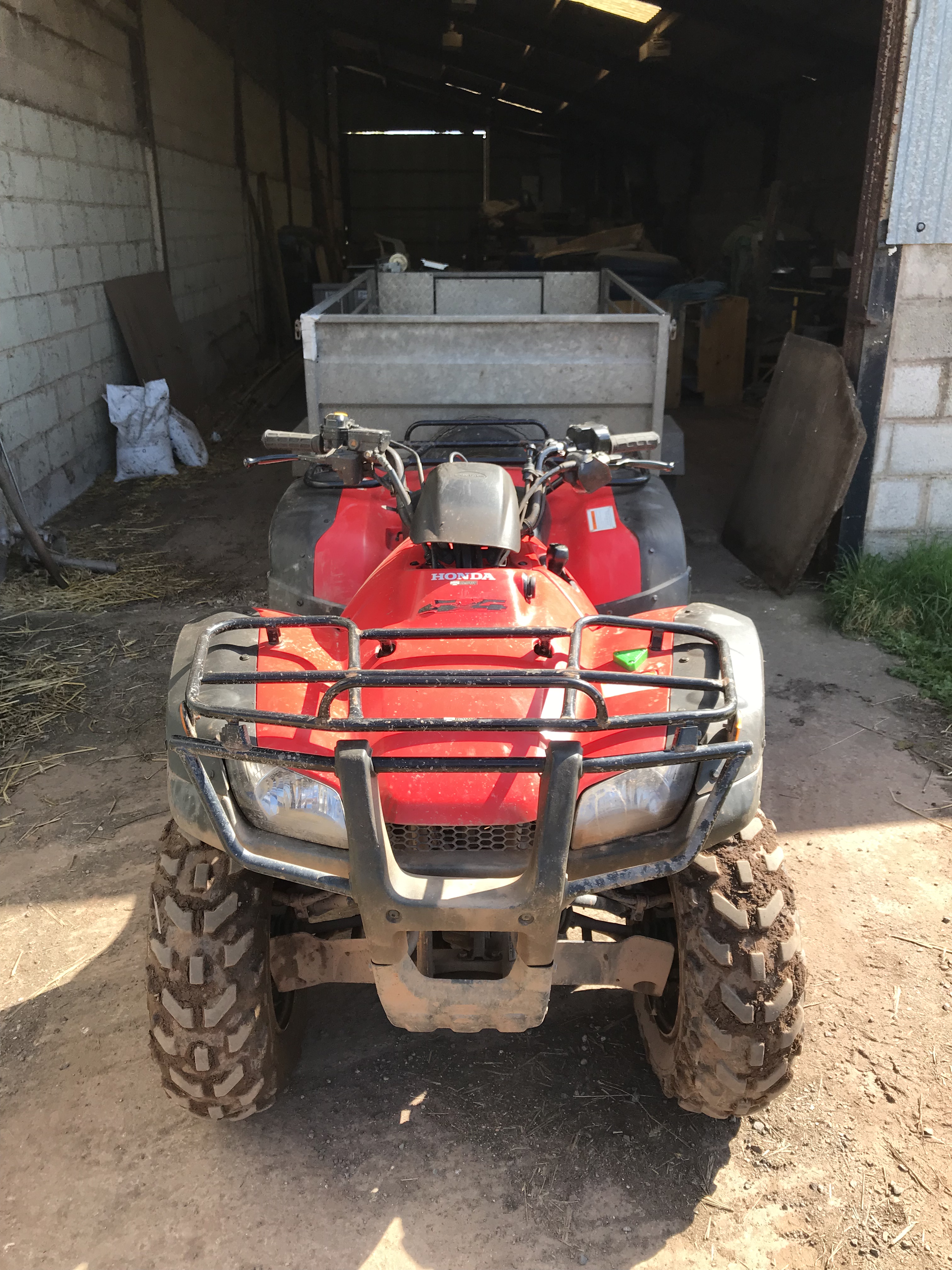
My first practical use of the quad bike after my course a few weeks ago
Altering some path signs and reinstalling them
Setting some more marker stones along the visitor path
Repairing the chicken shed and run (they deserved it as they lay great eggs!)
Tidying up around the farms buildings and cutting kindling for the Bungalow stove
Tidying up the back of the Bungalow and installing a new compost bin
Trying, and failing, to take a gate apart to salvage the wood
Cutting back some gorse above one of the bays
After our work for the day is finished, at about 4:30ish, the evenings are our own. I’ve been running a few times so far; I have never run anywhere as spectacular as the Island and it sure beats pounding the streets at home or going to the gym! I’ve also been out for evening walks, photographing the wildlife, and have sat in the sea-watching hide looking for the passing wildlife.
One evening, however, our work started again at 10pm as John and I headed out to the eastern side of the island of help the wardens, Greg and Lisa, to catch and ring Manx Shearwaters. We spent a couple of hours using large pond cleaning nets to catch the birds as they landed on the ground. We gathered them up carefully, trying to avoid being bitten and scratched too much, and put them into cloth bags, handing them to Greg to ring. We ringed 20 birds over the course of the evening and had a number of re-captures of previously ringed birds – quite a successful night’s work. Hopefully more of these evening tasks to come!
The Manx Shearwaters are highlight of a volunteer’s stay on the Island, even if they aren’t involved in ringing them. A night on Ramsey at this time of year is accompanied by the weird chuckling-gurgling calls of the ‘Manxies’ and I love going to bed listening to them come in to their breeding burrows all around the Bungalow – I’m fortunate that I have so many more nights to come on the Island to listen out for them.
The first couple of days on Ramsey Island felt a little odd and I couldn’t put my finger on it. Perhaps it was that I am living in the room usually occupied by the intern or just the usual great difference between here and the more hectic world outside. However, on the third day, yesterday, all was made clear and put right – we hadn’t had any visitors!
There wasn’t a 10am boat but the 12pm boat had 24 visitors and I did my first introductory talk of my stay.
It turned out to be the first properly sunny day and out of the wind it was quite warm – so all the visitors went away happy and slightly glowing!
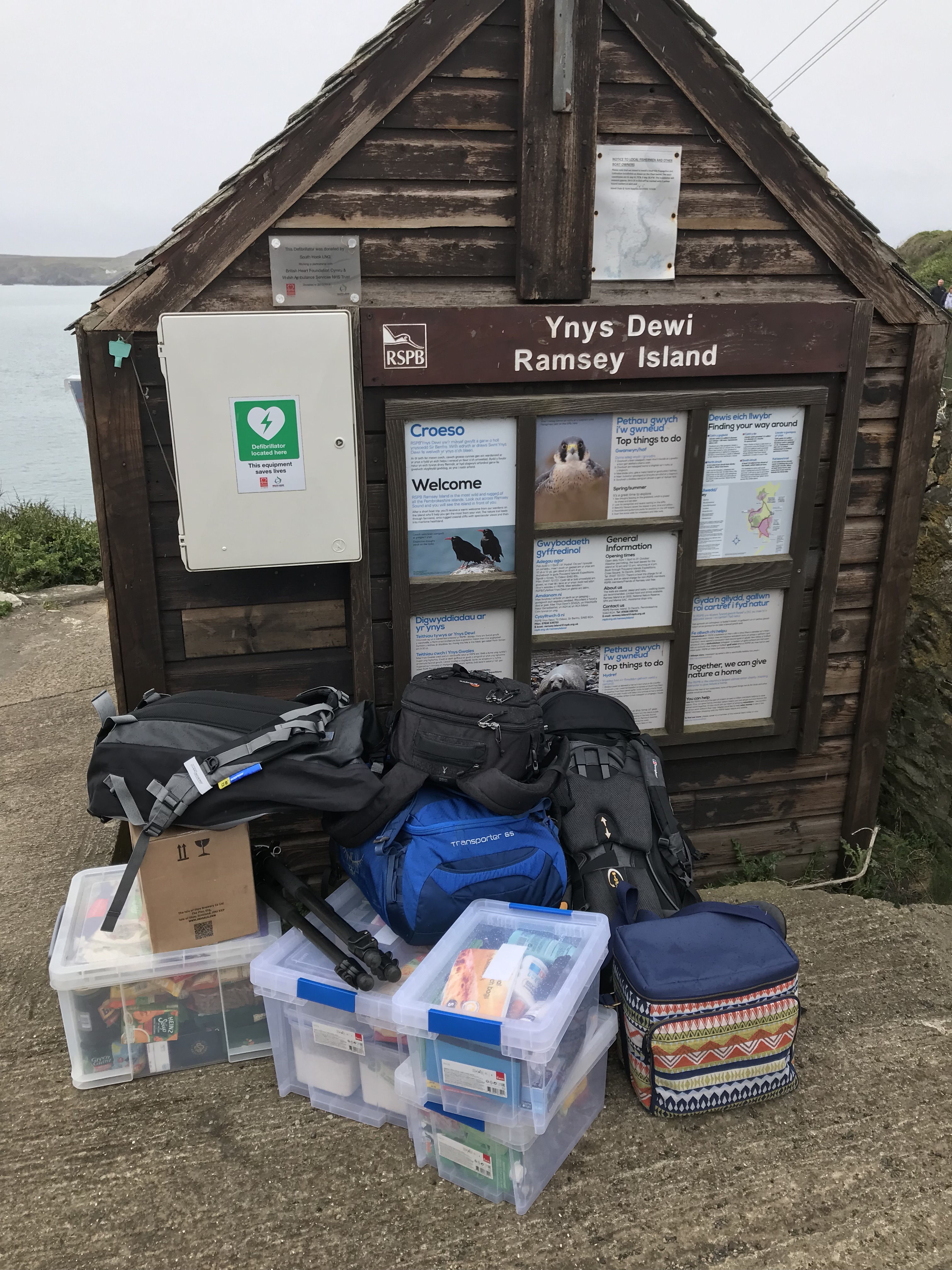
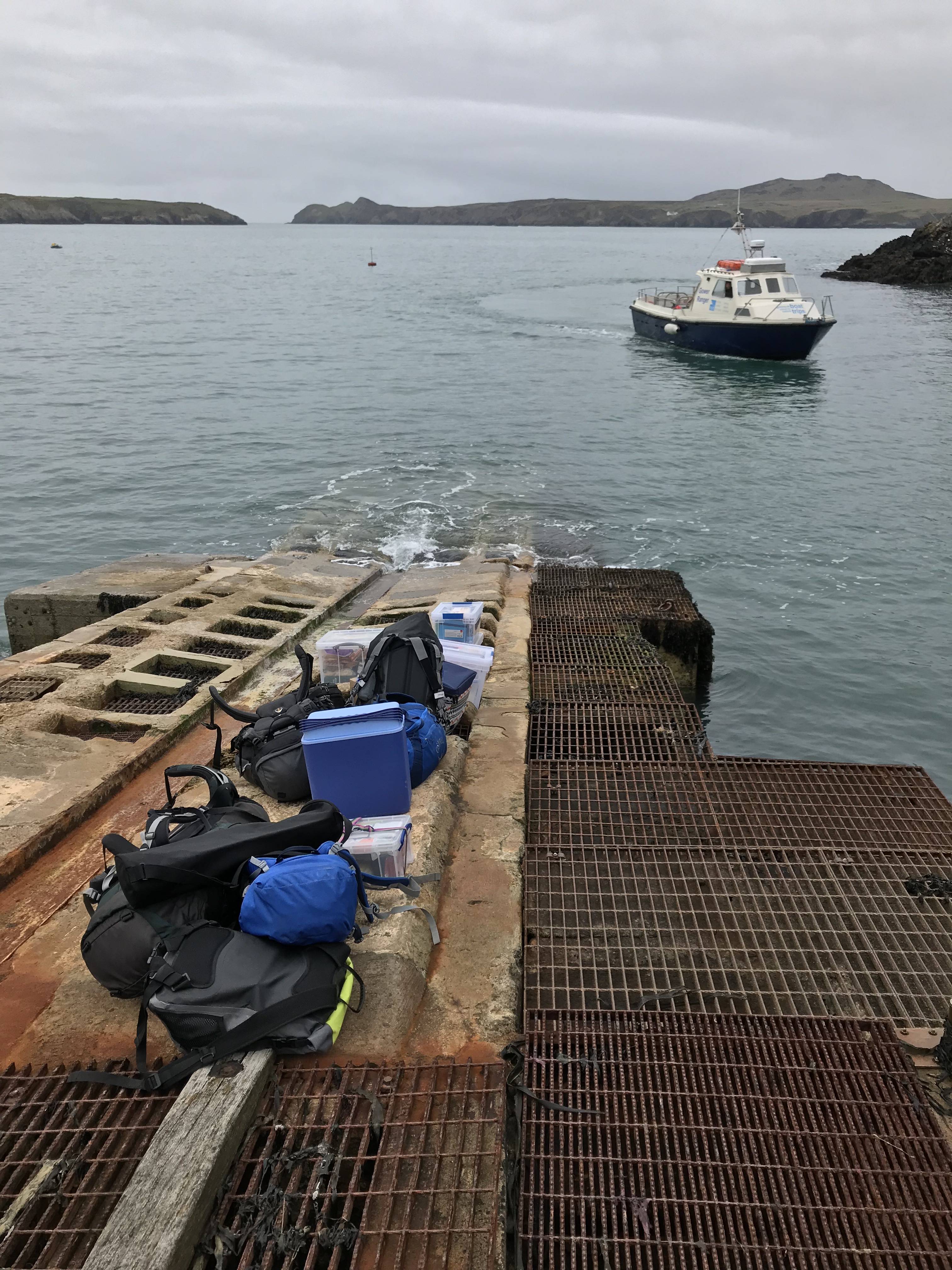
I’m now back on Ramsey Island after a one-day delay due to a storm. It took a bit of effort to get all my kit to the slipway and loaded onto the Gower Ranger for the trip across Ramsey Sound – I didn’t travel light this time!
The day was dull and cloudy with spots of rain and mist. It is certainly chilly as I write this tucked up in bed with a hot water bottle, a duvet and two blankets, and I can see my breath, but I can hear Manx Shearwaters going past in the darkness, which makes it all fine!!!
So my three-month stay on the Island has started and I can’t wait to get stuck in tomorrow morning!
I’ve barely been able to contain my excitement for the past seven months. I’m just about to do something that I’ve wanted to do for many years and something that is well up towards the top of my bucket list; in fact it probably sits in the number one position these days.
Looking back at my working life and my career, I can say, very honestly, that I am where I set out to be. Sometime during the middle years of secondary school, while in my form teacher’s classroom, I picked up a copy of the Local Plan; I was fascinated – odd, I know. Possibly coming from a liking for maps, a natural tendency for order, a bit of creativity and an interest in geography, planning seemed like the ideal profession for me.
My GCSEs seemed to fit well and my A-Levels were perfect, so I went on to study for a degree, and then a post-grad, in Town Planning (with a focus on transport). I then had a lucky break and got a job after only my first ever interview with a smallish consulting engineers, working as a Transport Planner. Over the course of the last 20 years, I’ve learned, grown and developed in the profession and now I’m an Associate Director in a large, multi-national consultancy. If I had seen where I am now from the eyes of that teenager holding that Local Plan, I think I would have been very happy.
However, what time has for so long led me to forget is that I had another dream job in mind way before I picked up that Local Plan. From my early childhood I’ve had an interest in wildlife and nature, despite a family tendency for all things trains and engineering, and that interest has burned long and deep in me. There was a key moment in my primary school years that sparked my interest further. If I remember correctly, on the way to catch a ferry from Newcastle, my parents, my brother and I stopped to meet my Mum’s cousin Steve at a nature reserve where he was warden. He showed us around and, as a nine year old, the experience was a defining moment in what would become a lifelong interest.
Over time however the interest slipped more into my subconscious and when I joined the world of work, it was well hidden behind all things that normally interest someone in their early 20s. As time moved on, work became more important and most other things became secondary and poorly prioritised. By my early thirties, my work/life balance was pretty bad and my love of wildlife and nature a mere cooling ember.
This all changed when, ten years ago, I finally decided to take a proper holiday and booked a wildlife trip to Sweden. It was the spark that re-ignited the flame and it has slowly but strongly grown ever since. Things still weren’t quite in balance between work and home, and it finally came to a head in the summer of 2011, when I decided to take a break from work and spend a year exploring my newly fanned interests. I spent a large part of that year volunteering for conservation organisations, both locally and at various locations around the UK. The experience that stood out the most from that year was the two weeks I spent with the RSPB on Ramsey Island off the Pembrokeshire Coast.
Every year since, I have gone back to the Island for more fortnights volunteering, and sometimes, if I’ve been well behaved, I’ve had have the odd additional week too. I adore being there and it would be a huge loss in my life if I couldn’t go back again. It’s usually one of the saddest days of the year when I leave and I think about place almost every day (triggered by the two paintings I have in my house). I always long to return and I usually make the booking to go back as soon as I get home from a stay.
So, imagine my reaction when I was there in September last year and Greg, the Site Manager, offered me the chance to stay for three whole months!!! Well, I couldn’t refuse. So, after seven months of containing my excitement, I’m taking May, June and July off work and heading down to South Wales to spend 13 weeks on the loveliest of islands doing something my childhood self could have dreamt of. I’m sure this stay will be the same as my usual shorter stays; it won’t be a holiday, I will actually be living a different life for a few weeks,
I have to say that my company and colleagues have been both extremely understanding and helpful in enabling me to do this – many wouldn’t have been so. It’s a sign of a brilliant company and great colleagues that staff can take time out and give the other half of their lives some real focus – thank you WSP!!!
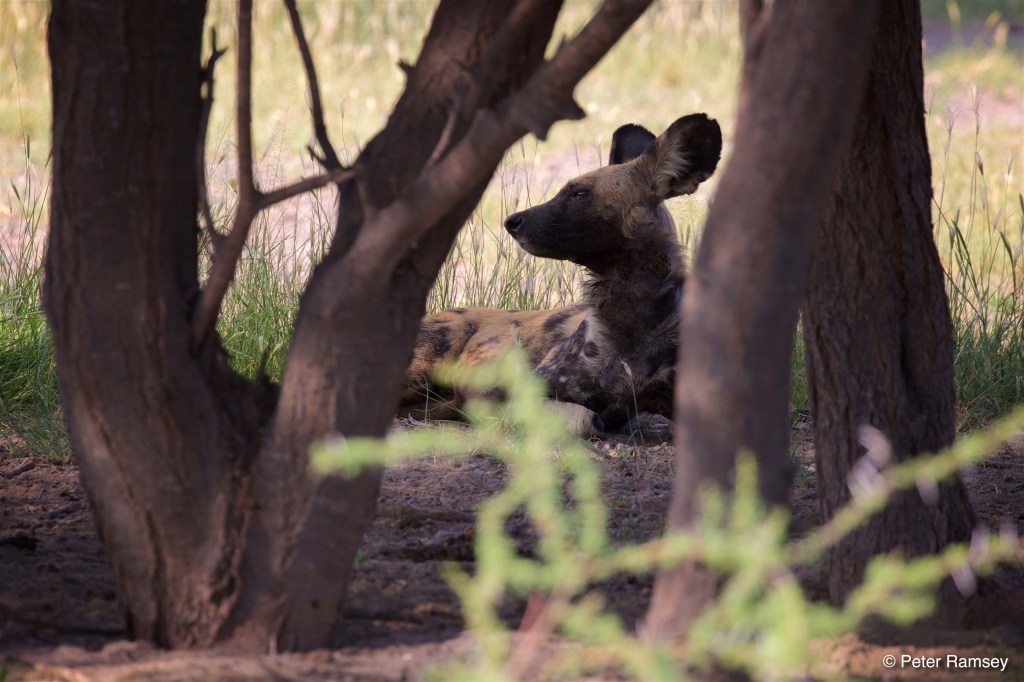
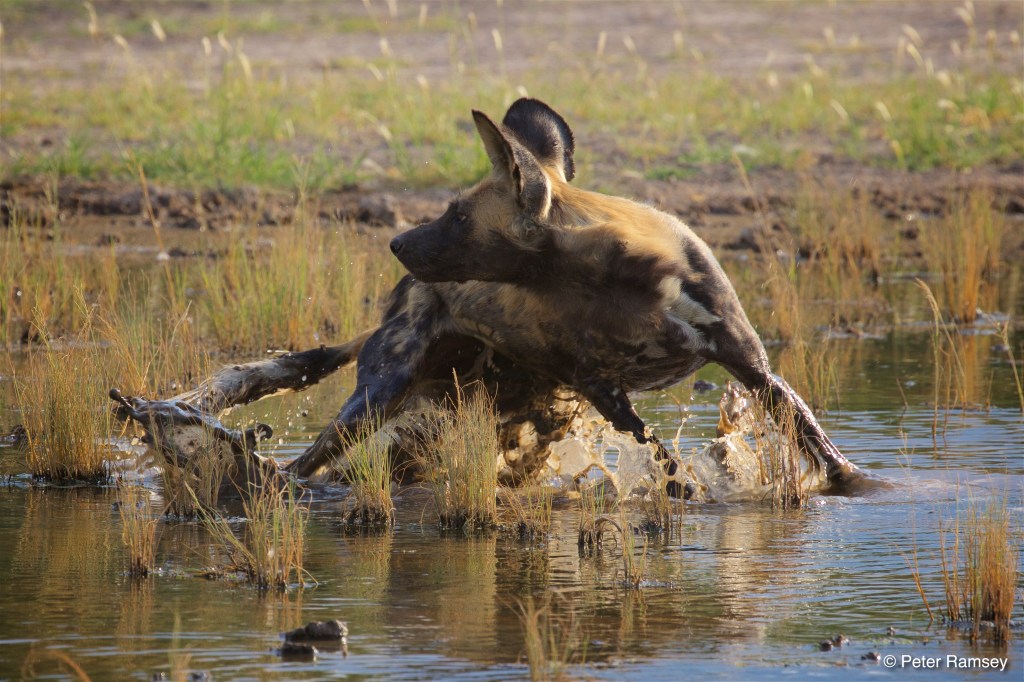
African painted dogs are by far my favourite animal of the continent and I had exceptional views of them when I visited the Okavango two years ago (my blog post about those sightings is here). After reading the pre-departure information from the tour company I didn’t expect to see them at all during my recent trip to the Kalahari. This level of expectation was reinforced by our guide who who had only ever seen them twice in the Central Kalahari Game Reserve during all his trips into the area. He told us there there are only one or two packs in the entire reserve and the chances of seeing them very slim.
…and the chances of seeing them in the future is diminishing. In 2016 there were only 6,600 left in the wild with only 1,400 breeding adults. They are spread amongst less than 40 disconnected populations and Botswana, especially the north of the country is a relative strong hold; that area may hold around 10% of the word population.
However, one morning while on our way back to camp in the Passarge Valley we passed another vehicle whose occupants told us they had seen both painted dogs and elephants earlier in the day with the former at a water hole. It was too late in the morning to head over there but after our usual daily siesta we made for the water hole in the late afternoon. As the dogs usually rest up during the heat of the day, and one become active as the sun drops, our expectations were high that they would still be there when we arrived.
It took a while to get to the site through narrow, twisty, sandy tracks, being flicked by the spikey undergrowth as the truck brushed passed (I’ve still got the scars!). However, after the best part of an hour we turned into the trees surrounding the water hole and almost immediately found the pack, resting under cover by the water. There were seven in total and as we approached, some nervously got up and slowly trotted off a little distance into the surrounding bushes while the rest stayed lazing where they were. As another vehicle approached, a few more got up and they seemed more concerned about it and walked off a little further. However, as we waited and the other vehicle drove off, the dogs returned one by one to the water’s edge.
We sat watching them for an hour or so as they rested and relaxed, some standing around or wandering about, while others just slept. Eventually, with a night-time ban on driving in the Reserve and an hour’s drive back to the camp, we had to leave them – as much as we didn’t want to!
This was just a little extra doggy bonus to the trip – these unexpected events are what make wildlife holidays exciting and rewarding.
We never did see the elephants despite finding their tracks and a lot of fresh dung; they’re rare in the Kalahari and these were probably roaming males rather than maternal herds.