Talking about bird song…I need to learn to love the dawn chorus again!

Whilst winter isn’t over just yet, and it’s still dark when I leave home in the morning to travel to work, spring can’t be far away as over the past week I’ve heard birds singing the dawn chorus for the first time this year. When I say birds, I really mean one species, as it has only been song thrushes so far that I have heard in these early hours, just before 6:00am.

Over course of the spring last year, I had quite a long period of poor sleep, getting less than a handful of hours a night.  Most mornings I knew it was pointless trying to get to sleep when the thrush on my roof started singing.  The song of the bird, a constantly changing pattern of two or three-times repeated calls and notes, really started to annoy me. It is actually one of the nicest songs of dawn but it can be quite sharp and piercing, and not only made me even wider awake, the pattern of the call disturbed by thoughts too.

Usually, the first calls of the dawn chorus, as winter moves into spring, would be very welcome, but when I first heard that song this week, it took me right back to those sleepless nights last year.  It’s strange how sounds (and other senses) can instantly transport the mind back to previous times.  I’ll need to shake that association from my head as the down chorus should be something wonderful not something bad. So, I’m going to force myself to get up early one weekend morning and head out into the countryside, to sit under the canopy of a wood and listen as the dawn chorus unfolds around me – that should do the trick!

Nature can stir the soul

Today, I made the first of my usual autumnal pilgrimages to the Wildfowl and Wetland Trust’s (WWT) Martin Mere reserve near Ormskirk, Lancashire. I have been there so many times that I have long lost count. I return there every year in late September or early October to witness what is, for me, a true wildlife spectacle to rival many better known natural sights.

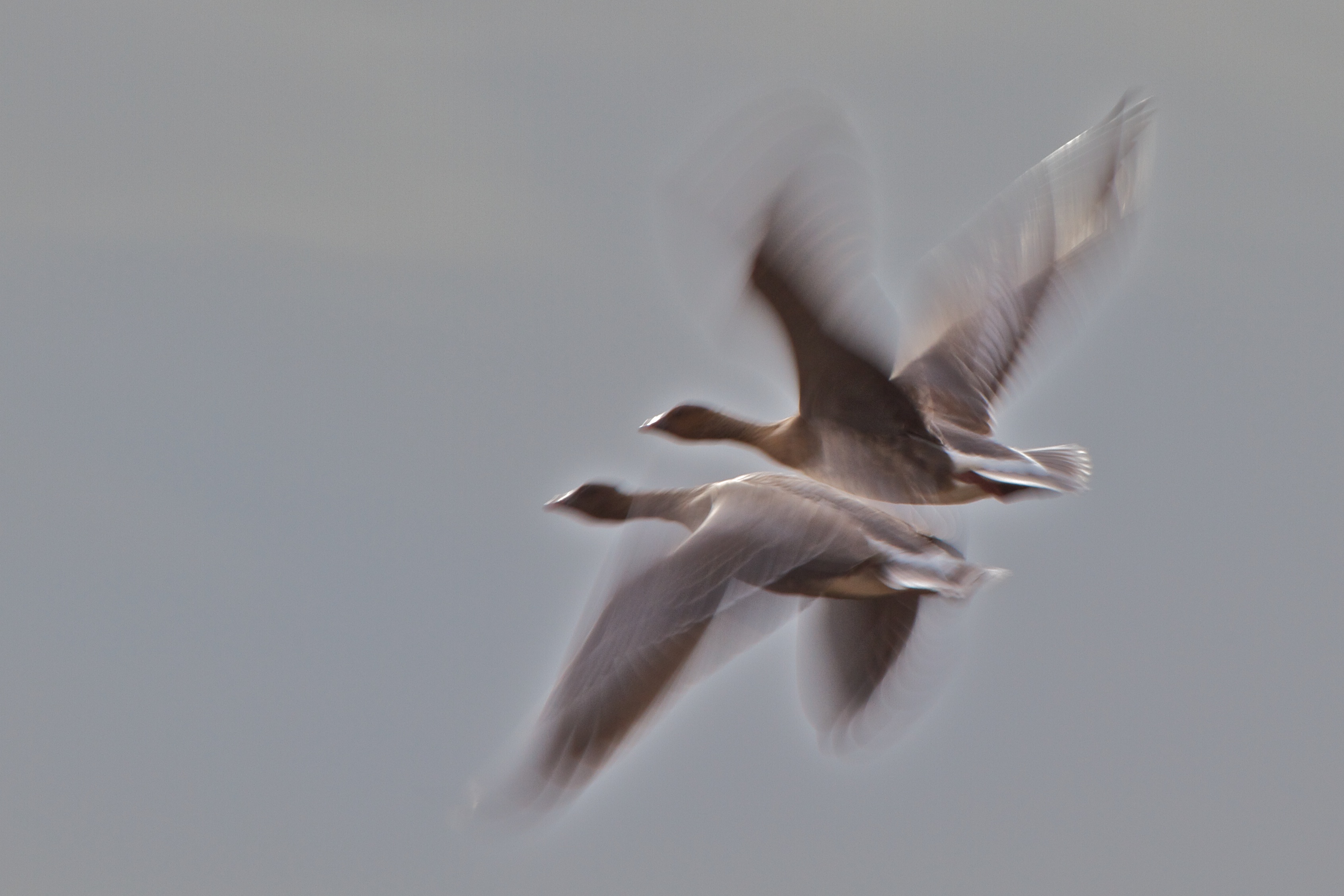
As autumn begins to grow in its seasonal beauty, the winter visitors to our shores start to arrive. Amongst the many different species to spend the colder northern hemisphere months in the British Isles, there is one that really connects with me – the Pink-footed Goose.
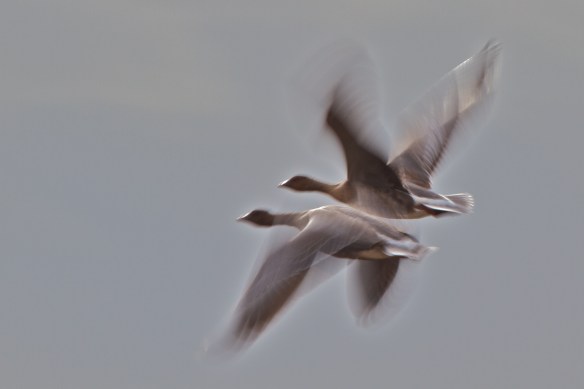
IMG_0395

These smaller geese, more petite than their canada or greylag cousins, breed just below the arctic circle, in Iceland. Only a few weeks after hatching, the goslings follow their parents from their early homes and fly across the north Atlantic all the way to our small islands. Around 240,000 pink-feet winter here, usually spending much of their time on the east coast but they use Lancashire as a first major staging post, with many thousands resting there before heading on their way further east.

I find the sounds of these geese have a soul-splitting ability. A single calling pink-foot, perhaps the lead of a small skein flying over an otherwise silent salt marsh, ‘wink-wink, wink-wink, wink-wink’, seems to be one of the loneliest and wildly remote sounds of nature. It brings visions of the wide open valleys of Iceland, and of the long struggle between their birthplace and their wintering fields here in the UK. Counter to that is the combined stirring chorus of a many thousand strong flock taking to the air in a mass force of nature. This is an invigorating, breathtaking and heart-pounding moment, a wave of noise as the flock erupts from the ground, turning the immediate sky into a flickering darkness, then splitting to form swirling clouds of avian purpose.

Three springs ago, I made a trip to Iceland with the aim, amongst other things, to see the breeding grounds of the pink-feet. I had seen them so many times in the autumn and winter, in Lancashire and in Norfolk, that I felt a great need to see them at the other end of their journey, in their other home. Feeling particularly sentimental at the time, I wrote the following:

“We drive through the high mountain passes, with small villages and scattered farms. The tall rock faces supported by brown scrub and green pasture. Out onto the valley bottom, the river flattens its course and man-made obstructions claim some of the plain. Out of shelter in the vehicle, the wind whips past and roars through the valley. Rolling clouds of sand and dust maraud across the plain, making eyes dry and scratched.

This is where they are, in small groups and pairs, preparing to nest after the long struggle north. Their colour now matching the surrounding ground. They are quiet here, now only an occasional call; not the great waves of noise from their winter glories.

Not as imagined; they are not alone here, amongst the farmland, fences and roads. Not as wild as thought but still more wild than most. A sense of seeing their other home; their real home. A sense of seeing it all, from journey start and journey finish.”

Today, there were over 20,000 pinkies at Martin Mere, a true spectacular in both sight and sound. The WWT website for the reserve has a sunset video that gives something of the emotional experience – but you have to be there to really feel it.

WWT Website

Hard work and dedication don’t guarantee happy endings…

A few posts ago, I was celebrating the fact that a chick from the first year I helped to protect the Glaslyn osprey nest (2012) had successfully returned to the UK for the first time. It was, for me, a reason to be very happy and proud that I had played a small part in helping this to happen – many others, and the osprey itself of course, can take much more credit!

However, this joy has now been tempered somewhat.

On one protection shift this year, I took along a friend, Jack (fellow wildlife enthusiast, womble tsar, long range cyclist, unstoppable camera-trapper and very poor whisky drinker), to show him what we do. He seemed to enjoy himself and hopefully will come along again next year.

Over the course of the summer, Jack got a job with the RSPB on their (now award-winning) Skydancer project doing the same role that the volunteers undertake at Glaslyn, but for hen harriers rather than ospreys. Based in the Forest of Bowland in north Lancashire, Jack spent many nights watching over a hen harrier nest from within a hide. Whilst there, Jack got some great views of wildlife in general as well as the hen harriers themselves. Unfortunately not all of the locals were friendly and many a night was spent fending off the unwanted advances of overly insistent midges (an experience I know all too well!).

In England, hen harriers are even rarer than their fish-eating cousin raptors and no pairs successfully bred in the country at all last year. So it was with some relief that three nests managed to fledge chicks this summer (two nests in Bowland and one in the Lakes). However, it was with great sadness and extreme anger that I heard today that two chicks from the Bowland nests have disappeared. They were fitted with trackers, which have both now fallen silent. The trackers are very reliable and it is highly unlikely that one of them, let alone both, will have failed whilst the birds were still alive. The most likely explanation is that both birds have been killed and probably at the hands of man. Whether this can be blamed on their nemesis, the gamekeeper, we may never know, but if I were a betting man…

It just goes to show that the collective will of many does not always overcome the selfishness of a few.  It also shows that the hard work of species protection teams is still of importance in the fight against our fellow humans who will not let a little thing like legal protection get in the way of their destructive hobbies.

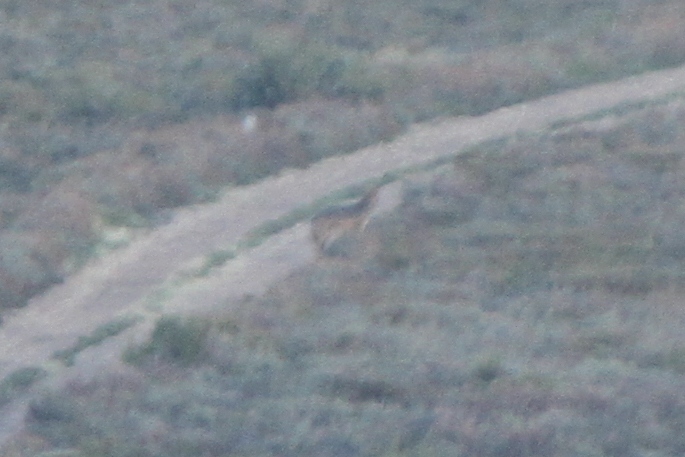
IMG_6427.1 I don’t often see hen harriers (obviously, I suppose) but when I do, it’s usually pretty memorable.  No other sighting I’ve had, however, can beat seeing a male harrier mobbing a wolf; and I even got a snap! In the photo above, the wolf is in the centre, on the track, while the light-coloured spot above and to the left is the harrier (it is, honest – they were at least a mile away after all!)

An end to a warm autumn day

It certainly has been an unusual start to the season with the weather still in summer mode.  Many of the autumn signs are there, and have been for some time; the changing of the leaves, the darkening of the evenings and the cooling of the mornings.  Yet the days are warm and I’m still seeing the last few swallows and house martins around.

I went for another of my increasingly regular wanders around Wybunbury Moss a couple of days ago.  The wood at the edge of the Moss was quiet, with most of the summer migrants gone, and it took a took a lot longer to notice a good handful of birds amongst the trees or flying over.  There were roving mixed tit flocks passing from cover to cover, a sure sign that the breeding season is over, but I was also still seeing dragonflies over the open Moss – summer remains. The trees around the Moss are certainly changing colour; in fact one or two are almost bare already, while others seem to be in their high summer prime.

Wandering back to the open fields, I got a rarely seen view of a green woodpecker being chased by a sparrowhawk.  I hear woodpeckers at the Moss quite regularly but they are usually great spotted. I hear the greens only a couple of times a year and probably only see one once a year.  The woodpecker was yaffling away as is sprinted low across the Moss, while the hawk didn’t seem all that intent on catching its quarry, as it glided behind.  I’ve had some nice sights at the Moss over the last year or so but its often the case that you have to spend a lot of time at a location to get that kind of glimpse of wildlife.

As dusk started to fall and I walked up the slope towards the church tower, out of the bowl-like depression in which the Moss sits, I could feel the temperature increasing; there had certainly been a nip in the air open fields.  The bowl was acting as a sink, with the cooling air flowing downwards into the lower lying ground and what remained of the day’s warmth, was rising upwards with me.

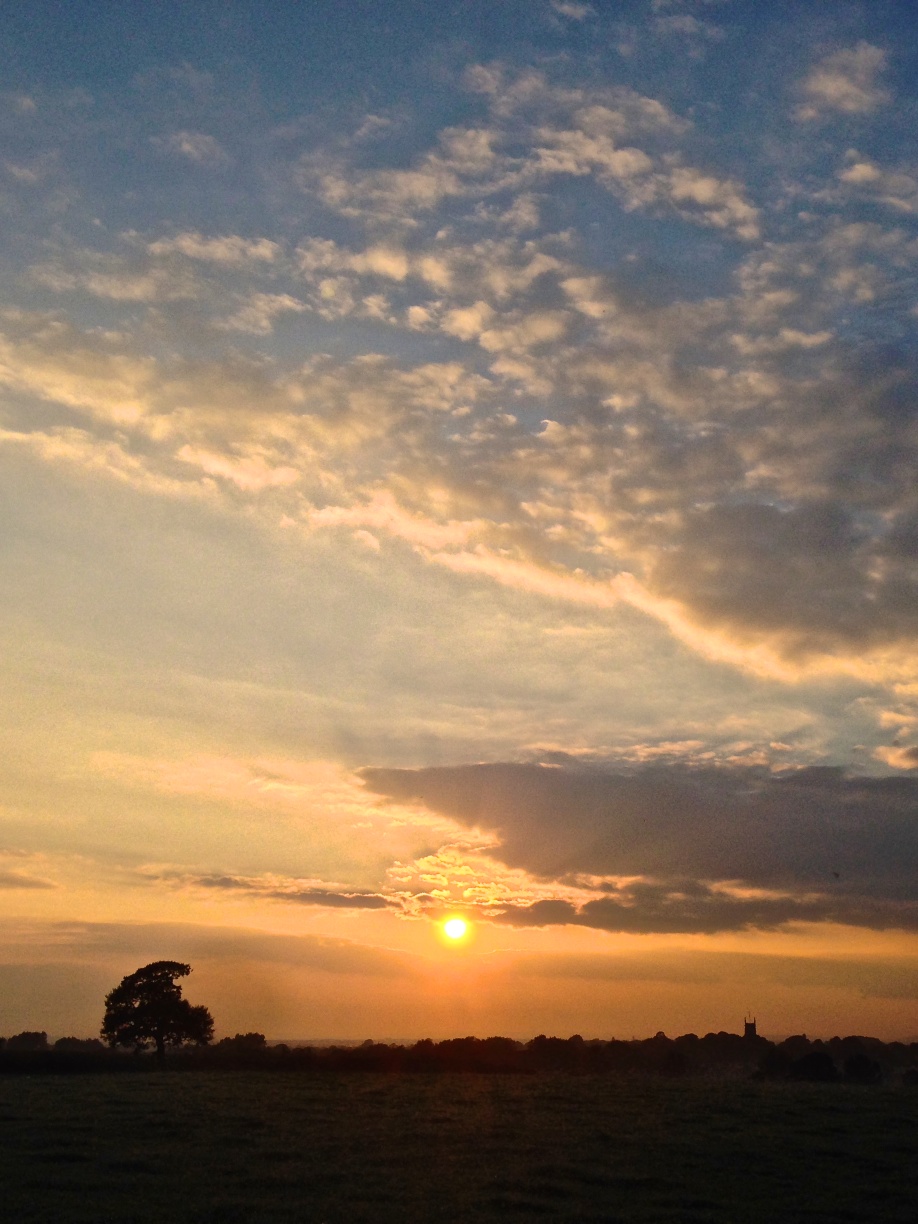
Driving away, I got a glimpse of the sunset over Wybunbury, the church tower standing out in silhouette. The last of the sun’s rays were still warm but the air flowing in through the open car window was cooling by the minute. 2

The melancholic tune of autumn…

As I stepped out of my porch this morning, with the dawn still to come, I was struck by a sound coming from the tree across the road. The sad, wistful notes came from an unseen bird, standing on a branch or twig amongst the foliage. The tune came again as I left the office for the day but this time there were two calling from within the bushes, perched some way apart.

After hearing very little bird song over the past few weeks, with the post-breeding moult keeping the birds quiet, the calls stood out from the background noise.

The calls came from robins.

Embed from Getty Images

The robin is unusual in that it sings almost throughout the year – the moult being the only time it remains quiet for any length of time. The singing enables the robin to keep its territory across the seasons but the song changes and is in two distinct phases. As breeding approaches, the song is more powerful, purposeful and bright, attracting a mate to the ground above which it stands protector. However, after it has refreshed from a hectic breeding season and the autumn proceeds, the song changes to more melancholic notes, as if saddened by the end of another year approaching.

After spending so much time listening to bird songs and calls during the breeding bird surveys this year, the quietness that the moult brought was quite startling and I noticed it more than ever before. The autumn call of the robin, however, has lifted the silence and has opened my ears to a whole new season of sound. It won’t be long until the some of my days are filled with the sounds of wintering geese and swans, and the dusk is accompanied by the alarm calls of blackbirds as the darkness of the lengthening nights envelope the land.

A footnote to an osprey footnote

I’m spending the bank holiday weekend at a family wedding on the atlantic coast of France, not far south of Bordeaux.  As always, I’ve taken an interest in the wildlife around the area I’m staying and there’s been plenty to see – ranging from a pipistrelle bat making a few passes over the post wedding drinks to a sand lizard in the dunes I walked through before the big event.

 (1)

Looking at the birds, there are some similarities to the Glaslyn Valley in the summer with green woodpecker yaffling in the woods, chaffchaff calling occasionally, a tawny owl screeching in the dark and a family of redstarts flitting from bush to bush.  However, the most significant connection came this morning on a slightly fuzzy walk down to the nearby lake.  In the distance I saw a familiar shape floating above the trees on the far shore.  It made its way along the lakeside and then suddenly plunged and splashed into the water, lifting itself out again after a moment on the surface.  I didn’t see if the bird had caught anything before it disappeared against the wooded backdrop. Even at some distance the bird was unmistakably an osprey but could it even have been one of the Glaslyn birds on migration south? If it was, that really would have been another great postscript to the osprey protecting season!

The first signs of mists and mellow fruitfulness

We may only be just past the middle of August but we are five sixths of the way through meteorological summer and the first signs of autumn are starting to appear.

 2

The weather has turned, after two gloriously warm and sunny months in June and July, August has so far been generally cooler and certainly wetter. Gone are the warm, bright evenings with temperatures in the high twenties and we’re now seemingly stuck with days in the high teens or low twenties, with stronger winds and more rain. However, the approach of autumn isn’t just shown in the weather.

On my early morning commute the signs are also there with the sun now not risen as I walk into the station and mists have been quite common across the fields as I head into Manchester. The series of lakes not far from the station that I pass each day had a large flock of geese on it earlier this week. In the gloom, I suspect these were Canada Geese which are an introduced species but they do move together into larger flocks in the colder months of the year.

The migration of summering birds actually starts much earlier than many people think but it is now well underway. For me, this is particularly shown by the disappearance of the swifts; one of my favourite signs of summer. Unlike the swallows and house martins, swifts have only one brood each year, therefore, they make an early departure back to Africa. The swifts from around my house have gone and last week in Lincolnshire I saw only a tiny proportion of the numbers I had seen only a couple of weeks previously. Also in Lincolnshire, I saw the first signs of the trees changing colour and this morning I noticed a few leaves turning brown in the car park I use each day.

Last weekend on a rural wander around the canal near to Beeston Castle, there were more signs that we are coming to the end of the summer with a wide variety of trees and plants laden down with the fruits of the summer – hawthorn, bramble, apple, elder and blackthorn.

 8 1 7  6 

I was getting back to my car, there was also large gathering of swallows skimming low over a meadow, fattening up on the insects in preparation for their own journeys south.

I used to approach summer with a certain amount of dread; spending hot meetings in client’s stuffy offices isn’t always my idea of fun, especially when it’s so nice outside. I also always used to dread the hot and sticky walk across the city centre back to the station on the way home but maybe all the exercise I have taken over the past couple of years has helped to stop me melting in my suit as I turn up at the train. I now love the summer, which is quite a transformation, however, the autumn has been my favourite season for quite a while now and I can’t wait to see what the coming ‘season of mists and mellow fruitfulness’ brings.

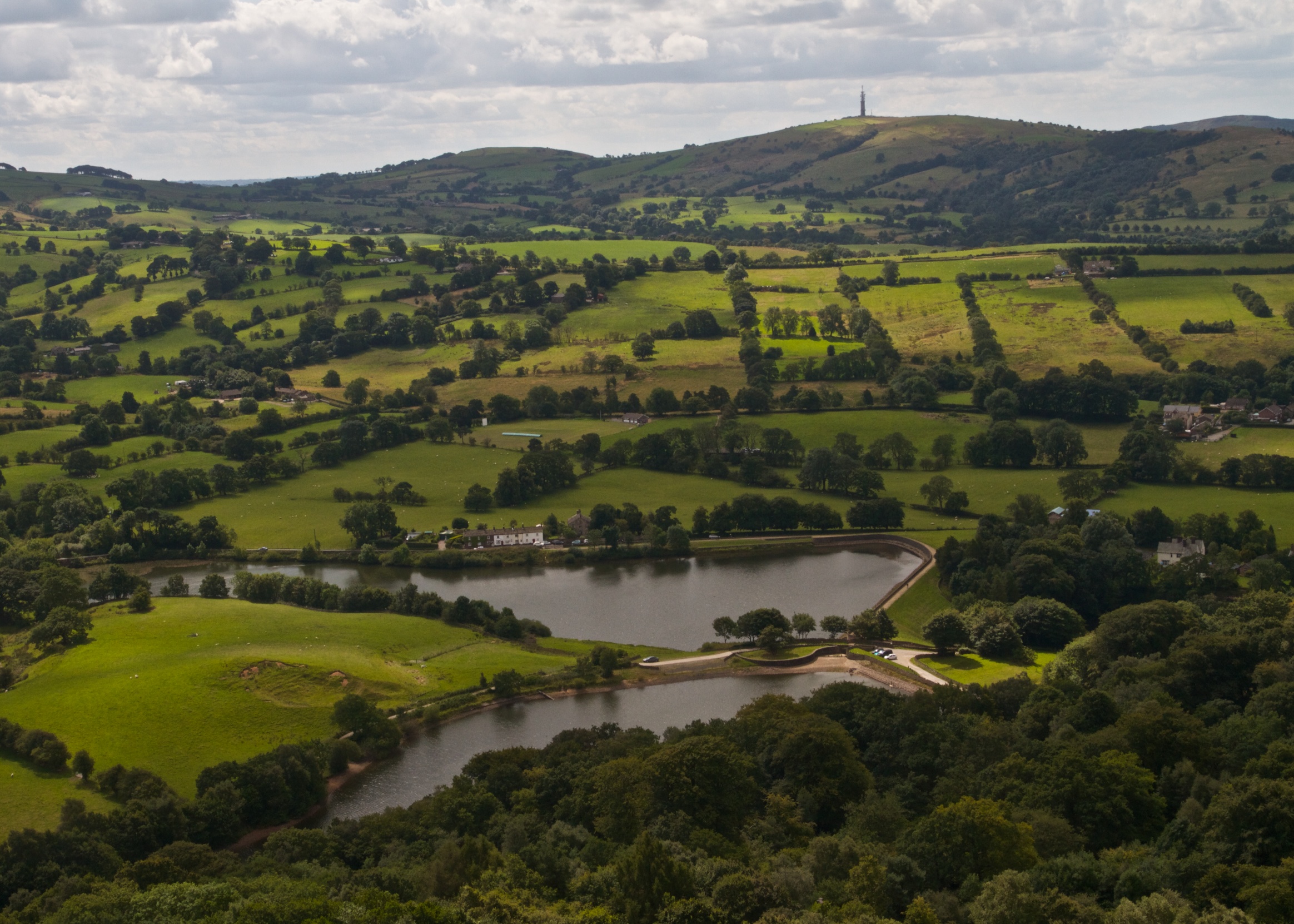
A return to the butterflies of Tegg’s Nose

After going to a wet and windy guided butterfly walk around Tegg’s Nose Country Park a few weeks ago, I returned last weekend to see if I could better views.

 3

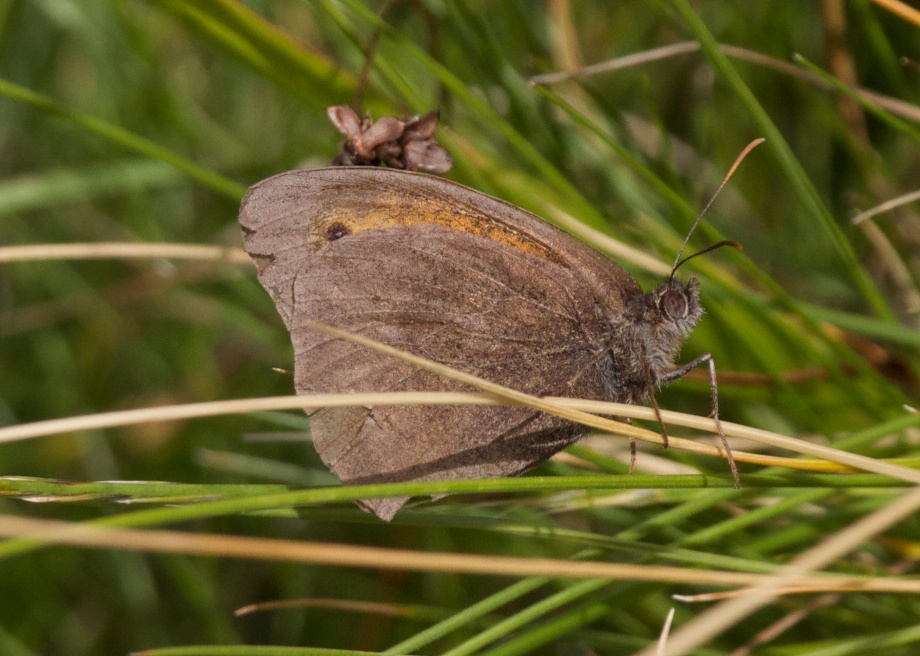
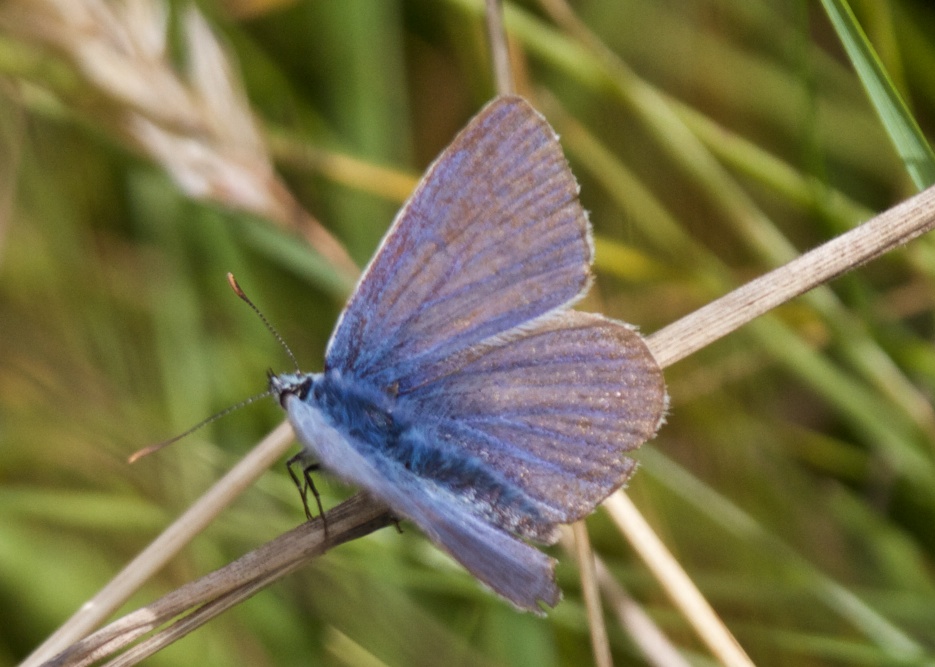
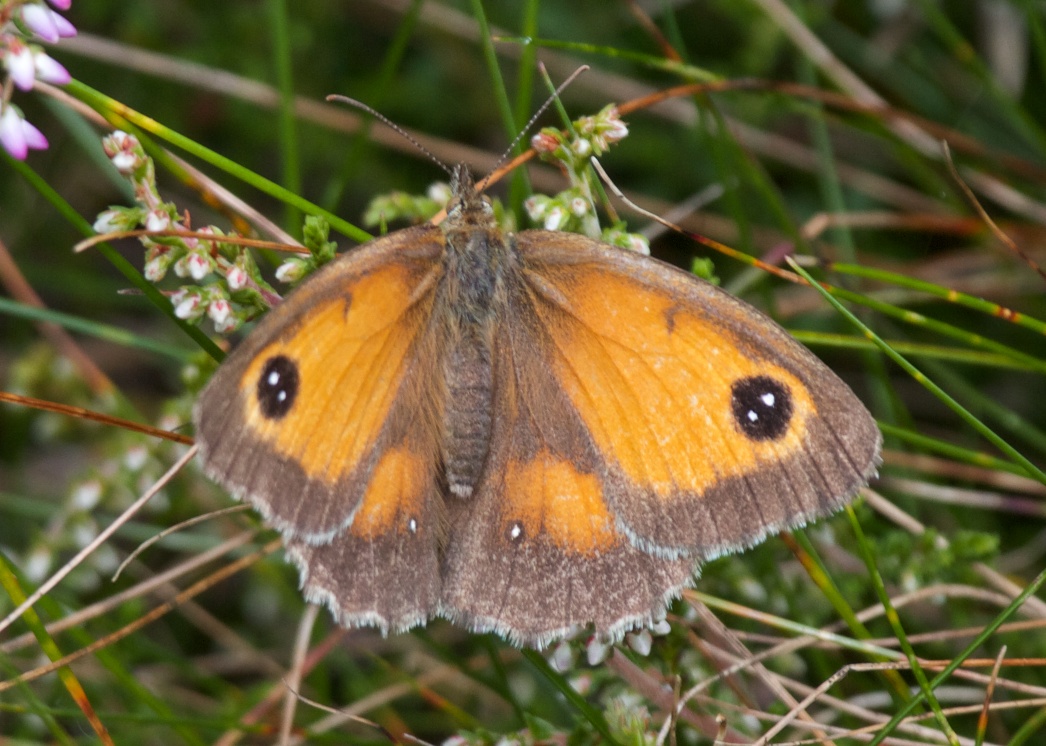
It was certainly much better weather with the sun out and warmth in the air, although the wind was quite strong.  Butterflies and moths were very much more in evidence with many flitting around across grass and heathland.  Trying to identify them at distance was quite difficult (especially for a beginner like me!) but I did manage to get good shot of the following:

Meadow Brown

 5

Common Blue

 4

Gatekeeper

 2

Also around the park, the bilberries were ripe and ready for picking, with a few visitors taking a good harvest.

The guided walk certainly increased my interest in butterflies but I might not get many more opportunities this year, particularly as the weather has taken a very autumnal turn.

GUEST BLOG: Black Fish Fundraiser – By Jack Riggall

I’ve never lived by the sea, but obviously in the UK we are never far away from it; so I’ve had some opportunity to see a few of its many citizens (both here and abroad), enough to secure my support, small though it may be, for its preservation. Cornwall was a frequented holiday destination for my family growing up, and events that spring to mind are rescuing a stranded plaice (Pleuronectes platessa) from the busy Polzeath beach where it was likely to be squashed and returning it to the tide, watching basking sharks (Cetorhinus maximus) from the cliffs at Boscastle and investigating rock pools looking for various crab species whilst the large aquatic woodlice amazed me (I’m not actually sure what they are to this day, though I suppose as an amateur naturalist I should find out). The time I spent in Florida swimming with captive dolphins is admittedly something I don’t look back on with pride after learning the origins of captured cetaceans, but my more recent experience of kayaking & swimming with loggerhead sea turtles (Caretta caretta) off the coast off Zakynthos in Greece is something I treasure. One charity working to protect them came to speak at our hotel, and I later recommended a friend spend the following summer with this group with the experience & challenges the loggerhead faces described on my own blog.

All these species, whether cetacean, turtle or fish, have something in common – overfishing threatens their future. It’s perhaps telling that the first posts that show up on google when searching for fish are links to the best way to cook them (whereas searches for mammals, invertebrates & birds all present information on ecology). The Black Fish made it clear when they came to my college towards the end of last year that current predictions of the impact of overfishing mean the ocean will be largely devoid of life (think Jellyfish and not much else) by the year 2050. This charity is working to achieve commitment to sustainable use of the ocean on a political level as well as monitor fishing for illegal activity (a big issue in the Mediterranean where the charity has been active & successful in pursuing prosecutions) such as the use of driftnets, also known as ‘curtains of death’ for their habit of drowning cetaceans & turtles which are then simply discarded. It’s clear that if all the lovely creatures of the ocean are to have a future, idleness is not an option.

So, in support of The Black Fish myself and fellow wildlife campaigner & student Matthew Goodacre signed up (rather last minute) to the London to Brighton bike ride the charity is organising in September; we would race the 54 miles but as I intend to lounge about in many cafes en route it simply would not be fair. We need to raise £200 each, so your support (whether in sponsorship or encouragement) would greatly be appreciated by ourselves and the lovely ocean creatures too.