North Uist: A Day Exploring

My first full day on North Uist and I spent it travelling around the island and getting my bearings. It’s not a huge place, so after a day spent driving and walking, I’m already familiar with the geography.

One of the main reasons I like to come to places like this is for the remoteness and lack of the hustle and bustle of my usual working week in the centre of Manchester.  However, today was exceptionally quiet.  There were very few people about and I didn’t come across many cars – maybe it’s always like this; I’ll have to wait and see tomorrow!

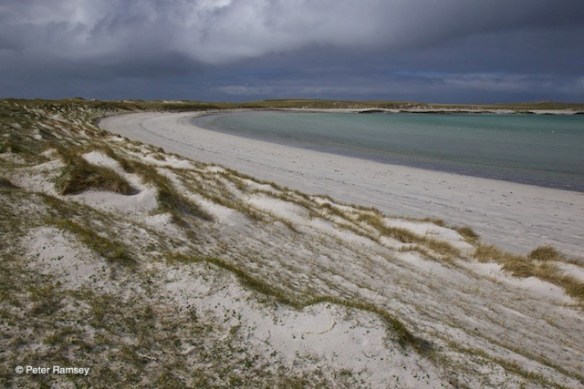
I spent the morning at RSPB Balranald, out on the western coast of the island.  It has contrasting landscapes with wide, open and flat pasture, sandy beaches and rocky shorelines.  The weather out there changed by the minute; to-ing and fro-ing between rain and bright sunshine, the strong wind blew clouds over so quickly that it was difficult to keep up!  The rain didn’t spoil my visit, however, and I think the weather is all part of the experience and certainly made it memorable.
5R0A2602

I’m a bit early in the year for some of the highlights at the reserve such as rasping corncrakes and the wildflowers of the Machir but I did get some good views of the local wildlife and passing migrants.  There were flocks of golden plover moving from field to field, a couple of great skuas flew along the coast and a small group of barnacle geese lifted and headed north as I rounded of the shoreline.
5R0A2673.jpg

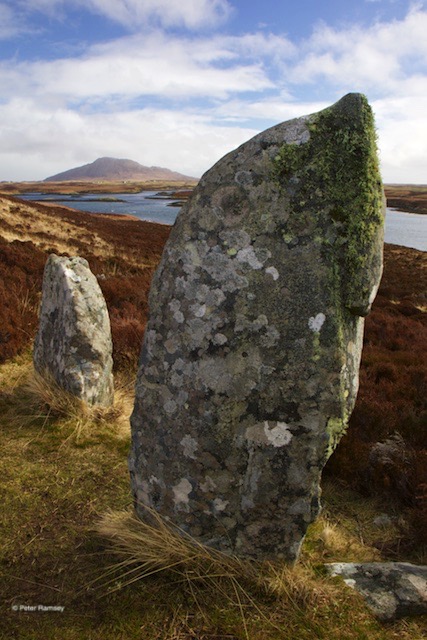
After walking along the white sand beaches of the reserve, I headed off on more wanderings around the island and came across the chambered cairn and standing stones at  Beinn Langais.  I walked up to the cairn, then to the top of the hill and round, back via the standing stones, with the weather just as changeable as it was in the morning. From the top of the hill, despite the cloud, there were great views across much of the island and down to the south towards Benbecula and South Uist; on a clear days the sights much be amazing.
5R0A2772.jpg

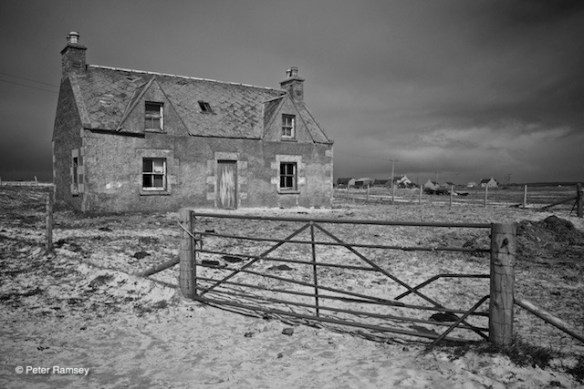
For the last part of the day, I travelled across the minor road that almost splits the island in half (well, more like one third to two thirds) and then headed up to Berneray to what the landscapes were like in the north.  I wasn’t disappointed as the beaches, hills and small lochs were just as photogenic as they were elsewhere during the day.

5R0A2808.jpg

Today has certainly whetted my appetite for more wanderings around the island.  After a guided wildlife tour tomorrow, I’ve got a few ideas of where to visit next. I certainly want to visit the islands to the south but there’s so much more to do on North Uist that I may not get around to going to Harris and Lewis at all – perhaps that’s another trip up here already in the planning!
 

Scottish Islands: Outer Hebrides

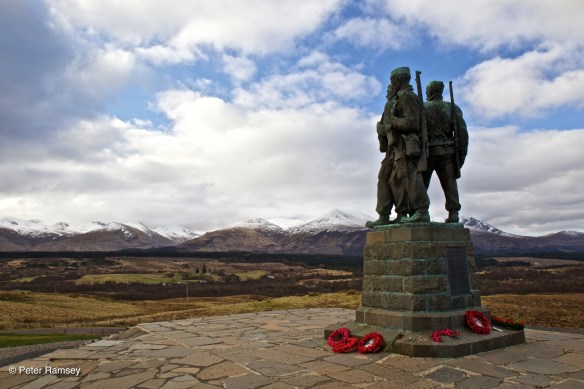
Following on from my trip to Skye last autumn (as well as a number of other trips before), I’m carrying on with my aim to visit all of the main islands, or groups of islands, around the coast of Scotland. This time, I’m staying on North Uist for a week.

After travelling as far as Fort William yesterday, I made the second leg of the outward journey today. I woke after a pretty poor night’s sleep, having been kept awake by a nearby fairground, then woken at 1:15am by the fire alarm and hotel evacuation, and then delayed from getting back to sleep by the overly loud bathroom extractor fan! However, the freshness of the morning, the bright light and the excitement of the journey ahead soon knocked me out of my drowsiness once I’d had breakfast.

My outward trip to Skye last year used the Mallaig ferry and my homeward journey was mostly in the dark before I passed Fort William. I had therefore never driven the route between Fort William and the Kyle of Lochalsh in daylight; today showed what I had missed! I use the word ‘stunning’ quite a lot in my blogging but it’s a truly perfect word to describe the journey. For someone who enjoys a good, long drive on demanding roads, the journey was just about perfect. As I had set off early, there was little traffic along the way although the intermittent snow, sleet and hail made it ‘interesting’ at times. However, I will remember the journey more for the sheer beauty of the landscapes, washed in early morning light, with dark but broken clouds allowing the sun to break over the deep valleys and the newly snow-dusted mountaintops.

5R0A2080.jpg

I arrived on Skye in plenty of time before I had to be at Uig for the ferry, so I drove a little further into the Trotternish area and retraced some of my autumnal steps. Unfortunately, the sea was too rough to allow much of a chance of catching a glimpse of a cetacean or two.

I love a ferry journey and the trip from Uig to Lochmaddy didn’t let me down. I stayed on deck for the whole 1hr45mins; it was cold but the views were worth it. On arriving on North Uist, it was only a short trip to my accommodation for the week; a newly rebuilt stone and thatch cottage, right on the coast. I don’t think I’ve ever been made to feel more welcome by owners of a holiday cottage and the place itself is pretty special; I might be a bit spoilt this week!

I didn’t do too much exploring before unpacking but I did pop out to the shop and slowly drove back, scanning the landscape for interesting wildlife – I was rewarded with a view of a short-eared owl right by the roadside. Unfortunately, by the time I got my camera ready it had flown off somewhat but I still managed to get some shots. As I write this post, there’s actually another one flying past the cottage!

5R0A2426.jpg

I can’t wait to see what the week brings!

Now for the peregrines…

Following on from my day with the ospreys yesterday, this morning I got up at 5:00am to head out for my first shift watching over another bird of prey nest – one belonging to a pair of peregrine falcons.

Like osprey nests, those of peregrines are targeted by thieves but whilst the eggs of both are prized by collectors, only the chicks of peregrines are of interest to those of bad intent as ospreys cannot be used for falconry. Both types of nest are also prone to disturbance, therefore, there is a need to help avoid unintentional impacts on these nests. There is a further threat to nesting raptors; that from people who see birds of prey as threats to their sports. Ospreys have been targeted by fishermen who believe they take too many of their sporting prizes whilst pigeon racers have been known to destroy peregrine nests as these birds of prey do have a taste for pigeons; I’ve seen this first hand on Ramsey Island where the local peregrines (one of them pictured below) target the wild relatives of racing pigeons – rock doves.

967248_10151705665192932_1333308331_o

It was a bitterly cold morning as I left home, having to defrost the car was unexpected – hopefully I didn’t disturb the neighbours with my scraping. Arriving at the site, the light was just starting to rise and I could just make out the area of the nest. It was even colder there, out in the countryside and I was glad for all the layers I had put on but I was even more glad for the blankets left at the site.

The dawn chorus built up slowly, starting with the song thrush, robin and blackbird. It wasn’t long before others joined in, either singing or calling; dunnock, woodpigeon, nuthatch, house sparrow and collared dove. Above all the other calls, those of the jackdaws and ravens came from high up near the nest and it wasn’t long before the distinctive scream of the peregrine rang out as one of the pair took to the sky for the first time in the day. Eventually a woodpecker also joined in, knocking out its drumming from somewhere within the woodland.

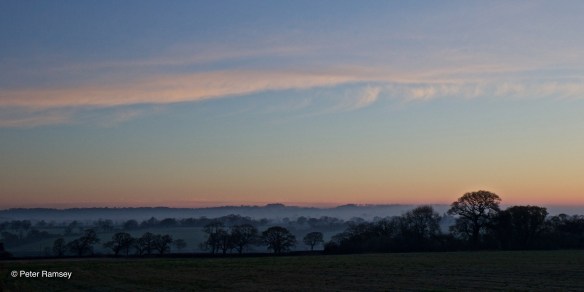
The coldness of the shift lasted until the end, even when the sun had risen, but I was rewarded by the scene of the lovely misty early morning light with low cloud hanging still over the fields.

5R0A1991

Hopefully, this will have been the first of many shifts to come, but I also hope that others won’t be quite as cold as the one this morning!

A sunny start to osprey season

Spring is in full swing as I head out for my first osprey protection shift of the year but as I make may way across the border, the season seems to go into reverse. Into the hills, a familiar story begins to play out, with the cloud growing and blocking out the early brightness, my car beeps as the temperature falls below five degrees. It is not only rain that starts to fall from the sky but sleet, snowflakes thrown in to make my hopes for a nice day fade.

Up onto the top of the moors, hope no longer seems lost as the first few breaks in the gloom start to form and the sun shows its strength as the moisture on the road begins to lift. Steam rises from the tarmac and the car parts the mist which gathers in the hollows. Patches of fog hang over the fields and forestry blocks, drifting across my path on an increasing breeze. As I reach the crest before dropping down into the valleys, the scene opens up below and in the distance is the sea, shimmering blue beneath the strong glare of the newly emerged sun.

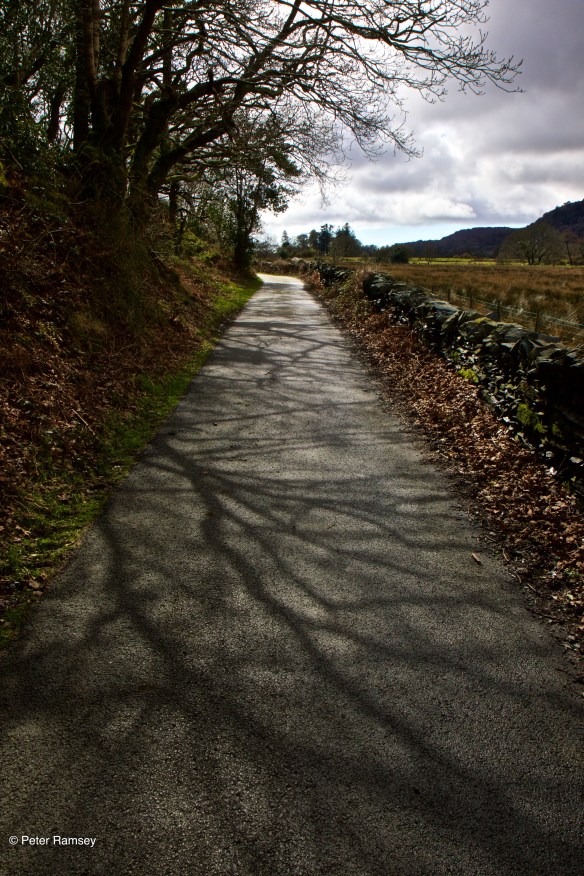
Turning through the gateway, the brightness is unexpected, the clouds diminishing as each moment passes. Driving through the wooded valley, the leafless branches of the enclosing trees cast shadows; I’m driving along a zebra-patterned track.

Leaving the trees behind, emerging out into the flat wet meadowland, little of the cloud remains. The sun falls strongly onto the land but the wind has a sharp chilling edge and the mountains tops have a new coat of white, showing winter, not spring. Here the season is less progressed, the permanent residents may have been singing for a while but the summer migrants are few in numbers and weak in their calls, yet to make this place their own. Those that have arrived seem unsettled, one in particular; she stands alone in the nest at the top of the fir tree copse looking out into the distance, patiently waiting for another to return.

5R0A1699

Writing is a bit of a struggle, the flu that has knocked me for over a fortnight still drags on my energy, both physical and creative. Others don’t seem to have such trouble; buzzards, four or five at a time, were performing their aerobatics, rising into the sky only to stoop into a rapid dive before racing back up high again. At one point in the day, they got too close to the nest and they were chased by the newly arrived female osprey, protecting her claim while waiting for her new partner from last year to make an appearance.

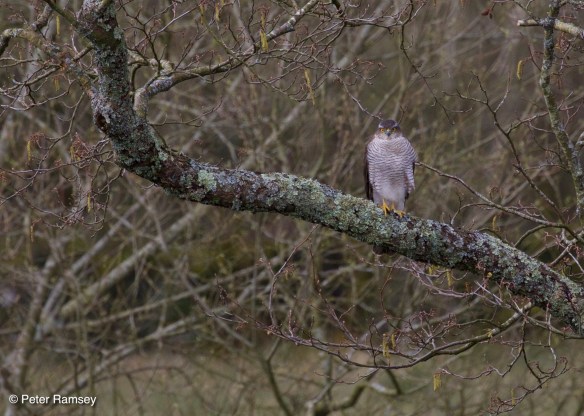
There were plenty of other birds present in the Glaslyn Valley today but few signs of other new arrivals. The great tits, chaffinches, meadow pipits, pied wagtails and robins were all busy going about their days feeding and calling loudly from tree, bush, wall and post. As well as the buzzards, other raptors were about, with a red kite sailing past and a large sparrowhawk staring fiercely at me from a low branch. The corvids were in evidence too with carrion crows and jackdaws feeding in the fields and an occasional raven ‘cronk’ could be heard from the hillsides. The summer migrants though were thinly spread, no hirundines yet and the slightest of hesitant calls from a willow warbler came from a nearby wood.

5R0A1743

The landscape seems a bit further behind here too with only the willows showing leaves so far although there are buds coming on other trees. The gorse is showing its bright yellow flowers but the grass has yet to turn a more vivid shade of green.

Maybe this osprey breeding season will be as melodramatic as the last, with the female having returned but the new male from last year still yet to appear. There’s plenty of time for him to come back though as it wasn’t until the end of last April that we first saw the handsome new partner for ‘Mrs G’. During the day, both before and during my shift, there were several ‘intrusions’ by other ospreys including by Blue 24, one of the usual suspects who has an eye on the Glaslyn nest. No doubt much will happen before my next shift in May.

5R0A1944

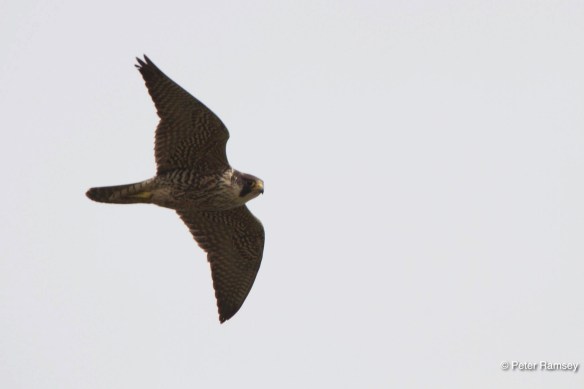
I finished my shift in my favourite spot, sat on the bridge in the sun, listening to a robin and song thrush and watching a peregrine circling high above the woodland – perfect!

A mix of winter and spring at the equinox

After a bit of work this morning, I headed out to make the most of the nice weather and went to one of the local birdwatching spots.  Sandwich Flashes are a series of lakes and wetlands between Crewe and Sandwich, formed by subsidence caused by the solution of underlying salt deposits.  I occasionally pay a visit if I have a spare hour or two on an unplanned Saturday or Sunday and can usually get a good bird list of 40 or more species, depending on the time of year.  It’s usually a focus of more seasoned birdwatchers, birders and twitchers but it’s also good for less persistent observers of birds like me.

5R0A1390

Despite the unexpectedly fine weather with a warm sun out of the cool breeze, the birdlife was as much of winter than of spring.  The waterbirds, such as wigeon and teal, that have stayed over the colder months have yet all to leave and the winter thrushes (redwings and fieldfares, are still about in goof numbers (and I’ve seen good flocks elsewhere too).

However, the calls of the breeding residents are growing stronger and pairing behaviour is becoming more obvious – the roving tit flocks have now broken up and the long-tailed tits are moving around in twos; no longer in the merry bands that pass swiftly and noisily by.  The hedgerows are also showing signs of new life with the hawthorns breaking out into leaf.

The most spring-like of all signs I noticed today were the very tentative and quiet first calls of a chiffchaff; not the full call of the height of spring but a sure sign that the new season is here.

Spring has sprung!

I spent today with Crewe & Nantwich Conservation Volunteers on another task at Wybunbury Moss working for Natural England.  Heading out this morning, it felt that finally spring is here, with a clear blue sky, strengthening warmth from the sun and birds starting to sing at the top of their voices.

IMG_8008

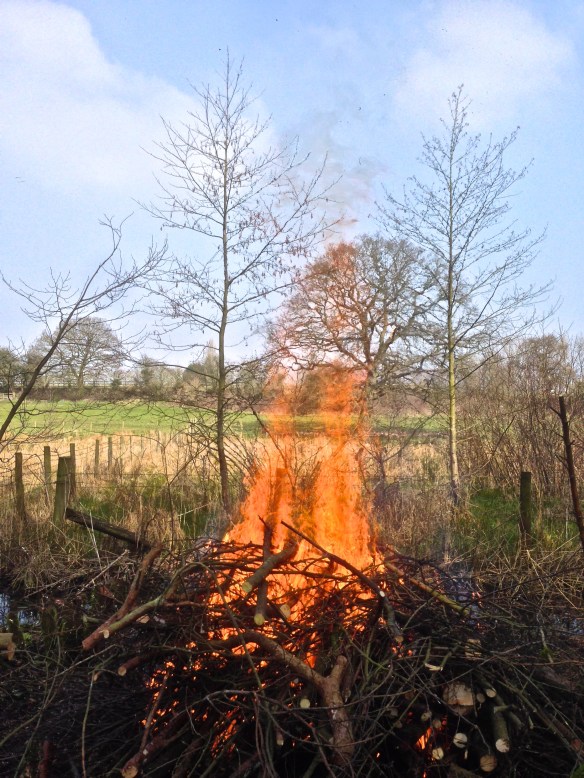
However, the task today was still very much a winter one, with more trees to fell and burn.  The task we have been doing for the last two visits has been focussed on softening an area of woodland edge by removing some of the smaller trees. This should encourage regrowth of the understory which should in turn provide improved habitats for scrub nesting birds.  After working in the same area last year, the signs of this regrowth are already there.

IMG_8015

With bird nesting season upon us, this could have been the last fire until autumn, a pity as I enjoy them so much, but having a fire in the sun does seem a bit wrong. At the end of what has seemed like a long, dark winter, I’ll quite happily swap having fires for more nice, warm sunny days!

IMG_8017

From Spring into Winter and (Almost) Back Again

There’s mist over the land as I head out on a welcome journey not done since the height of last summer (if there was a ‘height’). The roads are quiet and I make good time as the hazy sun brightens the countryside around. There are signs of spring along my route; daffodils and snowdrops at the roadside and the hawthorn hedges starting to burst new leaves. There’s also new life in the fields with the first of the lambs out in the low-lying pastures; the grass just starting to turning a richer green.

As the border is crossed and the road rises into the hills, the initial optimism for another rich early-season day falls away as the clouds draw over the longed-for sun and darkness covers the route ahead. It’s soon that I’m passing the reservoir and the first drops of fine rain need to be cleared from my windscreen but the high moorland route still beckons and I increase the pace once turned at the junction. The gloom is even deeper up here and my journey is slowed, lowland mist now upland fog. As I descend into the enclosed valleys, hopes are dashed that dropping out of the cloud will bring a halt to the fine but blanketing rain. There are no signs of brightness across the damp pastureland that divides the mountains and the sea; water lying in the fields are sure signs that these are familiar conditions.

After a break in my journey I eventually make my way down the track in the secluded wooded valley. In the trees and out in the damp water-logged pastureland, spring still seems to be a distant thought, the signs of the new season present in the lowlands yet to appear here. Whilst the birdsong has more strength, it is subdued by the weather and there seems little to sing for with water clinging to every tree, rock and blade of grass.

There may be few signs of spring in the valley but it is on its way and so is a wave of avian visitors, sweeping slowly northwards from warmer lands. Amongst them, hopefully, will be two pairs of wings, returning to an old nest high up in the fir tree copse out in the centre of the damp fields. With them are the hopes of a growing band of followers, hopes of a return of an old favourite and her new partner, and hopes of slightly less drama than last year.

IMG_5749
There is something very familiar about the text above, not just the journey but the weather pattern too. I made the same first trip to the Glaslyn Valley this time last year with signs of spring at home but the weather then enclosing as I made my way towards Snowdonia. The only difference this time was that on my return journey the bad weather had spread into the lowlands too.

The trip was made for the training day for the volunteers with Bywyd Gwyllt Glaslyn Wildlife; this is the community group that took over the Glaslyn Osprey Project from the RSPB in 2014. This will be fifth season that I’ve volunteered at the ‘Protection Site’ where the osprey nest is monitored to stop thieves stealing the eggs. Volunteers also help to prevent disturbance of the birds by walkers on the public footpath that passes close to the nest.

2015 was an osprey rollercoaster by previous standards. There had been the same pair of birds using Glaslyn nest for over a decade but last year the male failed to return and the female was left waiting at the nest. Over the following weeks there was a succession of males trying to mate with her but it was the third that finally settled down with her and managed to raise two healthy chicks which migrated south at the end of the summer.

Last year saw great strides forward by the group including a new visitor centre and video streaming from nest cameras going live on the internet towards the end of the season. Hopefully, the cameras will be live on the website soon and this year the whole breeding season can be watched from the comfort of my own sofa (or desk at work for that matter!).

Live streaming is expensive to run, particularly from such a remote location and it costs thousands of pounds each year and the equipment will need replacing from time to time. Therefore, an appeal has been launched to raise funds to pay for this year’s live streaming and to contribute towards replacement equipment when it is needed in due course. The details of the appeal can be found here.

That trip really marked the start of my spring of conservation volunteering which will also include bird surveys, practical land management tasks and maybe some other nest protection work, but sitting in the quiet of the Protection Site ‘spy cave’ watching over the ospreys really is a highlight – can’t wait for my next trip down that wooded track.

The look of spring; the touch of winter

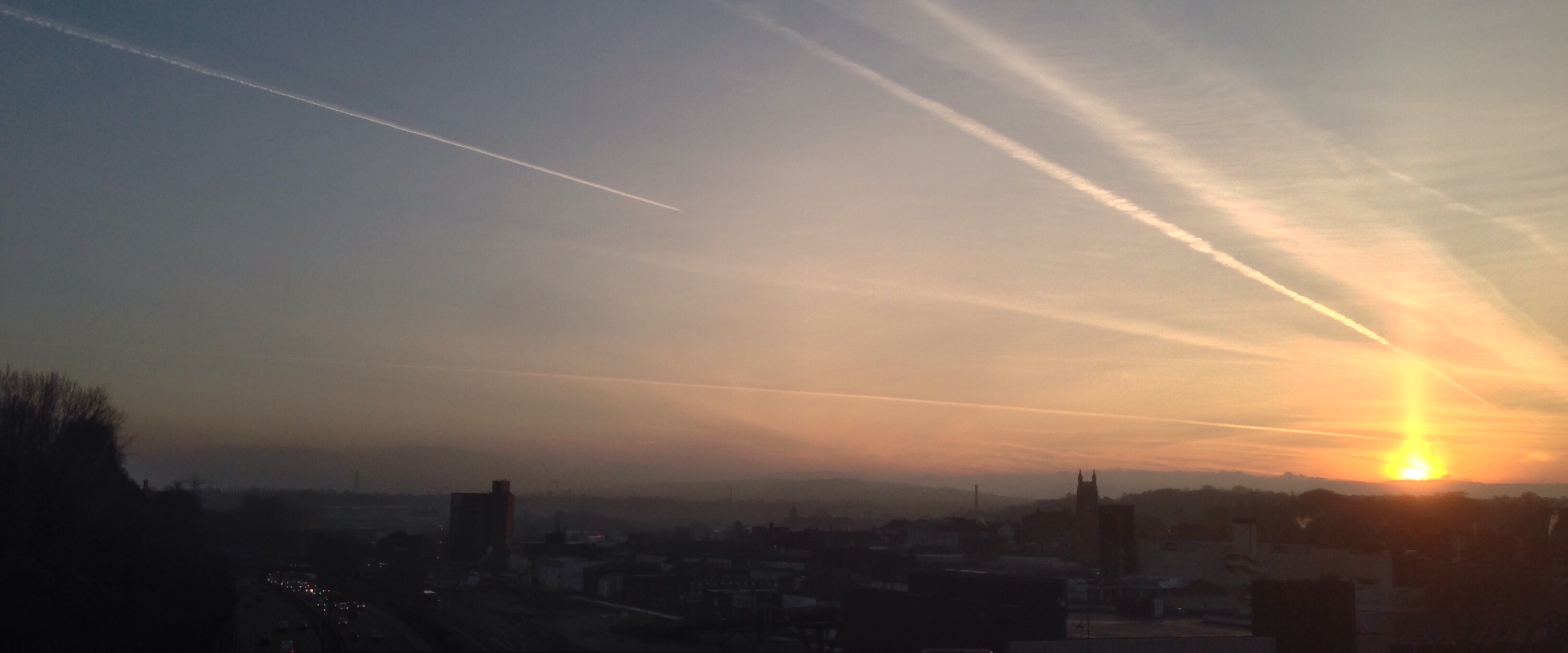
Working from home yesterday afternoon, I couldn’t help but be tempted to go for a wander around my local patch at sunset.  It had been the first gloriously bright and almost cloudless day I could remember for a long time so I had to take advantage of the last bit of light.

The sky and light conditions were very springlike looking out of the window but as soon as I set foot outside, winter was in the air.  At around 5 degrees celsius, it certainly didn’t feel like spring and as I made my way out into the fields, the ground conditions showed it wasn’t either.  After recent rains, the fields were saturated and my wellies became heavier and heavier as more mud clung to them.

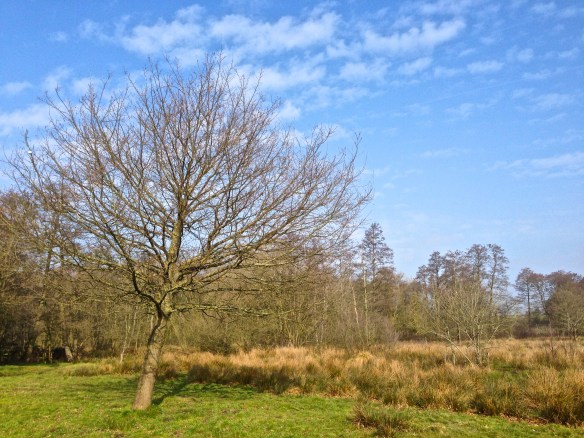
There were other signs that spring in the fields has yet appear – the trees were still skeletal in their lack of leaves and the collection of birds I saw had a wintry touch.  There was a large flock of redwings and fieldfares, our visitors from Scandinavia for the colder months of the year, noisily making it’s way through the trees and bushes as I wandered along the footpaths.

I took a few shots as I walked around the fields.  I wouldn’t say my local patch is particularly blessed with great beauty but in the fading light of last evening, it looked at its best.