Monitoring Manxies

One of my main tasks in my first week on Ramsey Island has been helping with the Manx Shearwater survey. ‘Manxies’ are long-distance travelling seabirds which return to breed to the coasts on the western side of the British Isles each year, after spending the Northern Hemisphere winter off the eastern seaboard of South America.

These burrow-nesting birds were severely affected by rats on Ramsey but the eradication of the rodents 15 years ago has enabled the number of Manxies to slowly recover. The last survey in 2012 found 3,835 nesting pairs, and in 2016 it is hoped that numbers will have increased significantly.
IMG_8251

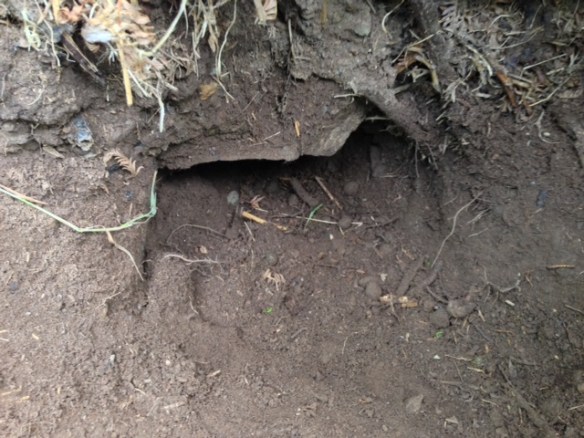
Following a survey of suitable nesting burrows earlier in the year (before the growth of bracken across the island made it much more difficult), the main survey involves the playing recordings of male and female Manxie calls down the burrows to check if any are ‘home’. My small role in the surveys was to help find the burrows into which the calls were then played. With the surveys now complete, the Island’s wardens now need to work out exactly how many Manxies are now breeding here.

5R0A1774 - small

It’s not just when undertaking the surveys that the sound of Manxies can be heard across the Island. One of the most memorable aspects of a stay on Ramsey is listening to the giggling and gurgling calls of the birds as they fly into their burrows near the volunteers’ Bungalow home. The birds only come to land at night, so the calls are an erie accompaniment to many a night’s sleep.

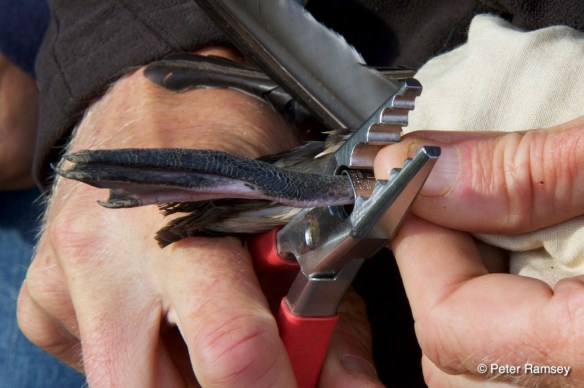
In addition to the natural burrows that the Manxies use for nesting, the wardens have installed a number of artificial nests and another task was to check whether these were occupied. While doing this, the wardens take the opportunity to ring individuals as part of their research and I was lucky enough to be there on one occasion during this stay – and even got to handle one!
5R0A1836 - small

One evening Manxie activity is to go out to the western side of the island at dusk to see the thousand upon thousand of these birds flying southwards, skimming just above the surface of the sea, to the much bigger colonies on the nearby islands of Skomer and Skokholm.

This link to the RSPB website provides a bit more information on Manx Shearwaters including a recording of their calls.

The first few days back on Ramsey Island

I’ve been on Ramsey Island, the RSPB’s reserve off the coast of Pembrokeshire, since Saturday but due to my stupidity have been without the internet until now. I was planning to blog each day but will have to start with a post about the first few days of my two-week stay.

The weather has been a bit mixed so far with the conditions only good enough for boats twice since I’ve been here. Yesterday, following two boatless days, we had a bumper load of visitors with an almost capacity crowd of 78. I did my first introductory talk of the year to a full boat shed, which didn’t go too badly and I even got a business card from a wildlife tour leader suggesting I should do a bit of tour leading myself!

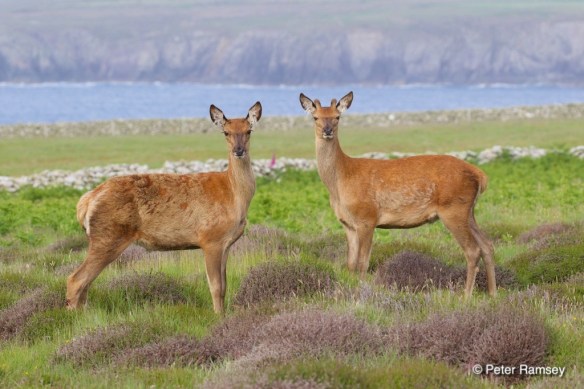
On my first full day, the sheep shearers came across in the late afternoon to de-fleece the 96 Welsh Mountain ewes. I was a bit more actively involved this year, particularly in the first task which was to split the ewes from their lambs. The lambs were born over a few weeks from mid-April and have grown a lot since, so the task of dividing them from the ewes wasn’t without some of effort.

The shearers again amazed me with how quick they could get a fleece off a sheep with about one and a half minutes being  the standard. The closely-cropped ewes were soon reunited with their youngsters in the farmyard, all making a racket until they found each other.

5R0A1532

I’ve also helped with manx shearwater surveys and did a house martin survey at the farmhouse (despite what others have said, I was definitely not asleep!).  We also went out on Gower Ranger yesterday (the boat that links the island to the mainland) to do a kittiwake and fulmar survey of the cliffs that could not be seen from the island – a great way to do a survey!

The weather forecast indicates that boats may not come across for the next couple of days, so it will be quiet around the island again but I’m sure there will be plenty to get on with.  There will also be more time to look at the scenery and wildlife which are as good as ever.

5R0A1873-1


House Martin Nest Study 2016

My favourite summer migrants have returned – the swallows, house martins, sand martins and swifts. I’m fortunate that three of these species (not sand martins) breed in the area where I live and I can usually see them flying in the sky above my house. I’m even more fortunate that there’s usually a house martin nest on under my eaves; I say usually but in fact there has been at least one nest for the past 15 summers than I have lived here. I thought the unbroken record was going to come to an end last summer when the house martins failed to return around their usual time. There was no sign of them for most of the spring and summer until I retuned home from work in late August to find droppings on the driveway beneath the nest, which was still up there from the previous year. That seemed very late for a first brood particularly compared to the usual May or June in previous year.

The chicks fledged in late September and it wasn’t clear if this was by accident or design. I worked from home one day and in the afternoon there seemed to be lots of comings and goings from the nest. It was only when I left the house later on that I noticed the nest on the driveway and the fledgelings flying up to the point when it used to cling to the eaves. The next day they were all gone and I didn’t see any more house martins around my home again last year.

Over the years I have sporadically kept a record of when the house martins first arrived back at the nest and most records show it was around mid to late April. When the month changed into May, I started to suspect there would be another late return this year. However, when I was cooking my evening meal yesterday I had a spare moment and popped my head out of the kitchen and popped my head round the corner of my house and looked upwards. Up at the apex of the eaves was the ring of mud, all that remained of the nest, but there was something else up there too. At first it looked like a bit of black plastic blown up there by the wind but after I shaded by eyes from the evening sun, the shape was clearly a house martin and there was another flying around just above the roof.

5R0A7767

House martins are ‘amber listed’ in the Birds of Conservation Concern listings and numbers have been in rapid decline.  I’m sure that when first moved into my house, another pair nested under next door’s eaves and there were other nests in the area.  Now there is mine and very few others.  However, the pattern of decline isn’t uniform.  Ramsey Island for example (the RSPB reserve where I volunteer for a couple of weeks each year), didn’t have any house martins before a first nest in 2014 and it had eight nests last year (extra emergency artificial nests had to be shipped across!). Something is certainly happening to house martins but fortunately it’s been noticed and hopefully before it’s too late to reverse the overall declines.

Last year I took part in the British Trust for Ornithology’s (BTO) House Martin Nest Survey. I was given an Ordnance Survey grid square, luckily for me the one immediately nest to the one in which I live, and I made several visits to record the number of nests on buildings and the amount of activity. This year there’s another house martin survey for the BTO. The House Martin Nest Study 2016 requires surveyors to choose a nest/nests and record the activity over the course of the spring and summer. The survey can be done with varying levels of detail and I hope to do as much monitoring as I can, doing daily records of activity whenever possible (holidays allowing). Now that house martins have returned to my home, I’m going to have a very convenient nest to monitor!

The chortling house martin chicks wafting in through my landing window on warm summer evenings as I lie in bed really is one of my favourite things about the season and I’m hopeful that it won’t be long until I hear those sounds once again. By doing the survey this year, I hope that I can make a small contribution to helping to ensure this will always be a sound of summer.

A conclusion to survey season

Last weekend I did my last bird survey of the breeding season, having had a busy few months of recording since the beginning of March. This year I’ve been doing surveys at two nature reserves for Cheshire Wildlife Trust, I’ve completed a Breeding Bird Survey for the British Trust for Ornithology (BTO) in a grid square near Bulkeley, I’ve taken part in the BTO’s House Martin Survey and I did a bit of surveying for the RSPB when I stayed on Ramsey Island.

The surveys for Cheshire Wildlife Trust, at its Bagmere and Blakenhall Moss reserves, were done once a month during March, April, May and June, and this year the overall bird lists for the sites increased further. Over the course of the four visits to Bagmere, 39 species were recorded and this was two less than last year. However, I also made a note of species when I spent a day there with Crewe & Nantwich Conservation Volunteers and that visit brought the total up to 45. It was disappointing not to record willow tits at Bagmere this year, a red-listed species, particularly as some nest boxes have now been put up for them; I haven’t seen them at the site since December last year. However, it was good to hear water rail on each visit and to add some new species including garden warbler and grasshopper warbler. This year I didn’t record any confirmed breeding species at Bagmere but I did record 19 probables and 12 possibles.

IMG_5461

At Blakenhall, the transformation from woodland to wetland continues to increase the species seen at the reserve. Up until a couple of years ago there would have only been woodland species but now there is a range of both wintering and breeding wildfowl. In total, 47 species were recorded, up from 35 last year and there were five species confirmed as breeding including blue tit, great tit, Canada goose, greylag goose and treecreeper. In addition, 12 probables and 22 possibles were recorded. There were some new species at Blakenhall too including grasshopper warbler, spotted flycatcher, swallow, shoveler, tufted duck and little owl.

IMG_5770

I’ve now completed two years’ of Winter Bird Surveys and Breeding Bird Surveys at Bagmere and Blakenhall, and these have set a baseline for the sites as they were the first surveys of birds done by the Wildlife Trust at the reserves. I’ve now recorded a total of 53 species at Bagmere and 59 at Blakenhall.

The House Martin Survey is being undertaken for one year only, to help to assess the state of the house martin population in the UK. My second visit to my allocated grid square added another nest to the one recorded during the previous visit in June. However, it was only the first one that appeared to being used, with adult birds visiting to feed chicks. Fortunately, there are more house martins in the area, with colonies just outside my grid square. It was also nice to see a good dozen or more floating around in the evening sky last night when I was at a BBQ only a couple of hundred metres from the boundary of my square.

My hopes were raised that the old house martin nest on the side of my house might still be used this year as I saw birds making fleeting visits over a couple of days and I found droppings beneath the nest when I came back from my two weeks on Ramsey Island. However, those hopes have gone as the birds’ interest didn’t last long and it’s now too late for a pair to breed in the nest. Maybe next year!

IMG_2465

I really enjoy doing the bird surveys, not only because I’m doing something practical to support conservation efforts, but also because it’s lovely to spend a couple of early hours on spring mornings wandering around nature reserves. However, I have to say that the bird survey I helped with on my first day on Ramsey Island was the most fun and memorable of the year. The seabird survey by jet boat in warm summer sunshine was spectacular and a world away from the freezing cold March morning at Bagmere when I crunched my way around the hushed, snow coated reserve with my fingers, toes and nose being nipped by the frost.

White-winged Black Tern

Last week while working in Lincolnshire I stayed overnight near Boston.  With a spare evening, I decided to take a look around RSPB Frampton Marsh, which is just south of the town.

While there I saw a nice range of wildlife including some I don’t see very often including spoonbills, avocets and little egrets. However, there was one bird that really caught my eye.  I’m not a twitcher, or even a birder, more a general nature enthusiast, but I have to say I was quite excited to see a rarity while wandering around the nature reserve.

A white-winged black tern was flying back and forth over the wetlands enabling those there to get a good view of it. According to the Collins Bird Guide, there are around 40 records of these lovely birds in the UK each year, so I was pretty lucky to see it and even get (a pretty rubbish) photo of it.  It’s a stunning looking bird in its summer plumage with its black body, and white and grey wings.

IMG_6422

VIDEO: Sheep Shearing on Ramsey Island

A short film about the sheep shearing day on Ramsey Island:

There are 100 welsh mountain ewes on Ramsey, used to keep the grass short in the fields in the northern half of the island.  The fields are prime dining tables for chough, a member of the crow/corvid family, which eat invertebrates such as dung beetle larvae.  Ramsey has seven breeding pairs of this rare bird with only around 400 pairs breeding in the UK.

IMG_5617

IMG_5615 (1)IMG_5402

Not all bird surveys are the same!

Yesterday I had the most fun I’ve ever had on a bird survey – they’re normally tranquil and quiet but not this time!

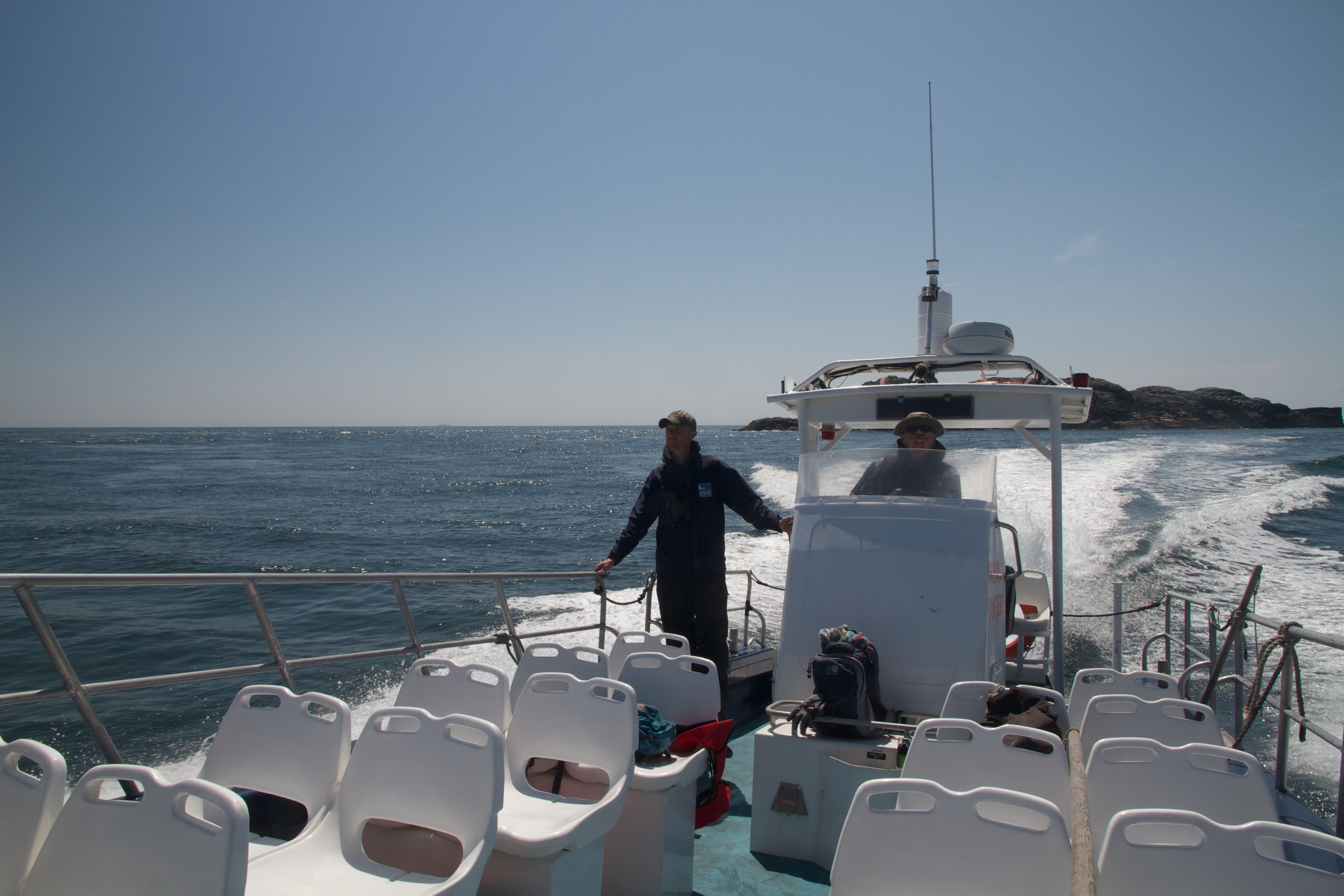
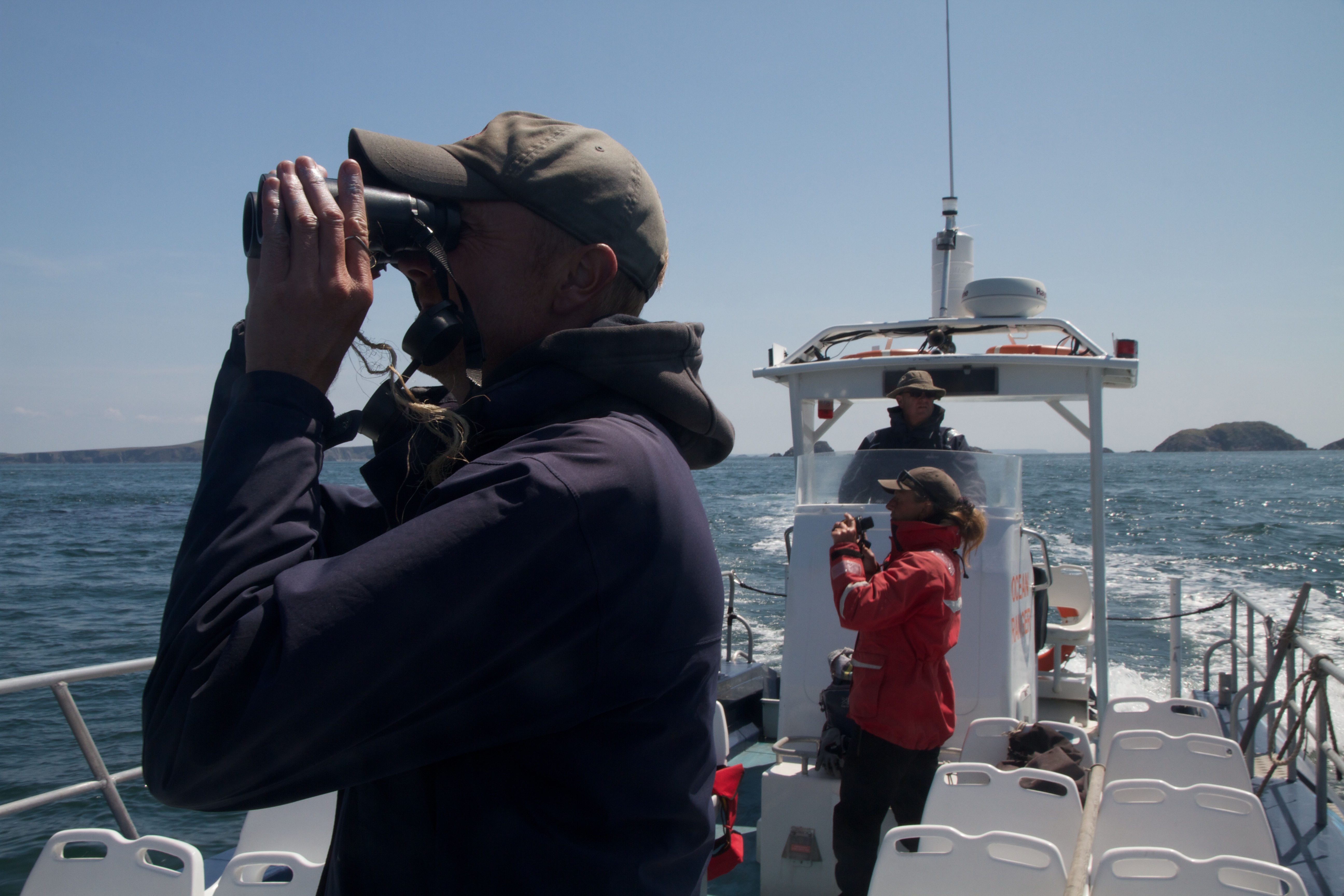
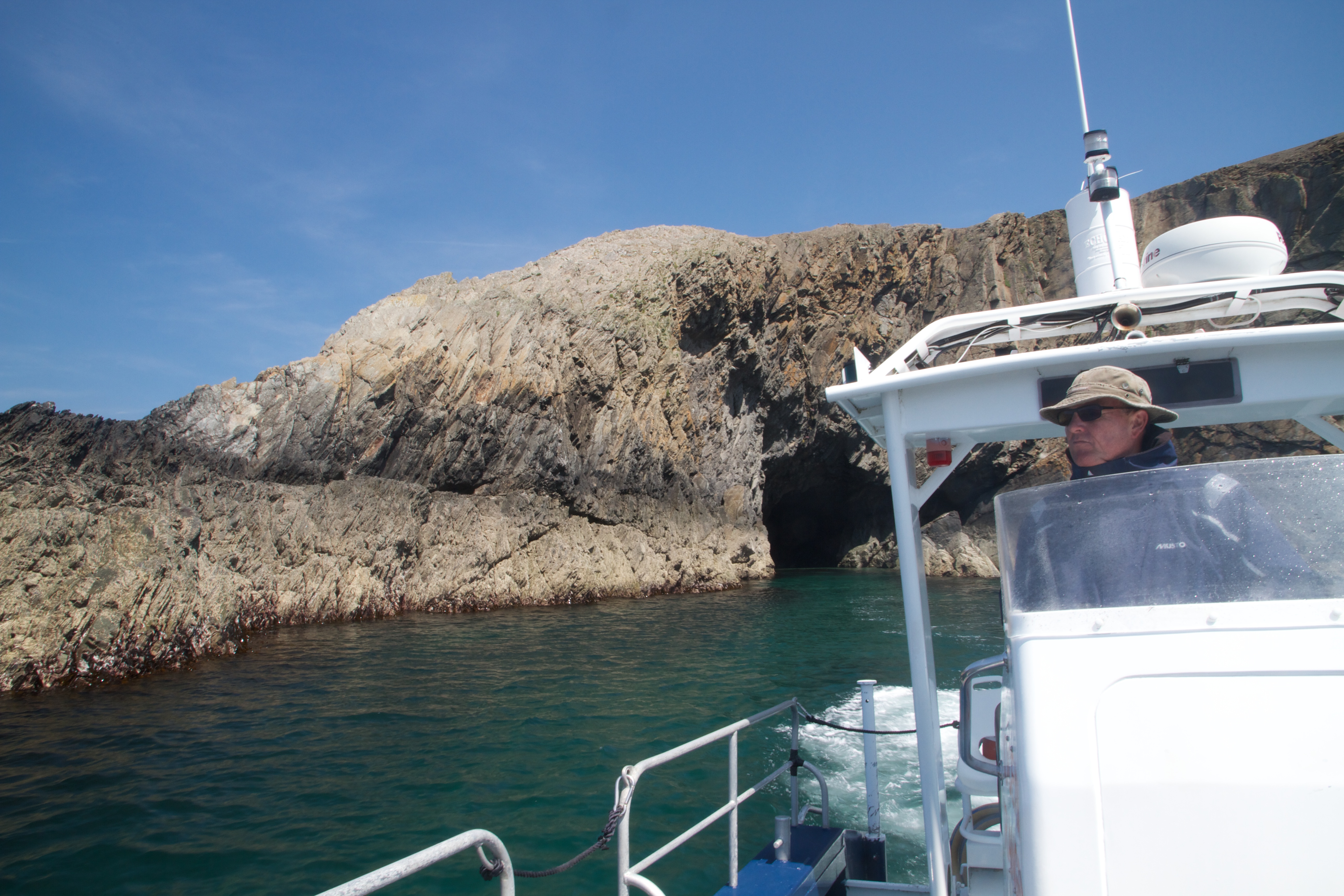
I joined Greg, Ramsey Island’s Site Manager, and Martin and Liz of Thousand Island Expeditions aboard the Ocean Ranger (a 500bhp jet boat!) to do a survey of the seabirds around the island.

IMG_2356

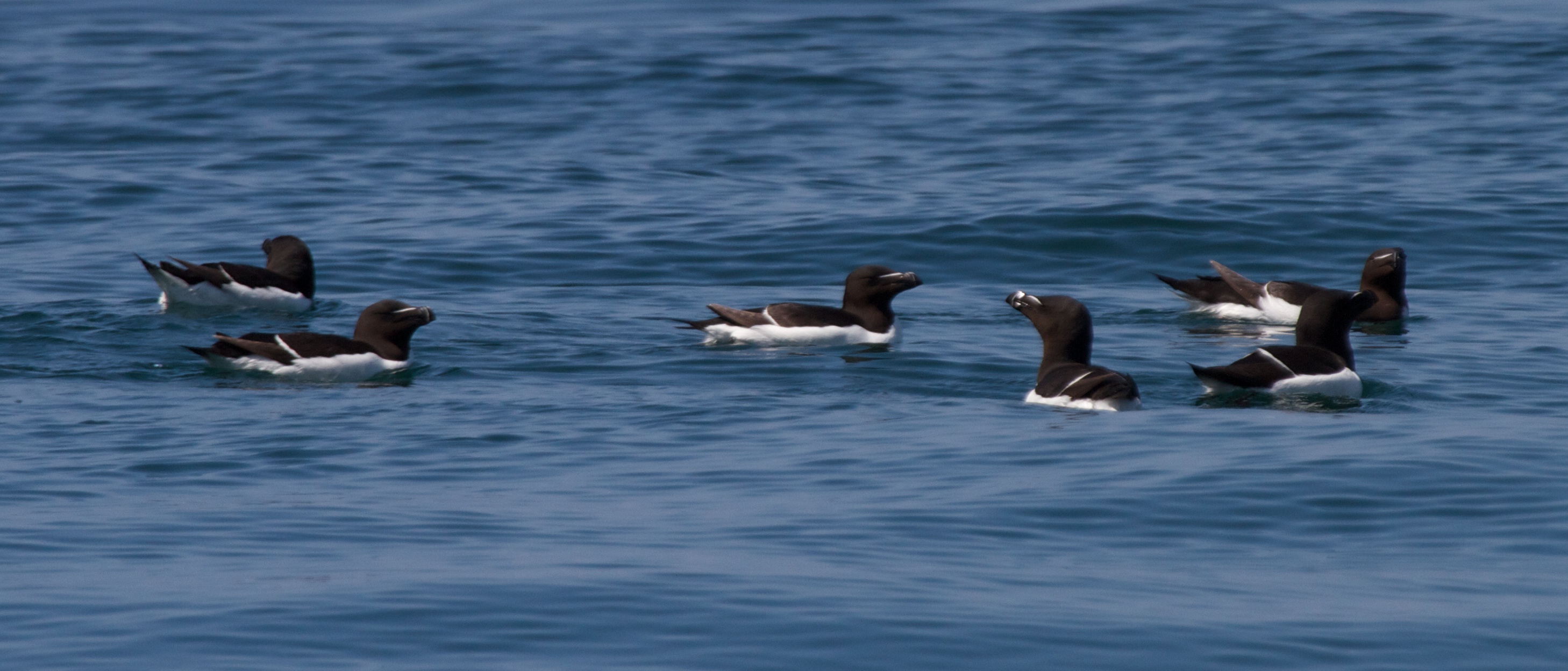
Every few years the seabirds are counted and most of the breeding cliffs can be seen and surveyed from the land. However, there are quite a few places hidden away from sight where the birds have to be counted from the water, so yesterday afternoon was spent out around the island looking up at the cliffs trying to spot razorbills, guillemots, fulmars and kittiwakes on their nests or breeding ledges.

IMG_1962

We set off from the harbour, on the eastern side of Ramsey, and went anti-clockwise around the island, finding a few fulmars to begin with. There are relatively few seabirds nesting on the east and north of the island, so we were soon heading round to the west, where the larger seabird cliffs are. We also headed out to the Bishops and Clerks, which are a chain of smaller islands to the west and north-west of Ramsey.

There were plenty of birds to count, although my counting was nowhere near as good as Greg’s but hopefully my photos might make up for it! There were plenty of all four types of bird we were surveying but also loads of gulls and just a few puffins (not including the 200 puffin decoys at Aber Mawr).

As the afternoon wore on the sun cloud cleared and it got quite warm under the cliffs – it’s normal to wrap up warm when out on the water – and I certainly didn’t need my winter jacket in the end.

IMG_2143

At the end of the four-hour survey, Martin took us for a spin through the Bitches, the line of rocks running out from the east of Ramsey, south of the harbour. The tides rushes between the rocks and there can be a one metre difference in water levels between the two sides. I certainly don’t normally get a free ride on a jet boat when I’m out doing my breeding bird surveys in the middle of Cheshire and they’ll certainly seem even more tame from now on!

IMG_1926