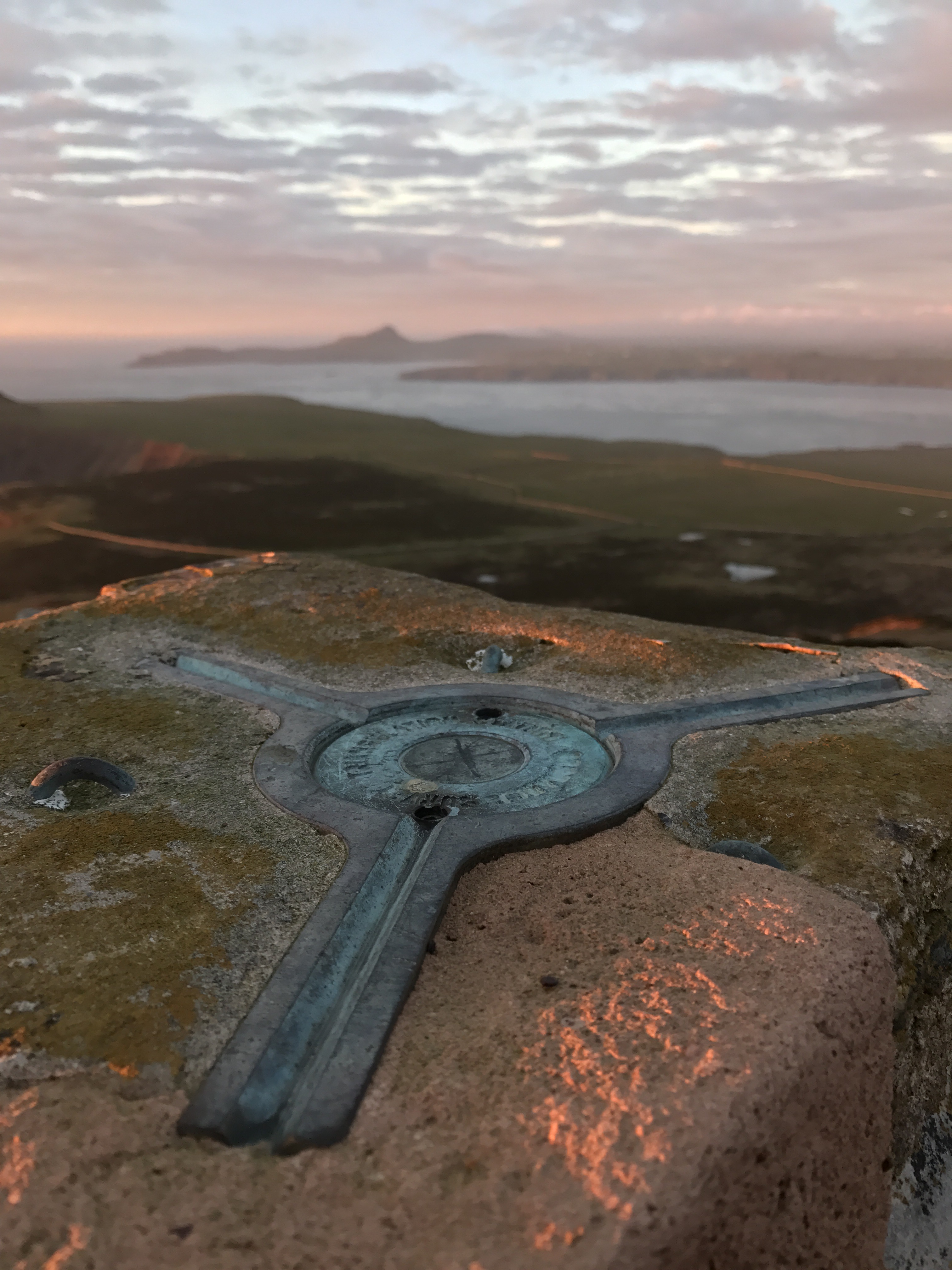
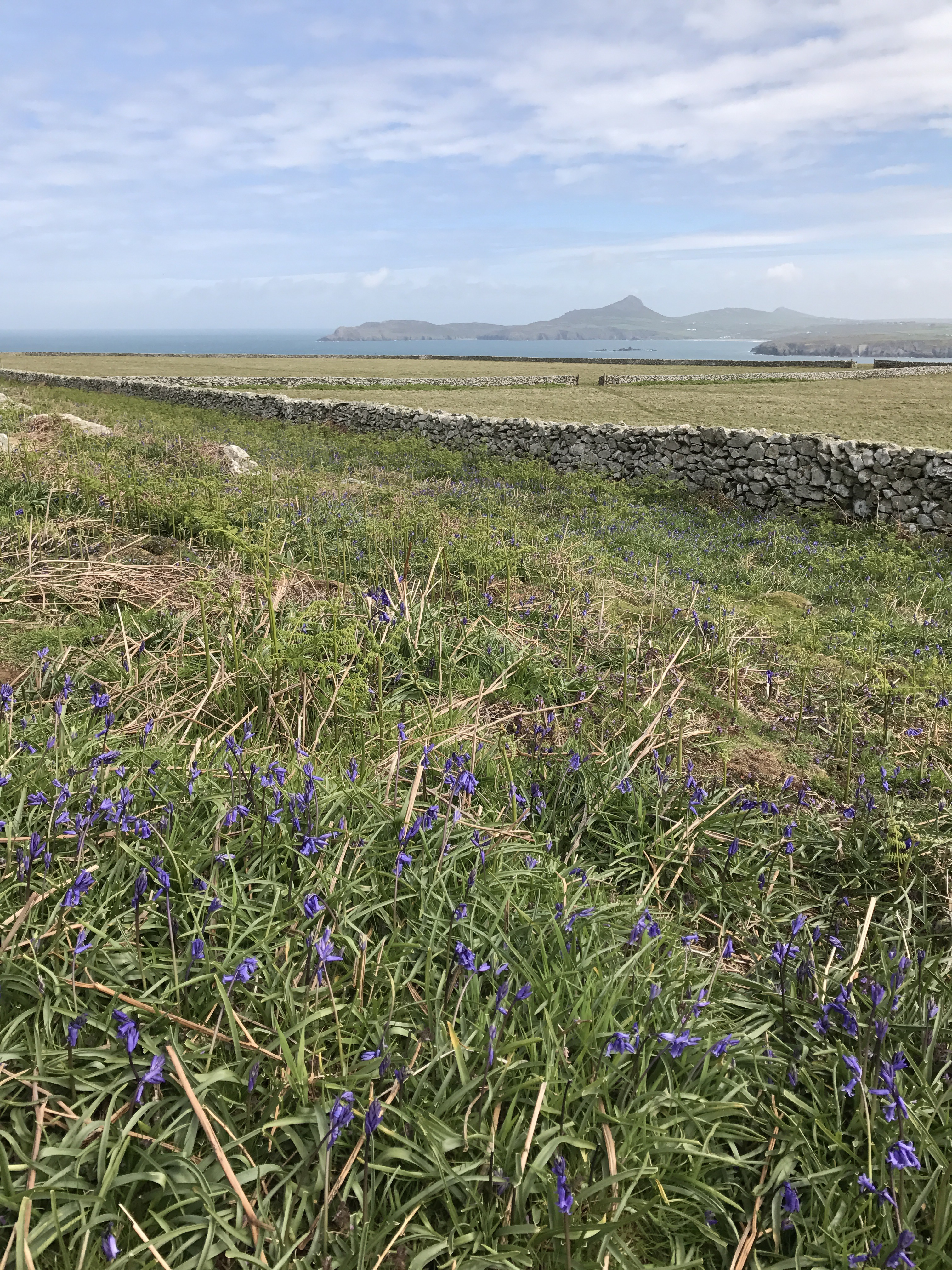
The sunset view from the top of the highest point in Ramsey Island looking across to Whitesands Bay, Carn Llidi and St David’s Head.
Back into the swing of things
Well, it’s now my third whole day back on Ramsey Island and the time seems to be going very fast (as usual). Steve (the other short term volunteer on at the same time as me) and I were brought across the Sound by jet boat on Saturday as it was too rough for the normal passenger boat (Gower Ranger). After catching up with the wardens (Greg and Lisa) and the long term intern (Sarah), we unpacked and settled back into island life.

We were immediately put to work and each did a chough watch. Essentially, this entailed me lying in the sun for an hour at the top of the cliffs (it’s a tough life here!) looking across towards a chough nest and recording what activity I saw. The choughs will most likely have chicks in the nests now and it seemed to be the case where I was watching with the parents going in and out several times over the hour. I then went for a wander and reacquainted myself with the island – not that it takes a lot of reacquaintance as this is my seventh stay in six years.

On the first full day, the Gower Ranger was running again and we had the usual 10am and 12pm arrivals with 21 visitors in total. After helping them get onto the island and serving in the little shop until the visitors went on their ways around the island, most of us went down to the south. We spent the afternoon clearing the paths up the little, but steep, hill of Foel Fawr. We then had to be back at the shop for the 45 minutes before the Gower Ranger picked up the visitors at 4pm. In the evening, I had a wander around the north of the island and went to the sea watching hide but being an idiot I forgot my binoculars so couldn’t really see much.

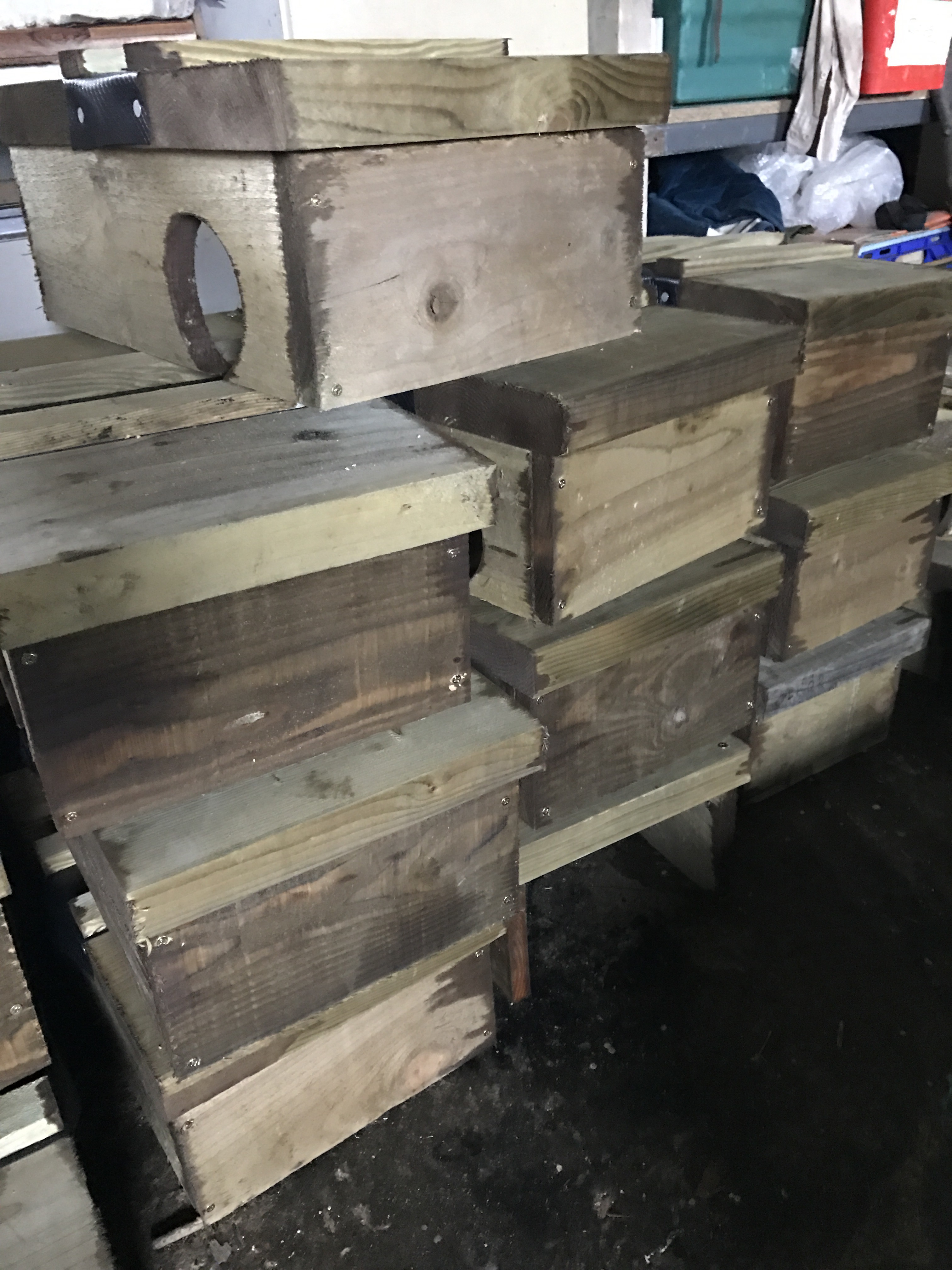
Unlike the first day when the weather was lovely, yesterday was pretty awful and it hasn’t got much better today. Yesterday was quiet with no visitors but we spent some time in the workshop making Manx Shearwater nest boxes. It’s unusual for me to actually make something – I seem to spend much of my volunteering either sitting down watching things or chopping stuff down and setting fire to it! Well, after some initial guidance, I made ten boxes altogether and none have fallen apart yet!

Yesterday evening was the annual Wardens Dinner; the now traditional highlight of the island’s social calendar when Steve cooks the wardens (and other hangers on) a great feast, all accompanied by his usual great choice of wines. The evening also turned into an awards night as Steve was presented with his 15 year long service award for volunteering – I’ve got some catching up to do! This morning is a little fuzzy.

I’ve written this sitting in the shelter of the Bunglow as it’s pretty awful outside and there are no visitors. Hopefully, the weather will improve and we’ll be out and about this afternoon.
Unfortunately my laptop has stopped working but I can still blog using my phone, so hopefully there will be a few more posts over the next two weeks.
Back on the right side…
Only a few hours…
…and I’ll be back on the right side of Ramsey Sound!!!

Dawn Chorus Day
Why volunteer?
The next layer of watercolour is being painted across the slowly disappearing pencil sketch, as the earliest of spring’s signs fade and the next flourishes begin to take form over the canvas of the Glaslyn Valley. Perhaps today, however, isn’t one of the days when too many flourishes appear; the spring seems to be taking a breather under the dark cloud lying heavily over the landscape. There’s a strong and chilling easterly wind which seems to be keeping the heads of the wildlife down and under shelter. The vividness of the season is washed out by the greyness of the light and the eruptive sounds of spring are held back by the breeze. The hill and mountain sides are masked under a veil of mist and haze with an occasional spot or two fine rain, taking more warmth away from the air.
The whooper swans have returned to their still snow-locked breeding grounds on their north Atlantic island, arriving while winter has still to loosen its grip. The fieldfares and redwings regain their strength feeding on the lawns of Scandinavian summer houses amongst the pines and lakes; even there the days can switch from warm summer-like mornings to afternoons of sleet, the land still not out of reach the slowly retreating fingers of winter. Back above the Glaslyn, on the moor tops, the birds are starting to settle into their nests wth both the curlew and hen harrier on eggs.
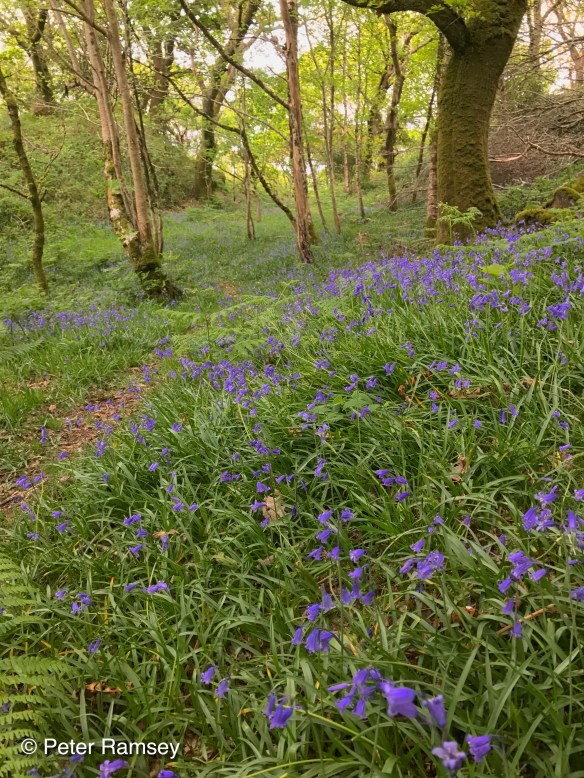
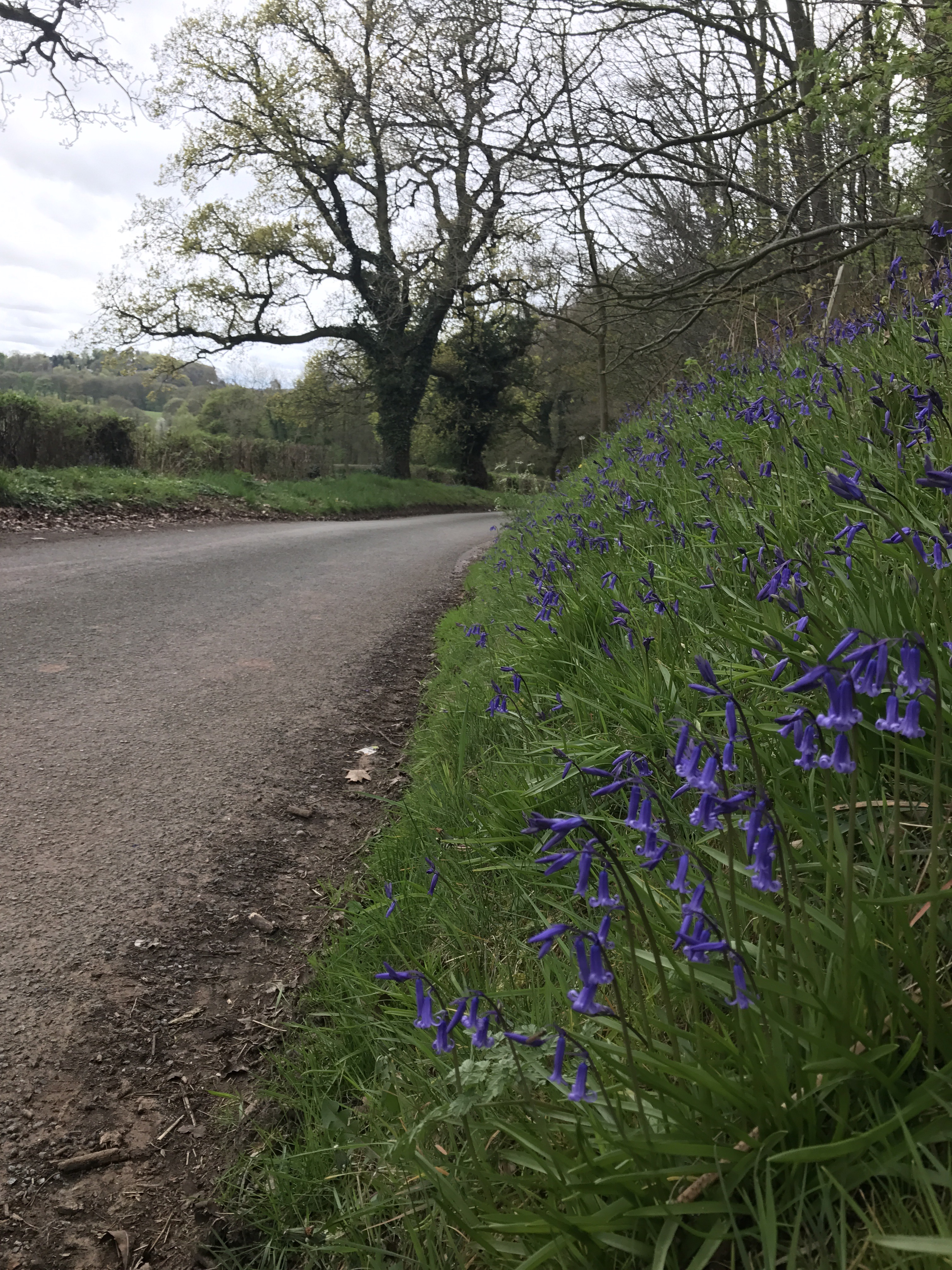
In the shelter of the woodland, there is now a riot of colour as the bluebells are in their prime, covering the floor with delicate blooms. Other flowers, however, have been and gone; only the standing leaves remain of the daffodils and the bright yellow of the gorse is starting to fade and dry. The last few trees remain without leaves while many are still to be in their full flush. More is to come, however, with the bramble in leaf but yet to flower and the irises and foxgloves are starting to grow tall on the wet verges. Down on the river bank, with the water now well below its winter flood, there’s a sprinkling of cuckoo flowers giving a backdrop to a paddling mute swan.
The young badger and fox cubs are becoming more confident by the day, taking greater steps away from their underground homes, and the otter pups have had their first dip into the river. The bank voles are starting to appear more frequently on top of the drystone wall, feeding on seed left out for the birds, and the bats are out in the evenings, hopefully taking a few midges from outside the caravan.
More summer visitors are arriving from the south with the swallows now flitting across the meadows at the end of the journey I saw the beginning of only a few weeks ago. Someone saw a swift nearby but I’ve yet to see my favourite bird and the house martins are in the area but also unseen by me. Finally, a cuckoo breaks the gloom’s spell, a true herald of spring and now an occasional patch of blue comes out from behind the grey clouds.
Having found mates and laid eggs, the birds are now in the long wait for hatching and then the energy of spring really will come to its peak. Endless cries for food will spark parents into a frenzy of gathering and providing. High up in the wind buffeted copse, three eggs now lie beneath the warming breast of an osprey but it will be weeks until the first cracks appear in their shells.

It was a very quiet shift today, not a lot to mention at all; there wasn’t even a fish delivery to write about. Aran was around the Glaslyn nest for most of the day but did disappear at one point and visit the ‘other woman’ at the Post Croesor nest but returned quite quickly and shared the incubation duties with Mrs G. This really is the calm before the storm; once the eggs hatch, Aran won’t have much time for hanging around.
It’s an unusual thing to do, sit alone in a cold caravan or shed for hours on end making sure that no one interferes with the eggs of a wild bird, but people do it and many do other similar things.
Volunteering may seem to some like a selfless act but I think it’s just as much about the volunteer as it is about the cause. We wouldn’t do it if there wasn’t something in it for us – well, my volunteering certainly isn’t selfless.
I volunteer for a whole range of reasons and, yes, supporting causes I care about is right at the top of the list and I wouldn’t volunteer if I didn’t feel I was personally making a difference (and sometimes I do have doubts). However, another major reason I volunteer is because I feel it makes me more three-dimensional. It gives me something more interesting to talk about than what’s happened on Eastenders, who won the game last night or what I bought at the weekend. It also stops me being solely defined by my work and I love the fact that my volunteering is so utterly different to my job. I enjoy my work, and I like working in a big city. However, days surrounded by managed air amongst the glass and concrete lead to yearnings for the fresh air and greenness of the countryside. Just working and making little of my weekends makes me miserable, and as I have a lot of spare time with which do whatever I wish, there could be a lot of time to be miserable.
Through doing a range of things I wouldn’t ordinarily do, or at least wouldn’t have done in the past, volunteering also expands my mind, increasing my knowledge and understanding, and leads to even more interests. It’s just difficult to decide what to look into next.
Through volunteering you can have opportunities to go to places and do things that most people can’t – I don’t know many people in my day-to-day life who get to stay on a stunningly-lovely, almost deserted island for two weeks each year for free— and you get a whole raft of experiences to talk and write about. You also get to meet fascinating and like-minded people, with whom to share those experiences; the only problem being they always seem to have done many more interesting things than me – I must try harder!
Volunteering can change you – even a meat-eating, car-loving, shaved-headed person like me can turn more veggie, beardy and earth-loving given enough influences from the right people. I’m certainly not the same person I was when I first began volunteering nearly six years ago – for a start, back then I wouldn’t have dreamt of posting soppy creative writing on the internet for the world to see!
Overall, however, I see the volunteering I do as a privilege; not everyone can or is able to do it and the experiences have made memories that I will never forget.

It will be a month or more until I return to Glaslyn (I have two weeks on a stunningly-lovely, nearly deserted island before then) and hopefully there will be chicks in the nests when I do.
A sparkling spring day in the Glaslyn Valley
The world has been brought back to life from its long dormant months and rich watercolours of spring are being applied to the once monochrome pencil sketch of the winter valley. The land has burst from its lull and the flush of the new season is washing across the woodlands and fields. Under a clear blue sky the fresh colours are given greater vibrancy as they emerge from the once grey drawn hillsides and valley floor. The scene is wide and open for all to see with the mountains now standing proud, uncovered from their cloak of cloud and mist. The once clawing dampness has been lifted as the warmth is brought back to the land by an ever strengthening sun; but views are deceptive, away from shelter a growing northerly whips away the hope of a perfect day.
Tree by tree and branch by branch the leaves are bringing the wooded hillsides to life. This is not a sudden burst of colour but starts with a series of uneven brushstrokes, slowly picking out new vibrant shades, which gather pace and eventually smother the land in green. Beneath the gradually enclosing woodland canopy, the ground is growing up to meet the sky as the grasses gain strength and the ferns and brackens unfurl their stands. Over the growing richness of the carpeted floor other colours emerge with the bluebells joined by white wood-sorrel and the yellows of the primroses and celandines.
The early new life of the mammals has continued to thrive with the badger cubs making their first forays out from the safety of their set beneath the oak tree. In the old rabbit warren, the fox cubs are also emerging from their den and the riverside holt of the otter has welcomed new kits. In the warmer evenings there are the first stirrings at the back of the abandoned barn as the bats take to the wing to feed in the insect-filled air.
The last of the winter visitors have moved north for their chance to breed in longer hours of light. The whooper swans are making their way up the coasts until leaving land far behind and embarking on their strenuous journey across the wide open ocean to the land of ice and fire. The winter thrushes now turn to spring breeders in their other homes across the water in the Nordic lands and the opening year mass spectacle of starlings is over until the nights draw in again. The lowland visitors no longer bide their time and have returned to their upland breeding grounds with the curlew making its evocative calls over the moorlands and the hen harriers sky dancing in the air above.
Whilst the sights of the winter visitors fade into memory after another season’s close, the influx from the south marks the next season’s opening. The arriving waves of avian life join the residents in bringing new energy to the landscape. In amongst the greening woodland branches the willow warbler, chaff chaff and redstart are all claiming their territories after their long journeys north. They join the others, the great tit, mistle thrush, blackbird and blue tit, all calling out their claims. The first swallows skim low across the damp pastureland as the meadow pipits wander between the clumps of thick rush below. The wrens sing piercingly from their hidden stands and the chaffinches chirp in amongst the riverside undergrowth while the wagtails make their bouncing flight from fencepost to gatepost. The insect life is growing too with the bees moving between the great masses of yellow coconut-scented gorse blossom and the dragonflies busily hunt above the slow moving stream. High above the woods and damp meadowlands the buzzards are calling to one another and the heron floats lazily past, skimming over the treetops and dropping down to the water’s edge.
A first white brown-speckled egg of the year lies deep in the bowl of the large nest at the top of the fir tree across the pastureland and a pair of ospreys have once more started their long watch while they wait for the arrival of new chicks to the Glaslyn.
My first protection shift of the year was very unusual in that it was accompanied by bright, clear blue skies and a strong sun. Anyone who has read my blog posts before will know that I’m often ‘blessed’ with plentiful rain during most of my protection shifts, particularly at the early stages of the season. The weather wasn’t perfect, however, as the warmth of the day was reduced markedly by a strong northerly wind but in shelter, away from the wind, it was lovely.

The early part of the shift was fairly quiet. There was an intruding osprey as I arrived at 10am but little else happened for the rest of the morning and early afternoon. After spending that time out in the forward hide, I returned to the caravan (and its live TV screens) at around 2pm. I’m no expert in osprey body language but when I started watching the screens, I thought the female osprey, ‘Mrs G’, looked a bit uncomfortable and rather than lying in the nest cup was slightly crouching over it. Over the space of a few minutes she shuffled around quite a lot and kept looking towards her rear. She then stood up and the camera, controlled from the viewing site, zoomed in beneath her to reveal not one but two eggs. Not only was I fortunate with the weather today and I had an egg delivery too!
Despite the chilly wind, I ended my shift in my favourite spot, sat on the bridge, dangling my legs over the stream below, watching the water pass beneath – lovely.
Botswana – Okavango Delta: African Painted Dogs
Before I went on my recent trip to Botswana, there was one particular species I really wanted to see: African painted dog (or African hunting dog). Whilst I was really looking forward to seeing many new bird species and plenty of mammals I’ve never seen in the wild before, it was the dogs that I longed to get a sight of. I’ve had a bit of a thing about wolves for a long time now but I think it might be about dogs in general really. I’ve been to Sweden and twice to Spain to find wolves (and been successful in Spain) and the African equivalent has sparked my interest for a long time. Many people want to see the more iconic African animals but I was particularly interested in seeing these less well-known, rare and elusive canines. In my heart of hearts, I had little real hope of seeing them or if I did, I only expected a far off, fleeting glimpse; I was rewarded with something utterly unexpected and truly memorable.

There appears to be some confusion over whether grey wolves are present in Africa with a sub-species of golden jackal having relatively recently been identified as coming from the canis lupus (grey wolf) genetic line. Painted dogs are a canid but are not not part of the lupus line and are an entirely separate species to wolves. However, they appear to me to be typical dogs and have similar social hierarchies to wolves and hunt in similar ways. There are differences though, both in biology and social structure. Painted dogs look very different to wolves and have significantly different dentistry and, opposite to wolves, it is the young females that leave the packs to form new family groups when they get close to breeding age.
As the itinerary for the holiday stated, it would take “a degree of good fortune” to find one of the dog packs in the area I visited but the light of good fortune really did shine strongly on the trip – well at least in dog watching terms. What some may have seen as bad luck had the opposite effect when it came to watching the dogs; the Okavango has had the wettest rainy season since the 1960s and many areas were flooded and impassable while I was there. This did limit the areas that could be visited but also limited the areas that the dogs could be in. Unlike elsewhere in the world where cats hate water and dogs like it, in the Okavango the roles are reversed; the swimming lions of the Okavango are famous. In contrast , the dogs don’t like to get their feet wet and the heavy rains have had a significant effect on them, limiting one of the two local packs to a very small area, made even smaller by a nearby lion pride blocking their exit. I was fortunate that the second camp site I stayed at was right in the midst of the area in which the dog pack was concentrated.

After not seeing the dogs in the first area I stayed, Khwai, it was with amazement that I saw them within a short time after arriving in the second, Moremi. Driving around the area not long before sunset, the time we had to be back at camp (no night driving is allowed in the Moremi national park), one of the group spotted an ear in the grass. As we rounded the corner, we found a pack lounging in the long grass around the base of some small trees taking advantage of the last light of the day. They started to look like they were readying for a hunt as the light began to fail but we had to leave to ensure we were back in camp before dusk fell.
Our next sighting was the following morning when we came across part of the group. The two dogs appeared to be actively hunting and it was a relatively brief sighting as we couldn’t follow them off road. That evening as dark approached and we were returning to camp, we came across two dogs again and when we got the tents we found out that the dogs had been through the camp that day while we were away on a drive. Just before we sat down for our evening meal we could hear the dogs calling to each other and then again later in the evening as I got into bed. The following morning I woke to their calls in the dark and that evening we found the dogs twice in a large open area in the woodlands as we drove around close to camp.
On the last evening we found the dogs in the same spot as the previous evening and spent a bit of time with them as they rested before they headed out for their nightly hunt. There seemed to be up to nine of them but it was difficult to be sure; when they fully lied down in the long grass they completely disappeared, even those only five metres from the truck. Not long after we arrived, two warthogs passed by with the smaller of the two being very wary while the larger one stood its ground. We weren’t sure that they could see the dogs but they seemed to know something was in the long grass; the dogs were relaxed and seemed indifferent to their presence. Eventually, they wandered off and left the dogs in peace but shortly afterwards a large breeding group of elephants passed through the area. They were obviously on a mission to get somewhere in a hurry as they were moving purposefully. Neither the dogs nor the elephants seemed to notice the others’ presence; if the elephants had known they were in the area, there could have been an interesting interaction – elephants don’t like predators. Again, as we returned to the camp we could hear the dogs calling to each other in the growing darkness and as I woke on my last morning in the Botswanan wilderness, I heard them for the final time.
However, we had one last magical glimpse of the dogs and it came not far into our journey to Maun Airport on the journey home. Bumping along the dirt tracks we suddenly came across three dogs busily sniffing around. They then set off as speed in the direction we were heading, so we kept up with them, despite the bumpiness of the track. They would stop every so often and sniff around an area and then set off purposefully again. Two of the dogs seemed quite oblivious to our presence but the third was much more wary and held back from us, splitting from the two in front. This enabled me to get the photo below. Despite bumping at speed along the track in the safari truck, I managed to get this shot without any camera shake. I love the light in the photo, how it picks out the dog’s eyes and the sand being kicked up as it runs along.

Eventually, the three came back together and sniffed again around a final spot. At a junction of tracks, they finally parted company with us, heading towards the Khwai area where we had stayed earlier in the week and we went off in the direction of the airport.
Seeing painted dogs on six separate times over the course of the trip was exceptional and perhaps unprecedented. After only having fleeting and distant views of wolves, these sightings the painted dogs, so close and for so long, were a truly magical final gift that I will not forget in a very long time. The dogs, the species I really wanted to see, but had no great expectations of being able to, were truly the highlight of my trip.

My new favourite valley…
Countryside coming to life
I did the second of four breeding bird surveys at Cheshire Wildlife Trust’s Bagmere reserve this morning. It was a chilly and slightly damp start but the weather wasn’t sufficiently poor to postpone the visit.
I’ve not been out in the Cheshire countryside much over the last two weeks and it has changed quite a lot with the plants starting to show their spring growth.


Our summer visitors are starting to arrive in good numbers and I recorded grasshopper warbler, willow warbler and swallow for the first time this year but there are still more to come.
Yet again, I didn’t record willow tit, which is disappointing but there are two more visits this spring to find them.