

Flying Ant Day
Reply

Yesterday I made the 20-minute train journey down to Stafford to go to the town’s beer festival.
Small but well-stocked would probably best describe it. The festival had been running from Thursday so I expected when turning up on Saturday afternoon, the last day of the event, that there would have been a shortage of beer. However, unlike other beer festivals that seem to start running very low remarkably quickly, there were very few ‘sold out’ signs when I left at 7:00pm (despite my best efforts!).
The school sportshall in which the festival was held was nicely laid out with local beers, and perries and ciders, on one side and national beers on the other and plenty of leaning posts in between. I got stuck into quite a few, favouring darker beers as usual, but there were also some nicer best bitters and lighter, more summery brews – although the 10% bitter I tried last would tempt me back!

The music made quite a change with a local brass band playing for much our the afternoon.
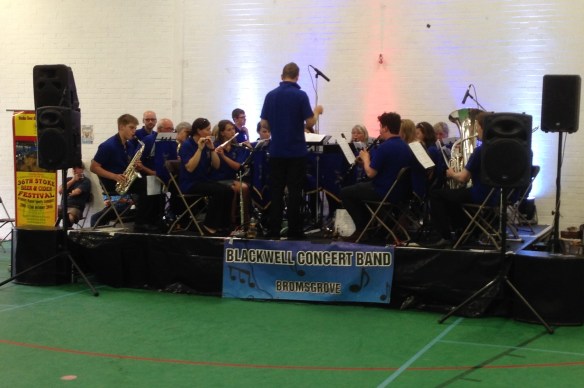
The only bad thing about the event was the weather – nice, warm and sunny – so it seemed a bit of a pity to spend the day inside. However, this might be another event to keep in my diary for next year.
Shorts seemed to be the order of the day as I left home but I became more uncertain about that decision as my journey wore on. All the signs of the season at its height were there; all apart from the sunshine of the previous few days. Even in the early morning, holiday-makers were on their way west into Wales; caravans being towed, people carriers packed to their limits and all manner of sporting kit piled onto roofs or hanging off bootlids. The hedge-bordered roads were slower than usual, giving more time to take in the scenes. The lambs have grown almost as big as the ewes, getting fat on the lush deep-green grass given strength by the heavy rain showers and strong sun. In other meadows, the farmers were cutting hay into long lines ready to be gathered into bales and stored away for the winter. The roadside flowers are less plentiful than on previous journeys but there are flushes of rosebay willow herb, the occasional foxglove still blooming, and brambles showing that there may be a good blackberry crop to come.
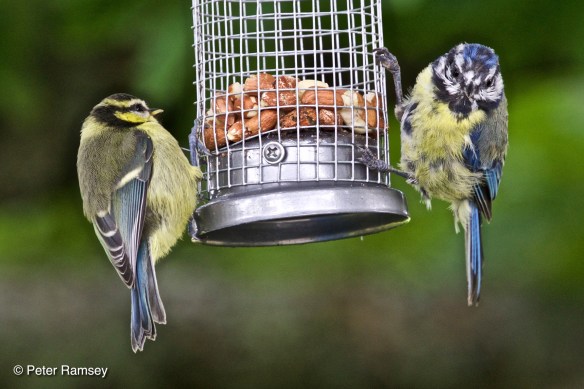
Turning onto the track, heading down to protection, the space for vehicles has become even more confined with bracken and bramble ever further encroaching into the way. In some places the farmer has cut the verges but in others the car flicks the vegetation as it passes. All sounds of spring have gone and there is silence on the way towards the meadows. Parking the car, it’s a muddy walk, the cows having made a mess of the gap between the fields and the rains having made it worse. As I approach the site, there are small birds aplenty on the abundance of feeders, blue and great tits, nuthatches and chaffinches, accompanied by a couple of great spotted woodpeckers.
Inside the caravan there is anticipation and excitement as the long wait for the second chick to fledge is coming to an end. As I step in W8 lifts from the nest and a bird is seen circling around the trees beneath but it’s W7 confusing things and W8 was only momentarily airborne and still within the confines of the nest – the wait goes on into the hours of my shift.
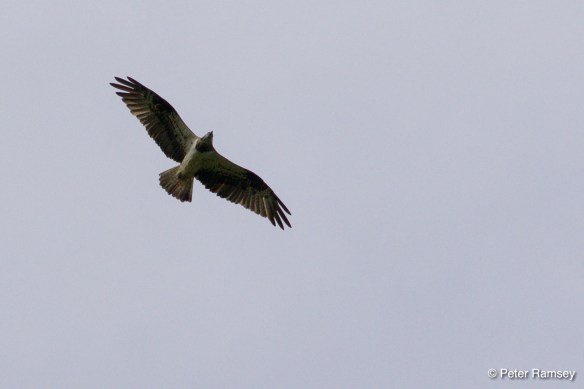
It was a busy and tense shift compared to the last few and as a last shift of the year, one to provide memories to take away. The will-he-won’t-he? question remained unanswered until almost the very end of my time. W7 having fledged two days previously, W8 was expected to make his maiden flight away from the nest at any time. After confusion when I first arrived, he ‘helicoptered’ above the nest a few times and transitioned between nest and perch and back again but seemed very hesitant to make the big step and leap away from his natal home.
There were intrusions into the parent-protected airspace around the nest with up to three intruders at one time, and the parents giving chase and entering into dog-fights, stooping and rising to ward off the unwelcome visitors.


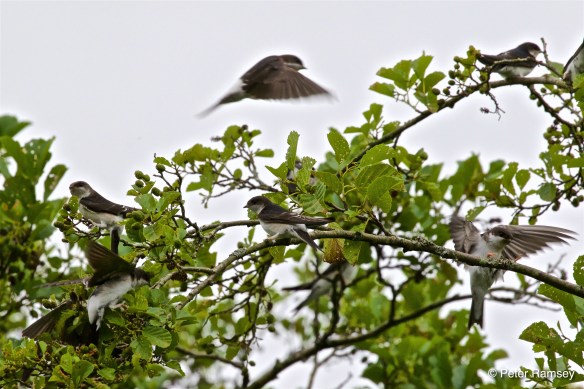
As I was about to give up hope, there was a cheer from the forward hide. My attention had been taken off the live stream and I had been watching a crowd of house martins circling and landing on a nearby tree but I rushed back into the caravan to see an empty nest. Grabbing my camera, I had a distant view of a madly flapping W8 flying around the tree and coming into land back in the nest, almost on top of his sister.
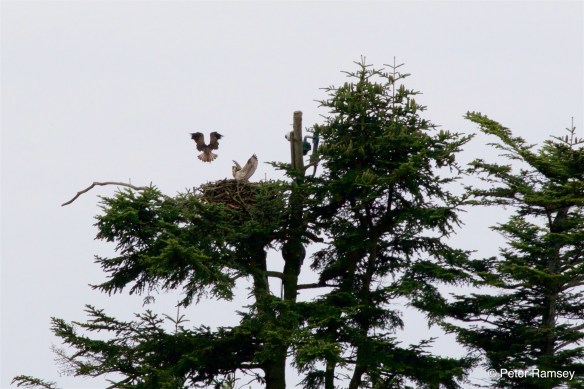
My last shift of the year ended on a high and as a drove back up the wooded track for the last time, windows open to take in the last of the valley air for another osprey season, there were two successfully fledged chicks sat in that high up nest. It will only be a matter of weeks until they make the journey south – but hopefully to be seen again in two or three years’ time.
A subdued atmosphere hangs in the trees as I head down the track today, the sounds of spring have fallen away and the only noises are the thwack of bracken against the wing mirrors and the crack and crunch of twigs under my tyres. There’s a coolness in the breeze coming through the open window and a muffled light, stifled by the thick woodland cover and held back by the patchwork of passing clouds. Out onto the open valley floor, between stone walls and damp meadows, the air becomes warmer but quicker, the breeze increased to windy gusts, chilling in the gloom. The seasons have moved on here, spring prime gone and summer just beginning. The plants have grown to their full height but faded from their bright freshness to darker, fixed tones and early flowers are a distant memory, even some later blooms are starting to fall. The fruits of the dawn chorus are out in the open, young finches, tits and thrushes feed, chase and squabble in the trees and bushes, all under the eye of a waiting hawk. I get a first sight of the other young in the valley, high above the fields in the tall copse. My last visit was spent in wait for eggs to first crack but so much time has passed since then; the chicks are almost in full feather and beginning to flex their wings. It won’t be long until those wings are lifted into the summer air.
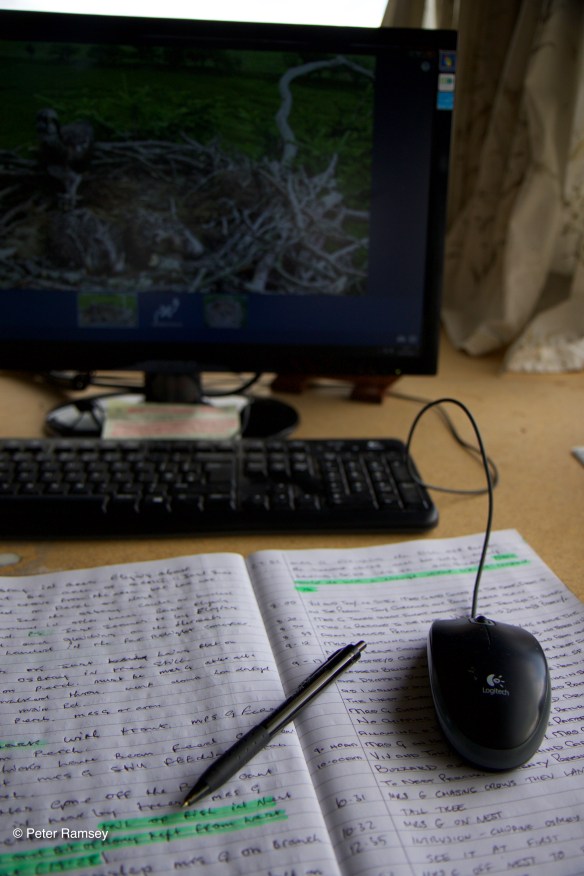
It was a quiet shift today with the chicks resting in the cup of the nest for most of it, with a bit of preening and wing flexing; there was more snuggling than arguing. They are also starting to stand properly on straightened legs, bringing them to their full height, although not yet up to their parents size. Mrs G was either sat on the perch or on the nest much of the time or occasionally chasing crows, and I didn’t see Aran until early afternoon when he returned with a trout. It all got a bit panicky for them mid-afternoon when the farmer came into the field by the nest with his dog to check on the sheep. Both adults took to the air and flew around for a while but she returned to the nest after a short time and he disappeared into the distance; the chicks seemed oblivious. He returned later with what looked like a whole sea trout (could easily be wrong as my fish ID skills are pretty poor). It got quite windy towards the end of my shift; I thought the caravan was going to lift off it’s wheels at one stage!
During my shift I had a strong feeling of time moving on; the seasons, the year, the years, and the subdued atmosphere I sensed on my arrival seeped into my thinking. The five weeks since my last shift has brought changes to the valley; the plants have grown, flowers bloomed and fallen, and birds fledged. I’ve missed the early stages of the osprey chicks’ growth since hatching and they don’t seem far from the size of their parents.
I had a sense that the year is moving past at speed. It doesn’t seem long since the Glaslyn training event in the dark days of late winter, spring has been and gone, and summer is already upon us (although no one has told the weather apparently!); it won’t be long until osprey parents and fledglings start their journeys south. The busiest period of my, now usual, conservation year is coming to an end with bird surveys finished, my two weeks on Ramsey Island gone and not many osprey shifts left.
I also had a sense of greater scale of time moving on. I have a significant birthday to mark soon, one I’m not altogether comfortable with but one to mark all the same. It’s strikes me that there’s only so much time in life to make a difference – whether that time be the hours in the week, the weekends in the year, or the years in a life. It’s easy to let time pass unmarked and let life drift and that risks missing chances to make an impact and a difference. It got me thinking about conservation and what contribution I make. I’ve already had my ‘midlife crisis’ moment, an early one if that’s what it was; it was now nearly five years ago when I started 12 months away from work and began my stop/start journey through conservation – including a month, altogether, with Mrs G and 11/98.
In the decades of my life so far, so much of nature has already been lost. What the new generation is beginning with, the environment, the plants, birds, insects and animals, is so diminished from what my generation started with and that in turn was much diminished from previous generations. There is a risk that the new generation may use what they inherit as the benchmark norm, to see that as what nature should be like, as others have done so before. Those benchmarks are lowering with every new generation and mine only has so much more time to lift it back up to a higher point from which our successors can take it on.
What has been lost over that time was put into sharp focus by the State of Nature report in 2013 – a copy of this sobering document can be found here. The report highlighted many frightening trends including that a group of 155 species it had data for, some of the most threatened in the UK, had declined by 77% over the last 40 years with little sign of recovery and that the UK has lost 44 million breeding birds since the late 1960s.
However, over the last five years, I’ve been involved with a range of conservation organisations and projects, some large and some small, some well established and some just starting out. Whilst what we have now is much diminished, these organisations give hope and there are good signs amongst all the bad. When I came into the world, there were barely any ospreys in the whole of the UK and none at all in Wales. Over time this has changed and not only are they thriving in Scotland, there are now growing pockets of populations in England as well as in Wales. The work of the volunteers at Glaslyn and many others like them, have helped to reverse the decline of this species and bring the growth in numbers – there just needs to be many more people making efforts to bring success to other parts of nature.
Time moves on…no one knows yet what impact recent decisions will have on conservation, with potentially so much to do, what time will be given in government to the environment and nature? What will happen to the existing legislation and policies? With these challenges, of politics, governance and available time, is the chance for this generation to repair the damage of the past slipping away?
There may be opportunities as well as problems but that’s the exciting thing about time, it keeps moving on…and not always in the direction we hope or expect.
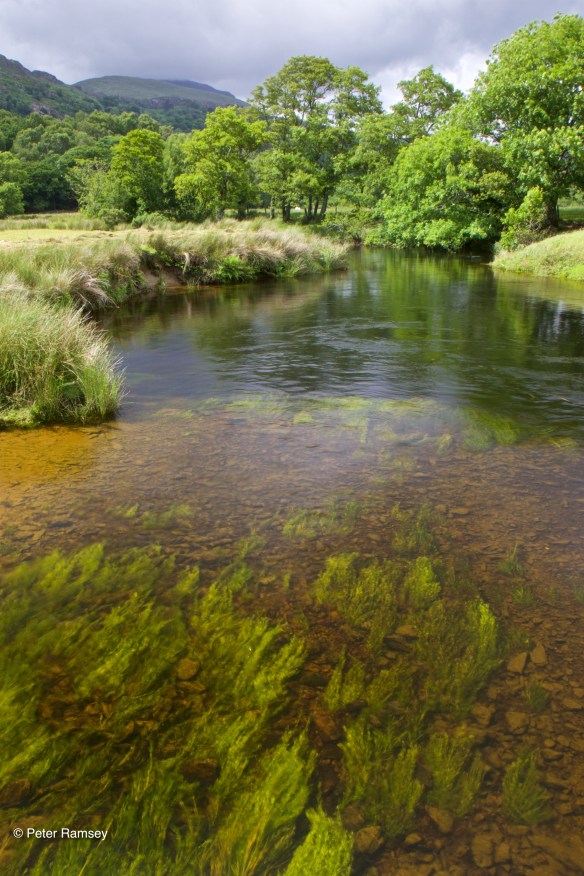

After a traverse across the clifftop, I sit high above the sea, lying back against the slope. The sun is long-risen and already strong on this mid-June morning, warming through the light cloud veil. My perch is cushioned by soft grass-covered earth and sheltered from the keen and cooling breeze by grey boulders, mottled by lichens of white, green and yellow. At my feet, the last of the pink topped thrift blooms jiggle in the wind like little candy floss-topped straws.
The distant views provide a backdrop to my vigil, both back to the mainland and out over the water. To my right, haze covers the distant Pembrokeshire hills, standing above the patchwork of fields hidden by the island’s curves. To my left, a two-masted sailor passes the outlying islets, with a freighter on a different heading in the further distance. The lighthouse is bright out on its rocky stand, lit by the sun gleaming on the white tower and shining back from the glass-enclosed summit. The blue hazy sky reflects beneath in the sea, a swell rolling into the land and hitting the cliff buttresses with white-topped waves. Standing strong against the elements, the tall rock faces tower above the surging and spilling water as it hits and covers the shoreline
It is a peaceful but not silent spot. The pounding of the sea provides a powerful constant base to the passing sounds of the birds. Gulls cry out from above and below, hanging on the rushing air or standing in wait. The coming and going of the razorbills and guillemots, from their busy and crowded perches, is accompanied by their revving moped calls. The ravens loiter on the cliff sides, an occasional cronk or caw highlighting their presence. The linnets chirp as they pass and the pippits pippit away from point to point. Only the fulmar are silent as they float past on their stiff, straight-winged glides.
After a wait, the chough pair appear from over my shoulder heading towards the nest, hidden behind a large carbuncled face, staring out to sea. Their joyous bouncing flight is accompanied by their cries, replying to each other with wall ricocheting bullets. As they approach their hollow, they harass a crow, standing too near for their comfort; they dive-bomb in a looping flight, returning time after time until their focus moves away, tired of their tormenting. They drop into their nest, now full of growing chicks ready to fledge, but not today; the wait goes on.
Today, I did two introductory talks to visitors to Ramsey Island – maybe I should start on the evening lecture circuit next!

Another barbecue evening on Ramsey Island!


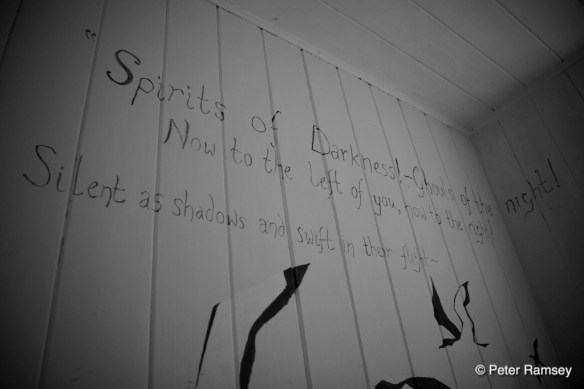
On cold, cloudy, damp and windy evenings, even in June, the normally cosy and welcoming Bungalow on Ramsey Island can take on a darker and brooding atmosphere.


But then someone switches on some lights and starts the fire and it all becomes cosy again..!
[Note: this post is the result of being stuck inside for the afternoon due to the rain and wind rushing past the Bungalow…for a more accurate view of what it’s like to stay in the lovely Bungalow please see this post from last year]
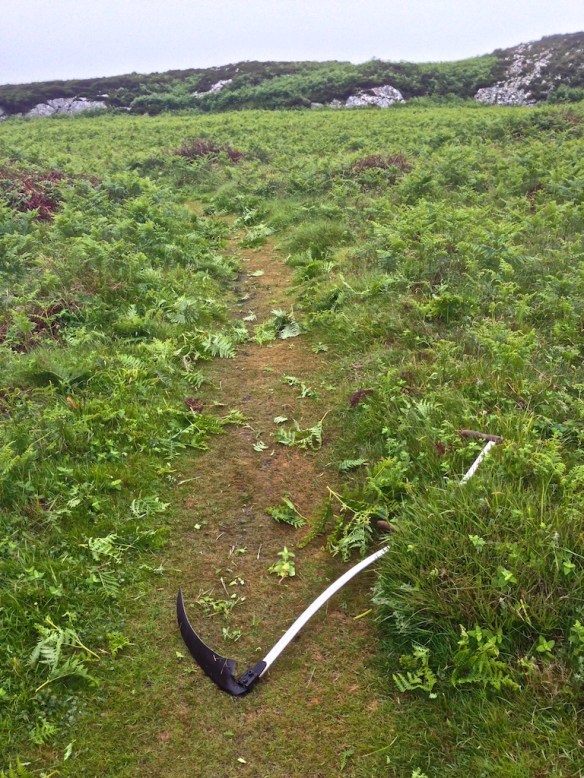
Spent the morning out in the rain clearing bracken from the sides of the path that leads to the south of Ramsey Island.
One of my main tasks in my first week on Ramsey Island has been helping with the Manx Shearwater survey. ‘Manxies’ are long-distance travelling seabirds which return to breed to the coasts on the western side of the British Isles each year, after spending the Northern Hemisphere winter off the eastern seaboard of South America.
These burrow-nesting birds were severely affected by rats on Ramsey but the eradication of the rodents 15 years ago has enabled the number of Manxies to slowly recover. The last survey in 2012 found 3,835 nesting pairs, and in 2016 it is hoped that numbers will have increased significantly.
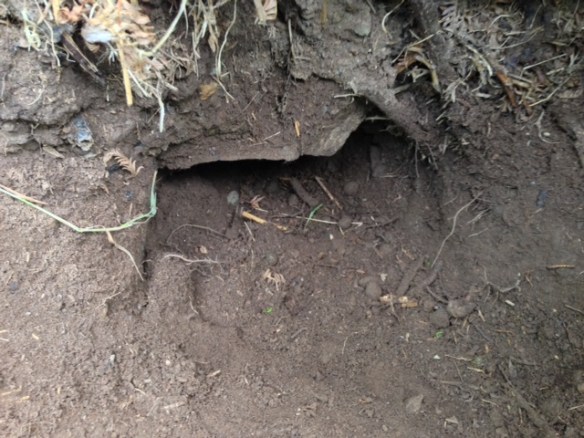
Following a survey of suitable nesting burrows earlier in the year (before the growth of bracken across the island made it much more difficult), the main survey involves the playing recordings of male and female Manxie calls down the burrows to check if any are ‘home’. My small role in the surveys was to help find the burrows into which the calls were then played. With the surveys now complete, the Island’s wardens now need to work out exactly how many Manxies are now breeding here.

It’s not just when undertaking the surveys that the sound of Manxies can be heard across the Island. One of the most memorable aspects of a stay on Ramsey is listening to the giggling and gurgling calls of the birds as they fly into their burrows near the volunteers’ Bungalow home. The birds only come to land at night, so the calls are an erie accompaniment to many a night’s sleep.
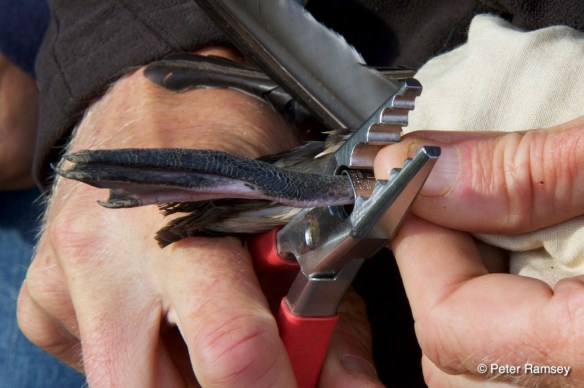
In addition to the natural burrows that the Manxies use for nesting, the wardens have installed a number of artificial nests and another task was to check whether these were occupied. While doing this, the wardens take the opportunity to ring individuals as part of their research and I was lucky enough to be there on one occasion during this stay – and even got to handle one!
One evening Manxie activity is to go out to the western side of the island at dusk to see the thousand upon thousand of these birds flying southwards, skimming just above the surface of the sea, to the much bigger colonies on the nearby islands of Skomer and Skokholm.
This link to the RSPB website provides a bit more information on Manx Shearwaters including a recording of their calls.
 Daft Mumblings