


…off the south coast of Ramsey Island – nesting place for gulls.
 I
I
It’s been a quiet and largely foggy day on Ramsey Island. I woke to a lack of a view from my bedroom windows this morning and it didn’t much improve when I opened the front door. After the great weather yesterday afternoon, it was with a bit of disappointment that we wandered down to the farmhouse.
Lisa (the Warden), Lizzie (the Intern), Kate (the summer volunteer) and I (the dogs-body) spent much of the day clearing bracken away from the edge of the path out towards the south of the island, and also up the small hill (Foel Fawr). I do like a bit of scything and maybe this was just a bit practice for some proper bracken-bashing later in my stay.

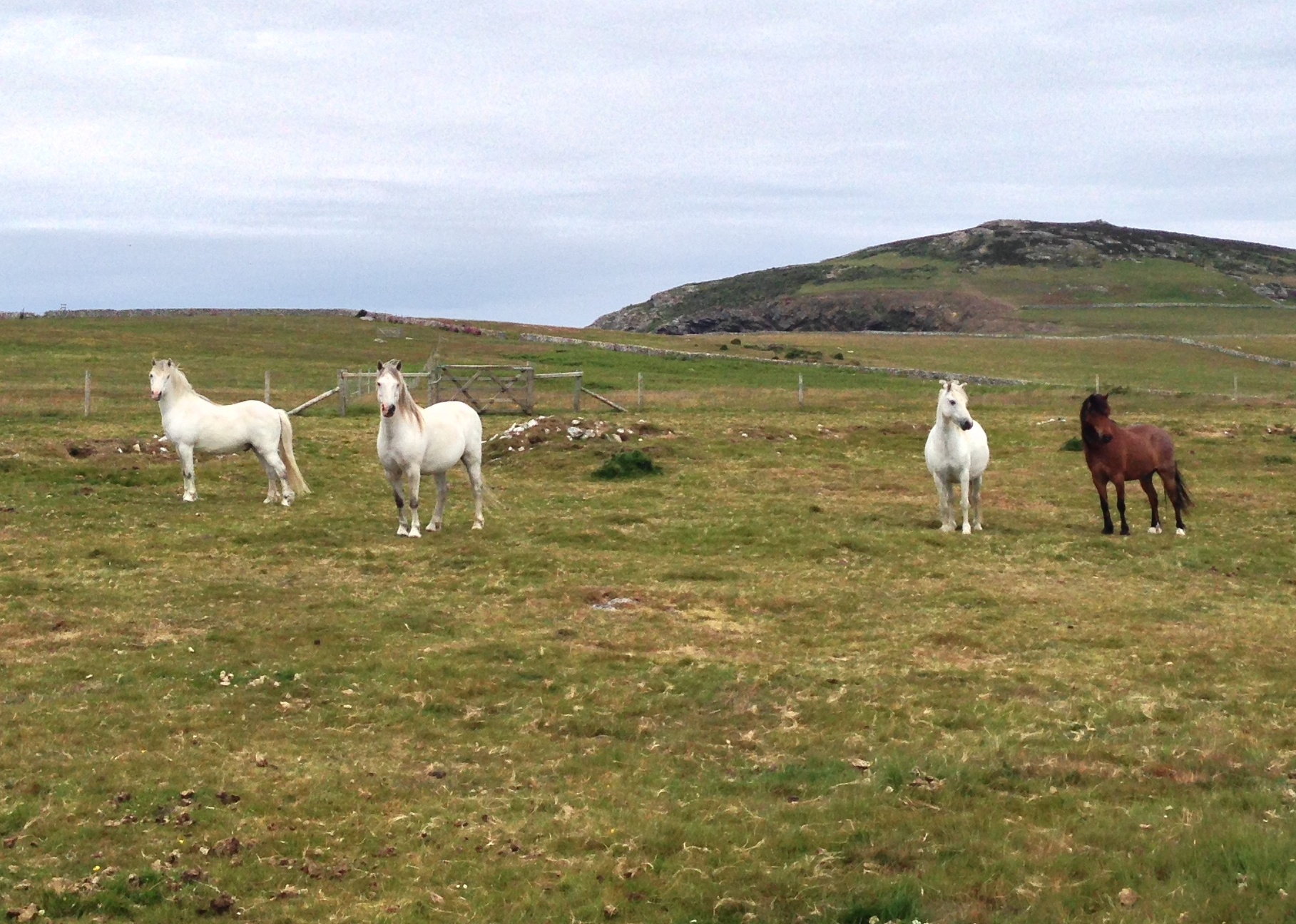
Ramsey Island has three white unicorns and a very rare brown one. Unfortunately, brown unicorns are born infertile, so cannot be bred from.

Yesterday I had the most fun I’ve ever had on a bird survey – they’re normally tranquil and quiet but not this time!
I joined Greg, Ramsey Island’s Site Manager, and Martin and Liz of Thousand Island Expeditions aboard the Ocean Ranger (a 500bhp jet boat!) to do a survey of the seabirds around the island.
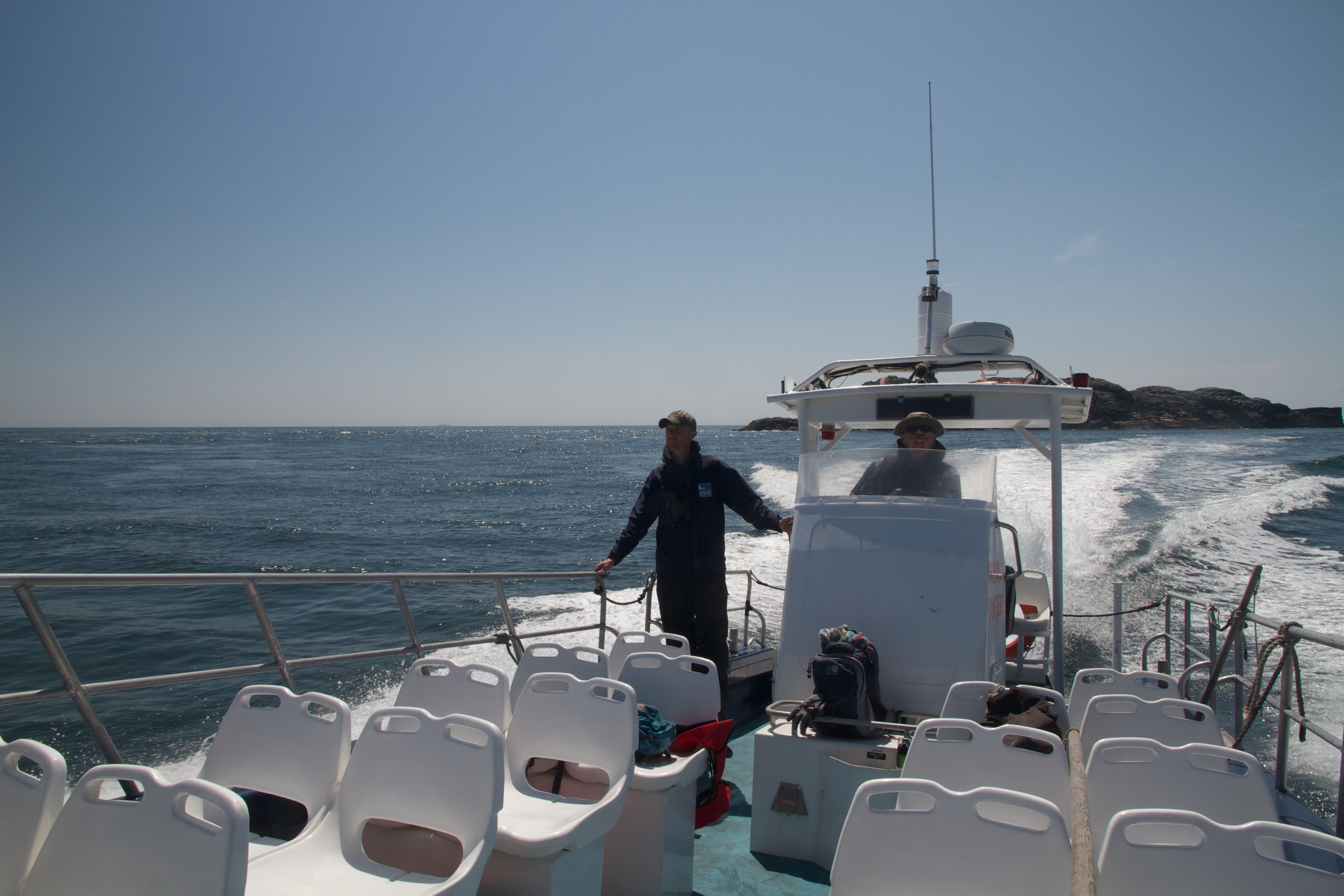
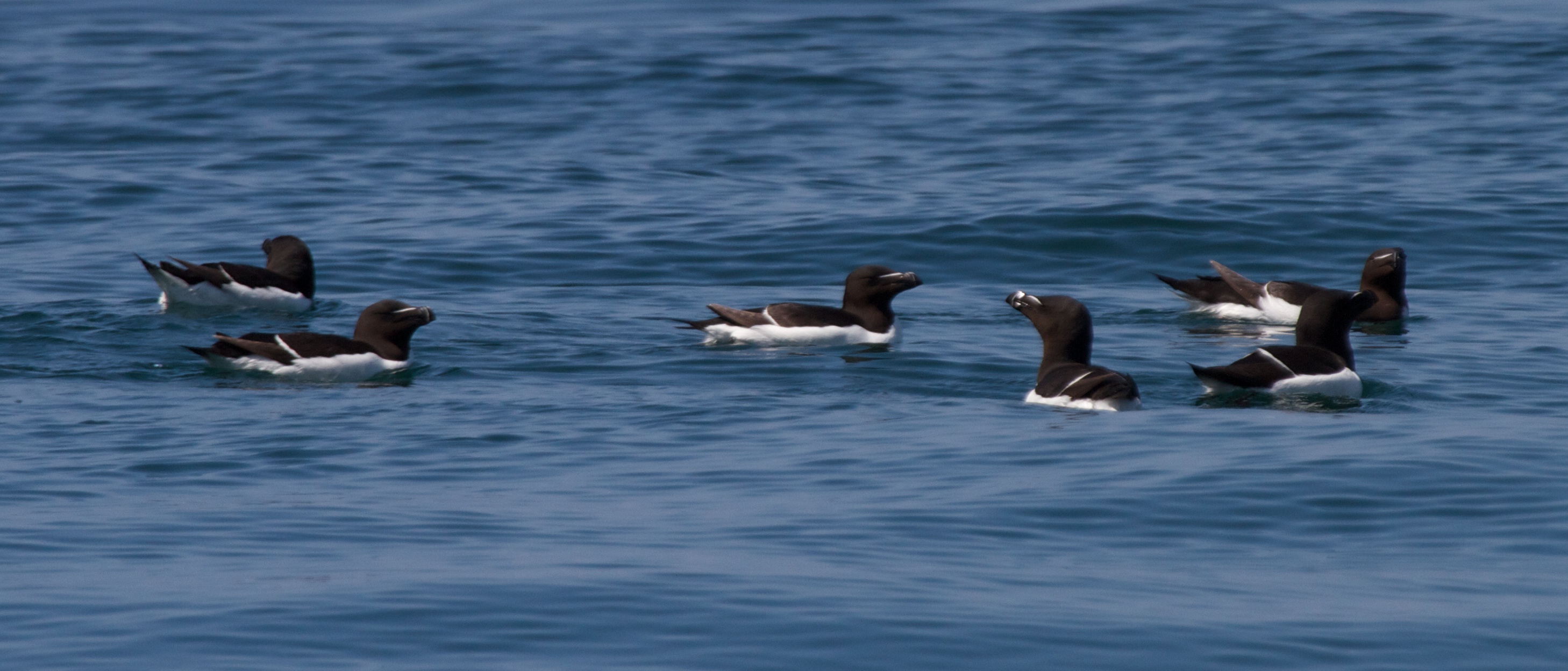
Every few years the seabirds are counted and most of the breeding cliffs can be seen and surveyed from the land. However, there are quite a few places hidden away from sight where the birds have to be counted from the water, so yesterday afternoon was spent out around the island looking up at the cliffs trying to spot razorbills, guillemots, fulmars and kittiwakes on their nests or breeding ledges.
We set off from the harbour, on the eastern side of Ramsey, and went anti-clockwise around the island, finding a few fulmars to begin with. There are relatively few seabirds nesting on the east and north of the island, so we were soon heading round to the west, where the larger seabird cliffs are. We also headed out to the Bishops and Clerks, which are a chain of smaller islands to the west and north-west of Ramsey.
There were plenty of birds to count, although my counting was nowhere near as good as Greg’s but hopefully my photos might make up for it! There were plenty of all four types of bird we were surveying but also loads of gulls and just a few puffins (not including the 200 puffin decoys at Aber Mawr).
As the afternoon wore on the sun cloud cleared and it got quite warm under the cliffs – it’s normal to wrap up warm when out on the water – and I certainly didn’t need my winter jacket in the end.
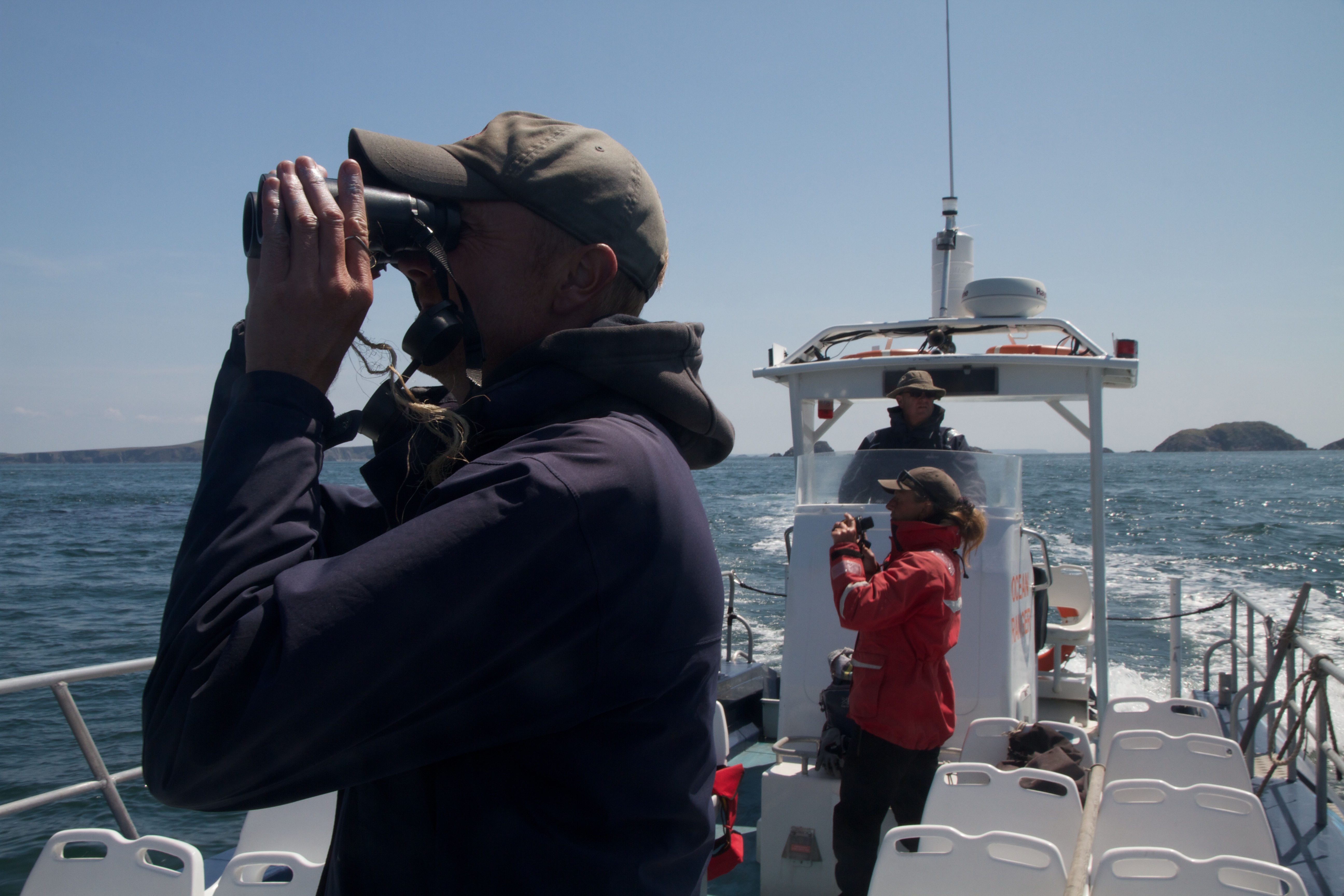
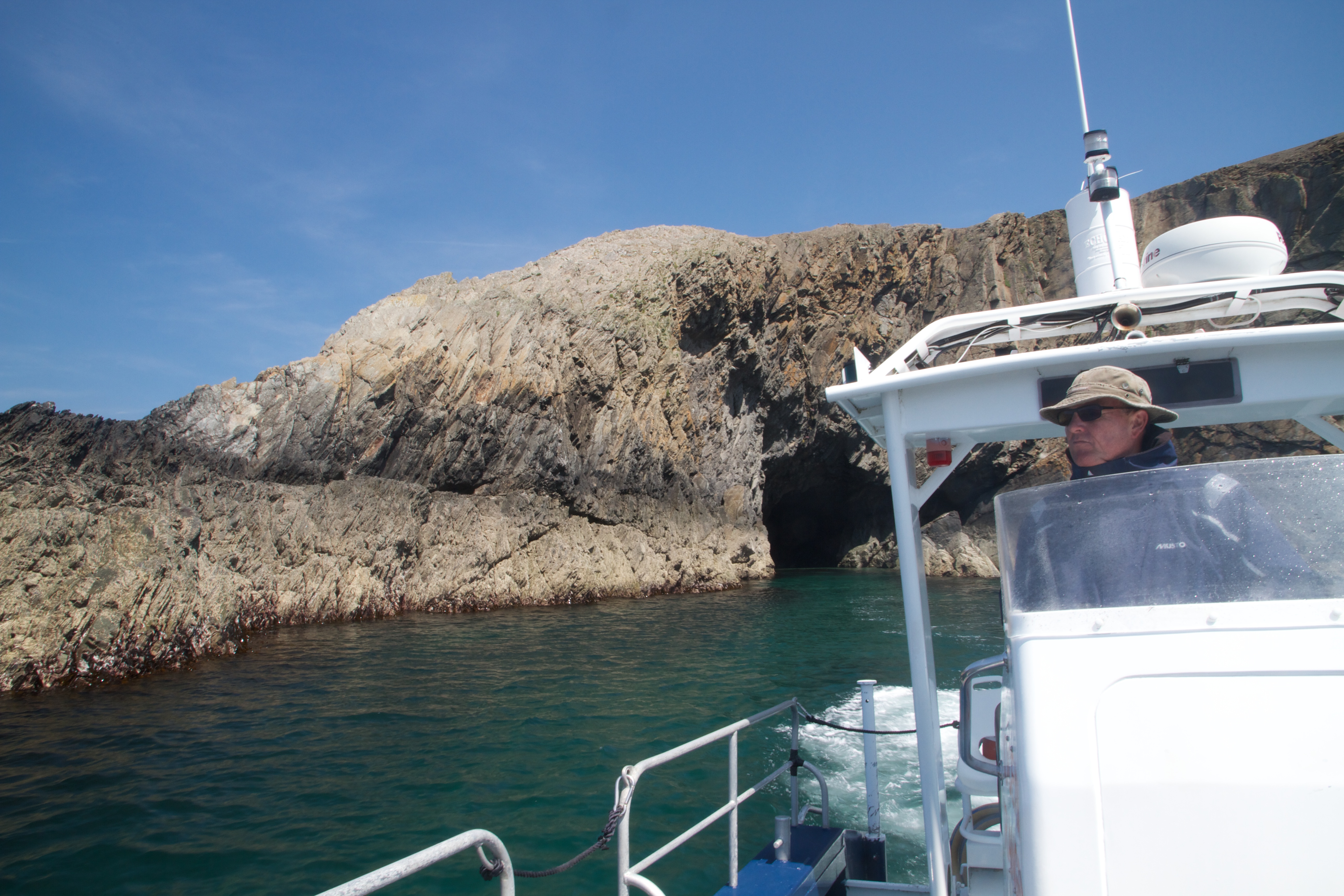
At the end of the four-hour survey, Martin took us for a spin through the Bitches, the line of rocks running out from the east of Ramsey, south of the harbour. The tides rushes between the rocks and there can be a one metre difference in water levels between the two sides. I certainly don’t normally get a free ride on a jet boat when I’m out doing my breeding bird surveys in the middle of Cheshire and they’ll certainly seem even more tame from now on!
After a busy day today (more on that later) and a lovely final hour of sunshine, I returned to the Bungalow and sat on the doorstep with a glass of Coal Ila just as the last of the light was fading. For the first time ever, I experienced the island with absolutely no wind whatsoever, I even had to strain my senses just to feel the slightest movement of air.
There was also almost silence with virtually no unnatural sounds at all. The only man-made background noise was from one of the two large ships laying at anchor in St. Bride’s Bay; a generator onboard giving a backing to the lights shining out from the distance.
Closer by were only natural sounds with a meadow pipit still climbing into the air and chirping its way back down again and the occasional linnet flitting past. There was also the occasional cry of a gull but everything else was quiet. Eventually, the peace was broken by the cat-like calls of a little owl out on the drystone walls.
It is a rare thing to see reflections in the water around Ramsey Island but Carn Llidi could quite easily be seen in the water beneath and the ships’ lights were shining both from their superstructures and back up from the bay beneath.

I’ve been on Ramsey for less than 12 hours but already I’ve taken some photos I’m quite pleased with. I’ve neglected my photography over recent months and I seem only to take an interest when I’m on holiday but I need to make more effort!
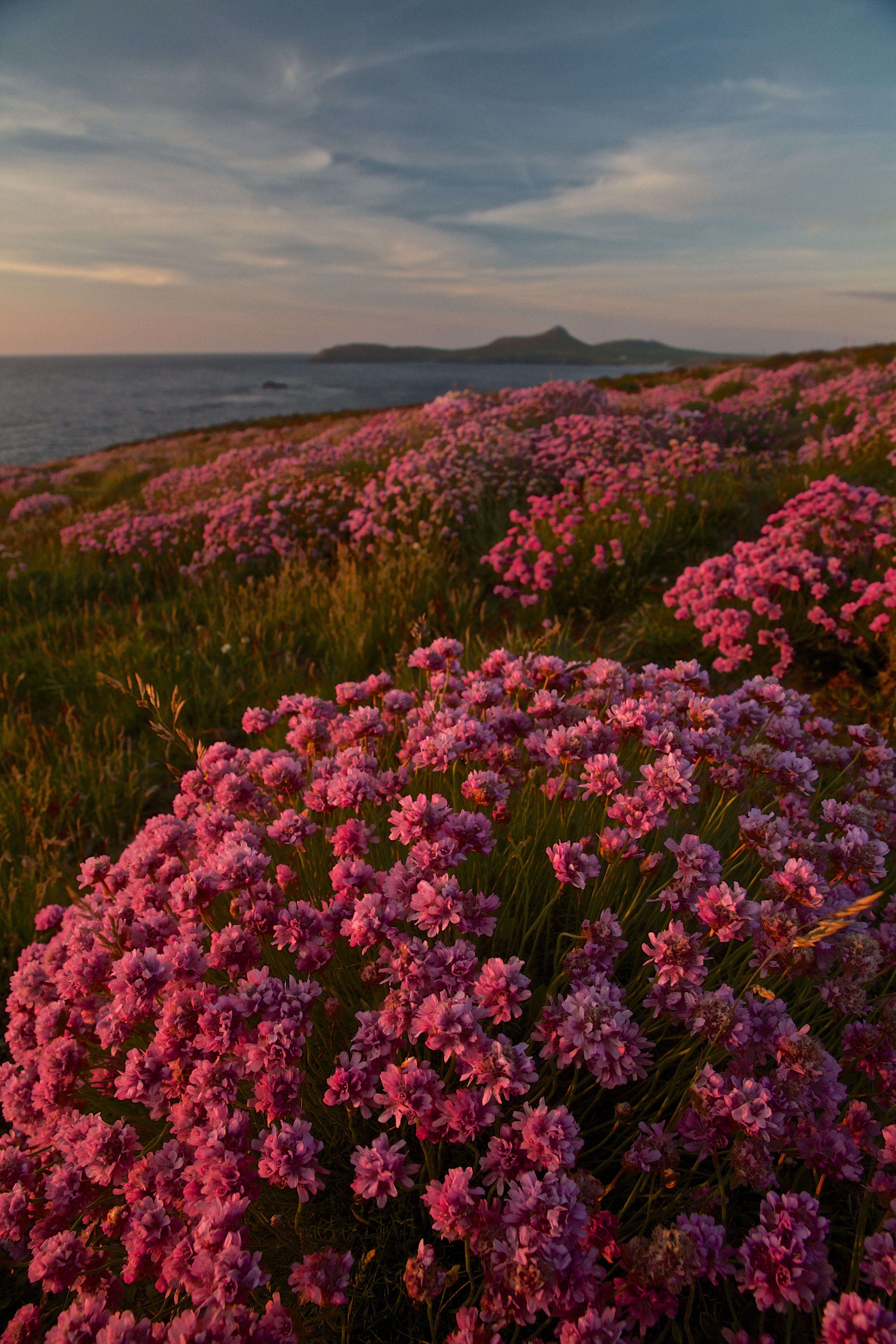
Having the time to spend a while just wandering around searching for a view that looks good really makes a difference but I seem to lack the enthusiasm and energy to do it in day-to-day life. However, I’ve made full use of this evening. After a fruitless hour spent looking for puffins off the shoreline of Aber Mawr (the large bay just next to The Bungalow, where the volunteers stay), I wandered around the north west coast of the island as the sun slowly set. The light gave a richness to the scene, the ‘Golden Hour’ living up to its reputation, and this is one of the results – vibrant Thrift with Carn Llidi in the background (Carn Llidi has to be in at least 50% of all photos taken on the island – it’s the law!).
Anyone who read some of my posts from May last year will know that I have a bit of a ‘thing’ for Ramsey Island – the RSPB’s reserve off the coast of Pembrokeshire, near St. Davids. I first volunteered on the Island in April 2012 and have returned each year since. After cancelling my booking for May this year but fortunately being able to rebook for June, I finally arrived this afternoon.
Not only was my trip delayed from May, it was also delayed from yesterday. After having a busy week, I didn’t quite have time to pack and with a bit of work to finish off, I put off my return for an extra day. Even if I had managed to get myself sorted for yesterday, I wouldn’t have been able to get to the island as the wind was too strong for the Gower Ranger to transport me (and other day visitors) across.
Today, however, the weather was perfect (as it always seems to be on the days I land on the island). I’m here for two whole weeks (minus the missed day) and will blog each day, all being well.
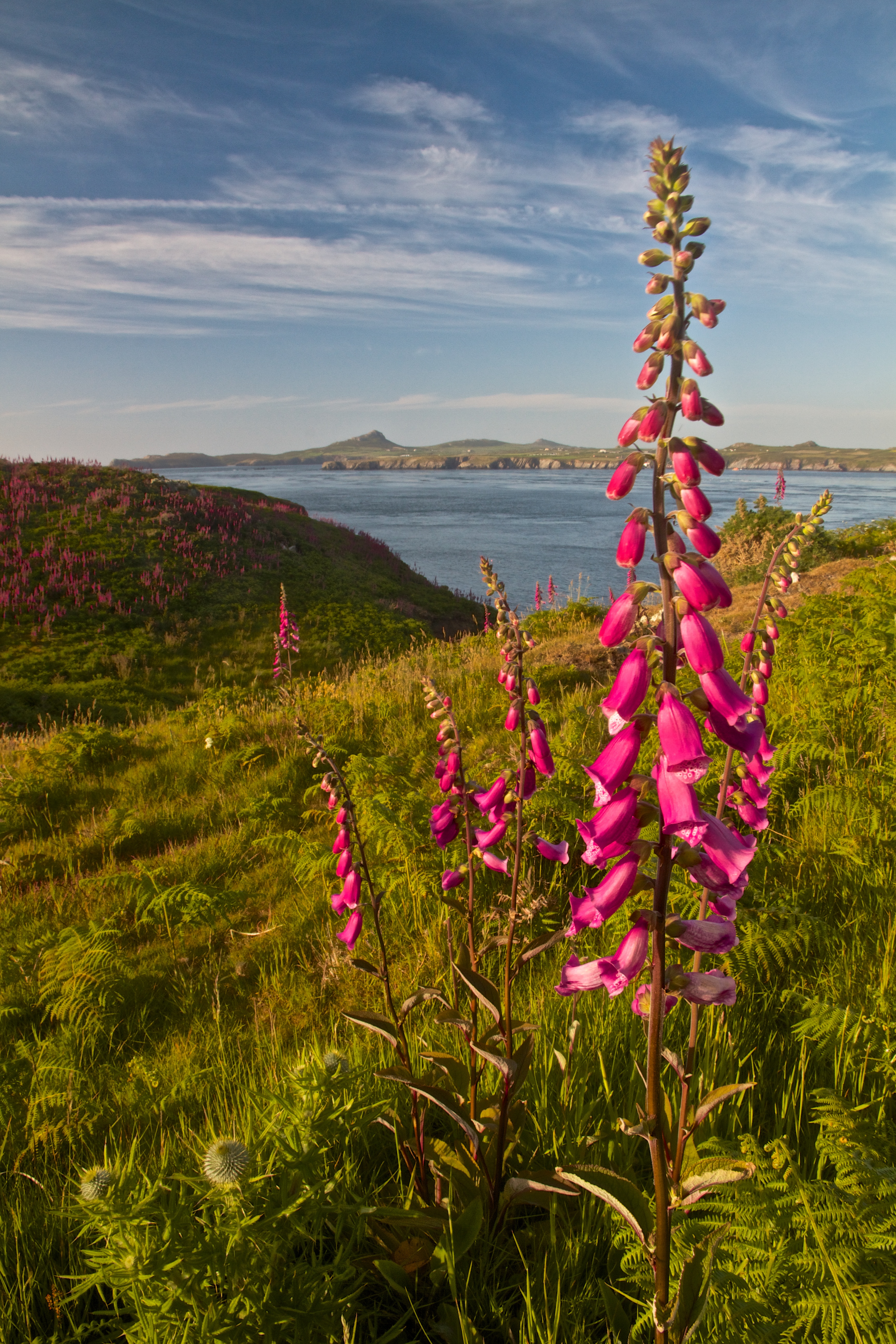
The first thing I noticed while waiting on the ‘wrong’ side of Ramsey Sound was the pink tinge to parts of the island. At first I thought it might be heather but it’s too early in the year for the usual heathland display and the colour was in the wrong part of the island. It was only when I landed that the cause of the scene was revealed – swathes of foxgloves.


It’s amazing how small the world is, especially for people with an interest in wildlife. Today I got talking to a couple I met on a ferry to Islay 18 months ago and who I kept bumping into during the week I was there.
 Daft Mumblings