Sweden in the Summer – Part II: Grilling in the Wilderness

If there’s one thing I absolutely have to do whenever I visit Sweden, it’s to go ‘grilling’. The Swedish countryside is dotted with wind shelters; small open-fronted log cabin-like shelters with fireplaces in front. The wind shelters are often close to water or nestled deep inside the forest and, for me, cooking over the open fire gives a real sense of being outdoors in the Swedish wilderness. The shelters are even stocked with wood, ready for visitors to light a fire!

 (4)

The windshelters I have used most often are in Färnebofjärdens National Park. The park is quite small but holds a landscape of wide rivers, lakes and dense forest, holding a rich variety of wildlife. While on trips to the Park, I’ve seen so much nature of the northern lands with the birds being particularly evident including cranes, owls, and white-tailed eagles. Walk a few metres into the forest and you’re bound to find signs of elk too and if you want a bit of pudding, there’s always the blueberries and lingon (cow berries) at this time of year.

IMG_4272

My grilling trip during my recent visit to Sweden was in the National Park and at a wind shelter at the edge of a set of rapids. It was a lovely, warm summer’s midday, with the sounds of the rushing water and the crackling fire accompanied by the smells of the forest, wood smoke and cooking sausages.

However, Sweden in the summer isn’t all sun and beauty; there are some smaller creatures that take a great liking for me, particularly my blood, and this trip left me with a very swollen ankle when I returned home.

I could spend hours sat at any fireside but there’s something special about grilling at a windshelter in the Swedish wilderness and I would happily spend days at one, maybe with a spot of fishing too (although I’m a complete novice at catching fish!). Over the years, I have visited the shelters in the height off summer, in the bright colours of autumn and deep in the cold, snowy winter – it doesn’t matter what the season is, I always have to pay a visit!

I’m sure the shelters could catch on in the UK but I think there are many people here who don’t have the same sense of a shared countryside that the Swedes seem to have and the shelters wouldn’t last long. Then again, there’s a belief that the vast majority of people won’t walk more than 100m from their car, so if the shelters were put half a mile from the road or car park, maybe they would last longer and be a reward the the more adventurous.

Sweden in the Summer – Part I: Blue Skies, Red Barns and White Swans

Walking along the forested dirt track, passing the summer homes, the lake comes into view. Approaching the water, the track gives way to short cut grass surrounded by meadow and marsh. The birch trees enclosing the shallow beach merge into pines around most of the lake. There are gaps in the barrier of trees, providing windows into meadows and glades.

The lake is calm but not mirror-like, with a light breeze rippling the surface and bringing scents of sweet, fresh nordic air with hints of the forest, summer blooms and the damp wetland at the water’s edge. Stepping onto the jetty, more ripples spread out and the creaking and clanking of the wood and metal disturbs the scene. Serenity soon returns and the only sounds are of nature at peace as the evening comes to a close. The last of the sun lights up the trees at the far end of the lake but the rays have lost little of their strength from the heat of the day.

The whoopers are here, two cygnets protected by cautious parents which give occasional trumpets on the far side away from my seat. The small orchestra of birds is given more depth by the willow warbler’s descending song and the far off bugling of the common cranes but a heron stands silent in the shallows, not delivering its harsh call. The screaming swifts add a quicker tempo as they chase in the evening’s closing light.

The deepening blue of the sky reflects in the calmer areas towards the banks with small disturbances triggered by pond-skaters making their punctuated ways over the tension. Fish rising to feast on the emerging insects ‘plip’ as they break the surface with an occasional splash as one leaps clear.

Out on the far edge of the lake are more industrious creatures. Beavers live here; their large lodge growing by the year. They make their way purposefully around their watery home; gnawing can be heard where they are working on their next tree to fell. The whoopers are wary of their presence and a beaver slaps the water with its tail and dives as one of the parents moves to ward off any further advance.

The evening is starting to cool and I return back along the tracks, giving one last look over my shoulder at a view which will have to wait again for another year.

 (3)

I’ve just come home after a week and a bit in central Sweden visiting family. While the main purpose for visiting was to spend time with my brother, sister-in-law, nephew and niece, I did manage to indulge my wildlife interests.

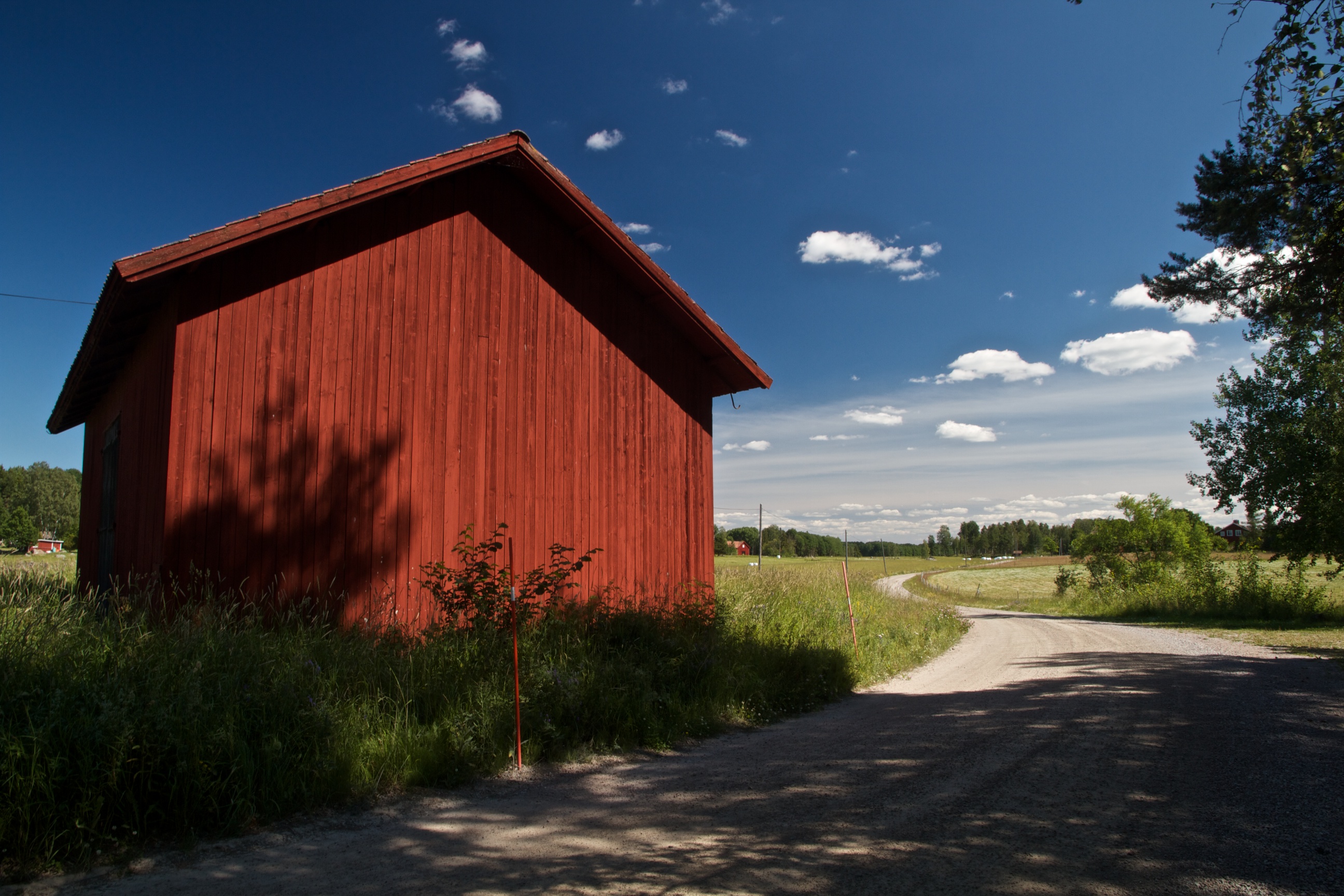
The area of central Sweden where I stay is on the dividing line between the south and north of the country – the area immediately south being characterised by broadleaf woodlands and wide, open, hedgeless fields with the area to the north being typically rocky pine forest, dark lakes and bogs, interspersed with smaller meadows and glades. However, everywhere there are field barns in a deep, rich red which bring timeless touch of man to the landscapes.

The land is rich in wildlife and I saw a great range of fauna, many of which are rare or non-existent in my area of England or, indeed, the rest of the UK, while others would require a long trip for a glimpse. The summer house where I have spent some time can be great for seeing some of the specialities with willow and crested tit common visitors, crossbills passing in groups and the occasional sound of cranes and black woodpeckers. The roe deer are seen regularly but I missed the red squirrels this time and the brown hares, but I really dream of seeing a lynx or wolf in my wanderings around the area. I had my camera trap with me and caught a nice night-time video of a deer and her fawn – I say night-time but the skies stay light for 24hrs at this time of year, not a mid-night sun but light enough to walk without a torch.

The whooper swans breeding on the lake were a nice surprise as this is the first time they have done so in the three years I have stayed near the lake. I see these birds in the UK in winter but those are icelandic swans and I suspect these swedish breeders may winter elsewhere on the continent.

 (2)

I’ve been visiting Sweden for the past 13 years and I still love to see the wildlife and scenery, and spend time out in the countryside – wilderness is much closer to hand than it is at home.

GUEST BLOG: For Wombles and Moomins – by Jack Riggall

I never intended to become a wildlife campaigner but I think I have to admit to myself that is what I am today, at least in part, even if I’m not that good at it – since January I’ve been doing my small part for the wider campaign for hedgehogs, called Hedgehog Street, and part of this is a national survey running from the 1st of February to the 31st of August, and this has been ongoing for three years (see the reports for 2012 & 2013 here) to form a better picture about what is happening to them. To support this I’ve promoted the campaign in a few local media outlets such as Nantwich News & The Cat Radio to ask people to get in touch with sightings; but the most enjoyable part of this is the glimpses of this mammal that I’ve had myself; though it was before I knew of the survey the most memorable (and odd) encounter was last summer when an adult woke me up in my garden by running into my face. When we both got over the shock it ran off, and I was surprised at how noisy they can be for their size (something hedgehog lovers have long known of course, but I’m new to the table). My later realisation was not quite as amusing and markedly less joyful; that these animals, beloved by almost everyone in the country (I’m going to exclude gamekeepers because of their use of the indiscriminate fen trap), have been severely reduced in numbers by our activities since the 1950s. Whilst the precise numbers are unknown, it’s very unlikely that there are more than a million left, a fraction of their numbers in the 1950s. The threats to the hedgehog are too numerous to mention but an overview can be found here with suggestions about what you can do to help them; and please do so (but not with milk!), because it may not be long before the many ‘I barely see them anymore’ equivalents I hear when discussing hedgehogs with people start becoming ‘I never see them anymore’. You can register to help with the national campaign here.

On to the moomins! You may have heard that beavers have been on the River Otter in Devon for a few years, likely having escaped from captivity nearby. Historically, the European beaver lived throughout the UK but was hunted to extinction for its fur & meat. Fortunately, the beaver is an ecological keystone, as George Monbiot explains, meaning it is a real gem for the river ecosystem, and so the results of its presence wherever it is reintroduced in Europe are very positive. Unfortunately, the knee-jerk response of the Department for Environment, Food & Rural Affairs (DEFRA), an already infamous government department due to their policy of culling badgers, is to capture these individual beavers and place them in zoos for reasons that soon fall apart under the mildest of scrutiny; that they harm fish populations, when in fact the presence of beaver dams is a great boon for fish as shelter and breeding grounds. Species of high conservation priority also benefit from the dams such as otters & water voles.

One renowned ecologist finds this plan to effectively eradicate the beaver from the English wilderness a second time so abhorrent that he is threatening legal action if DEFRA proceed with their plan. I have sent DEFRA my own comments with a request for them to re-consider; I hope you’ll do the same.

Onwards & upwards for our mammalian neighbours!

Jack Riggall.

Mammal Tracker

Last weekend I came across the Mammal Society’s Mammal Tracker app for smart phones.

I’ve been using the British Trust for Ornithology’s BirdTrack app for quite a while now and have submitted dozens of records but I’ve been wanting a mammal equivalent to use alongside it. To be honest, I have more interest in mammals than birds but they are much more difficult to see.

The Mammal Tracker app couldn’t be simpler to use and like BirdTrack, the information collected through Mammal Tracker will feed directly into conservation efforts. In fact, the information will help to produce the first UK mammal atlas for 20 years.

I’ve just checked the website and my records have already appeared on the national map; it is great to see the immediate contribution I have made.

If you have any interest in conservation and wildlife (and a smart phone) you should get this app.  Actually, you don’t need a phone at all as you can submit records via the Mammal Tracker website – see the link below:

Mammal Society Mammal Tracker website

Well, I’m off to Sweden tomorrow but I think the Mammal Society might be a bit suspicious if I start submitting records for moose, bears and wolves!

A tweet can lead to a good Nose for butterflies

Last night a friend posted on Facebook a photo of a caterpillar he had seen while working. I’m not great at identifying butterflies or moths, in fact I’m a complete novice, so I tweeted a copy of the photo and included Cheshire East Council Rangers (@CECRangers) in the tweet. Within a few minutes, Martin, the Ranger from Tegg’s Nose Country Park, replied and identified it as a Mullein Moth (no, I hadn’t heard of one of those before either!). Martin then asked whether I was attending the butterfly walk he was leading this morning. As I didn’t have anything else to do, I thought it was a great idea and booked a place via the Council’s (very efficient) on line system.

Image

As I drove to Tegg’s Nose this morning the weather didn’t look great and as I arrived at the country park, just above Macclesfield, the rain started to fall. However, I pressed on and joined a small, select band of hardy folk who, like me, didn’t really want to let a bit of wind and rain get in the way. Martin was joined by a local butterfly expert, who does weekly surveys of Tegg’s Nose, and the group of us set off to try to find some butterflies.

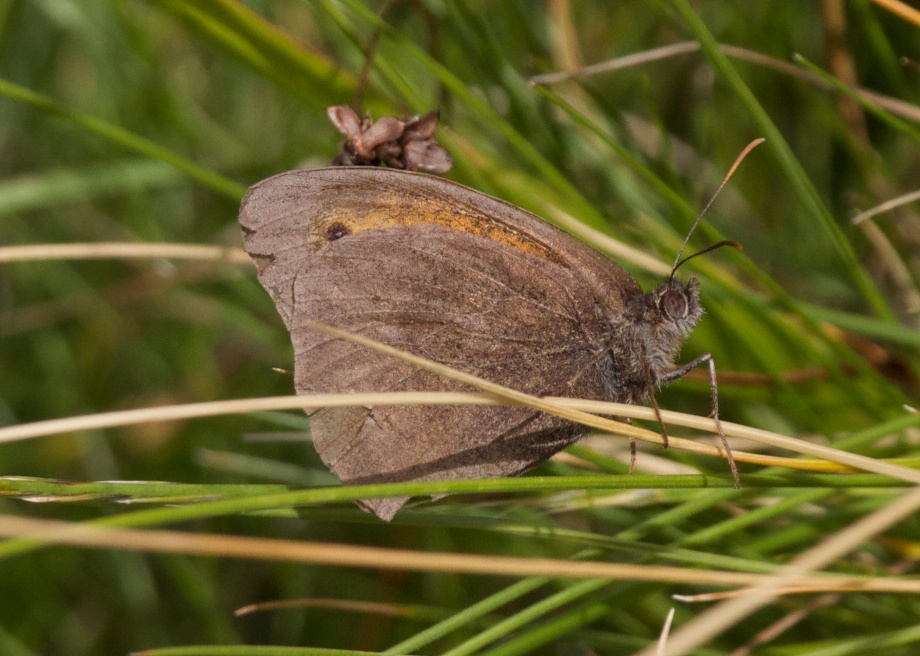
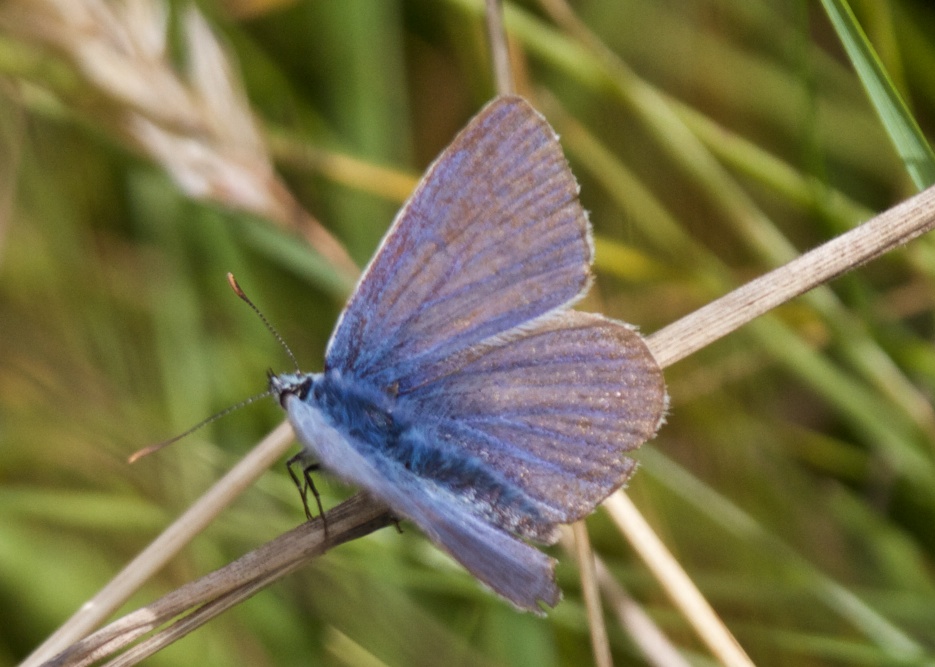
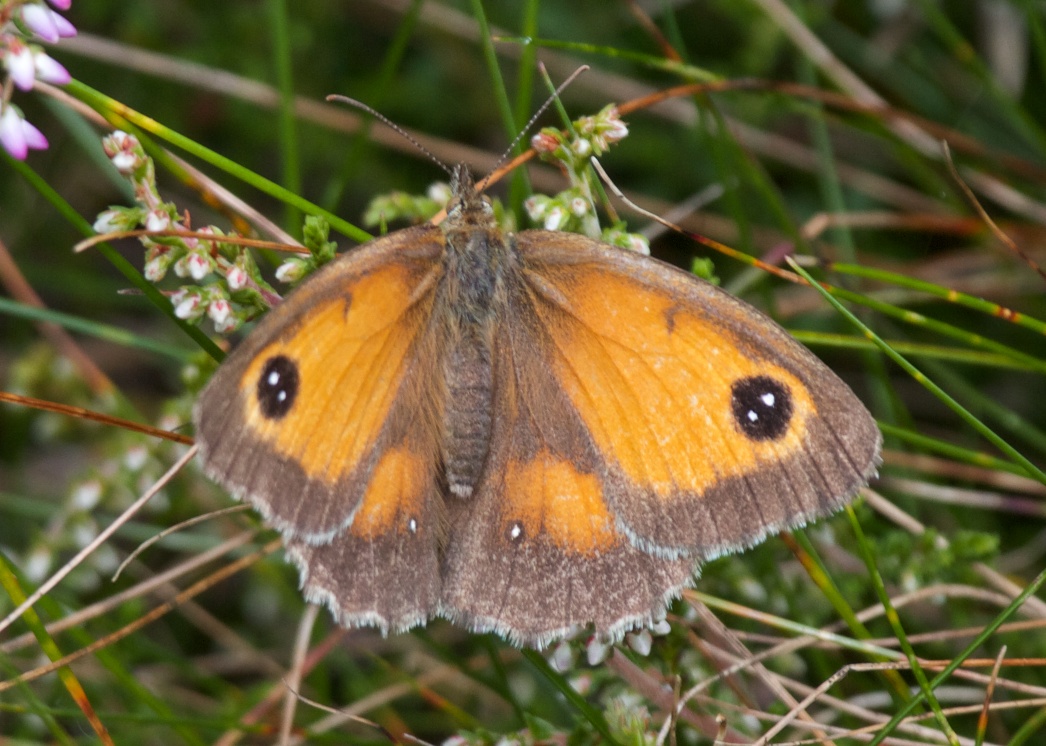
Slowly wandering around the country park in the rain and wind we didn’t expect to see many butterflies but spirits remained high, as did hopes that the rain wouldn’t last forever. Eventually, as the rain was blown away and the wind dropped, we started to see some movement over the grass. First we saw a few moths and eventually after over an hour of looking we found and caught (then released) a Meadow Brown and then found a Common Blue sheltering in the grass.

ImageImage

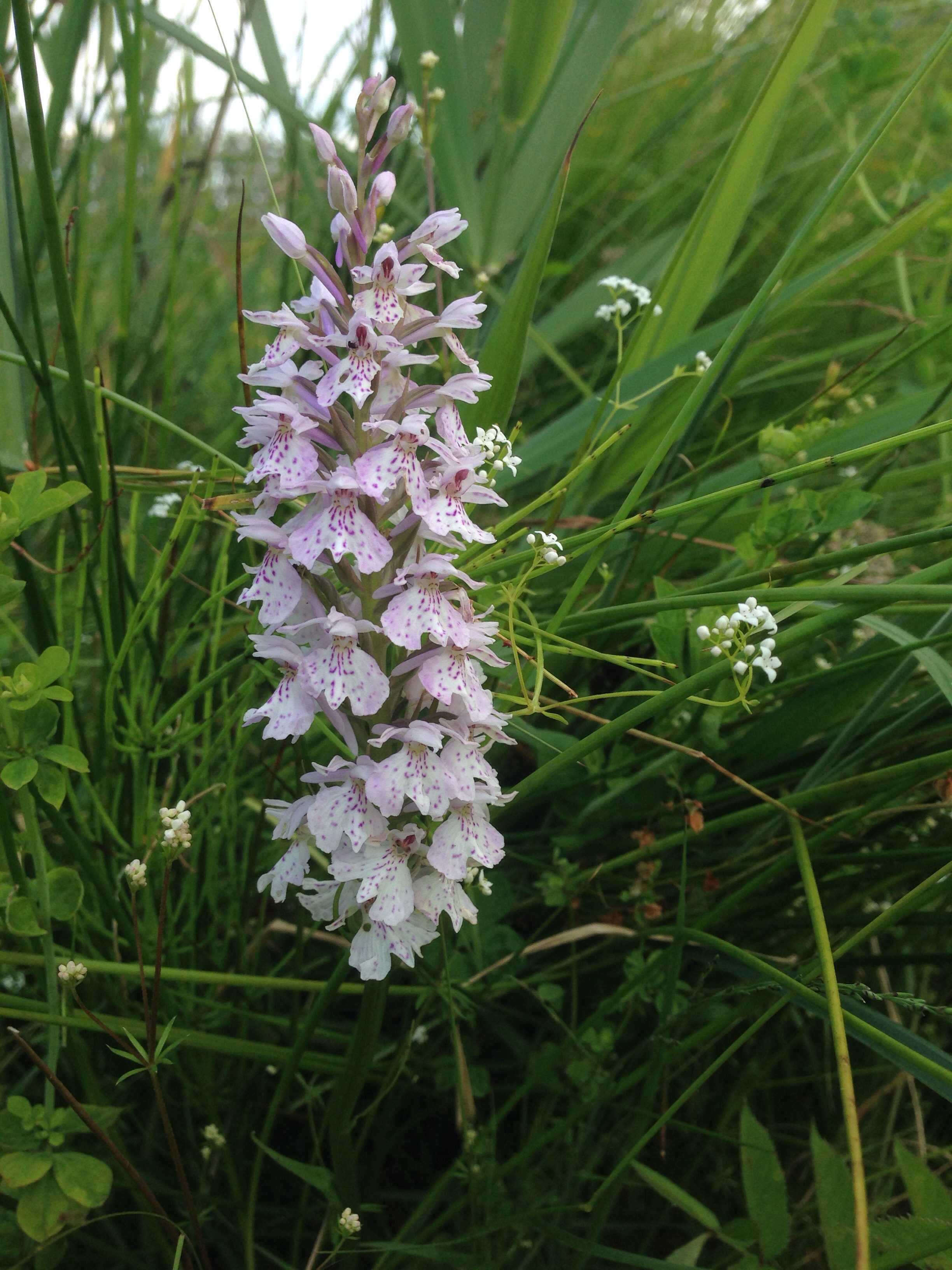
While the number of butterflies wasn’t huge, we were given some very good hints and tips on finding them in better weather and I will probably return later in the summer to check the place again – taking my butterfly education further. However, we didn’t just look at the butterflies on the way around and we were given a good general guide of the different habitats at Tegg’s Nose. The meadows and fields on the way back to the visitor centre had carpets of flowers and I got some nice shots with my phone.

Image 4

Some people say that social media reduces face-to-face human interaction – for me, today at least, it has done the exact opposite – used well, it can make life richer and fuller.

Battling through a Breeding Bird Survey

I’ve just finished the fourth and final visit to Cheshire Wildlife Trust’s Blakenhall Moss Reserve to undertake the Breeding Bird Survey for the site.  Wandering around a nature reserve recording the birds heard or seen, seems like an idilic way to spend an early morning in summer; however, it was a bit of a battle today.

Image

As I’ve mentioned before, the Trust bought the site last year and has blocked the drainage channels and cleared the majority of the woodland to hopefully restore the Moss to its previous bog-like state.  This has brought about a transformation to the reserve, which is now open in the centre and has large areas of standing water.  Throughout the time I have been doing the surveys (March, April, May and June), the raised water level has provided a few obstacles, with water overtopping my wellies, hidden timber to trip over and mud to get stuck in.  With the undergrowth having grown so much over the course of the spring and early summer, the brambles and nettles now also provide more obstacles to get over, through and around.  All this is then added to by the lovely mosquitoes which seem to like me quite a lot and they followed me around and bit me for much of the hour and a quarter it took to complete the survey.

With the final of the four visits completed, I can now submit my records to the Trust.  In total, over the course of the four visits, I noted 35 species, with a reasonably consistent number (26, 25, 23 and 26) recorded each time.  Of these species, five were confirmed as breeding including:

  • Mallard (destroyed nest found in March)
  • Great Tit (fledglings seen today)
  • Canada Goose (four goslings seen today)
  • Coot (three chicks seen today)
  • Buzzard (at least one chick heard in a nest today with an agitated adult nearby)

Image

I also recorded 16 ‘probable’ breeders; this is based on the numbers seen either during one visit or a number of visits, pairs seen or agitated behaviour indicating a nest may be nearby.

Also of note were seven species that are unlikely to have been breeding at the site last year but have now been attracted by the new areas of water; these species include mallard, canada goose, coot, greylag goose, little grebe, grey heron and lapwing.  Of course, with less tree cover at the reserve, the number of woodland birds will have decreased significantly since last year but hopefully only in total numbers of individual birds and not species.

While I was at the site, I also recorded three species of mammal, either by seeing them (rabbit) or finding signs (mole hills and badger tracks – see below).  I also noted small white and spotted wood butterflies.

Image

I’ve really enjoyed doing the surveys for the Trust and I’ve learnt a lot over the course of the surveys, both at Blakenhall Moss and the same surveys completed at the Bagmere reserve – hopefully, I will be able to continue doing the surveys next years – now I just need to find some new activities to fill my weekend early mornings!

Icelandic Little People

After having a blank page on my blog site for a while, titled ‘Little People’, I’ve finally got around to posting something on this subject!

I have thought for some time that little people might actually exist. When I say little people, I don’t mean short homo sapiens; I think there might be a completely different species of little people.

I’m trying to gather some evidence and I’m sure there’s plenty out there, but the first I’ve found is taken from the BBC News Website (Link to BBC News) which has published a story about changes made to an Icelandic road scheme due to the presence of elves.

I work in transport planning and until now we have produced Environmental Impact Assessments (EIAs) as part of proposals for major schemes.  I now think we may have to do a new form of EIA – yes, that’s right, an Elf Impact Assessment or perhaps a LPIA to allow for other types of Little People.